

P0157 on 2013-2016 Jaguar XF V6/V8: O2 Sensor Low Voltage Causes and Fixes
P0157 indicates a low voltage signal from the Bank 2, Sensor 2 oxygen sensor, located after the catalytic converter on the driver's side. The most common fix is replacing the sensor itself. However, Jaguar has issued multiple service bulletins (JTB00392NAS1, SSM72477) suggesting the cause can be a software error, requiring a PCM update instead of, or in addition to, part replacement.
- P0157 on a 2013-2016 Jaguar XF V6/V8 points to a low voltage issue with the driver's side, post-catalytic converter O2 sensor.
- The most probable cause is a failed O2 sensor, which is a standard wear item.
- Before replacing parts, check with a dealer for any available PCM software updates, as Jaguar TSBs indicate this can be the root cause.
- Always perform a visual inspection of the wiring and check for exhaust leaks, as these can also trigger the code.
- This code applies only to V6 and V8 engines, as the 4-cylinder engine does not have a 'Bank 2'.
What's Unique About the 2013-2016 Jaguar XF
For the 2013-2016 Jaguar XF with V6 or V8 engines, this code is notable due to multiple Technical Service Bulletins (TSBs) issued by Jaguar. TSB JTB00392NAS3 and its predecessors explicitly state that for a wide range of O2 sensor codes, including P0157, the cause may be a "post-catalyst heated oxygen sensor (HO2S) software error". The prescribed action is to first check for any stored DTCs and replace only the specific sensor indicated, then proceed to update the PCM software regardless. TSB #SSM72477 further notes that diagnosis may find no fault with the wiring or sensor, reinforcing the software issue. Another TSB, JTB-00392-NAS-3, suggests the cause could be thermal shock from water contacting the hot sensor element. Therefore, while a bad sensor is a likely cause, it's crucial to consider these platform-specific software and sensitivity issues before replacing parts unnecessarily.
Diagnostic Flowchart
Tap your situation to follow the diagnostic path that matches what you're seeing on this vehicle.
Symptoms You May Notice
- Check Engine Light is on
- Failure to pass an emissions test
- Decreased fuel efficiency
- In rare cases, a slight reduction in engine performance or rough idle
- Potential fuel or 'rotten egg' odor from the exhaust
- Replacing the catalytic converter when the actual issue is a faulty sensor, an exhaust leak, or a software glitch.
- Replacing the wrong oxygen sensor (e.g., replacing the upstream sensor instead of the downstream, or replacing the Bank 1 sensor instead of Bank 2).
- Replacing the sensor without checking for and applying the required PCM software update, leading to a recurring code.
Most Likely Causes
- Faulty Bank 2, Sensor 2 Oxygen Sensor 🔴 High Probability Oxygen sensors are wear-and-tear items that degrade over time from heat and contaminants. This is the most frequent cause for this code on any vehicle. TSB JTB-00392-NAS-3 also notes that sensors can fail from thermal shock when water splashes onto the hot sensor element.
How to confirm: Use a scan tool to monitor the live voltage data from the Bank 2, Sensor 2 O2 sensor. A healthy downstream sensor should show a relatively steady voltage around 0.45V or higher. If the voltage is stuck low (typically below 0.2V) and doesn't respond to changes in engine RPM, the sensor is likely faulty.
Typical fix: Replace the Bank 2, Sensor 2 (downstream, driver's side) oxygen sensor. It is recommended to apply anti-seize compound to the threads of the new sensor.
Est. part cost: $60-$150 - PCM Software/Calibration Issue 🟡 Medium Probability Jaguar has released multiple TSBs (SSM72477, JTB00392NAS1, JTB-00392-NAS-3) for this model year range specifically citing a "software error" as the cause for numerous O2 sensor codes, including P0157. The fix involves a PCM software update.
How to confirm: Check with a Jaguar dealership or a qualified independent shop with access to Jaguar's TOPIx system to see if TSB JTB-00392-NAS-3 or a superseding update is applicable to your vehicle's VIN. The TSB instructs technicians to update the software even after replacing a sensor.
Typical fix: Update the Powertrain Control Module (PCM) software to the latest version using Jaguar's SDD diagnostic tool.
Est. part cost: $0 (if covered), $150-$300 (dealer labor for programming) - Wiring or Connector Damage 🟡 Medium Probability The O2 sensor wiring is routed near the hot exhaust system and under the vehicle, making it susceptible to heat damage, melting, corrosion, or physical damage from road debris.
How to confirm: Visually inspect the wiring harness and connector for the Bank 2, Sensor 2 O2 sensor. Look for any signs of melting, chafing, corrosion, or broken wires. Use a multimeter to check for continuity on the signal wire and for proper voltage and ground at the heater circuit pins on the harness-side connector.
Typical fix: Repair the damaged section of the wiring harness or clean/replace the corroded connector.
Est. part cost: $10-$50 - Exhaust System Leak ⚪ Low Probability Leaks from gaskets or cracks in the exhaust manifold or pipes located between the engine and the Bank 2, Sensor 2 sensor can allow unmetered oxygen to enter the exhaust stream, causing a false low voltage reading.
How to confirm: Listen for ticking or hissing sounds from the exhaust, especially when the engine is cold. A mechanic can perform a smoke test on the exhaust system to pinpoint the location of any leaks.
Typical fix: Replace the leaking exhaust gasket or repair the cracked pipe.
Est. part cost: $20-$200
Rare But Worth Checking
- Failing Catalytic Converter: While a failing converter more commonly causes a P0420/P0430 code, a severely damaged or inefficient converter can sometimes affect downstream O2 sensor readings in unusual ways.
- Faulty Powertrain Control Module (PCM): This is very rare, but if all other possibilities have been exhausted, the PCM itself could have a faulty driver circuit or internal voltage reference for the O2 sensor. TSB SSM72477 hints at this possibility when no other fault is found.
Diagnosis Steps
- Read the code: Use an OBD-II scanner to confirm P0157 is present and check for any other related codes, especially heater circuit codes (like P0060).
- Check for TSBs: This is a critical step for this platform. Investigate if your vehicle's VIN has an open campaign or is covered by TSB JTB-00392-NAS-3 (or its latest version) regarding the O2 sensor software update.
- Inspect Wiring: Perform a thorough visual inspection of the Bank 2, Sensor 2 oxygen sensor's wiring harness and connector. Look for any signs of melting on the heat shielding, corrosion in the connector, or physical damage.
- Analyze Live Data: Use a scan tool with live data capability to observe the voltage from Bank 2, Sensor 2. It should be relatively stable around 0.45V-0.7V on a warm engine. If it's stuck below 0.2V, it points towards a problem.
- Check for Exhaust Leaks: With the engine running, carefully listen for any hissing or ticking sounds near the exhaust manifolds and pipes upstream of the sensor. A smoke test is the most definitive way to find leaks.
- Test the Sensor Circuit: If the sensor appears unresponsive, unplug it and test the harness side. Check for battery voltage and a good ground on the heater circuit pins. A skilled technician can also test the signal wire to rule out a PCM issue.
- Replace the Sensor: If the sensor itself is determined to be the cause, replace the Bank 2, Sensor 2 (downstream, driver's side) oxygen sensor. Use a proper O2 sensor socket (22mm or 7/8").
- Perform Software Update: Even after replacing the sensor, it is highly recommended to have a dealer or qualified shop perform the PCM software update as specified in TSB JTB-00392-NAS-3 to prevent recurrence.
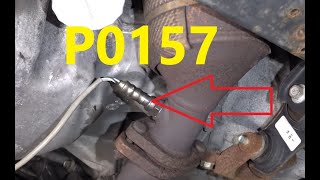
- Clear Codes and Test Drive: After any repair, clear the DTCs and perform a complete drive cycle to ensure the fault does not return. 🎬 See this breakdown of P0157 causes and common fixes.
Parts You'll Likely Need
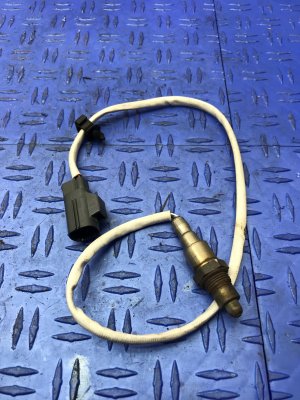
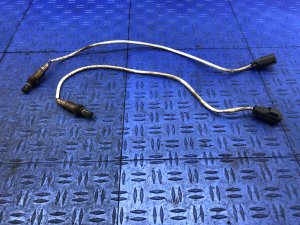
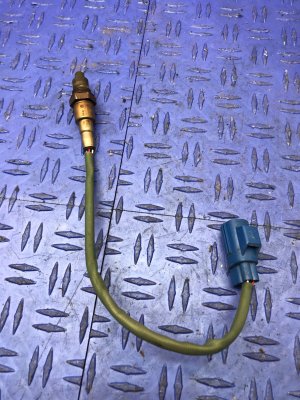
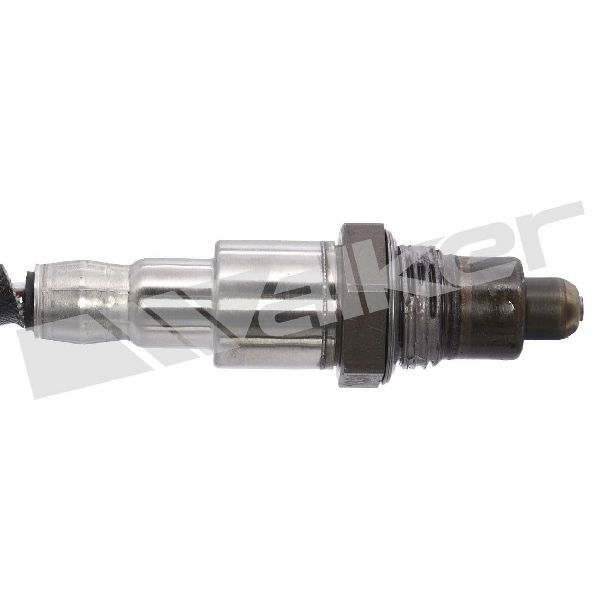
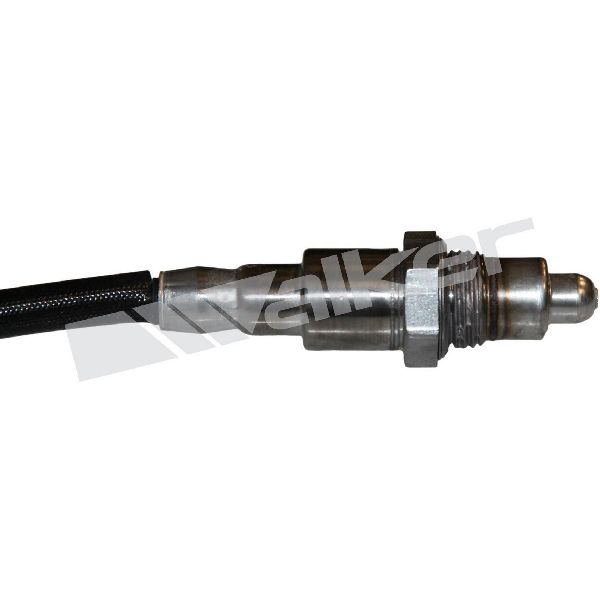
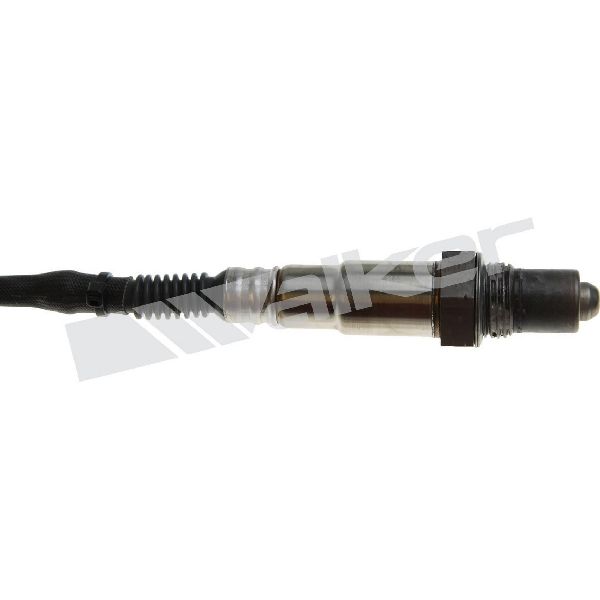
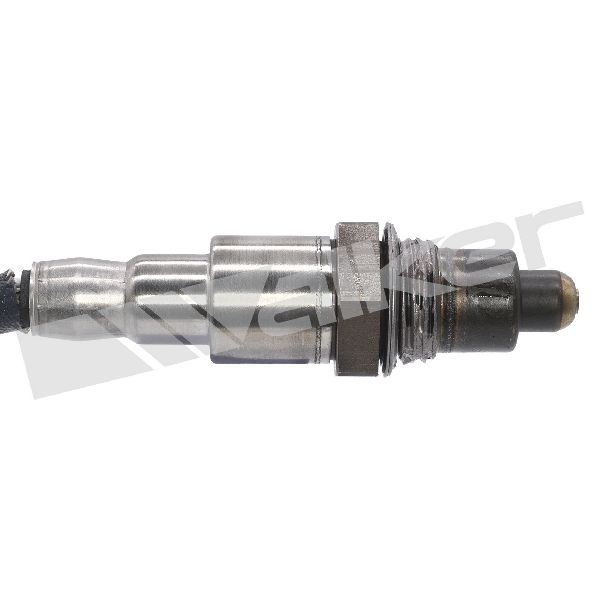
- Downstream Oxygen Sensor (Bank 2, Sensor 2)
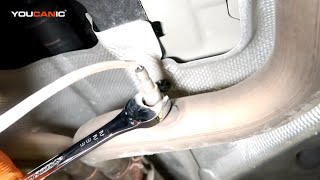
(OEM #T2H48050)— This is the most common component to fail and trigger a P0157 code. It is located on the driver's side, after the catalytic converter. 🎬 Watch: This video shows the downstream sensor replacement process. The original part number C2D23702 has been superseded by T2H48050.
Trusted brands: Jaguar (OEM), Bosch, Denso, NGK/NTK
OEM price range: $120-$200
Aftermarket price range: $60-$150
Related Codes That Often Appear With This One
- P0156 — This code indicates a general malfunction in the same sensor circuit (Bank 2, Sensor 2) and can appear alongside P0157.
- P0158 — This code for high voltage on the same sensor can appear intermittently if the sensor or wiring is failing erratically.
- P0060 — This is a heater resistance code for the same sensor (Bank 2, Sensor 2). If the sensor's internal heater fails, it can't reach operating temperature, leading to incorrect voltage readings and triggering P0157 as well.
- P0062 — Some 3.0L V6 models have a third O2 sensor per bank. Forum discussions show that heater circuit codes for sensor 3 (P0062) can appear with other O2 sensor issues on the same bank.
Technical Service Bulletins (TSBs) & Recalls
- SSM72477: Acknowledges that O2 sensor codes like P0157 may be set without any discernible fault in the wiring or sensor itself.
- JTB-00392-NAS-3: Lists P0157 as one of several O2 sensor codes that can be stored in the Powertrain Control Module (PCM).
- JTB00392NAS1: Similar to the above, notes P0157 may be stored in the Engine Control Module (ECM) and points to a potential cause with the post-catalyst heated oxygen sensor.
Platform-Specific Known Issues
- TSB #JTB-00392-NAS-3: This is the most critical platform-specific issue. It states that a software error can cause P0157 and many other O2 codes. The fix is to replace the failed sensor (if a code is present) and then update the PCM software. The TSB also mentions thermal shock from water as a potential cause of sensor failure.
Mechanic-Grade Diagnostic Values
- Downstream O2 Sensor (HO2S) Signal Voltage — expected: Relatively steady reading between 0.45V and 0.7V on a warm, running engine in closed loop.. Failure: Voltage is consistently stuck low, below 0.2V.
- HO2S Heater Circuit Resistance — expected: A low resistance value, typically between 5 and 30 ohms when measured across the two heater pins on the sensor.. Failure: Resistance is very high (kOhms), infinite (open circuit), or over 100 ohms.
- HO2S Heater Circuit Power Supply — expected: Battery voltage (approx. 12V) at one of the heater pins on the harness-side connector with the key on, engine off.. Failure: Low or no voltage (e.g., 8V), indicating a wiring or fuse issue upstream.
- Long Term Fuel Trim (LTFT) — expected: Ideally close to 0%, but readings up to +/- 10% are generally acceptable.. Failure: While not a direct test for P0157, a persistently high positive LTFT (e.g., > +15%) could indicate an exhaust leak upstream of the sensor is causing a false lean reading.
Hidden / Shadow Codes Worth Checking
- Unrelated Events (in SDD): Jaguar's SDD software categorizes DTCs based on the symptoms entered by the technician. A fault code might not appear in the primary 'Related Events' list but could be stored in the 'Unrelated Events' section. This is a crucial area to check for underlying issues that the system didn't automatically link to the main complaint. (see via Jaguar SDD (Symptom Driven Diagnostics) dealer-level software.)
Scan Tool Commands That Help
- Jaguar SDD (Symptom Driven Diagnostics): Recommendations / Pinpoint Test — After reading DTCs, SDD will often recommend a 'Pinpoint Test'. This is a guided diagnostic routine with step-by-step instructions for testing components and wiring specific to the fault code, such as P0157. It may instruct the tech to measure voltage or resistance at specific connectors.
- Jaguar SDD (Symptom Driven Diagnostics): Datalogger — Use the Datalogger to graph the live voltage of the Bank 2 Sensor 2 O2 sensor. This allows you to visually confirm if the sensor voltage is stuck low, as indicated by the P0157 code, or if it's behaving erratically.
- Jaguar SDD (Symptom Driven Diagnostics): Clear Adaptations / Vehicle Reset — After replacing a component like an oxygen sensor, it is best practice to perform a 'Vehicle Reset' or clear the fuel adaptations. This forces the PCM to relearn fuel trims with the new, accurate sensor data, preventing potential rough running or recurring codes during the learning period.
Wiring & Ground Locations
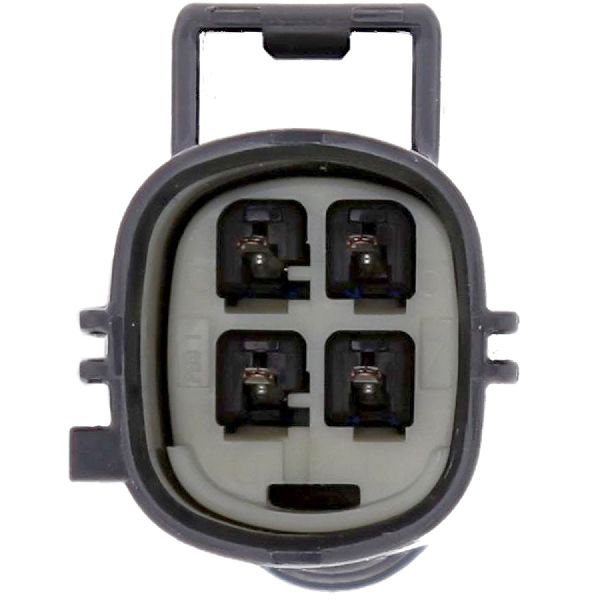
- O2 Sensor Ground Path — The downstream O2 sensors on this platform are typically 4-wire sensors. The heater circuit has a power and ground, while the sensor signal itself is referenced to a ground provided by the Powertrain Control Module (PCM).. A low voltage code can be caused by a poor ground connection. While the sensor has dedicated ground wires, the PCM itself relies on major chassis ground points. A corroded main engine or chassis ground can introduce voltage offsets and cause sensor reading issues.
- G1D123 / G1D124 — G1D123 is located at the right rear of the engine compartment. G1D124 is located behind the right front fender splash shield.. These are major ground points for the engine bay and front-end electrical systems. While not directly for the O2 sensor, corrosion or looseness at these points can affect the stability of the entire engine management system, including the PCM which processes the O2 sensor signal.
- Exhaust System Grounding (Edge Case) — The exhaust system itself can act as part of the ground path on older vehicles. On modern cars with multi-wire sensors, this is less of an issue, but high resistance between exhaust sections due to corrosion can still cause electrical noise.. On older Jaguars, it was a known issue that a poor ground through the exhaust system could cause erratic O2 sensor readings. While less common now, if all other wiring checks out, verifying a low-resistance path from the exhaust pipe to the chassis is a veteran mechanic's trick.
Real Owner Repair Stories
- Jaguar Forums user 'saajaguarx' (2013 Jaguar XF 3.0 SC (Supercharged)) — Check engine light with code P0062 (HO2S Heater Control Circuit Bank 2 Sensor 3).
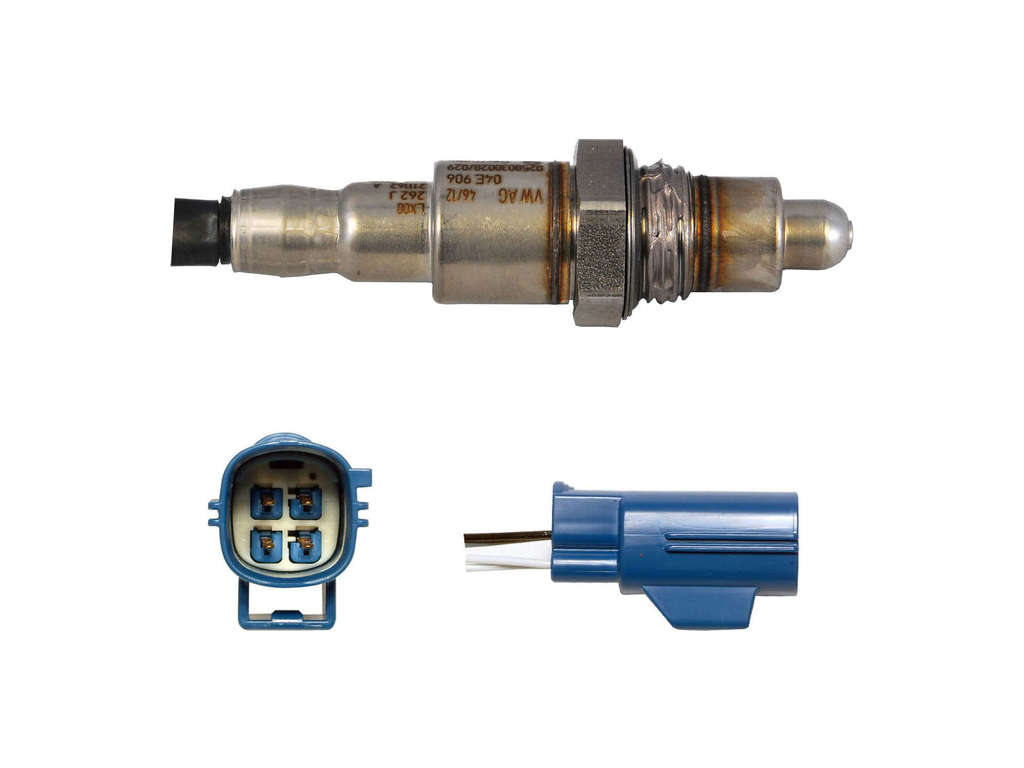
❌ Tried (didn't work) Initially ordered a DENSO 234-4749 sensor which was listed for Bank 2.
✅ What actually fixed it The DENSO sensor's electrical connector was keyed for the right side (Bank 1) of the car and would not fit the left side (Bank 2) harness. The user had to purchase a different brand (NTK 25749) for the left side to complete the repair. This highlights that even with correct part lookup, physical connector keying on aftermarket parts can be a trap. - Jaguar Forums user 'EscapedApe' (2001 Jaguar XJR (X308 Chassis, but illustrates a valuable diagnostic concept)) — Rich smell, rough idle, and codes P1646/P1647 (O2 sensor heater faults).
❌ Tried (didn't work) Replacing all four oxygen sensors fixed the heater codes but the rough idle persisted for weeks, despite the mechanic suggesting the ECU just needed to 're-learn'.
✅ What actually fixed it The actual root cause was two other hidden faults: a missing MAP sensor that had been broken and taped up by a previous owner, and an incorrect MAF sensor. The mechanic theorized that the old, completely dead O2 sensors were sending no data, so the ECU couldn't detect the issues from the other bad sensors. Installing new, working O2 sensors provided accurate (but problematic) data, unmasking the other faults and causing the persistent rough idle.
OEM Part Supersession History
C2D23702→C2D54166, then T2H48050— Standard part evolution for design improvements, material changes, or supplier updates.
Heads up: While the OEM parts are directly interchangeable, be aware that some aftermarket brands may have different part numbers for the left (Bank 2) and right (Bank 1) downstream sensors due to connector keying differences, even if the OEM uses a single part number for both positions.
Model Year Variations Within This Range
- 2013-2016: For the 2013 model year, Jaguar introduced the 3.0L Supercharged V6 engine and a new 8-speed automatic transmission across the lineup.
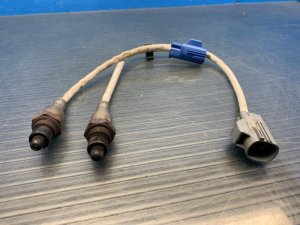
- 2013-2016 (Primarily 3.0L AWD): While most V6/V8 engines use a 4-sensor system (one upstream and one downstream per bank), there is evidence that some models, particularly the 3.0L AWD, are equipped with a 6-sensor system (one upstream and two downstream per bank). In this case, P0157 (Bank 2, Sensor 2) would refer to the 'center' or first downstream sensor, while a code like P0062 could refer to 'Bank 2, Sensor 3', the rearmost sensor on that side.
Helpful Videos

Used OEM Parts in Stock
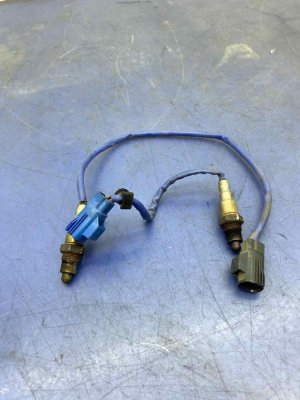
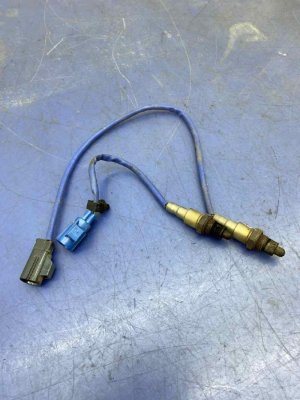
New Aftermarket Parts Available

The information in this article is provided for general reference and educational purposes only. Vehicle specifications, procedures, and part compatibility can vary by production date, trim level, and region. Always consult your vehicle's factory service manual and verify part numbers before purchasing or performing repairs. Safety-critical components such as airbags, seat belts, and braking systems should be installed by a qualified professional.
- Jaguar XF:
- 🎬 Helpful Videos
- 🛍️ Shop This Part
- What's Unique About the 2013-2016 Jaguar XF
- Diagnostic Flowchart
- Symptoms You May Notice
- Most Likely Causes
- Rare But Worth Checking
- Diagnosis Steps
- Parts You'll Likely Need
- Related Codes That Often Appear With This One
- Technical Service Bulletins (TSBs) & Recalls
- Platform-Specific Known Issues
- Mechanic-Grade Diagnostic Values
- Hidden / Shadow Codes Worth Checking
- Scan Tool Commands That Help
- Wiring & Ground Locations
- Real Owner Repair Stories
- OEM Part Supersession History
- Model Year Variations Within This Range
- 🎟️ Get 5% Off