

P0156 on 2013-2016 Jaguar XJ: O2 Sensor Circuit Malfunction Causes and Fixes
This code indicates a fault with the Bank 2, Sensor 2 oxygen sensor, which is the downstream sensor on the driver's side. The most common fix is replacing the sensor itself, though a PCM software update may also be required per Jaguar TSBs. Expect to pay between $60 and $100 for an aftermarket part and around $150-$180 for an OEM sensor.
- P0156 points to the downstream oxygen sensor on the driver's side (Bank 2, Sensor 2).
- The most likely cause is a failed oxygen sensor, a common wear-and-tear item.
- Before replacing the sensor, perform a quick visual inspection of the wiring and check for obvious exhaust leaks near the sensor.
- Replacing the sensor is a manageable DIY job for most home mechanics with the right tools (an O2 sensor socket is recommended).
- Do not immediately assume the catalytic converter is bad; the P0156 code relates to the sensor that *monitors* the converter, which is far more likely to fail.
What's Unique About the 2013-2016 Jaguar XJ
On this generation of Jaguar XJ (X351) and its platform-mates (like the XF and F-Type), a P0156 code is often straightforward, but Jaguar has issued several Technical Service Bulletins (TSBs) covering a wide range of oxygen sensor codes. TSB JTB00392NAS1 explicitly states that a "POST-CATALYST HEATED OXYGEN SENSORS (HO2S) SOFTWARE ERROR" can be the cause, requiring a dealer to reflash the PCM. The service procedure for this TSB instructs technicians to replace the faulty sensor *and then* update the PCM software to prevent future issues. Another TSB, SSM72477, notes that upon diagnosis, technicians often find no fault with the wiring harness or connectors, suggesting the sensors themselves are the common failure point.
Diagnostic Flowchart
Tap your situation to follow the diagnostic path that matches what you're seeing on this vehicle.
Symptoms You May Notice
- Check Engine Light is on
- Potential for reduced fuel economy
- Vehicle may fail an emissions test
- In rare cases, rough idling or hesitation
- A burning smell from the engine bay if an exhaust leak is the cause
- Replacing the catalytic converter when the actual problem is a faulty downstream O2 sensor giving a false reading.
- Replacing the wrong O2 sensor (e.g., replacing the upstream sensor (Sensor 1) or the sensor on the wrong bank).
- Replacing the O2 sensor but failing to perform the required PCM software update, leading to the code returning.
Most Likely Causes
- Faulty Bank 2, Sensor 2 Oxygen Sensor 🔴 High Probability O2 sensors are wear items that degrade over time from heat and contaminants. Jaguar TSBs JTB00392NAS1 and K309 suggest sensor failure (sometimes from thermal shock) is a primary cause, often in conjunction with a software issue. The TSBs for this platform suggest that the sensor itself is a more likely failure point than its wiring.
How to confirm: Use an OBD-II scanner with live data capabilities. A healthy downstream O2 sensor (Sensor 2) should show a relatively stable and steady voltage. If the voltage is stuck low (near 0.1V), stuck high (near 0.9V), or not showing any reading, the sensor has likely failed.
Typical fix: Replace the Bank 2, Sensor 2 oxygen sensor. This is the downstream sensor on the driver's side. After replacement, the PCM may need a software update from a Jaguar dealer to prevent recurrence, as per TSB JTB00392NAS1.
Est. part cost: $60-$180 - Exhaust Leak 🟡 Medium Probability Exhaust components can develop leaks at gaskets or from corrosion, allowing outside air to enter the exhaust stream. On Jaguars, leaks are sometimes reported at the connection between the exhaust manifold and the catalytic converter. This extra oxygen can cause the downstream sensor to provide an inaccurate reading, triggering the code.
How to confirm: Visually inspect the exhaust system from the manifold to the post-catalyst sensor for any signs of cracks, holes, or black soot indicating a leak. Listen for a hissing or tapping sound that may be louder on a cold start and quiet down as the metal expands. A shop can perform a smoke test by forcing smoke into the exhaust and looking for where it escapes.
Typical fix: Repair the leak by replacing the faulty gasket or section of pipe. Sometimes a high-temperature sealant can be used for very small leaks.
Est. part cost: $10-$300 - Damaged Wiring or Connectors ⚪ Low Probability While TSB SSM72477 suggests wiring is often not the issue, the under-vehicle location of the sensor makes its wiring vulnerable to road debris, heat damage from the exhaust, and corrosion. The connector for the downstream sensor on some models is located near the transmission mount, where it can be exposed.
How to confirm: Visually inspect the wiring harness and connector for the Bank 2, Sensor 2 O2 sensor. Look for any frayed, melted, or broken wires. Use a multimeter to check for 12V at the heater circuit and proper ground.
Typical fix: Repair or replace the damaged section of the wiring harness or the connector.
Est. part cost: $20-$100
Rare But Worth Checking
- Faulty Powertrain Control Module (PCM): This is extremely rare. Before condemning the PCM, all other possibilities, including the sensor, wiring, and exhaust leaks, must be exhaustively ruled out. The software issue is more common than a hardware failure.
- PCM Software Update Needed: The existence of TSBs JTB00392NAS1 and JTB-00392-NAS-3 for O2 sensor codes on this platform indicates that in some cases, a dealer-installed software update is required to adjust the PCM's monitoring parameters and sensitivity, even after replacing the sensor.
Diagnosis Steps
- Read the code with an OBD-II scanner and confirm P0156 is present. Note any other codes.
- Using the scanner's live data function, monitor the voltage from 'O2S2 B2' (Oxygen Sensor 2, Bank 2). A healthy sensor should show a fairly steady voltage (typically between 0.5V and 0.8V) on a warm engine. A bad sensor will often be stuck near 0V or 1V, or show no reading.
- Perform a visual inspection of the Bank 2 (driver's side) downstream O2 sensor. Check its wiring harness and connector for any signs of melting, corrosion, or physical damage. The sensor is located post-catalytic converter, and the connector may be near the transmission mount.
- Inspect the exhaust system for leaks, especially between the engine and the Bank 2 catalytic converter. Look for soot trails or listen for hissing sounds.
- If the sensor signal is absent or stuck and the wiring appears intact, test the sensor's heater circuit with a multimeter to ensure it's receiving power (around 12V) and has a good ground. Check for blown fuses related to the O2 sensor heater circuit.
- If the wiring and power supply are good but the live data is bad, the O2 sensor is faulty and should be replaced.
- After replacing the sensor, clear the codes. If the code returns, check for relevant TSBs like JTB00392NAS1, as a PCM software update by a dealer may be necessary to fully resolve the issue.
Parts You'll Likely Need
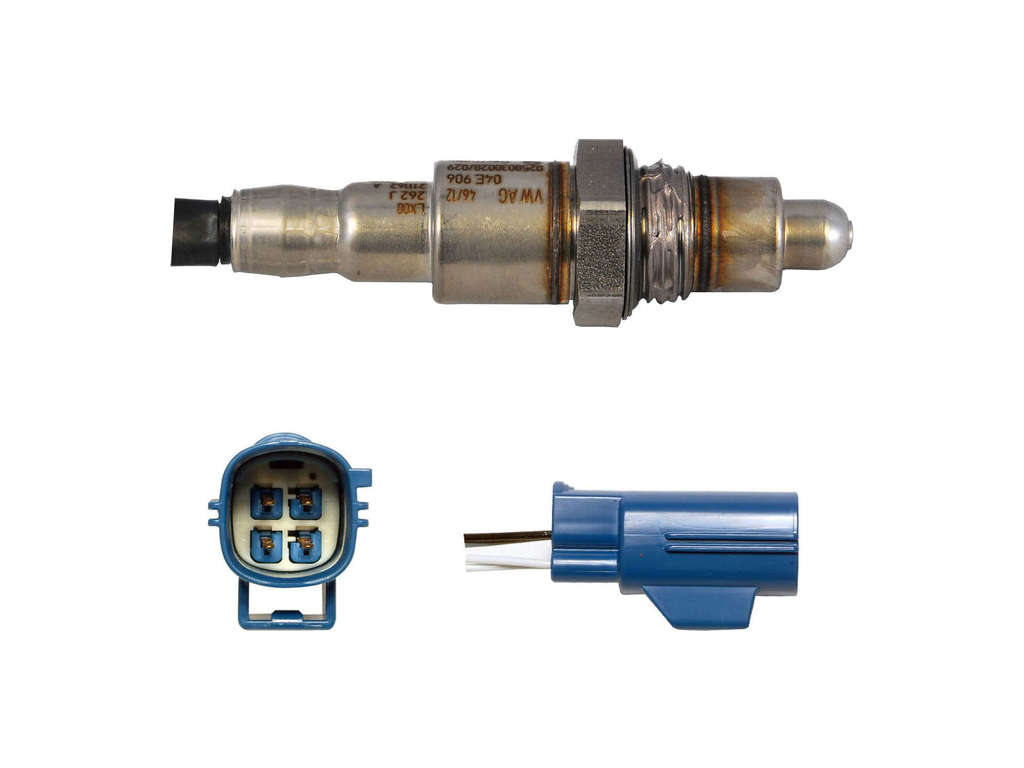
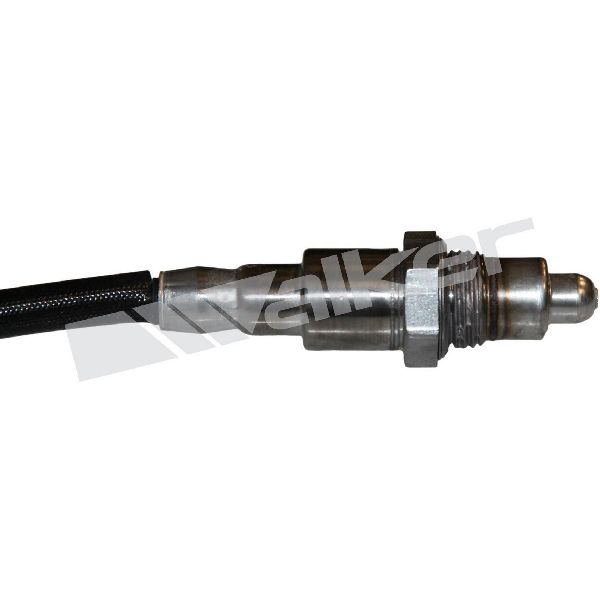
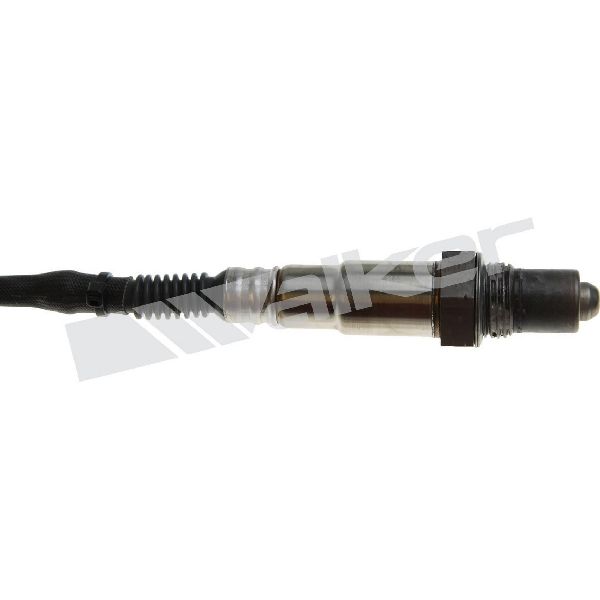
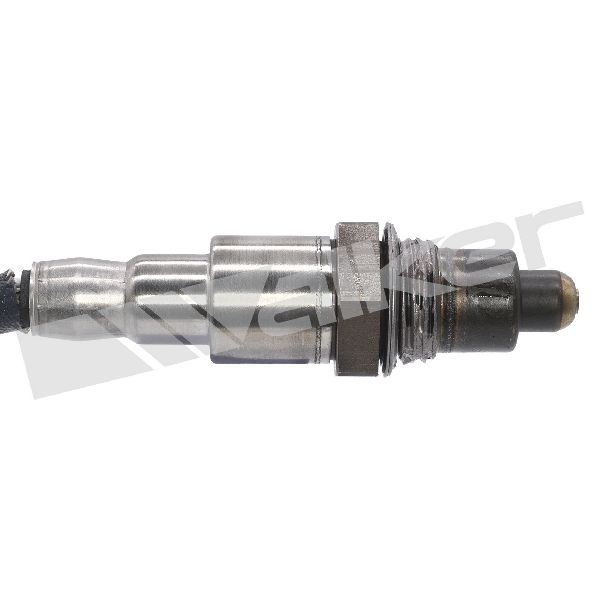
- Oxygen Sensor (Bank 2, Sensor 2)
(OEM #C2P16397)— This is the most common cause for P0156. It is the downstream (post-catalyst) sensor for the driver's side cylinder bank. Part number C2P16397 is listed for the downstream position on the 5.0L XJ up to VIN V39426. Always verify the part number with your vehicle's VIN.
Trusted brands: Bosch, Denso, NGK, Walker
OEM price range: $140-$180
Aftermarket price range: $60-$100
Related Codes That Often Appear With This One
- P0161 — This code indicates a malfunction in the heater circuit for the same sensor (Bank 2, Sensor 2). They often appear together when the sensor fails internally.
- P0157 — This code indicates the sensor circuit voltage is low, which is a specific type of malfunction that P0156 covers more generally.
- P0158 — This code indicates the sensor circuit voltage is high, another specific fault related to the same sensor.
Technical Service Bulletins (TSBs) & Recalls
- SSM72477: Notes that for P0156 and other codes, diagnosis often finds no fault with the wiring harness or connector.
- JTB-00392-NAS-3: Lists P0156 as a potential code stored in the Powertrain Control Module (PCM) for both Jaguar and Land Rover models with these engines.
- JTB00392NAS1: Lists P0156 as a potential code and points to a "POST-CATALYST HEATED OXYGEN SENSORS (HO2S) SOFTWARE ERROR" as the cause, requiring sensor replacement and a PCM update.
- K309: A service action for non-US markets that also requires a PCM software update to address O2 sensor issues, potentially caused by thermal shock.
Platform-Specific Known Issues
- Jaguar has issued multiple Technical Service Bulletins (TSBs) related to a wide range of O2 sensor codes, including P0156. TSB #SSM72477 specifically notes that diagnosis may reveal no fault with the wiring or connectors, pointing towards the sensor itself as the likely culprit.
- TSB #JTB00392NAS1 is critical for this issue, stating the cause may be a 'Post-catalyst Heated Oxygen sensors (HO2S) software error'. The official repair procedure involves replacing the failed sensor and then reprogramming the Powertrain Control Module (PCM) with updated software to prevent the fault from recurring.
- A similar bulletin, K309 (for markets outside North America), also calls for a PCM software update to address O2 sensor concerns, citing 'thermal shock when water contacts the heated sensing element' as a potential cause for failure.
Mechanic-Grade Diagnostic Values
- O2 Sensor Heater Circuit Resistance — expected: 2 Ω ± 0.5 Ω. Failure: A reading significantly higher or lower than this range indicates a faulty heater element within the sensor.
- Engine Ground Point Voltage Drop (while cranking) — expected: Under 0.5V (500mV). Failure: A reading above 0.5V indicates excessive resistance in the ground circuit, which can cause numerous electrical issues, including sensor faults.
- Downstream O2 Sensor Voltage (warm engine, steady RPM) — expected: Relatively stable voltage between 0.5V and 0.8V.. Failure: Voltage stuck near 0.1V (lean), 0.9V (rich), or showing no reading at all.
Hidden / Shadow Codes Worth Checking
- Unrelated Events: In the Jaguar SDD software, if the technician does not select the correct symptoms at the start of a session, relevant DTCs may not appear in the main 'Related Events' list. They may be stored in the 'Unrelated Events' section and can be missed if not checked. (see via Jaguar SDD (Symptom Driven Diagnostics) dealer software.)
Scan Tool Commands That Help
- Jaguar SDD: Recommendations > Technical Service Bulletins — After reading DTCs, this function should be used to check for any applicable TSBs related to the stored codes. For P0156, this is critical as it can lead the technician directly to the software update TSB.
- Jaguar SDD: Vehicle Reset — After replacing a component like an O2 sensor, this function performs a reset of the control modules to ensure the new part is recognized and adaptations are cleared.
- High-End Aftermarket (e.g., iCarsoft, Autel): O2 Sensor Heater Circuit Test — This is a bidirectional test to command the O2 sensor's heater on and verify it is receiving voltage (typically 12V) and functioning correctly, helping to isolate a faulty heater from a wiring problem.
Wiring & Ground Locations
- Main Engine Ground Strap — On similar Jaguar models (like the XK8), a primary engine ground strap is located directly under the starter on the right side (passenger side in US) lower frame of the car.. A poor engine ground can cause incorrect sensor readings and erratic behavior. A voltage drop test at this point is recommended.
- Firewall Ground Posts — General Jaguar practice includes ground posts on the firewall, one on each side of the engine bay.. These are central grounding points for many vehicle systems. Ensuring they are clean and tight is a crucial step in diagnosing any electrical fault.
Real Owner Repair Stories
- Jaguar Forums user (Jaguar X350 (engine shared with X351)) — Using the Torque app, the user saw that both upstream and downstream O2 sensor readings were completely flatlined (no voltage fluctuation) at 2500 RPM. Interestingly, no DTCs were being triggered initially.
❌ Tried (didn't work) The previous owner had installed extremely cheap (£23 each) O2 sensors from eBay.
✅ What actually fixed it The user replaced all four oxygen sensors with genuine Denso (OEM) units, which resolved the issue. This highlights the risk of using low-quality aftermarket sensors on this platform.
"I Checked Everything" — The Actual Cause
- Per Jaguar TSB SSM72477, it is common for a technician to investigate P0156 (and related codes) and find 'NO FAULT... WITH THE WIRING HARNESS OR CONNECTOR'. In these cases, where visual inspection and basic electrical checks are clean, the cause is highly likely to be either an internal failure of the O2 sensor itself or the PCM software error described in TSB JTB00392NAS1.
When the Usual Fixes Don't Work
- While replacing the Bank 2, Sensor 2 O2 sensor is the most common fix, a significant amount of counter-evidence exists in the form of Jaguar's own Technical Service Bulletins. TSBs JTB00392NAS1 and JTB00496NAS1 indicate that a software bug in the Powertrain Control Module (PCM) can falsely trigger P0156 and other O2 sensor codes. In these cases, replacing the sensor alone will not fix the problem, and the code will return. The complete, official repair requires both replacing the sensor and reprogramming the PCM with updated software, a task that must be performed by a Jaguar dealer or a specialist with access to the SDD software.
OEM Part Supersession History
C2P16397→C2P16397 (current)— This part number appears to be current and has not been superseded as of early 2026.
Heads up: This part number is specified for the 5.0L engine up to VIN V39426. Vehicles with a later VIN may require a different part number. The OEM manufacturer is Denso, whose equivalent part number is DOX-0402.
Model Year Variations Within This Range
- 2013-2014 (Up to VIN V39426): For the 5.0L V8 engine, the downstream oxygen sensor is specified as part number C2P16397.
- 2014-2016 (From VIN V39427 onwards): Vehicles with the 5.0L V8 engine after VIN V39426 may use a different oxygen sensor part number. VIN must be verified before ordering parts.
Used OEM Parts in Stock
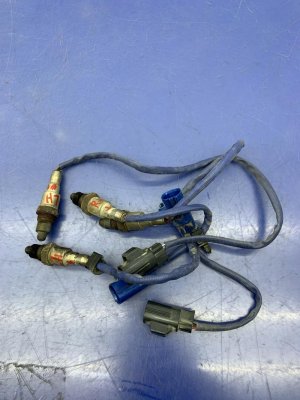
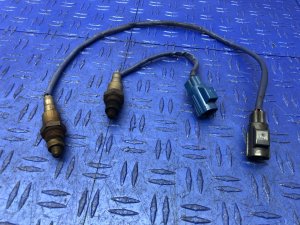
New Aftermarket Parts Available
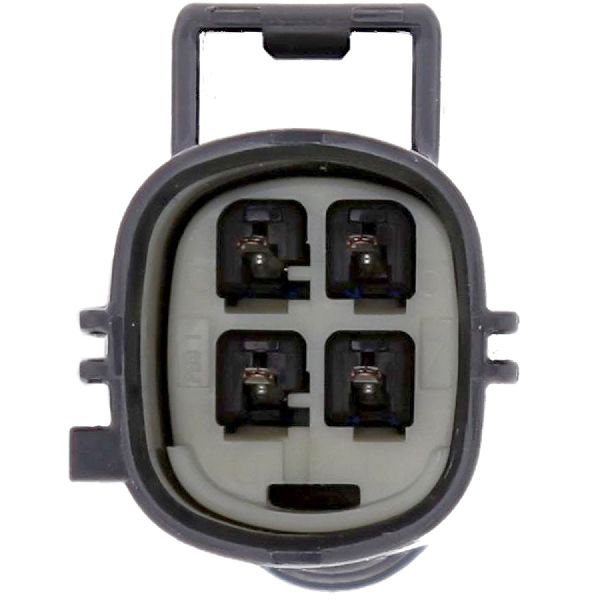
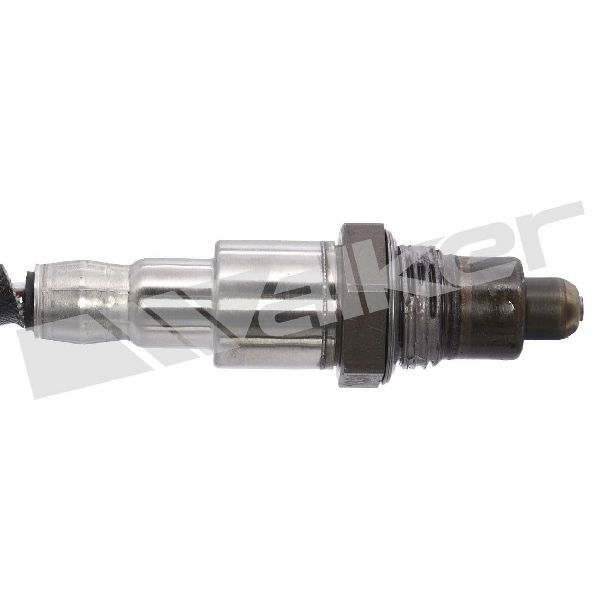

The information in this article is provided for general reference and educational purposes only. Vehicle specifications, procedures, and part compatibility can vary by production date, trim level, and region. Always consult your vehicle's factory service manual and verify part numbers before purchasing or performing repairs. Safety-critical components such as airbags, seat belts, and braking systems should be installed by a qualified professional.
- Jaguar XJ:
- 🛍️ Shop This Part
- What's Unique About the 2013-2016 Jaguar XJ
- Diagnostic Flowchart
- Symptoms You May Notice
- Most Likely Causes
- Rare But Worth Checking
- Diagnosis Steps
- Parts You'll Likely Need
- Related Codes That Often Appear With This One
- Technical Service Bulletins (TSBs) & Recalls
- Platform-Specific Known Issues
- Mechanic-Grade Diagnostic Values
- Hidden / Shadow Codes Worth Checking
- Scan Tool Commands That Help
- Wiring & Ground Locations
- Real Owner Repair Stories
- "I Checked Everything" — The Actual Cause
- When the Usual Fixes Don't Work
- OEM Part Supersession History
- Model Year Variations Within This Range
- 🎟️ Get 5% Off