

P0154 on 2014-2015 Acura MDX: A/F Sensor Heater Malfunction Causes & Fixes
On a 2014-2015 Acura MDX, code P0154 is frequently caused by a software glitch in the engine's computer (PCM). Before replacing any parts, check with an Acura dealer about a software update outlined in Service Bulletin 15-008, as this is the most common fix. This issue also affects the 2014-2015 Acura RLX with the same engine family.
- For a 2014-2015 Acura MDX, P0154 is most often a software issue, not a hardware failure.
- Before buying any parts, call an Acura dealer with your VIN and ask if TSB 15-008 (a software update) has been performed.
- If the software is up-to-date, the next most likely cause is a failed A/F sensor heater element.
- The same issue is documented for the P0134 code (Bank 1, Sensor 1) and on the 2014-2015 Acura RLX.
What's Unique About the 2014-2015 Acura MDX
For this specific generation of Acura MDX and its platform-mate, the Acura RLX, the P0154 code has a well-documented history of being caused by a software issue. Acura officially recognized that the PCM could misinterpret the signal from the A/F sensor's heater, triggering the code even when the sensor and its wiring were perfectly fine. This makes it unique, as on most other vehicles, a heater circuit code almost always points to a failed sensor. Owners who replace the sensor without first getting the software update often find the check engine light returns, a common story in owner forums.
Diagnostic Flowchart
Tap your situation to follow the diagnostic path that matches what you're seeing on this vehicle.
Symptoms You May Notice
- Check Engine Light is on
- Possible decrease in fuel economy
- Failure to pass an emissions test
- Engine may hesitate on acceleration in some cases
- Rough or hesitant idle
- Replacing the Air/Fuel Ratio sensor before checking for the required PCM software update. Many owners on forums like Acurazine and Honda-Tech report replacing the sensor, sometimes multiple times, only to have the code return because the root cause was the software.
Most Likely Causes
- Powertrain Control Module (PCM) Software Error 🔴 High Probability Acura issued Technical Service Bulletin 15-008 specifically for this issue, stating the PCM can misinterpret the sensor's heater input. This was part of an investigation by American Honda Motor (AHM) into the prevalence of this code on 2014-2015 MDX and RLX models.
How to confirm: Contact an Acura dealership with your vehicle's VIN. Ask them to check if TSB 15-008 has been performed on your vehicle. The bulletin is titled "MIL Comes On With DTC P0134 and/or P0154".
Typical fix: The dealership will update the PGM-FI (Programmed Fuel Injection) software to the latest version using a proprietary diagnostic tool.
Est. part cost: $0 - Failed Air/Fuel Ratio Sensor (Bank 2, Sensor 1) 🟡 Medium Probability
How to confirm: After confirming the PCM software is up-to-date, disconnect the sensor and measure the resistance between the two heater circuit pins (typically the two same-colored wires, e.g., black). A good Denso sensor heater should have a low resistance, often in the range of 1-10 Ohms when cold. An open circuit (infinite resistance) or a direct short (zero resistance) indicates a failed heater element.
Typical fix: Replace the Bank 2, Sensor 1 Air/Fuel Ratio sensor. Soaking the sensor threads with a penetrating oil like PB Blaster beforehand can make removal easier. 🎬 Watch: Step-by-step guide to replacing the air fuel ratio sensor
Est. part cost: $80-$250 - Wiring or Connector Issue ⚪ Low Probability
How to confirm: Visually inspect the wiring harness leading to the sensor for any signs of melting, chafing, or corrosion. Check for a secure connection at the sensor plug. Use a multimeter to check for 12V power and a good ground at the heater circuit pins on the harness side of the connector with the ignition on.
Typical fix: Repair the damaged section of the wiring harness or clean/replace the connector.
Est. part cost: $5-$50
Rare But Worth Checking
- Blown Fuse: The A/F sensor heater circuit is protected by a fuse, often labeled 'A/F HEATER' or similar. On the MDX, this is typically located in the under-hood fuse box near the brake fluid reservoir. While not common to blow, it's a quick check that can save time and money.
- Faulty Powertrain Control Module (PCM): This is extremely rare. The PCM itself could have a hardware failure, but this should only be considered after all other possibilities, including the software update and sensor replacement, have been exhausted.
Diagnosis Steps
- Scan the vehicle for trouble codes to confirm P0154 is active. Note if P0134 is also present.
- Crucial First Step: Contact an Acura dealership with your VIN. Inquire about Service Bulletin 15-008 and ask if the PGM-FI software update has been performed. If not, this is the most likely solution.
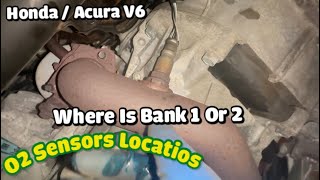
- If the software is up-to-date, proceed with physical diagnosis. 🎬 See a diagnostic walkthrough for code P0154 on an MDX Locate the Bank 2, Sensor 1 A/F sensor on the front exhaust manifold (near the radiator). 🎬 Watch: How to identify all oxygen sensor locations on this V6
- Inspect the sensor's wiring harness and connector for any visible damage, such as melting on the exhaust pipe, frayed wires, or corrosion in the connector.
- Disconnect the sensor. Using a multimeter set to Ohms (Ω), measure the resistance across the two pins for the heater circuit on the sensor side. A reading between 1 and 10 Ohms is generally expected for a good sensor. A reading of infinite resistance (OL) or near-zero resistance indicates a faulty heater element.
- If the sensor's resistance is within specification, check the vehicle-side connector. With the ignition on (engine off), use a multimeter to verify there is battery voltage (approx. 12V) at one of the heater pins and a good ground on the other.
- Check the A/F sensor heater fuse, located in the under-hood fuse box.
- If power, ground, and the fuse are all good, and the sensor's heater circuit tests within spec, the problem is likely an intermittent wiring issue or, in very rare cases, a faulty PCM.
Parts You'll Likely Need
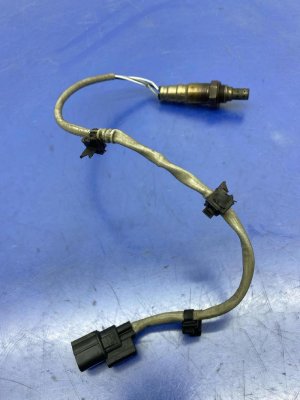
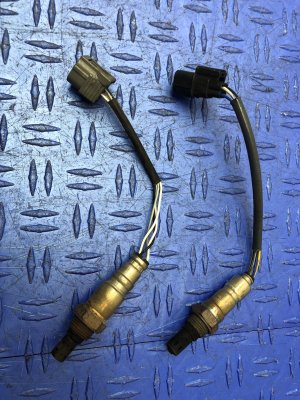
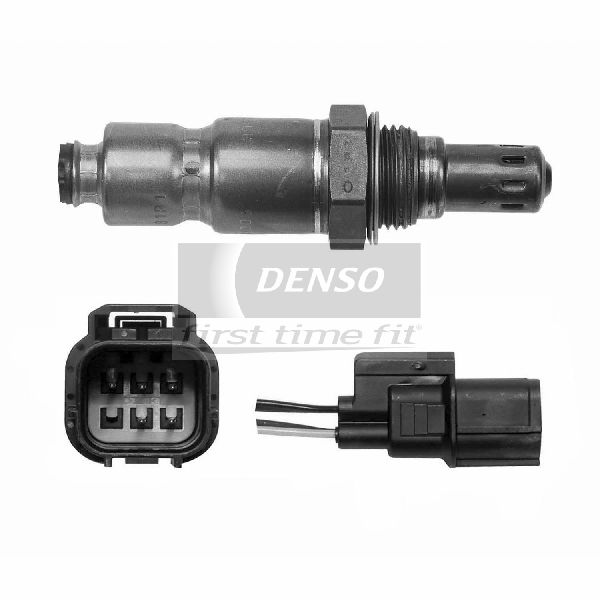
- Front Air/Fuel Ratio Sensor (Bank 2, Sensor 1)
(OEM #36531-5J6-A01)— If the PCM software is confirmed to be up-to-date, the internal heater element of the sensor is the most common hardware failure point for this code.
Trusted brands: Denso (OEM Supplier), NGK/NTK
OEM price range: $200-$280
Aftermarket price range: $80-$160
Related Codes That Often Appear With This One
- P0134 — This code is for the Bank 1, Sensor 1 heater circuit. Acura's TSB 15-008 explicitly states that the same PCM software glitch can cause either P0154 or P0134, or sometimes both.
Technical Service Bulletins (TSBs) & Recalls
- Acura Service Bulletin 15-008: "MIL Comes On With DTC P0134 and/or P0154" - This is the primary document identifying the software glitch as the cause for the 2014-15 MDX.
- Acura Service Bulletin 15-035: "MIL Comes On with DTC P0134 and/or P0154" - This is the equivalent TSB for the 2014-15 Acura RLX, confirming the issue exists across platforms.
Platform-Specific Known Issues
- Acura Service Bulletin 15-008, issued February 4, 2015, directly addresses this code. It states, "The PCM misinterprets the heater system input from the A/F sensor and sets DTC codes P0134 and/or P0154." The prescribed fix is a software update.
Mechanic-Grade Diagnostic Values
- A/F Sensor Heater Resistance — expected: 1.8 to 3.4 Ω at 20°C (68°F). Failure: Open circuit (infinite resistance) or significantly outside the specified range.
- A/F Sensor Signal Wire Voltage (KOEO) — expected: On Honda/Acura wideband sensors, expect to see two signal wires. One should have ~3.3V and the other ~2.9-3.0V, supplied by the PCM.. Failure: No voltage or significantly different voltage indicates a wiring or PCM issue.
- A/F Sensor Heater Power Supply (KOEO) — expected: Approximately 12V (Battery Voltage) at one of the heater circuit pins on the harness-side connector.. Failure: No voltage suggests a blown fuse or a problem with the heater relay or power supply wire.
- Mode 6 Test ID $80 for Monitor ID $05 — expected: The measured value is a time in seconds (output value x 0.1). The test passes if the sensor becomes active within a PCM-specified time limit.. Failure: A high measured value indicates the sensor is slow to activate, triggering the P0154 code.
Hidden / Shadow Codes Worth Checking
- Mode 6, Monitor ID $05, Test ID $80: This specific monitor test checks the A/F sensor 'non-activation' time. It measures how long it takes for the sensor to become active after startup. A failure here directly corresponds to setting DTC P0154. (see via An advanced OBD-II scan tool capable of displaying Mode 6 diagnostic data.)
Scan Tool Commands That Help
- Honda Diagnostic System (HDS) or equivalent i-HDS: A/F Sensor Heater Test — While not explicitly named as a bidirectional command in public sources, the dealer-level tool can monitor the heater duty cycle and current, which is essential for diagnosing if the PCM is commanding the heater on and if the circuit is drawing the correct amount of current (typically 0.9 to 9.9 A). This helps differentiate a bad sensor from a control-side problem.
Wiring & Ground Locations
- G101 — Right rear of the engine compartment.. This is a primary engine ground. A poor connection here can cause a variety of sensor and module communication issues, including erratic sensor readings that could be misinterpreted by the PCM.
- G201 — Left front of the engine compartment.. Another critical engine ground point. Ensuring this ground is clean and tight is a fundamental step when diagnosing any electrical fault on the engine, including sensor heater circuits.
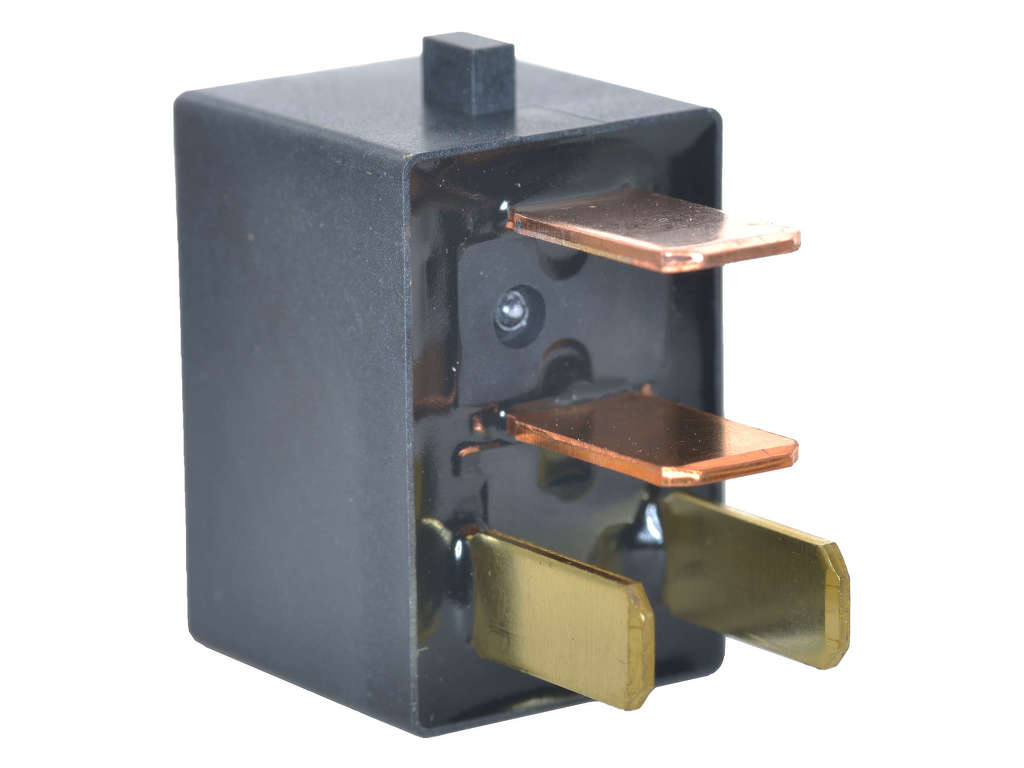
- A/F Sensor Heater Relay — Located in the under-hood fuse/relay box.. This relay supplies power to the A/F sensor's heater circuit. A faulty relay would prevent the heater from working, directly causing a P0154 code. It can be tested by checking resistance or swapping with a known-good relay.
Real Owner Repair Stories
- Acurazine.com & MDXers.org forum members (2014 & 2015 Acura MDX 3.5L V6) — Check Engine Light with code P0154, sometimes accompanied by P0134.
❌ Tried (didn't work) Replacing the Bank 2, Sensor 1 A/F sensor, sometimes multiple times.
✅ What actually fixed it The vast majority of owners reported that having an Acura dealer perform the software update outlined in TSB 15-008 permanently resolved the code without any parts replacement.
OEM Part Supersession History
36531-5J6-A01→N/A— This part number appears to be the current and original part for the 2014-2015 MDX Bank 2 Sensor 1.
Heads up: While other Acura/Honda A/F sensors may physically fit, using the exact OEM part number or a high-quality equivalent (like Denso 234-5061) is critical. The PCM is sensitive to the specific characteristics of the sensor, and an incorrect part can cause persistent codes even if it's new.
Model Year Variations Within This Range
- 2014-2015: There are no significant mechanical or electrical differences reported between the 2014 and 2015 Acura MDX models concerning the J35Y5 engine or its emissions control system. Both model years use the same engine and are covered by the same Technical Service Bulletin (15-008) for the P0154 fault.
Helpful Videos
Used OEM Parts in Stock
New Aftermarket Parts Available


The information in this article is provided for general reference and educational purposes only. Vehicle specifications, procedures, and part compatibility can vary by production date, trim level, and region. Always consult your vehicle's factory service manual and verify part numbers before purchasing or performing repairs. Safety-critical components such as airbags, seat belts, and braking systems should be installed by a qualified professional.
- Acura MDX:
- 🎬 Helpful Videos
- 🛍️ Shop This Part
- What's Unique About the 2014-2015 Acura MDX
- Diagnostic Flowchart
- Symptoms You May Notice
- Most Likely Causes
- Rare But Worth Checking
- Diagnosis Steps
- Parts You'll Likely Need
- Related Codes That Often Appear With This One
- Technical Service Bulletins (TSBs) & Recalls
- Platform-Specific Known Issues
- Mechanic-Grade Diagnostic Values
- Hidden / Shadow Codes Worth Checking
- Scan Tool Commands That Help
- Wiring & Ground Locations
- Real Owner Repair Stories
- OEM Part Supersession History
- Model Year Variations Within This Range
- 🎟️ Get 5% Off