

P0149 on 2009-2016 Volkswagen Jetta: Fuel Timing Error Causes and Fixes
On 2009-2016 VW Jettas, P0149 means a fuel timing error, most often caused by a failing High-Pressure Fuel Pump (HPFP). For TDI diesel models, this can be a catastrophic failure of the Bosch CP4 pump requiring a full fuel system replacement. For TSI gas engines, it's often the HPFP or its associated cam follower, which is a critical wear item.
- P0149 on a Jetta is a critical fuel system code that should be addressed immediately.
- The most likely cause is a failing High-Pressure Fuel Pump (HPFP) on both TDI and TSI engines.
- If you have a TDI (diesel), you must check for metal shavings in the fuel filter. If metal is present, the entire fuel system needs replacement.
- If you have a TSI (gasoline) engine, inspect the HPFP cam follower immediately. It is a cheap part that can prevent a very expensive repair.
- This code is almost always seen with P0087 (Fuel Pressure Too Low), confirming a fuel delivery fault.
What's Unique About the 2009-2016 Volkswagen JETTA

For the Jetta within this year range, P0149 is a tale of two engines. On the TDI diesel models, this code is an urgent warning, often pointing to the infamous Bosch CP4 High-Pressure Fuel Pump (HPFP), which is known for catastrophic failures that contaminate the entire fuel system with metal debris. On the TSI gasoline engines, the issue is also typically the HPFP, but more commonly involves a worn-out cam follower, which is a known weak point that can be replaced before it damages the pump itself.
Diagnostic Flowchart
Tap your situation to follow the diagnostic path that matches what you're seeing on this vehicle.
Generation note: This range covers the Jetta Mk5 (2009-2010) and Mk6 (2011-2016). The most significant difference regarding this code is the engine type. TDI diesel engines (like the CBEA and CJAA) use a Bosch CP4 HPFP known for specific failure modes. 🎬 Watch: Understanding the CJAA TDI fuel pump failure and repair TSI gasoline engines (like the 1.4T, 1.8T, and 2.0T) have a different HPFP design and a failure-prone cam follower. The TSI cam follower design was later updated to a more durable roller-style in newer engine generations, but the flat tappet style in this range is a known issue.
Symptoms You May Notice
- Check Engine Light and/or EPC (Electronic Power Control) light is on
- Engine is hard to start or has an extended crank time, especially on cold starts
- Engine cranks but won't start
- Noticeable loss of engine power and poor acceleration
- Sudden 'fuel cut' feeling during acceleration (common with TSI cam follower failure)
- Engine stumbles, hesitates, or idles roughly
- Increased fuel consumption
- Engine stalling, sometimes while driving
- Strong fuel odor
- Replacing only the fuel pressure sensor when the HPFP is the actual cause.
- Replacing fuel injectors on a TDI without checking for HPFP metal contamination, leading to repeat failure of the new injectors.
- On a TSI, replacing the HPFP without replacing the worn cam follower, leading to the new pump failing quickly.
Most Likely Causes

- High-Pressure Fuel Pump (HPFP) Failure (TDI Engines) 🔴 High Probability The Bosch CP4.1 pump used in CBEA/CJAA TDI engines is infamous for internal disintegration, where components flake apart and send metallic debris throughout the entire fuel system. This can be caused by wear, air in the system, or misfueling with gasoline, which lacks diesel's lubricity.
How to confirm: Check the fuel filter housing and the fuel pressure regulator valve (N276) on the HPFP for metallic glitter. A scan tool showing actual rail pressure far below requested pressure is another strong indicator. The presence of any metal confirms catastrophic failure.
Typical fix: If metal is present, the entire fuel system must be replaced: HPFP, all fuel lines, fuel rail, all four injectors, in-tank lift pump, and the fuel tank must be dropped and cleaned or replaced. Some owners opt for a more robust 'CP3 pump conversion' to prevent recurrence.
Est. part cost: $2,500-$4,000 for a complete OEM fuel system kit; $400-$1200 for just the pump. - Worn HPFP Cam Follower (TSI Engines) 🔴 High Probability The cam follower is a small, flat-faced tappet that rides on a camshaft lobe to drive the HPFP. It is a known wear item and can fail, sometimes in as few as 10,000-15,000 miles on modified cars. Neglecting it will destroy the follower, the HPFP's plunger, and the intake camshaft lobe.
How to confirm: Remove the HPFP from the cylinder head (typically 2-3 bolts and a fuel line). The follower is a small cup that sits between the pump and the camshaft. Visually inspect it for a worn-through surface or a hole in the center. Check every other oil change as preventative maintenance.
Typical fix: Replace the cam follower. If it has failed completely, the HPFP and potentially the intake camshaft will also need replacement. It is critical to replace the follower when replacing the HPFP.
Est. part cost: $20-$50 for the follower; $200-$500 for an HPFP if also damaged. - Failed Fuel Pressure Sensor (G247) or Regulator Valve (N276) 🟡 Medium Probability These electronic components regulate and measure the extremely high pressure in the fuel rail. They can fail electronically or become clogged with debris (especially in a TDI with a failing HPFP), sending incorrect data to the ECM.
How to confirm: Compare the fuel pressure reading from the sensor on a scan tool to a mechanical gauge reading. Test the regulator valve's function using a capable scan tool's bidirectional controls. On a TDI, the regulator valve can be removed from the HPFP and inspected for metal shavings.
Typical fix: Replace the faulty sensor or regulator valve. If metal is found on the TDI regulator valve, it's a sign of a much larger HPFP failure.
Est. part cost: $50-$250 - Clogged Fuel Filter / Air in Fuel System ⚪ Low Probability On TDI models, the injection pump has to pull fuel from the tank, and any restriction or air leak can cause pressure issues and strain the HPFP. Using low-quality diesel or biodiesel can lead to premature filter clogging. A hard start after a filter change can indicate air in the system.
How to confirm: Check for air bubbles in the clear fuel line going to the injection pump (if equipped). Perform a fuel volume test to ensure adequate flow from the in-tank lift pump. Replace the fuel filter as a first step if its age is unknown.
Typical fix: Replace the fuel filter and properly bleed the system. Find and repair any source of air leaks in the fuel lines.
Est. part cost: $20-$60
Rare But Worth Checking
- Failed In-Tank Lift Pump: The low-pressure pump in the fuel tank feeds the HPFP. If it's weak, the HPFP will be starved of fuel, which can trigger low-pressure codes like P0087 and P0149 and put extra strain on the HPFP.
- Worn Intake Camshaft Lobe (TSI Engines): The specific camshaft lobe that drives the HPFP can wear down, especially if a bad cam follower was neglected. This prevents the pump from generating sufficient pressure.
- Incorrect Injection Pump Timing (TDI): If a timing belt service was performed incorrectly, the injection pump's mechanical timing could be off by a tooth, causing a P0149 code even if the pump itself is healthy. This requires VCDS software to check and adjust.
Diagnosis Steps

- Scan the ECM for all stored fault codes. Note if P0149 is accompanied by P0087, P053F, or misfire codes.
- Identify the engine (TDI or TSI) as the diagnostic path differs significantly.
- For TDI Engines: Carefully remove the fuel filter and pour its contents into a clean glass jar. Swirl the fuel and inspect for fine, glitter-like metal shavings. As a secondary check, remove the fuel metering valve (N276) from the top of the HPFP and inspect its screen for metal particles. The presence of any metal indicates catastrophic HPFP failure. Stop and plan for a full system replacement.
- For TSI Engines: Remove the HPFP from the cylinder head. Remove and inspect the cam follower for wear or a hole. Also inspect the camshaft lobe for scoring or damage.
- Using a diagnostic scan tool (like VCDS), monitor 'Fuel Rail Pressure (Specified)' and 'Fuel Rail Pressure (Actual)'. At idle and under load, these values should be very close. A large discrepancy where the actual pressure is much lower than specified points to a fuel delivery problem.
- Check the low-pressure fuel system. Connect a fuel pressure gauge to test the output of the in-tank lift pump. It should meet the manufacturer's specification (typically around 60 PSI).
- Inspect all fuel lines for leaks, kinks, or damage.
- If a timing belt was recently replaced on a TDI, use VCDS to check the injection pump timing to ensure it is not off mechanically.
Parts You'll Likely Need
- High-Pressure Fuel Pump (HPFP)
(OEM #03L130755A)
Related Codes That Often Appear With This One
- P0087 — This code means 'Fuel Rail/System Pressure - Too Low' and is a direct consequence of the issues causing P0149, such as a failing HPFP. VW TSBs often list these codes together.
- P053F — This code means 'Cold Start Fuel Pressure Malfunction' and points specifically to the system's inability to build or hold pressure when the engine is cold, a common symptom of a failing HPFP or leaking injectors.
- P0300-P0304 — These are random or specific cylinder misfire codes. Incorrect fuel pressure and timing directly lead to poor combustion, causing the engine to misfire.
- P2293 — On TSI engines, this code for 'Fuel Pressure Regulator 2 Performance' is often seen with P0087 when the cam follower is failing.
Technical Service Bulletins (TSBs) & Recalls
- VIN4APIN20211013 & VIN4APIN20211026: These bulletins link P0149 with related fuel pressure and misfire codes (P0087, P053F, P0300-P0304), confirming they often appear together.
- VW TSB V011011 2023624: Issued in 2010 for 2009-2010 TDI models, this TSB addresses symptoms of HPFP failure including MIL illumination with code P0087, hard starting, and loss of power.
- VW TSB 2025795/7: This bulletin for TDI engines addresses rough running and codes P0087, P0088, or P0191, and provides part numbers for a replacement HPFP (03L130851AX) and fuel lines.
Platform-Specific Known Issues
- TDI Owner Story: Catastrophic HPFP Failure at 96k Miles: An owner of a 2009 Jetta TDI on a Reddit forum shared their experience with an HPFP failure at 96,000 miles. The dealership covered the repair 100%, which took about a week. The fix involved replacing the entire fuel system from the in-tank pump to the injectors, including all lines and rails, and cleaning the fuel tank. The owner also had the timing belt service done at the same time to save on labor overlap.
- TSI Owner Wisdom: The Critical Cam Follower Check: Across multiple forums, TSI owners emphasize that the cam follower is not a 'lifetime' part. An owner on a GTI forum detailed the symptoms of failure as a sudden loss of power that feels like the gas pedal is gone. They advise that codes like P0087 and P2293 are strong indicators. The consensus is to proactively inspect the follower every other oil change to avoid a much more expensive repair involving the HPFP and camshaft.
Mechanic-Grade Diagnostic Values
- High-Pressure Fuel Rail at Idle (TSI & TDI) — expected: Approx. 40 bar (580 psi). Failure: Actual pressure is not within +/- 1 bar of specified pressure. If pressure is below 10 bar after a failed output test, the HPFP is likely bad.
- Low-Pressure Fuel Pump (In-Tank Lift Pump) — expected: Approx. 40-75 PSI for gasoline models; 8-11 PSI for PD TDI models.. Failure: Pressure is significantly below the expected range, indicating a weak lift pump starving the HPFP.
- Fuel Pressure Sensor (G247) Voltage Test — expected: With sensor connected and Key On, Engine Off: Signal wire (Pin 2) should be ~0.5V. At idle, signal wire should be ~2.2V. Reference wire (Pin 3) should be a constant 5V.. Failure: Voltages that are absent, stuck high, or do not change with engine state indicate a faulty sensor or wiring.
- Wiring Harness Resistance (G247 to ECM) — expected: Max 1.5 ohms. Failure: Higher resistance indicates an open or corroded wire in the harness between the sensor and the Engine Control Module (J623).
- VCDS Measuring Block 003 (TDI MAF) — expected: Actual MAF value should be at least 850-900 mg/stroke at 3000 RPM under full throttle.. Failure: Values significantly lower than specified suggest an airflow issue (e.g., bad MAF, boost leak) that can affect fueling calculations.
Scan Tool Commands That Help
- ODIS/VAS (VW Dealer Tool): Output Diagnostic Test Mode (DTM) for Fuel Pressure Regulator 2 (N276) — This is a specific function test called out in VW TSBs. The technician listens for an audible 'click' from the regulator on the HPFP. No click, combined with low fuel pressure, directly points to a failed HPFP.
- VCDS (Ross-Tech): Adaptation - Channel 01 (TDI) — Allows for fine-tuning the 'Injected Quantity' value perceived by the ECU. While not a direct fix for P0149, it can be used to address driveability issues by slightly increasing the value to 3-4 mg/h if the stock setting is causing issues.
- VCDS (Ross-Tech): Basic Settings - Group 060 (Throttle Body Alignment) — While not a primary cause, an uncalibrated throttle body can affect fueling calculations. This function re-learns the idle, partial, and wide-open throttle positions. It's good practice after any work on the intake or throttle system.
- VCDS (Ross-Tech): Adaptation - Chain Drive — After replacing a timing chain on TSI engines, the ECM's adaptation values for cam/crank correlation must be reset. Failure to do so can cause timing-related codes even if the mechanical timing is perfect.
Wiring & Ground Locations
- ECM Connector T60 — At the Engine Control Module (J623). Specific pin locations for the G247 sensor must be referenced from the vehicle's official wiring diagram.. This is the termination point for the fuel pressure sensor wiring. A continuity and resistance check (spec: < 1.5 ohms) from the sensor connector to these pins is required to rule out a wiring harness failure before replacing the ECM.
- Circuit D141 (example) — This is not a standard identifier but was mentioned by a user in a forum diagnosing a related fault. It indicates a specific circuit in the VW wiring diagram that may contain multiple sensors.. A fault on a shared circuit could cause issues with multiple components. If a sensor tests good, a technician may need to trace the entire circuit on a wiring diagram to find a short or open that affects the fuel pressure sensor.
Real Owner Repair Stories
- Reddit user Pete_Iredale (2007 VW GTI (FSI Engine), ~90,000 miles) — Check Engine Light and loud ticking noise.
✅ What actually fixed it The owner proactively removed the HPFP, took pictures of the badly worn cam follower, and showed them to the dealer technician. The final repair, covered under warranty, was a replacement of the cam follower, the high-pressure fuel pump (HPFP), and the intake camshaft which had been damaged by the follower's failure. - VWROC forum user (Vehicle unspecified, but symptoms match TSI/FSI failure.) — Sudden, total loss of power while accelerating on the interstate. Engine cranks but will not start. Codes P0087 and P119A stored.
❌ Tried (didn't work) The owner initially suspected the G247 fuel pressure sensor, but another user advised against this initial conclusion.
✅ What actually fixed it The final fix was not posted, but the diagnostic advice given was highly valuable: test the resistance of the more accessible HPFP metering (N290) and regulator (N276) sensors first. The sudden and catastrophic nature of the failure strongly suggested a mechanical pump failure rather than a sensor glitch.
OEM Part Supersession History
06D109309C→06H109311B (Roller Follower - different design)— The original flat tappet follower (06D109309C) used in early FSI/TSI engines had a high wear rate, leading to catastrophic failure of the HPFP and camshaft.
Heads up: The flat tappet and roller follower designs are not interchangeable. The EA113 engine (found in early Mk5 Jettas) must use the flat tappet follower. The EA888 engine (found in late Mk5 and all Mk6 Jettas) uses the more durable roller design.03L130755A (TDI HPFP)→04L130755D, 04L130755E— Ongoing revisions by Bosch/VW to improve the reliability of the CP4 high-pressure fuel pump.
Heads up: While newer pumps may be more robust, they must be compatible with the specific TDI engine code (e.g., CJAA, CKRA). Always verify the part number against the vehicle's VIN.
Model Year Variations Within This Range
- 2009-2010 (late Mk5): Gasoline engines in this range could be either the late EA113 FSI (timing belt, flat tappet cam follower) or the early EA888 Gen1 TSI (timing chain, roller follower). It is critical to identify the engine code to source the correct HPFP-related parts, as the cam follower design is completely different and a major failure point on the FSI.
- 2011-2016 (Mk6): All gasoline engines are EA888 TSI variants with timing chains and roller cam followers, avoiding the notorious flat tappet issue of the earlier FSI. However, these engines have their own issues with timing chain tensioner failure. The overall vehicle was simplified compared to the Mk5, with some models using a rear torsion beam suspension and simpler electronics.
Helpful Videos
Used OEM Parts in Stock

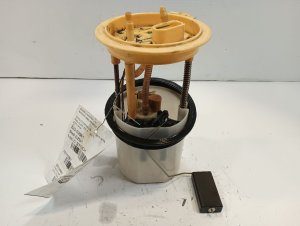
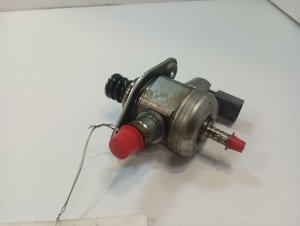

New Aftermarket Parts Available
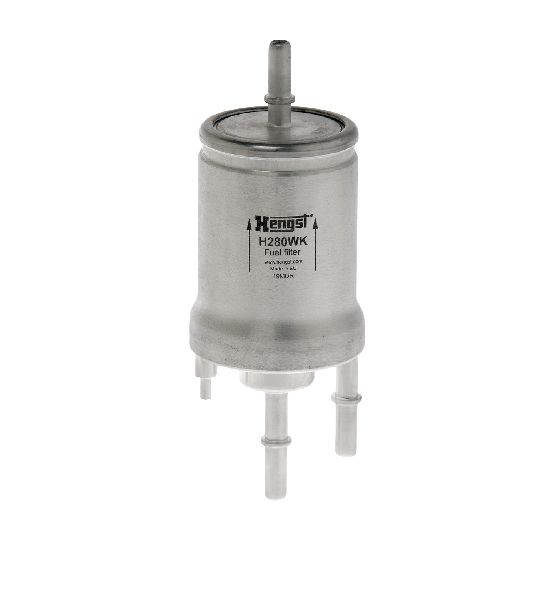
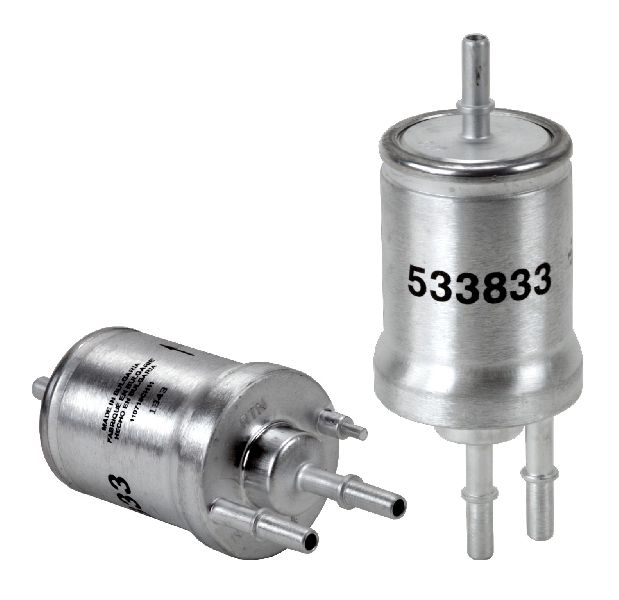

The information in this article is provided for general reference and educational purposes only. Vehicle specifications, procedures, and part compatibility can vary by production date, trim level, and region. Always consult your vehicle's factory service manual and verify part numbers before purchasing or performing repairs. Safety-critical components such as airbags, seat belts, and braking systems should be installed by a qualified professional.
- Volkswagen JETTA:
- 🎬 Helpful Videos
- 🛍️ Shop This Part
- What's Unique About the 2009-2016 Volkswagen JETTA
- Diagnostic Flowchart
- Symptoms You May Notice
- Most Likely Causes
- Rare But Worth Checking
- Diagnosis Steps
- Parts You'll Likely Need
- Related Codes That Often Appear With This One
- Technical Service Bulletins (TSBs) & Recalls
- Platform-Specific Known Issues
- Mechanic-Grade Diagnostic Values
- Scan Tool Commands That Help
- Wiring & Ground Locations
- Real Owner Repair Stories
- OEM Part Supersession History
- Model Year Variations Within This Range
- 🎟️ Get 5% Off