

P0149 on 2009-2013 VW Beetle Convertible: Fuel Timing Error Causes and Fixes
On 2012-2013 VW Beetle models with the 2.0T engine, code P0149 almost always points to a failing High-Pressure Fuel Pump (HPFP) or a worn camshaft follower. This is often accompanied by codes P0087 and P053F. Expect to replace the HPFP and its follower, costing between $250 and $500 for parts. While the cam follower design was improved for the TSI engine over the older FSI, it remains a critical failure point.
- P0149 on a 2012-2013 VW Beetle is a critical code pointing to a high-pressure fuel system failure.
- This code is almost always accompanied by P0087 and P053F, which are also listed in official VW TSBs.
- The most likely cause is a worn-out cam follower, which has likely led to the failure of the High-Pressure Fuel Pump (HPFP).
- Always replace the cam follower when replacing the HPFP. Consider replacing the follower as a preventative measure to avoid costly pump failure.
- This repair is not recommended for beginners due to the danger of working with high-pressure fuel lines.
What's Unique About the 2009-2013 Volkswagen BEETLE CONVERTIBLE
The 2009-2013 year range covers two different Beetle generations with different fuel systems. The 2012-2013 models use a 2.0T TSI direct-injection engine (engine codes CCTA/CBFA), which has both a low-pressure in-tank fuel pump and a high-pressure fuel pump (HPFP) driven by the camshaft. The P0149 code, especially when seen with P0087 and P053F, is almost exclusively an issue for these 2.0T engines. The HPFP and its associated camshaft follower are well-documented weak points on this platform, leading Volkswagen to issue multiple Technical Service Bulletins (TSBs) that address diagnosing these codes.
Diagnostic Flowchart
Tap your situation to follow the diagnostic path that matches what you're seeing on this vehicle.
Generation note: This range covers two generations. The 2009-2011 'New Beetle' (A4 platform) typically used a 2.5L 5-cylinder port-injected engine without an HPFP, making P0149 extremely rare. The 2012-2013 'Beetle' (A5 platform) uses a 2.0T TSI engine with a direct injection system and an HPFP. The information in this guide is primarily focused on the 2012-2013 models, as the provided TSBs and common causes are specific to their fuel system design.
Symptoms You May Notice
- Check Engine Light (MIL) is on
- Engine is hard to start or has an extended crank time
- Significant loss of power and poor acceleration
- Rough or unstable idle
- Engine stalling, especially under load or when coming to a stop
- Reduced fuel economy
- Vehicle may enter 'limp mode' with reduced power
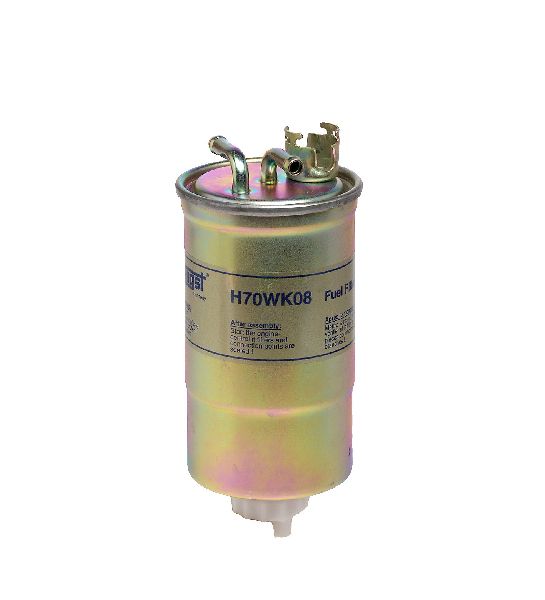
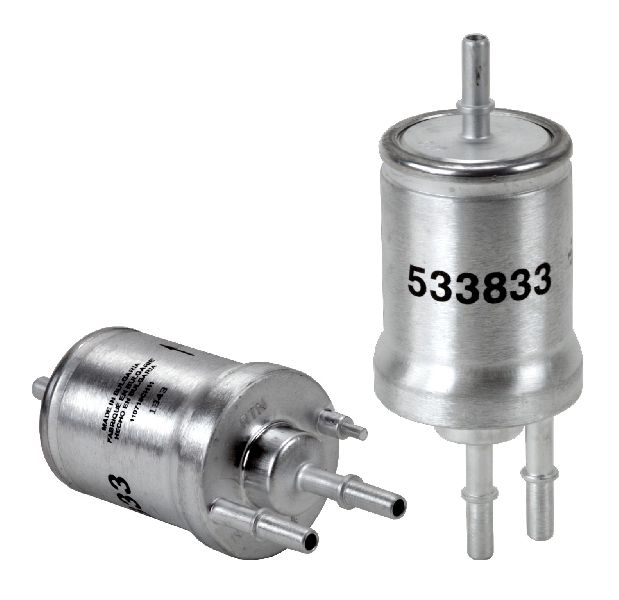
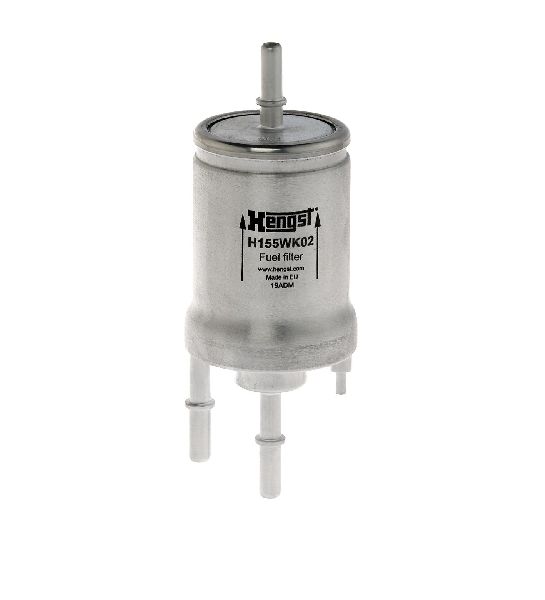
- Replacing only the fuel filter. While a clogged filter can cause fuel issues, it typically affects the low-pressure side and is less likely to be the sole cause of the P0149/P0087 combination on this engine.
- Replacing fuel injectors. While faulty injectors can cause performance issues, they are not the primary cause for this specific set of fuel pressure and timing codes.
Most Likely Causes
- Worn High-Pressure Fuel Pump (HPFP) Cam Follower 🔴 High Probability The cam follower is a small metal thimble that sits between the camshaft lobe and the HPFP piston. It is a known wear item on VW/Audi direct injection engines. As it wears, the black coating is removed and the metal surface thins, reducing the pump's stroke and leading to low pressure. If it fails completely, it can shatter and cause catastrophic damage to the camshaft and HPFP. While the 2.0T TSI engine in the Beetle uses a roller-style follower which is an improvement over the flat-tappet style in the older FSI engines, it is still a common failure point.
How to confirm: Remove the HPFP and visually inspect the cam follower for wear, scoring, or a hole worn through the surface. A DIY video shows this inspection process, comparing a worn follower to a new one. This should be the first component inspected when diagnosing this issue.
Typical fix: Replace the cam follower. It is strongly recommended to replace this part whenever the HPFP is serviced, or as a preventative maintenance item. Some enthusiasts recommend inspection every 20,000-30,000 miles, especially on tuned vehicles.
Est. part cost: $40-$70 - Failing High-Pressure Fuel Pump (HPFP) 🔴 High Probability The HPFP is a mechanical pump that can fail internally, often due to a worn cam follower causing damage to the pump's piston. The TSBs from Volkswagen linking P0149, P0087, and P053F point directly to issues within this high-pressure system, often leading to HPFP replacement.
How to confirm: Using a scan tool, monitor the actual vs. specified fuel rail pressure. If the actual pressure is consistently below the specified pressure, especially under load, and the cam follower is intact, the HPFP is likely faulty. A diagnostic video shows this process where the pump shaft itself had failed.
Typical fix: Replace the High-Pressure Fuel Pump and the cam follower at the same time. It is considered best practice to never install a new HPFP without also installing a new cam follower.
Est. part cost: $200-$450 - Weak In-Tank Low-Pressure Fuel Pump (LPFP) ⚪ Low Probability The HPFP requires a steady supply of fuel from the in-tank pump. If the LPFP is weak, it can't supply enough volume to the HPFP, causing it to starve and triggering low-pressure codes.
How to confirm: Connect a fuel pressure gauge to the low-pressure fuel line. The pressure should meet the manufacturer's specification (typically around 4-6 bar or 60-85 PSI) at idle and under load. This can also be checked via some advanced scan tools.
Typical fix: Replace the in-tank fuel pump module.
Est. part cost: $150-$300
Rare But Worth Checking
- Faulty Fuel Pressure Sensor (G247): While less common than pump failure, the sensor that reads the high-side fuel pressure can fail and send incorrect data to the ECM, mimicking a low-pressure condition. This should be considered if both the HPFP and follower are confirmed to be good. The OEM part number is often 06J906051D.
- Worn Intake Camshaft Lobe: In severe cases, especially if driven for a long time with a failed cam follower, the specific tri-lobe on the intake camshaft that drives the HPFP can be worn down, preventing any new pump from generating sufficient pressure. This is a major engine repair.
- Faulty Fuel Timing Solenoid / N276 Fuel Pressure Regulating Valve: The P0149 code can generically refer to a fault in the fuel timing solenoid. On the 2.0T engine, this function is integrated into the HPFP via the N276 Fuel Pressure Regulating Valve. A failure of this electronic component on the pump can cause timing and pressure errors, though it typically requires replacement of the entire HPFP assembly.
Diagnosis Steps
- Scan the ECM for all stored trouble codes. Confirm if P0149 is present with P0087 and/or P053F, as this combination strongly points to the HPFP system.
- Using a capable scan tool (like VCDS), access live data and monitor Measuring Value Blocks for fuel pressure. Compare 'Fuel Rail Pressure (actual)' against 'Fuel Rail Pressure (specified)'. A large discrepancy, especially under acceleration, points to a fuel delivery issue.
- SAFETY FIRST: Relieve the fuel system pressure. This is a critical safety step. This can be done by pulling the fuel pump fuse and running the engine until it stalls, and then carefully bleeding the remaining pressure at the HPFP's Schrader valve.
- Disconnect the battery. Disconnect the electrical connector and fuel lines from the HPFP. Have rags ready to catch spilled fuel.
- Remove the three T30 Torx bolts holding the HPFP to the cylinder head. Carefully remove the pump.
- Carefully remove and inspect the cam follower from the pump bore. Look for a concave surface, deep scoring, or a hole. If any wear is visible beyond minor polishing of the black coating, it must be replaced.
- Inspect the HPFP piston tip and the camshaft lobe (using a mirror and light) for any scoring or damage.
- If the follower is significantly worn or breached, it is highly recommended to replace the HPFP as well, as it has likely been damaged or excessively worn. The pump piston can be damaged from impacting a failed follower.
- If the follower and HPFP appear visually okay, the next step would be to test the low-pressure fuel pump's output to ensure it is supplying the HPFP correctly.
- Reassemble with new parts (at minimum a new cam follower and new HPFP bolts). Torque the 🎬 See this replacement walkthrough for installing a new HPFP bolts to the correct specification in a star pattern (e.g., 10 Nm or 7 ft-lbs). Reconnect fuel lines and electrical connector.
- Reconnect the battery, clear codes, and prime the fuel system by cycling the ignition key a few times without starting the engine. Check for leaks.
- Perform a road test while monitoring fuel pressure data to confirm the fix.
Parts You'll Likely Need
- High-Pressure Fuel Pump (HPFP) Cam Follower
(OEM #06D109309F)— This is the most common failure point in the system. It is a sacrificial part designed to wear out and should be replaced pre
Related Codes That Often Appear With This One
- P0087 — This code means 'Fuel Rail/System Pressure - Too Low'. It is often set alongside P0149 because the mechanical failure causing the timing error (P0149) also results in insufficient pressure in the fuel rail. VW TSBs explicitly group these codes together.
- P053F — This code means 'Cold Start Fuel Pressure Performance'. It indicates the system failed to build adequate fuel pressure during a cold start, which is a common symptom when the HPFP or cam follower is failing. This code is also mentioned in the same VW TSBs as P0149 and P0087.
- P0300-P0304 — These are random or specific cylinder misfire codes. Insufficient fuel pressure can lead to a lean condition, causing the engine to misfire, as noted in TSB VIN4APIN20211026.
Technical Service Bulletins (TSBs) & Recalls
- VIN4APIN20211026: Customer states MIL-on with P0087 P0149 P053F in the ECM
- VIN4APIN20211013: Customer states MIL-on with P0087 P0149 P053F in the ECM
- VIN4APIN20210909: Customer states MIL-on with P0087 P0149 P053F in the ECM
- VIN4APIN20210819: Customer states MIL-on with P0087 P0149 P053F in the ECM
Platform-Specific Known Issues
- Volkswagen has issued multiple Technical Service Bulletins for 2012-2013 models that group P0149 with P0087 and P053F. For example, TSB #VIN4APIN20211013 and others explicitly state customer complaints of the Malfunction Indicator Lamp being on with these codes stored. This indicates a known pattern of failure in the high-pressure fuel system that VW has documented for its dealer technicians.
- Another TSB, 21 15 02 (2025464), addresses a no-start condition in cold weather due to moisture freezing in the charge air cooler, which can also cause intake system faults, though this is a separate issue from the primary P0149 cause.
Mechanic-Grade Diagnostic Values
- High-Pressure Fuel Rail Pressure at Idle (VCDS) — expected: ~40-50 bar. Failure: Pressure significantly lower, such as 6-10 bar, indicates a failing HPFP or severe leak.
- High-Pressure Fuel Rail Pressure during Cranking (VCDS) — expected: Should rise towards specified value (e.g., ~46 bar). Failure: Remaining at low-pressure levels (e.g., 5-6 bar) indicates the HPFP is not building pressure.
- Low-Pressure Fuel Pump (LPFP) Pressure — expected: 80-90 PSI (approx. 5.5 - 6.2 bar) with a healthy pump.. Failure: Below 50 PSI indicates a weak in-tank pump or controller issue.
- N276 Fuel Pressure Regulator Valve Resistance — expected: 1.3 to 5 ohms. Failure: A reading outside this range, particularly an open circuit, points to a failed solenoid on the HPFP.
- G247 Fuel Pressure Sensor Signal Voltage (Key On, Engine Off) — expected: A specific voltage reading that is not 0V or 5V. It should change once the engine is running.. Failure: A flatlined voltage of 0V, 5V, or a value that does not change when the engine starts indicates a faulty sensor or wiring issue.
Scan Tool Commands That Help
- VCDS (Ross-Tech): Engine -> Measuring Blocks -> Group 106 — To monitor actual vs. specified high-pressure fuel rail pressure on CAN-based engine controllers. This is a primary step in diagnosing P0149/P0087.
- VCDS (Ross-Tech): Engine -> Advanced Measuring Values — To monitor fuel pressure on newer UDS protocol controllers where Measuring Blocks are not available.
- VCDS (Ross-Tech): Engine -> Output Tests -> Fuel Pump Electronics — To prime the fuel system after replacing a fuel filter or pump. Running this test cycles the in-tank low-pressure pump.
Wiring & Ground Locations
- G15 — On the engine cylinder head.. This is a primary engine ground. A poor connection here can cause erratic behavior from sensors and actuators mounted on the engine, including the HPFP's N276 valve and the G247 pressure sensor.
- G602 — In the left kick panel area, inside the passenger compartment.. This is a major ground point for the vehicle electrical system control module and other interior components. While less direct, a fault here could cause issues with the ECM or related control modules.
- G642 / G655 — Located on the frame in the left front of the engine compartment.. These are key grounding points in the engine bay. Corrosion or a loose connection at these points can affect the entire engine management system.
- N276 Connector — The electrical connector on top of the High-Pressure Fuel Pump (HPFP).. This is the connector for the fuel pressure regulating valve. P0149 is a timing code, and this valve controls the pump's action. Checking for voltage and a good connection here is critical. A wiring diagram shows it connects directly to the ECM (T60 connector).
Real Owner Repair Stories
- AudiWorld Forums user (Audi A6 (similar fuel system)) — Random stalling, code for G247 sensor short to ground.
❌ Tried (didn't work) Replaced High-Pressure Fuel Pump (HPFP), Replaced in-tank low-pressure fuel pump (transfer pump), Replaced fuel filter
✅ What actually fixed it The user logged data with VCDS and saw the G247 fuel pressure sensor was randomly reporting 0 bar, causing the stall. The final fix was replacing the G247 sensor itself after confirming wiring was okay. A disconnected vacuum line on the intake manifold was also found and reconnected, which helped stabilize the system. - Ross-Tech Forums user nickm1979 (2009 Volkswagen CC 2.0 TSI) — P0087 (Fuel Pressure Too Low) and P0172 (System Too Rich).
❌ Tried (didn't work) Replaced High-Pressure Fuel Pump (HPFP), Replaced fuel rail pressure sensor (G247)
✅ What actually fixed it The user found the low-pressure fuel pump was only producing <50 PSI. After replacing the LPFP, pressure rose to 80-90 PSI and high-side pressure increased to 160-170 bar under load, but the code remained. The user ordered a fuel pump driver module as the next logical step, suspecting it was the final piece causing the inconsistent commands or readings despite the new pumps. The thread ends before final confirmation, but highlights that replacing both pumps and the sensor may not be enough if the control module is faulty.
OEM Part Supersession History
06H127025E, 06H127025G, 06H127025K, 06H127025M, 06H127025N, 06H127025P→06H127025Q (and later revisions like 'R')— Internal improvements to address reliability issues with the pump and integrated N276 valve.
Heads up: Some very early 2.0T TSI engines used a different fuel line fitting. If replacing an early pump with a newer style, an adapter fitting (PN: 06E-127-065-G) may be required.06D109309C→06D109309F— Potentially minor changes in material or manufacturing process for the cam follower. Both are generally considered interchangeable for the FSI engine, which uses this style. The TSI engine uses a different roller-style follower.
Heads up: The part number listed in Pass 2 (06D109309F) is for the older FSI engine's flat tappet follower. The 2012-2013 Beetle's TSI engine uses a roller-style follower integrated with the pump, which is not typically serviced separately from the HPFP itself. This is a key distinction. The Pass 2 information incorrectly lists the FSI follower part number.
Model Year Variations Within This Range
- 2012-2013: The 2.0T engine in these models can be engine code CCTA or CBFA. The primary difference is that the CBFA includes a Secondary Air Injection (SAI) system for stricter emissions standards (like California's). This does not directly affect the HPFP or the P0149 code, but it is a key identifier for the engine variant.
- 2013: Starting in 2013.5, VW began phasing in the Gen 3 TSI engine (e.g., CPLA/CPPA) in some models like the Jetta GLI and Beetle. It's crucial to verify the engine code, as the Gen 3 has a different design and parts. However, most 2012-2013 Beetles will have the Gen 2 CCTA/CBFA engine.
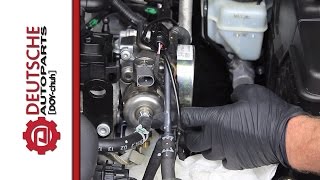
Helpful Videos
Used OEM Parts in Stock
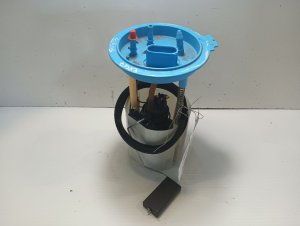
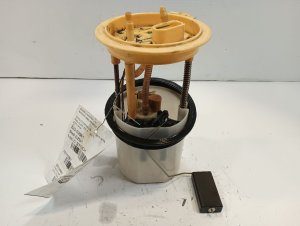
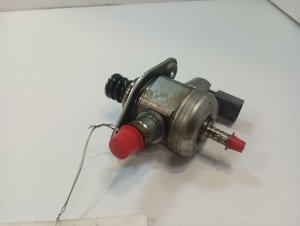


New Aftermarket Parts Available

The information in this article is provided for general reference and educational purposes only. Vehicle specifications, procedures, and part compatibility can vary by production date, trim level, and region. Always consult your vehicle's factory service manual and verify part numbers before purchasing or performing repairs. Safety-critical components such as airbags, seat belts, and braking systems should be installed by a qualified professional.
- Volkswagen BEETLE CONVERTIBLE:
- 🎬 Helpful Videos
- 🛍️ Shop This Part
- What's Unique About the 2009-2013 Volkswagen BEETLE CONVERTIBLE
- Diagnostic Flowchart
- Symptoms You May Notice
- Most Likely Causes
- Rare But Worth Checking
- Diagnosis Steps
- Parts You'll Likely Need
- Related Codes That Often Appear With This One
- Technical Service Bulletins (TSBs) & Recalls
- Platform-Specific Known Issues
- Mechanic-Grade Diagnostic Values
- Scan Tool Commands That Help
- Wiring & Ground Locations
- Real Owner Repair Stories
- OEM Part Supersession History
- Model Year Variations Within This Range
- 🎟️ Get 5% Off