

P0142 on 2013-2020 Land Rover Range Rover Evoque: O2 Sensor Circuit Fixes
This code points to a circuit malfunction for the O2 Sensor Bank 1, Sensor 3. Most often, the cause is a faulty oxygen sensor itself, a known issue supported by Land Rover technical bulletins. Replacing the sensor is the most common fix. However, on 2018+ Ingenium engines, this code can be falsely triggered by an engine misfire (P1315), so further diagnosis is critical.
- P0142 on a Range Rover Evoque most commonly means the rearmost oxygen sensor (Bank 1, Sensor 3) has failed.
- Land Rover has issued service bulletins acknowledging manufacturing defects in these sensors, particularly on earlier models.
- Before replacing the sensor on 2018+ models with the Ingenium engine, you MUST check for a P1315 misfire code, as this can be the true cause.
- Always inspect the sensor's wiring for heat damage, rodent damage, or corrosion before buying a new part.
- This is a DIY-friendly repair for those comfortable working under a vehicle, but accessing the wiring harness can be challenging.
What's Unique About the 2013-2020 Land Rover RANGE ROVER EVOQUE

Land Rover has acknowledged issues with this system. A Technical Service Bulletin (TSB #SSM63157) points to a "Manufacturing fault at the supplier" causing premature sensor failure on earlier models due to internal misalignment. For later models with the Ingenium engine, another bulletin (TSB #SSM75635) explicitly warns that P0142 can be falsely triggered by an underlying engine misfire (code P1315), leading to unnecessary O2 sensor replacement. This history suggests that while the sensor is a likely culprit, other specific issues must be considered before replacement.
Diagnostic Flowchart

Tap your situation to follow the diagnostic path that matches what you're seeing on this vehicle.
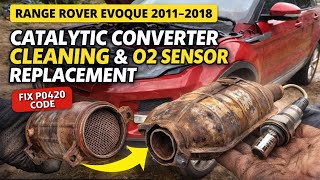
Generation note: This year range covers the first generation (L538, 2013-2018) and the start of the second generation (L551, 2019-2020). Early models used a Ford-derived 2.0L EcoBoost engine, while later models from 2018 onward use the Jaguar Land Rover (JLR) 2.0L Ingenium petrol engine. While the code's meaning is the same, specific part numbers for the O2 sensor differ 🎬 Watch: DIY O2 sensor replacement for 2011–2018 Evoque models between these engines. The EcoBoost sensor is generally LR028931, and the Ingenium sensor is often LR098298 or LR096522.
Symptoms You May Notice
- Check Engine Light is on
- Decreased fuel economy
- Rough idling or engine hesitation
- Sluggish acceleration
- Failing an emissions test
- Replacing the O2 sensor when the actual fault is an engine misfire (on Ingenium engines, per TSB #SSM75635).
- Replacing the O2 sensor when the root cause is a damaged wiring harness or a corroded connector.
- Replacing the wrong sensor. P0142 is for Bank 1, Sensor 3, which is the rearmost sensor on the exhaust system. 🎬 See this breakdown of P0142 symptoms, causes, and solutions
Most Likely Causes

- Faulty Oxygen Sensor (Bank 1, Sensor 3) 🔴 High Probability Land Rover issued TSB #SSM63157 citing a "misalignment with in the sensor" from the supplier, causing pre-stress and premature failure of the internal ceramic element.
How to confirm: Use a multimeter to test the sensor's heater circuit resistance; it should be within 12-30 Ohms. An open circuit or a reading outside this range indicates failure. Alternatively, monitor live data with a scan tool to see if the voltage is stuck or unresponsive when it should be relatively stable.
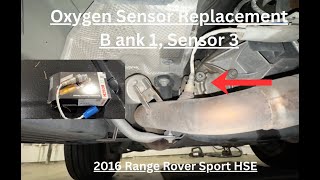
Typical fix: Replace the Bank 1, Sensor 3 oxygen sensor. Ensure you purchase the correct part 🎬 Watch: A helpful walkthrough of a downstream O2 sensor replacement for your specific engine (EcoBoost vs. Ingenium).
Est. part cost: $80-$240 - Damaged Wiring or Connectors 🟡 Medium Probability The sensor wiring is routed under the vehicle near the hot exhaust, making it susceptible to heat damage, melting, and chafing. Road debris and corrosion, especially at the connector, are also common failure points. Rodent damage has also been reported by owners.
How to confirm: Visually inspect the entire wiring harness leading to the sensor for any signs of melting, chafing, breaks, or corrosion at the connector pins. A user on landroverforums.com noted that accessing the harness for repair can be difficult and may require removing the upper intake manifold for proper access.
Typical fix: Repair the damaged section of the wiring harness or replace the connector pigtail. In some cases, an O2 sensor wire extender can be used if the original wiring is too short after repair.
Est. part cost: $20-$60 - Exhaust Leak ⚪ Low Probability
How to confirm: Visually inspect the exhaust system for cracks or loose connections upstream of the sensor. You may hear a ticking or hissing sound from the leak, especially when the engine is cold. Soot trails around a flange or joint are also a clear indicator.
Typical fix: Repair the leak by replacing the gasket or welding the cracked component.
Est. part cost: $50-$250
Rare But Worth Checking
- Engine Misfire (on Ingenium engines): TSB #SSM75635 specifically warns that a persistent engine misfire (DTC P1315) can lower exhaust gas temperatures and falsely trigger the P0142 code. The PCM flags P0142 because the sensor isn't reaching the expected temperature, but the root cause is the misfire, not the sensor. If P1315 is present, it must be diagnosed and fixed first (common causes include spark plugs, ignition coils, or fuel injectors).
- Powertrain Control Module (PCM) Issue: This is very rare. TSB #SSM72448 mentions situations where diagnosis finds no fault with wiring or sensors for a range of O2 sensor codes including P0142. This suggests that an intermittent software glitch or a fault within the PCM itself could be the cause. This should only be considered after all other possibilities are exhausted.
Diagnosis Steps
- Connect an OBD-II scanner and check for any other codes. If you have a 2018+ Ingenium engine, pay close attention to P1315. If present, diagnose the misfire first.
- Visually inspect the Bank 1 Sensor 3 O2 sensor's wiring harness and connector. Look for signs of melting from exhaust heat, chafing, rodent damage, or corrosion in the connector pins.
- Inspect the exhaust system for any leaks between the engine and the O2 sensor. Listen for hissing sounds and look for soot marks.
- Use a scan tool to observe the live data stream for the Bank 1 Sensor 3 voltage. A healthy downstream sensor should show a relatively stable voltage. If it's stuck high, low, or shows no activity, the sensor is likely faulty.
- If the sensor appears unresponsive, disconnect it and use a multimeter to check the resistance of the heater circuit. A reading outside the typical 12-30 Ohm range indicates a failed sensor heater.
- If the sensor and wiring test good, and especially if code P1315 is present, diagnose the cause of the misfire (e.g., spark plugs, ignition coils, fuel injectors).
- If all else fails, consider the possibility of a PCM software issue as hinted at in TSB #SSM72448, which may require a dealer visit to check for software updates.
Parts You'll Likely Need
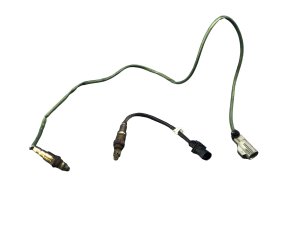
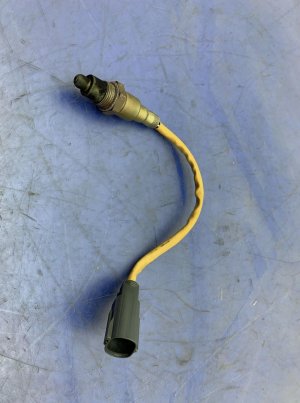
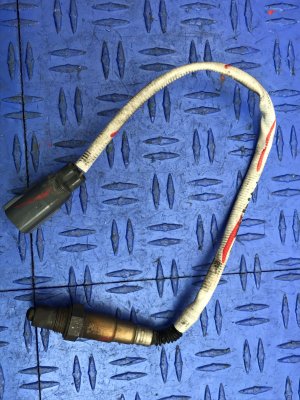
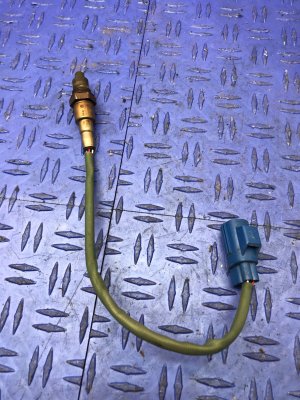
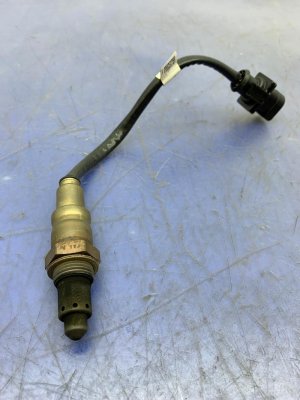
- Oxygen Sensor (Bank 1, Sensor 3)
(OEM #LR028931 (for 2.0L EcoBoost); LR098298 or LR096522 (for 2.0L Ingenium))— This is the most frequent point of failure for this code, as documented by Land Rover TSBs and owner reports.
Trusted brands: Bosch, Denso, Walker, NGK
OEM price range: $180-$240
Aftermarket price range: $80-$150
Related Codes That Often Appear With This One
- P1315 — On Ingenium engines, TSB #SSM75635 states that a persistent misfire (P1315) can cause the P0142 code to appear as a symptom. The misfire is the root cause to be addressed.
- P0143 — This code indicates low voltage in the same sensor circuit (Bank 1, Sensor 3) and can appear alongside P0142 as part of the same electrical fault.
- P0144 — This code indicates high voltage in the same sensor circuit (Bank 1, Sensor 3) and can appear with P0142.
- P0147 — This code specifically points to a malfunction in the heater circuit for the same sensor (Bank 1, Sensor 3), which is a common internal failure mode that also causes P0142.
Technical Service Bulletins (TSBs) & Recalls
- SSM75635: Ingenium I4 2.0L Petrol logging P0142-00 O2 Sensor Circuit Bank 1 Sensor 3
- SSM72448: Lists P0142 among codes where no fault is found with the wiring upon diagnosis.
- SSM63157: Cites a manufacturing fault within the O2 sensor from a supplier causing premature failure.
Platform-Specific Known Issues
- TSB #SSM63157: Notes a manufacturing fault in the O2 sensor from the supplier, causing premature failure on early models due to internal stress on the ceramic element.
- TSB #SSM75635: Warns that on 2.0L Ingenium petrol engines, a P1315 misfire code can lower exhaust gas temperatures and cause P0142 to be logged incorrectly, leading to misdiagnosis.
- TSB #SSM72448: Mentions that diagnosis may find no fault with the wiring for a group of O2 sensor codes including P0142, suggesting the possibility of intermittent or software-related issues that are hard to trace.
Mechanic-Grade Diagnostic Values
- O2 Sensor Heater Circuit Resistance — expected: 12 Ω to 30 Ω when measured across the two same-colored heater wires (often white).. Failure: An open circuit (> 1 kΩ) or a short circuit (< 5 Ω) indicates a failed heater element.
- O2 Sensor Heater Circuit Current — expected: 0.5 A to 1.0 A (viewed with a capable scan tool).. Failure: No current draw or erratic current indicates a heater circuit or sensor fault.
- Downstream O2 Sensor Voltage (at idle, engine warm) — expected: Relatively stable voltage, typically hovering between 0.1 V and 0.9 V.. Failure: Voltage is stuck high (e.g., 1.2V), stuck low, or not changing at all.
Scan Tool Commands That Help
- JLR Symptom Driven Diagnostics (SDD): Configure existing module – Powertrain control module — This function should be run after replacing an oxygen sensor to ensure the PCM is correctly configured for the new component. A TSB indicates this may be necessary to prevent further issues.
Wiring & Ground Locations
- G1D108 — Near the battery.. This is a primary ground point for the engine bay. A poor connection here can cause a variety of sensor and ECU issues, including O2 sensor circuit codes.
- G1D130a — Located in the left front of the engine compartment.. This ground serves components in the engine compartment, including the Engine Control Module (ECM). A fault at this location can lead to incorrect readings and codes from engine sensors.
- Engine/Exhaust Ground Straps — Multiple locations, typically from the engine block/cylinder head to the chassis/frame.. While specific Evoque locations are not detailed, degraded or broken engine-to-chassis ground straps are a common cause of erratic sensor behavior on Land Rovers. They ensure the engine block (and thus the sensors threaded into it) has a solid ground reference.
OEM Part Supersession History
LR096522→LR116639— Part update or manufacturer change.
Heads up: These parts are considered interchangeable for the 2.0L Ingenium engine. T2H30421 is also listed as an equivalent part number.LR028931→N/A— N/A
Heads up: This part is for the earlier 2.0L Ford EcoBoost engine (2013-2017) and is not interchangeable with Ingenium engine parts. The OE manufacturer is often Bosch, and purchasing the Bosch-branded equivalent (e.g., 0258010256) can be a cost-effective alternative.
Model Year Variations Within This Range
- 2013-2017: These models use the Ford-derived 2.0L EcoBoost engine. The correct rear O2 sensor is part number LR028931. TSB #SSM63157 regarding a manufacturing fault is most relevant to this era.
- 2018-2020: These models use the JLR 2.0L Ingenium petrol engine. The correct O2 sensor is LR096522 or its supersession LR116639. TSB #SSM75635, which warns that a P1315 misfire can induce a false P0142 code, is specific to this engine.
Helpful Videos
We Have This Part in Stock


The information in this article is provided for general reference and educational purposes only. Vehicle specifications, procedures, and part compatibility can vary by production date, trim level, and region. Always consult your vehicle's factory service manual and verify part numbers before purchasing or performing repairs. Safety-critical components such as airbags, seat belts, and braking systems should be installed by a qualified professional.
- Land Rover RANGE ROVER EVOQUE:
- 🎬 Helpful Videos
- 🛍️ Shop This Part
- What's Unique About the 2013-2020 Land Rover RANGE ROVER EVOQUE
- Diagnostic Flowchart
- Symptoms You May Notice
- Most Likely Causes
- Rare But Worth Checking
- Diagnosis Steps
- Parts You'll Likely Need
- Related Codes That Often Appear With This One
- Technical Service Bulletins (TSBs) & Recalls
- Platform-Specific Known Issues
- Mechanic-Grade Diagnostic Values
- Scan Tool Commands That Help
- Wiring & Ground Locations
- OEM Part Supersession History
- Model Year Variations Within This Range
- 🎟️ Get 5% Off