

P0141 on 2020-2024 Subaru Legacy: O2 Sensor Heater Circuit Causes and Fixes
This code points to a problem with the heater circuit in the rear oxygen sensor (Bank 1, Sensor 2). The most common fix is replacing the sensor itself, which costs about $75-$120 for a quality aftermarket part or more for OEM. It's a straightforward DIY job for many owners, but the sensor can be difficult to remove due to rust.
- P0141 almost always means you need a new rear oxygen sensor (Bank 1, Sensor 2), specifically the updated part mentioned in TSB 09-115-24R.
- This is a minor issue that won't stop you from driving, but you must fix it to pass emissions and maintain long-term engine health.
- It is a very DIY-friendly repair. You can save $300-$500 by replacing the sensor yourself. Use a quality Denso or NTK part.
- Always check the wiring for 12V power and the fuse before buying a new sensor, just in case the known part failure isn't the cause.
What's Unique About the 2020-2024 Subaru LEGACY
For the seventh-generation Subaru Legacy (2020-2024) and its platform-mate, the Outback, the P0141 code is a well-documented issue. Subaru has issued Technical Service Bulletin (TSB) #09-115-24R, which directly addresses P0141 along with other rear O2 sensor codes (P0137, P0138, P0140). The TSB announces a redesigned sensor with an 'optimized coating application to help prevent cracking within the internal surfaces reducing any possibility of short/open circuits'. This strongly indicates that the sensor itself is the most frequent point of failure due to a specific design flaw, rather than more complex wiring or ECU issues.
Diagnostic Flowchart
Tap your situation to follow the diagnostic path that matches what you're seeing on this vehicle.
Symptoms You May Notice
- Check Engine Light is on
- Vehicle fails emissions testing
- Slightly decreased fuel economy (often not noticeable)
- Intermittent illumination of the Check Engine Light (light may turn on and off over several drive cycles).
- Replacing the catalytic converter. A P0141 code is specific to the sensor's heater circuit and is not an indicator of catalytic converter efficiency.
- Replacing the wrong oxygen sensor (e.g., the front Air/Fuel Ratio sensor). The code specifically identifies Sensor 2, which is the rear/downstream sensor.
- Using a cheap, generic oxygen sensor. Owners report that the code can return if a non-OEM or low-quality aftermarket sensor is used, as the vehicle's computer is sensitive to the correct resistance and performance.
Most Likely Causes
- Failed Rear Oxygen Sensor 🔴 High Probability The internal heater element is a known failure point. TSB #09-115-24R confirms Subaru released an updated part to prevent internal cracking and short circuits that cause this code, making this the most likely cause.
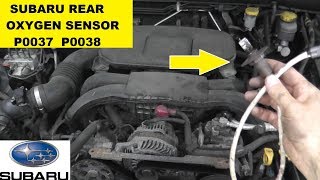
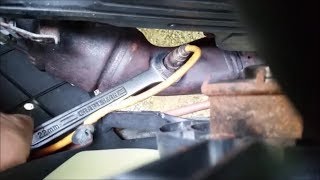
How to confirm: Disconnect the sensor and measure the resistance across the two heater circuit pins (typically the two same-colored wires) with a multimeter set to Ohms. A reading of 'OL' (Over Limit) or infinite resistance confirms an open circuit (burned-out heater). A good heater should have a low resistance, typically between 3 and 25 ohms. 🎬 Watch: How to test and replace the rear oxygen sensor Some sources cite a narrower range of 5-10 ohms for a good sensor.
Typical fix: Replace the Bank 1, Sensor 2 (downstream) oxygen sensor with the updated OEM part or a quality equivalent from Denso or NTK.
Est. part cost: $75-$220 - Damaged Wiring or Connector 🟡 Medium Probability The sensor is located under the vehicle, and its wiring is exposed to road debris, heat, and moisture. The connector is often located on the frame rail or on top of the transmission bell housing, where it can accumulate dirt and corrosion.
How to confirm: Visually inspect the wiring harness from the sensor to the main connector for any signs of breaks, melting, or chafing against the chassis or axle. Disconnect the connector and check for 12V power at the heater circuit pins on the harness side with the ignition on. One user on a forum reported finding only 6.7-7V, indicating a wiring issue upstream from the sensor.
Typical fix: Repair the damaged section of the wiring harness or clean/replace the connector. Ensure the connector is fully seated.
Est. part cost: $5-$50 - Blown Fuse ⚪ Low Probability
How to confirm: Check the vehicle's fuse box diagram (in the owner's manual) for the fuse related to the O2 sensor heater circuit. Visually inspect the fuse or test it for continuity. A user on a forum confirmed their fuse was fine when troubleshooting a persistent P0141.
Typical fix: Replace the blown fuse. If it blows again, a short circuit in the wiring or the sensor itself must be diagnosed.
Est. part cost: $1-$5
Rare But Worth Checking
- Faulty Engine Control Module (ECM): This is extremely rare. The ECM's internal driver for the heater circuit can fail, but all other potential causes, especially the sensor and wiring, should be exhaustively ruled out first. No specific owner reports were found for this failure on this platform.
Diagnosis Steps
- Read the code with an OBD-II scanner to confirm P0141 is present. Note if it is intermittent.
- Visually inspect the Bank 1, Sensor 2 (passenger side, post-catalytic converter) wiring harness and connector for any obvious damage, melting, or corrosion. The connector is often on the frame rail or transmission.
- Check the fuse for the O2 sensor heater circuit in the vehicle's fuse panel.
- If the wiring and fuse are intact, disconnect the O2 sensor connector.
- Using a multimeter, measure the resistance between the two heater pins (same color wires) on the sensor itself. A reading of infinite resistance (OL) indicates a failed heater element. A good sensor should read between 3-25 ohms.
- If the sensor's resistance is good, check for power at the heater circuit pins on the harness-side connector. With the ignition on, you should have ~12V. If voltage is significantly lower (e.g., 6-7V), there is a wiring issue between the fuse box and the sensor.
- If power and ground are present at the harness and the sensor resistance is good, the issue may be an intermittent connection or a faulty aftermarket sensor.
- If the sensor is being replaced, soaking the threads with a penetrating oil like PB Blaster beforehand is highly recommended, as they are often seized by rust. A special O2 sensor socket is required. 🎬 See this walkthrough for replacing both Subaru oxygen sensors
Parts You'll Likely Need
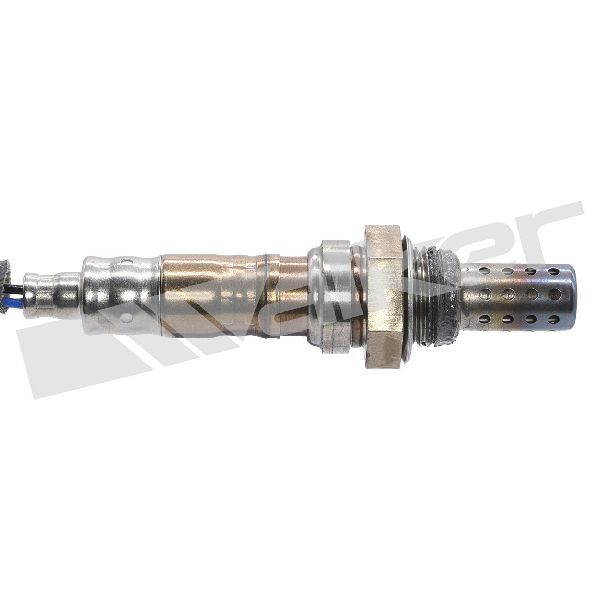
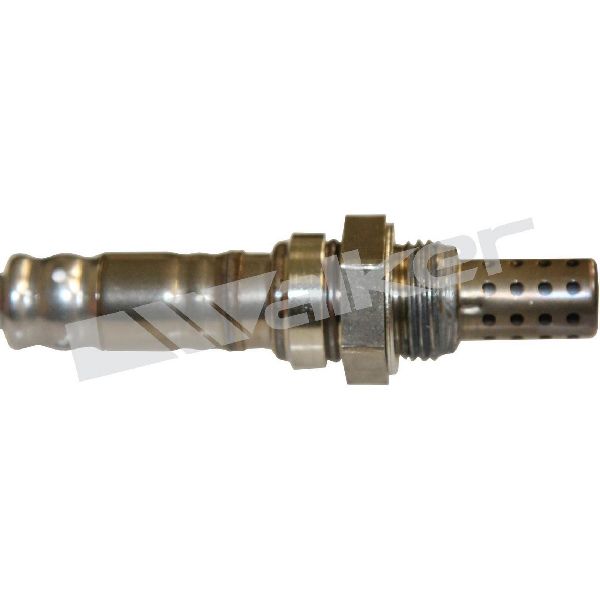
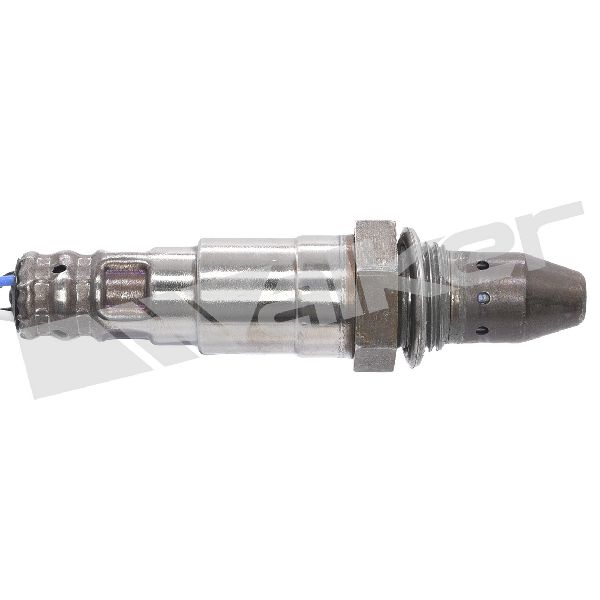
- Rear Oxygen Sensor (Bank 1, Sensor 2)
(OEM #22690AB08A)— This is the most common cause of a P0141 code. The internal heater element fails, requiring the replacement of the entire sensor assembly. TSB #09-115-24R indicates this is an updated part number to resolve the issue.
Trusted brands: Denso (OEM Supplier), NGK/NTK, Subaru (Genuine)
OEM price range: $150-$225
Aftermarket price range: $75-$145
Related Codes That Often Appear With This One
- P0137 — O2 Sensor Circuit Low Voltage (Bank 1 Sensor 2) - Often appears with P0141 as part of a general sensor failure, and is explicitly mentioned in TSB #09-115-24R.
- P0138 — O2 Sensor Circuit High Voltage (Bank 1 Sensor 2) - Can be triggered alongside P0141 if the sensor fails internally, and is also listed in TSB #09-115-24R.
- P0140 — O2 Sensor Circuit No Activity Detected (Bank 1 Sensor 2) - Indicates the sensor is not responding, which can happen if the heater fails to bring it to temperature. Also listed in TSB #09-115-24R.
Technical Service Bulletins (TSBs) & Recalls
- 09-115-24R: Announces a redesigned rear O2 sensor to fix P0141, P0137, P0138, and P0140 caused by internal cracking and short/open circuits.
- 09-115-24: An earlier version of the TSB also identifying P0141 as an O2 Sensor Heater Circuit fault for Bank 1 Sensor 2.
- 11-174-17R: While not directly for P0141, this TSB for older models shows a history of Subaru issuing ECM reprogramming to address other DTCs, though none have been issued for P0141 on this platform.
Platform-Specific Known Issues
- Subaru Technical Service Bulletin #09-115-24R explicitly lists P0141 and announces a redesigned rear oxygen sensor to prevent internal cracking and short circuits.
- Owners on forums for the platform-mate Subaru Outback report dealers quoting over $500 for the repair, while a DIY replacement with a Denso or NTK part costs around $100-$150.
- A Reddit user with a 2021 Outback 2.5L replaced the sensor but the P0141 code returned. They discovered the heater circuit on the harness side was only receiving ~7V instead of 12V, pointing to a wiring fault.
Mechanic-Grade Diagnostic Values
- Rear O2 Sensor Heater Element Resistance — expected: 3 to 25 Ohms when cold. Some sources suggest a tighter range of 5-10 Ohms.. Failure: Infinite resistance or 'OL' on a multimeter indicates a burned-out, open circuit heater element.
- Harness Connector Voltage (Heater Power Pin) — expected: Approximately 12V (battery voltage) with the ignition on, engine off.. Failure: Significantly low voltage (e.g., 6-7V) or no voltage indicates a wiring problem, corroded connection, or blown fuse upstream from the connector.
- Harness Connector Voltage (Heater Ground Control Pin) — expected: Near 0V when the ECM is commanding the heater on (typically during warm-up). May show 12V if the ECM is not grounding the circuit. Some systems may be pulse-width modulated, causing a multimeter to read an average voltage (e.g., 7V).. Failure: Voltage that does not drop to near 0V when commanded on, or is stuck at 12V, could indicate an ECM driver issue or a break in the ground wire.
Scan Tool Commands That Help
- Subaru Select Monitor (SSM): Current Data Display & Save — To monitor live data parameters such as 'Rear O2 Sensor' voltage and potentially heater circuit status to confirm the fault. The SSM can also be used to read Freeze Frame Data to see the exact conditions under which the P0141 code was set.
Wiring & Ground Locations
- Rear O2 Sensor Connector (E25) — The harness-side connector for the rear O2 sensor is often located on top of the transmission bell housing or clipped to the frame rail. It connects to a short extension harness from the sensor itself.. This connector is a common point for corrosion or damage due to its location. Testing for voltage and ground at this connector is a critical diagnostic step to isolate the fault between the sensor and the rest of the vehicle's wiring.
Real Owner Repair Stories
- Reddit user on r/subaru (2021 Subaru Outback 2.5L (platform mate)) — P0141 code returned immediately after replacing the Bank 1 Sensor 2 O2 sensor.
❌ Tried (didn't work) Replacing the rear O2 sensor., Cleaning the ground cable near the sensor.
✅ What actually fixed it The user identified the root cause but did not post the final repair. The problem was low voltage (~7V instead of 12V) on the heater circuit power wire at the harness-side connector, indicating a wiring fault (corrosion or partial break) between the fuse box and the sensor connector. The fix would be to trace and repair that specific wire. - Ultimate Subaru Message Board user 'subarusubarusubaru' (1998 Subaru Legacy GT (older model, but principle is the same)) — P0141 code, rough idle, hesitation.
❌ Tried (didn't work) Bench testing the O2 sensor (it produced voltage, but this doesn't test the heater circuit).
✅ What actually fixed it The P0141 code was caused by the wiring harness connector to the O2 sensor not being seated properly. The separate drivability issues were caused by an unrelated intake manifold leak. This highlights the importance of checking simple connections first.
When the Usual Fixes Don't Work
- In one documented case on a 2021 Subaru Outback, replacing the oxygen sensor did not fix the P0141 code. The actual cause was a wiring issue upstream of the sensor, which resulted in only 7 volts being supplied to the heater circuit instead of the required 12 volts. This demonstrates that while the sensor is the most common failure point, it's critical to verify correct voltage at the harness connector before condemning a second sensor if the code returns.
OEM Part Supersession History
22690AB070→22690AB08A— The new part number is associated with TSB #09-115-24R, which describes an updated sensor with an 'optimized coating' to prevent internal cracking and short/open circuits that cause P0141.
Helpful Videos
We Have This Part in Stock

The information in this article is provided for general reference and educational purposes only. Vehicle specifications, procedures, and part compatibility can vary by production date, trim level, and region. Always consult your vehicle's factory service manual and verify part numbers before purchasing or performing repairs. Safety-critical components such as airbags, seat belts, and braking systems should be installed by a qualified professional.
- Subaru LEGACY:
- 🎬 Helpful Videos
- 🛍️ Shop This Part
- What's Unique About the 2020-2024 Subaru LEGACY
- Diagnostic Flowchart
- Symptoms You May Notice
- Most Likely Causes
- Rare But Worth Checking
- Diagnosis Steps
- Parts You'll Likely Need
- Related Codes That Often Appear With This One
- Technical Service Bulletins (TSBs) & Recalls
- Platform-Specific Known Issues
- Mechanic-Grade Diagnostic Values
- Scan Tool Commands That Help
- Wiring & Ground Locations
- Real Owner Repair Stories
- When the Usual Fixes Don't Work
- OEM Part Supersession History
- 🎟️ Get 5% Off