

P0141 on 2018-2023 Kia Stinger 3.3T: O2 Sensor Heater Circuit Causes and Fixes
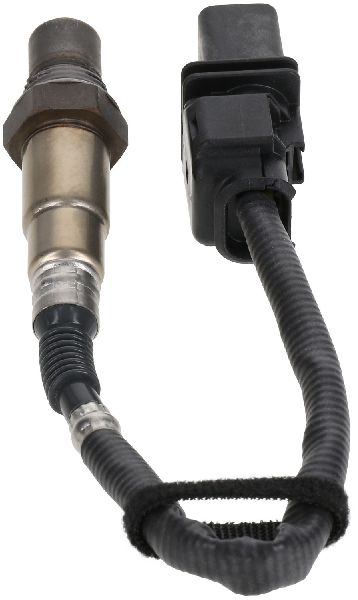
This code indicates a malfunction in the heater circuit of the Bank 1, Sensor 2 oxygen sensor. The most common fix is replacing the sensor itself, which is located after the catalytic converter on the passenger side of the engine. Expect to pay between $70 for an aftermarket part and $150 for an OEM sensor.
- P0141 points to a fault in the heater circuit for the O2 sensor located on the passenger side, after the catalytic converter.
- The most likely cause is a failed O2 sensor, which is a common wear-and-tear item.
- Before buying a new sensor, perform a quick visual inspection of the wiring for any obvious damage and check the 15A 'SENSOR 2' fuse in the engine bay fuse box.
- This is a DIY-friendly repair for most home mechanics; a special slotted socket for O2 sensors is recommended.
- Do not mistake this code for a bad catalytic converter; the issue is electrical, not related to converter efficiency.
What's Unique About the 2018-2023 Kia Stinger
For the Kia Stinger with the 3.3L Twin-Turbo V6, the P0141 code is a straightforward emissions-related fault. While owner forums confirm it's not an unusually common failure, it does occur and is typically resolved with a sensor replacement. The diagnostic procedure is standard, but accessing the sensor and its connector can be tight. There is a recall on early 2018 models for a wiring harness issue that could potentially cause various electrical faults, though it's not directly linked to P0141 in TSBs. The issue is also common on its platform-mates, the Genesis G70, G80, and G90 with the same 3.3T engine.
Symptoms You May Notice
- Check Engine Light is on.
- Vehicle will fail an emissions test.
- Potential for slightly decreased fuel economy.
- Replacing the wrong oxygen sensor (e.g., Bank 2 Sensor 2, or Bank 1 Sensor 1). Always confirm the bank and position before replacement. Bank 1 is the passenger side.
- Replacing the catalytic converter. A P0141 code specifically points to the sensor's heater circuit, not the efficiency of the converter itself.
Most Likely Causes
- Failed Bank 1, Sensor 2 Oxygen Sensor 🔴 High Probability The internal heater element is a common failure point in oxygen sensors due to constant heat cycles and exposure to exhaust gases. This is a wear-and-tear item.
How to confirm: Unplug the sensor and measure the resistance between the two heater circuit wires (usually the two wires of the same color) with a multimeter. An infinite resistance reading (open circuit) confirms the heater element has failed. A healthy heater circuit should have a low resistance, typically between 2 and 15 ohms.
Typical fix: Replace the Bank 1, Sensor 2 oxygen sensor.
Est. part cost: $70-$150 - Damaged Wiring or Connector 🟡 Medium Probability The wiring is located under the vehicle and is exposed to road debris, moisture, and high temperatures from the exhaust system, which can lead to corrosion, chafing, or melting over time. An early 2018 model year recall for a wiring harness rubbing on the fender highlights the potential for wiring issues.
How to confirm: Visually inspect the entire wiring harness from the O2 sensor to its connection point. Look for any signs of physical damage, melting, or corrosion on the connector pins.
Typical fix: Repair the damaged section of wire or clean/replace the connector.
Est. part cost: $5-$50 - Blown Fuse ⚪ Low Probability
How to confirm: Locate the fuse for the O2 sensor heater circuit. On the Stinger, this is typically a 15A fuse labeled 'SENSOR 2' in the engine compartment fuse box. Visually inspect the fuse or use a test light to check for power on both sides.
Typical fix: Replace the blown fuse. If the fuse blows again immediately, it indicates a short circuit in the wiring or the sensor itself that must be diagnosed.
Est. part cost: $1-$5
Rare But Worth Checking
- Faulty Engine Control Module (ECM): This is extremely rare. Before condemning the ECM, all other possibilities, including the sensor, wiring, and fuses, must be exhaustively ruled out. A full diagnostic sequence that verifies the absence of voltage at the ECU output for the heater circuit would be required to confirm this.
Diagnosis Steps
- Read the code with an OBD-II scanner to confirm P0141 is the only code present.
- Visually inspect the Bank 1, Sensor 2 (passenger side, downstream) oxygen sensor's wiring harness and connector for any obvious damage, melting, or corrosion.
- Locate and check the 15A 'SENSOR 2' fuse in the engine compartment fuse box. Replace if blown.
- If the wiring and fuse are okay, disconnect the sensor's electrical connector.
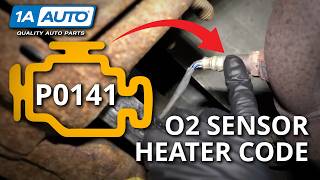
- Using a multimeter set to ohms, measure the resistance across the two heater pins on the sensor side of the connector. A reading of infinite ohms (OL) means the sensor's heater is broken and the sensor must be replaced. 🎬 See this guide on causes and fixes for P0141 A reading between 2-15 ohms is typically normal.
- If sensor resistance is normal, check for 12V power at the heater circuit pin on the harness side of the connector (with the ignition on, engine off).
- If power is present, check the ground circuit for continuity to the chassis ground. The PCM provides the ground path, so a scan tool may be needed to command the heater on to properly test this. If both power and ground are good but the code persists, the sensor is likely faulty despite testing within resistance specs.
Parts You'll Likely Need
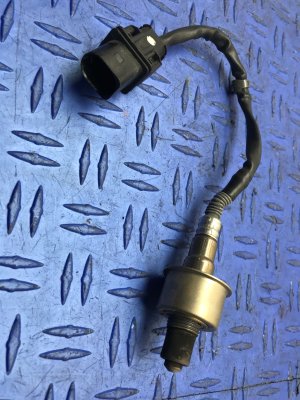
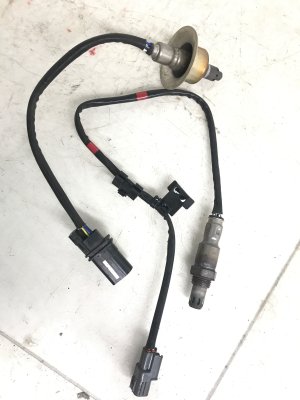
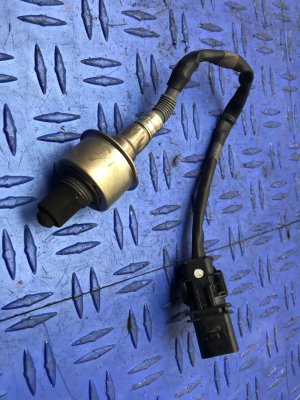
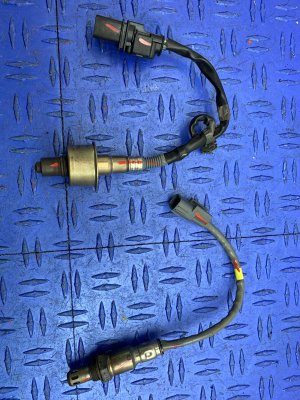
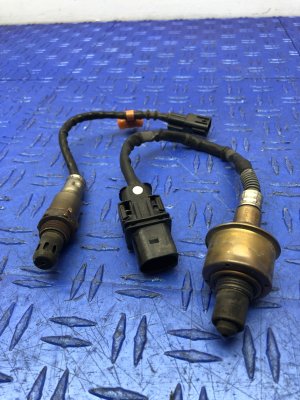
- Oxygen Sensor (Bank 1, Sensor 2)
(OEM #39210-3CGA0)— This is the downstream (post-catalytic converter) sensor for the passenger side. The internal heater element is the most common failure point for a P0141 code. The part number from pass 1 was likely for a different engine; 39210-3CGA0 is more appropriate for the 3.3T V6.
Trusted brands: Kia/Hyundai (Genuine OEM), Bosch, Denso, NGK/NTK
OEM price range: $120-$150
Aftermarket price range: $70-$110
Technical Service Bulletins (TSBs) & Recalls
- While no TSB is specifically for P0141 on the Stinger, an early recall for the 2018 model year addressed a front wiring harness that could be damaged by a burr on a fender panel. This highlights a potential, albeit rare, cause for this and other electrical codes if the harness is compromised.
Platform-Specific Known Issues
- Owner experience with P0141: A user on stingerforum.org reported getting a P0141 code, confirming it was for the Bank 1 Sensor 2 (downstream, passenger side). The community confirmed the diagnosis and typical fix is sensor replacement.
Mechanic-Grade Diagnostic Values
- O2 Sensor Heater Element Resistance — expected: Between 2 and 20 ohms, with 2.8 ohms being a specific example of a good reading.. Failure: An infinite resistance reading (OL - Open Loop) indicates a broken heater element. A reading of zero ohms indicates a short circuit.
- Heater Circuit Voltage (Harness Side) — expected: Battery voltage (approx. 12V) with Key On, Engine Off.. Failure: 0V indicates a problem with the power supply, which could be a blown fuse or a wiring issue upstream.
- Heater Circuit Ground Control (Harness Side) — expected: The PCM provides a pulsed ground to control the heater. Using a test light connected to battery positive, the light should pulse when connected to the ground pin while the engine is running.. Failure: No pulse or a steady light indicates a problem with the PCM driver or the wiring to the PCM.
Scan Tool Commands That Help
- Kia GDS (Global Diagnostic System): Actuation Test — The GDS, used by dealers for vehicles up to 2018, allows a technician to perform actuation tests on various components. While a specific O2 heater test isn't explicitly documented in public sources, this function would be used to command the heater circuit on/off to verify PCM driver function and check for voltage/ground at the sensor connector without having to wait for the system to activate on its own.
- Advanced OBD-II Scanner: Mode $06, Test ID $81 — Mode $06 provides results from the onboard, non-continuous monitors. Test ID $81 typically corresponds to the O2 Sensor Heater Monitor. A technician can view the raw test data to see if the circuit is passing or failing, and by how much, which can help diagnose intermittent issues before a permanent code is set.
Wiring & Ground Locations
- O2 Sensor Heater Wires — Within the 4-wire or 5-wire connector for the oxygen sensor.. On many sensors, the two wires for the heater circuit are the same color (e.g., two black or two white wires). These are the pins to use for resistance testing on the sensor side.
- O2 Sensor Signal Wire (for reference) — In the sensor connector for the primary (upstream) O2 sensors.. While not directly for P0141, documentation for JB4 tuners on the 3.3T engine specifies that the O2 signal wire is RED. This provides a known wire color within the O2 sensor harness, which can help with wire identification during diagnosis.
- Engine Ground Wiring Assembly — Various points on the engine block and chassis.. A poor engine ground can cause a variety of electrical issues. The main engine ground strap (Part No. 91860-J5010) is a specific part for the Stinger. While not a direct cause of P0141, checking that main grounds are clean and tight is a crucial step in diagnosing any electrical fault.
Model Year Variations Within This Range
- 2022-2023: For the 2022 model year facelift, the 3.3T V6 engine gained a minor power bump (368 hp vs 365 hp) primarily due to a new electronic variable exhaust system. While this doesn't change the function of the O2 sensors, the physical exhaust components and routing around the new valve system may differ slightly from the 2018-2021 models.
- 2022-2023: The interior and exterior received styling updates, including new LED headlights/taillights and a larger 10.25-inch infotainment screen. These changes do not affect the P0141 diagnosis.
Diagnostic Flowchart
Other Known Issues on This Vehicle
Issues unrelated to this code that are worth knowing about as an owner of this generation:
- Premature Brake Rotor Warping / Judder 🟠 Medium — Commonly reported by owners, sometimes within the first 12,000 miles. Many owners report it's actually uneven pad deposits on the rotors rather than true warping. (Ref: Multiple TSBs exist for brake-related issues, though not a specific recall for this exact problem. Dealers may replace rotors/pads under the 12-month/12,000-mile warranty.)
- High-Pressure Fuel Pump (HPFP) Failure 🔴 High — Affects 2018-2021 models, can cause loss of motive power at highway speeds. (Ref: NHTSA Recall 23V-634 (Kia Recall SC281) was issued to address this by replacing the pump and updating software.)
- Paint Peeling/Chipping 🟡 Low — Some owners, particularly those with Sunset Yellow paint, have reported premature peeling or flaking. Other colors have also been mentioned. (Ref: Covered under Kia's 3-year/36,000-mile paint warranty, though some owners report difficulty with claims.)
- Left Turbocharger Oil Feed Pipe Leak 🟠 Medium — A recall was issued for potential oil leaks from a deteriorating feed pipe and hose assembly. (Ref: Recall issued for 2018-2023 Stinger models with the 3.3L engine.)
- Wiring Harness Damage 🔴 High — Primarily affected early 2018 models where the front wiring harness could rub against a burr on the fender panel, creating a short circuit risk. (Ref: A recall was issued for early production 2018 models to inspect and protect the harness.)
Used vs. New Parts: Buying Guide for This Vehicle
When a used part is the smart pick: For this repair, buying a used oxygen sensor is generally not recommended. O2 sensors are wear-and-tear items with a finite lifespan. The cost savings of a used part are minimal compared to the risk of premature failure and the labor to replace it again. A used wiring harness pigtail from a junkyard can be a cost-effective solution if only the connector is damaged.
Donor-vehicle mileage cap: roughly under 30000 miles for the part to have meaningful remaining life.
What to inspect on the donor part:
- For a connector/pigtail, ensure the plastic is not brittle or cracked.
- Check for any signs of melting on the connector housing.
- Verify the locking tab is intact and functional.
- Inspect the wire insulation for cracking, chafing, or heat damage.
Aftermarket brands forum-validated for this vehicle:
- NGK / NTK (often the Original Equipment Manufacturer)
- Bosch
- Denso
Brands owners have reported issues with on this vehicle:
- Unnamed, no-brand "universal" sensors that require splicing wires are often a poor fit and can have incorrect resistance values, leading to persistent codes.
Real Owner Stories
Aggregated from forums and TSBs cited above. Mileages and costs reflect what owners reported in those sources.
2018-2023 Kia Stinger 3.3L Twin-Turbo V6
Symptoms: The user reported getting a P0141 code on their vehicle.
What fixed it: The community confirmed the fix is typically replacing the Bank 1 Sensor 2 (downstream, passenger side) oxygen sensor.
Source hint: stingerforum.org thread titled 'Kia Stinger Forum - OBD-II Error Codes'
Related OBD-II Codes
Frequently Asked Questions
Where is the Bank 1 Sensor 2 oxygen sensor located on my 3.3L Twin-Turbo Stinger?
Could the 2018 Kia Stinger wiring harness recall be related to my P0141 code?
Which fuse should I check for the O2 sensor heater circuit on the Stinger?
What is the correct resistance for a healthy O2 sensor heater on this vehicle?
Are there specific aftermarket brands recommended for the Stinger's downstream sensor?
Does the Genesis G70 share this same O2 sensor issue?
Helpful Videos


Used OEM Parts in Stock
New Aftermarket Parts Available

The information in this article is provided for general reference and educational purposes only. Vehicle specifications, procedures, and part compatibility can vary by production date, trim level, and region. Always consult your vehicle's factory service manual and verify part numbers before purchasing or performing repairs. Safety-critical components such as airbags, seat belts, and braking systems should be installed by a qualified professional.
- Kia Stinger:
- 🎬 Helpful Videos
- 🛍️ Shop This Part
- What's Unique About the 2018-2023 Kia Stinger
- Symptoms You May Notice
- Most Likely Causes
- Rare But Worth Checking
- Diagnosis Steps
- Parts You'll Likely Need
- Technical Service Bulletins (TSBs) & Recalls
- Platform-Specific Known Issues
- Mechanic-Grade Diagnostic Values
- Scan Tool Commands That Help
- Wiring & Ground Locations
- Model Year Variations Within This Range
- Diagnostic Flowchart
- Other Known Issues on This Vehicle
- Used vs. New Parts: Buying Guide for This Vehicle
- Real Owner Stories
- 2018-2023 Kia Stinger 3.3L Twin-Turbo V6
- Related OBD-II Codes
- Frequently Asked Questions
- 🎟️ Get 5% Off