

P0141 on 2016-2021 Hyundai Tucson 2.0L: O2 Sensor Heater Fixes & Causes
On a 2016-2021 Tucson with the 2.0L engine, code P0141 almost always means the heater inside the downstream oxygen sensor has failed. Expect to pay $70-$150 for an aftermarket sensor or $150-$220 for an OEM part. It is a straightforward DIY replacement for those with basic tools. Before replacing, check the 15A 'SENSOR 1' fuse in the engine bay fuse box.
- P0141 on your Tucson means the heater in the rear oxygen sensor has failed.
- This is a minor issue; the car is safe to drive, but you need to fix it to pass an emissions test.
- The most likely fix is to replace the downstream (Bank 1, Sensor 2) oxygen sensor.
- Before buying a new sensor, check the 15A 'SENSOR 1' fuse in the engine bay fuse box as a simple first step.
- This is a DIY-friendly repair for many, requiring a special 22mm (or 7/8") O2 sensor socket.
What's Unique About the 2016-2021 Hyundai Tucson
For the third-generation (TL) Tucson with the Nu 2.0L engine, the P0141 code is a very common and straightforward issue. There are no significant platform-specific complexities or variations within the 2016-2021 model years, other than a part number change for the 2019 facelift. The cause is almost always a simple component failure of the O2 sensor's internal heater, a common wear-and-tear item on many vehicles. While some Hyundai engines have been subject to serious recalls for connecting rod bearing failure, this specific code is not directly related to those campaigns, though it shares the same engine.
Symptoms You May Notice
- Check Engine Light is on.
- Inability to pass a vehicle emissions test.
- Slightly increased fuel consumption (often not noticeable by the driver).
- Replacing the upstream (Bank 1, Sensor 1) oxygen sensor. This code specifically points to the downstream (Sensor 2) heater circuit.
- Replacing the catalytic converter. P0141 relates to the sensor's heater circuit, not the efficiency of the converter itself. A bad converter would typically set a P0420 code.
Most Likely Causes
- Failed Downstream Oxygen Sensor 🔴 High Probability The internal heater element within oxygen sensors is a common failure point over time due to repeated, rapid heat cycles. It's a standard wear-and-tear component, with failures often reported between 80,000 and 150,000 km.
How to confirm: Disconnect the sensor and use a multimeter to measure the resistance across the two heater circuit pins (often the two same-colored wires, typically black). An open circuit (infinite resistance or 'OL') confirms the heater has failed. A good heater should have a specific resistance, typically between 4 and 15 ohms 🎬 See how to test the heater circuit with a multimeter when cool. Readings outside this range, or close to 0Ω (short-circuit), also indicate a failed sensor.
Typical fix: Replace the Bank 1, Sensor 2 (downstream) oxygen sensor. Clear the code with a scanner after replacement.
Est. part cost: $70-$240 - Blown Fuse ⚪ Low Probability A short circuit within the failed O2 sensor's heater element can sometimes cause the fuse to blow as a protective measure.
How to confirm: Locate the fuse box in the engine compartment. Identify the 15A fuse labeled 'SENSOR 1'. Visually inspect the fuse or test for continuity with a multimeter. This fuse protects the heater circuit for both upstream and downstream sensors.
Typical fix: Replace the blown 15A fuse. If the new fuse blows immediately, it indicates a persistent short circuit in the wiring or the sensor itself that must be traced and repaired.
Est. part cost: $1-$5 - Damaged Wiring or Connector ⚪ Low Probability The sensor is located under the vehicle, making its wiring susceptible to damage from road debris, corrosion, or melting on the hot exhaust pipe if a retaining clip breaks.
How to confirm: Visually inspect the wiring harness and connector leading to the downstream O2 sensor for any signs of breaks, fraying, melting on the exhaust, or corrosion on the connector pins. The connector is often located on a bracket at the back of the engine. 🎬 Watch: A quick walkthrough of the rear sensor removal process
Typical fix: Repair the damaged section of wire or replace the connector pigtail.
Est. part cost: $15-$40
Rare But Worth Checking
- Faulty Engine Control Module (ECM): This is extremely rare. Before considering the ECM, all other possibilities, including the sensor, fuse, and wiring, must be exhaustively ruled out. This would typically manifest as a lack of 12V power or ground signal at the harness connector despite good wiring and fuses.
Diagnosis Steps
- Read the code with an OBD-II scanner to confirm P0141 is present.
- Check the fuse box in the engine compartment. Locate the 15A fuse labeled 'SENSOR 1' and verify it is not blown. Replace if necessary.
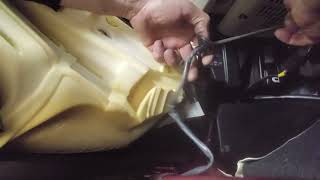
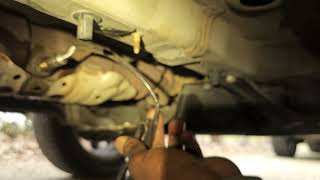
- If the fuse is good, safely raise the vehicle and locate the downstream O2 sensor, which is installed in the exhaust pipe after the catalytic converter. 🎬 Watch: Locate and replace the downstream sensor on your Tucson
- Visually inspect the sensor's wiring and connector for any obvious damage, melting, or corrosion. Ensure it is securely clipped away from the exhaust pipe.
- If the wiring appears intact, disconnect the sensor's electrical connector.
- Using a multimeter set to measure resistance (Ohms), probe the two pins on the sensor side of the connector that correspond to the heater circuit (these are often the two wires of the same color, e.g., two black wires).
- A reading of 'OL' or infinite resistance indicates an open circuit, meaning the heater inside the sensor has failed and the sensor must be replaced. A good sensor should read between 4-15 Ohms.
- If resistance is within specification, check for 12V power and a good ground at the vehicle harness side of the connector with the key on, engine off. Lack of power points back to the fuse or a wiring issue.
Parts You'll Likely Need
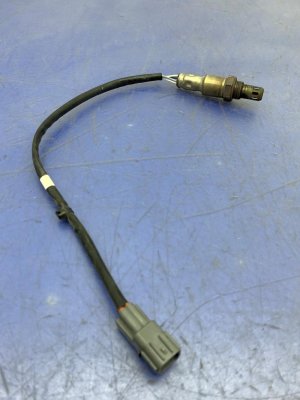
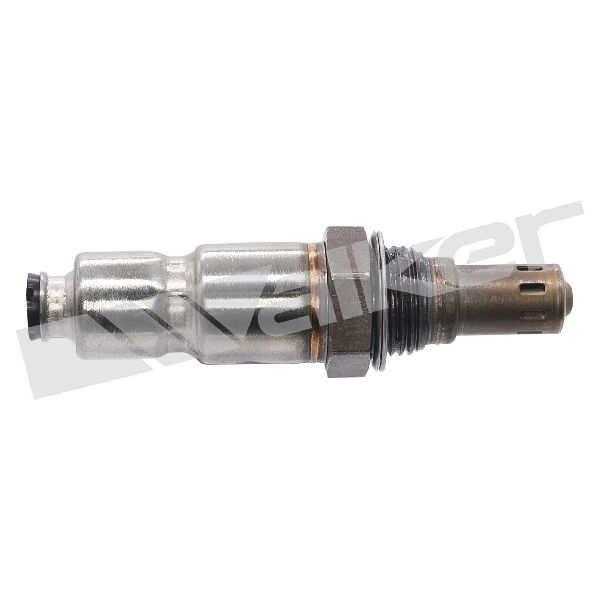
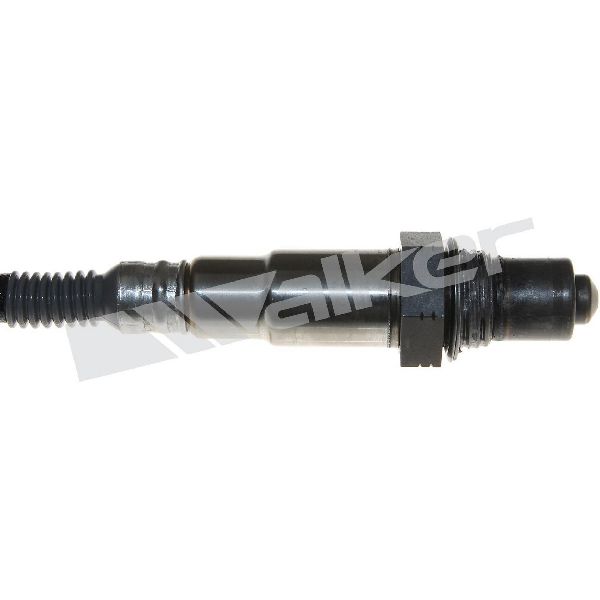
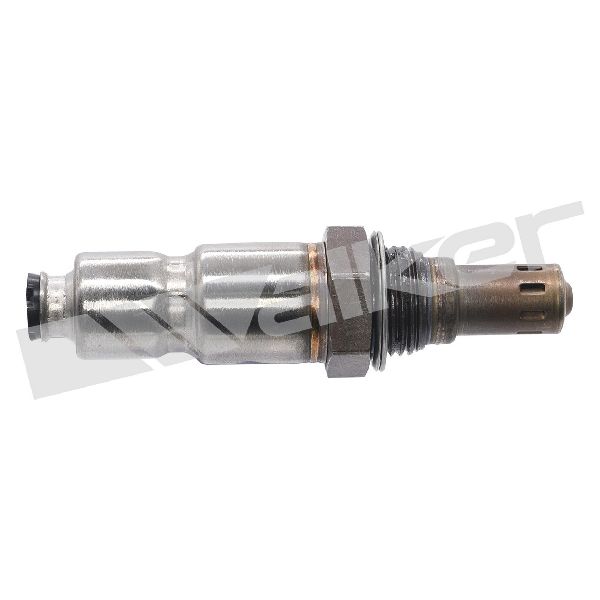
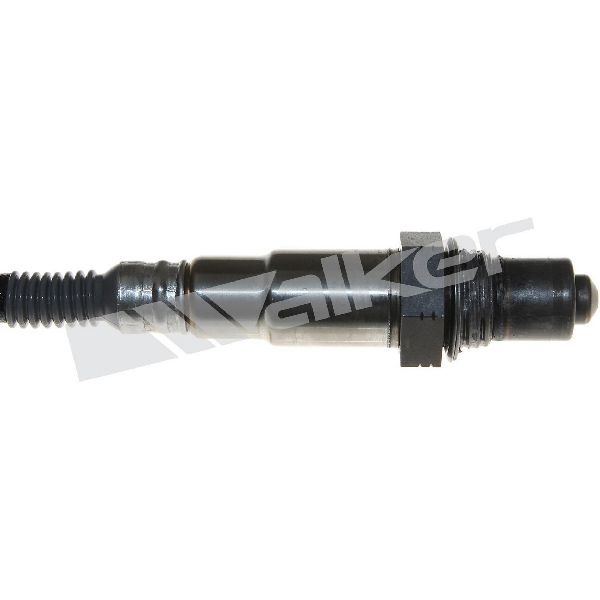
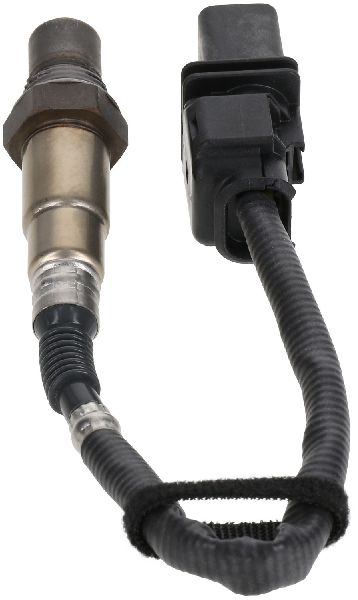
- Downstream Oxygen Sensor (Bank 1, Sensor 2)
(OEM #39210-2E410 (2016-2018), 39210-2E411 (2019-2021))— The internal heater element is the most common failure point for this code. The entire sensor must be replaced to fix it. Always verify the part number with your vehicle's VIN before purchasing, as a mid-generation part number change occurred.
Trusted brands: Denso, Bosch, NGK/NTK (often the OEM supplier), Walker Products
OEM price range: $150-$240
Aftermarket price range: $70-$150
Related Codes That Often Appear With This One
- P0136 — P0136 (O2 Sensor Circuit Malfunction Bank 1 Sensor 2) can appear alongside P0141 if there are broader issues with the sensor or its wiring beyond just the heater circuit.
- P0037 — This code (HO2S Heater Control Circuit Low) is a more specific version of P0141, also pointing directly to a problem in the downstream sensor's heater circuit.
Technical Service Bulletins (TSBs) & Recalls
- No specific Technical Service Bulletins (TSBs) for P0141 on this platform were found. The issue is typically handled as a standard component replacement.
Platform-Specific Known Issues
- On the Hyundai-Forums.com website, multiple owners of third-generation Tucsons confirm that replacing the downstream O2 sensor is the definitive fix for P0141.
- A user on the Carly forum with a 2019 Tucson reported this exact code at 150,597 km, with the community advising that sensor replacement is the standard and necessary repair.
Mechanic-Grade Diagnostic Values
- Downstream O2 Sensor Heater Resistance — expected: 4-15 Ohms (when cool). Failure: Infinite resistance ('OL' on multimeter) indicates an open circuit. Near zero resistance indicates a short circuit. Some aftermarket sensors may have resistance outside the OEM tolerance and still cause a code.
- Live Data O2 Sensor Temp (B1S2) — expected: Should rise to over 600°F (315°C) in under two minutes from a cold start.. Failure: Temperature rises very slowly or not at all.
- Voltage at Harness Connector (Power Pin) — expected: ~12 Volts (Battery Voltage) with Key On, Engine Off.. Failure: No voltage or significantly low voltage points to a wiring or fuse issue upstream.
- Voltage at Harness Connector (Ground Pin) — expected: Less than 0.1 Volts (back-probed with key on, engine off).. Failure: A reading higher than 0.1V indicates high resistance in the ground circuit, which is controlled by the ECM.
Hidden / Shadow Codes Worth Checking
- Mode $06, Oxygen Sensor Heater Monitor: This is not a trouble code, but a non-continuously monitored system test. Advanced scan tools can view Mode $06 data to see if the O2 sensor heater self-test is passing or failing, even before the P0141 code is set. It provides the raw test values and the min/max acceptable limits. (see via An advanced OBD-II scanner that supports Mode $06 data. The specific Test ID (TID) and Component ID (CID) for Hyundai are not widely published, but the monitor will be labeled.)
Scan Tool Commands That Help
- Hyundai GDS (Global Diagnostic System): Actuator Test / Component Control — After verifying the sensor and wiring are good, a technician can use the OEM scan tool (GDS, for pre-2018 models) to command the O2 sensor heater circuit on and off. This directly tests the ECM's ability to control the circuit, helping to isolate a rare ECM driver fault.
Wiring & Ground Locations
- Downstream O2 Sensor Connector — Under the vehicle, on the exhaust pipe after the catalytic converter. The electrical connector is a 4-pin connector often mounted to a bracket on the back of the engine/transmission area.. This is the primary connection point for testing. It may be a 'KUM 090 Type 4 pin' connector, especially on 2016+ models.
- Engine Ground Strap — Main grounds are typically bolted from the engine block or transmission to the chassis. A potential OEM part number for an engine ground strap on this vehicle is 91860-D3510. Any clean, unpainted bolt on the chassis or strut tower can serve as a ground point for testing.. A poor main engine or chassis ground can cause a variety of electrical issues, though it would likely present with more codes than just P0141. It's a crucial point for verifying the ground side of a circuit during testing.
OEM Part Supersession History
39210-2E410→39210-2E411— Model year update, likely corresponding to the 2019 facelift.
Heads up: Part 39210-2E410 is generally listed for pre-facelift models (2016-2018), while 39210-2E411 is listed for post-facelift models (2019-2021). Using the wrong part may result in fitment or electrical incompatibility. Always verify with VIN.
Model Year Variations Within This Range
- 2019-2021: The 2019 model year facelift introduced a different OEM part number for the downstream oxygen sensor (39210-2E411) for the 2.0L engine compared to the pre-facelift models (39210-2E410). While the core Nu 2.0L gasoline engine was unchanged, this part difference is critical when ordering a replacement.
Diagnostic Flowchart
Other Known Issues on This Vehicle
Issues unrelated to this code that are worth knowing about as an owner of this generation:
- Connecting Rod Bearing Failure / Excessive Oil Consumption 🔴 High — Widespread enough to trigger multiple class-action lawsuits and recalls. Can occur at various mileages, often presenting after 60,000 miles. (Ref: Campaign T3G / Recall 198 (NHTSA 20V746) for KSDS update; Campaign 966; Powertrain Warranty Extension to 15yr/150k miles for this issue.)
- ABS Module Electrical Short 🔴 High — Affects certain 2016-2021 models, posing a fire risk even when the vehicle is parked. (Ref: Recall 195 (NHTSA 20V543) involves replacing the HECU (Hydraulic Electronic Control Unit).)
- Intake Valve Carbon Buildup 🟠 Medium — Common on GDI (Gasoline Direct Injection) engines like the Nu 2.0L, typically becoming noticeable after 60,000 miles, causing misfires or rough idle.
Used vs. New Parts: Buying Guide for This Vehicle
When a used part is the smart pick: It is strongly recommended to NEVER use a used oxygen sensor. O2 sensors are wear-and-tear items with a finite lifespan determined by heat cycles and contamination. A used sensor from a junkyard has unknown remaining life and is very likely to fail soon, causing the P0141 code to return.
What to inspect on the donor part:
- Not applicable as used parts are not recommended.
OEM-only on this vehicle (don't cheap out):
- While not strictly 'OEM-only', using a high-quality, reputable brand is critical. Cheap, no-name sensors are a very common cause of the code returning immediately after repair.
Aftermarket brands forum-validated for this vehicle:
- NTK (often the OEM supplier)
- Denso
- Bosch
Brands owners have reported issues with on this vehicle:
- Avoid 'universal' sensors that require cutting and splicing wires. These introduce potential points of failure and are a common cause of persistent codes.
Real Owner Stories
Aggregated from forums and TSBs cited above. Mileages and costs reflect what owners reported in those sources.
2016 Hyundai Tucson — 65833 miles
Symptoms: Check engine light on. Scan revealed codes P0136, P0141, P0036.
What fixed it: The repair shop replaced the downstream (B1S2) oxygen sensor.
Source hint: RepairPal - Armpro Auto Service
2019 Hyundai Tucson 2.0L — 150597 miles
Symptoms: Check engine light with code P0141.
What fixed it: Sensor replacement was advised as the standard and necessary repair rather than just cleaning the connection.
Source hint: Carly Community Forum - 'Tucson Oxygen Sensor Heater Failure'
2019 Hyundai Tucson 2.0L — 88000 miles
Symptoms: Repeated catalytic converter failure, burning oil, check engine light.
What fixed it: The owner was advised to replace the Oxygen sensor and Catalytic converter.
Source hint: Reddit
2017-2020 Hyundai Elantra (2.0L Nu) — ~115000 miles
Symptoms: Downstream O2 sensor heater failure triggering P0141/P0036.
What fixed it: Replacement of the downstream O2 sensor (OEM part 39210-2E410).
Source hint: Platform mate data for 2.0L Nu engine
Related OBD-II Codes
Frequently Asked Questions
Is there a specific fuse I should check for the P0141 code on my 2016-2021 Tucson?
What is the correct resistance for a new downstream O2 sensor on the Nu 2.0L engine?
Will my emissions warranty cover a catalytic converter failure related to these codes on a 2019 Tucson?
Does the P0141 code on my Tucson indicate a risk of engine fire?
Are there any TSBs specifically for P0141 on the 2016-2021 Hyundai Tucson?
Could my Tucson's excessive oil consumption be related to the O2 sensor codes?
Helpful Videos
Used OEM Parts in Stock
New Aftermarket Parts Available


The information in this article is provided for general reference and educational purposes only. Vehicle specifications, procedures, and part compatibility can vary by production date, trim level, and region. Always consult your vehicle's factory service manual and verify part numbers before purchasing or performing repairs. Safety-critical components such as airbags, seat belts, and braking systems should be installed by a qualified professional.
- Hyundai Tucson:
- 🎬 Helpful Videos
- 🛍️ Shop This Part
- What's Unique About the 2016-2021 Hyundai Tucson
- Symptoms You May Notice
- Most Likely Causes
- Rare But Worth Checking
- Diagnosis Steps
- Parts You'll Likely Need
- Related Codes That Often Appear With This One
- Technical Service Bulletins (TSBs) & Recalls
- Platform-Specific Known Issues
- Mechanic-Grade Diagnostic Values
- Hidden / Shadow Codes Worth Checking
- Scan Tool Commands That Help
- Wiring & Ground Locations
- OEM Part Supersession History
- Model Year Variations Within This Range
- Diagnostic Flowchart
- Other Known Issues on This Vehicle
- Used vs. New Parts: Buying Guide for This Vehicle
- Real Owner Stories
- 2016 Hyundai Tucson — 65833 miles
- 2019 Hyundai Tucson 2.0L — 150597 miles
- 2019 Hyundai Tucson 2.0L — 88000 miles
- 2017-2020 Hyundai Elantra (2.0L Nu) — ~115000 miles
- Related OBD-II Codes
- Frequently Asked Questions
- 🎟️ Get 5% Off