

P0141 on 2001-2007 Ford Escape 3.0L V6: O2 Sensor Heater Circuit Causes and Fixes
This code almost always means the downstream oxygen sensor on the rear cylinder bank (Bank 1) has failed. The internal heater element burns out with age. Replacing the sensor is the most common fix, costing around $40-$80 for an aftermarket part and is a straightforward, if sometimes tight, DIY job for many.
- P0141 points to the heater in the oxygen sensor located after the catalytic converter on the rear (firewall side) of the engine.
- Before replacing the sensor, always check the 15A HEGO fuse (usually #5) in the under-hood fuse box first.
- The most likely fix is replacing the Bank 1, Sensor 2 oxygen sensor. This is a manageable DIY job but can be challenging due to tight access and potential rust. Be prepared with penetrating oil and a 22mm O2 sensor socket.
- There are no serious drivability symptoms, but the issue should be fixed to ensure your vehicle can pass an emissions test and runs efficiently.
What's Unique About the 2001-2007 Ford Escape
On the 3.0L V6 Escape, Bank 1 is the cylinder bank located against the firewall, making access to its sensors slightly more challenging than Bank 2, which is at the front by the radiator. The code P0141 specifically points to the downstream sensor (Sensor 2) on this rear bank. The electrical connector for this sensor is typically a grey, 4-pin connector found on a bracket attached to the firewall. While the sensor itself is the most common failure point, owners have occasionally traced the issue to a shared fuse or, in rare cases, a fault within the PCM that drives the heater circuits.
Generation note: The 2001-2007 year range covers the first generation of the Ford Escape. A significant refresh occurred for the 2005 model year, but the 3.0L V6 engine and its emissions control system, including the location and function of the oxygen sensors, remained fundamentally the same. The diagnostic and repair procedures are consistent across this entire period.
Symptoms You May Notice
- Check Engine Light is on.
- Inability to pass a vehicle emissions test.
- Slightly reduced fuel economy in some cases, though often not noticeable.
- An owner reported that the heater in the O2 sensor was taking too long to warm up (NHTSA ODI #11648592).
- Replacing the wrong oxygen sensor. It is critical to identify Bank 1 (rear/firewall side) and Sensor 2 (downstream/post-catalyst) correctly before purchasing or replacing parts.
- Replacing the sensor without first checking the fuse, which is a much simpler and cheaper fix.
Most Likely Causes
- Failed Bank 1, Sensor 2 Oxygen Sensor 🔴 High Probability The internal heater element is a common failure point in oxygen sensors due to constant, rapid heat cycles and age-related wear. Manufacturer service bulletins for other models, such as TSB 19-2005 and TSB 16-0128, have specifically identified faulty catalyst monitor sensors (CMS) as a primary cause for P0141.
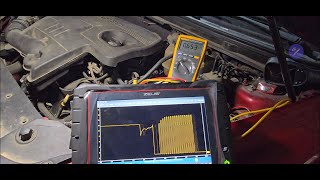
How to confirm: After checking the fuse and wiring, test the resistance of the heater circuit within the sensor using a multimeter. An open circuit (infinite resistance) or a reading outside the typical 3-30 ohm range across the two same-colored heater wires (usually white) confirms the element has failed. 🎬 Watch: A professional guide to testing oxygen sensor heater circuits.
Typical fix: Replace the downstream oxygen sensor on the rear (firewall side) cylinder bank. Using penetrating oil on the old sensor before removal is highly recommended.
Est. part cost: $40-$90 - Damaged Wiring or Connector 🟡 Medium Probability The sensor's wiring is routed under the vehicle near the hot exhaust and is susceptible to damage from road debris, heat, or corrosion over time. TSB 21-2090 notes that water intrusion into the heated oxygen sensor can also trigger this code. Furthermore, TSB 16-0163 indicates that various drivability issues and P0141 can stem from intermittent electrical faults in the system.
How to confirm: Visually inspect the wiring harness and the grey connector leading to the sensor for any signs of melting, chafing, corrosion, or broken wires. Check for 12V power on one of the heater circuit wires and ground on the other at the vehicle-side connector with the key on, engine off.
Typical fix: Repair the damaged section of the wiring harness or replace the connector pigtail.
Est. part cost: $15-$30 - Blown Fuse ⚪ Low Probability
How to confirm: Check the fuse for the Heated Exhaust Gas Oxygen (HEGO) sensors. In the under-hood fuse box (Power Distribution Box), this is typically fuse #5, a 15A fuse for 2001-2007 models.
Typical fix: Replace the blown fuse. If the fuse blows again immediately, it indicates a short circuit in the wiring or within one of the O2 sensors that needs to be diagnosed further.
Est. part cost: $1-$5
Rare But Worth Checking
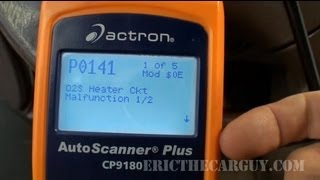
- Faulty Powertrain Control Module (PCM): This is very uncommon, but some Ford PCMs of this era can develop failed driver circuits for the O2 sensor heaters. TSB 19-2005 mentions that P0141 may be due to PCM software issues in addition to sensor hardware. This should only be considered after the sensor, wiring, and fuse have all been confirmed to be good. Often, this will be accompanied by other O2 heater codes (like P0135, P0155, P0161). 🎬 Watch EricTheCarGuy's deep dive into diagnosing O2 sensor heater failures.
Diagnosis Steps
- Read the code with an OBD-II scanner to confirm P0141 is present. Check for any other codes, especially P0161.
- Locate the under-hood Power Distribution Box and inspect the 15A fuse for the O2 sensor heaters (HEGO), typically at position #5. If it's blown, replace it, clear codes, and see if the fault returns.
- If the fuse is good, safely raise the vehicle. Liberally apply penetrating oil (like PB Blaster) to the base of the Bank 1, Sensor 2 O2 sensor and let it soak to prevent thread damage.
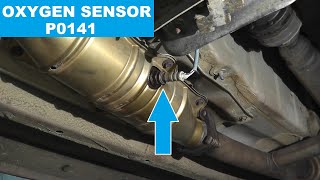
- Locate the sensor. It is on the exhaust pipe after the catalytic converter on the firewall side of the engine. Trace its wire to the grey connector on the firewall.
- Visually inspect the sensor's wiring harness and connector for any obvious damage, melting, or corrosion.
- Disconnect the sensor. With the ignition key in the 'On' position (engine off), use a multimeter to verify that ~12V power and a good ground signal are present at the two heater circuit pins (usually the two same-colored wires) on the vehicle-side connector.
- Using the multimeter, measure the resistance between the two heater pins on the sensor itself (typically the two white wires). A healthy sensor will have a low resistance, generally between 3 and 30 ohms. An infinite reading (OL) or zero reading indicates the heater element is broken or shorted, and the sensor must be replaced.
- If the sensor is bad, use a 22mm or 7/8" O2 sensor socket (a special slotted socket) to remove and replace it.
- If the sensor, wiring, and fuse all test good, the fault may lie with the PCM, which is a rare but possible cause.
Parts You'll Likely Need
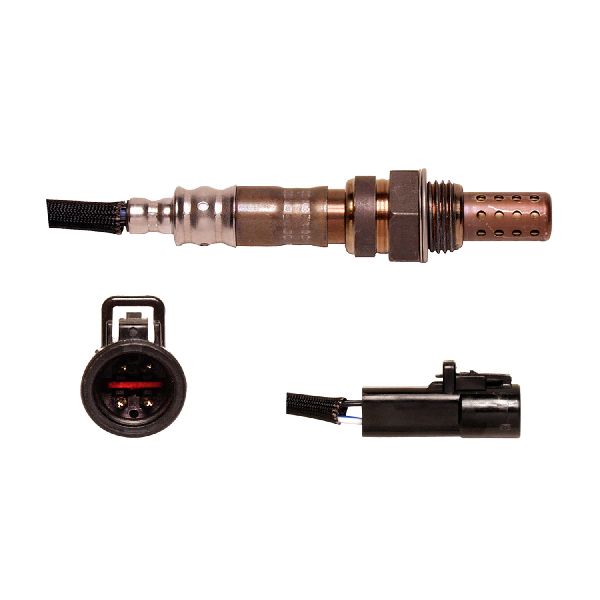
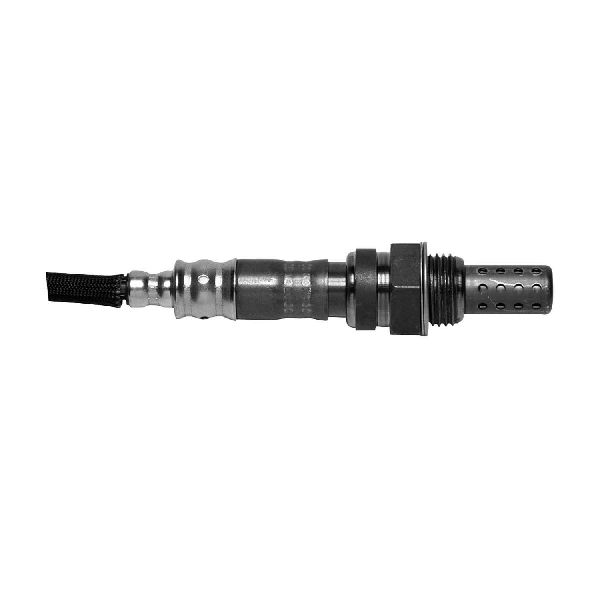
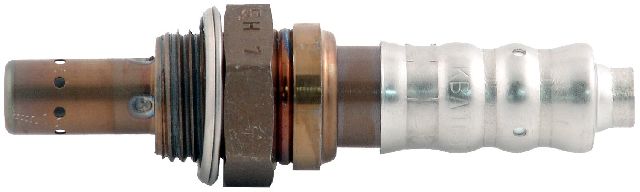
- Oxygen Sensor (Bank 1, Sensor 2)
(OEM #Motorcraft DY-1034 (or superseding part number like DY-1401))— This is the component that contains the heater element reported as faulty by the P0141 code. Its internal heater is the most common failure point.
Trusted brands: Motorcraft, Denso (e.g., 234-4127), Bosch (e.g., 15717), NGK/NTK
OEM price range: $80-$120
Aftermarket price range: $40-$80 - O2 Sensor Socket Set — A special 22mm (7/8") slotted socket is often required to remove and install the oxygen sensor without damaging its wire.
Trusted brands: Lisle, OEMTools, GearWrench
Aftermarket price range: $10-$30
Related Codes That Often Appear With This One
- P0161 — P0161 is the same heater circuit fault but for Bank 2, Sensor 2 (front/radiator side). Seeing both P0141 and P0161 together strongly points to a common cause like a blown fuse (#5) or a PCM issue that affects both downstream sensor heaters.
Technical Service Bulletins (TSBs) & Recalls
- No specific Technical Service Bulletins (TSBs) directly addressing only P0141 on the 2001-2007 Escape 3.0L were found during research. TSB 19-2005 exists for a later model EcoSport with P0141, but it is not applicable to this platform. The issue is typically resolved through standard diagnostics rather than a specific recall or service campaign.
- TSB 21-2090 (for other Ford models) notes that water intrusion into the heated oxygen sensor (HO2S) can cause P0141 and related codes.
- TSB 16-0128 and TSB 16-0163 document that P0141 can appear alongside various other DTCs due to sensor faults or intermittent electrical issues in the PCM memory.
Platform-Specific Known Issues
- Difficult Access to Bank 1 Sensor: The Bank 1 (firewall side) downstream sensor is notoriously difficult to access. Owners and mechanics report needing to work from both above and below the vehicle. A long extension with a swivel joint and the proper O2 sensor socket is often necessary. Some owners find it easier to access the connector from the top and the sensor itself from underneath the vehicle.
- Rusted/Seized Sensor: Due to its location and exposure to heat cycles and the elements, the sensor frequently rusts and seizes in the exhaust pipe bung. It is highly recommended to apply a quality penetrating oil (like PB Blaster or Kroil) liberally to the sensor's threads several hours, or even a day, before attempting removal. This significantly reduces the risk of stripping the threads in the exhaust pipe, which would require a much more complex repair.
Mechanic-Grade Diagnostic Values
- O2 Sensor Heater Element Resistance — expected: 3 to 30 Ohms. Failure: An infinite reading (Open Loop) or zero ohms (short circuit) indicates a failed heater element.
- O2 Sensor Heater Power Supply (at connector) — expected: ~12V with Key On, Engine Off. Failure: No voltage indicates a problem upstream, likely a blown fuse or wiring fault.
- O2 Sensor Heater Ground Signal (at connector) — expected: A good ground provided by the PCM. The PCM grounds the circuit to activate the heater.. Failure: No ground with the heater commanded on (via scan tool) points to a wiring issue or a faulty PCM driver.
Scan Tool Commands That Help
- FORScan: Actuation Test for Oxygen Sensor Heater (e.g., 'HO2S12 Heater') — This bidirectional command allows a technician to manually turn the heater circuit on and off. It is used to verify that the PCM can control the circuit and to check for voltage and ground at the sensor connector during a commanded 'on' state, confirming the integrity of the wiring and PCM driver.
- FORScan / Professional Scan Tools: Monitor O2 Heater PIDs (e.g., O2S12_HTR) — While diagnosing, monitoring the specific PID for the Bank 1 Sensor 2 heater status ('On'/'Off') can confirm if the PCM is attempting to activate the heater. This helps differentiate between a control issue and a circuit failure.
Wiring & Ground Locations
- G108 — On the firewall, at the rear of the engine compartment.. This is a primary engine-area ground point. While not exclusively for the O2 sensor, a corroded or loose G108 can cause a variety of intermittent sensor and PCM-related issues, including heater circuit faults due to poor ground reference.
- G109 — At the rear of the engine compartment, on the firewall.. Similar to G108, this is another critical firewall ground point. Verifying its integrity is a key step when diagnosing unusual electrical faults after confirming the main components are good.
- PCM Connector Pin 92 — At the Powertrain Control Module (PCM).. This specific pin (on many 3.0L models) is the control for the Bank 1 Sensor 2 heater circuit (HO2S12). The PCM provides the ground path through this pin to activate the heater. A continuity test from this pin to the sensor connector can verify the control wire's integrity.
Real Owner Repair Stories
- Reddit user Horny-Hotrod_357 on r/fordescape (2003 Ford Escape 3.0L V6) — Check Engine Light with codes P0141 and P0161.
❌ Tried (didn't work) Replaced both downstream oxygen sensors (Bank 1 Sensor 2 and Bank 2 Sensor 2)., Visually inspected the wiring harness and found no obvious damage.
✅ What actually fixed it The user's post was a request for help after initial fixes failed. A common suggestion for when both downstream heater codes appear simultaneously after sensor replacement is to suspect a shared power/fuse issue that was missed, or a less common PCM fault. One responder suggested a PCM reflash might be necessary, which can only be done at a dealership. The final fix was not posted by the original user. - NHTSA ODI #11648592 — An owner reported experiencing P0141 where the heater in the O2 sensor was taking too long to warm up, occurring alongside a cylinder misfire (P0303) and camshaft correlation issues (P0016).
OEM Part Supersession History
Motorcraft DY-1034→Motorcraft DY-1401— Part consolidation and potential design updates over time.
Heads up: DY-1401 is the correct service replacement for DY-1034 and is fully compatible with the 2001-2007 Ford Escape.
Model Year Variations Within This Range
- 2005-2007: The 2005 model year refresh introduced the Smart Junction Box (SJB), which is the fuse/relay box located on the passenger side of the center console. While the under-hood fuse for the O2 heaters remained the primary one to check, some circuits were rerouted through the SJB. This adds a potential point of failure (corrosion, connection issues) for later models in this range that is not present on 2001-2004 models.
Diagnostic Flowchart
Real Owner Stories
Aggregated from forums and TSBs cited above. Mileages and costs reflect what owners reported in those sources.
2003 Ford Escape 3.0 V6
Symptoms: Check engine light illuminated with codes P0141 and P0161.
What fixed it: The owner replaced both downstream O2 sensors and inspected the wiring harness, but the codes returned. Community members suggested checking the catalytic converter or having a dealer inspect and reflash the PCM.
Source hint: Reddit (r/fordescape) - 'P0141 and P0161 2003 Ford Escape after changing both sensors'
2001 Mazda Tribute V6
Symptoms: Check engine light came on with CEL code P0141.
What fixed it: The user replaced the oxygen sensor only to have the code return, demonstrating that the issue was likely in the wiring harness or another component rather than the sensor itself.
Source hint: mazdaforum.com - 'CEL code P0141 - 01 Tribute V6'
Ford Escape 3.0L V6
Symptoms: Needed to replace the Bank 1 downstream oxygen sensor due to failure.
What fixed it: Owners successfully replaced the sensor but noted the extreme difficulty of accessing it. The successful repair required specific tools like crow's foot O2 sockets, long extensions, and liberal use of penetrating oil.
Source hint: escape-city.com - 'O2 Sensor Replacement'
Related OBD-II Codes
Frequently Asked Questions
Where exactly is the Bank 1 Sensor 2 oxygen sensor located on my 2001-2007 Escape 3.0L V6?
Is there a specific fuse I should check for the P0141 code on this vehicle?
Does TSB 19-2005 apply to my 2005 Ford Escape for this code?
Why do people say the O2 sensor is so hard to remove on the 3.0L Escape?
What specific tools do I need to test and replace the Bank 1 Sensor 2?
I have a 2006 Mazda Tribute 3.0L. Does the same P0141 diagnostic apply?
Helpful Videos
We Have This Part in Stock


The information in this article is provided for general reference and educational purposes only. Vehicle specifications, procedures, and part compatibility can vary by production date, trim level, and region. Always consult your vehicle's factory service manual and verify part numbers before purchasing or performing repairs. Safety-critical components such as airbags, seat belts, and braking systems should be installed by a qualified professional.
- Ford Escape:
- 🎬 Helpful Videos
- 🛍️ Shop This Part
- What's Unique About the 2001-2007 Ford Escape
- Symptoms You May Notice
- Most Likely Causes
- Rare But Worth Checking
- Diagnosis Steps
- Parts You'll Likely Need
- Related Codes That Often Appear With This One
- Technical Service Bulletins (TSBs) & Recalls
- Platform-Specific Known Issues
- Mechanic-Grade Diagnostic Values
- Scan Tool Commands That Help
- Wiring & Ground Locations
- Real Owner Repair Stories
- OEM Part Supersession History
- Model Year Variations Within This Range
- Diagnostic Flowchart
- Real Owner Stories
- 2003 Ford Escape 3.0 V6
- 2001 Mazda Tribute V6
- Ford Escape 3.0L V6
- Related OBD-II Codes
- Frequently Asked Questions
- 🎟️ Get 5% Off