

P0141 on 2014-2017 Fiat 500: O2 Sensor Heater Fault Causes and Fixes
This code indicates a fault in the heater circuit of the downstream oxygen sensor (Bank 1, Sensor 2). While a failed sensor is a common cause, this Fiat platform is unique due to multiple Technical Service Bulletins (TSBs) specifying that a simple powertrain control module (PCM) software update from a dealer is often the correct fix. Always check for required software updates before or after replacing the sensor.
- P0141 points to a problem with the heater in your downstream O2 sensor, located on the exhaust after the catalytic converter.
- Before replacing any parts, check if your vehicle needs a PCM software update, as multiple Fiat TSBs list this as the official fix.
- If a software update isn't needed, the most likely cause is a failed O2 sensor, followed by damaged wiring or a blown fuse.
- This is a DIY-friendly repair for those comfortable working under their car. The sensor can be replaced with a special O2 sensor socket.
- Ignoring this code will lead to a failed emissions test but is unlikely to cause serious harm to your engine.
What's Unique About the 2014-2017 Fiat 500

On many cars, P0141 is a straightforward sensor replacement. However, on the 2014-2015 Fiat 500, Fiat Chrysler Automobiles (FCA) issued multiple Technical Service Bulletins (TSBs) indicating that this code can be triggered by overly sensitive or outdated Powertrain Control Module (PCM) software. These TSBs (like 18-061-15 and 18-010-15 REV. D) often bundle the P0141 fix with corrections for other unrelated trouble codes, suggesting a software logic issue rather than a simple hardware failure. Therefore, checking for a required software update is a critical and unique diagnostic step for this vehicle, often solving the issue even after a new sensor has been installed.
Diagnostic Flowchart

Tap your situation to follow the diagnostic path that matches what you're seeing on this vehicle.
Symptoms You May Notice
- Check Engine Light (MIL) is on.
- Failure to pass a vehicle emissions test. 🎬 Watch: Understanding the P0141 heater circuit malfunction and its symptoms.
- In rare cases, a slight delay in reaching optimal fuel efficiency after a cold start.
- Replacing the upstream (Bank 1, Sensor 1) oxygen sensor instead of the downstream (Bank 1, Sensor 2) sensor.
- Replacing the O2 sensor multiple times without checking for required PCM software updates, which are a known issue on this platform.
- Condemning the PCM without first thoroughly checking the wiring harness for shorts or open circuits, and verifying the ECU ground connection is clean and tight.
Most Likely Causes

- Failed Downstream Oxygen Sensor 🔴 High Probability The internal heating element is a common failure point due to constant, extreme heat cycles and exposure to exhaust gases. The element's resistance can increase over time or break entirely.
How to confirm: After confirming power and ground at the sensor connector, test the resistance across the two heater circuit pins (usually the two same-colored wires, e.g., white) on the sensor itself using a multimeter. A healthy sensor should read between 4 and 10 ohms when cold. An open circuit (infinite resistance) or a reading far outside this range confirms a bad heater element. 🎬 See how to test oxygen sensor heater circuits with a multimeter.
Typical fix: Replace the Bank 1, Sensor 2 (downstream) oxygen sensor. A special 22mm slotted socket is recommended for removal.
Est. part cost: $50-$230 - Outdated Powertrain Control Module (PCM) Software 🔴 High Probability Manufacturer TSBs #18-061-15 and #18-010-15 REV. D specifically call out a PCM software update as the remedy for P0141 on these vehicles, indicating the original software was too sensitive.
How to confirm: A Fiat dealership or a qualified independent shop with access to FCA's wiTECH diagnostic tool can check the current software calibration ID against the latest available version referenced in the TSBs. This is the likely cause if a new, tested-good sensor does not resolve the code.
Typical fix: Reprogram or "flash" the PCM with the latest software calibration. This is a dealer/specialist-only procedure.
Est. part cost: $0 (if under warranty) - $250 - Damaged Wiring or Connector 🟡 Medium Probability The sensor wiring is routed under the vehicle near the hot exhaust, making it susceptible to melting, chafing, or road debris damage. The connector itself can also accumulate moisture and corrosion.
How to confirm: Visually inspect the entire wiring harness from the sensor to where it enters the cabin. Look for melted plastic, bare wires, or green/white corrosion in the connector pins. Use a multimeter to check for 12V power and a good ground at the connector with the key on, engine off.
Typical fix: Repair the damaged section of wiring using solder and heat-shrink tubing or replace the connector pigtail.
Est. part cost: $10-$50 - Blown Fuse ⚪ Low Probability A short circuit in the heater element or its wiring can cause the corresponding fuse to blow as a protective measure.
How to confirm: Locate the fuse for the O2 sensor heaters in the underhood fuse box (consult the owner's manual or online diagrams for the specific location, often labeled 'O2 HTR' or similar). Visually inspect the fuse. If it's blown, it confirms a circuit issue.
Typical fix: Replace the blown fuse, which is typically 15A or 20A. If it blows again immediately, a short circuit exists and must be found and repaired before replacing the fuse again.
Est. part cost: $1-$5
Rare But Worth Checking
- Faulty Powertrain Control Module (PCM): This is very rare. It should only be considered after a certified technician has exhausted all other possibilities, including sensor replacement, wiring repair, and software updates. A loose ground wire to the ECU itself can also cause erratic behavior and should be checked.
- Oil Contamination on Sensor/Connector: On the 1.4L MultiAir engine, the vacuum pump is known to leak oil. Due to its location, this oil can drip directly onto the downstream O2 sensor and its electrical connector, fouling the sensor or compromising the connection over time.
Diagnosis Steps
- Connect an OBD-II scanner to verify the P0141 code is active and check for any other stored codes.
- CRITICAL: Check for applicable Technical Service Bulletins (TSBs) for your vehicle's VIN. For 2014-2015 models especially, TSBs #18-061-15, #18-010-15 REV. D, and #18-026-17 REV. A are highly relevant and may point to a software fix.
- Perform a thorough visual inspection of the downstream O2 sensor's wiring harness and connector. The sensor is located on the exhaust pipe after the catalytic converter. Look for signs of melting, fraying, or corrosion. Also check for oil contamination from above.
- Locate and inspect the fuse for the O2 sensor heater circuit in the underhood fuse box. Replace if blown.
- If the fuse and wiring appear intact, use a multimeter to test for 12-volt power and a good ground at the sensor's electrical connector (with the ignition key on, engine off).
- If power and ground are present, turn the vehicle off and test the resistance of the heater circuit within the O2 sensor itself. A good reading is typically between 4-10 ohms. An infinite reading (open) or zero reading (short) means the sensor's heater is broken and the sensor must be replaced.
- If the sensor's heater circuit tests good and the wiring is intact, the problem is very likely software-related. The vehicle should be taken to a dealer or qualified shop to have the PCM software updated per the relevant TSBs.
- After repairs (sensor replacement or PCM flash), clear the code with the OBD-II scanner and perform a complete drive cycle to ensure the code does not return.
Parts You'll Likely Need
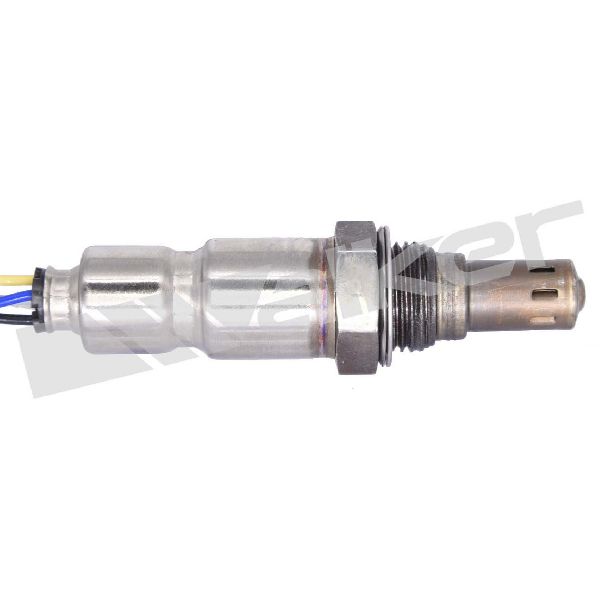
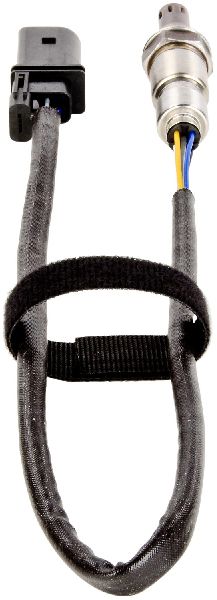
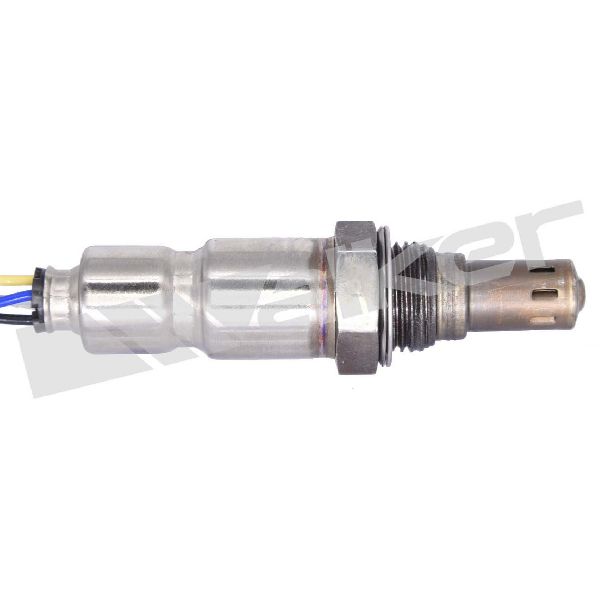
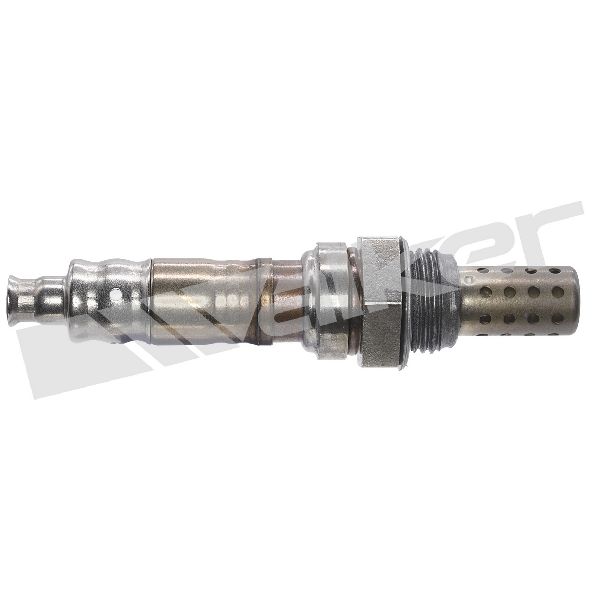
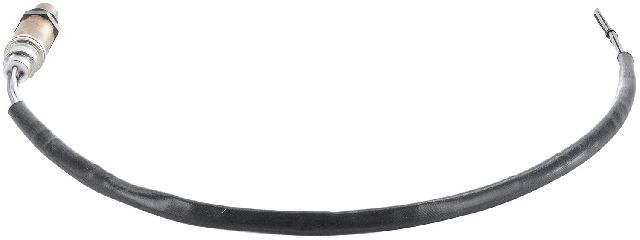
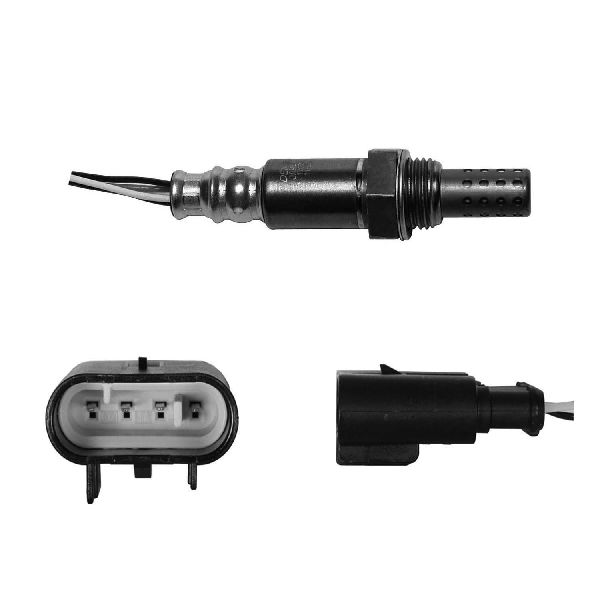
- Downstream Oxygen Sensor
(OEM #68070702AB)— This is the most common hardware failure for code P0141. The internal heater element burns out over time.
Trusted brands: Mopar, Bosch (e.g., 15510), Denso, NTK / NGK (e.g., 22506)
OEM price range: $210-$240
Aftermarket price range: $50-$90
Related Codes That Often Appear With This One
- P1D7F-00 — Per TSB #18-026-17 REV. A, this code for ETC Self-Learning Failure can appear with P0141 due to a software issue that a PCM update is designed to fix.
- P1523-00 — Per TSB #18-026-17 REV. A, this code for VVA Low Oil Pressure can be set alongside P0141 due to a software glitch addressed by a PCM flash.
- P1524-00 — Per TSB #18-026-17, this code for Oil Pressure Out Of Range can be triggered with P0141 due to a known software issue requiring a PCM update.
Technical Service Bulletins (TSBs) & Recalls
- Bulletin #18-026-17 REV. A: Notes P0141-00 - O2 Sensor 1/2 Heater Performance can be set along with other DTCs, fixed by a software update.
- Bulletin #18-061-15: Specifically calls out P0141 - O2 Sensor 1/2 Heater Performance and involves a PCM software update for 2015 models.
- Bulletin #18-010-15 REV. D: Mentions P0141 - Oxygen Sensor 1/2 Heater Performance as a code fixed by a PCM flash for 2015 vehicles.
- Bulletin #18-042-21: Supersedes older TSBs and includes the Fiat 500X and Jeep Renegade with the 1.4L engine, confirming the P0141 software fix applies across these platforms.
Platform-Specific Known Issues
- Multiple TSBs (e.g., 18-010-15 REV. D, 18-061-15, 18-026-17 REV. A) were issued by FCA to address this code via a PCM software update. This should be considered a primary potential solution, especially on 2014-2015 models, even if the sensor has already been replaced.
- Owners on forums like fiattech.com have confirmed that the P0141 code can return weeks after replacing the sensor, with the ultimate fix being a dealer PCM flash or discovery of a wiring issue.
Mechanic-Grade Diagnostic Values
- Downstream O2 Sensor Heater Element Resistance — expected: 4 to 10 Ohms (some sources state up to 20 Ohms is acceptable). Failure: Infinite resistance (open circuit) or near-zero resistance (short circuit).
- Heater Circuit Power Supply Voltage — expected: Battery Voltage (approx. 12V) with key on, engine off.. Failure: Significantly lower or no voltage, indicating a wiring or fuse issue.
- Downstream O2 Sensor (Sensor 2) Live Data Voltage — expected: A stable voltage around 0.5V - 0.7V once the engine is warm.. Failure: A voltage stuck very low (e.g., 0.04V) or not producing a stable reading.
Hidden / Shadow Codes Worth Checking
- Preheating resistance one downstream of catalyst open circuit: This is not a separate code but the specific description of the P0141 fault as displayed by some advanced diagnostic tools like MultiECUScan, providing more detail than a generic OBD-II reader. (see via Advanced FCA-compatible scan tools such as MultiECUScan or wiTECH.)
Scan Tool Commands That Help
- wiTECH / MultiECUScan: O2 Sensor Heater Actuation Test — This bidirectional command allows a technician to manually turn the O2 sensor heater on and off to verify the PCM's control over the circuit and to monitor the voltage and current draw in real-time, confirming if the PCM driver and wiring are functional.
Wiring & Ground Locations
- PCM Connector H, Pin 2 — On the Powertrain Control Module (PCM), which is typically located in the engine bay near the battery.. According to a PCM pinout diagram, this specific pin provides the ground for the Post (downstream) O2 Heater. A fault in this pin's connection or an internal PCM issue can prevent the heater from working, directly causing a P0141 code.
- O2 Sensor Heater Wires — Within the 4-wire connector for the downstream O2 sensor.. The two same-colored wires (often white) are for the heater circuit. One receives 12V power from a fused source, and the other is the ground controlled by the PCM. All diagnostic electrical tests for the heater circuit are performed on these two wires.
Real Owner Repair Stories
- Abarth 500 Forum (Abarth 500 (specific year not mentioned, but within the platform)) — Check engine light with code P0141 (heater circuit open circuit).
❌ Tried (didn't work) Replacing the downstream O2 sensor with a new, genuine part.
✅ What actually fixed it The code returned after three weeks. The final resolution was not posted, but the discussion pointed towards investigating intermittent wiring faults, contamination of the new sensor, or a potential PCM software issue, highlighting that a simple sensor swap is not always the fix. - Reddit r/fiat500 (2012 Fiat 500 Abarth) — Check engine light with code P0141.
❌ Tried (didn't work) The user was asking for advice after replacing the sensor and the code remained.
✅ What actually fixed it Another user confirmed the fix was to check live data. Their faulty sensor showed 0.04 volts, while the new, working sensor showed a steady 0.45v in closed loop. This confirms that even after replacement, verifying the sensor's output with a scan tool is a critical step. If the new sensor still shows bad data, the problem is in the wiring or PCM.
OEM Part Supersession History
Unknown→68070702AB— Standard part evolution and updates by the manufacturer.
Heads up: This is the standard OEM part number for the downstream sensor for the 2012-2019 Fiat 500 range, indicating good compatibility across the specified years.
Model Year Variations Within This Range
- 2015 only: TSB #18-010-15 REV. D and #18-061-15 specifically call out a PCM software update to fix P0141 for 2015 model year vehicles, suggesting the software logic was uniquely problematic for this year.
- 2014 only: TSB #18-010-15 REV. D notes that other codes like P1128 and P061A were specific software-related issues for 2014 vehicles, but the P0141 fix in that bulletin was for 2015 models, indicating a potential difference in software issues between these two years.
Helpful Videos
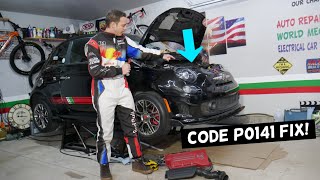
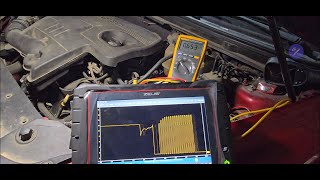
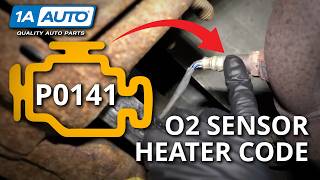
We Have This Part in Stock

The information in this article is provided for general reference and educational purposes only. Vehicle specifications, procedures, and part compatibility can vary by production date, trim level, and region. Always consult your vehicle's factory service manual and verify part numbers before purchasing or performing repairs. Safety-critical components such as airbags, seat belts, and braking systems should be installed by a qualified professional.
- Fiat 500:
- 🎬 Helpful Videos
- 🛍️ Shop This Part
- What's Unique About the 2014-2017 Fiat 500
- Diagnostic Flowchart
- Symptoms You May Notice
- Most Likely Causes
- Rare But Worth Checking
- Diagnosis Steps
- Parts You'll Likely Need
- Related Codes That Often Appear With This One
- Technical Service Bulletins (TSBs) & Recalls
- Platform-Specific Known Issues
- Mechanic-Grade Diagnostic Values
- Hidden / Shadow Codes Worth Checking
- Scan Tool Commands That Help
- Wiring & Ground Locations
- Real Owner Repair Stories
- OEM Part Supersession History
- Model Year Variations Within This Range
- 🎟️ Get 5% Off