

P0140 on 2017-2024 Subaru Impreza: Causes and Fixes for O2 Sensor No Activity
This code almost always means the rear oxygen sensor (Bank 1, Sensor 2) has failed. It's a common wear item. Expect to pay $70-$120 for an aftermarket sensor (Denso or NTK are good brands) or around $150-$200 for an OEM part. It's a straightforward DIY replacement for those with basic tools.
- P0140 on your Impreza points directly to a problem with the rear oxygen sensor (Bank 1, Sensor 2).
- The most common cause is simply a failed sensor, which is a normal wear item.
- Before buying a new sensor, perform a quick visual inspection of the wiring underneath the car for any obvious damage, especially near the transmission.
- Replacing the sensor is a DIY-friendly job that requires an O2 sensor socket (22mm or 7/8") and basic hand tools.
- Always address related codes like P0137, P0138, or P0141 at the same time, as they all point to the same sensor assembly.
What's Unique About the 2017-2024 Subaru IMPREZA
For the 2017-2024 Impreza, the P0140 code is a very typical emissions-related fault without major platform-specific quirks. Subaru issued Technical Service Bulletins (TSBs) that group P0140 with other codes for the same sensor (P0137, P0138, P0141), indicating these are common and related failures of the rear O2 sensor assembly. The fix is almost always a direct replacement of the sensor or repair of its exposed wiring, which can sometimes be damaged near the transmission bell housing.
Diagnostic Flowchart
Tap your situation to follow the diagnostic path that matches what you're seeing on this vehicle.
Generation note: The 2017-2024 year range covers two Impreza generations: the 5th generation (2017-2023) and the 6th generation (starting 2024). Both generations use a 2.0L flat-four engine (FB20D) and the diagnosis for P0140 is identical, as the underlying emissions control system and sensor functions are the same.
Symptoms You May Notice
- Check Engine Light is on. 🎬 Watch: A quick breakdown of P0140 causes and symptoms.
- Vehicle will fail an emissions inspection.
- Potentially a slight decrease in fuel economy.
- In some related Subaru models, a flashing cruise control light may accompany the Check Engine Light.
- Replacing the front Air/Fuel Ratio sensor (Sensor 1) instead of the rear Oxygen Sensor (Sensor 2).
- Replacing the catalytic converter when the issue is only a faulty sensor monitoring it. This is an expensive mistake, as a P0420 code would typically be present if the converter itself was failing.
Most Likely Causes
- Failed Rear Oxygen Sensor (Bank 1, Sensor 2) 🔴 High Probability Oxygen sensors are wear-and-tear items with a finite lifespan. Contamination from exhaust gases, oil, or coolant, combined with constant heat cycles, causes them to fail over time.
How to confirm: Use an OBD2 scanner to watch the live data for the B1S2 O2 sensor. If the voltage is stuck and not fluctuating (e.g., stuck at 0.45V or 0V), the sensor is likely dead. You can also test the internal heater circuit's resistance with a multimeter; a healthy sensor will typically show a resistance between 5-15 ohms, while a failed one will show an open circuit (infinite resistance) or a resistance over 50 ohms.
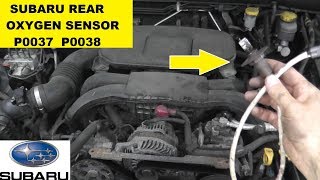
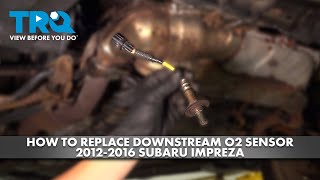
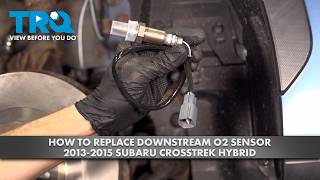
Typical fix: Replace the rear oxygen sensor. It can be unscrewed with a special 22mm (7/8") O2 sensor so 🎬 Watch: Step-by-step guide to replacing the downstream sensor.cket. Applying anti-seize compound to the new sensor's threads is recommended.
Est. part cost: $70 - $200 - Damaged Wiring or Connector 🟡 Medium Probability The sensor and its wiring are located under the vehicle, exposed to road debris, moisture, and heat from the exhaust. Wires can become frayed, melted, or corroded, causing a loss of signal. On some Subarus, the harness connector is located on top of the transmission bell housing, and the wiring can be damaged during other repairs like a clutch replacement.
How to confirm: Visually inspect the entire wiring harness leading from the rear O2 sensor to its connection point. Check for breaks, melting, or corrosion on the connector pins. Ensure the connector is dry and free of water intrusion.
Typical fix: Repair the damaged section of the wire or replace the connector pigtail. In some cases, a short extension harness between the sensor and main harness may need replacement.
Est. part cost: $10 - $50 - Exhaust Leak ⚪ Low Probability Rust or gasket failure can cause leaks in the exhaust system. A leak before the rear O2 sensor can introduce outside air, causing the sensor to give a flat, lean reading that the ECM interprets as 'no activity'.
How to confirm: Listen for hissing or ticking sounds from the exhaust while the engine is running. A visual inspection may reveal black soot marks around a leaking gasket or crack. A smoke test is the most definitive way to find a small leak.
Typical fix: Replace the leaking gasket or repair the damaged section of the exhaust pipe.
Est. part cost: $20 - $100
Rare But Worth Checking
- Blown Fuse: The oxygen sensor's heater circuit is protected by a fuse. If this fuse blows, the sensor cannot warm up to its operational temperature, which will prevent it from sending a signal and trigger a P0140 code. Check the fuse box for any blown fuses related to emissions or O2 sensors.
- Faulty Engine Control Module (ECM): In very rare cases, the driver circuit within the ECM that reads the O2 sensor signal can fail. This is a last resort diagnosis and should only be considered after all other possibilities (sensor, wiring, leaks, fuses) have been definitively ruled out by a professional.
Diagnosis Steps
- Read the code with an OBD2 scanner to confirm P0140 is present.
- Visually inspect the entire wiring harness for the rear O2 sensor, from the sensor itself to where it connects to the main harness on top of the transmission. Look for any signs of melting, chafing, or corrosion.
- Using the live data function on a scan tool, monitor the voltage for 'O2 Bank 1 Sensor 2'. A healthy sensor on a warm engine will show a relatively stable voltage, typically above 0.5V if the catalyst is working well. A reading that is stuck at a specific number (e.g., 0.45V), shows 0V, or is below 0.03V or above 1.2V indicates a problem.
- If possible, use a multimeter to check the resistance of the O2 sensor's heater circuit (usually between the two same-colored wires). A reading outside of the 5-15 ohm range, or an open circuit (infinite resistance), confirms a failed heater element within the sensor.
- Check for exhaust leaks between the catalytic converter and the rear O2 sensor.
- If the wiring is intact and the sensor voltage is flat or the heater circuit is open, the sensor itself has failed.
- Replace the Bank 1, Sensor 2 oxygen sensor.
- Clear the trouble codes with the scan tool and perform a drive cycle to ensure the code does not return.
Parts You'll Likely Need
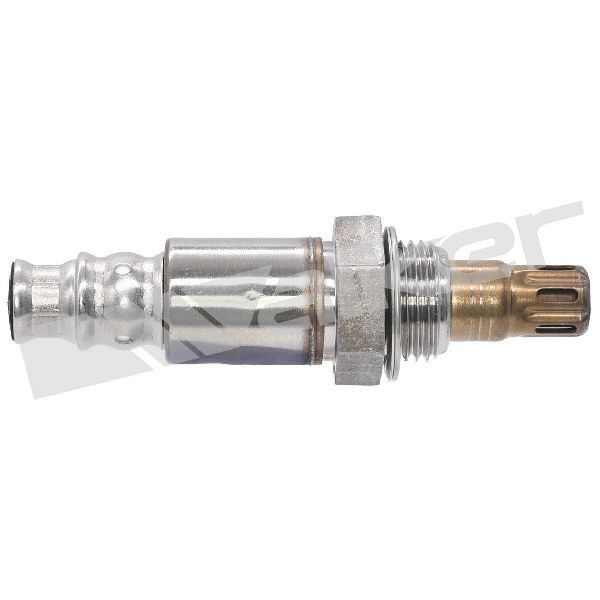
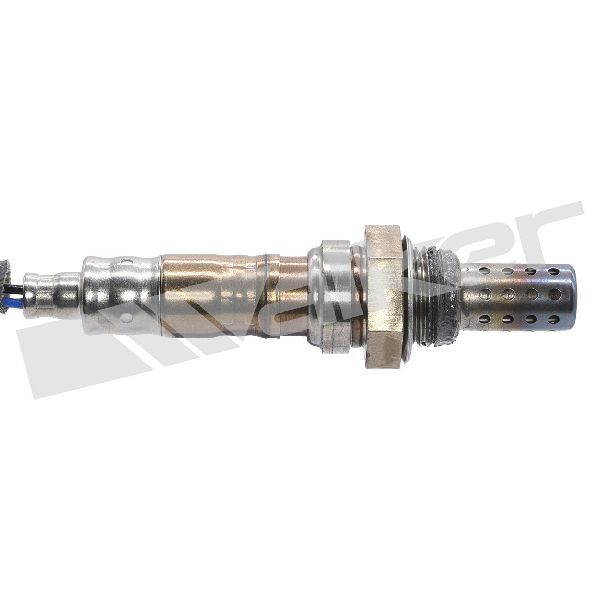
- Rear Oxygen Sensor (Downstream)
(OEM #22690AB08A (replaces 22690AB070))— This is the component that directly reports the data causing the P0140 code. It is a common failure point due to age and exposure to exhaust gases.
Trusted brands: Denso (e.g., 234-4449, verify fitment), NTK (e.g., 24448, verify fitment), Bosch
OEM price range: $165-$230
Aftermarket price range: $70-$120
Related Codes That Often Appear With This One
- P0137 — This code for 'O2 Sensor Circuit Low Voltage' points to the same sensor (Bank 1, Sensor 2) and is often caused by the same failures, such as a dead sensor or shorted wiring.
- P0138 — This code for 'O2 Sensor Circuit High Voltage' also relates to the same rear O2 sensor and can indicate a short circuit in the wiring.
- P0141 — This indicates a failure in the heater circuit of the same sensor. A bad heater can prevent the sensor from working correctly, directly causing the P0140 'No Activity' code.
Technical Service Bulletins (TSBs) & Recalls
- 09-115-24: Groups P0140 with P0137, P0138, and P0141, all related to the rear O2 sensor (Bank 1 Sensor 2).
- 09-115-24R: A revised version of the above TSB, confirming the same set of related DTCs for the rear O2 sensor.
Platform-Specific Known Issues
- Wiring Harness Damage: The rear O2 sensor harness runs up the side of the transmission and connects on top of the bell housing. This area can be disturbed during major services like clutch replacements, and technicians may accidentally pull wires from the connector, leading to a P0140 code immediately after the service.
Mechanic-Grade Diagnostic Values
- Rear O2 Sensor (B1S2) Heater Circuit Resistance — expected: 5 - 15 Ohms. Failure: Open circuit (infinite resistance) or a reading over 50 Ohms.
- Rear O2 Sensor (B1S2) Live Data Voltage — expected: Relatively stable voltage, typically >0.5V on a warm engine with a good catalytic converter.. Failure: Voltage is stuck (e.g., at 0.45V), reads 0V, is under 0.03V, or is above 1.2V.
Hidden / Shadow Codes Worth Checking
- Mode $06, TID $41, CID $81: This is the on-board monitor test for the 'Maximum output voltage' of the Bank 1 Sensor 2 oxygen sensor. A capable scan tool can read this value to see if the sensor's peak voltage has exceeded its operational limit. (see via Use an advanced OBD2 scan tool that supports Mode $06 diagnostics.)
- Mode $06, TID $41, CID $02: This is the on-board monitor test for the 'Minimum output voltage' of the Bank 1 Sensor 2 oxygen sensor. This value can show if the sensor signal has dropped below its minimum threshold, indicating a fault. (see via Use an advanced OBD2 scan tool that supports Mode $06 diagnostics.)
Wiring & Ground Locations
- Main Engine Ground — Bolted to the top of the transmission bell housing, often sharing a bolt with the starter motor.. While not specific to the O2 sensor circuit, a poor main engine ground can cause a host of unpredictable electrical issues and sensor reading errors. It is a critical connection point to check when diagnosing any electronic fault.
- Rear O2 Sensor Harness Connector — The harness from the sensor runs up the side of the transmission and the connector is located on top of the bell housing.. This location makes it susceptible to damage or being disconnected/improperly reconnected during major services like a clutch or transmission replacement, a known cause of this code.
Real Owner Repair Stories
- Ultimate Subaru Message Board (1997 Subaru Legacy 2.2L (Illustrates a common failure pattern applicable to the Impreza)) — Post-clutch replacement, the rear O2 sensor was not working.
❌ Tried (didn't work) Initial confusion due to mismatched wire colors between the chassis harness and the sensor.
✅ What actually fixed it The wires had been pulled out of the chassis-side connector during the exhaust removal for the clutch job. The fix was to correctly identify and re-insert the wires into the connector plug to restore the connection.
OEM Part Supersession History
22690AB070→22690AB08A— Standard part revision by the manufacturer.
Heads up: The new part number (22690AB08A) is the correct replacement for the original and is fully compatible.
Helpful Videos
We Have This Part in Stock

The information in this article is provided for general reference and educational purposes only. Vehicle specifications, procedures, and part compatibility can vary by production date, trim level, and region. Always consult your vehicle's factory service manual and verify part numbers before purchasing or performing repairs. Safety-critical components such as airbags, seat belts, and braking systems should be installed by a qualified professional.
- Subaru IMPREZA:
- 🎬 Helpful Videos
- 🛍️ Shop This Part
- What's Unique About the 2017-2024 Subaru IMPREZA
- Diagnostic Flowchart
- Symptoms You May Notice
- Most Likely Causes
- Rare But Worth Checking
- Diagnosis Steps
- Parts You'll Likely Need
- Related Codes That Often Appear With This One
- Technical Service Bulletins (TSBs) & Recalls
- Platform-Specific Known Issues
- Mechanic-Grade Diagnostic Values
- Hidden / Shadow Codes Worth Checking
- Wiring & Ground Locations
- Real Owner Repair Stories
- OEM Part Supersession History
- 🎟️ Get 5% Off