

P0140 on 2017-2024 Subaru Crosstrek: Causes and Fixes for O2 Sensor Inactivity
P0140 on a Subaru Crosstrek almost always means the rear (downstream) oxygen sensor has failed. This is a known issue confirmed by a Subaru Technical Service Bulletin (TSB). A new, redesigned sensor is the most common fix. Expect to pay between $120-$180 for an OEM part and around $80-$100 for a quality aftermarket one like a Denso. It's a straightforward DIY repair for those with basic tools, though rusted bolts can complicate the job.
- P0140 on your Crosstrek means the rear oxygen sensor (Bank 1, Sensor 2) is not sending a signal.
- The most likely cause is a failed sensor, a known issue addressed by a Subaru TSB.
- You can continue to drive the car, but you will fail an emissions test.
- Replacing the sensor is a DIY-friendly job, but be prepared for potential rust.
- Always check for related codes like P0137, P0138, and P0141, which point to the same faulty sensor.
What's Unique About the 2017-2024 Subaru CROSSTREK

For the 2017-2024 Crosstrek, Subaru has issued a Technical Service Bulletin (TSB 09-115-24R) that specifically addresses this code, along with related O2 sensor codes P0137, P0138, and P0141. The TSB indicates that Subaru introduced redesigned rear oxygen sensors to prevent internal cracking that could lead to open or short circuits. The new sensors feature an 'optimized coating application' to improve durability. This suggests a known weakness in the original sensors, making sensor failure a particularly common cause on these vehicles compared to other potential issues like wiring or ECU faults.
Diagnostic Flowchart

Tap your situation to follow the diagnostic path that matches what you're seeing on this vehicle.
Generation note: The 2017-2024 range covers the end of the first generation (2017), the full second generation (2018-2023), and the start of the third generation (2024). The TSB #09-115-24R applies to all these model years, indicating the issue and the redesigned part are relevant across these generations. While the fundamental cause is the same, specific part numbers for the sensor may vary slightly by year, so always confirm fitment with your vehicle's VIN.
Symptoms You May Notice

- Check Engine Light is on
- Inability to pass a vehicle emissions test
- In some rare cases, owners on forums have noted the code appears intermittently, sometimes correlated with ambient temperature changes.
- Replacing the front (upstream) Air/Fuel Ratio sensor instead of the rear (downstream) Oxygen sensor.
- Replacing the catalytic converter when the issue is only with the monitoring sensor. A P0420 code would typically indicate a bad converter, not P0140 alone.
Most Likely Causes

- Failed Rear Oxygen Sensor (Bank 1, Sensor 2) 🔴 High Probability Subaru issued TSB #09-115-24R regarding this issue, introducing a redesigned sensor with an 'optimized coating' to prevent internal cracks that cause a 'no activity' condition. This points to a known manufacturing defect with the original-spec sensors.
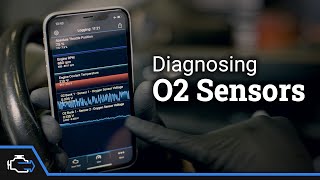
How to confirm: Use an OBD-II scanner to monitor the live data for the B1S2 O2 sensor. If the voltage is flat and unresponsive (e.g., stuck at 0V, 0.45V, or another fixed value) while the engine is running and warmed up, the sensor has failed. A healthy downstream sensor should show slow fluctuations. The heater element resistance should be 5.6 Ohms +/- 0.8 Ohms.
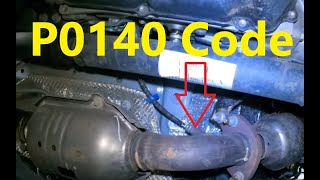
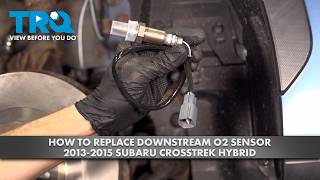
Typical fix: Replace the rear oxygen sensor. This involves unplugging the electrical connector (located on the frame rail), unscrewing the old sensor from the exhaust pipe (often requiring a 22mm or 7/8" O2 sensor socket and penetrating oil for rust), and installing the new one. Always apply anti-seize compound to the new sensor's threads.
Est. part cost: $80-$180 - Damaged Wiring or Corroded Connector 🟡 Medium Probability The sensor and its wiring are located under the vehicle, exposed to road debris, moisture, and heat from the exhaust. This can lead to frayed wires, melted insulation, or corrosion on the connector pins.
How to confirm: Visually inspect the entire wiring harness from the sensor to the connector for any signs of breaks, fraying, melting, or contact with the exhaust pipe. Unplug the connector and check for green or white corrosion on the pins. Use a multimeter to check for continuity between the ECM and the sensor connector if the visual inspection is clear.
Typical fix: Repair the damaged section of wire or clean the connector pins with an electrical contact cleaner. If the connector itself is damaged, it may need to be replaced.
Est. part cost: $5-$50
Rare But Worth Checking
- Blown Fuse for O2 Sensor Heater Circuit: The sensor's internal heater must work for the sensor to become active. A blown fuse can cause a 'no activity' code. While more commonly associated with P0141 (Heater Circuit Malfunction), it can sometimes present as P0140, as the TSB groups these codes together.
- Exhaust Leak: A significant exhaust leak before the rear O2 sensor can introduce outside air, causing the sensor to give a flat, unchanging reading that mimics a dead sensor. This is less common and would typically be accompanied by loud exhaust noise.
- Faulty Engine Control Module (ECM): This is extremely rare. The ECM itself could fail to read the sensor's signal. This should only be considered after all other possibilities, including the sensor and wiring, have been definitively ruled out. Forum users mention this as a last resort.
Diagnosis Steps
- Connect an OBD-II scanner to confirm the P0140 code and check for any other related codes (P0137, P0138, P0141).
- Using the scanner's live data function, monitor the voltage for 'O2S B1S2' (Bank 1, Sensor 2) with the engine running and fully warmed up.
- If the voltage is stuck at a fixed number (e.g. 0.45V) and does not fluctuate, it confirms a lack of activity. A healthy sensor will fluctuate slowly.
- Perform a thorough visual inspection of the rear O2 sensor's wiring harness and connector. Look for obvious damage, melting from exhaust contact, or corrosion.
- If the wiring appears intact, the most probable cause is a failed oxygen sensor, as documented in the Subaru TSB.
- If a new sensor does not resolve the issue, use a multimeter to test the wiring for continuity and check for proper voltage and ground signals at the sensor connector, tracing back to the ECM.
- As a final step, check the vehicle's fuse box for a blown fuse related to the emissions or O2 sensor heater circuits.
Parts You'll Likely Need
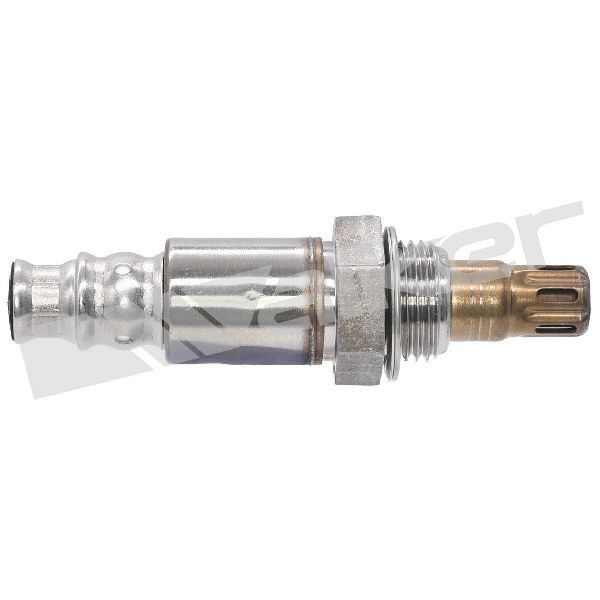
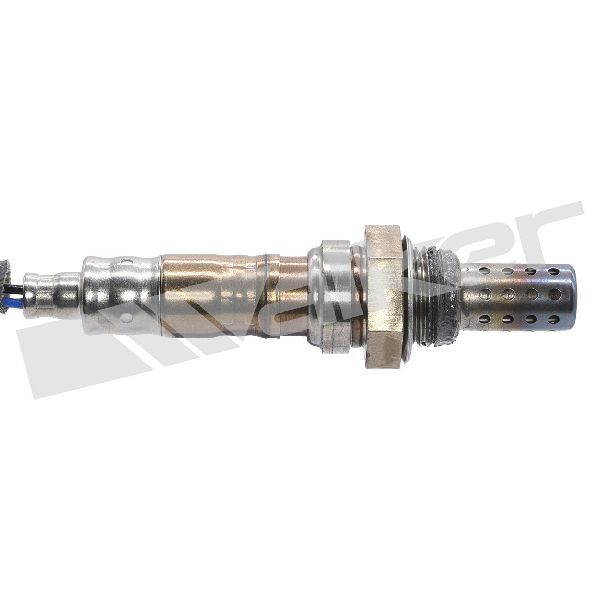
- Rear Oxygen Sensor (Downstream, Bank 1 Sensor 2)
(OEM #22690AA960)— This is the most common failure point for code P0140, as confirmed by owner experiences and a specific Subaru TSB. Note that the TSB states the part number was not changed for the redesigned part, but the new part can be identified by the Denso part number engraved on it.
Trusted brands: Denso (OEM supplier), NTK
OEM price range: $120-$180
Aftermarket price range: $80-$140
Related Codes That Often Appear With This One
- P0137 — This code for 'O2 Sensor Circuit Low Voltage' can be triggered by the same failing sensor, often due to an internal short or open circuit.
- P0138 — This code for 'O2 Sensor Circuit High Voltage' can also be caused by an internal short in the same failing sensor.
- P0141 — This code for 'O2 Sensor Heater Circuit Malfunction' is very common with P0140, as a failure of the sensor's internal heater will prevent it from sending a signal. The Subaru TSB groups all these codes together as being caused by the same faulty sensor design.
Technical Service Bulletins (TSBs) & Recalls
- 09-115-24R: Announcing a design change for the rear oxygen sensor to address DTCs P0137, P0138, P0140, & P0141 on 2017-2024 Crosstrek models. It notes the cause is potential internal cracking and the fix is a new sensor with an optimized coating.
Platform-Specific Known Issues
- Subaru TSB #09-115-24R specifically covers the 2017-2024 Crosstrek for code P0140 (and related codes), recommending replacement with a redesigned sensor. The new sensor has an improved 'optimized coating' to prevent internal cracks that cause short/open circuits.
- Owner experiences in forums frequently confirm that replacing the rear O2 sensor is the definitive fix for P0140 on this platform, often accompanied by P0141.
- Accessing the sensor can be complicated by rust on the undertray bolts and the sensor threads themselves, sometimes requiring significant force or penetrating oil.
Mechanic-Grade Diagnostic Values
- Rear O2 Sensor (B1S2) Heater Circuit Resistance — expected: 5.6 Ohms +/- 0.8 Ohms at 20°C (68°F). Failure: No reading (open circuit) or a very high resistance reading (e.g., over 50 Ohms) indicates a failed heater element.
- Rear O2 Sensor (B1S2) Live Data Voltage (Engine Warm, Idle) — expected: Slow, relatively stable fluctuations, typically around 0.45V to 0.7V.. Failure: Voltage is stuck at a fixed value (e.g., 0V, 0.45V) or is completely flat. A reading below 0.03V or above 1.2V also indicates a fault.
- Rear O2 Sensor Connector - Heater Power — expected: Battery Voltage (approx. 12V) at Pin 1 (Red wire) with key on, engine off.. Failure: No voltage indicates a problem in the power supply circuit, such as a blown fuse or broken wire before the connector.
Hidden / Shadow Codes Worth Checking
- Mode 6, Test ID $41: This Test ID corresponds to the diagnostic monitor for the O2 Sensor Circuit (B1S2). It tracks values like maximum and minimum sensor output voltage. (see via Advanced OBD-II scanners that support Mode 6 data display. Interpreting the raw hexadecimal values often requires manufacturer-specific documentation.)
Scan Tool Commands That Help
- Subaru Select Monitor (SSM): Current Data Display & Save > Rear O2 Sensor — This is the dealer-level method to view the live voltage output of the rear O2 sensor to confirm if it is active or stuck at a fixed voltage. While most consumer scan tools can also show this PID, the SSM is the authoritative tool for diagnosis.
Wiring & Ground Locations
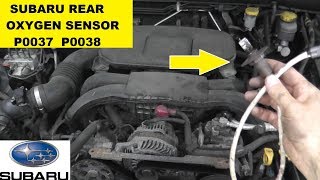
- Rear O2 Sensor Connector — Under the vehicle, on the exhaust pipe after the catalytic converter. The electrical connector is typically mounted to the frame rail nearby.. This is the primary point for electrical testing. Pin 1 (Red) is heater power, and Pin 2 (Green/Yellow) is the heater ground controlled by the ECM. Damage or corrosion here is a common cause of P0140.
- ECM Ground — The Subaru ECM primarily gets its ground reference from the top of the intake manifold.. A poor ground connection at the intake manifold can cause a wide range of strange electrical issues, including incorrect sensor readings. This is especially relevant if aftermarket parts like TGV deletes have been installed, as they can interrupt the ground path.
- Engine Ground Strap — There are multiple ground straps connecting the engine block to the chassis. One is located on the driver's side near the engine mount, and another connects to the passenger side manifold area.. These straps ensure the engine block has a solid ground connection to the chassis and battery negative. If they break due to corrosion or are forgotten during repairs, it can lead to poor grounding for all engine sensors, potentially causing a P0140 code.
Real Owner Repair Stories
- Reddit user HaasMe on r/Crosstrek (2018 Crosstrek 6MT, 110k miles) — Recurring Check Engine Light for the downstream O2 sensor heater circuit (related to P0140).
❌ Tried (didn't work) Replaced the rear O2 sensor with an aftermarket Walker brand sensor (P/N: 350-34052). The code returned after about a week.
✅ What actually fixed it The user confirmed with a multimeter that the new sensor's resistance was 6.0 Ohms (within the 5.6 +/- 0.8 Ohm spec) and that the heater circuit was receiving modulating current from the ECM. The final advice from another user was that the aftermarket sensor was likely the problem despite testing correctly, and that an OEM (Denso) sensor should be used as Subarus can be sensitive to non-OEM electronics.
OEM Part Supersession History
22690AA960→22690AA96A— Unconfirmed, but part number changes often indicate a revision or change in supplier. Given the TSB for a redesigned part, this could be a related change.
Heads up: The TSB for the redesigned sensor states the original part number was not changed, but this alternate number appears in some parts catalogs, suggesting a possible running change or alternative.
Model Year Variations Within This Range
- 2017-2024: While the Crosstrek platform underwent significant changes from the first generation (ending 2017) to the second (2018-2023) and third (2024-), the underlying cause of P0140 (faulty rear O2 sensor) and the fix (replacement with a redesigned part) remain consistent across all these model years, as documented by Subaru's TSB #09-115-24R.
Helpful Videos
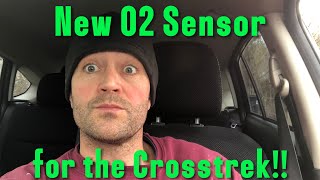
We Have This Part in Stock

The information in this article is provided for general reference and educational purposes only. Vehicle specifications, procedures, and part compatibility can vary by production date, trim level, and region. Always consult your vehicle's factory service manual and verify part numbers before purchasing or performing repairs. Safety-critical components such as airbags, seat belts, and braking systems should be installed by a qualified professional.
- Subaru CROSSTREK:
- 🎬 Helpful Videos
- 🛍️ Shop This Part
- What's Unique About the 2017-2024 Subaru CROSSTREK
- Diagnostic Flowchart
- Symptoms You May Notice
- Most Likely Causes
- Rare But Worth Checking
- Diagnosis Steps
- Parts You'll Likely Need
- Related Codes That Often Appear With This One
- Technical Service Bulletins (TSBs) & Recalls
- Platform-Specific Known Issues
- Mechanic-Grade Diagnostic Values
- Hidden / Shadow Codes Worth Checking
- Scan Tool Commands That Help
- Wiring & Ground Locations
- Real Owner Repair Stories
- OEM Part Supersession History
- Model Year Variations Within This Range
- 🎟️ Get 5% Off