

P0139 on 2011-2013 GMC Savana: O2 Sensor Slow Response Causes and Fixes
This code most often means the downstream oxygen sensor on the driver's side (Bank 1, Sensor 2) has failed. Replacing this sensor is the most common fix. An exhaust leak before the sensor is the second most likely cause. Before replacement, inspect the wiring for damage and the exhaust for leaks.
- P0139 points to a slow-reacting oxygen sensor after the catalytic converter on the driver's side.
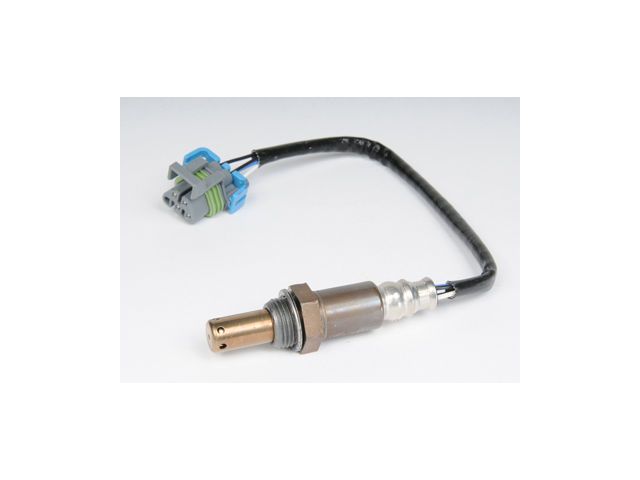
- The most likely fix is replacing the oxygen sensor itself (Bank 1, Sensor 2), with ACDelco 213-4229 being a common OEM part.
- Before replacing the sensor, always check for exhaust leaks between the engine and the sensor, as this is a common secondary cause.
- Also, inspect the sensor's wiring and connector for any heat damage or corrosion, as the under-van location makes it vulnerable.
- This is a DIY-friendly repair for most owners with basic tools, but the sensor can sometimes be difficult to remove if it's rusted in place.
What's Unique About the 2011-2013 GMC Savana
On the V6 and V8 engines in the 2011-2013 Savana, this code is straightforward. Given the heavy-duty use these vans often see, heat and mileage are the primary enemies of the exhaust components. The long exhaust system running the length of the van's underbody exposes the sensors and wiring to significant potential for physical damage from road debris and corrosion from road salt, which can affect wiring, connectors, and the exhaust pipes themselves, leading to this code.
Symptoms You May Notice
- Check Engine Light is on
- Failing an emissions test
- Slightly reduced fuel economy
- In rare cases, rough idle or hesitation on deceleration
- Replacing the catalytic converter. A P0139 code points to a slow sensor, not necessarily a bad converter. A failing converter usually sets a P0420 (Bank 1) or P0430 (Bank 2) code.
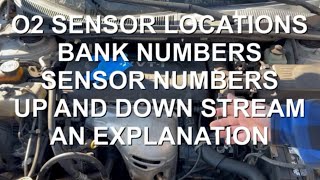
- Replacing the wrong oxygen sensor. This code is for Bank 1, Sensor 2. Sensor 1 is the upstream sensor (before the converter), and Bank 2 is on the passenger side. Ensure you are diagnosing the correct sensor (downstream, driver's side).
Most Likely Causes
- Failing or Contaminated Oxygen Sensor (Bank 1, Sensor 2) 🔴 High Probability Oxygen sensors are wear items. High mileage, age, and contamination from engine byproducts (like silicone from coolant leaks or carbon) eventually cause them to become sluggish and lose their ability to react quickly.
How to confirm: Use a scan tool to watch the live voltage data for B1S2. On a fully warmed-up engine, the voltage should be relatively stable. If you snap the throttle, the voltage should change. If it's very slow to react (taking several seconds) or is stuck at a certain voltage (e.g., flatlined at 0.5v), the sensor is likely bad. A healthy downstream sensor will show slow fluctuations, but a lazy one will barely respond to induced rich/lean conditions.
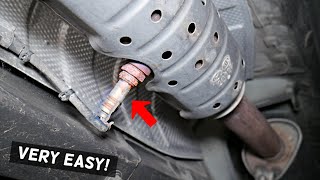
Typical fix: Replace the Bank 1, Sensor 2 oxygen sensor. This is the downstream sensor on the driver's side. Using an O2 sensor socket is highly recommended as they can be seized in the exhaust pipe.
Est. part cost: $40-$90 - Exhaust System Leak 🟡 Medium Probability Exhaust gaskets at the manifold or flange connections, as well as the pipes themselves, can develop leaks from rust, vibration, and heat cycles. A leak before the O2 sensor allows outside air into the exhaust, which skews the sensor's readings and can make it appear slow or biased.
How to confirm: Visually inspect the exhaust manifold, gaskets, and pipes leading to the sensor for black soot trails or cracks. Listen for ticking or hissing sounds when the engine is cold. A professional method is to use a smoke machine to pressurize the exhaust (when cold) and look for smoke escaping from cracks or bad gaskets.
Typical fix: Repair the leak by replacing the faulty gasket or section of pipe. Manifold-to-head or crossover pipe gaskets are common failure points.
Est. part cost: $10-$200 - Damaged Wiring or Connector ⚪ Low Probability The sensor wiring runs close to the hot exhaust and is exposed under the vehicle, making it vulnerable to melting, chafing, or corrosion from road salt and moisture. The long harness length on a van provides more opportunity for damage.
How to confirm: Visually inspect the entire wiring harness for the Bank 1, Sensor 2, from the sensor connector to where it enters the main loom. Look for melted plastic, frayed wires, or green/white corrosion on the connector pins. Use a multimeter to check for continuity on the signal wire and for proper voltage/ground on the heater circuit wires. Excessive resistance in the wiring can delay the signal, causing the code.
Typical fix: Repair the damaged section of the harness or clean/replace the connector. Sometimes the connector itself is the point of failure.
Est. part cost: $5-$50
Rare But Worth Checking
- Engine Running Rich or Lean: If the engine has other issues like leaking fuel injectors or a major vacuum leak (e.g., from an intake manifold gasket), it can sometimes trigger a P0139. However, you will almost always have other codes (like P0171, P0174, or misfire codes) present. Address those codes first.
- Powertrain Control Module (PCM) Issue: In very rare cases, the PCM itself can be faulty or may require a software update from the manufacturer. This could be due to internal signal processing delays. This should only be considered after all other possibilities, including wiring and the sensor itself, have been exhaustively ruled out.
Diagnosis Steps
- Connect an OBD-II scanner and check for any other codes. If other codes are present, especially for fuel trim (P0171, P0174) or misfires (P030x), diagnose and fix them first.
- Perform a thorough visual inspection of the exhaust system from the driver's side exhaust manifold to the catalytic converter. Look for signs of leaks like black soot stains or audible hissing/ticking noises, especially around flanges and welds.
- Inspect the wiring and connector for the Bank 1, Sensor 2 (downstream, driver's side). Check for any signs of melting, chafing, corrosion, or loose pins. Follow the harness as far back as possible.
- With the engine fully warmed up, use the live data function on your scanner to monitor the voltage of the Bank 1 Sensor 2. It should fluctuate slowly. A sensor that is stuck or responds very slowly to throttle changes is likely faulty. Compare its reaction time to the Bank 2 Sensor 2 if possible.
- If you suspect an exhaust leak, a smoke test is the most definitive way to find it.
- If the wiring and exhaust are confirmed to be good and the sensor appears lazy on the scan tool, replace the Bank 1, Sensor 2 oxygen sensor.
- After replacement, clear the codes and perform a complete drive cycle to ensure the code does not return.
Parts You'll Likely Need
- Oxygen Sensor (Bank 1, Sensor 2)
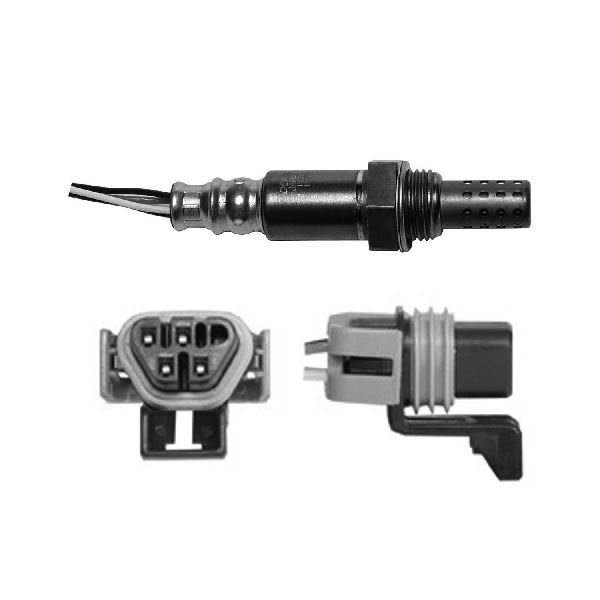
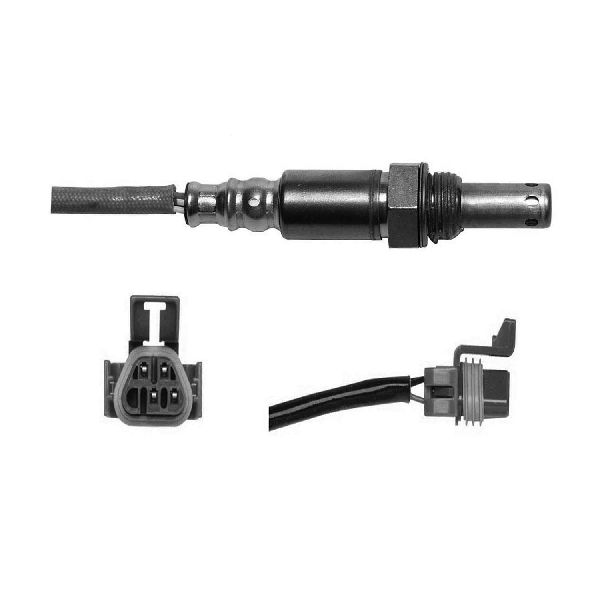
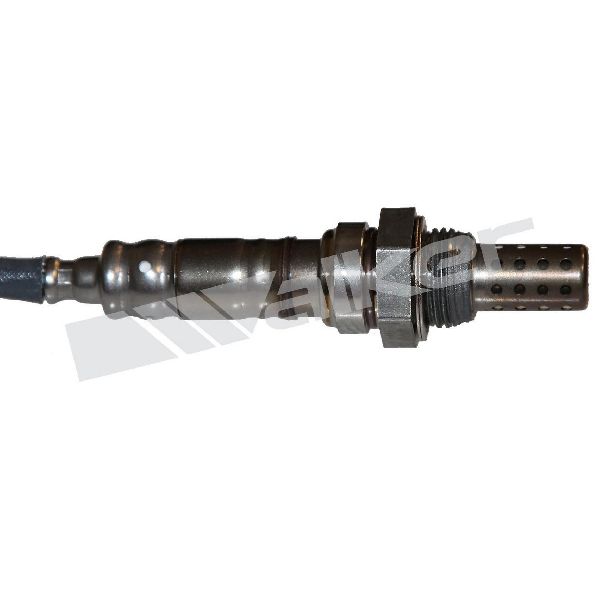
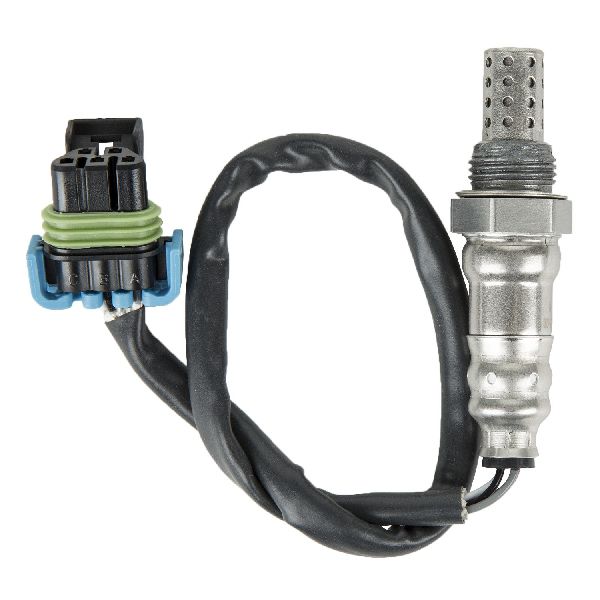
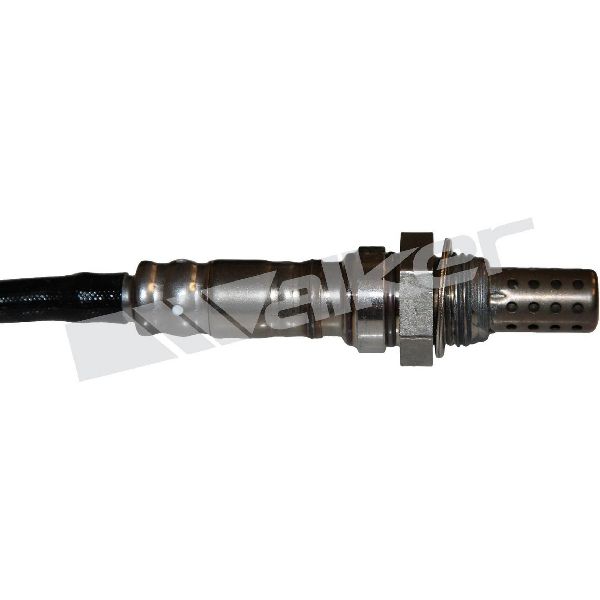
(OEM #ACDelco 213-4229 (GM 12609457))— This is the most common failure point for code P0139. It is the downstream sensor on the driver's side.
Trusted brands: ACDelco, Denso (e.g., 234-4668), Bosch, NGK/NTK
OEM price range: $70-$120
Aftermarket price range: $40-$90
Related Codes That Often Appear With This One
- P0137 — Indicates low voltage from the same sensor, suggesting a sensor or wiring fault.
- P0138 — Indicates high voltage from the same sensor, also suggesting a sensor or wiring fault.
- P0140 — Indicates no activity from the same sensor, pointing strongly to a dead sensor or a complete wiring failure.
Technical Service Bulletins (TSBs) & Recalls
- While no TSBs directly address P0139 specifically for this model, GM has issued bulletins for related issues. For example, TSB 16-NA-284 addresses rough idle and stalling conditions that could be related to fuel trim issues, which can sometimes influence O2 sensor readings. Always check for the latest ECM calibrations, as software updates can sometimes revise sensor monitoring strategies.
- Manufacturer TSB Bulletin #PIP5123B notes that for some GM vehicles, P0139 may appear alongside codes like P2270, P0140, P0138, and P0137. In these cases, technicians are advised to inspect for a bent terminal on the X131 connector.
Mechanic-Grade Diagnostic Values
- O2 Sensor Heater Circuit Resistance — expected: Typically 4-7 ohms for a good OEM-style sensor (e.g., Denso). Some aftermarket brands may differ significantly.. Failure: An open circuit (infinite resistance) or very high resistance (e.g., over 12 ohms) indicates a failed heater. A value outside the expected range can also trigger heater circuit codes.
- O2 Sensor Signal Voltage (Live Data) — expected: A healthy downstream (Sensor 2) O2 sensor should show a relatively stable voltage, typically between 0.5V and 0.8V on a warm engine at steady RPM. It fluctuates much slower than the upstream sensor.. Failure: For a P0139, the key failure is slow response. During deceleration fuel cut-off, the voltage should drop below 0.2 volts. The PCM sets the code if this drop takes too long (e.g., more than 7 seconds). If the voltage is stuck or flatlined, the sensor is likely dead.
- O2 Sensor Heater Circuit Voltage — expected: 12 volts should be present on the pink wire at the sensor connector with the key on.. Failure: No voltage indicates a problem with the fuse (O2A or O2B in the under-hood fuse block) or the wiring from the fuse block to the sensor.
- Wiring Harness Resistance — expected: Near 0 ohms from the sensor connector to the PCM connector.. Failure: Resistance values above 5 ohms suggest corrosion in a connector or a damaged wire, which can add delay to the signal and trigger a P0139.
Scan Tool Commands That Help
- GDS2 (GM Global Diagnostic System 2): Module Diagnostics > ECM > Data Display — To view live data streams for all O2 sensors simultaneously, allowing for comparison between Bank 1 and Bank 2 sensor responses to confirm if B1S2 is significantly lazier than B2S2.
- GDS2 (GM Global Diagnostic System 2): Module Diagnostics > ECM > Output Controls — While there isn't a direct 'test O2 sensor' command, a technician can use output controls to command changes in fuel trim or activate other components to induce a rich or lean condition, then observe the O2 sensor's reaction time in the data display.
Wiring & Ground Locations
- O2 Sensor Heater Fuse — In the under-hood fuse block, labeled as 'O2A' and 'O2B'. These are typically 15-amp fuses.. While P0139 is a slow response code, not a heater circuit code, a malfunctioning heater can cause the sensor to warm up too slowly, contributing to sluggish performance, especially on a cold start. Always check fuses for related O2 sensor codes.
- B1S2 Connector Pinout (Typical 4-wire GM) — On the sensor pigtail and the vehicle harness connector for the driver's side, downstream O2 sensor.. Knowing the wire functions is critical for testing. Typically for GM: two wires of the same color (e.g., two blacks or two whites) are for the heater circuit (12V power and ground). The other two, often black (signal) and gray (signal ground), are for the sensor signal to the PCM. This allows for targeted testing of power, ground, and signal integrity.
- Harness Chafe Point — On 4WD models, the wiring harness for the Bank 2 (passenger side) sensor is known to rub against the front driveshaft. While this code is for Bank 1, it highlights a common issue on this platform. The Bank 1 harness should be inspected for similar contact with the frame, exhaust, or transmission components.. A chafed wire can cause an intermittent short or open in the signal or heater circuit, leading to erratic sensor behavior that the PCM may interpret as slow response.
Real Owner Repair Stories
- GM-Trucks.com forum user (2005 Silverado 5.3L (similar platform)) — Repeatedly getting O2 sensor heater code P0053 after clearing.
❌ Tried (didn't work) Replacing the O2 sensor with a new Bosch unit.
✅ What actually fixed it The user measured the resistance of the new Bosch sensor's heater circuit and found it was 12.7 ohms. The original sensor was 4 ohms. He replaced the Bosch sensor with a new Denso sensor which measured 5.6 ohms, and the code was resolved. This shows that the PCM expects a specific resistance range, and some aftermarket parts may be out of spec, causing codes even when new.
OEM Part Supersession History
12609457→No direct supersession found, but this part is also sold under ACDelco PN 213-4229.— N/A
Heads up: While many brands offer compatible sensors, forum reports suggest that GM truck PCMs can be sensitive to the heater circuit resistance of aftermarket sensors. Using OEM ACDelco or a known-good equivalent like Denso is recommended to avoid issues.
Diagnostic Flowchart
Other Known Issues on This Vehicle
Issues unrelated to this code that are worth knowing about as an owner of this generation:
- Fuel Level Sensor Failure 🟠 Medium — Very common across all GM trucks and vans of this era. The fuel gauge becomes erratic or reads empty. The sensor resistor card inside the fuel pump module wears out.
- 4L60E/4L80E Transmission Problems 🔴 High — Common at higher mileage (>100k miles). Symptoms include slipping, delayed shifts (especially 1-2), loss of reverse, or no movement when hot. Failures of the 3-4 clutch pack and sun shell are well-documented weak points.
- Intake Manifold Gasket Leaks (V6 & V8) 🟠 Medium — A known issue on Vortec engines. The gasket can degrade, causing coolant or oil leaks, or vacuum leaks that lead to rough idling and other performance issues.
- Tail Light Wiring Damage 🟡 Low — Common on cargo models due to items shifting in the back and damaging the harness that runs along the interior walls, causing light failure.
- CNG Fuel System Recalls 🔴 High — Specific to vans equipped with the Compressed Natural Gas (CNG) option. Recalls were issued for potential gas leaks from the high-pressure regulator or corrosion on a solenoid connector, increasing fire risk. (Ref: GM Recalls 13365, and others related to IMPCO CNG systems.)
Used vs. New Parts: Buying Guide for This Vehicle
When a used part is the smart pick: A used O2 sensor is almost never recommended. It is a wear-item with a finite lifespan (typically 60k-100k miles). The labor to install it is the same, and you have no idea how much life is left on a used part. It is a poor value proposition.
Donor-vehicle mileage cap: roughly under 50000 miles for the part to have meaningful remaining life.
What to inspect on the donor part:
- If forced to use one in an emergency, inspect the sensor tip for heavy black soot (rich running), white deposits (coolant/silicone contamination), or physical damage.
- Check the connector for corrosion or broken locking tabs.
- Ask for the mileage of the donor vehicle; anything over 50,000 miles is a significant gamble.
Aftermarket brands forum-validated for this vehicle:
- ACDelco (OEM)
- Denso
- NTK/NGK
Brands owners have reported issues with on this vehicle:
- Unbranded or 'no-name' sensors from online marketplaces.
- Some forum users have reported issues with certain Bosch sensors having incorrect heater resistance for GM applications, leading to heater circuit codes.
Real Owner Stories
Aggregated from forums and TSBs cited above. Mileages and costs reflect what owners reported in those sources.
Chevrolet Express 6.0L V8 (Platform Mate)
Symptoms: The owner was troubleshooting O2 sensor codes and emphasized that the issue might not just be the sensor itself.
What fixed it: Checking the entire sensor circuit for wiring issues, as the long harness on these vans is prone to damage.
Source hint: Chevrolet Forum - Please advice on O2 sensors
2011-2013 GMC Savana — ~120000 miles
Symptoms: The sensor showed a slow reaction when tested with a propane torch and improper voltage fluctuations on a scanner.
What fixed it: Replacing the sensor with a new one, which then showed proper voltage fluctuation on the scan tool.
Source hint: Reddit r/MechanicAdvice - P0139 code troubleshooting
Related OBD-II Codes
Frequently Asked Questions
Where is the Bank 1 Sensor 2 located on my 2011-2013 GMC Savana?
Could my Savana's rough idle be related to P0139?
Does TSB 16-NA-284 apply to the issues I'm seeing with my O2 sensor readings?
I have a Savana with the 6.0L V8; are there specific parts recommended for this repair?
Can an exhaust leak cause a P0139 on my GMC Savana?
Is the P0139 code related to the CNG fuel system recalls on some Savana models?
Helpful Videos


We Have This Part in Stock

The information in this article is provided for general reference and educational purposes only. Vehicle specifications, procedures, and part compatibility can vary by production date, trim level, and region. Always consult your vehicle's factory service manual and verify part numbers before purchasing or performing repairs. Safety-critical components such as airbags, seat belts, and braking systems should be installed by a qualified professional.
- GMC Savana:
- 🎬 Helpful Videos
- 🛍️ Shop This Part
- What's Unique About the 2011-2013 GMC Savana
- Symptoms You May Notice
- Most Likely Causes
- Rare But Worth Checking
- Diagnosis Steps
- Parts You'll Likely Need
- Related Codes That Often Appear With This One
- Technical Service Bulletins (TSBs) & Recalls
- Mechanic-Grade Diagnostic Values
- Scan Tool Commands That Help
- Wiring & Ground Locations
- Real Owner Repair Stories
- OEM Part Supersession History
- Diagnostic Flowchart
- Other Known Issues on This Vehicle
- Used vs. New Parts: Buying Guide for This Vehicle
- Real Owner Stories
- Chevrolet Express 6.0L V8 (Platform Mate)
- 2011-2013 GMC Savana — ~120000 miles
- Related OBD-II Codes
- Frequently Asked Questions
- 🎟️ Get 5% Off