

P0138 on 2008-2017 Volvo XC60 3.2L: O2 Sensor High Voltage Causes and Fixes
This code almost always means the rear (downstream) oxygen sensor has failed. It's a common issue caused by age and heat. Replacing the sensor is the typical fix, costing around $75-$150 for an aftermarket part and is a straightforward DIY job for many.
- P0138 on your XC60 3.2L points to a problem with the rear oxygen sensor (Bank 1, Sensor 2).
- The most likely cause is simply a worn-out sensor that needs to be replaced.
- Before buying parts, always inspect the sensor's wiring for any visible damage, as this is a common and cheaper fix.
- You can continue driving, but fixing it promptly will save fuel and prevent potential damage to your catalytic converter.
- This is a DIY-friendly repair for those with basic tools, including a special O2 sensor socket.
What's Unique About the 2008-2017 Volvo XC60
The Volvo XC60 with the 3.2L I6 engine uses a fairly standard emissions control setup. The P0138 code is not unique to this platform and generally points to the same common failures seen across many vehicles: a bad sensor or wiring. The inline engine configuration means there is only one 'Bank 1,' simplifying diagnosis compared to V-engines. The key is ensuring you are replacing the correct 'Sensor 2,' which is the one located after the catalytic converter. The connector for the downstream sensor is located on the vehicle body above the exhaust, and can be accessed from underneath the vehicle.
Symptoms You May Notice
- Check Engine Light is on
- Increased fuel consumption
- Failure to pass an emissions test
- Rough idling or stalling (less common)
- Strong exhaust odor, indicating a rich condition (less common)
- Replacing the upstream (pre-catalyst) oxygen sensor instead of the downstream (post-catalyst) one.
- Replacing the catalytic converter when the actual problem is just a faulty sensor. A failing converter typically sets a P0420 code, not P0138.
Most Likely Causes
- Faulty Downstream Oxygen (O2) Sensor 🔴 High Probability Oxygen sensors are wear items that degrade over time from constant exposure to high-temperature exhaust gases and contaminants. After 100,000 miles, failure is common and is the most frequent reason for a P0138 code.
How to confirm: Use an OBD-II scanner with live data to monitor the Bank 1 Sensor 2 voltage. A healthy downstream sensor should show a relatively stable voltage, typically between 0.5 and 0.8 volts. If the voltage is stuck high (e.g., above 1.0 volt) and does not fluctuate, the sensor has likely failed internally. You can also test the sensor's internal heater circuit resistance; a typical value for a good sensor is between 2 and 4 ohms.
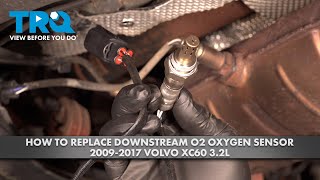
Typical fix: Replace the Bank 1, Sensor 2 (downstream) oxygen sensor. An O2 sensor socket or a 22mm wrench is required for removal and installation. 🎬 Watch: Step-by-step downstream O2 sensor replacement for your XC60. Applying anti-seize compound to the threads of the new sensor is recommended.
Est. part cost: $75-$200 - Damaged Wiring or Connectors 🟡 Medium Probability The sensor wiring runs underneath the vehicle and is exposed to road debris, moisture, and extreme heat from the exhaust system, which can cause wires to melt, fray, or corrode over time. This can cause a short-to-voltage on the signal wire, resulting in a constant high reading.
How to confirm: Visually inspect the entire wiring harness from the O2 sensor to its connection point. Look for any signs of melting, chafing, corrosion in the connector, or breaks in the wires. Use a multimeter to check for a short to power in the signal wire by back-probing the connector.
Typical fix: Repair the damaged section of wiring or replace the connector pigtail. Ensure the repair is sealed from moisture using heat-shrink tubing.
Est. part cost: $10-$50
Rare But Worth Checking
- Exhaust Leak: An exhaust leak near the sensor can sometimes draw in outside air, confusing the sensor and causing erratic readings, though this more commonly causes low voltage codes.
- Failing Engine Control Module (ECM): This is very rare. The ECM itself can fail, causing it to misinterpret the sensor's signal. All other possibilities should be exhausted before considering ECM replacement.
- High Fuel Pressure: A failing fuel pressure regulator or leaking fuel injectors can create a rich running condition, causing the downstream O2 sensor to read high voltage. This would typically be accompanied by other codes (like P0172 Rich Condition) and more severe drivability symptoms like black smoke from the exhaust.
Diagnosis Steps
- Connect an OBD-II scanner to confirm the P0138 code and check for any other related codes.
- Use the scanner's live data feature to observe the voltage from 'O2S B1S2' (Bank 1, Sensor 2). A reading consistently stuck above 1.0V points towards a sensor or wiring issue.
- Perform a thorough visual inspection of the downstream O2 sensor's wiring harness and connector. Look for any signs of melting on the exhaust, corrosion in the pins, or physical damage.
- If wiring appears damaged, repair it. If it looks intact, disconnect the sensor and check the signal wire on the harness side for voltage with the key on, engine off. There should be no voltage; if there is, you have a short-to-power in the harness that must be traced.
- If the wiring tests good, the most probable cause is a failed oxygen sensor. To confirm, test the sensor's internal heater circuit resistance with a multimeter. It should typically be between 2-4 ohms. An open circuit (no reading) confirms a failed heater.
- If the sensor and wiring test good, investigate potential rich fuel conditions (e.g., leaking injectors, high fuel pressure), though this is less likely without other codes present.
- Replace the downstream oxygen sensor if it is confirmed to be faulty.
- After replacement, clear the codes with the scanner and perform a test drive to ensure the code does not return.
Parts You'll Likely Need
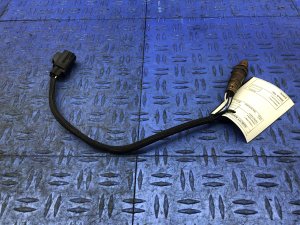
- Downstream Oxygen Sensor (Bank 1, Sensor 2)
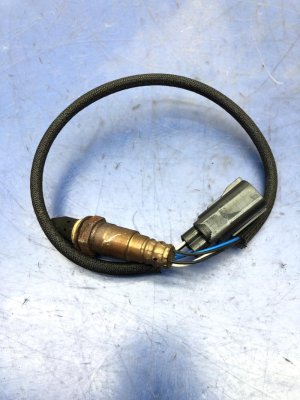
(OEM #30774563)— This is the most common failure point for code P0138. The sensor's ability to read oxygen content degrades over time. For the 3.2L engine, this part number corresponds to the rear (downstream) sensor.
Trusted brands: Bosch (e.g., 15740), Denso (OEM supplier, part #DOX-0529), Walker
OEM price range: $200-$300
Aftermarket price range: $75-$150
Mechanic-Grade Diagnostic Values
- Downstream O2 Sensor (B1S2) Voltage at Idle/Steady Cruise — expected: Relatively stable voltage between 0.5V and 0.8V. Failure: Voltage is stuck high, consistently above 0.9V or 1.0V.
- O2 Sensor Internal Heater Resistance — expected: Approximately 2.0 to 4.0 Ohms at room temperature.. Failure: An open circuit (infinite resistance) or a value significantly outside the specified range.
- Upstream O2 Sensor (B1S1) Voltage at Idle — expected: Rapidly fluctuating between approximately 0.1V (lean) and 0.9V (rich).. Failure: A slow or non-fluctuating signal. While not the direct cause of P0138, a faulty upstream sensor can affect the overall system.
Scan Tool Commands That Help
- Volvo VIDA or equivalent professional scanner: Live Data Graphing for Rear HO2S — This is the primary diagnostic step. Use it to visually confirm if the Bank 1 Sensor 2 voltage is stuck high, as opposed to showing the expected stable reading. 🎬 Watch: How to monitor O2 sensor live data using a scanner. A flat line near or above 1.0V is a clear indicator of a fault in the sensor or its circuit.
Wiring & Ground Locations
- 31/93 and 31/94 — Ground connections located in the left and right front wheel housings, respectively.. The Engine Control Module (ECM) and its sensors rely on clean ground connections. A corroded or loose engine-area ground can introduce electrical noise or voltage offsets, potentially causing the ECM to misinterpret the O2 sensor's signal.
- 31/84 — Ground connection on the right bottom rail of the chassis.. This is another critical chassis ground point. Verifying its integrity is a key step when diagnosing any persistent electrical fault codes after the primary component and its direct wiring have been checked.
- B1S2 Connector — The downstream O2 sensor connector is located on the vehicle body, above the exhaust pipe, near the catalytic converter. The sensor wire routes up to this connection point.. This connector is a common point for corrosion or damage. It's where you would perform electrical tests (checking for shorts, opens, and voltage) on both the sensor side and the vehicle harness side.
Real Owner Repair Stories
- Volvo Owners Club Forum (2004 Volvo S40 2.0L (B4204S2 engine, P1 platform - similar diagnostic principles)) — P0138 code present. Live data showed both upstream and downstream sensors fluctuating to a very high 1.275V.
❌ Tried (didn't work) Replaced both upstream and downstream O2 sensors with OEM quality parts., Used a catalytic converter cleaner additive.
✅ What actually fixed it The user's issue was unresolved in the thread, but the detailed description of symptoms (high voltage on both sensors, going into open loop on deceleration) points strongly toward a wiring issue or a systemic problem like high fuel pressure or an exhaust restriction, rather than a simple sensor failure. This highlights the importance of diagnosing beyond just replacing the sensor mentioned in the code.
OEM Part Supersession History
30774563→30774563 (current)— This part number has remained stable for the specified application (rear sensor for 3.2L).
Heads up: Note that part number 30774563 is listed for the FRONT sensor on some 3.0L Turbo models but is the REAR sensor for the 3.2L non-turbo engine. Always verify fitment with the vehicle's VIN.30774700→N/A— This is another common rear O2 sensor part number for the P3 platform, fitting some 3.2L models in certain years.
Heads up: Fitment can vary by model year and specific emissions configuration (e.g., PZEV). It is critical to confirm the correct part number for the specific vehicle's VIN before ordering.
Diagnostic Flowchart
Other Known Issues on This Vehicle
Issues unrelated to this code that are worth knowing about as an owner of this generation:
- Rear End Accessory Drive (READ) Unit Bearing Failure 🔴 High — A well-documented weak point. A whirring or whining noise from the transmission-side of the engine that increases with RPM is the key symptom. Can occur at any mileage but becomes more common over 80,000 miles. (Ref: Volvo issued service bulletin TJ 26058, but repair is complex and expensive, sometimes requiring engine removal.)
- Brake Vacuum Pump Oil Leak 🟠 Medium — Extremely common. The seals for the camshaft-driven vacuum pump degrade, causing a noticeable oil leak onto the top of the transmission bell housing. Often misdiagnosed as a rear main seal or oil pan leak. (Ref: No recall, but Volvo offers a dedicated seal repair kit (part # 31401556), which is much cheaper than replacing the entire pump assembly.)
- PCV System Diaphragm Failure 🟠 Medium — Common after 100,000 miles. The rubber diaphragm inside the PCV oil trap assembly tears, causing a loud whistling or howling sound at idle. This creates excessive crankcase vacuum, which can be tested by feeling strong suction when trying to remove the oil filler cap with the engine running. (Ref: No recall. This is considered a wear item. The entire PCV assembly (part # 31319642) is typically replaced.)
- Oil Consumption on Early Models 🟠 Medium — Primarily affected pre-2012 models due to piston ring design. Less common than on other Volvo engines of the era, and many affected engines have been repaired. Frequent oil changes (5,000-7,500 miles) can help mitigate the issue on engines that are prone to it. (Ref: No recall, but was addressed in later engine revisions (B6324S5).)
Used vs. New Parts: Buying Guide for This Vehicle
When a used part is the smart pick: A used part is almost never a smart choice for this repair. Oxygen sensors are wear-and-tear items with a finite lifespan, similar to spark plugs or brake pads. A used sensor from a junkyard has unknown remaining life and may fail shortly after installation, wasting time and money.
Donor-vehicle mileage cap: roughly under 10000 miles for the part to have meaningful remaining life.
What to inspect on the donor part:
- If forced to use a used part in an emergency, source it from the lowest-mileage donor vehicle possible.
- Visually inspect the sensor tip for heavy carbon fouling, white deposits (from coolant/oil contamination), or physical damage.
- Inspect the wiring and connector for any signs of melting, fraying, or corrosion.
OEM-only on this vehicle (don't cheap out):
- While not strictly 'OEM-only', using a sensor from the original equipment manufacturer (Denso) or a reputable high-quality aftermarket brand is strongly recommended for longevity and proper performance.
Aftermarket brands forum-validated for this vehicle:
- Denso (often the OEM supplier)
- Bosch
- NTK/NGK
- Walker
Brands owners have reported issues with on this vehicle:
- Unnamed, no-brand 'white box' parts from online marketplaces should be avoided. They often have high failure rates, incorrect calibrations, or short service lives, leading to the code returning.
Real Owner Stories
Aggregated from forums and TSBs cited above. Mileages and costs reflect what owners reported in those sources.
2010 Volvo XC60 3.2L I6 — ~105000 miles
Symptoms: Standard wear item failure at higher mileage.
What fixed it: Replacing the downstream O2 sensor.
Source hint: reddit.com/r/Volvo
2008-2017 Volvo XC60 3.2L I6 — ~120000 miles
Symptoms: Check Engine Light on; code P0138.
What fixed it: Replacing the downstream O2 sensor with a Denso or Bosch brand unit.
Source hint: swedespeed.com
2008-2017 Volvo XC60 3.2L I6 — 100000 miles
Symptoms: Check Engine Light on; oxygen sensor failure as a common maintenance item.
What fixed it: Replacement of the Bank 1, Sensor 2 oxygen sensor.
Source hint: matthewsvolvosite.com
Related OBD-II Codes
Frequently Asked Questions
My 3.2L XC60 has a whistling sound at idle along with the P0138 code; are they related?
Does Volvo TSB TJ 26058 address the P0138 oxygen sensor code?
I'm seeing P0138 on my 2010 XC60; should I replace the sensor with any aftermarket brand?
Can I use a used O2 sensor from a salvaged XC70 to fix my XC60's P0138 code?
My XC60 is leaking oil onto the transmission bell housing; could this cause P0138?
Is there a specific resistance I should look for when testing the O2 sensor on my 3.2L engine?
Helpful Videos

We Have This Part in Stock

The information in this article is provided for general reference and educational purposes only. Vehicle specifications, procedures, and part compatibility can vary by production date, trim level, and region. Always consult your vehicle's factory service manual and verify part numbers before purchasing or performing repairs. Safety-critical components such as airbags, seat belts, and braking systems should be installed by a qualified professional.
- Volvo XC60:
- 🎬 Helpful Videos
- 🛍️ Shop This Part
- What's Unique About the 2008-2017 Volvo XC60
- Symptoms You May Notice
- Most Likely Causes
- Rare But Worth Checking
- Diagnosis Steps
- Parts You'll Likely Need
- Mechanic-Grade Diagnostic Values
- Scan Tool Commands That Help
- Wiring & Ground Locations
- Real Owner Repair Stories
- OEM Part Supersession History
- Diagnostic Flowchart
- Other Known Issues on This Vehicle
- Used vs. New Parts: Buying Guide for This Vehicle
- Real Owner Stories
- 2010 Volvo XC60 3.2L I6 — ~105000 miles
- 2008-2017 Volvo XC60 3.2L I6 — ~120000 miles
- 2008-2017 Volvo XC60 3.2L I6 — 100000 miles
- Related OBD-II Codes
- Frequently Asked Questions
- 🎟️ Get 5% Off