

P0138 on 2014-2019 Toyota Highlander: O2 Sensor High Voltage Causes & Fixes
For the 2014-2019 Toyota Highlander, code P0138 almost always means the downstream oxygen sensor (Bank 1, Sensor 2) has failed. This sensor is located on the rear cylinder bank (closer to the firewall), after the catalytic converter. An OEM-quality replacement from a brand like Denso costs about $50-$90 and is a straightforward DIY fix for most owners. Before replacing, a quick check of the wiring for damage is recommended.
- P0138 on your Highlander means the rear, downstream O2 sensor is sending a constant high voltage signal.
- The most likely cause is a failed O2 sensor, which is a common wear-and-tear item. The OEM supplier is Denso.
- Before replacing the sensor, perform a quick visual inspection of the wiring for any obvious damage and check for dampness in the driver's footwell.
- Ensure you are replacing the correct sensor: Bank 1 is the rear bank (near the firewall), and Sensor 2 is after the catalytic converter.
- If code P0606 appears at the same time, do not panic. It is almost certainly a 'sympathy code' caused by the O2 sensor fault; fix P0138 first.
What's Unique About the 2014-2019 Toyota Highlander
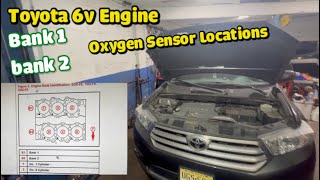
The 2GR-FE V6 engine in the Highlander is known for its reliability, and P0138 is not an unusually common or complex issue. The most platform-specific consideration is correctly identifying the sensor location. 🎬 Watch: This video helps you locate Bank 1 and Bank 2. 'Bank 1' on this transverse V6 is the cylinder bank closer to the firewall, which is less accessible than Bank 2 (front). 'Sensor 2' is the downstream sensor after the catalytic converter. While some Toyota models have had TSBs for wiring issues causing this code, none specifically apply to the 2014-2019 Highlander, making a simple sensor failure the most probable cause. Accessing the sensor often requires working from underneath the vehicle, and the sensor's position can make it tricky to remove without a specialized O2 sensor socket and extensions.
Symptoms You May Notice
- Check Engine Light is on
- Decreased fuel economy
- Vehicle may fail an emissions test
- Rough idling or poor engine performance
- Strong exhaust odor (smell of gas)
- Traction control and/or cruise control may be disabled
- Replacing the wrong oxygen sensor. The 2GR-FE V6 has four O2 sensors. P0138 specifically refers to Bank 1 (rear/firewall side), Sensor 2 (downstream/post-catalytic converter). Replacing any other sensor will not fix this code.
- Replacing the catalytic converter. This code points to a sensor or circuit issue, not a converter efficiency problem (which would typically set a P0420 or P0430 code).
- Replacing the sensor without checking for wiring damage. A short circuit can mimic a failed sensor, and the code will return immediately if the wiring is the true cause.
Most Likely Causes
- Failed Downstream Oxygen Sensor (Bank 1, Sensor 2) 🔴 High Probability Oxygen sensors are wear items with a finite lifespan, typically failing due to age, heat cycles, and contamination from exhaust byproducts. On the 2GR-FE, this is the most common reason for a P0138 code.
How to confirm: Use a scan tool to monitor the live data for the B1S2 O2 sensor. If the voltage is stuck high (e.g., >0.9V, often 1.25V in a fault condition) and does not fluctuate as expected, the sensor is very likely bad. The ultimate confirmation is replacing the sensor and seeing if the code clears.
Typical fix: Replace the Bank 1, Sensor 2 oxygen sensor. This sensor is located on the rear exhaust manifold (firewall side), after the catalytic converter. Using an O2 sensor socket is highly recommended for removal.
Est. part cost: $50-$150 - Damaged Wiring or Connectors 🟡 Medium Probability The wiring harness for the O2 sensor runs under the vehicle and is exposed to road debris, moisture, and heat, which can cause damage over time. A short to power in the signal wire will cause a constant high voltage reading. On the related Lexus RX350, water intrusion in the driver's side kick panel from clogged sunroof drains is a known cause of this code, shorting the circuit.
How to confirm: Visually inspect the entire wiring harness from the O2 sensor to the main loom. Look for any breaks, chafing, melting, or corrosion on the wires and connector pins. Use a multimeter to check for a short to power on the signal wire. Check for dampness in the driver's side footwell and kick panel area.
Typical fix: Repair the damaged section of the wiring harness or clean/replace the connector. If water intrusion is found, the source of the leak (e.g., sunroof drain) must be cleared and the affected connectors dried and cleaned.
Est. part cost: $5-$50
Rare But Worth Checking
- Exhaust Leak: An exhaust leak before the sensor can sometimes allow outside oxygen to be pulled in, which can skew sensor readings. While this more commonly causes lean codes, it can sometimes trigger other O2 sensor faults. Check for soot or listen for ticking noises from the exhaust manifold or pipes.
- Engine Control Module (ECM) Fault: This is very rare. An ECM failure can theoretically cause almost any code. This should only be considered after all other possibilities, including the sensor and wiring, have been exhaustively ruled out by a professional.
- Failing Upstream Air/Fuel Ratio Sensor (Bank 1, Sensor 1): On some Toyotas, a failing upstream A/F sensor can send incorrect data, causing the engine to run rich. The downstream O2 sensor (B1S2) correctly detects this rich condition and reports a high voltage, triggering P0138. In this scenario, the B1S2 sensor is acting as a 'tattletale' for the real problem, which is the B1S1 sensor. This is an important edge case to consider if a new B1S2 sensor doesn't fix the code.
Diagnosis Steps
- Verify the code with a reliable OBD-II scanner.
- Check for any other stored codes. If P0606 is present, prioritize the P0138 diagnosis as the root cause.
- Using the scanner's live data function, observe the voltage for 'O2S B1S2' or 'Bank 1 Sensor 2'.
- The voltage for a downstream sensor should normally be relatively stable between 0.1V and 0.9V after warm-up. If it is stuck high (above 0.9V, often seen at 1.25V), this points strongly to a bad sensor or a short to power.
- Perform a thorough visual inspection of the Bank 1 Sensor 2 oxygen sensor and its wiring harness. Bank 1 is the rear bank, closer to the firewall. Follow the wire from the sensor and check for any signs of melting, chafing, or physical damage.
- Inspect the driver's side kick panel and floor for any signs of moisture, which could indicate water intrusion shorting the connectors.
- If the wiring looks good and there is no water damage, the most likely cause is a failed oxygen sensor.
- For advanced diagnosis, unplug the sensor. The voltage on the scan tool should drop to near 0V. If it remains high, there is a short to power in the wiring harness between the sensor and the ECM.
- If the sensor and wiring are confirmed to be good, the issue could be a rare ECM fault, which typically requires professional diagnosis.
Parts You'll Likely Need
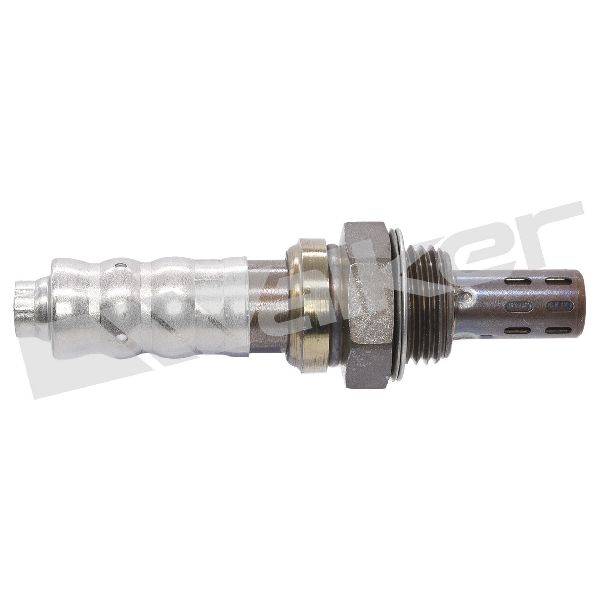
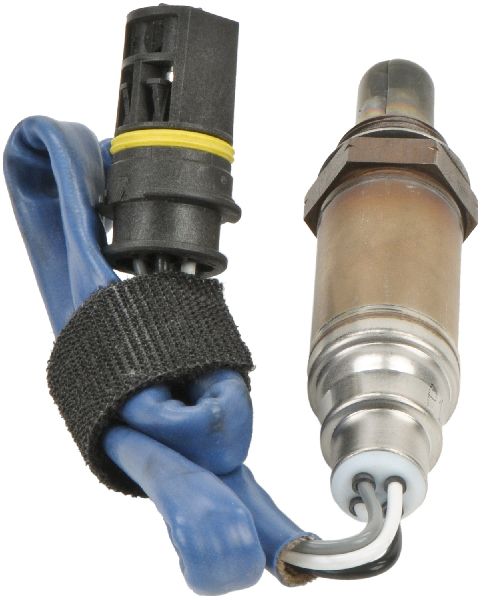
- Oxygen Sensor, Bank 1 Sensor 2
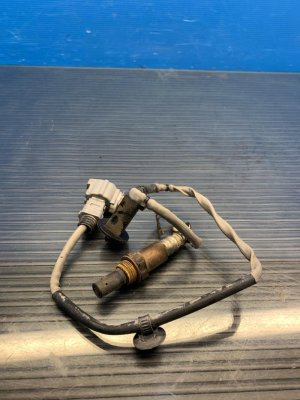
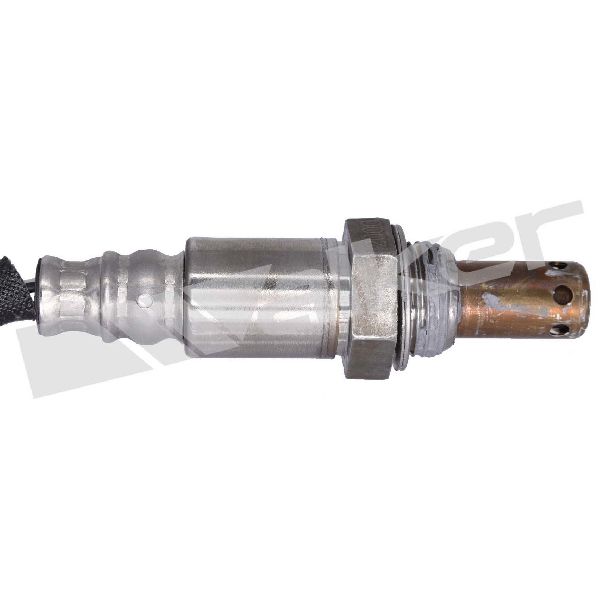
(OEM #89465-0E070)— This is the component that directly measures the exhaust gas content and is the most common failure point for this code.
Trusted brands: Denso (OEM Supplier), Bosch, NGK/NTK
OEM price range: $120-$180
Aftermarket price range: $50-$90 - Oxygen Sensor Socket — This specialized tool has a slot for the sensor's wire, making removal and installation much easier than with a standard wrench, especially in tight spaces.
Trusted brands: Lisle, OEMTOOLS
Aftermarket price range: $10-$25
Related Codes That Often Appear With This One
- P0606 — On some Toyotas, a faulty O2 sensor can send such erratic data that the ECM flags itself with a processor fault code. If you see P0606 alongside P0138, fixing the O2 sensor issue will almost always resolve both codes.
- P0137 — P0137 is the opposite code (O2 Sensor Circuit Low Voltage). Seeing both P0137 and P0138 intermittently could point to a wiring issue causing the voltage to swing wildly between shorting to ground and shorting to power.
- P2195 — This code for 'A/F Sensor Signal Stuck Lean' can sometimes appear with P0138. A Toyota TSB suggests this combination can be caused by an incorrect Air Fuel Ratio Sensor response, which should be diagnosed before replacing the O2 sensor.
Technical Service Bulletins (TSBs) & Recalls
- T-SB-0001-10 (Rev1): While for older models, this TSB provides diagnostic tips for P0138/P0158, especially when seen with P0606. It confirms that an O2 sensor fault can trigger the P0606 ECM code and advises replacing the O2 sensor to fix both.
Platform-Specific Known Issues
- Access to Bank 1 Sensor 2: The B1S2 sensor is on the firewall side of the engine, located after the catalytic converter. Access is from underneath the vehicle. While not requiring major disassembly, it can be in a tight spot, making a proper O2 sensor socket and a ratchet with an extension very helpful for the job.
Mechanic-Grade Diagnostic Values
- Downstream O2 Sensor (B1S2) Voltage — expected: Relatively stable between 0.1V and 0.9V after warm-up.. Failure: Voltage is stuck high, at or above 0.9V (often 1.25V) for more than 10 seconds.
- O2 Sensor Heater Resistance — expected: Typically between 5 and 15 Ohms at ambient temperature. A common value is around 5.5 Ohms.. Failure: Resistance is infinite (open circuit) or near zero (short circuit).
- O2 Sensor Heater Circuit Current — expected: 0.4 to 1.0 Amps at idle.. Failure: Current greater than 2.0A (short) or less than 0.3A (open). While this typically sets heater codes (P0037/P0038), a faulty heater can affect sensor signal performance.
Scan Tool Commands That Help
- Toyota Techstream: Active Test: 'Control the Injection Volume for A/F sensor' — This test allows a technician to manually force the engine rich or lean. While observing the B1S2 voltage, if the voltage remains stuck high even when a lean mixture is commanded, it confirms the fault is with the B1S2 sensor or its circuit, not a true rich condition from another cause.
Wiring & Ground Locations
- ECM Connector D1 (or B30) — The main Engine Control Module, typically located in the engine bay or behind the glove box.. Pin D1-45 (OX1B) is the signal wire for Bank 1 Sensor 2. Pin D1-46 (EX1B) is the sensor ground. Testing for voltage and continuity at these pins can isolate a wiring problem from an ECM problem.
- Engine Harness Ground Points — The 2GR-FE has critical harness grounds on the cylinder heads. One is on the front head (Bank 2) and another is on the rear head (Bank 1), directly under the throttle body area.. A poor or corroded ground connection at these points can introduce voltage offsets and noise into sensor readings, potentially causing incorrect codes. Ensuring these are clean and tight is a crucial step if a new sensor and good wiring don't solve the problem.
- B1S2 Sensor Connector (D2) — Under the vehicle, following the wire from the sensor on the rear exhaust pipe.. This is the primary connector to disconnect for testing. The four pins are typically: +B (Heater Power), HT1B (Heater Control from ECM), OX1B (Signal to ECM), and E2 (Sensor Ground).
Real Owner Repair Stories
- Torque News article citing a Toyota technician (Toyota Prius (principle applies to Highlander)) — P0138 code appeared after getting the car running.
❌ Tried (didn't work) Assuming the P0138 code meant the downstream B1S2 sensor was bad.
✅ What actually fixed it The upstream Air/Fuel ratio sensor (B1S1) was faulty. The failing upstream sensor caused a rich condition, and the downstream sensor (B1S2) correctly reported this with a high voltage, triggering the P0138 code. The B1S2 was just the messenger; the B1S1 was the root cause. - YouTube video on a 2011 Toyota Corolla (2011 Toyota Corolla) — Persistent P0138 code that would return a few days after being cleared.
❌ Tried (didn't work) Replacing mass air sensor, Replacing purge regulator, Replacing an unspecified oxygen sensor (likely the wrong one)
✅ What actually fixed it Replacing the correct downstream oxygen sensor (Bank 1, Sensor 2) with a genuine Toyota part finally resolved the issue permanently.
OEM Part Supersession History
89465-0E070→This part number appears to be stable for the 2014-2016 2GR-FE models. No direct supersession was found.— N/A
Heads up: The sensor for the 2017-2019 2GR-FKS engine is a different part number (e.g., 89465-0E210). They are not interchangeable.
Model Year Variations Within This Range
- 2017-2019: For the 2017 model year, the Highlander's V6 was updated from the 2GR-FE to the 2GR-FKS. This engine features D-4S (combined port and direct injection) and VVT-iW, allowing it to run on the Atkinson cycle for better efficiency. While the P0138 diagnostic process is the same, the oxygen sensor part number is different for these later years.
Diagnostic Flowchart
Other Known Issues on This Vehicle
Issues unrelated to this code that are worth knowing about as an owner of this generation:
- Torque Converter Shudder (6-Speed Auto) 🟠 Medium — Common on 2014-2016 models with the 6-speed automatic transmission. Can occur between 25-50 mph under light load. (Ref: While TSBs like T-SB-0023-15 exist for other models like the RAV4, there isn't one specifically for the Highlander, but the issue is widely reported by owners.)
- Water Pump Failure 🟠 Medium — A well-known weak point on the 2GR-FE engine. Leaks can start as early as 50,000-80,000 miles. Look for dried pink coolant residue around the pump on the passenger side of the engine. (Ref: T-SB-0103-20 helps technicians differentiate between minor weeping and a failed pump requiring replacement.)
- Entune Infotainment System Glitches 🟡 Low — Common across this generation. Owners report the screen freezing, randomly rebooting, Bluetooth connectivity problems (echoing or dropping), and GPS issues. (Ref: TSB B004522Rev1 (NHTSA ID 10224102) addresses software issues causing these problems, often fixed with a dealer-installed software update.)
- Water Leaks into Cabin 🟡 Low — Reported on 2014-2015 models in particular. Water can seep in from clogged sunroof drains or faulty roof rail seals, running down the A-pillars and soaking the carpet.
Used vs. New Parts: Buying Guide for This Vehicle
When a used part is the smart pick: For this repair, a used part is almost never a smart choice. The primary failure component is the oxygen sensor itself, which is a wear-and-tear item with a finite lifespan. Installing a used sensor is risky as it may have little life left or be faulty already. A used wiring harness pigtail could be considered if only the connector is damaged and a new one is unavailable.
Donor-vehicle mileage cap: roughly under 20000 miles for the part to have meaningful remaining life.
What to inspect on the donor part:
- For a wiring pigtail, ensure the connector is not cracked, brittle, or melted.
- Check for clean, uncorroded pins inside the connector.
- Ensure there is at least 6-8 inches of clean, undamaged wire attached.
OEM-only on this vehicle (don't cheap out):
- While not strictly 'OEM-only', using the OEM supplier (Denso) for the oxygen sensor is highly recommended. Some aftermarket brands have a poor reputation for reliability and compatibility with Toyota's sensitive ECU logic.
Aftermarket brands forum-validated for this vehicle:
- Denso (OEM supplier)
- NGK / NTK
Brands owners have reported issues with on this vehicle:
- Bosch sensors have mixed reviews in Toyota applications; many forum users recommend sticking with Denso or NTK to avoid potential issues.
- Unbranded, generic parts from online marketplaces are strongly discouraged as they often fail quickly or are dead on arrival.
Real Owner Stories
Aggregated from forums and TSBs cited above. Mileages and costs reflect what owners reported in those sources.
2011-2016 Toyota Sienna 2GR-FE
Symptoms: The P0138 code persisted even after replacing the oxygen sensor twice. The code also caused the traction control and cruise control to be disabled.
What fixed it: The owner was advised to check the wiring for continuity and shorts, as replacing the sensor alone did not resolve the issue.
Source hint: Reddit r/ToyotaSienna - 'P0138 still on after a new oxygen sensor.'
2010-2015 Lexus RX350 2GR-FE
Symptoms: Check engine light with code P0138 caused by a short to power in the signal wire.
What fixed it: Clearing clogged sunroof drains and drying/cleaning the affected connectors in the driver's side kick panel where water intrusion occurred.
Source hint: YouTube - 'Lexus RX 350 Engine Light P0138... WATCH THIS FIRST!'
Toyota Tacoma (Related Platform)
Symptoms: Check engine light showing both P0138 and P0606 codes simultaneously.
What fixed it: Replacing the Bank 1 Sensor 2 oxygen sensor, which resolved the primary P0138 fault and the sympathetic P0606 ECM code.
Source hint: TacomaWorld - 'Check engine light P0138 and P0606'
Related OBD-II Codes
Frequently Asked Questions
Where is the Bank 1 Sensor 2 oxygen sensor located on my 2GR-FE Highlander?
My Highlander has both P0138 and P0606; do I need a new engine computer?
Can a sunroof leak cause a P0138 code on my Highlander?
Why are my traction control and cruise control disabled when the Check Engine Light is on for P0138?
What should the live data voltage look like for a healthy Bank 1 Sensor 2?
Is it worth buying a used O2 sensor to fix this code?
Helpful Videos
Used OEM Parts in Stock
New Aftermarket Parts Available


The information in this article is provided for general reference and educational purposes only. Vehicle specifications, procedures, and part compatibility can vary by production date, trim level, and region. Always consult your vehicle's factory service manual and verify part numbers before purchasing or performing repairs. Safety-critical components such as airbags, seat belts, and braking systems should be installed by a qualified professional.
- Toyota Highlander:
- 🎬 Helpful Videos
- 🛍️ Shop This Part
- What's Unique About the 2014-2019 Toyota Highlander
- Symptoms You May Notice
- Most Likely Causes
- Rare But Worth Checking
- Diagnosis Steps
- Parts You'll Likely Need
- Related Codes That Often Appear With This One
- Technical Service Bulletins (TSBs) & Recalls
- Platform-Specific Known Issues
- Mechanic-Grade Diagnostic Values
- Scan Tool Commands That Help
- Wiring & Ground Locations
- Real Owner Repair Stories
- OEM Part Supersession History
- Model Year Variations Within This Range
- Diagnostic Flowchart
- Other Known Issues on This Vehicle
- Used vs. New Parts: Buying Guide for This Vehicle
- Real Owner Stories
- 2011-2016 Toyota Sienna 2GR-FE
- 2010-2015 Lexus RX350 2GR-FE
- Toyota Tacoma (Related Platform)
- Related OBD-II Codes
- Frequently Asked Questions
- 🎟️ Get 5% Off