

P0138 on 2007-2011 Toyota Camry Hybrid: O2 Sensor High Voltage Causes and Fixes
This code almost always points to a failed downstream oxygen sensor (Bank 1, Sensor 2). It's a simple DIY replacement with a Denso sensor costing about $45-$70. Before replacing it, check the wiring for damage and be aware that a failing upstream A/F sensor can sometimes trigger this code, though this is less common on the hybrid model.
- P0138 on your Camry Hybrid almost certainly means the downstream (post-catalytic converter) oxygen sensor has failed.
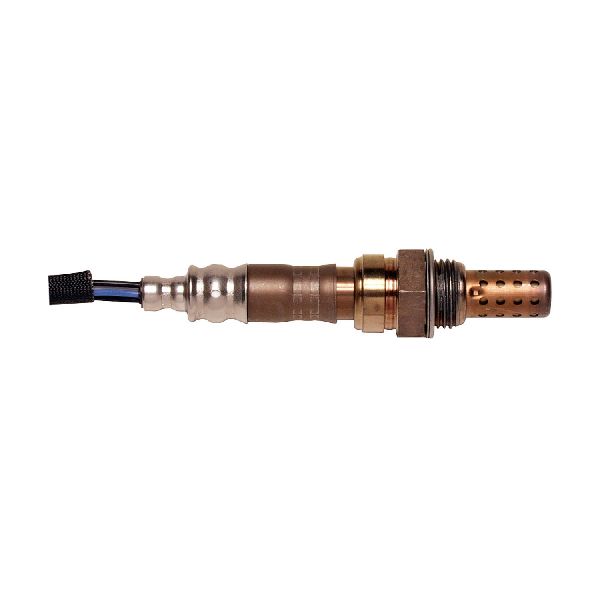
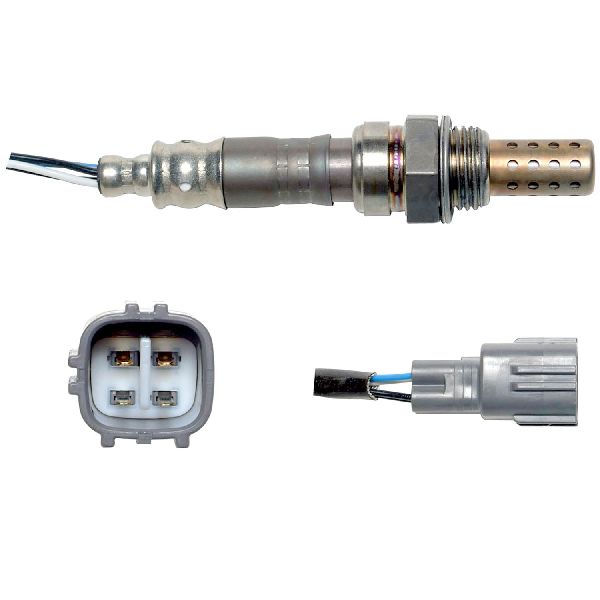
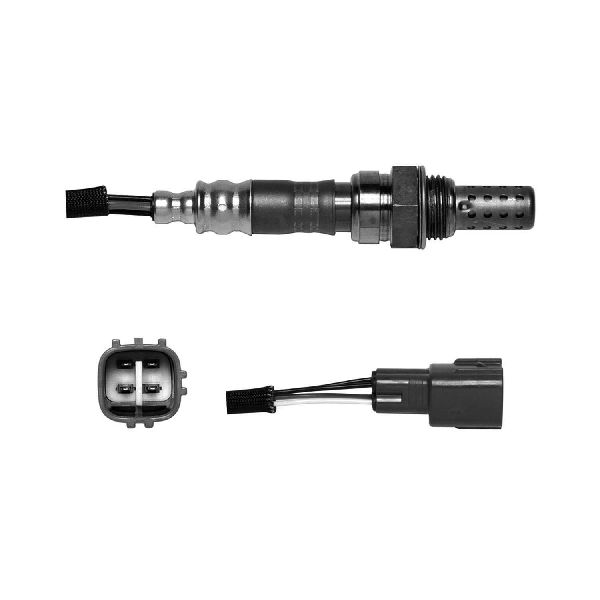
- It is a straightforward and affordable DIY repair; the Denso OEM-equivalent part (234-4622) is widely available.
- Before replacing the sensor, perform a quick visual check of the wiring harness near the exhaust for any signs of melting or damage.
- Do not confuse this with a catalytic converter failure (P0420). This code points to the sensor itself or its circuit.
- Be aware of other major issues on this platform, such as oil consumption and brake actuator failure, which are unrelated but important for owners to know.
What's Unique About the 2007-2011 Toyota Camry Hybrid

On the 2007-2011 Camry Hybrid with its 2.4L inline-four engine (2AZ-FXE), there is only one exhaust bank, so 'Bank 1' is the only one. Sensor 2 is the downstream sensor, located under the car after the exhaust flex pipe, making it fairly easy to access. While the downstream sensor is the most common failure point, Toyota has a known issue on similar platforms (non-hybrid Camrys with the 2AR-FE engine) where a failing upstream Air/Fuel (A/F) sensor causes a rich condition, which the downstream sensor correctly reports with high voltage. This means the code can sometimes point to the messenger (downstream O2 sensor) when the real problem is the upstream A/F sensor, though it's a less frequent cause on this specific hybrid model.
Symptoms You May Notice
- Check Engine Light is on
- Decreased fuel economy
- Rough or uneven idle
- Hesitation during acceleration
- Slight smell of sulfur or rotten eggs from the exhaust
- Replacing the catalytic converter. A P0138 code indicates a sensor or circuit voltage issue, not a converter efficiency problem (which would typically set a P0420 code).
Most Likely Causes

- Failed Downstream Oxygen Sensor (Bank 1, Sensor 2) 🔴 High Probability Oxygen sensors are wear items that degrade over time from heat and contaminants, typically lasting around 100,000 miles. Failure causing a high voltage reading is a common end-of-life scenario where the sensor's internal components short out or become contaminated.
How to confirm: After confirming the wiring is intact, if a scan tool shows the B1S2 voltage is stuck high (e.g., >0.9V) and does not fluctuate during normal operation, the sensor has likely failed. A healthy downstream sensor should show slow fluctuations, typically between 0.1V and 0.9V.
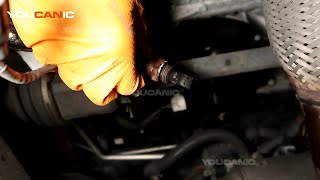
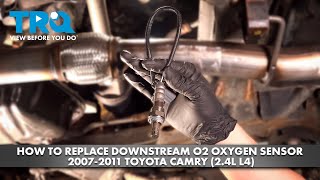
Typical fix: Replace the Bank 1, Sensor 2 oxygen sensor. This is located under the car, after the catalytic converter's flex pipe. It requires a 22mm wrench or a specialized O2 sensor socket. Pre-soaking the threads with penetrating oil is highly recommended.
Est. part cost: $45 - $150 - Damaged Wiring or Corroded Connector 🟡 Medium Probability The sensor is located under the vehicle, exposing its wiring and connector to road debris, moisture, and intense heat from the exhaust. The wiring can become brittle, melt, or fray, causing a short circuit to power which results in a constant high voltage signal.
How to confirm: Visually inspect the entire wiring harness from the O2 sensor to where it connects to the main loom inside the cabin. Check for frayed wires, melted insulation near the exhaust pipe, or any signs of green corrosion inside the connector plug. The connector is located just inside the cabin floor, so the carpet may need to be pulled back for access.
Typical fix: Repair the damaged section of wire or clean the connector terminals. If the damage is severe, a new connector pigtail may need to be spliced in.
Est. part cost: $5 - $30 - Failing Upstream Air/Fuel Ratio Sensor (Bank 1, Sensor 1) ⚪ Low Probability A failing upstream A/F sensor can send incorrect data to the ECM, causing the engine to run rich. The downstream O2 sensor then accurately detects the rich exhaust and reports a high voltage, setting the P0138 code as a symptom of the upstream sensor's failure. TSB T-SB-0151-18 documents this for similar Toyota engines.
How to confirm: Use a scan tool to monitor live data for both the upstream (B1S1) and downstream (B1S2) sensors. If the B1S1 sensor is not responding or shows erratic readings (e.g., stuck at 3.4V), and other codes related to the A/F sensor are present, it is the likely culprit. A healthy A/F sensor should fluctuate rapidly around 3.3V.
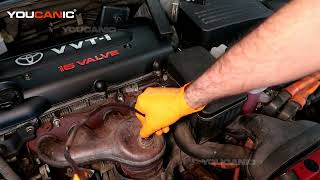
Typical fix: Replace the upstream Air/Fuel Ratio sensor 🎬 See how to access and replace the upstream sensor. (Bank 1, Sensor 1).
Est. part cost: $100 - $200
Rare But Worth Checking
- Exhaust Leak: An exhaust leak before the downstream O2 sensor can sometimes allow outside air to be pulled in, skewing sensor readings. While more commonly associated with low voltage codes, a significant leak can disrupt exhaust flow and cause erratic readings. Check for soot marks or listen for hissing sounds around exhaust flanges and the flex pipe.
- Engine Control Module (ECM) Fault: This is very rare. The ECM should only be considered after all other possibilities, including sensors and wiring, have been definitively ruled out. TSBs for other models suggest an ECM re-flash can sometimes be required, but this is not a common primary cause.
- Rich Running Condition: Issues like a leaking fuel injector or a faulty fuel pressure regulator can cause the engine to run rich. The P0138 is a correct response from the O2 sensor in this case. This is an unlikely cause if P0138 is the only code present.
Diagnosis Steps
- Connect an OBD-II scanner to confirm P0138 is the active code and check for any other stored codes.
- Visually inspect the downstream O2 sensor's wiring harness and connector for any obvious signs of damage, melting, or corrosion. The harness runs close to the hot exhaust pipe.
- Inspect the exhaust system for any leaks between the engine and the downstream O2 sensor.
- Use the scanner's live data function to monitor the voltage from 'O2S B1S2'. With the engine warm, the voltage should fluctuate slowly. If it is stuck above 0.9 volts, the sensor or its circuit is faulty.
- Also observe the live data for the upstream 'A/F Sensor B1S1'. It should fluctuate rapidly around 3.3V. If it appears stuck, sluggish, or biased, it may be the root cause of a rich condition triggering the P0138.
- If wiring is confirmed good and the upstream A/F sensor is functioning correctly, the downstream O2 sensor is faulty. Use a 22mm O2 sensor socket to replace it.
- After replacement, clear the codes and perform a drive cycle to ensure the Check Engine Light does not return.
Parts You'll Likely Need
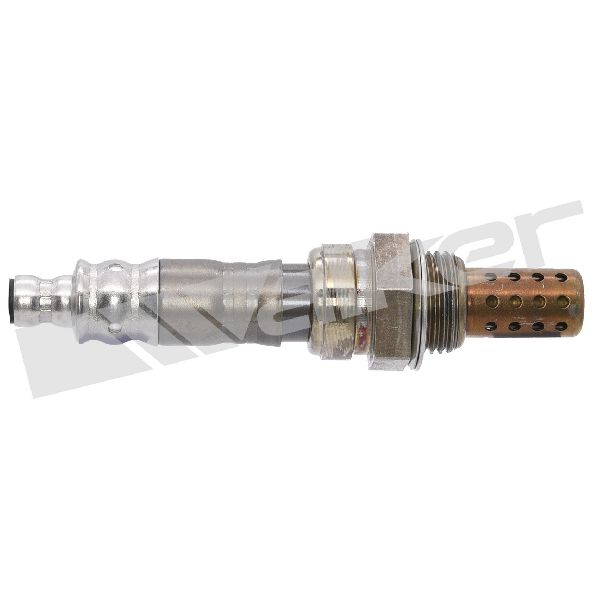
- Downstream Oxygen Sensor (Bank 1, Sensor 2)
(OEM #89465-33440)— This is the most common part to fail and directly cause the P0138 code. The original sensor is made by Denso, and using an OEM-quality replacement is highly recommended.
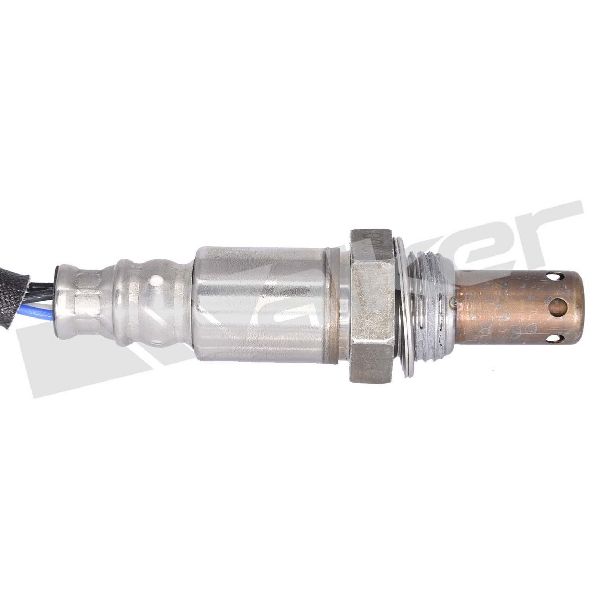
Trusted brands: Denso (OEM Manufacturer), Walker Products, NGK/NTK
OEM price range: $100-$150
Aftermarket price range: $45-$80
Related Codes That Often Appear With This One
- P2195 — This code indicates 'O2 Sensor Signal Stuck Lean (Bank 1 Sensor 1)'. A Toyota TSB notes that a faulty A/F sensor can trigger both P2195 and P0138 together, pointing strongly to the A/F sensor as the root cause.
- P0606 — This code is for an 'ECM/PCM Processor' fault. A Toyota TSB indicates this can sometimes appear alongside P0138 when there is a sensor circuit issue, and diagnosis should focus on the sensor and wiring first, not the ECM itself.
- P0137 — Indicates 'O2 Sensor Circuit Low Voltage (Bank 1 Sensor 2)'. Seeing both P0137 and P0138 can point to severely damaged wiring that is shorting to both ground and power intermittently, or a completely failed sensor.
Technical Service Bulletins (TSBs) & Recalls
- T-SB-0151-18 (December 2018): While for the non-hybrid 2010-11 Camry with the 2AR-FE engine, it documents a known issue where a faulty upstream A/F sensor and outdated ECM logic cause a P0138 code. This highlights a critical diagnostic path to consider.
- T-SB-0003-10 (January 2010): Provides diagnostic tips for P0138, P0158, and P0606, suggesting that a failing upstream A/F sensor can be the root cause for the downstream sensor code.
- T-SB-0072-12 (May 2012): For 2007-2011 Camry Hybrids, this TSB addresses a P0136 (O2 Sensor Circuit Malfunction) by replacing the B1S2 sensor and potentially reprogramming the HV ECU, which is relevant context for related sensor codes like P0138.
Mechanic-Grade Diagnostic Values
- Heated Oxygen Sensor (B1S2) Heater Resistance — expected: 11 - 16 Ω at 68°F (20°C). Failure: Resistance outside of this range indicates a faulty heater element within the sensor.
- Upstream A/F Sensor (B1S1) Heater Resistance — expected: 1.8 - 3.4 Ω at 68°F (20°C). Failure: Resistance outside this range indicates a faulty heater in the upstream sensor, which can affect its performance and lead to a rich condition flagged by the downstream sensor.
- Upstream A/F Sensor (B1S1) Live Data Voltage — expected: Fluctuates rapidly around 3.3V at idle.. Failure: A voltage stuck at 3.4V or higher indicates a lean bias, which can cause the ECM to over-fuel the engine, resulting in a P0138 from the downstream sensor.
Scan Tool Commands That Help

- Toyota Techstream: Active Test: 'Control the Injection Volume for A/F sensor' — This test allows a technician to manually command a rich or lean fuel mixture. While observing the B1S2 voltage, if the voltage remains stuck high even when a lean mixture is commanded, it confirms the fault is with the B1S2 sensor or its circuit, not an actual rich condition.
Wiring & Ground Locations

- E1, E2, E3 — E1 and E2 are on the left side of the instrument panel / kick panel area. E3 is on the right side of the instrument panel.. These are the primary ground points for the instrument panel wiring harness, which the ECM and sensor circuits are tied into. A poor ground at these locations can introduce voltage offsets and cause erroneous sensor readings, including a false high voltage signal.
- ECM Connector A24 and C24 — The ECM is located behind the glove box. It has two main connectors, A24 (smaller) and C24 (larger).. When performing pin-out testing, these are the connectors where you will test for voltage and continuity between the ECM and the O2 sensor connector. A wiring diagram is essential for identifying the correct pins for the B1S2 signal (OX1B), heater (HT1B), and sensor ground (E2).
- Heated Oxygen Sensor (B1S2) Shield Wire — This is a shielded wire within the sensor's harness.. The shield wire is grounded to protect the sensor's signal from electrical interference. A break in this shield's ground connection can allow electrical noise to induce a false high voltage on the signal wire.
Real Owner Repair Stories
- YouTube channel 'Voltage Drop Diagnostics' (2006 Toyota RAV4 (with similar 2AZ-FE engine and sensor logic)) — P0138 code returned shortly after a new downstream O2 sensor was installed by another shop.
❌ Tried (didn't work) Replacing the downstream O2 sensor (B1S2).
✅ What actually fixed it The upstream Air/Fuel Ratio sensor (B1S1) was biased lean, showing a constant 3.4V. This caused the ECM to command a rich mixture, which the new downstream sensor correctly reported as high voltage. Replacing the upstream A/F sensor resolved the P0138 code. - YouTube channel 'my digital life' (2007 Toyota Camry Hybrid) — Check Engine Light with code P0138.
❌ Tried (didn't work) No other attempts mentioned.
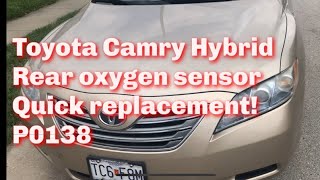
✅ What actually fixed it The owner replaced the downstream oxygen sensor (Bank 1, Sensor 2) with a new Denso sensor from RockAuto. The video shows the location and replacement process, which fixed the code.
OEM Part Supersession History
89465-33440→89465-06150— Standard part number consolidation and updates by Toyota.
Heads up: The new part number 89465-06150 is the direct OEM replacement and is fully compatible.
Diagnostic Flowchart
Other Known Issues on This Vehicle
Issues unrelated to this code that are worth knowing about as an owner of this generation:
- Excessive Oil Consumption 🔴 High — Common issue for the 2AZ-FE/FXE engine, often starting around 60,000-80,000 miles. Caused by defective piston ring design. (Ref: Toyota issued a Warranty Enhancement Program (ZE7) extending coverage for this issue. TSBs include POL 14-12 and others.)
- Brake Actuator Assembly Failure 🔴 High — A very common and expensive failure on the Camry Hybrid, causing ABS, VSC, and brake warning lights, along with a loud, persistent buzzing noise from the actuator pump. (Ref: Toyota issued a Warranty Enhancement Program (ZE1) extending coverage to 10 years or 150,000 miles.)
- Melting/Sticky Dashboard 🟡 Low — Prevalent in vehicles exposed to high heat and sun, causing the dashboard to become shiny, sticky, and soft. (Ref: Toyota initiated a Warranty Enhancement Program (ZLD) to replace affected dashboards.)
- Hybrid Battery Degradation 🟠 Medium — While generally reliable, the high-voltage battery pack can fail, typically after 150,000 miles or 10+ years, leading to warning lights and the car failing to start or run.
Used vs. New Parts: Buying Guide for This Vehicle
When a used part is the smart pick: For this repair, a used part is almost never a smart choice. Oxygen sensors are wear-and-tear items with a finite lifespan. Installing a used sensor is risky as its remaining life is unknown, and it may fail shortly after installation.
Donor-vehicle mileage cap: roughly under 40000 miles for the part to have meaningful remaining life.
What to inspect on the donor part:
- If forced to consider a used sensor, source it from a very low-mileage vehicle that was wrecked due to collision, not due to engine or electrical failure.
- Inspect the sensor tip for heavy carbon deposits, oil fouling, or white contamination from coolant, all of which indicate a problem.
- Ensure the wiring and connector are free of any cuts, melting, or corrosion.
OEM-only on this vehicle (don't cheap out):
- While not strictly 'OEM-only', using the OEM manufacturer (Denso) is highly recommended for oxygen and A/F sensors on Toyotas. The vehicle's ECM is calibrated specifically for the response characteristics of the Denso sensor.
Aftermarket brands forum-validated for this vehicle:
- Denso (OEM supplier)
- NGK/NTK
Brands owners have reported issues with on this vehicle:
- Generic, unbranded, or 'white-box' sensors from online marketplaces should be avoided. Forum and mechanic discussions frequently report issues with incorrect readings, premature failure, and incompatibility with Toyota ECMs, even if they physically fit.
Real Owner Stories
Aggregated from forums and TSBs cited above. Mileages and costs reflect what owners reported in those sources.
2007 Toyota Camry Hybrid
Symptoms: I've been getting some random errors on the sensor showing a check engine light.
What fixed it: Replaced the rear oxygen sensor with a Denso unit.
Cost: $50-$60
Source hint: YouTube comment by HighMiles Garage
2011 Toyota Camry
Symptoms: Check engine light with code P0138.
What fixed it: Replacing the downstream oxygen sensor as it is a different part type than the upstream sensor.
Source hint: Reddit r/Cartalk (2019)
2007 Toyota Camry Hybrid
Symptoms: Check engine light on; confirmed P0138 code.
What fixed it: Replacement of the downstream oxygen sensor located after the flex pipe.
Source hint: YouTube (2022) 'my digital life'
Related OBD-II Codes
Frequently Asked Questions
Can I swap the Bank 1 Sensor 1 and Bank 1 Sensor 2 sensors to see if the P0138 code moves?
Does TSB T-SB-0151-18 apply to my 2007-2011 Camry Hybrid?
Where is the Bank 1 Sensor 2 located on the 2007-2011 Camry Hybrid?
Is there a TSB for other oxygen sensor codes like P0136 on this vehicle?
Could my hybrid's oil consumption issue be related to the P0138 code?
What specific part should I use to replace the downstream sensor?
Helpful Videos
We Have This Part in Stock


The information in this article is provided for general reference and educational purposes only. Vehicle specifications, procedures, and part compatibility can vary by production date, trim level, and region. Always consult your vehicle's factory service manual and verify part numbers before purchasing or performing repairs. Safety-critical components such as airbags, seat belts, and braking systems should be installed by a qualified professional.
- Toyota Camry Hybrid:
- 🎬 Helpful Videos
- 🛍️ Shop This Part
- What's Unique About the 2007-2011 Toyota Camry Hybrid
- Symptoms You May Notice
- Most Likely Causes
- Rare But Worth Checking
- Diagnosis Steps
- Parts You'll Likely Need
- Related Codes That Often Appear With This One
- Technical Service Bulletins (TSBs) & Recalls
- Mechanic-Grade Diagnostic Values
- Scan Tool Commands That Help
- Wiring & Ground Locations
- Real Owner Repair Stories
- OEM Part Supersession History
- Diagnostic Flowchart
- Other Known Issues on This Vehicle
- Used vs. New Parts: Buying Guide for This Vehicle
- Real Owner Stories
- 2007 Toyota Camry Hybrid
- 2011 Toyota Camry
- 2007 Toyota Camry Hybrid
- Related OBD-II Codes
- Frequently Asked Questions
- 🎟️ Get 5% Off