

P0138 on 2004-2008 Ford F-150: O2 Sensor High Voltage Causes and Fixes
This code almost always points to a failed downstream oxygen sensor on the passenger side (Bank 1, Sensor 2). Replacing the sensor is the most common fix. Before replacing, inspect the wiring harness for melting or chafing. Expect to pay $50-$100 for an aftermarket sensor and $100-$200 for an OEM Motorcraft part. It's a straightforward DIY job for many owners with an O2 sensor socket.
- P0138 means the passenger side, downstream O2 sensor circuit has high voltage.
- The most likely cause by far is a failed O2 sensor.
- Before buying parts, visually inspect the sensor's wiring for any melting or damage, as this is the second most common cause.
- This is a DIY-friendly repair with a specialized O2 sensor socket, but the sensor can be difficult to remove if it's rusted in place.
- Do not replace the catalytic converter for this code unless a separate catalyst efficiency code (like P0420) is also present.
What's Unique About the 2004-2008 Ford F-150
For the 2004-2008 (11th generation) F-150, the P0138 code is a very common and straightforward issue. There are no widespread, unique design flaws that cause this code. The most frequent cause is simply the O2 sensor reaching the end of its service life (typically 90,000-120,000 miles). The wiring harness is sometimes susceptible to damage from heat from the nearby exhaust or chafing against the frame, but this is less common than simple sensor failure. Owners on forums like F150Forum.com and Ford-Trucks.com frequently report resolving this code by replacing the Bank 1, Sensor 2 O2 sensor.
Symptoms You May Notice
- Check Engine Light is on
- Increased fuel consumption
- Rough idling or engine hesitation
- Failure to pass an emissions test
- Strong exhaust odor or black smoke from a rich fuel mixture
- Replacing the catalytic converter. A P0138 code by itself rarely indicates a bad converter. The sensor's job is to monitor the converter, but the code points to a fault in the sensor's circuit, not necessarily the converter's performance.
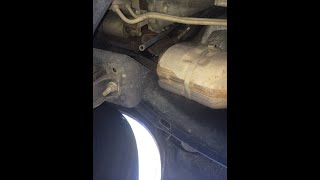
- Replacing the wrong O2 sensor. Ensure you are replacing Bank 1 (passenger side), Sensor 2 (downstream/post-catalyst). Many owners accidentally replace the upstream (Sensor 1) sensor. 🎬 Watch: Locate the correct Bank 1 Sensor 2 on your F-150
- Using a cheap, universal O2 sensor. Some forum users report that Ford PCMs can be sensitive and may not work correctly with certain aftermarket sensors, leading to the code returning. Using OEM (Motorcraft) or high-quality OE-equivalent (Bosch, Denso, NTK) sensors is recommended.
Most Likely Causes
- Faulty Bank 1, Sensor 2 Oxygen Sensor 🔴 High Probability Oxygen sensors are wear-and-tear items that fail over time from constant exposure to high-temperature exhaust gases and contaminants. Their typical lifespan is around 100,000 miles.
How to confirm: Use a scan tool to monitor the live voltage data for the B1S2 sensor. If the voltage is stuck high (e.g., above 0.9V) and does not fluctuate, the sensor is likely bad. 🎬 See how to troubleshoot and fix P0138 and P0139 codes You can also test the sensor's internal heater resistance with a multimeter; an open circuit indicates a failed heater, which necessitates sensor replacement. A healthy sensor heater should have a resistance between 3 and 30 Ohms.
Typical fix: Replace the Bank 1, Sensor 2 oxygen sensor. This sensor is located on the passenger side of the vehicle, downstream of the catalytic converter. An O2 sensor socket is highly recommended for removal.
Est. part cost: $50-$200 - Damaged Wiring or Connector 🟡 Medium Probability The wiring harness runs underneath the truck and is exposed to heat from the exhaust, road debris, and moisture, which can cause wires to melt, chafe, or corrode over time. A short circuit between the signal wire and the heater power wire is a common failure mode that will cause a constant high voltage reading. On this F-150 generation, the harness is known to drape over the transmission crossmember, creating a common chafe and melt point.
How to confirm: Visually inspect the entire wiring harness leading to the B1S2 O2 sensor. Look for any signs of melting on the exhaust, frayed wires, or corrosion in the connector pins. Test for a short to power in the signal wire using a multimeter.
Typical fix: Repair the damaged section of the wiring harness or clean/replace the connector. Do not use dielectric grease inside the connector, as the sensor needs to 'breathe' through the wire strands for accurate readings.
Est. part cost: $5-$50
Rare But Worth Checking
- Exhaust Leak: An exhaust leak before or near the sensor can introduce outside air, paradoxically sometimes leading to a high voltage reading as the PCM tries to compensate for what it perceives as a lean condition elsewhere. This is less common for a high voltage code.
- Rich Fuel Condition: If the engine is running excessively rich due to other issues like leaking fuel injectors or a faulty fuel pressure regulator, it can cause a legitimate high voltage reading from the O2 sensor. This is rare and would typically be accompanied by other trouble codes (e.g., P0172 Rich Bank 1) and symptoms like black smoke.
- Powertrain Control Module (PCM) Failure: In very rare cases, the PCM itself can be faulty and misinterpret the sensor's signal or have a failed driver circuit. This should only be considered after all other possibilities, including wiring and the sensor itself, have been exhaustively checked.
Diagnosis Steps
- Read the code: Use an OBD-II scanner to confirm P0138 is the only code present. If other codes exist (e.g., fuel trim codes, misfire codes), address them first as they could be the root cause.
- Inspect the wiring: Visually inspect the O2 sensor's wiring harness and connector for any obvious damage, such as melting on the exhaust pipe, chafing against the frame, or corrosion in the connector. This is a critical step before buying parts. Pay special attention to the area where the harness passes over the transmission crossmember.
- Analyze live data: Use a scan tool to view the live data stream for the Bank 1, Sensor 2 O2 sensor. A healthy downstream sensor should show a relatively stable voltage, typically between 0.5V and 0.8V. If it is stuck high (above 0.9V) and does not change, this confirms the fault condition.
- Test the circuit: Disconnect the sensor and check the harness connector for proper voltage and ground. A short to power in the signal wire can cause a constant high reading. Since Ford systems of this era do not use a bias voltage, you can test the signal wire integrity by connecting a test light to battery positive and touching the signal wire pin; the voltage on a scan tool should jump high, confirming the wire to the PCM is intact.
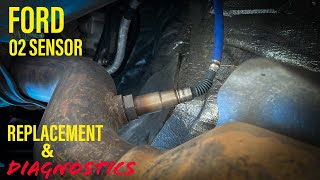
- Replace the sensor: If the wiring and circuit test good, the oxygen sensor itself is the most likely cause of the problem. Use penetrating oil and an O2 sensor socket for easier removal. 🎬 Watch this complete guide to F-150 O2 sensor diagnostics and replacement
- Clear and re-test: After replacing the sensor, clear the trouble code with the scanner and take the truck for a test drive, including highway speeds, to ensure the light does not return.
Parts You'll Likely Need
- Oxygen Sensor (Bank 1, Sensor 2)
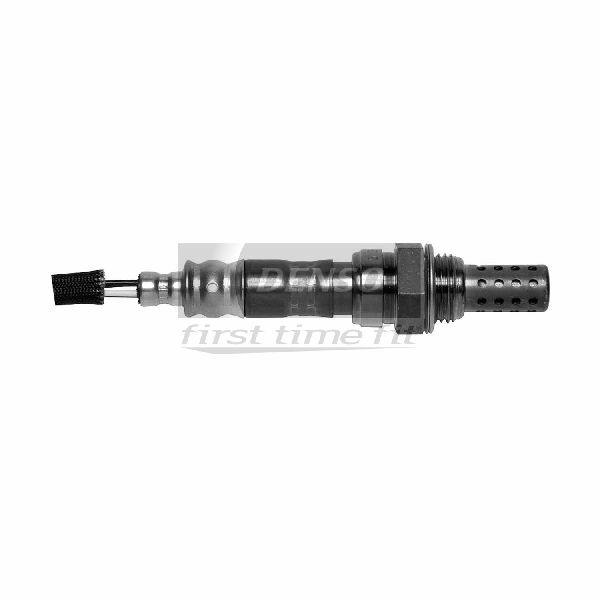
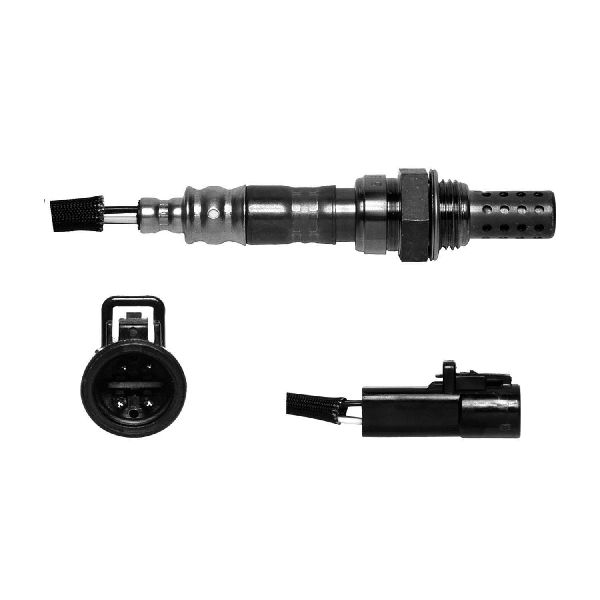
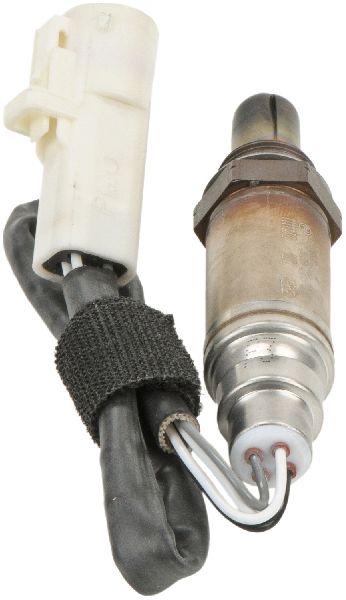
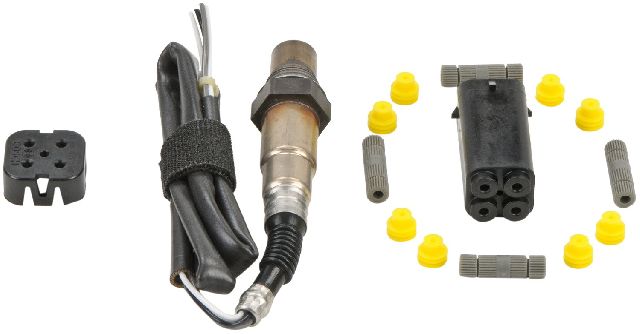
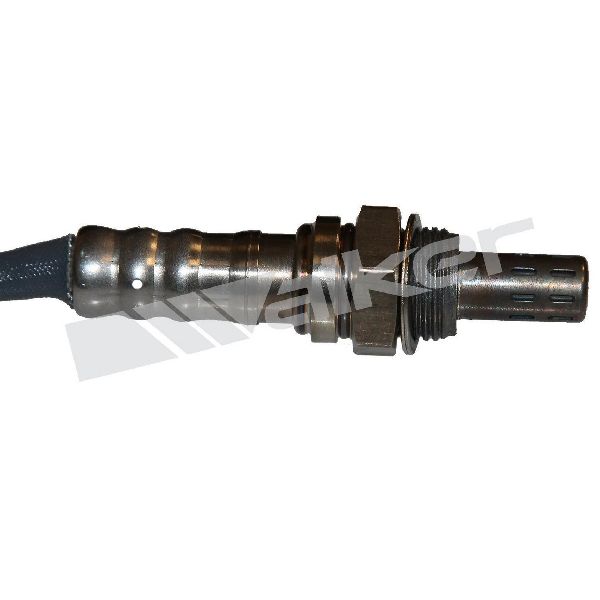
(OEM #Motorcraft DY-993 (replaces DY-835). Aftermarket equivalents include Bosch 15719, Denso 234-4071, and NTK 22501.)— This is the most common failure point for a P0138 code, as the sensor degrades over time.
Trusted brands: Motorcraft, Bosch, Denso, NGK/NTK
OEM price range: $100-$200
Aftermarket price range: $50-$100
Technical Service Bulletins (TSBs) & Recalls
- TSB 20-2380: While for newer Super Duty trucks, this TSB mentions P0138 being caused by water intrusion into O2 sensor connectors. It explicitly warns against using dielectric grease in the connectors as it can block the sensor's reference air path and lead to repeat failures. This advice is relevant to all Ford O2 sensor replacements.
Platform-Specific Known Issues
- Owner Experience: Replaced Sensor and Catalytic Converters, Code Returned: On Ford-Trucks.com, a user with an '08 F-150 reported getting code P0138 even after replacing the O2 sensor and both catalytic converters. The advice from other members was to inspect the wiring harness for a short or open circuit, suggesting the problem was not the sensor itself but the wiring leading to it.
- Owner Experience: Aftermarket Sensor Issues: In a review for a Bosch 15719 sensor, a user noted that after passing a smog test, the O2 sensor code returned. They suspected the new aftermarket sensor was also defective and solved the problem by installing a more expensive OEM Motorcraft sensor from the dealer. This highlights a potential sensitivity of the Ford PCM to non-OEM sensors.
Mechanic-Grade Diagnostic Values
- O2 Sensor Heater Element Resistance — expected: 3 to 30 Ohms. Many Ford sensors are between 5-15 Ohms.. Failure: A reading of 'OL' (Open Loop/infinite resistance) or near-zero Ohms (short circuit) indicates a failed heater element.
- Downstream O2 Sensor Live Data Voltage (Warm Engine, Steady Cruise) — expected: Relatively stable voltage between 0.5V and 0.8V.. Failure: Voltage is stuck high (above 0.9V) and does not fluctuate.
- O2 Sensor Heater Circuit Power Supply (Key On, Engine Off) — expected: Battery Voltage (~12V) at the harness-side connector.. Failure: 0V at the harness connector points to a blown fuse or a break in the power supply wire.
- O2 Sensor Signal Wire Voltage (Sensor Unplugged) — expected: Near 0V. Ford systems of this era do not use a bias voltage.. Failure: Voltage present with the sensor unplugged could indicate a short to power in the harness.
Scan Tool Commands That Help
- Ford IDS (or equivalent high-level scanner): Datalogger - O2S12 PID — This is the primary function to view the live voltage data from the Bank 1, Sensor 2 to confirm if it is stuck in a high state, which is the trigger for P0138.
- Ford IDS (or equivalent high-level scanner): KOER (Key On, Engine Running) Self-Test — This commands the PCM to run a series of system checks, including the O2 sensor circuits, and can help confirm if the fault is currently active.
Wiring & Ground Locations
- Harness Chafe Point — Where the O2 sensor wiring harness passes over the transmission crossmember.. This is a notoriously common spot for the harness to melt or chafe on the hot exhaust pipe, causing a short in the O2 sensor circuit that will trigger a P0138 and will not be fixed by replacing the sensor.
- G101 — On the firewall behind the PCM or on the right side fender apron near the battery.. This is a primary power ground. A poor connection here can cause a variety of electrical issues, including incorrect sensor readings.
- G104 — On the left side fender apron, near the hood hinge and EEC Test Connector.. This is the case ground for the PCM. A bad ground here can cause the PCM to malfunction and misinterpret sensor data.
- O2 Sensor Connector (C139/C140 vicinity) — The 4-pin connector for the downstream O2 sensor, located along the frame rail on the passenger side.. This is where all electrical tests for the sensor and harness begin. A short between the heater power wire and the signal wire within this connector or the harness nearby is a common cause for a P0138.
Real Owner Repair Stories
- Ford Truck Enthusiasts Forum user 'Ace79' (2008 Ford F-150) — Check Engine Light with code P0138, which returned about 50 miles after being reset.
❌ Tried (didn't work) Replaced the Bank 1 Sensor 2 O2 sensor, Replaced both catalytic converters
✅ What actually fixed it The community diagnosed the likely cause as a broken or burnt wire in the harness. The final fix was not posted by the original user, but the diagnostic direction points squarely at a wiring fault after the expensive parts cannon approach failed. - Reddit user /u/Galopigos (mechanic) (General vehicle with P0138) — Persistent P0138 code.
❌ Tried (didn't work) Implied sensor replacement didn't work.
✅ What actually fixed it The user identified a short in the wiring harness where the sensor's heater voltage wire had rubbed through and was contacting the signal wire. The fix was to cut out the bad section of the harness and repair it with solder seal connectors.
When the Usual Fixes Don't Work
- While a faulty O2 sensor is the most common cause, a significant number of owners on forums have fixed a recurring P0138 code only after finding and repairing a melted or chafed wiring harness. One owner on Ford-Trucks.com replaced both the sensor and the catalytic converters, yet the code returned, strongly indicating the root cause was a wiring short that was missed in the initial diagnosis. This pattern suggests that for the 2004-2008 F-150, a wiring inspection, particularly over the transmission crossmember, should be considered a mandatory first step, not a secondary one.
OEM Part Supersession History
Motorcraft DY-835→Motorcraft DY-993— Standard part number update and consolidation by the manufacturer.4L3Z-9G444-AA→Motorcraft DY-992— Part number update.
Heads up: DY-992 is also listed for this application, potentially differing by wire length or connector style for specific sub-models or build dates. Always verify fitment with VIN.
Model Year Variations Within This Range
- 2004-2008: While the fundamental cause is the same, the physical wire length of the O2 sensors can sometimes differ between model years or even between the 4.6L and 5.4L engines. It's crucial to verify the correct part number for your specific VIN, as upstream and downstream sensors have different length harnesses.
Diagnostic Flowchart
Other Known Issues on This Vehicle
Issues unrelated to this code that are worth knowing about as an owner of this generation:
- 5.4L 3V Cam Phaser Rattle ('Diesel Tick') 🔴 High — Very common, especially on higher mileage engines (75k+ miles). Caused by low oil pressure at idle due to worn timing chain tensioner seals. (Ref: TSB 06-19-8 addresses the noise and diagnosis. Later TSBs also exist.)
- Two-Piece Spark Plug Breakage 🔴 High — Extremely common on the 5.4L 3V engine. Carbon buildup causes the lower portion of the spark plug to seize in the cylinder head, breaking off during removal. Special extraction tools are required.
- Fuel Pump Driver Module (FPDM) Failure 🟠 Medium — Common failure item. The aluminum module is mounted directly to the steel frame above the spare tire, causing galvanic corrosion that cracks the housing, allowing water intrusion. Leads to no-start or stalling conditions.
- Cracked Exhaust Manifold / Broken Studs 🟠 Medium — Commonly occurs, causing a ticking noise that is loudest on a cold start and may disappear as the metal expands when hot. The rear-most studs are most prone to breaking.
- Window Regulator Failure 🟡 Low — A frequent annoyance where the window will fail to go up or down, or may fall into the door, due to a failed regulator cable or motor.
Used vs. New Parts: Buying Guide for This Vehicle
When a used part is the smart pick: For this repair, a used part is almost never a smart choice. The primary failure part, the oxygen sensor, is a wear-and-tear item with a finite lifespan. A used sensor from a junkyard has unknown remaining life and is a poor value. A used wiring harness pigtail could be a viable option if your connector is melted and you can source a clean one from a low-mileage donor.
Donor-vehicle mileage cap: roughly under 50000 miles for the part to have meaningful remaining life.
What to inspect on the donor part:
- For a harness pigtail, inspect for any signs of melting, brittleness, or corrosion on the pins.
- Ensure the locking tab on the connector is intact.
- Verify the wire insulation is still flexible and not cracked.
OEM-only on this vehicle (don't cheap out):
- Oxygen Sensor - While not strictly 'OEM-only', many forum users report that Ford PCMs of this era can be sensitive to the specific characteristics of aftermarket sensors, sometimes causing the code to return. Using an OEM Motorcraft sensor is the safest bet to avoid compatibility issues.
Aftermarket brands forum-validated for this vehicle:
- NTK
- Denso
- Bosch (though some users report issues, it is generally considered a reliable OE supplier)
Brands owners have reported issues with on this vehicle:
- Unbranded, 'white-box' sensors from online marketplaces are frequently cited as being unreliable or failing prematurely.
Real Owner Stories
Aggregated from forums and TSBs cited above. Mileages and costs reflect what owners reported in those sources.
2008 Ford F-150
Symptoms: The owner reported getting code P0138 even after replacing the O2 sensor and both catalytic converters.
What fixed it: The community suggested the issue was a short or open circuit in the wiring harness rather than the sensor itself.
Source hint: Ford-Trucks.com thread titled '08 f150 P0138 code'
2006 Ford F-150
Symptoms: Check Engine Light returned after installing aftermarket Bosch sensors; the dealer claimed the computer was too sensitive for non-OEM parts.
What fixed it: Installing a more expensive OEM Motorcraft sensor from the dealer.
Source hint: F150online.com thread titled 'Bosch Oxygen sensors Vs. Motorcraft'
2005 Ford Expedition 5.4L 3V
Symptoms: Experienced a P0138 code with diagnosis pointing to the Bank 1 Sensor 2 location.
What fixed it: Diagnosis and replacement of the Bank 1 Sensor 2 oxygen sensor.
Source hint: F150online.com forum thread
Related OBD-II Codes
Frequently Asked Questions
Where is the Bank 1, Sensor 2 oxygen sensor located on my 2004-2008 Ford F-150?
Should I use dielectric grease when replacing the O2 sensor on my F-150?
Can I use an aftermarket Bosch sensor to fix P0138 on my Ford?
Is there a specific spot where the wiring harness usually fails on this generation of F-150?
What should the resistance be for a healthy O2 sensor heater on this truck?
My F-150 has a 'diesel tick' noise; could this be related to my P0138 code?
Helpful Videos

We Have This Part in Stock


The information in this article is provided for general reference and educational purposes only. Vehicle specifications, procedures, and part compatibility can vary by production date, trim level, and region. Always consult your vehicle's factory service manual and verify part numbers before purchasing or performing repairs. Safety-critical components such as airbags, seat belts, and braking systems should be installed by a qualified professional.
- Ford F-150:
- 🎬 Helpful Videos
- 🛍️ Shop This Part
- What's Unique About the 2004-2008 Ford F-150
- Symptoms You May Notice
- Most Likely Causes
- Rare But Worth Checking
- Diagnosis Steps
- Parts You'll Likely Need
- Technical Service Bulletins (TSBs) & Recalls
- Platform-Specific Known Issues
- Mechanic-Grade Diagnostic Values
- Scan Tool Commands That Help
- Wiring & Ground Locations
- Real Owner Repair Stories
- When the Usual Fixes Don't Work
- OEM Part Supersession History
- Model Year Variations Within This Range
- Diagnostic Flowchart
- Other Known Issues on This Vehicle
- Used vs. New Parts: Buying Guide for This Vehicle
- Real Owner Stories
- 2008 Ford F-150
- 2006 Ford F-150
- 2005 Ford Expedition 5.4L 3V
- Related OBD-II Codes
- Frequently Asked Questions
- 🎟️ Get 5% Off