

P0137 on 2015-2022 Subaru Outback: Causes and Fixes for O2 Sensor Low Voltage
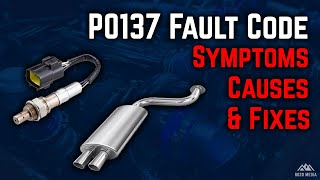
This code means the rear oxygen sensor is sending a low voltage signal. On a 2015-2022 Outback, this is most often a failing sensor, but for 2015 models, an ECM software update may be required. Expect to pay $80-$150 for an aftermarket sensor or $150-$250 for an OEM part.
- P0137 on a 2015-2022 Outback almost always points to the rear (downstream) oxygen sensor on the passenger side.
- The most common fix is replacing the sensor with a quality part from a brand like Denso or NTK.
- For 2015 models, an ECM software update from a dealer might be the required fix, per TSB 11-160-15.
- Before replacing the sensor, perform a quick visual inspection of the wiring for damage and the exhaust for obvious leaks.
- Do not confuse Sensor 2 (rear) with Sensor 1 (front/air-fuel ratio sensor).
What's Unique About the 2015-2022 Subaru OUTBACK

Subaru has a well-documented history with this specific code across two Outback generations. For early 5th generation models (notably 2015), the issue was sometimes caused by overly sensitive ECM logic, which Subaru addressed with a software update (TSB 11-160-15). For the 6th generation (starting in 2020) and other contemporary models, Subaru released newly designed oxygen sensors with an "optimized coating application to help prevent cracking within the internal surfaces" to more robustly fix the problem, as noted in TSB 09-115-24R. This history shows the fix can be year-specific, involving either software or an updated part.
Diagnostic Flowchart

Tap your situation to follow the diagnostic path that matches what you're seeing on this vehicle.
Generation note: The 2015-2022 range covers the 5th Gen (2015-2019) and 6th Gen (2020-2022) Outback. The fixes can differ: 2015 models may need an ECM reflash per TSB 11-160-15. 2020+ models have an updated sensor available per TSB 09-115-24R.
Symptoms You May Notice
- Check Engine Light is on
- Cruise control may be disabled
- Vehicle will fail an emissions test
- In some cases, a subtle decrease in fuel economy.
- Rarely, a rough or unstable idle.
- Replacing the front oxygen sensor (Bank 1, Sensor 1) instead of the rear one (Bank 1, Sensor 2).
- Replacing the sensor when an exhaust leak before the sensor is the true cause.
- Repeatedly replacing the sensor without checking for underlying wiring issues like oil contamination in the harness.
Most Likely Causes

- Failing Rear Oxygen Sensor (Bank 1, Sensor 2) 🔴 High Probability Sensors wear out over time from heat and contaminants. Subaru released updated parts for 2020+ models (and other recent models), acknowledging a need for a more robust sensor design to prevent internal cracking and short circuits (TSB 09-115-24R). Owners consistently report that sensor replacement is the most common fix.
How to confirm: Use a scan tool to monitor live data for the B1S2 sensor. A healthy sensor on a warm engine will show a relatively stable voltage, typically around 0.6-0.8V. If the voltage is stuck low (e.g., under 0.2V) or reads 0V even during acceleration, the sensor is likely faulty.
Typical fix: Replace the rear oxygen sensor on Bank 1 (passenger side). Using an OEM-equivalent brand like Denso or NTK is highly recommended for Subarus.
Est. part cost: $80-$250 - Outdated ECM Software 🟡 Medium Probability Specifically for 2015 models (both 2.5L and 3.6L), the original ECM logic was sensitive and could misinterpret sensor readings, especially during certain coasting or hot-restart conditions. TSB 11-160-15 was issued to correct this. One owner on the r/Subaru_Outback subreddit described this exact scenario: the code would only appear after a 30-40 minute drive followed by a short stop and a hot restart.
How to confirm: A Subaru dealership can check the vehicle's service history and current ECM software version (CID number) to see if the update from TSB 11-160-15 has been applied. The diagnostic cost for this check is typically $60-$90.
Typical fix: A Subaru dealer must perform an ECM reflash with the updated software. This is not a DIY repair.
Est. part cost: $0-$200 (cost varies by dealer, may be covered if vehicle is under warranty) - Exhaust Leak ⚪ Low Probability Exhaust gaskets and pipe welds can degrade over time due to rust and heat cycles. A leak before the rear O2 sensor is a common cause for a false low voltage reading because it allows outside oxygen into the exhaust stream.
How to confirm: Visually inspect the exhaust system from the engine to the rear O2 sensor for cracks, rust, or loose flange bolts, particularly around the catalytic converter flanges. You can also use a smoke machine to pinpoint small leaks. 🎬 Watch this before buying parts to ensure you don't misdiagnose the sensor.
Typical fix: Repair the leak by replacing the gasket, tightening bolts, or welding the cracked component.
Est. part cost: $10-$150 - Wiring or Connector Damage ⚪ Low Probability The sensor wiring is located under the vehicle and is exposed to road debris, moisture, and exhaust heat, which can cause damage over time. The harness can get brittle, or pins in the connector can corrode.
How to confirm: Visually inspect the wiring harness and connector for the rear O2 sensor. Look for frayed wires, melted insulation, corrosion in the connector pins, or a loose connection. Wiggle the harness by hand while monitoring the sensor voltage on a scan tool to see if the reading fluctuates.
Typical fix: Repair the damaged section of wiring or replace the connector pigtail.
Est. part cost: $20-$50
Rare But Worth Checking
- Oil Contamination in Wiring Harness: In some Subaru models, oil can seep from a leaking sensor or switch (like an oil pressure sender) and travel through the capillary action of the wires inside the harness, eventually contaminating the O2 sensor or even the ECM connector. A Subaru technician on a forum noted this issue on several Ascents causing the same DTC. The fix involves finding and stopping the oil leak and often replacing the affected harness section and cleaning the connectors.
- Failing Catalytic Converter: While a failing converter usually triggers a P0420 code, it can sometimes cause erratic readings on the rear O2 sensor, leading to a P0137 as a secondary symptom.
- Faulty Engine Control Module (ECM): This is extremely rare. All other possibilities, especially the sensor, wiring, and software updates, should be exhausted before considering the ECM as the cause. An ECM repair service can cost several hundred dollars, while a new one can be much more.
Diagnosis Steps
- Read the code with an OBD-II scanner to confirm P0137 is present and check for any other codes.
- Check for any applicable Technical Service Bulletins (TSBs) for your specific year. For 2015 models, inquire about TSB 11-160-15. For 2020+ models, be aware of TSB 09-115-24R.
- Visually inspect the Bank 1, Sensor 2 (passenger side, rear) oxygen sensor and its wiring harness for any signs of physical damage, melting, or corrosion.
- Inspect the exhaust system for any leaks between the catalytic converter and the rear O2 sensor, paying close attention to flanges and welds.
- Use a scan tool to observe the live voltage data for Bank 1, Sensor 2. If the voltage is consistently stuck below 0.2V when the engine is warm and running, it points towards a faulty sensor or a significant exhaust leak. A healthy rear sensor should have a relatively stable voltage.
- If the sensor and wiring appear good and there are no leaks, the sensor itself is the most likely culprit.
- If you have a 2015 model and the code appears intermittently, especially after a hot restart, consult a dealer about the ECM reprogramming TSB.
Parts You'll Likely Need
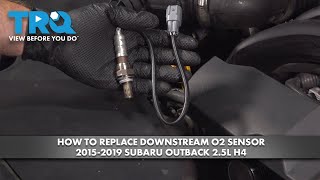
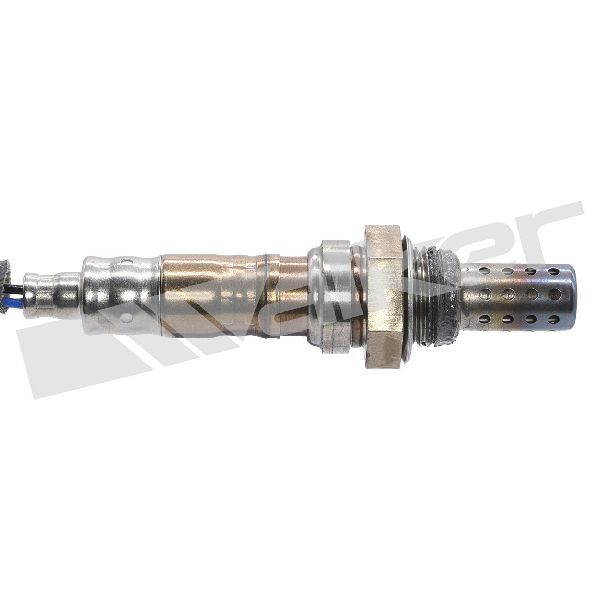
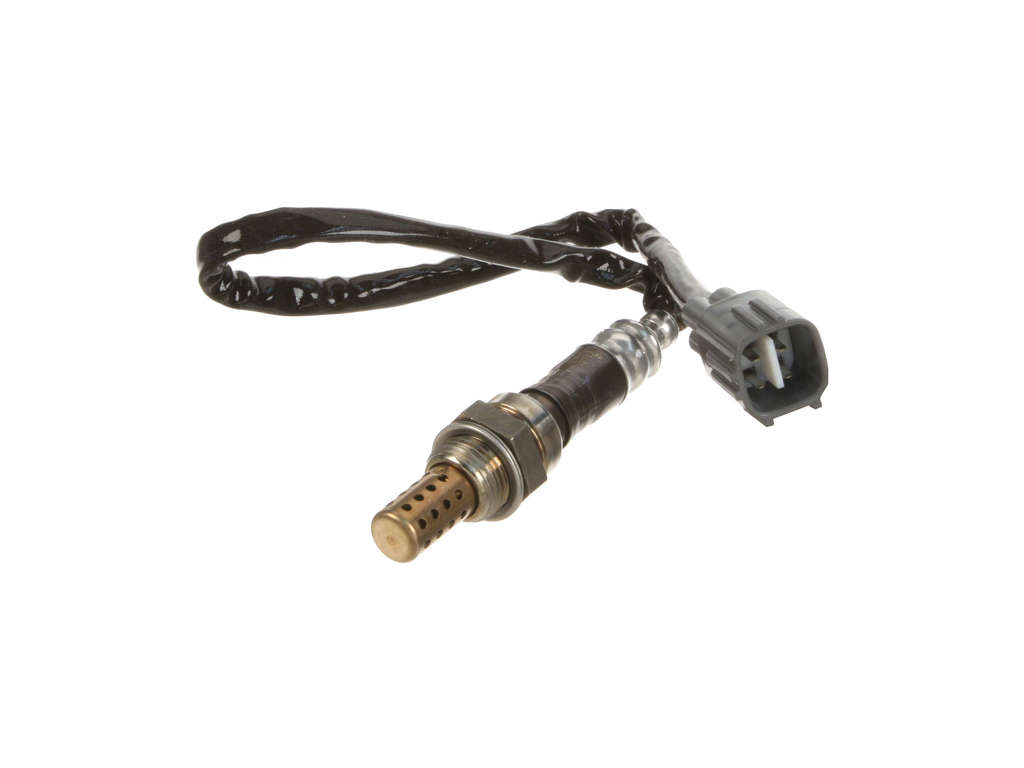
- Rear Oxygen Sensor (Bank 1, Sensor 2)
(OEM #22690AB06A (For 3.6L H6 Engine) / 22690AB070 (For 2.5L Engine, updated per TSB))— This is the component that generates the signal being monitored. It is a common wear-and-tear item and the most frequent cause of P0137. Subaru has also issued TSBs related to updated versions of this part.
Trusted brands: Denso (OEM supplier), NTK
OEM price range: $150-$250
Aftermarket price range: $80-$150
Related Codes That Often Appear With This One
- P0138 — This code for 'O2 Sensor Circuit High Voltage' is for the same sensor. Both are mentioned in TSB 09-115-24R, indicating they relate to the same component's failure modes.
- P0140 — This code for 'O2 Sensor Circuit No Activity Detected' is also for the same sensor and is cited in the same TSBs as P0137, suggesting a related failure.
- P0171 — If an exhaust leak is significant, it might also cause a 'System Too Lean (Bank 1)' code as the front O2 sensor detects the excess oxygen. A fouled sensor can also cause this code.
Technical Service Bulletins (TSBs) & Recalls

- 09-115-24R: Announces availability of new oxygen sensors developed to address P0137, P0138, and P0140.
- 11-160-15: Announces availability of reprogramming files to optimize the ECM for DTC P0137 on 2015 models.
Platform-Specific Known Issues
- TSB #11-160-15: ECM Reprogramming for 2015 Models: For 2015 Outback and Legacy models (both 2.5L and 3.6L), Subaru released reprogramming files to optimize the ECM logic. This was done to prevent false P0137 codes that could set under specific driving conditions, like a hot engine restart after a short soak or long downhill coasts. The TSB also addressed an idle RPM drop concern.
- TSB #09-115-24R: Redesigned Oxygen Sensor for 2020+ Models: For 2020+ Outback/Legacy, 2019+ Forester, and 2017+ Crosstrek/Impreza models, this bulletin announces the availability of newly developed rear oxygen sensors. The new sensors have an "optimized coating application to help prevent cracking" internally, reducing the chance of short/open circuits that trigger P0137, P0138, and P0140. The Subaru part numbers did not change, but the new parts can be identified by an updated Denso part number engraved on the sensor body.
Mechanic-Grade Diagnostic Values
- Downstream O2 Sensor (B1S2) Live Data Voltage — expected: Relatively stable voltage between 0.6V and 0.8V when the engine is warm and the catalytic converter is working efficiently.. Failure: Voltage is stuck low (below 0.2V), reads 0V, or is below 0.03V for an extended period.
- Downstream O2 Sensor Heater Circuit Resistance — expected: Typically between 2 and 16 Ohms, but the exact specification is vehicle-dependent. Check the service manual.. Failure: No reading (open circuit) or a reading far outside the specified range indicates a bad heater element.
Hidden / Shadow Codes Worth Checking
- Mode $06, Test ID $41: This test monitors the O2 Sensor Circuit for Bank 1, Sensor 2. It includes checks for minimum and maximum output voltage. (see via An advanced scan tool capable of reading Mode $06 data. Component ID $81 shows maximum voltage and $02 shows minimum voltage, with an expected range of 0-1.275V.)
Scan Tool Commands That Help
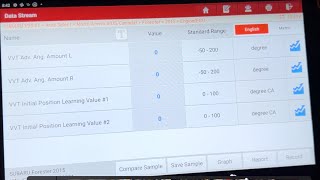
- Subaru Select Monitor (SSM) or equivalent professional scan tool: Current Data Display & Save (Engine Control System) — This function is used to view the live voltage output of the rear oxygen sensor (B1S2) to determine if it is responding correctly or is stuck in a low voltage state, which is the primary diagnostic step after checking for physical damage or leaks.
Wiring & Ground Locations
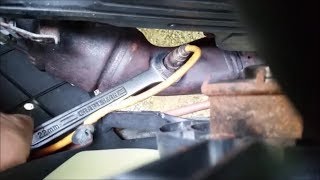
- Rear O2 Sensor Connector — On the passenger side of the engine compartment. The harness runs up the side of the transmission and plugs into the main harness on top of the bell housing. Access is often easiest from underneath by partially removing the passenger side front fender liner.. This connector and its harness are exposed to heat and road debris, making them susceptible to damage, corrosion, or loose connections that can cause a low voltage signal.
- ECU Main Grounds — On top of the intake manifold. Additional critical grounds are from the battery negative terminal to the chassis, on the engine block, and on the alternator housing.. The ECU gets its ground reference from the intake manifold. A poor ground connection here can cause erratic sensor readings and phantom codes, including P0137.
When the Usual Fixes Don't Work
- While P0137 is almost always caused by a faulty sensor, wiring, or an exhaust leak, it can also be triggered by modifications. In some cases, owners of modified Subarus (like the WRX) install an O2 sensor spacer or a 'J-pipe' extension to pull the rear sensor out of the direct exhaust stream. This is typically done to prevent a P0420 (Catalyst Efficiency) code when using a high-flow catalytic converter. However, if the spacer moves the sensor too far out of the exhaust flow, it can cause the sensor to read an artificially low voltage, triggering a P0137 code even though the sensor and wiring are perfectly fine.
OEM Part Supersession History
Denso P/N: 150200-9001→Denso P/N: 150200-9002— New sensor has an optimized internal coating to prevent cracking and reduce the possibility of short/open circuits, as per TSB 09-115-24.
Heads up: This applies to the Subaru part number 22690AB070 for the 2.5L engine. The Subaru part number itself did not change, only the supplier part number engraved on the sensor body.
Model Year Variations Within This Range
- 2015: An ECM software update (TSB 11-160-15) was released to fix overly sensitive logic that could trigger a false P0137, especially after a hot restart.
- 2020-2022: A redesigned rear oxygen sensor with a more durable internal coating was introduced into production to address P0137, P0138, and P0140 codes (TSB 09-115-24R).
Helpful Videos
We Have This Part in Stock

The information in this article is provided for general reference and educational purposes only. Vehicle specifications, procedures, and part compatibility can vary by production date, trim level, and region. Always consult your vehicle's factory service manual and verify part numbers before purchasing or performing repairs. Safety-critical components such as airbags, seat belts, and braking systems should be installed by a qualified professional.
- Subaru OUTBACK:
- 🎬 Helpful Videos
- 🛍️ Shop This Part
- What's Unique About the 2015-2022 Subaru OUTBACK
- Diagnostic Flowchart
- Symptoms You May Notice
- Most Likely Causes
- Rare But Worth Checking
- Diagnosis Steps
- Parts You'll Likely Need
- Related Codes That Often Appear With This One
- Technical Service Bulletins (TSBs) & Recalls
- Platform-Specific Known Issues
- Mechanic-Grade Diagnostic Values
- Hidden / Shadow Codes Worth Checking
- Scan Tool Commands That Help
- Wiring & Ground Locations
- When the Usual Fixes Don't Work
- OEM Part Supersession History
- Model Year Variations Within This Range
- 🎟️ Get 5% Off