

P0137 on 2017-2024 Subaru Impreza: Causes and Fixes for O2 Sensor Low Voltage
On a 2017-2024 Impreza, code P0137 is almost always caused by a faulty rear oxygen sensor. Subaru issued a TSB for this exact problem, releasing an updated sensor. Expect to pay $70-$150 for an aftermarket sensor or $150-$250 for the updated OEM part. It's a straightforward DIY replacement for many.
- P0137 on a 2017-2024 Impreza points directly to a problem with the rear oxygen sensor (Bank 1, Sensor 2).
- The most likely cause is a failed sensor. Subaru has acknowledged this with a TSB and an updated part (22690AB08A).
- Before replacing the sensor, perform a quick visual inspection of the wiring and check for obvious exhaust leaks.
- This is a DIY-friendly repair for many, requiring a special 22mm O2 sensor socket. The main challenge can be removing the old sensor if it is rusted in place.
- When replacing, use the updated OEM part or a high-quality brand like Denso or NTK to prevent the issue from recurring.
What's Unique About the 2017-2024 Subaru IMPREZA
For this generation of Subaru Impreza, the P0137 code is a well-documented issue. Subaru of America released Technical Service Bulletin (TSB) #09-115-24, which acknowledges this code (and others related to the rear O2 sensor) and announces the availability of a newly designed sensor. The TSB states the new sensors have an "optimized coating application to help prevent cracking within the internal surfaces," which reduces the chance of short circuits that can cause the low voltage reading. This strongly indicates that the original factory-installed sensors 🎬 Watch: 3 DIY methods to fix the Subaru P0137 code. are a common failure point.
Diagnostic Flowchart
Tap your situation to follow the diagnostic path that matches what you're seeing on this vehicle.
Symptoms You May Notice
- Check Engine Light is on
- Vehicle may fail an emissions test
- Cruise control is disabled
- Slightly reduced fuel economy in some cases
- Replacing the front Air/Fuel ratio sensor (Sensor 1) instead of the rear Oxygen sensor (Sensor 2). They are not interchangeable and serve different functions.
- Replacing the O2 sensor when a small, undetected exhaust leak before the sensor is the actual root cause.
Most Likely Causes
- Faulty Rear Oxygen Sensor (Bank 1, Sensor 2) 🔴 High Probability Subaru issued TSB #09-115-24 announcing a redesigned rear oxygen sensor to fix this specific code, indicating a known issue with the original part's durability. The new sensor has an improved internal coating to prevent cracking and short circuits.
How to confirm: Using a scan tool, monitor the live data for the B1S2 O2 sensor. If the voltage is stuck below 0.2V (often near 0V) and does not fluctuate on a warm engine, and the wiring is intact, the sensor has likely failed. A healthy downstream sensor should show a relatively stable voltage, typically between 0.5V and 0.8V. You can also test the sensor's internal heater circuit; resistance should typically be between 3 and 15 ohms when cold.
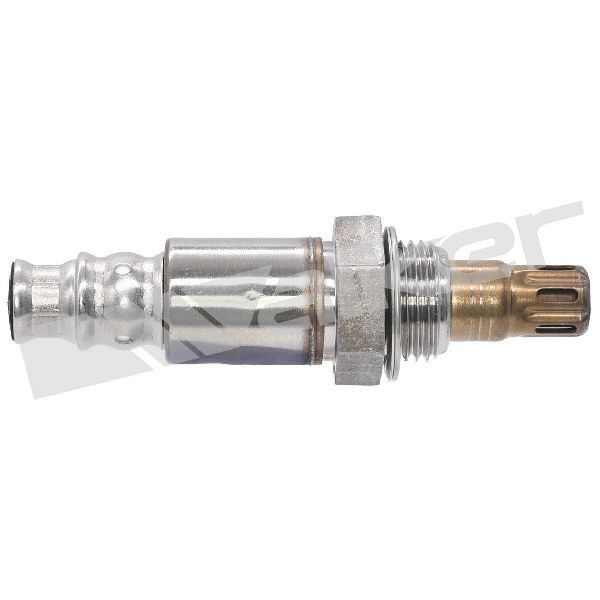
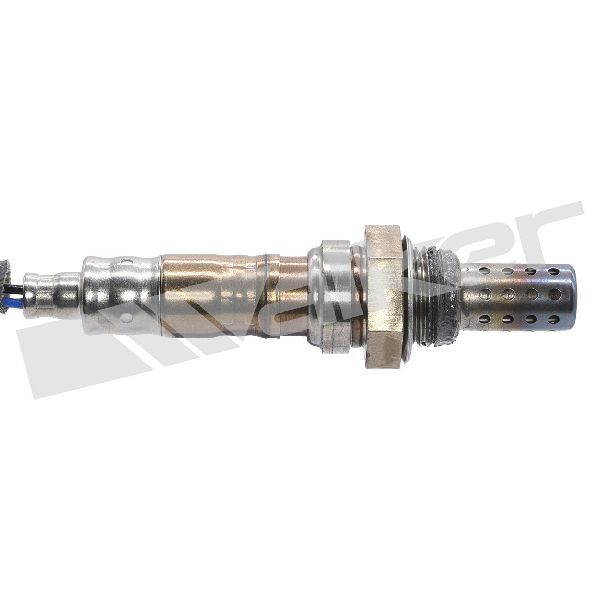
Typical fix: Replace the rear (downstream) oxygen sensor. It is highly recommended to use the updated OEM part (22690AB08A) or a quality aftermarket equivalent from OE suppliers like Denso or NTK.
Est. part cost: $70-$250 - Exhaust Leak 🟡 Medium Probability Exhaust system components can develop leaks from rust or damage, which is common on vehicles in regions with harsh winters or road salt. An exhaust leak before the rear O2 sensor allows outside air into the exhaust stream, which the sensor reads as a lean condition (low voltage).
How to confirm: Visually inspect the exhaust system for cracks or holes between the catalytic converter and the rear O2 sensor. Listen for ticking or hissing sounds that change with engine RPM. A professional smoke test is the most effective way to find small, hard-to-see leaks. A DIY method involves spraying soapy water on cold exhaust joints and looking for bubbles when the engine is started.
Typical fix: Repair the leak by welding the damaged section or replacing the leaking exhaust component. Exhaust putty can be a temporary fix for small pinholes.
Est. part cost: $10-$300 - Damaged Wiring or Connector ⚪ Low Probability The sensor's wiring is located under the vehicle and is exposed to road debris, moisture, and heat, which can cause damage over time. The connector is often clipped to the frame rail near the front wheel well. The harness runs up the side of the transmission to a connection point on top of the bell housing.
How to confirm: Visually inspect the wiring harness from the sensor to its connector for any frayed, broken, or melted wires. Unplug the connector and check for corrosion, moisture, or bent pins. In rare cases on Subarus, oil from a leaking seal elsewhere can wick through the inside of the wires and contaminate the ECM connector, causing this code.
Typical fix: Repair the damaged section of the wiring harness or clean/replace the connector. If oil contamination is found in the harness, the source of the oil leak must be fixed and the affected harness section may need replacement.
Est. part cost: $20-$100
Rare But Worth Checking
- Oil contamination in wiring harness: A very rare but documented issue where oil from a leak (e.g., pressure switch, transmission connector) can travel inside the wiring harness via capillary action and contaminate the sensor or ECM connectors, causing electrical faults. This has been noted by Subaru technicians for similar codes. Requires disconnecting the ECM connectors to inspect for oil residue.
- Faulty Engine Control Module (ECM): This is extremely rare. The ECM should only be considered after all other possibilities (sensor, wiring, exhaust leaks) have been thoroughly ruled out by a professional.
Diagnosis Steps
- Confirm the P0137 code is present using an OBD-II scanner.
- Visually inspect the rear oxygen sensor's wiring harness and connector for any signs of damage, melting, or corrosion.
- Inspect the exhaust system for any leaks between the catalytic converter and the rear O2 sensor. Listen for unusual noises or use a smoke machine for a definitive test.
- Use a scan tool to observe the live data from the Bank 1 Sensor 2. On a fully warmed-up engine, the voltage should fluctuate slowly. If it is stuck below 0.2 volts, it confirms the low voltage condition.
- Test the O2 sensor's internal heater circuit with a multimeter set to Ohms. A typical reading for a good sensor is between 3 and 15 ohms when cold. An out-of-limit or open circuit indicates a failed heater element.
- If the wiring and exhaust are confirmed to be in good condition, the rear oxygen sensor is the most likely cause of the fault.
- To remove the old sensor, which may be seized, spray its threads with penetrating oil and let it soak for 15-30 minutes while the exhaust is cool.
- Using a 22mm (or 7/8-inch) slotted oxygen sensor socket and a ratchet, remove the old sensor.
- Apply a small amount of anti-seize compound to the threads of the new sensor if it is not pre-applied.
- Install the new sensor and torque to approximately 30-32 ft-lbs (40-44 Nm). Do not overtighten.
- After replacement, clear the code with the scanner and perform a drive cycle to ensure the code does not return.
Parts You'll Likely Need
- Rear Oxygen Sensor (Downstream)
(OEM #Updated: 22690AB08A, Original: 22690AB070)— This is the most common failure item for code P0137 on this vehicle. TSB #09-115-24 introduced the updated part number 22690AB08A to supersede the original, failure-prone sensor.
Trusted brands: Denso (P/N: 234-4933), NTK (P/N: 24461)
OEM price range: $150-$250
Aftermarket price range: $70-$150
Related Codes That Often Appear With This One
- P0138 — O2 Sensor Circuit High Voltage. This code, along with P0137, P0140, and P0141, are all related to the rear O2 sensor and are mentioned in the same Subaru TSB #09-115-24.
- P0140 — O2 Sensor Circuit No Activity Detected. This points to a complete failure of the sensor or its circuit, and is also covered by the Subaru TSB.
- P0141 — O2 Sensor Heater Circuit Malfunction. The sensor has an internal heater that can fail, which is another common issue addressed by the updated part mentioned in the TSB.
Technical Service Bulletins (TSBs) & Recalls
- 09-115-24: "Oxygen Sensor Design Change / P0137, P0138, P0140, & P0141" - Announces a new, more durable rear oxygen sensor (part number 22690AB08A) to address these codes on 2017-24 Impreza and Crosstrek models, among others.
Platform-Specific Known Issues
- Official TSB for Faulty Sensor: Subaru TSB #09-115-24 explicitly addresses DTC P0137 for 2017-2024 Impreza models. It announces a redesigned rear oxygen sensor with an 'optimized coating' to prevent internal cracking, confirming a known weakness with the original part.
- Issues on Modified Vehicles: Owners of modified Imprezas (especially WRX models) may trigger P0137 after installing an O2 sensor spacer or 'defouler'. These are often used to prevent a P0420 catalyst code after installing a high-flow downpipe, but can sometimes pull the sensor too far out of the exhaust stream, causing an erroneous low voltage reading.
Mechanic-Grade Diagnostic Values
- Downstream O2 Sensor Signal Voltage (Live Data) — expected: Relatively stable voltage between 0.5V and 0.8V on a warm, running engine.. Failure: Voltage is stuck below 0.2V, often near 0V, for an extended period.
- O2 Sensor Heater Circuit Resistance — expected: Between 3 and 15 Ohms when measured across the two heater wires (often same color) at ambient temperature.. Failure: Resistance is out of limits (OL) or shows an open circuit, indicating a broken internal heater.
Wiring & Ground Locations
- Rear O2 Sensor Connector (E25) — The sensor plugs into a harness connector that is often clipped to the underbody or frame rail. The harness then runs up the side of the transmission and connects to the main engine harness on top of the bell housing.. This connector and its associated wiring are exposed to heat, moisture, and road debris, making them a potential point of failure for shorts or open circuits that can cause P0137.
- Main Engine Ground — A primary engine ground strap is typically located on the top of the engine block, often near the starter motor on the bell housing. The ECU itself relies on grounds located on the top of the intake manifold.. A poor engine or ECU ground can cause a variety of sensor reading errors, including the low voltage signal of P0137. Ensuring these grounds are clean and tight is a crucial diagnostic step for any electrical fault.
Real Owner Repair Stories
- Reddit user on r/WRX (Subaru WRX (similar platform/engine)) — P0137 code appeared.
❌ Tried (didn't work) Replacing the donut gasket between the J-pipe and cat-back., Replacing a ground wire.
✅ What actually fixed it The code was resolved by replacing the rear O2 sensor and performing a 'relearn' with an Accessport tuning device.
OEM Part Supersession History
22690AB070→22690AB08A— The original sensor was prone to internal failure. The updated part was released under TSB #09-115-24 to address durability issues causing codes P0137, P0138, P0140, and P0141.
Model Year Variations Within This Range
- 2020-2024: The 2020 model year introduced a mid-cycle refresh with updated front fascia, grille, and some interior tech features. However, the 2.0L boxer engine and its associated emissions control systems, including the oxygen sensors, remained unchanged from the 2017-2019 models.
Helpful Videos

![How to Fix SUBARU P0137 Engine Code in 4 Minutes [3 DIY Methods / Only $9.42]](https://img.youtube.com/vi/9erVmfLzav8/mqdefault.jpg)
We Have This Part in Stock

The information in this article is provided for general reference and educational purposes only. Vehicle specifications, procedures, and part compatibility can vary by production date, trim level, and region. Always consult your vehicle's factory service manual and verify part numbers before purchasing or performing repairs. Safety-critical components such as airbags, seat belts, and braking systems should be installed by a qualified professional.
- Subaru IMPREZA:
- 🎬 Helpful Videos
- 🛍️ Shop This Part
- What's Unique About the 2017-2024 Subaru IMPREZA
- Diagnostic Flowchart
- Symptoms You May Notice
- Most Likely Causes
- Rare But Worth Checking
- Diagnosis Steps
- Parts You'll Likely Need
- Related Codes That Often Appear With This One
- Technical Service Bulletins (TSBs) & Recalls
- Platform-Specific Known Issues
- Mechanic-Grade Diagnostic Values
- Wiring & Ground Locations
- Real Owner Repair Stories
- OEM Part Supersession History
- Model Year Variations Within This Range
- 🎟️ Get 5% Off