

P0137 on 2022-2023 Subaru Forester: O2 Sensor Low Voltage Causes and Fixes
On a 2022-2023 Forester, P0137 is almost always a faulty rear oxygen sensor (Bank 1, Sensor 2). Subaru issued a TSB for this exact problem, providing an updated sensor to fix internal cracking. Expect to pay ~$65-$160 for a quality aftermarket sensor (Denso) or ~$150-$250 for an OEM part; the repair is straightforward for DIYers with the right tools.
- P0137 on a 2022-2023 Forester is most likely due to a faulty rear oxygen sensor with an internal crack, a known design flaw.
- Subaru has released an updated sensor to fix this specific problem, as noted in TSB #09-115-24R.
- Before replacing the sensor, always perform a quick visual check of the wiring for damage and the exhaust for leaks.
- Replacing the sensor is a DIY-friendly job with the proper tool (an O2 sensor socket), but ensure the exhaust is cool before starting.
- When a Check Engine Light appears on a Subaru, it's common for other lights like traction control to also illuminate; this is normal behavior and will resolve when the code is fixed.
What's Unique About the 2022-2023 Subaru FORESTER
The 2022-2023 Subaru Forester is part of a model range known to have issues with the rear oxygen sensor. Subaru acknowledged this by issuing Technical Service Bulletins (TSBs), including #09-115-24R. This TSB announces the availability of new, improved oxygen sensors specifically to address code P0137. The bulletin explains the new sensors have an "optimized coating application to help prevent cracking within the internal surfaces reducing any possibility of short/open circuits." This makes a failed sensor the most likely cause, rather than other potential issues like exhaust leaks or wiring problems.
Diagnostic Flowchart
Tap your situation to follow the diagnostic path that matches what you're seeing on this vehicle.
Symptoms You May Notice
- Check Engine Light is on
- Traction control light, cruise control light, and other warning lights may illuminate simultaneously (a common Subaru trait often called the 'Christmas tree' effect when any engine code is set).
- Vehicle will fail an emissions test.
- Potential for slightly decreased fuel economy.
- Replacing the front Air/Fuel Ratio Sensor (Bank 1, Sensor 1) instead of the rear Oxygen Sensor 🎬 See the difference between A/F and O2 sensor testing (Bank 1, Sensor 2). P0137 specifically points to the rear, downstream sensor.
- Replacing the catalytic converter. A failing converter typically causes a P0420 'Catalyst Efficiency' code, not a P0137 low voltage code.
Most Likely Causes
- Failed Rear Oxygen Sensor (Bank 1, Sensor 2) 🔴 High Probability Subaru issued TSBs #09-115-24 and #09-115-24R acknowledging a design flaw in the original sensors. The TSB states the original parts are prone to internal cracking, which leads to short/open circuits. The updated part has an 'optimized coating' to prevent this.
How to confirm: Use a scan tool to monitor live data for the B1S2 O2 sensor. If the voltage is stuck low (e.g., below 0.2V) and does not fluctuate on a warm engine, the sensor is likely faulty. Given the TSB, this is the most probable cause. When ordering a replacement, confirm the part number with a dealer using your VIN to ensure you receive the updated version. The new part can be identified by the Denso part number engraved on the sensor body.
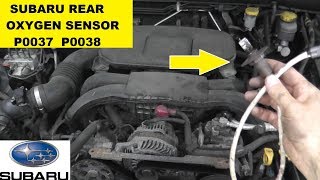
Typical fix: Replace the rear oxygen sensor with the new, updated OEM part 🎬 Watch: How to test and replace the rear oxygen sensor or a quality aftermarket equivalent from a brand like Denso or NGK/NTK.
Est. part cost: $150-$250 (OEM), $65-$160 (Aftermarket) - Damaged Wiring or Connector 🟡 Medium Probability The sensor and its wiring are located under the vehicle, making them susceptible to damage from road debris, moisture, and corrosion. The wiring harness can also be melted if it comes into contact with hot exhaust components.
How to confirm: Visually inspect the entire wiring harness from the sensor to the main connector for any signs of fraying, melting, corrosion, or breaks. Check that the connector is clean, dry, and securely fastened. In rare cases on other Subaru models, oil from a leaking Oil Control Valve (OCV) has been known to wick through the harness to the connector, causing this code.
Typical fix: Repair the damaged section of the wiring harness or clean/replace the connector.
Est. part cost: $10-$50 - Exhaust Leak ⚪ Low Probability Exhaust gaskets and pipe welds can degrade over time from heat cycles and corrosion, especially in regions that use road salt in winter.
How to confirm: Visually inspect the exhaust system for cracks or holes, particularly at flange gaskets between the catalytic converter and the rear O2 sensor. Listen for hissing or ticking sounds from the exhaust. A shop can perform a smoke test to pinpoint small leaks.
Typical fix: Repair the leak by welding the pipe or replacing the leaking gasket or exhaust component.
Est. part cost: $20-$200
Rare But Worth Checking
- Oil Contamination in Wiring Harness: This is a rare but documented issue on some Subaru models. A leaking Oil Control Valve (OCV) can allow engine oil to 'wick' through the internal wiring of the harness, eventually contaminating the oxygen sensor connector and causing faulty readings. Diagnosis involves disconnecting the OCV and O2 sensor connectors to check for the physical presence of oil.
- Engine Control Module (ECM) Fault: This is extremely rare. All other possibilities, especially the sensor itself and its wiring, should be exhaustively ruled out before considering the ECM as the cause.
Diagnosis Steps
- Confirm the code P0137 is present using an OBD-II scanner.
- Clear the code and drive the vehicle to see if it returns. A code that returns quickly, often within two consecutive driving cycles, suggests a hard fault.
- Perform a thorough visual inspection of the rear oxygen sensor's wiring harness and connector. Look for any signs of physical damage, melting on the exhaust, corrosion, or oil contamination inside the connector.
- Inspect the exhaust system for any leaks between the catalytic converter and the rear O2 sensor. Listen for unusual noises and look for soot trails.
- Use a scan tool with live data capability to observe the voltage from Bank 1, Sensor 2. A healthy downstream sensor on a warm, running engine should show a relatively stable voltage. If it is stuck low (below 0.2V), it confirms the low voltage condition described by the code.
- Given the high probability due to TSB #09-115-24R, if the wiring is intact and there are no exhaust leaks, the sensor itself is the most likely culprit.
- Replace the Bank 1, Sensor 2 oxygen sensor. It is highly recommended to use the updated OEM part (confirm with VIN) or a high-quality aftermarket part from Denso or NGK/NTK.
- After replacement, clear the code and perform a drive cycle to ensure the fix was successful.
Parts You'll Likely Need
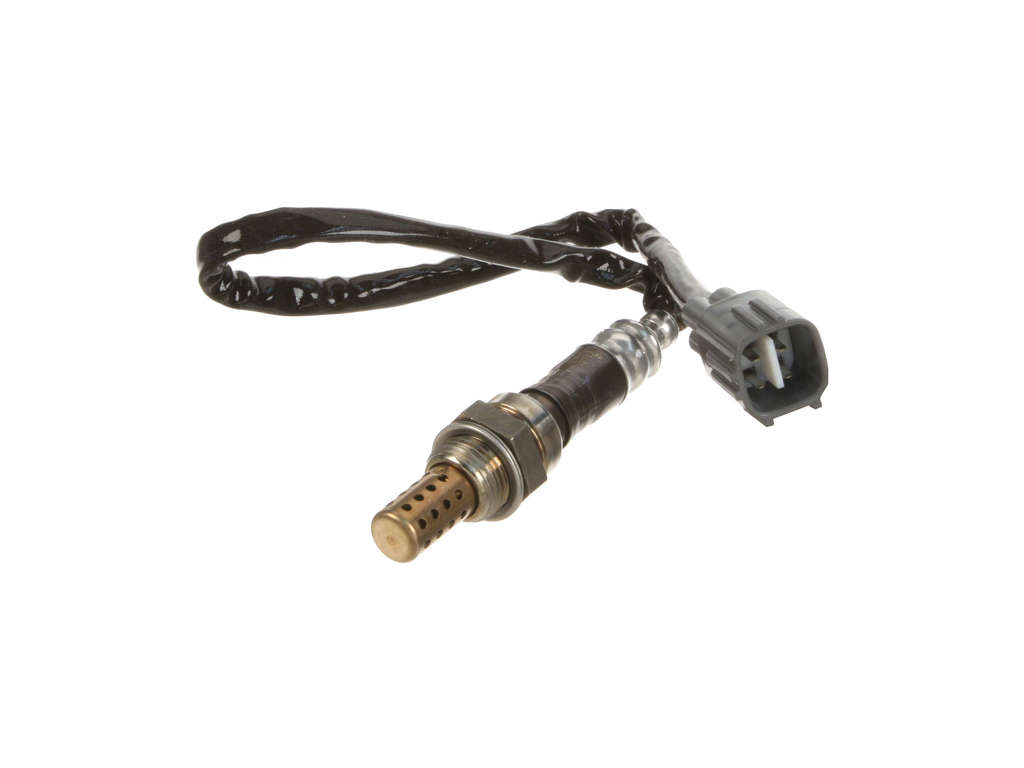
- Rear Oxygen Sensor (Bank 1, Sensor 2)
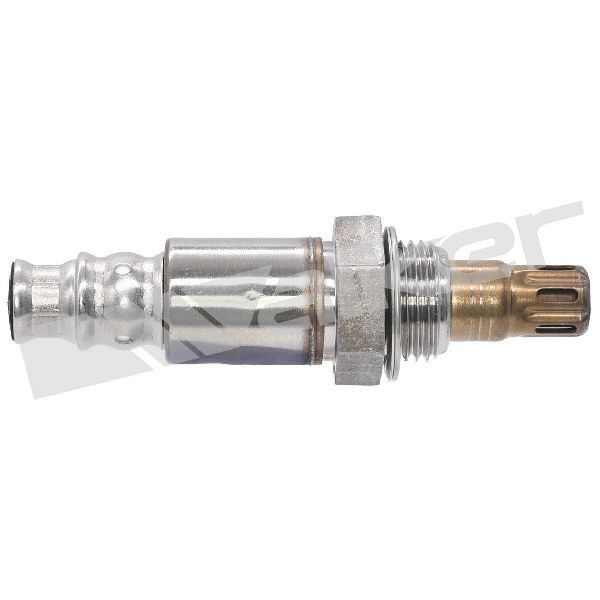
(OEM #22690AB08A)— This is the most common failure point for code P0137 on this vehicle, as confirmed by Subaru's own Technical Service Bulletin #09-115-24R, which describes a design flaw in the original part. Field data indicates 22690AB08A is the updated part number, superseding 22690AB010.
Trusted brands: Subaru (OEM), Denso, NGK/NTK
OEM price range: $150-$250
Aftermarket price range: $65-$160
Related Codes That Often Appear With This One
- P0138 — O2 Sensor Circuit High Voltage. This code, along with P0140 and P0141, is also mentioned in Subaru TSB #09-115-24R. Seeing them together points strongly to the same faulty oxygen sensor or circuit issue.
- P0140 — O2 Sensor Circuit No Activity Detected. This is another code covered by the same Subaru TSB and indicates a problem with the same sensor.
- P0141 — O2 Sensor Heater Circuit Malfunction. Also covered by TSB #09-115-24R, this code indicates a failure of the sensor's internal heating element, which is integral to the sensor assembly.
Technical Service Bulletins (TSBs) & Recalls
- 09-115-24R: Announcing new oxygen sensors to address DTCs P0137, P0138, P0140, and P0141, and explaining the failure mode as internal cracking.
- 09-115-24: The original bulletin announcing the availability of new oxygen sensors for these codes.
Platform-Specific Known Issues
- Subaru has issued Technical Service Bulletins #09-115-24 and #09-115-24R regarding P0137, P0138, P0140, and P0141 codes on various models, including the 2019-2023 Forester. The bulletins announce the availability of a newly developed oxygen sensor with an 'optimized coating application to help prevent cracking within the internal surfaces,' which was causing short circuits in the original parts.
Mechanic-Grade Diagnostic Values
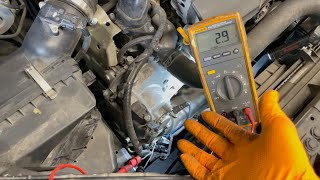
- Rear O2 Sensor Heater Circuit Resistance — expected: 5 to 8 Ohms. Failure: An open circuit (infinite resistance) or a reading over 50 Ohms indicates a failed heater element.
- Rear O2 Sensor Voltage (Live Data) — expected: Relatively stable between 0.5V and 0.8V on a warm, running engine with a healthy catalytic converter.. Failure: Voltage is stuck consistently below 0.2V - 0.4V.
Scan Tool Commands That Help
- Subaru Select Monitor: Current Data Display & Save — This function is used to monitor the live voltage output of the rear O2 sensor (Bank 1, Sensor 2) to confirm if it is staying in the low voltage state that triggers P0137.
Wiring & Ground Locations
- E25 — This is the wiring diagram identifier for the rear oxygen sensor connector plug (Plug C).. Knowing the specific connector ID helps in locating the correct component and its pinout in a factory service manual for electrical testing (voltage, ground, and signal).
- Engine Ground — A primary engine ground point on many Subarus is located on the intake manifold, near the throttle body.. A poor engine ground can cause a variety of electrical issues and incorrect sensor readings. While not a common cause for P0137 specifically, ensuring this ground is clean and tight is a fundamental step in any electrical diagnosis.
Real Owner Repair Stories
- Reddit user landryb06 in r/subaru (2016 Forester XT) — Intermittent P0137 Check Engine Light, always occurring in the winter.
❌ Tried (didn't work) Replacing the rear O2 sensor with a new Denso part. The code returned after about 9,000 miles.
✅ What actually fixed it The root cause was oil from a leaking exhaust Oil Control Valve (OCV) wicking through the wiring harness and contaminating the ECM connector. The fix required replacing the leaking OCV and cleaning the oil out of the connectors.
"I Checked Everything" — The Actual Cause
- In some cases, particularly with intermittent P0137 codes that persist after sensor replacement, the cause is not an exhaust leak that a smoke test would find. A known issue is engine oil from a leaking Oil Control Valve (OCV) seeping into the wiring harness. The oil travels internally through the wires and eventually contaminates the O2 sensor or ECM connector, causing the low voltage reading. This problem is purely electrical and would not be found with a smoke test.
OEM Part Supersession History
22690AB010→22690AB08A— The original sensor was prone to internal cracking, causing short/open circuits. The new part has an 'optimized coating' to prevent this, as described in TSB 09-115-24R.
Heads up: While TSB 09-115-24R states the part number did not change, field reports from technicians indicate that 22690AB08A is the correct updated part number to ensure the redesigned sensor is received. Requesting the old part number may result in receiving old stock.
Model Year Variations Within This Range
- 2023: The redesigned rear oxygen sensor was incorporated into Forester production starting with VIN PH476292. Vehicles produced before this VIN have the original, more failure-prone sensor.
Helpful Videos
We Have This Part in Stock

The information in this article is provided for general reference and educational purposes only. Vehicle specifications, procedures, and part compatibility can vary by production date, trim level, and region. Always consult your vehicle's factory service manual and verify part numbers before purchasing or performing repairs. Safety-critical components such as airbags, seat belts, and braking systems should be installed by a qualified professional.
- Subaru FORESTER:
- 🎬 Helpful Videos
- 🛍️ Shop This Part
- What's Unique About the 2022-2023 Subaru FORESTER
- Diagnostic Flowchart
- Symptoms You May Notice
- Most Likely Causes
- Rare But Worth Checking
- Diagnosis Steps
- Parts You'll Likely Need
- Related Codes That Often Appear With This One
- Technical Service Bulletins (TSBs) & Recalls
- Platform-Specific Known Issues
- Mechanic-Grade Diagnostic Values
- Scan Tool Commands That Help
- Wiring & Ground Locations
- Real Owner Repair Stories
- "I Checked Everything" — The Actual Cause
- OEM Part Supersession History
- Model Year Variations Within This Range
- 🎟️ Get 5% Off