

P0137 on 2017-2024 Subaru Crosstrek: O2 Sensor Low Voltage Causes & Fixes
On a 2017-2024 Subaru Crosstrek, code P0137 almost always points to a faulty rear oxygen sensor (Bank 1, Sensor 2). Subaru has released updated parts to fix this known issue. Expect to pay around $80-$150 for an aftermarket sensor or $150-$250 for an OEM part; it's a straightforward DIY job for many.
- For the 2017-2024 Subaru Crosstrek, P0137 is most likely caused by a failed rear oxygen sensor, a known issue confirmed by a Subaru TSB.
- Subaru released a redesigned rear O2 sensor (Part #22690AB010) to permanently fix the problem.
- Using a quality OEM or Denso-branded replacement sensor is highly recommended to avoid recurring issues.
- While less common, an exhaust leak before the sensor or a wiring issue can also trigger this code and should be investigated if a new sensor doesn't solve it.
- This is a common DIY repair that requires an O2 sensor socket and can save significant labor costs.
What's Unique About the 2017-2024 Subaru CROSSTREK

What makes the Subaru Crosstrek notable for this code is that Subaru has officially acknowledged the problem. The manufacturer issued Technical Service Bulletins (TSBs) for a wide range of models, including the Crosstrek, announcing the availability of newly designed rear oxygen sensors specifically to address code P0137, along with P0138, P0140, and P0141. The TSB explains the new sensors have an 'optimized coating application to help prevent cracking within the internal surfaces reducing any possibility of short/open circuits,' directly addressing a design flaw in the original part. This strongly indicates a higher-than-average failure rate for the original factory-installed sensors.
Diagnostic Flowchart

Tap your situation to follow the diagnostic path that matches what you're seeing on this vehicle.
Generation note: This year range covers the end of the first generation (2017), the entire second generation (2018-2023), and the beginning of the third generation (2024). The manufacturer TSBs for this code apply across these generations, indicating a common issue with the downstream O2 sensor part design used in all of them.
Symptoms You May Notice
- Check Engine Light is on
- Cruise control disabled (blinking cruise control light is common on the dash 🎬 Watch: Why your cruise control light flashes with a check engine light.)
- Failure to pass an emissions test
- Slightly decreased fuel efficiency (often not noticeable)
- Rough or unstable idle in some cases
- Replacing the front (upstream) Air/Fuel Ratio sensor instead of the rear (downstream) oxygen sensor. P0137 specifically points to Sensor 2, which is after the catalytic converter.
- Replacing the O2 sensor repeatedly without checking for a small, underlying exhaust leak or a wiring issue.
Most Likely Causes

- Faulty Rear Oxygen Sensor (Bank 1, Sensor 2) 🔴 High Probability Subaru issued Technical Service Bulletins #09-115-24 and #09-115-24R specifically announcing redesigned oxygen sensors to fix this exact code. The TSB states the new sensors have an 'optimized coating' to prevent internal cracking and short circuits, confirming a known weakness with the original part.
How to confirm: Use a scan tool to monitor the live voltage data for 'Bank 1 Sensor 2'. If the voltage remains consistently low (e.g., below 0.2V) when the engine is warm and at a steady RPM, the sensor has likely failed. A healthy sensor should show a relatively stable voltage between 0.5V and 0.8V. A reading below 0.03V or above 1.2V is a definitive failure indicator. 🎬 See this guide on diagnosing the causes of low O2 sensor voltage. You can also test the sensor's heater circuit resistance; a healthy sensor should measure approximately 5.6 Ohms +/- 0.8 Ohms.
Typical fix: Replace the rear (downstream) oxygen sensor. It is highly recommended to use the updated OEM part (22690AB010) or a high-quality equivalent from Denso, which is the original equipment manufacturer. Be sure to use an O2 sensor socket and apply anti-seize to the threads of the new sensor if not pre-applied. 🎬 Watch: A step-by-step walkthrough of the Crosstrek O2 sensor replacement.
Est. part cost: $80-$250 - Exhaust Leak 🟡 Medium Probability Subaru exhaust systems are susceptible to rust and damage at flange gaskets and welded seams, which can introduce outside oxygen and cause a false low voltage reading from the O2 sensor.
How to confirm: Visually inspect the exhaust system for cracks, rust holes, or loose flange connections, especially between the catalytic converter and the rear O2 sensor. Listen for hissing or louder-than-normal rumbling sounds from the exhaust when accelerating. A professional smoke test is the most reliable way to find small leaks.
Typical fix: Repair the leak. This may involve replacing a gasket, tightening bolts, or welding a cracked pipe.
Est. part cost: $10-$300 - Damaged Wiring or Connector ⚪ Low Probability In some Subaru models, oil from a leaking Oil Control Valve (OCV) can wick through the wiring harness and contaminate the O2 sensor or ECM connectors, causing this code.
How to confirm: Visually inspect the O2 sensor's wiring harness (connector E25) and connector for any signs of melting, corrosion, chafing, or breaks. Disconnect the sensor and ECM connectors and check for any oil residue inside the pins. Use a multimeter to check for proper voltage and continuity at the connector.
Typical fix: Repair the damaged section of wiring or replace the connector pigtail. If oil contamination is found, the source of the leak (e.g., OCV) must be fixed and the harness cleaned or replaced.
Est. part cost: $15-$50 for wiring repair, potentially more if harness replacement is needed.
Rare But Worth Checking
- Engine Control Module (ECM) Fault: This is extremely rare. The ECM should only be considered as the cause after the sensor, wiring, and exhaust system have been thoroughly tested and confirmed to be in good working order.
Diagnosis Steps
- Connect an OBD-II scanner to confirm P0137 is the active code and check for any other codes.
- Check for Technical Service Bulletins (TSBs) for your vehicle's specific VIN. Note TSBs #09-115-24 and #09-115-24R.
- Use the scanner's live data feature to observe the voltage of 'Bank 1 Sensor 2'. A healthy downstream sensor should show a relatively stable voltage, typically between 0.5V and 0.8V on a warm engine. If it's stuck below 0.2V, the sensor is the primary suspect. A reading below 0.03V is a definitive failure indicator.
- Perform a thorough visual inspection of the exhaust system from the engine to the tailpipe, looking and listening for any leaks. Pay close attention to the area before the rear O2 sensor.
- Inspect the wiring and connector for the rear O2 sensor. Look for any signs of physical damage, melting on the exhaust, or corrosion in the connector pins. Check for oil contamination inside the connector.
- If wiring is intact, test the resistance of the sensor's heater circuit. A reading of approximately 5.6 Ohms +/- 0.8 Ohms is expected.
- Check engine ground connections, particularly the main grounds on the intake manifold, as a poor ECU ground can cause faulty sensor readings.
- If the sensor has been replaced and the wiring is confirmed good, but the code returns, an exhaust leak is the next most likely cause. A smoke test may be required to find it.
- If all other steps fail to identify the issue, a more advanced diagnosis of the ECM circuit may be needed, which is best left to a professional.
Parts You'll Likely Need

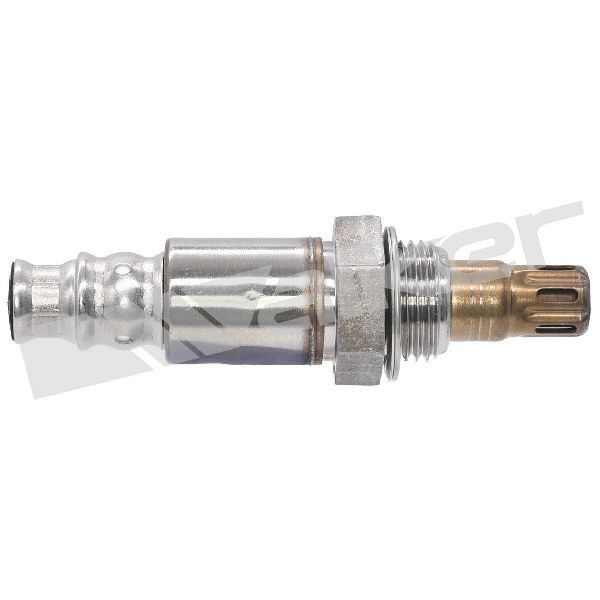
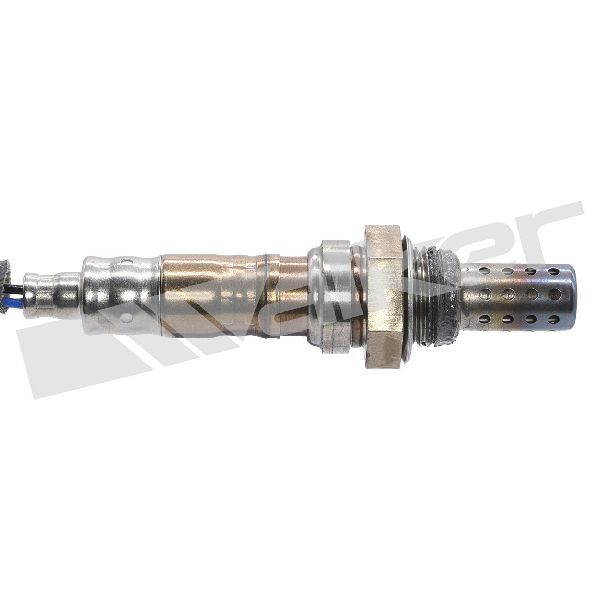
- Rear Oxygen Sensor (Downstream, Bank 1 Sensor 2)
(OEM #22690AB010)— This is the component directly identified by the trouble code and is the subject of a manufacturer TSB due to a high failure rate on this vehicle.
Trusted brands: Subaru (OEM), Denso (is the OEM manufacturer)
OEM price range: $150-$250
Aftermarket price range: $80-$150
Related Codes That Often Appear With This One
- P0138 — This code for 'O2 Sensor Circuit High Voltage' is mentioned in the same Subaru TSBs, suggesting it can be caused by the same faulty sensor failing in a different manner.
- P0140 — This code for 'O2 Sensor Circuit No Activity Detected' is also listed in the Subaru TSBs and points to the same root cause of a failed rear O2 sensor.
- P0141 — This code for 'O2 Sensor Heater Circuit' is also listed in TSB #09-115-24 as being related to the same faulty sensor design.
- P0420 — If the rear O2 sensor provides inaccurate low readings for a long time, the ECM may incorrectly determine that the catalytic converter is inefficient, triggering a P0420 code.
Technical Service Bulletins (TSBs) & Recalls
- Bulletin #09-115-24: Announces new oxygen sensors developed to address Diagnostic Trouble Code P0137 (O2 Sensor Circuit Low Voltage Bank 1 Sensor 2). It notes the new sensors have an 'optimized coating' to prevent internal cracks. It applies to 2017-24 Crosstrek/Impreza and other models.
- Bulletin #09-115-24R: A revised bulletin also announcing the availability of new O2 sensors to fix code P0137.
Platform-Specific Known Issues
- Subaru issued TSBs #09-115-24 and #09-115-24R announcing the availability of redesigned rear oxygen sensors to resolve DTC P0137, P0138, and P0140, confirming a known issue with the original parts.
- Owner Experience: Intermittent Code Fixed with Quality Sensor: A user on Reddit with an '18 Crosstrek reported an intermittent P0141 (heater circuit code, also related to this sensor). They first replaced the sensor with an aftermarket Walker brand part, but the code returned. After confirming the wiring was good, the consensus was that using a high-quality OEM or Denso sensor is critical, as some aftermarket sensors do not perform to the ECU's specifications, causing codes to return.
Mechanic-Grade Diagnostic Values
- Rear O2 Sensor (B1S2) Heater Circuit Resistance — expected: 5.6 Ω +/- 0.8 Ω at 20°C / 68°F. Failure: An open circuit (infinite resistance) or a reading significantly outside the specified range.
- Rear O2 Sensor (B1S2) Live Data Voltage — expected: Relatively stable voltage between 0.5V and 0.8V on a warm, running engine.. Failure: For P0137, voltage is stuck low (e.g., <0.2V). A reading under 0.03V or over 1.2V indicates a definitive sensor failure.
- Rear O2 Sensor (B1S2) Voltage - Forced Lean — expected: Approximately 0.2V (200mV). Failure: Reading is significantly higher or the sensor is slow to react when a vacuum leak is introduced (e.g., by disconnecting the PCV valve hose).
- Rear O2 Sensor (B1S2) Voltage - Forced Rich — expected: Approximately 0.8V (800mV). Failure: Reading is significantly lower or the sensor is slow to react when the engine air intake is partially blocked.
Scan Tool Commands That Help
- Subaru Select Monitor: Current Data Display & Save — This is the OEM dealer tool function used to monitor live data parameters, including 'Rear O2 Sensor' voltage. It is the primary method for observing the sensor's real-time behavior to confirm if it is stuck in a low voltage state, which is the trigger for P0137.
Wiring & Ground Locations
- ECU Grounds — On top of the intake manifold. There are typically two 12mm bolts securing ground wires from the main harness.. The ECU gets its ground reference from the intake manifold. If this ground is poor due to corrosion or looseness, the ECU's interpretation of all sensor voltages, including the O2 sensor, can be skewed, leading to false codes. This is a known weak point in Subaru grounding systems.
- Main Engine Ground — A thick ground cable that typically bolts to the top starter bolt on the transmission bell housing, connecting the engine block to the chassis/battery negative.. While not directly for the O2 sensor circuit, a poor main engine ground can cause a variety of unpredictable electrical issues and noise, potentially affecting sensor readings throughout the system.
- E25 — The vehicle harness connector for the rear oxygen sensor.. This is the specific connector to inspect for damage, corrosion, or oil contamination when diagnosing a wiring-related cause for P0137.
- Rear O2 Sensor Heater Circuit Pins — On the vehicle harness connector for the rear O2 sensor. Pin 1 (Red wire) should have B+ (12V) with key on, and Pin 2 (Green/Yellow wire) is the ground controlled by the ECU.. These specific pins and wire colors are used to test the heater circuit power and ground, which is often implicated in related codes (like P0141) and can be tested as part of a thorough diagnosis.
Real Owner Repair Stories
- Reddit user HaasMe in r/Crosstrek (2018 Crosstrek 6MT, 110k miles) — Recurring check engine light for rear O2 sensor heater circuit (P0141, often caused by the same faulty sensor as P0137).
❌ Tried (didn't work) Replacing the rear O2 sensor with an aftermarket Walker brand part (PN: 350-34052). The code returned after about a week.
✅ What actually fixed it The user confirmed the heater circuit resistance was within spec (6.0 Ohms) and that it was receiving power. The community strongly advised that the aftermarket sensor was the likely culprit and that replacing it with a genuine OEM or Denso-branded sensor was necessary to resolve the issue, as Subarus are notoriously picky about non-OEM sensors. - Reddit user in r/WRX (Subaru WRX (year not specified, but with aftermarket downpipe and Cobb tune)) — Persistent P0137 code that returns daily after being cleared.
❌ Tried (didn't work) Replacing the rear O2 sensor with a new one.
✅ What actually fixed it The problem was not a faulty part, but a software issue. Due to Cobb's 'Green Speed' update, their standard tunes no longer disable emissions-related codes. With an aftermarket downpipe, the rear O2 sensor readings are often outside the stock parameters, triggering the code. The final fix is to work with a tuner using open-source software or an older version of EcuTek to properly disable the rear O2 sensor diagnostic in the tune.
OEM Part Supersession History
Unknown→22690AB010— Redesigned to address a known flaw. The new sensor has an 'optimized coating application to help prevent cracking within the internal surfaces reducing any possibility of short/open circuits.'
Heads up: While not a supersession issue, there is strong anecdotal evidence that many aftermarket O2 sensors (brands other than OEM Subaru or Denso) are not compatible with the vehicle's ECU. They may fit physically but fail to operate within the precise voltage/resistance ranges the ECU expects, causing the code to return.
Helpful Videos
We Have This Part in Stock

The information in this article is provided for general reference and educational purposes only. Vehicle specifications, procedures, and part compatibility can vary by production date, trim level, and region. Always consult your vehicle's factory service manual and verify part numbers before purchasing or performing repairs. Safety-critical components such as airbags, seat belts, and braking systems should be installed by a qualified professional.
- Subaru CROSSTREK:
- 🎬 Helpful Videos
- 🛍️ Shop This Part
- What's Unique About the 2017-2024 Subaru CROSSTREK
- Diagnostic Flowchart
- Symptoms You May Notice
- Most Likely Causes
- Rare But Worth Checking
- Diagnosis Steps
- Parts You'll Likely Need
- Related Codes That Often Appear With This One
- Technical Service Bulletins (TSBs) & Recalls
- Platform-Specific Known Issues
- Mechanic-Grade Diagnostic Values
- Scan Tool Commands That Help
- Wiring & Ground Locations
- Real Owner Repair Stories
- OEM Part Supersession History
- 🎟️ Get 5% Off