

P0137 on 2014-2017 Chevrolet Impala: O2 Sensor Low Voltage Causes and Fixes
P0137 on a 2014-2017 Impala indicates the downstream oxygen sensor (Bank 1, Sensor 2) is sending a low voltage signal. The most common cause is a failing O2 sensor itself. Other likely causes include exhaust leaks, particularly near the catalytic converter, or wiring issues.
- P0137 on your Impala means the downstream O2 sensor (Bank 1, Sensor 2) is reading a low voltage.
- The most likely fix is replacing the O2 sensor itself, but always check for exhaust leaks (especially near the catalytic converter) and wiring damage first.
- Driving with this code can hurt your fuel mileage and potentially damage your catalytic converter over time.
- This is a DIY-friendly repair for those with basic tools, an O2 sensor socket, and the ability to safely work under the vehicle.
What's Unique About the 2014-2017 Chevrolet IMPALA
The 2014-2017 Impala (10th generation) uses either a 2.5L 4-cylinder or a 3.6L V6 engine. On both engines, 'Bank 1' is the only bank for the 4-cylinder and the front bank (closest to the radiator) for the V6. The 'Sensor 2' is the downstream sensor after the catalytic converter. While the code is common, TSBs #PIP5529B and #PIP5529A list P0137 among a large group of seemingly unrelated codes (P0068, P0101, P0171, etc.) that can point to a single underlying issue. This suggests that on these GM platforms, a comprehensive check for vacuum leaks or complex electrical faults should be considered if multiple codes are present, rather than immediately replacing the O2 sensor.
Diagnostic Flowchart
Tap your situation to follow the diagnostic path that matches what you're seeing on this vehicle.
Symptoms You May Notice
- Check Engine Light is on
- Reduced fuel economy
- Rough or unstable idle
- Engine hesitation or lack of power
- Failure to pass an emissions test
- Replacing the O2 sensor without checking for exhaust leaks first. An exhaust leak will cause the new sensor to read low as well, making the replacement seem ineffective.
- Replacing the O2 sensor when the actual fault is a damaged wire or corroded connector providing a weak signal.
Most Likely Causes
- Failing Downstream Oxygen (O2) Sensor 🔴 High Probability O2 sensors are wear-and-tear items that degrade over time due to extreme heat and exhaust contaminants. The internal heater circuit can also fail, preventing the sensor from reaching its effective operating temperature.
How to confirm: Using an OBD-II scanner with live data, monitor the voltage of Bank 1 Sensor 2. 🎬 Watch a technician diagnose the P0137 code on an Impala. A healthy downstream sensor should show a relatively stable voltage (typically 0.6V-0.8V). If the voltage is stuck low (e.g., <0.2V) and doesn't respond to changes in engine RPM, the sensor is likely faulty.
Typical fix: Replace the Bank 1, Sensor 2 oxygen sensor. 🎬 See this walkthrough for locating and replacing the 2.5L sensor.
Est. part cost: $40-$120 - Exhaust Leak 🟡 Medium Probability Gaskets and flex pipes degrade over time. Specifically on the 10th gen Impala, cracks can develop on the catalytic converter housing near the mounting flange, allowing outside air to be drawn into the exhaust stream before the O2 sensor, artificially lowering its voltage reading.
How to confirm: Visually inspect the exhaust system from the manifold to the downstream O2 sensor for cracks, rust, or black soot. Listen for hissing or ticking sounds, especially on a cold start. A smoke test is the most definitive way to locate small leaks. A YouTube video for a 2014 Impala shows a repair for a common leak point causing fumes in the cabin, which is indicative of the types of leaks that can trigger this code.
Typical fix: Repair the leak by replacing the faulty gasket, welding the crack, or tightening connections.
Est. part cost: $10-$200 - Damaged Wiring or Connector 🟡 Medium Probability The O2 sensor wiring is located under the vehicle and is exposed to road debris, heat, and moisture. This can cause the wires to melt, chafe, or break. The connector pins can also corrode, leading to a poor signal (low voltage).
How to confirm: Visually inspect the wiring harness leading to the sensor for any signs of melting, chafing, or breaks. Unplug the connector and check for corrosion, moisture, or bent/broken pins. Use a multimeter to check for continuity on the signal wire and verify proper voltage and ground at the connector 🎬 Check out these three simple DIY methods to fix P0137. with the key on.
Typical fix: Repair the damaged section of wire or replace the connector pigtail.
Est. part cost: $15-$50
Rare But Worth Checking
- Lean Engine Condition: If the engine is running lean (too much air, not enough fuel), it can cause a legitimate low voltage reading. This will almost always be accompanied by other codes like P0171 (System Too Lean). Causes include vacuum leaks, a dirty/faulty MAF sensor, or low fuel pressure from a weak fuel pump.
- Failing Catalytic Converter: A physically damaged or inefficient catalytic converter can alter exhaust flow and cause incorrect readings. This is less common and usually presents with other codes like P0420 (Catalyst System Efficiency Below Threshold).
- Faulty Powertrain Control Module (PCM): In very rare cases, the PCM itself may be unable to correctly read the sensor's voltage. This should only be considered after all other possibilities, including wiring and software updates, have been exhausted.
Diagnosis Steps
- Connect an OBD-II scanner and confirm P0137 is the primary code. Note any other codes present, especially P0171 or P0420.
- Using the scanner's live data feature, observe the voltage for 'O2S12' (Bank 1, Sensor 2). With the engine warm and running, it should be relatively stable between 0.6V and 0.8V. If it's stuck below 0.2V-0.3V, a problem exists.
- Perform a thorough visual and auditory inspection of the exhaust system from the engine to the catalytic converter. Look for any signs of cracks, rust, or black soot indicating a leak, particularly around welds and flanges.
- If a leak is suspected but not visible, use a smoke machine to inject smoke into the exhaust system (when cool) and watch for where it escapes.
- Inspect the wiring harness and connector for the Bank 1, Sensor 2. Look for any signs of physical damage, melting on the loom, or corrosion in the connector pins. Ensure the connector is securely fastened.
- If wiring appears intact, use a multimeter to test the sensor's heater circuit. Disconnect the sensor and measure the resistance between the two heater wires (often the same color). A reading outside the manufacturer's spec (or an open circuit) indicates a bad heater, requiring sensor replacement.
- If no leaks or wiring damage are found, the O2 sensor itself is the most likely culprit. Replace the Bank 1, Sensor 2.
- If other codes are present, such as P0171, diagnose those first as they may be the root cause of the P0137 reading.
Parts You'll Likely Need
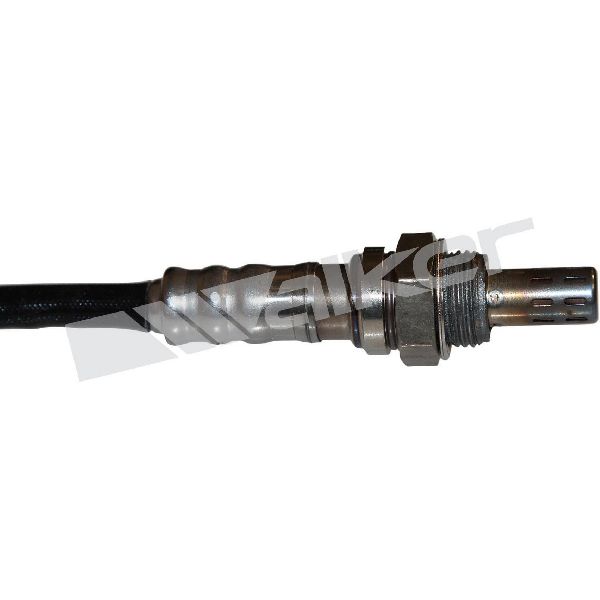
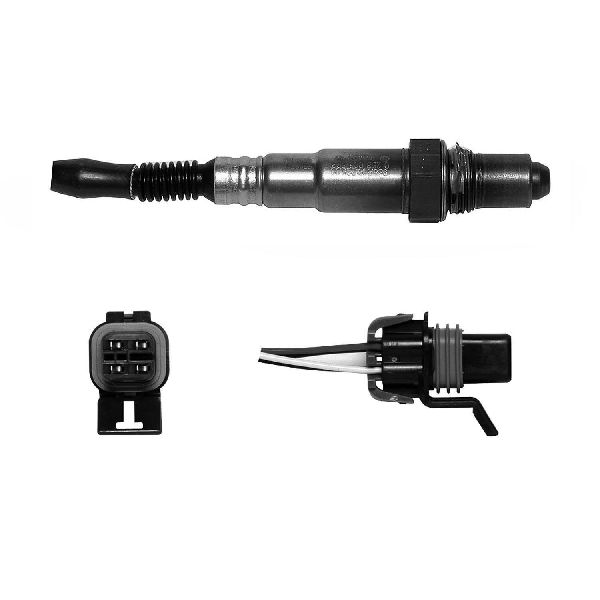
- Downstream Oxygen Sensor (Bank 1, Sensor 2)
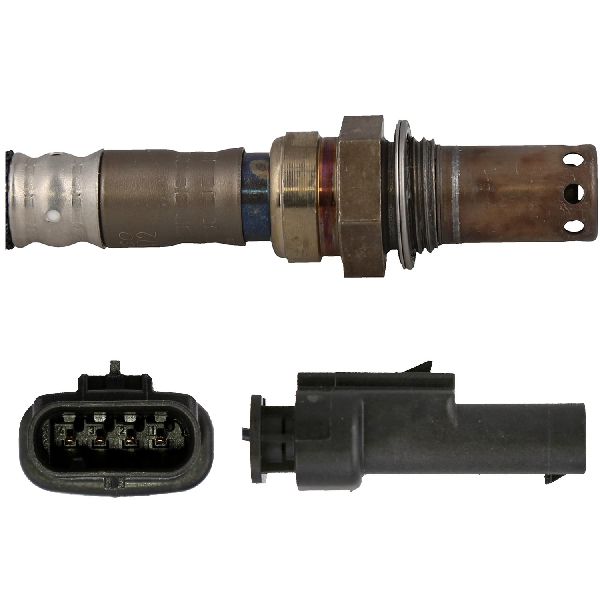
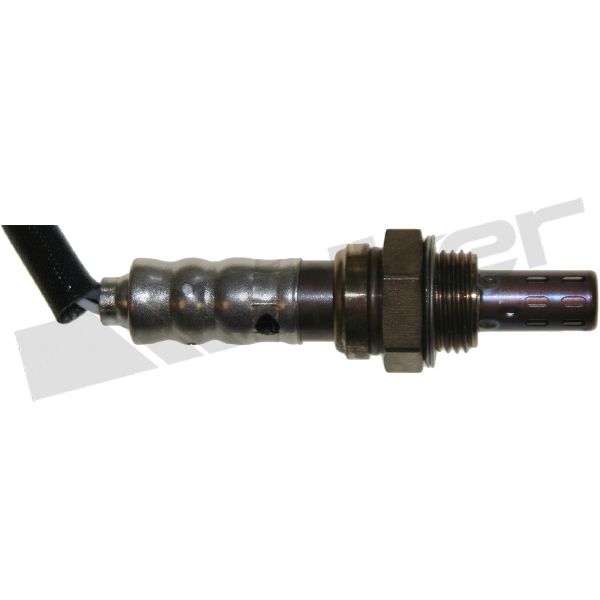
(OEM #ACDelco 213-4768 (GM 12639692) for 2.5L LKW; ACDelco 213-4241 (GM 12666729) for 3.6L LFX)— This is the most common failure point for a P0137 code when no exhaust leaks or wiring issues are present.
Trusted brands: ACDelco, Denso, Bosch, NGK/NTK
OEM price range: $70-$120
Aftermarket price range: $40-$80
Related Codes That Often Appear With This One
- P0171 — If an engine is running lean due to a vacuum leak or fuel delivery issue, it will cause both a P0171 (System Too Lean Bank 1) and can cause the downstream O2 sensor to read low, triggering P0137.
- P0420 — P0420 (Catalyst System Efficiency Below Threshold) is often related to O2 sensor readings. A failing O2 sensor can sometimes trigger a P0420, or a failing catalyst can cause erratic O2 sensor readings, including P0137.
- P0138 — P0138 (O2 Sensor Circuit High Voltage) is the opposite of P0137. Seeing them intermittently could suggest a severe wiring short or a failing sensor that is fluctuating wildly.
Technical Service Bulletins (TSBs) & Recalls
- PIP5529B: Mentions P0137 in a list of DTCs (P0068, P0101, P0106, P0171, etc.) that may be resolved by addressing potential unmetered air leaks into the engine or other underlying issues, rather than focusing on the individual component named in the code.
- PIP5529A: An earlier version of the same bulletin, also listing P0137 among a group of codes with a potential common cause.
Platform-Specific Known Issues
- TSBs #PIP5529B and #PIP5529A mention P0137 in a large group of codes that can be set due to potential air leaks or other complex electrical issues. This indicates that if multiple codes are present alongside P0137, a broader diagnostic approach may be needed beyond just the O2 sensor circuit.
- Some owners and technicians have noted a tendency for the catalytic converter assembly on the 10th generation Impala to develop cracks near the flange welds. This creates an exhaust leak right before the downstream O2 sensor, which is a direct cause for a P0137 code.
Mechanic-Grade Diagnostic Values
- Downstream O2 Sensor (B1S2) Voltage — expected: A healthy downstream sensor should have a stable voltage, typically between 0.4V and 0.6V, or lazily drifting above 0.5V.. Failure: The PCM triggers P0137 when the voltage remains below 400 millivolts (0.4V) for more than 20 seconds. A reading stuck below 0.1V confirms a hard fault.
- O2 Sensor Heater Circuit Resistance — expected: Varies by manufacturer, but a typical range is 4-20 Ohms. A specific value should be looked up for the exact sensor being tested.. Failure: An open circuit (infinite resistance) or resistance far outside the specified range indicates a failed heater element, which can cause the sensor to report incorrect voltage.
Wiring & Ground Locations
- Heated Oxygen Sensor Bank 1 Sensor 2 — For the 3.6L V6 engine, this sensor is located in the right-hand (front) exhaust pipe, downstream of the catalytic converter.. This is the precise component and location identified by the P0137 code. Physical inspection for damage and testing must be done at this location.
- G113 — On the left side of the automatic transaxle.. While not the only ground, engine and transmission grounds are critical for providing a stable reference for sensors like the O2 sensor. A corroded or loose G113 can introduce electrical noise or a voltage offset, potentially causing a false low voltage reading from the sensor.
- B1S2 Connector (4-wire) — The connector is attached to the wiring harness a short distance from the sensor itself, typically clipped to the vehicle's underbody or heat shielding.. Most modern O2 sensors, including those on the Impala, are 4-wire heated sensors. Two wires are for the heater circuit, one is the signal wire, and one is the signal ground. Testing for power, ground, and signal continuity must happen at this connector.
Real Owner Repair Stories
- YouTube channel 'Fix It All' (2008 Chevrolet Impala (9th generation, but with similar engine architecture and code behavior)) — Check Engine Light with code P0137.
❌ Tried (didn't work) The video directly proceeds to replacement, implying no other steps were taken first.
✅ What actually fixed it Replacing the Bank 1, Sensor 2 (downstream) oxygen sensor. The video shows the location under the passenger side, the process of unplugging the old sensor, applying anti-seize to the new one (Denso #234-4254), and installing it. After replacement, the code was cleared.
OEM Part Supersession History
12643903→12639692 (ACDelco 213-4768)— Standard part evolution and consolidation by the manufacturer.
Helpful Videos

![How to Fix P0137 Engine Code in 4 Minutes [3 DIY Methods / Only $9.42]](https://img.youtube.com/vi/D7iaXnsbzWQ/mqdefault.jpg)
We Have This Part in Stock



The information in this article is provided for general reference and educational purposes only. Vehicle specifications, procedures, and part compatibility can vary by production date, trim level, and region. Always consult your vehicle's factory service manual and verify part numbers before purchasing or performing repairs. Safety-critical components such as airbags, seat belts, and braking systems should be installed by a qualified professional.
- Chevrolet IMPALA:
- 🎬 Helpful Videos
- 🛍️ Shop This Part
- What's Unique About the 2014-2017 Chevrolet IMPALA
- Diagnostic Flowchart
- Symptoms You May Notice
- Most Likely Causes
- Rare But Worth Checking
- Diagnosis Steps
- Parts You'll Likely Need
- Related Codes That Often Appear With This One
- Technical Service Bulletins (TSBs) & Recalls
- Platform-Specific Known Issues
- Mechanic-Grade Diagnostic Values
- Wiring & Ground Locations
- Real Owner Repair Stories
- OEM Part Supersession History
- 🎟️ Get 5% Off