

P0135 on 2007-2014 Mercedes-Benz C-Class: O2 Sensor Heater Fault Causes and Fixes
On a W204 C-Class with the M272 V6 engine, P0135 almost always means the heater inside the Bank 1 (passenger side) upstream oxygen sensor has failed. Replacing the sensor is the fix. Expect to pay $75-$110 for a quality aftermarket sensor (like Bosch) or $160+ for OEM. DIY is possible but tight access makes it a 3/5 difficulty job.
- P0135 points directly to a problem with the heater in the passenger-side, upstream (pre-catalytic converter) O2 sensor.
- The most likely fix is to replace the sensor itself. Bosch is a trusted OEM-quality brand for this part (Part No. 17016).
- Before buying parts, always check the specific fuses for the O2 sensor heater circuit first (Fuses 4, 6, 25, 27 in front; 42 in rear) as it's a simple and cheap potential fix.
- While a DIY replacement is possible and saves money, be prepared for a challenging job due to very tight access on the V6 engine. A 22mm offset O2 sensor socket is highly recommended.
What's Unique About the 2007-2014 Mercedes-Benz C-Class
For the W204 C-Class with the M272 V6, this code is a straightforward component failure rather than a sign of a deeper platform-specific issue like the M272's more well-known balance shaft problems. The main challenge on this vehicle is physical access. The Bank 1 (passenger side) upstream sensor is tucked tightly between the engine, transmission, and catalytic converter, making replacement more difficult than on an inline-four engine. The M272 engine uses a Bosch ME 9.7 engine control unit to manage the O2 sensor heaters.
Symptoms You May Notice
- Check Engine Light is on
- Reduced fuel economy
- Rough or unstable idle, particularly during cold starts
- Failing a vehicle emissions test
- Slight hesitation during acceleration when the engine is cold
- Possible rotten egg (sulfur) smell from the exhaust due to an incorrect air/fuel mixture
- Replacing the wrong oxygen sensor. P0135 is specifically for Bank 1 (passenger side) and Sensor 1 (upstream/pre-catalytic converter). Do not replace the downstream sensor or the sensor on the driver's side (Bank 2).
Most Likely Causes
- Failed Bank 1, Sensor 1 Oxygen Sensor 🔴 High Probability The internal heater element is a wear item that simply burns out over time with tens of thousands of heating and cooling cycles. It is the most common point of failure for this code.
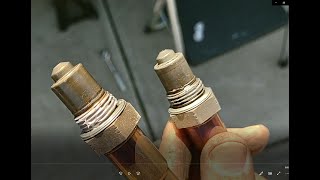
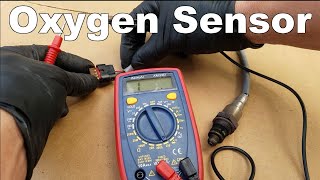
How to confirm: Using a multimeter, disconnect the sensor and measure the resistance between the two heater circuit pins (usually the same color wires, often white). 🎬 Watch: How to diagnose and fix P0135 heater circuit codes. An open circuit (infinite resistance) or a reading far from the manufacturer's specification (typically 2-10 ohms) confirms a bad heater element. A good sensor should read between 2 and 20 ohms.
Typical fix: Replace the Bank 1, Sensor 1 (Upstream, Passenger Side) oxygen sensor. The Bosch 17016 is a direct OEM-equivalent replacement.
Est. part cost: $75-$110 - Damaged Wiring or Connector 🟡 Medium Probability The wiring harness runs close to hot exhaust components, which can cause the insulation to become brittle and crack over time, leading to a short or open circuit. The connectors are also exposed to the elements under the car.
How to confirm: Visually inspect the wiring harness leading to the O2 sensor for any signs of melting, chafing, or corrosion on the connector pins. Perform a continuity test on the heater circuit wires from the ECM to the sensor connector. With the ignition on, there should be battery voltage (~12V) at the power supply pin and a bias voltage (approx. 4.4V) on the control pin at the harness-side connector.
Typical fix: Repair the damaged section of the wiring harness or clean/replace the connector.
Est. part cost: $5-$50 - Blown Fuse ⚪ Low Probability
How to confirm: Locate the fuse boxes (SAM modules) in the engine bay and trunk. Check the fuses related to engine management and oxygen sensors. For the W204, these are typically fuse #4, #6, #25, and #27 in the front SAM (engine bay) and fuse #42 in the rear SAM (trunk). Visually inspect the fuse; if blown, replace it.
Typical fix: Replace the blown fuse. Note: If the new fuse blows immediately, it indicates a short circuit in the wiring or the sensor itself that must be diagnosed.
Est. part cost: $1-$5
Rare But Worth Checking
- Faulty Engine Control Module (ECM): This is very uncommon. Before condemning the expensive ECM (Bosch ME 9.7), all other possibilities (sensor, wiring, fuse) must be exhaustively ruled out. This is typically diagnosed by confirming the sensor and wiring are good, but there is still no voltage or PWM control signal being supplied to the heater circuit from the ECM. Technicians have noted that the internal heater driver chip on the ME 9.7 circuit board can fail, though it is rare.
- Poor Engine-to-Chassis Ground: A corroded or loose main engine ground strap can cause a variety of intermittent electrical faults and incorrect sensor readings. While not a direct cause, it can create voltage discrepancies that may trigger heater circuit codes. The main ground strap is a braided cable running from the transmission bell housing area to the chassis.
Diagnosis Steps
- Connect an OBD-II scanner to confirm P0135 is the active code.
- Locate the Bank 1, Sensor 1 oxygen sensor. On the M272 V6, this is the upstream sensor on the passenger side of the vehicle.
- For easier access, spray the sensor's threads with penetrating oil a few hours or a day before attempting removal.
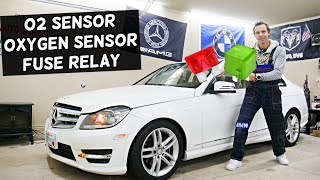
- Check the O2 sensor heater circuit fuses. In the W204, inspect fuse #4, #6, #25, and #27 in the front fuse box (engine bay) and fuse #42 in the rear fuse box (trunk). 🎬 See exactly where to find these O2 sensor heater fuses. Replace if blown.
- If fuses are good, thoroughly inspect the sensor's wiring harness and connector for any visible damage, such as melting, fraying, or corrosion.
- Disconnect the sensor. Use a multimeter to test the resistance of the heater circuit on the sensor side. A reading of infinite resistance (open loop) or one significantly outside the 2-20 ohm range means the heater is bad and the sensor must be replaced.
- If resistance is within spec, test for voltage at the connector (harness side). With the key on, engine off, check for battery voltage (approx. 12V) on the heater power supply pin. The ECU-controlled ground side may show a bias voltage.
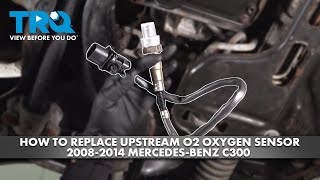
- If the sensor's heater circuit is confirmed faulty, replace the sensor. A 22mm (or 7/8") offset oxygen sensor socket, long extensions, and a universal joint are highly recommended for this job. Access is possible from both above and below the engine. 🎬 Watch this step-by-step guide to replacing the upstream sensor.
- Clear the code with the OBD-II scanner and perform a test drive, allowing the engine to cool down and restart to ensure the code does not return.
Parts You'll Likely Need
- Upstream Oxygen Sensor (Bank 1)
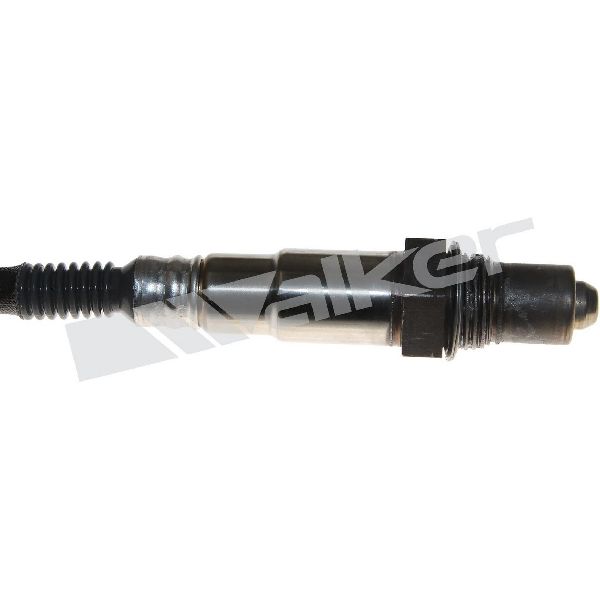
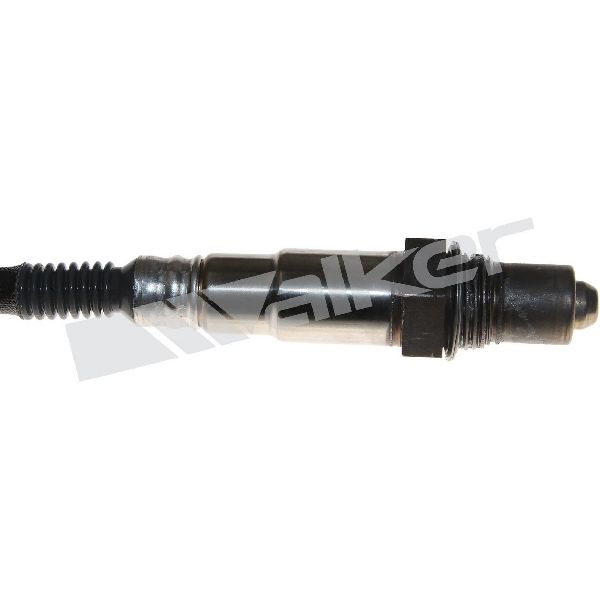
(OEM #A0035427018)— This is the sensor identified by the code P0135. The internal heater element fails from age and heat cycles, which is the most common cause of this code. It is a 5-wire wideband sensor with a 530mm wire length.
Trusted brands: Bosch (OEM Part No. 17016 or 0258017016), NTK
OEM price range: $160-$200
Aftermarket price range: $75-$110
Technical Service Bulletins (TSBs) & Recalls
- NHTSA Document NC-10232396-0001: Official letter from Mercedes-Benz detailing the 20-year/unlimited-mile warranty extension for the rear subframe on W204 and other models, covering replacement due to corrosion with perforation.
Mechanic-Grade Diagnostic Values
- O2 Sensor Heater Element Resistance — expected: 2 - 20 Ohms at ambient temperature. Some sources state a tighter range of 2-4 Ohms.. Failure: A reading of infinite resistance (Open Loop / OL) or near zero ohms (short circuit).
- O2 Sensor Heater Power Supply Voltage — expected: ~12V (Battery Voltage) with ignition on.. Failure: Voltage near 0V indicates an open circuit in the power feed from the SAM/fuse box.
- O2 Sensor Heater Control Circuit Voltage (Harness Side) — expected: A bias voltage of approximately 4.4V with the sensor disconnected, key on. When running, the ECM will pulse this connection to ground to control the heater.. Failure: No voltage or a constant ground may indicate a wiring issue or a failed ECM driver.
- Live Data - O2 Sensor Voltage (Operational) — expected: Once warmed up and operational, the upstream wideband sensor voltage will fluctuate. A different Mercedes model showed operational voltages around 1.6V at idle.. Failure: Sensor voltage that is stuck, unresponsive, or does not reach an operational reading after warm-up.
Hidden / Shadow Codes Worth Checking
- P0135 (with specific text): While not a hidden code, a Mercedes-specific scanner (like DAS or XENTRY) provides more detail than a generic scanner. For a heater fault, it might specify 'Heating capacity is too low', which points more directly to a performance issue rather than a simple open/short circuit. (see via Mercedes STAR/DAS/XENTRY diagnostic system.)
Scan Tool Commands That Help
- Mercedes STAR/XENTRY: O2 Sensor Heater Activation / Bidirectional Control — This function is used in advanced diagnosis after the sensor and wiring have been tested and are known to be good. It allows a technician to command the ECM's heater driver circuit on and off manually. If the command is sent but the heater does not activate (verified by measuring voltage or current), it strongly suggests a failed ECM driver.
Wiring & Ground Locations
- Engine-to-Chassis Ground Strap — A large, braided copper cable running from the lower bell housing area of the transmission (driver's side) to a mounting point on the vehicle's chassis/frame.. A poor main engine ground can cause unstable voltage references for all engine sensors, including the O2 sensors, potentially leading to incorrect readings or fault codes. This should be inspected for corrosion or looseness if multiple, seemingly unrelated electrical faults are present.
- W10 Ground Point — Located at the right front strut tower in the engine bay, serving as the main battery ground point.. This is a primary grounding point for the vehicle's electrical system. Corrosion here can cause widespread issues. It is known to act as a 'water funnel' and can corrode, so it's worth inspecting.
- G3/4 (Bank 1, Sensor 1) Connector Pins — The electrical connector for the upstream passenger-side O2 sensor.. For testing, the two heater circuit wires are typically the same color (often white). On the harness side, one pin should have ~12V with key-on, and the other is the control (ground) from the ECM.
Real Owner Repair Stories
- MHH Auto Forum User (Mercedes with ME9.7 ECU (same as W204 M272)) — Persistent O2 sensor heater fault code (P0141, downstream, but same heater control principle).
❌ Tried (didn't work) Replacing the oxygen sensor., Verifying the wiring harness had continuity and was not shorted to ground.
✅ What actually fixed it The user suspected a failed heater driver chip on the ME9.7 ECU circuit board after ruling out all other components. This represents the final, rarest possibility for this type of fault.
OEM Part Supersession History
A0035427018→A0035427018 (current)— This is the original and still current primary part number from Mercedes-Benz for this application.
Heads up: The direct OEM equivalent is Bosch part 0 258 017 016, which is often sold under the shorter part number 17016. These are interchangeable.
Model Year Variations Within This Range
- 2012-2014 (C350 model): For the 2012 model year facelift, the C350 model's 3.5L M272 V6 was replaced by the newer 3.5L M276 direct-injection V6. While similar in displacement, the M276 is a different engine family with different engine management and components. This guide is specific to the M272 engine.
Diagnostic Flowchart
Other Known Issues on This Vehicle
Issues unrelated to this code that are worth knowing about as an owner of this generation:
- M272 Engine Balance Shaft Sprocket Failure 🔴 High — Common on engines built before ~2008 (specifically, before M272 engine serial number 2729..30 468993). Failure can occur from 60k-100k miles. (Ref: A class-action lawsuit was filed, and Mercedes issued internal service bulletins, but no official public recall.)
- Intake Manifold Air Flap Lever Failure 🟠 Medium — Very common after 80,000 miles. The original plastic lever breaks, causing performance issues and fault codes P2004, P2005, or P2006. (Ref: No TSB, but a robust aftermarket of metal repair kits exists to avoid replacing the entire manifold.)
- Rear Subframe Corrosion/Rust 🔴 High — Common enough that Mercedes extended the warranty. Affects vehicles operated in regions where road salt is used. Rusts from the inside out, making it difficult to detect before significant damage occurs. (Ref: Mercedes-Benz has extended the warranty to 20 years/unlimited miles for replacement if perforation occurs.)
- Leaking Camshaft Adjuster Solenoids (Magnets) 🟡 Low — A common source of oil leaks. The primary concern is oil wicking through the wiring harness and potentially damaging the engine control module (ECM). (Ref: No TSB, but a common preventative fix is to install short 'pigtail' harnesses (sacrificial wires) to protect the main engine harness.)
Used vs. New Parts: Buying Guide for This Vehicle
When a used part is the smart pick: For this specific repair, a used part is almost never a smart choice. The primary cause of P0135 is the failure of a wear-and-tear item (the heater element). A used sensor has unknown remaining life and is very likely to fail soon, if it hasn't already.
What to inspect on the donor part:
- Not applicable. Do not purchase a used oxygen sensor.
OEM-only on this vehicle (don't cheap out):
- While not strictly 'OEM-only', using the OEM supplier (Bosch) is highly recommended. Avoid unbranded, no-name sensors as they are known to have high failure rates, incorrect resistance values, or slow response times, which can cause persistent issues even if they clear the P0135 code temporarily.
Aftermarket brands forum-validated for this vehicle:
- Bosch (OEM supplier, part 17016 or 0258017016)
- NTK/NGK
- Denso
Brands owners have reported issues with on this vehicle:
- Generic, unbranded 'white-box' parts from online marketplaces.
Real Owner Stories
Aggregated from forums and TSBs cited above. Mileages and costs reflect what owners reported in those sources.
2010-2015 Mercedes-Benz GLK350 (X204) M272 V6
Symptoms: Difficulty reaching and unplugging the upstream O2 sensor connectors due to tight routing.
What fixed it: Replacement of the upstream O2 sensor using specific routing techniques for the new sensor wires.
Source hint: YouTube - Mercedes GLK 350 4Matic (X204) M272 engine O2 (Oxygen) Sensor Replacement
2008-2014 Mercedes-Benz C-Class (W204)
Symptoms: Check engine light active with P0135; owner investigating fuse locations across multiple SAM modules.
What fixed it: Inspecting and potentially replacing fuses #4, #6, #25, #27 in the front SAM and #42 in the rear SAM.
Source hint: YouTube - MERCEDES W204 Upstream Downstream O2 Oxygen Sensor Fuse Relay Location
Related OBD-II Codes
Frequently Asked Questions
Which specific oxygen sensor do I need to replace for a P0135 code on my M272 V6?
Where are the O2 sensor heater circuit fuses located on a W204 C-Class?
Is there a warranty extension that might cover my 2007-2014 C-Class for related issues?
What resistance should I see when testing the heater circuit on my Mercedes O2 sensor?
Can I access the Bank 1 Sensor 1 O2 sensor from the top of the engine bay?
Why does my C-Class idle roughly only during cold starts with this code?
Helpful Videos
Used OEM Parts in Stock

New Aftermarket Parts Available

The information in this article is provided for general reference and educational purposes only. Vehicle specifications, procedures, and part compatibility can vary by production date, trim level, and region. Always consult your vehicle's factory service manual and verify part numbers before purchasing or performing repairs. Safety-critical components such as airbags, seat belts, and braking systems should be installed by a qualified professional.
- Mercedes-Benz C-Class:
- 🎬 Helpful Videos
- 🛍️ Shop This Part
- What's Unique About the 2007-2014 Mercedes-Benz C-Class
- Symptoms You May Notice
- Most Likely Causes
- Rare But Worth Checking
- Diagnosis Steps
- Parts You'll Likely Need
- Technical Service Bulletins (TSBs) & Recalls
- Mechanic-Grade Diagnostic Values
- Hidden / Shadow Codes Worth Checking
- Scan Tool Commands That Help
- Wiring & Ground Locations
- Real Owner Repair Stories
- OEM Part Supersession History
- Model Year Variations Within This Range
- Diagnostic Flowchart
- Other Known Issues on This Vehicle
- Used vs. New Parts: Buying Guide for This Vehicle
- Real Owner Stories
- 2010-2015 Mercedes-Benz GLK350 (X204) M272 V6
- 2008-2014 Mercedes-Benz C-Class (W204)
- Related OBD-II Codes
- Frequently Asked Questions
- 🎟️ Get 5% Off