

P0135 on 2020-2025 Hyundai Palisade: O2 Sensor Heater Circuit Causes and Fixes
This code indicates a malfunction in the heater circuit of the upstream oxygen sensor for Bank 1 (the rear cylinder bank, near the firewall). The most common fix is replacing the Bank 1, Sensor 1 O2 sensor itself. Expect to pay $300-$500 for an OEM sensor and around one to two hours of labor for the repair.
- P0135 points directly to a problem with the heater in the Bank 1, Sensor 1 O2 sensor, which is the upstream sensor on the rear (firewall side) of the engine.
- The most likely fix is replacing the sensor itself, but always check the 'SENSOR 1' fuse and the sensor's wiring for damage first.
- Driving is possible, but it will cause poor fuel economy and could eventually damage the catalytic converter, so a prompt repair is recommended.
What's Unique About the 2020-2025 Hyundai Palisade
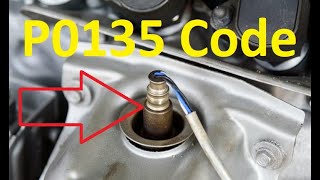
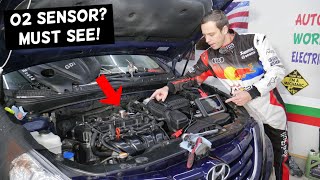
For the Hyundai Palisade's 3.8L V6, this code is a straightforward electrical fault with the sensor's heater. There are no widespread reports or Technical Service Bulletins (TSBs) suggesting a chronic design flaw causing this code, which indicates it's likely due to normal part wear-and-tear. The primary challenge on this vehicle is correctly identifying and accessing the Bank 1, Sensor 1 O2 sensor, as it is located on the rear exhaust manifold, which has tighter access than the front sensor (Bank 2). 🎬 Watch: How to locate the Bank 1 Sensor 1 oxygen sensor Its platform-mate, the Kia Telluride with the same engine, exhibits the same pattern of occasional, non-systemic failures of this sensor.
Symptoms You May Notice
- Check Engine Light is on
- Reduced fuel economy
- Vehicle may fail an emissions test
- Slightly rough engine performance, especially when first starting up
- Replacing the wrong oxygen sensor. P0135 is for Bank 1, Sensor 1 (Upstream, Rear/Firewall side). It is easy to mistakenly replace the more accessible Bank 2 sensor (Front/Radiator side) or one of the downstream (Sensor 2) sensors.
- Assuming the sensor is bad without checking the fuse first. A blown 'SENSOR 1' fuse will cause this code.
Most Likely Causes
- Failed Bank 1, Sensor 1 Oxygen Sensor 🔴 High Probability The internal heater element is a common failure point in O2 sensors as they age from constant, rapid heat cycles. This is considered a normal wear-and-tear item.
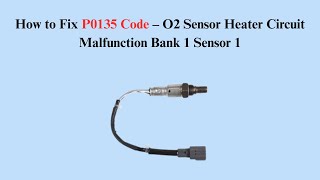
How to confirm: After checking the fuse, the most definitive test is to measure the resistance across the two heater circuit pins on the sensor itself using a multimeter. 🎬 See this walkthrough on testing and replacing the sensor An open circuit (infinite resistance) or a reading far outside the manufacturer's specification (typically between 2.5 and 10 ohms for this type of sensor) confirms the heater has failed.
Typical fix: Replace the Bank 1, Sensor 1 (Upstream, Rear) oxygen sensor.
Est. part cost: $100-$480 - Damaged Wiring or Connector 🟡 Medium Probability The sensor is located near the hot exhaust manifold, making its wiring susceptible to heat damage, melting, or becoming brittle over time. The harness can also be damaged by road debris or improper servicing.
How to confirm: Visually inspect the wiring harness and connector leading to the sensor for any signs of melting, chafing, corrosion, or loose pins. Use a multimeter to check for 12V power and ground at the connector with the key on, engine off.
Typical fix: Repair the damaged section of the wiring harness or replace the connector pigtail.
Est. part cost: $15-$50 - Blown Fuse ⚪ Low Probability
How to confirm: Locate the fuse for the O2 sensor heater circuit in the engine bay fuse box. On the Palisade, this is typically a 10A or 15A fuse labeled 'SENSOR 1' or similar. Visually inspect the fuse or test it for continuity with a multimeter.
Typical fix: Replace the blown fuse. If the new fuse blows immediately, it indicates a short circuit in the wiring or the sensor itself that must be diagnosed.
Est. part cost: $1-$5
Rare But Worth Checking
- Faulty Engine Control Module (ECM): This is very uncommon. The ECM's internal driver for the heater circuit can fail. This should only be considered after all other possibilities (sensor, wiring, fuse) have been definitively ruled out.
Diagnosis Steps
- Confirm the P0135 code is present using an OBD-II scanner.
- Check the fuse for the O2 sensor heater circuit in the engine compartment fuse box. It is labeled 'SENSOR 1' and is a 10A fuse. Replace if blown.
- Locate the Bank 1, Sensor 1 O2 sensor. On the Palisade's transverse V6, this is the upstream sensor on the exhaust manifold of the rear cylinder bank (closer to the firewall).
- Inspect the sensor's wiring harness and connector for any visible damage, melting, or corrosion.
- Disconnect the sensor. With the ignition on (engine off), use a multimeter to test the vehicle-side connector for battery voltage (around 12V) and a good ground on the two pins corresponding to the heater circuit.
- If power and ground are present, test the sensor itself. Measure the resistance (ohms) between the two heater pins on the sensor. A reading of infinite resistance (open loop) or a very high reading (kilo-ohms) means the heater is broken and the sensor must be replaced. A good sensor should read between 2.5 and 10 ohms.
- If power or ground is missing at the connector, trace the wiring back toward the ECM to find the break.
- If all tests pass but the code persists, the fault may lie within the ECM, which is a rare occurrence.
Parts You'll Likely Need
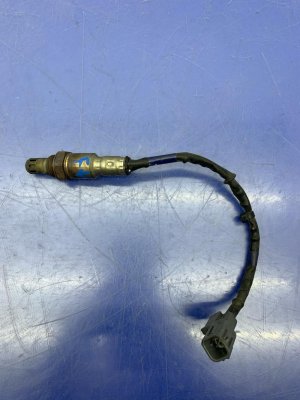
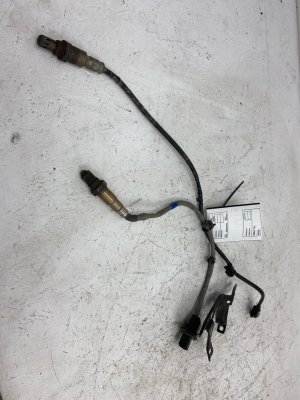
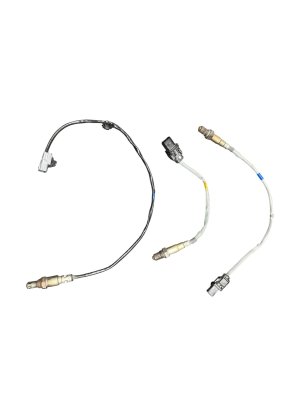
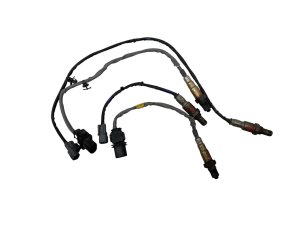
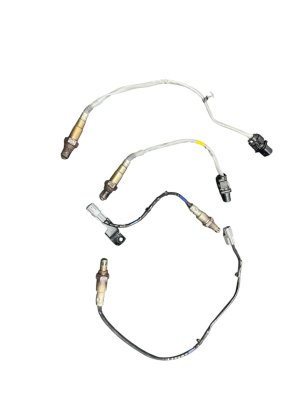
- Oxygen Sensor (Bank 1, Sensor 1)
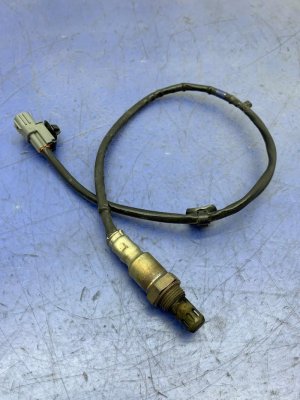
(OEM #39210-3L100)— This is the upstream sensor for the rear bank, and its internal heater element is the most common failure point for code P0135. Note: Part number 39210-3L100 is specified for early 2020 models (built up to 10/23/2019). Always verify the correct part number with the vehicle's VIN before purchasing, as later models may use a different part number.
Trusted brands: Hyundai (OEM), Bosch, Denso, NGK/NTK
OEM price range: $340-$480
Aftermarket price range: $100-$220
Related Codes That Often Appear With This One
- P0155 — This is the same heater circuit fault but for Bank 2, Sensor 1. Seeing both codes together could point to a shared power or ground issue, like a blown fuse that serves both sensors.
Mechanic-Grade Diagnostic Values
- O2 Sensor Heater Element Resistance — expected: 2.5 to 10 Ohms at ambient temperature. Some sources cite a tighter range of 2.8 to 5.5 Ohms.. Failure: An open circuit (infinite resistance) or a direct short (near zero Ohms) indicates a failed heater element.
- Heater Circuit Power Supply Voltage (at vehicle-side connector) — expected: Approximately 12V (battery voltage) with Key On, Engine Off (KOEO).. Failure: A reading of 0V points to a blown fuse (e.g., 'SENSOR 1' fuse) or a break in the power supply wire from the fuse box.
- Heater Circuit Ground Control (at vehicle-side connector) — expected: Near 0V with KOEO. The ECM/PCM supplies a pulse-width modulated (PWM) ground to control the heater once the engine is running.. Failure: Constant voltage or a lack of a pulsing ground signal when the engine is started (viewable with an oscilloscope or sometimes a test light) can indicate a wiring issue or a faulty ECM driver.
Scan Tool Commands That Help
- Hyundai GDS (Global Diagnostic System): Actuation Test > Heater (Bank 1 Sensor 1) — This bidirectional command allows a technician to manually turn the O2 sensor heater on and off to verify the circuit's integrity. By observing live data for heater voltage or current simultaneously, you can confirm if the ECM driver is working and if the sensor is responding to commands.
- Hyundai GDS (Global Diagnostic System): Live Data / Data Display > O2 Sensor Heater Duty Cycle — Use this to monitor the percentage of 'on' time the ECM is commanding for the heater. If the duty cycle is high (e.g., 90-100%) but the sensor remains cold, it points to a failed heater element in the sensor itself. If the duty cycle is 0% when it should be active, it could indicate a problem with the ECM or its inputs.
Wiring & Ground Locations
- Fuse 'SENSOR 1' — Located in the engine compartment fuse & relay box.. This fuse (typically 10A or 15A) provides the 12V power supply to the heater elements for both upstream oxygen sensors. A blown fuse is a common and simple cause for P0135 and/or P0155. 🎬 Watch: A summary of common causes and fixes for P0135
- Bank 1 Sensor 1 Connector — On the wiring harness leading to the upstream O2 sensor on the rear exhaust manifold (firewall side).. This is the primary test point for checking voltage, ground, and sensor resistance. The two same-colored wires (often black) are typically for the heater circuit. Damage from heat or road debris is common here.
OEM Part Supersession History
39210-3L100→Unknown, but a different part number is used for later models.— Standard part evolution or minor design change.
Heads up: Part number 39210-3L100 is specifically for Palisade models built up to October 23, 2019. Using it on a later model may result in improper function. Always verify the correct part number with the vehicle's VIN.
Model Year Variations Within This Range
- 2020 (Early Production): Models built on or before October 23, 2019, use OEM oxygen sensor part number 39210-3L100 for Bank 1, Sensor 1. Models built after this date use a different, unspecified part number. This is a critical detail when ordering a replacement part.
Diagnostic Flowchart
Other Known Issues on This Vehicle
Issues unrelated to this code that are worth knowing about as an owner of this generation:
- Tow Hitch Wiring Harness Fire Risk 🔴 High — Affects 2020-2022 models with an accessory tow hitch. A widespread recall was issued. (Ref: NHTSA Recall 22V-633 / Hyundai Recall 235.)
- Foul Interior Odor from Headrests 🟡 Low — Common complaint on 2020-2021 Limited and Calligraphy trims with Nappa leather. The smell is often described as chemical or like garlic/rotten produce. (Ref: TSB 20-BD-018H and 21-BD-002H-1 describe an odor-neutralizing procedure.)
- GDI Engine Carbon Buildup 🟠 Medium — An inherent characteristic of all Gasoline Direct Injection (GDI) engines, including the Lambda II 3.8L. Can cause misfires, rough idle, or reduced performance, typically after 60,000+ miles.
- Engine Ticking / Lifter Noise 🟠 Medium — Some owners report a ticking noise from the engine, potentially related to valve lifters (tappets) or oil pressure. The GDI high-pressure fuel pump also makes a characteristic ticking sound that is normal.
- Faulty Seat Belt Buckles 🔴 High — A large recall was issued for 2020-2025 models where front and second-row seat belt buckles may fail to latch or could unbuckle themselves. (Ref: NHTSA ID 25V607000 / Hyundai Recall 283.)
Used vs. New Parts: Buying Guide for This Vehicle
When a used part is the smart pick: A used part is generally NOT recommended for the oxygen sensor itself, as it is a wear-and-tear item with a finite lifespan. However, sourcing a used wiring harness connector pigtail from a junkyard is a very practical and cost-effective repair if only the connector is melted or damaged.
Donor-vehicle mileage cap: roughly under 50000 miles for the part to have meaningful remaining life.
What to inspect on the donor part:
- For a connector pigtail, ensure the plastic is not brittle or cracked.
- Check that the locking tab is intact and functional.
- Inspect the wire insulation for any signs of melting, chafing, or previous repair (e.g., tape, butt connectors).
- Look at the metal pins inside the connector for corrosion or signs of water intrusion.
OEM-only on this vehicle (don't cheap out):
- While not strictly required, using an OEM Hyundai sensor is the safest option to guarantee correct heater resistance and signaling characteristics, avoiding potential compatibility issues with the ECM.
Aftermarket brands forum-validated for this vehicle:
- NTK (part of NGK) and Denso are highly reputable and are often the original equipment manufacturers for Hyundai. They are considered the best aftermarket alternatives.
- Bosch is also a major, high-quality manufacturer of oxygen sensors.
Brands owners have reported issues with on this vehicle:
- Avoid unbranded, no-name, or unusually cheap sensors from online marketplaces. Forum discussions frequently mention that these parts may fail prematurely or have incorrect resistance values, causing the code to return.
Real Owner Stories
Aggregated from forums and TSBs cited above. Mileages and costs reflect what owners reported in those sources.
2020-2025 Hyundai Palisade 3.8L V6
Symptoms: Throwing PO135 code after fixing bank 1 sensor 1 O2 sensor. Does this mean new cat? My dealer seems dead set it does.
What fixed it: The discussion emphasizes checking fuses and wiring before condemning other parts like the catalytic converter, as a blown fuse or wiring issue can cause the code to persist even with a new sensor.
Source hint: r/Hyundai - 'Throwing PO135 code after fixing bank 1 sensor 1 O2 sensor. Does this mean new cat? My dealer seems dead set it does.'
Related OBD-II Codes
Frequently Asked Questions
Where exactly is the Bank 1, Sensor 1 oxygen sensor located on my Hyundai Palisade 3.8L V6?
Which fuse should I check for a P0135 code on my 2020-2025 Palisade?
Could the foul odor in my Palisade's cabin be related to the P0135 engine code?
Is there a recall for the O2 sensor on the 2020-2025 Palisade?
What is the correct resistance for a new Bank 1 Sensor 1 O2 sensor on this vehicle?
Can I use a used O2 sensor from a donor Kia Telluride?
Helpful Videos

We Have This Part in Stock

The information in this article is provided for general reference and educational purposes only. Vehicle specifications, procedures, and part compatibility can vary by production date, trim level, and region. Always consult your vehicle's factory service manual and verify part numbers before purchasing or performing repairs. Safety-critical components such as airbags, seat belts, and braking systems should be installed by a qualified professional.
- Hyundai Palisade:
- 🎬 Helpful Videos
- 🛍️ Shop This Part
- What's Unique About the 2020-2025 Hyundai Palisade
- Symptoms You May Notice
- Most Likely Causes
- Rare But Worth Checking
- Diagnosis Steps
- Parts You'll Likely Need
- Related Codes That Often Appear With This One
- Mechanic-Grade Diagnostic Values
- Scan Tool Commands That Help
- Wiring & Ground Locations
- OEM Part Supersession History
- Model Year Variations Within This Range
- Diagnostic Flowchart
- Other Known Issues on This Vehicle
- Used vs. New Parts: Buying Guide for This Vehicle
- Real Owner Stories
- 2020-2025 Hyundai Palisade 3.8L V6
- Related OBD-II Codes
- Frequently Asked Questions
- 🎟️ Get 5% Off