

P0135 on 1996-2005 Honda Civic: O2 Sensor Heater Fixes & Causes
On a 1996-2005 Honda Civic, code P0135 almost always means the primary (upstream) oxygen sensor's internal heater has failed. Replacing the sensor with an OEM-quality brand like Denso or NTK is the most common fix. Before replacing, check the relevant fuse (Fuse #15, 7.5A under-dash for 1996-2000 models; Fuse #4, 10A under-dash for 2001-2005 models). Expect to pay $30-$60 for the part on 1996-2000 models and $100-$180 for 2001-2005 models.
- P0135 points directly to a failure in the primary O2 sensor's heater.
- The most likely fix is replacing the Bank 1, Sensor 1 (upstream) O2 sensor.
- ALWAYS check the fuse before buying parts. It's Fuse #15 (7.5A) on 96-00 models and Fuse #4 (10A) on 01-05 models, both under the dash.
- Use a high-quality Denso or NTK sensor. For 2001-2005 models, ensure you are buying the correct, more expensive Air/Fuel Ratio sensor.
- An O2 sensor socket will make the replacement job much easier, especially if the sensor is seized in the exhaust.
What's Unique About the 1996-2005 Honda Civic

The 1996-2005 Civic range covers two distinct generations with different primary O2 sensors. The 6th generation (1996-2000) with the D16Y8 engine uses a conventional, affordable 4-wire O2 sensor. In contrast, the 7th generation (2001-2005) with the D17A1/D17A2 engine uses a more sophisticated and expensive wideband Air/Fuel (A/F) ratio sensor. Using the wrong type or a low-quality aftermarket sensor (especially Bosch) is a common cause of failed repairs on these vehicles.
Generation note: This range covers the 6th Gen Civic (1996-2000) and 7th Gen Civic (2001-2005). The 6th Gen uses a traditional O2 sensor, while the 7th Gen uses a more expensive Air/Fuel Ratio sensor for the primary position. Part numbers are not interchangeable between generations. Furthermore, within the 7th gen, the sensor connector for the D17A1 (DX/LX) has male terminals, while the D17A2 (EX) has female terminals, making them non-interchangeable without modification.
Symptoms You May Notice
- Check Engine Light (CEL) is illuminated
- Slightly decreased fuel efficiency
- Vehicle may fail an emissions test
- Rough running or hesitation during initial warm-up phase
- Replacing the sensor with a cheap, universal-style part. These often require splicing wires and may not have the correct heater resistance, leading to the code returning.
- Replacing the downstream (post-catalyst) O2 sensor instead of the upstream (pre-catalyst) one.
- Not checking the fuse first. Many owners replace a perfectly good sensor only to find the fuse was the issue all along.
Most Likely Causes


- Failed Oxygen/Air-Fuel Sensor Heater Element 🔴 High Probability The internal heating element is a common failure point due to age, moisture, and countless heat cycles. It is the most frequent cause for P0135 on these vehicles.
How to confirm: Unplug the sensor and measure the resistance between the two heater wires (typically the two wires of the same color, often black or white). For 96-00 models, a good sensor will read 10-40 ohms. For 01-05 models, the A/F sensor heater resistance is much lower, typically between 0.9 and 10 ohms. An open circuit (infinite resistance) or a reading far outside the spec confirms a failed heater. A new Denso sensor for a 2004 model should read around 1.3 ohms.
Typical fix: Replace the Bank 1, Sensor 1 Oxygen/Air-Fuel sensor with a Denso or NTK part.
Est. part cost: $30-$180 - Blown Fuse 🟡 Medium Probability A short in the sensor's heater element or its wiring can cause the corresponding fuse to blow, cutting power to the circuit.
How to confirm: Check the under-dash fuse box. For 1996-2000 models, this is the 7.5A fuse in position #15. For 2001-2005 models, this is the 10A fuse in position #4, often labeled 'A/F SENSOR HEATER'. Some 2004+ D17 models may use a 20A fuse in position #2.
Typical fix: Replace the blown fuse. If it blows again immediately, investigate the wiring harness for a short circuit before installing a new sensor.
Est. part cost: $1-$5 - Damaged Wiring or Connector ⚪ Low Probability
How to confirm: Visually inspect the wiring harness leading to the oxygen sensor for any signs of melting, chafing, or corrosion, especially where it might contact the exhaust manifold or engine block. Check that the connector is securely plugged in and the terminals are clean. Test for 12V power at the harness-side connector with the ignition on (KOEO - Key On, Engine Off). For 96-00 models, power is on the YEL/BLK wire. For 01-05 models, power is on the BLK/YEL wire.
Typical fix: Repair the damaged section of wiring or clean/replace the connector. A common failure point on 96-00 models is the wiring harness rubbing on a bracket, causing a short that blows Fuse 15.
Est. part cost: $5-$50
Rare But Worth Checking
- Faulty Engine Control Unit (ECU): This is extremely rare. The ECU provides the ground signal for the heater circuit. All other possibilities, including the sensor, fuse, and wiring, should be exhaustively ruled out before considering the ECU as the cause. A failure here is more likely if other sensor codes are also present.
- Fuel System Issues (Cross-Manufacturer Reference): While documented on different Honda models, manufacturer service bulletin #A25-044 notes that a fuel injector leak causing a rich mixture can foul spark plugs and cause the PCM to misread the A/F sensor, potentially leading to DTC P0135.
Diagnosis Steps
- Read the code with an OBD-II scanner to confirm P0135 is the only code present.
- Check the fuse for the O2 sensor heater circuit. For 1996-2000, check the 7.5A Fuse #15 in the under-dash fuse box. For 2001-2005, check the 10A Fuse #4 in the under-dash fuse box.
- If the fuse is good, visually inspect the sensor's wiring and connector for any obvious damage, like melting on the exhaust or frayed wires.
- Disconnect the sensor. Turn the ignition to the 'ON' position (engine off) and use a multimeter to verify that you have 12-volt power on the vehicle's harness connector. For 96-00, probe the YEL/BLK wire. For 01-05, probe the BLK/YEL wire. The black multimeter lead should be on a good chassis ground or the battery negative terminal.
- With the sensor still disconnected, switch the multimeter to measure resistance (Ohms) and test the heater circuit on the sensor itself. Probe the two pins that correspond to the heater element (usually same-colored wires, often black or white). A reading for 96-00 models should be between 10 and 40 ohms. For 01-05 models, it should be between 0.9 and 10 ohms. A reading of 'OL' or infinite resistance means the heater is burned out and the sensor must be replaced.
- If power, ground, and sensor resistance are all within spec, the problem may be an intermittent wiring issue or, very rarely, a fault in the ECU's driver circuit.
Parts You'll Likely Need
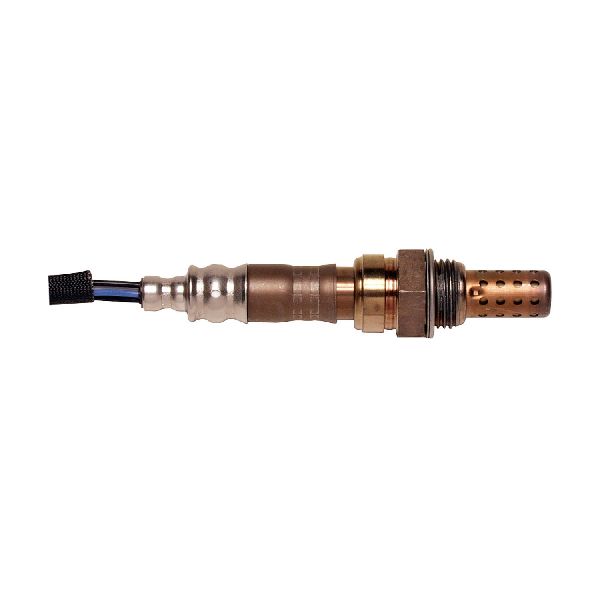
- Bank 1 Sensor 1 Oxygen Sensor (1996-2000)
(OEM #36531-P2E-A11)— This is a standard O2 sensor. The internal heater element fails with age, which is the direct cause of the P0135 code.
Trusted brands: Denso (P/N: 234-4099), NTK (P/N: 24525)
OEM price range: $50-$80
Aftermarket price range: $30-$60 - Bank 1 Sensor 1 Air/Fuel Ratio Sensor (2001-2005)
(OEM #36531-PLM-306)— This is a wideband A/F sensor. The internal heater element fails with age, triggering the P0135 code. These models are sensitive to brand, and OEM (Denso/NTK) is strongly recommended.
Trusted brands: Denso (P/N: 234-9005), NTK (P/N: 24620)
OEM price range: $150-$180
Aftermarket price range: $90-$130
Platform-Specific Known Issues
- On 1996-2000 Civic EX models with the D16Y8 engine, the primary O2 sensor is located under the car on the exhaust pipe, just before the catalytic converter, not on the exhaust manifold as on other trims (DX/LX).
- Forum users strongly advise against using Bosch or other non-OEM brand sensors on these Hondas, as they can cause the code to return or create new issues.
- For 2001-2005 models, the fuse for the heater circuit is Fuse #4 (10A) located in the under-dash fuse box, not the under-hood one.
- For 1996-2000 models, the fuse is #15 (7.5A) in the under-dash fuse box. This fuse is notorious for blowing due to a short in the wiring harness near the back of the engine, often referred to as the 'Fuse 15 TSB issue', although it may not have a formal TSB number.
Mechanic-Grade Diagnostic Values
- Primary O2 Sensor Heater Resistance (1996-2000 D16Y8) — expected: 10-40 Ohms. Failure: Open circuit (infinite resistance) or outside of specified range.
- Primary A/F Sensor Heater Resistance (2001-2005 D17A1) — expected: 0.9-10 Ohms. A new Denso sensor tested at 1.3 Ohms.. Failure: Open circuit (infinite resistance) or outside of specified range.
- Heater Circuit Current Draw (All Years) — expected: Approximately 1.75A at 12V. This can be tested by substituting the sensor with a #7440 incandescent bulb; the bulb should light up when the circuit is active.. Failure: The bulb does not light, or it lights with the key off (indicating a short). If the ECU detects current outside its expected range, it may shut down the circuit driver for protection.
- ECU/PCM Heater Control Pin (1996-2000 D16Y8) — expected: Pin A6 (HO2SHTC) at the ECU provides the ground for the heater circuit.. Failure: No continuity to ground when the ECU commands the heater on, or a permanently grounded wire.
- PCM Heater Control Pin (2001-2005 D17A1) — expected: The PCM provides ground control for the A/F Sensor Relay, which in turn powers the heater. The heater control wire (AFHT) at the PCM can be checked for shorts to ground.. Failure: Continuity to ground on the AFHT wire with the sensor disconnected indicates a short in the harness.
Scan Tool Commands That Help
- Honda Diagnostic System (HDS) or equivalent: Live Data Monitoring (O2S HTR B1S1) — After starting the engine, monitor the status of the heater circuit. The status should change from 'OFF' to 'ON' as the ECU commands it. If it remains 'OFF' despite a cold engine, it points to a control side issue (fuse, relay, ECU) rather than just a failed sensor element.
Wiring & Ground Locations

- G101 — Bolted to the thermostat housing on the cylinder head.. This is a critical ground point for the ECU and multiple engine sensors. A corroded or loose G101 ground can cause a host of intermittent electrical issues, including erratic sensor behavior and fault codes like P0135, even if the sensor and its direct wiring are good.
- A/F Sensor Relay (2001-2005) — Located in the cabin, typically behind the glove box area.. For 7th generation Civics, this relay provides power to the A/F sensor heater circuit. A failure of this relay will cut power to the heater and set P0135, even with a good fuse and sensor.
- PGM-FI Main Relay (All Years) — Under the driver's side dash, often a gray or black box.. The PGM-FI Main Relay supplies power to the ECU and the fuse for the O2/A-F sensor heater circuit. While a failure typically causes a no-start condition, failing solder joints within the relay can cause intermittent power loss to various systems, including the O2 heater circuit.
- ECU Connector A, Pin 6 (A6) (1996-2000) — The 6th pin on the 'A' connector of the Engine Control Unit.. This specific pin (HO2SHTC) is the heater control wire for the primary O2 sensor. The ECU provides a ground path through this pin to activate the heater. Testing at this pin can isolate a wiring problem from an ECU problem.
Real Owner Repair Stories
- Honda-Civic Forum user 'dabatman99' (2005 Honda Civic LX) — P0135 code.
❌ Tried (didn't work) Replacing the primary O2 sensor with a new Denso part.
✅ What actually fixed it The A/F Heated Sensor Relay, located behind the glovebox, was faulty. After swapping the relay with one from a known-good vehicle, voltage returned to the heater circuit and the problem was resolved. - Honda-Tech Forum user 'LiteraCola' (1996 Honda Civic LX) — Persistent P0135 code over the course of a year.
❌ Tried (didn't work) Replacing secondary O2 sensor., Replacing primary O2 sensor (both generic and Denso)., Replacing ECU., Verifying power and ground at the harness connector., Temporarily bypassing harness wires directly to the ECU.
✅ What actually fixed it The final suggestion from veteran forum members, after all electrical avenues were exhausted, was a cracked exhaust manifold. On DX/LX models, the manifold is prone to cracking, which can introduce fresh air that affects sensor readings or heat-damage the nearby wiring, leading to the P0135 code. - NHTSA ODI #10261705 — An owner reported that their check engine light came on with error code P0135, indicating the oxygen sensor Bank 1 Sensor 1 heater circuit was bad. The owner noted that numerous other people have encountered this same problem shortly after the warranty period expired.
Model Year Variations Within This Range
- 2004-2005: While most 2001-2005 models use the 10A Fuse #4 in the under-dash box for the A/F sensor heater, some wiring diagrams for 2004-2005 models show the circuit being powered by a 20A fuse in position #2 of the under-dash fuse box, which also powers the ignition coils.
Diagnostic Flowchart
Real Owner Stories
Aggregated from forums and TSBs cited above. Mileages and costs reflect what owners reported in those sources.
2004 Honda Civic D17A1
Symptoms: Check engine light was on.
What fixed it: Replaced the Air Fuel Ratio Sensor (Sensor 1) located on top of the manifold with an OEM sensor.
Source hint: Honda-Tech forum thread '2004 Check engine Code p0135'
2004 Honda Civic
Symptoms: Code P0135 wouldn't go away even after replacing the A/F sensor with a Denso part.
What fixed it: Traced the issue to exposed copper wires in the engine harness connector where a previous owner had made a poor repair with electrical tape.
Source hint: Reddit r/AskAMechanic Thread 'Code p0135 won't go away' (2024)
1999 Honda Civic
Symptoms: Replaced a cracked manifold and the O2 sensor, but the code returned.
What fixed it: Inspected the wiring harness for heat damage caused by the original cracked manifold.
Source hint: Car Talk Community '1999 Honda Civic Oxygen Sensor "PO-135"' (2008)
Honda Civic DX/LX
Symptoms: Experienced a year-long battle with the P0135 code.
What fixed it: Suspected a cracked exhaust manifold, a known issue on DX/LX models that can cause similar symptoms.
Source hint: Honda-Tech.com Thread 'P0135 primary O2 sensor heater CEL' (2018)
Related OBD-II Codes
Frequently Asked Questions
Where is the primary O2 sensor located on my 1996-2000 Civic EX (D16Y8)?
Which fuse should I check for the P0135 code on my 2001-2005 Civic?
What is the 'Fuse 15 TSB issue' on the 1996-2000 Honda Civic?
Can I use a Bosch oxygen sensor to fix the P0135 code on my Civic?
What should the heater resistance be on a good sensor for a 2004 Civic?
I replaced the O2 sensor and the manifold on my 1999 Civic, but P0135 came back. What else could it be?
We Have This Part in Stock


The information in this article is provided for general reference and educational purposes only. Vehicle specifications, procedures, and part compatibility can vary by production date, trim level, and region. Always consult your vehicle's factory service manual and verify part numbers before purchasing or performing repairs. Safety-critical components such as airbags, seat belts, and braking systems should be installed by a qualified professional.
- Honda Civic:
- 🛍️ Shop This Part
- What's Unique About the 1996-2005 Honda Civic
- Symptoms You May Notice
- Most Likely Causes
- Rare But Worth Checking
- Diagnosis Steps
- Parts You'll Likely Need
- Platform-Specific Known Issues
- Mechanic-Grade Diagnostic Values
- Scan Tool Commands That Help
- Wiring & Ground Locations
- Real Owner Repair Stories
- Model Year Variations Within This Range
- Diagnostic Flowchart
- Real Owner Stories
- 2004 Honda Civic D17A1
- 2004 Honda Civic
- 1999 Honda Civic
- Honda Civic DX/LX
- Related OBD-II Codes
- Frequently Asked Questions
- 🎟️ Get 5% Off