

P0135 on 2018-2025 Genesis G70 3.3T: O2 Sensor Heater Circuit Causes and Fixes
On the Genesis G70 3.3T, code P0135 almost always means the heater inside the Bank 1, Sensor 1 oxygen sensor has failed. This is the upstream sensor on the passenger side. Replacing the sensor itself is the most common fix. Before replacement, a quick check of the O2 sensor fuse is recommended. Expect to pay ~$150-$280 for an OEM sensor and ~$70-$170 for an aftermarket replacement.
- P0135 points directly to a fault in the heater circuit for the passenger-side, upstream O2 sensor.
- The most likely fix is to replace the oxygen sensor itself (OEM Part # 39210-3L000).
- Before replacing the sensor, always check the corresponding fuse first.
- Thoroughly inspect the sensor's wiring harness for any signs of melting or physical damage due to the high-heat, twin-turbo environment.
What's Unique About the 2018-2025 Genesis G70
The Lambda II 3.3T is a twin-turbocharged engine that creates a very high-heat environment, especially around the exhaust manifolds and turbochargers where the oxygen sensors are located. While the sensor failing is common, the wiring harness is also vulnerable to melting or damage. A significant recall (NHTSA #24V191000) was issued for a leaking turbo oil line on the opposite bank (Bank 2) for 2019-2022 models, highlighting the potential for fluid leaks and extreme heat to degrade wiring integrity across the engine bay. Therefore, a visual inspection of the wiring for melting, chafing, or oil contamination is a crucial step that should not be skipped, especially on modified vehicles with aftermarket downpipes which can alter heat shielding and clearances.
Symptoms You May Notice
- Check Engine Light is on
- Reduced fuel economy
- Rough idle or poor performance, particularly during the first few minutes after a cold start
- Failing a vehicle emissions test
- Noticeable gasoline smell from the exhaust, especially on startup, due to an overly rich fuel mixture.
- Replacing the oxygen sensor without first checking the fuse and inspecting the wiring harness for damage. If the fuse is blown or the wiring is shorted, the new sensor will not fix the problem and the fuse may blow again.
- Replacing the wrong sensor. P0135 specifically refers to Bank 1 (passenger side) and Sensor 1 (upstream, before the catalytic converter). Always confirm the location before replacement.
Most Likely Causes
- Failed Bank 1, Sensor 1 Oxygen Sensor 🔴 High Probability The internal heater element is subjected to thousands of extreme heat cycles, making it a common wear-and-tear component. This is the most frequent cause of P0135 on virtually all vehicles, including the G70.
How to confirm: After confirming power and ground at the sensor's connector, use a multimeter to test the resistance of the heater circuit within the sensor itself. An open circuit (infinite resistance) or a reading far outside the manufacturer's specification (typically between 2 and 30 ohms) confirms the sensor has failed.
Typical fix: Replace the Bank 1, Sensor 1 (passenger side, upstream) oxygen sensor. An O2 sensor socket is often required for removal.
Est. part cost: $70-$280 - Damaged Wiring or Connector 🟡 Medium Probability The sensor wiring is routed in a high-heat area near the exhaust manifold and turbocharger. Aftermarket modifications like downpipes can increase the risk of the harness melting or becoming brittle and chafed. Oil leaks, such as the one addressed in recall 24V-191, can also saturate and degrade the wiring insulation over time.
How to confirm: Visually inspect the entire wiring harness leading to the sensor for any signs of melting, fraying, or contact with hot exhaust components. Check the connector for corrosion, moisture, or pushed-out pins. Use a multimeter to verify ~12V power and a good ground at the connector with the ignition on.
Typical fix: Repair the damaged section of the wiring harness. If the connector is damaged, replace the connector pigtail.
Est. part cost: $15-$50 - Blown Fuse ⚪ Low Probability A short circuit within the oxygen sensor's heater element or in the wiring harness can cause the fuse for the heater circuit to blow as a protective measure.
How to confirm: Locate the fuse for the O2 sensor heaters in the vehicle's fuse box (often labeled 'SNSR' or 'HTR'). Visually inspect the fuse to see if it has blown. If it blows again after replacement, a short circuit is present and must be located.
Typical fix: Replace the blown fuse after diagnosing and fixing the underlying short circuit.
Est. part cost: $1-$5
Rare But Worth Checking
- Faulty Engine Control Module (ECM): This is extremely rare. The ECM's internal driver for the heater circuit can fail, but all other possibilities (sensor, wiring, fuse) must be exhaustively ruled out before considering the ECM as the cause.
Diagnosis Steps
- Use an OBD-II scanner to confirm that P0135 is the only code present. If other codes exist, address them as they may be related.
- Locate the fuse box and inspect the fuse for the oxygen sensor heaters (check owner's manual for 'SNSR' or 'A/F HTR'). If it is blown, replace it and see if the code returns. If it blows again, a short circuit exists that must be found.
- Safely raise the vehicle and locate the Bank 1, Sensor 1 oxygen sensor. It is on the passenger side, in the exhaust manifold or downpipe, before the catalytic converter.
- Visually inspect the sensor's wiring harness and connector for any signs of melting, chafing, oil contamination, or physical damage. Pay close attention to its proximity to the hot exhaust components.
- Disconnect the sensor. With the ignition key in the 'On' position (engine off), use a multimeter to test for ~12 volts at the power pin on the vehicle-side connector. Also, test for a good ground.
- If power and ground are present, the issue is likely the sensor itself. Test the resistance across the two heater circuit pins on the sensor side of the connector. An infinite reading (open circuit) or a value far outside OEM specs confirms the heater element has failed.
- If resistance is within spec, but power or ground was missing in step 5, the problem lies in the wiring harness or the ECM. Trace the wiring to find the open or short circuit.
- If the sensor and wiring are confirmed to be good, the fault may lie with the ECM, though this is highly unlikely.
Parts You'll Likely Need
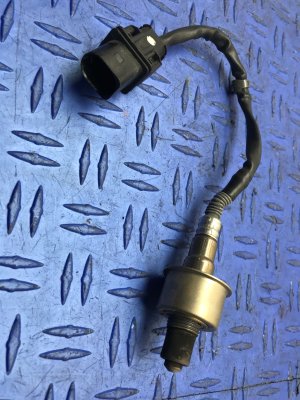
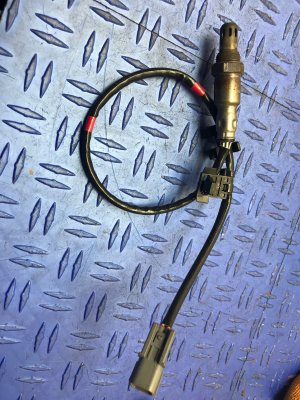
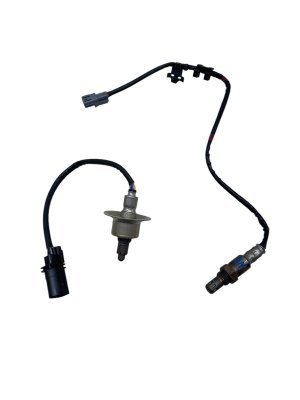
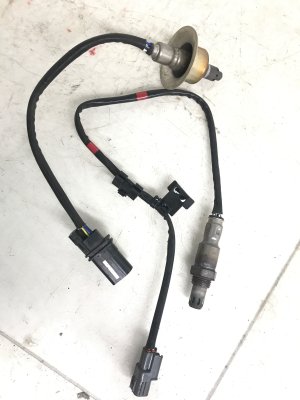
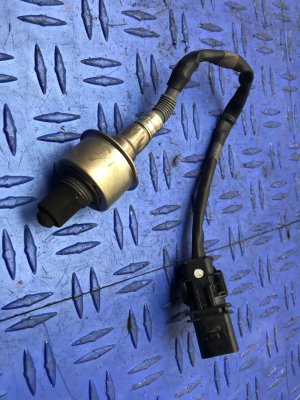
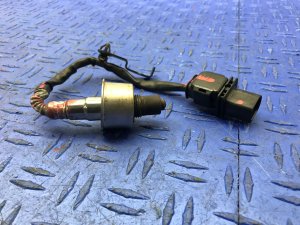
- Upstream Oxygen Sensor (Bank 1, Sensor 1)
(OEM #39210-3L000)— This is the most common cause of code P0135, as the internal heater element fails from repeated heat cycles.
Trusted brands: Hyundai/Genesis OE, Bosch, NGK/NTK, Denso
OEM price range: $150-$280
Aftermarket price range: $70-$170
Related Codes That Often Appear With This One
- P0030 — This is an alternative but identical SAE code for 'HO2S Heater Control Circuit (Bank 1 Sensor 1)'. They mean the same thing and share the same causes.
- P0050 — This is the same heater circuit fault but for Bank 2 (driver's side). If P0135 and P0050 appear together, it strongly suggests a shared power or ground issue, such as a single blown fuse that supplies power to both sensor heaters.
- P0031 — This code for 'HO2S Heater Control Circuit Low (Bank 1 Sensor 1)' can be triggered by a short circuit in the sensor or wiring, which is a common reason for the related fuse to blow.
Technical Service Bulletins (TSBs) & Recalls
- 24-01-032G (Recall 019G): Addresses a potential oil leak from the left-hand (Bank 2) turbocharger oil feed pipe, which can crack due to heat exposure. This highlights the high-heat environment and risk of fluid contamination to nearby components, including wiring for sensors on both banks.
Platform-Specific Known Issues
- A recall (NHTSA #24V191000 / TSB 24-01-032G) was issued for 2019-2022 G70 3.3T models for a cracking and leaking turbo oil feed pipe on Bank 2 (driver's side). While not on the same bank as P0135, an oil leak in the engine bay can degrade wiring insulation over time, making a thorough visual inspection of the Bank 1 sensor wiring particularly important.
Mechanic-Grade Diagnostic Values
- O2 Sensor Heater Circuit Resistance — expected: 3.3 - 4.1 Ω at 18-20°C (64-82°F). Failure: An Open Line (OL) reading on a multimeter, or a reading significantly outside the specified range, confirms a failed heater element.
- Heater Circuit Power Supply Voltage — expected: ~12.6V with Key On, Engine Off (KOEO) or ~13.7-14.7V with the engine running.. Failure: Low or zero voltage at the sensor connector (vehicle side) points to a blown fuse, a bad relay, or a break in the power supply wire.
Hidden / Shadow Codes Worth Checking
- P0135 as a pending code: On some Hyundai/Genesis systems, P0135 may be set as a pending or preliminary code. The fault is often confirmed and accompanied by a primary, hard code like P0030 (HO2S Heater Control Circuit). (see via A professional scan tool, such as the dealer-level Hyundai GDS, may show the relationship between these codes during diagnosis.)
Scan Tool Commands That Help
- Hyundai GDS / Kia KDS: DTC Analysis & Live Data (Current Data) — A technician would use the dealer scan tool to view live data from the O2 sensor heater circuit, such as the duty cycle commanded by the ECM. This allows for monitoring the circuit's behavior in real-time to confirm if the ECM is attempting to activate the heater and whether the sensor is responding, which helps differentiate between a sensor, wiring, or ECM fault.
OEM Part Supersession History
39210-3L000→39210-3L000— No supersession found. This part number remains consistent for the Bank 1 Sensor 1 position across the 2018-2025 model years.
Heads up: Ensure you are purchasing the correct sensor. The Bank 2 (driver's side) sensor is a different part number (39210-3L210) and is not interchangeable.
Model Year Variations Within This Range
- 2022-2025: The G70 received a facelift for the 2022 model year which included a new variable sport exhaust and a minor power increase to 368 hp for the 3.3T engine. However, the core engine management, O2 sensor part number (39210-3L000), and the diagnostic procedure for P0135 remain identical to the 2018-2021 models.
Diagnostic Flowchart
Other Known Issues on This Vehicle
Issues unrelated to this code that are worth knowing about as an owner of this generation:
- Interior Rattles (Sunroof/Overhead Console) 🟡 Low — Very common complaint across many model years. Often worse in warm weather due to plastic expansion. (Ref: No specific TSB, but owners report DIY fixes with felt tape are effective.)
- Premature Brake Rotor Warping/Shudder 🟠 Medium — Common, especially on GT/Sport trims with Brembo brakes. Owners report shudder during braking. (Ref: No TSB, but a common owner solution is to replace OEM pads and rotors with aftermarket alternatives.)
- Turbo Wastegate Actuator Rattle/Failure 🔴 High — Reported in some 3.3T models, causing a distinct rattling or squeaking noise. Ignoring it can lead to turbo failure. (Ref: No recall, but dealers have replaced turbos under warranty for this issue.)
- Cracked Turbo Oil Feed Pipe (Bank 2) 🔴 High — Affects 2019-2022 3.3T models, leading to an oil leak that poses a fire risk. (Ref: NHTSA Recall #24V191000 / Hyundai Recall 019G)
- Carbon Buildup on Intake Valves 🟠 Medium — A known long-term issue for all Gasoline Direct Injection (GDI) engines, including the Lambda II. Can cause misfires and performance loss, typically after 60k+ miles.
- Infotainment Screen Delamination 🟡 Low — Some owners report bubbling or peeling at the edges of the infotainment screen.
Used vs. New Parts: Buying Guide for This Vehicle
When a used part is the smart pick: For this repair, a used part is generally NOT recommended for the oxygen sensor itself, as it is a wear-and-tear component with a finite lifespan. However, sourcing a used connector pigtail or a section of the engine wiring harness from a reputable salvage yard can be a cost-effective solution if the original wiring is found to be melted or damaged.
Donor-vehicle mileage cap: roughly under 50000 miles for the part to have meaningful remaining life.
What to inspect on the donor part:
- For a wiring harness/pigtail: Inspect thoroughly for any signs of melting, brittleness, or oil saturation.
- Ensure the connector's locking tab is intact and the pins are not corroded or pushed out.
- Verify the donor vehicle was not involved in a fire or a front-end collision that could have stressed the harness.
OEM-only on this vehicle (don't cheap out):
- While not strictly 'OEM-only', using a direct-fit sensor is highly recommended over a 'universal' sensor that requires splicing wires. Splicing introduces a potential point of failure in a critical circuit.
Aftermarket brands forum-validated for this vehicle:
- NGK/NTK
- Denso
- Bosch
Brands owners have reported issues with on this vehicle:
- Unnamed, no-brand sensors from online marketplaces. Owners on related platforms have reported issues with cheap aftermarket sensors failing to resolve codes or having short lifespans.
Real Owner Stories
Aggregated from forums and TSBs cited above. Mileages and costs reflect what owners reported in those sources.
2019 Genesis G70 3.3T
Symptoms: Owner noted the 3.3T engine is generally robust but highlighted concerns regarding the turbo oil feed line issue which can lead to leaks in the engine bay.
What fixed it: Inspection of the turbo oil feed pipe as part of the NHTSA Recall #24V191000 / Hyundai Recall 019G to prevent fluid contamination and fire risk.
Source hint: Reddit discussion on r/GenesisG70 titled 'Reliability of the 3.3 twin-turbo engine for G70'
2018-2023 Kia Stinger GT 3.3T
Symptoms: The vehicle triggered a P0135 diagnostic trouble code; owner sought confirmation of the code's meaning on a platform-mate forum.
What fixed it: Replacement of the upstream oxygen sensor (Bank 1 Sensor 1) to resolve the heater circuit malfunction.
Source hint: Kia Stinger forum thread 'Kia OBD-II error codes'
Related OBD-II Codes
Frequently Asked Questions
Does the turbo oil feed pipe recall (24V-191) affect my Bank 1 oxygen sensor?
What is the specific part number for the Bank 1, Sensor 1 oxygen sensor on my G70 3.3T?
Can aftermarket downpipes cause a P0135 code on the G70?
Where is the Bank 1, Sensor 1 oxygen sensor located on the Lambda II 3.3T engine?
Which fuse should I check for the O2 sensor heater circuit?
Is the P0135 issue common to other vehicles similar to the G70?
Helpful Videos
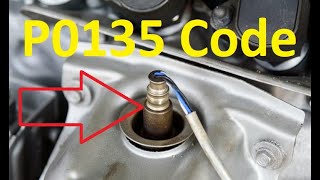
We Have This Part in Stock

The information in this article is provided for general reference and educational purposes only. Vehicle specifications, procedures, and part compatibility can vary by production date, trim level, and region. Always consult your vehicle's factory service manual and verify part numbers before purchasing or performing repairs. Safety-critical components such as airbags, seat belts, and braking systems should be installed by a qualified professional.
- Genesis G70:
- 🎬 Helpful Videos
- 🛍️ Shop This Part
- What's Unique About the 2018-2025 Genesis G70
- Symptoms You May Notice
- Most Likely Causes
- Rare But Worth Checking
- Diagnosis Steps
- Parts You'll Likely Need
- Related Codes That Often Appear With This One
- Technical Service Bulletins (TSBs) & Recalls
- Platform-Specific Known Issues
- Mechanic-Grade Diagnostic Values
- Hidden / Shadow Codes Worth Checking
- Scan Tool Commands That Help
- OEM Part Supersession History
- Model Year Variations Within This Range
- Diagnostic Flowchart
- Other Known Issues on This Vehicle
- Used vs. New Parts: Buying Guide for This Vehicle
- Real Owner Stories
- 2019 Genesis G70 3.3T
- 2018-2023 Kia Stinger GT 3.3T
- Related OBD-II Codes
- Frequently Asked Questions
- 🎟️ Get 5% Off