

P0135 on 2006-2008 Dodge Magnum 6.1L Hemi: O2 Sensor Heater Circuit Causes and Fixes
This code indicates a failed heater circuit in the upstream oxygen sensor on the passenger side (Bank 1, Sensor 1). The most common fix is to replace the sensor itself. Expect to pay $50-$90 for a quality aftermarket sensor (NTK, Denso) or $120-$180 for an OEM Mopar part. This is a DIY-friendly repair with the proper O2 sensor socket.
- P0135 on your 6.1L Hemi almost always means you need a new passenger-side upstream O2 sensor.
- Before buying a new sensor, take five minutes to check the O2 heater fuse in both the engine bay and trunk fuse boxes and visually inspect the sensor's wiring for any obvious damage.
- Bank 1 is the passenger side; Sensor 1 is before the catalytic converter.
- Use a quality replacement sensor from brands like NTK (OEM supplier) or Denso to ensure longevity and proper performance. Avoid generic or off-brand sensors.
- You will need a special 7/8" (or 22mm) O2 sensor socket with a slit for the wire to perform this repair yourself.
What's Unique About the 2006-2008 Dodge Magnum
For the 6.1L Hemi V8 in the Dodge Magnum SRT-8, this is a very common and straightforward code. Bank 1 is the passenger side of the engine, which is the side with cylinder #1. The issue is almost always a burned-out heater element inside the O2 sensor itself, a common failure point due to age and extreme heat cycles. The PCM on this platform uses a Pulse Width Modulated (PWM) signal to control the heater, which is a modern and precise method but doesn't change the fundamental diagnosis. There are no widespread, unique platform-specific issues like faulty wiring harnesses that are known to cause this code, making diagnosis relatively simple.
Symptoms You May Notice
- Check Engine Light is on
- Reduced fuel economy
- Rough idle, especially on cold starts
- Vehicle may fail an emissions test
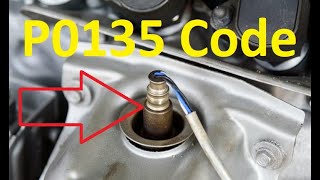
- A rotten egg smell from the exhaust 🎬 Watch: Understanding the causes and fixes for the P0135 code. in some cases.
- Replacing the wrong O2 sensor (e.g., the downstream sensor or the sensor on the driver's side). P0135 is specifically for Bank 1 (passenger side) and Sensor 1 (upstream/before the catalyst).
Most Likely Causes
- Failed Bank 1, Sensor 1 Oxygen Sensor 🔴 High Probability The internal heater element is subjected to thousands of heat cycles and eventually burns out. This is a normal wear-and-tear item on the 6.1L Hemi, with failures often reported between 80,000 and 100,000 miles.
How to confirm: Disconnect the sensor and measure the resistance between the two heater circuit pins (often the two same-colored wires). A reading of 'OL' (Open Loop/infinite resistance) on a multimeter confirms a burned-out element. A good sensor typically reads between 2 and 30 ohms.
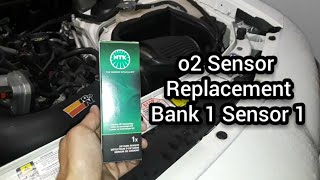
Typical fix: Replace the Bank 1, Sensor 1 (passenger side, upstream) oxygen sensor. 🎬 See this walkthrough for changing the Bank 1 Sensor 1. A video guide for a 2006 Magnum SRT-8 shows the replacement of all four sensors to address codes.
Est. part cost: $50-$180 - Damaged Wiring or Connector 🟡 Medium Probability The wiring harness is close to hot exhaust components and can become brittle, melt, or chafe over time. The connector can also accumulate moisture and corrode, leading to a poor connection.
How to confirm: Visually inspect the wiring harness and connector leading to the O2 sensor for any signs of melting, fraying, or corrosion in the pins. With the key on and engine off, use a multimeter to check for 12-volt power at the heater circuit supply wire in the harness-side connector.
Typical fix: Repair the damaged section of wire or clean/replace the connector. Mopar offers connector repair kits for this purpose.
Est. part cost: $5-$50 - Blown Fuse or Faulty Relay ⚪ Low Probability
How to confirm: Check the fuse box in the engine bay, near the battery. On many Dodge vehicles of this era, the O2 sensor heaters are powered by the Auto Shutdown (ASD) relay and a corresponding fuse. If the engine runs, the ASD relay and its primary fuse are likely okay, but a secondary fuse could be involved. Consult the fuse box diagram for a fuse labeled 'O2' or 'Heater'.
Typical fix: Replace the blown fuse. If the fuse blows again immediately, it indicates a short circuit in the wiring or the sensor itself that must be diagnosed.
Est. part cost: $1-$5
Rare But Worth Checking
- Faulty Powertrain Control Module (PCM): This is extremely rare. Before condemning the PCM, all other possibilities, including the sensor, wiring, and fuses, must be exhaustively ruled out. A PCM replacement is expensive and requires programming with the vehicle's VIN. An incorrect or non-programmed PCM can cause other issues.
Diagnosis Steps
- Retrieve the code with an OBD-II scanner to confirm P0135 is the active code. Note any other codes, like P0155, which would point to the other upstream sensor.
- Locate the Bank 1, Sensor 1 oxygen sensor. On the 6.1L Hemi, this is on the passenger side exhaust manifold, before the catalytic converter. It is the most accessible of the four sensors.
- Visually inspect the sensor's electrical connector and wiring for any obvious signs of damage, such as melting, chafing, or corrosion.
- Check the fuse box located in the trunk under the spare tire cover and the one in the engine bay (Power Distribution Center) for a blown fuse related to the O2 sensor heaters. The O2 heaters may be powered by the ASD circuit.
- If the wiring and fuse are okay, disconnect the sensor. Use a multimeter to test the resistance of the heater element on the sensor side of the connector (usually across the two wires of the same color, often black). An infinite resistance reading ('OL') means the sensor's heater is broken and the sensor must be replaced.
- If the sensor resistance is within spec (typically 2-30 ohms), test the vehicle's wiring. Turn the ignition to the 'ON' position (engine off) and check for 12V power at the heater power supply pin on the harness-side connector.
- If power and sensor resistance are good, the issue may be on the ground/control side of the circuit, which is pulse-width modulated by the PCM. This would require more advanced wiring diagram diagnostics to trace the wire back to the PCM.
Parts You'll Likely Need
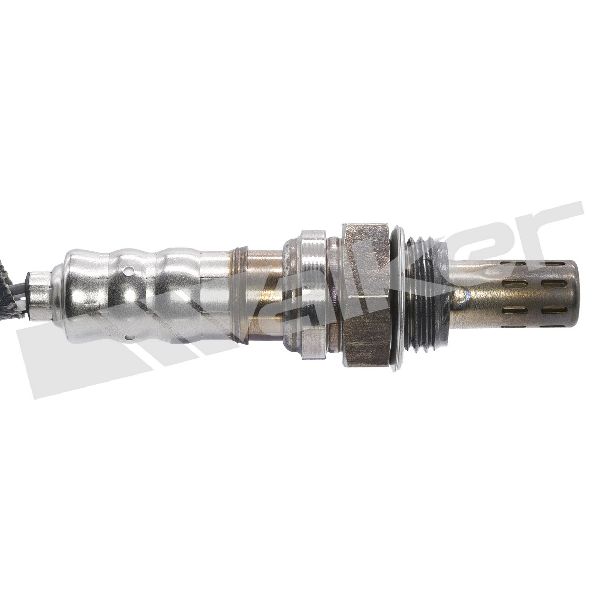
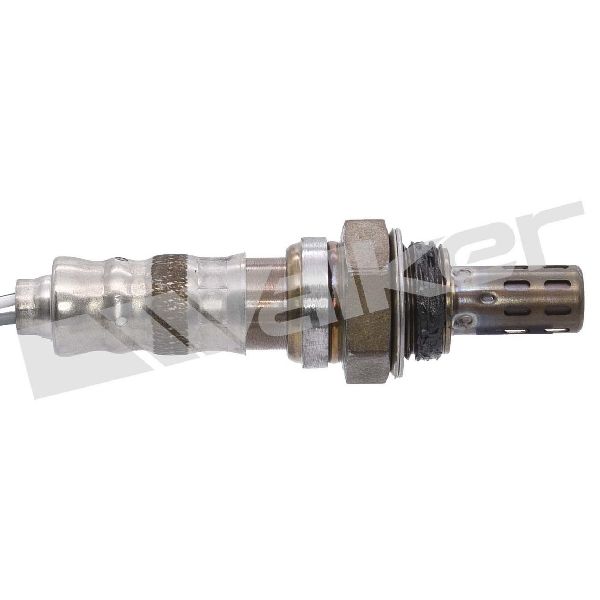
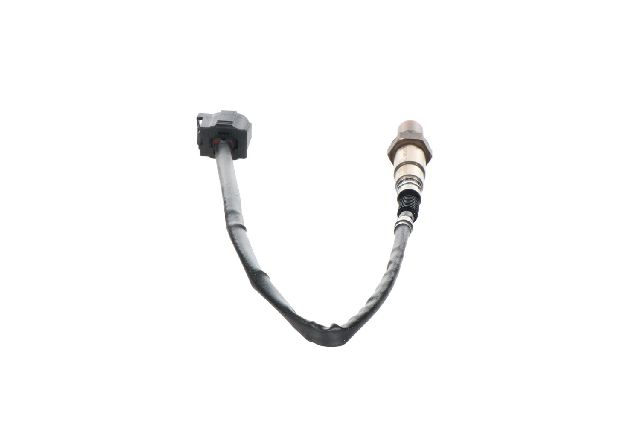
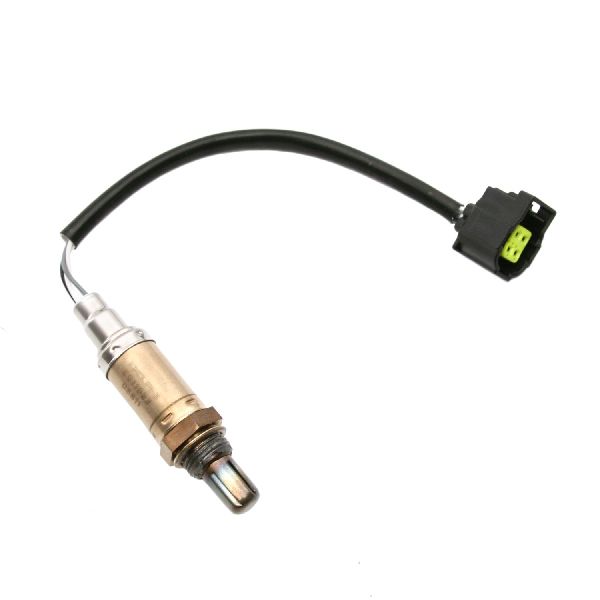
- Oxygen Sensor (Bank 1, Sensor 1)
(OEM #05149180AA)— This is the upstream sensor on the passenger side. Its internal heater element is the most common failure point for code P0135.
Trusted brands: Mopar (OEM Part #: 05149180AA, which may be superseded by 05149180AB), NTK (Often the OEM supplier, Part #: 23159), Denso (Part #: 234-4587)
OEM price range: $120-$180
Aftermarket price range: $50-$90
Related Codes That Often Appear With This One
- P0155 (O2 Sensor Heater Circuit Malfunction Bank 2, Sensor 1): This is the identical code but for the driver's side upstream sensor. It is common for both upstream sensor heaters to fail around the same time.
Platform-Specific Known Issues
- Owner Experience: P0135 and P0155 at 90k miles: A user on lxforums.com with a 2006 300C SRT-8 (same 6.1L engine) reported getting both P0135 and P0155 codes at around 90,000 miles. The fix was to replace both upstream O2 sensors. The user noted that NTK is the original equipment manufacturer and recommended using them for replacement to avoid compatibility issues.
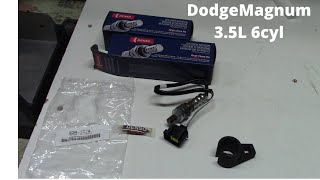
- DIY Repair Video: A YouTube video by 'Average Guy's Garage' titled '2006 Dodge Magnum SRT8 - Episode 3: O2 Sensors and T-Stat' documents the process of replacing all four O2 sensors to clear codes. The video shows the location of the sensors and the tools required, confirming it's a manageable DIY job. 🎬 Watch: Full SRT8 O2 sensor and thermostat replacement guide.
Technical Service Bulletins (TSBs) & Recalls
- TSB Bulletin #25-004-12: A manufacturer service bulletin notes that P0135 can be triggered by O2 Sensor 1/1 Heater Performance issues related to internal control module processor performance.
- TSB Bulletin #25-003-13: This bulletin identifies P0135 as an O2 Sensor 1/1 Heater Performance fault, often grouped with other O2 sensor short-to-ground or short-to-voltage codes.
- TSB Bulletin #25-002-14: Manufacturer documentation confirms P0135 indicates O2 Sensor 1/1 Heater Performance issues, which may be monitored alongside internal control module sensor processor performance.
Mechanic-Grade Diagnostic Values
- O2 Sensor Heater Element Resistance — expected: 2.5 to 4.0 Ohms at room temperature.. Failure: A reading of infinite resistance ('OL') indicates an open circuit/burned out element. A reading outside the specified range also indicates a faulty sensor.
- Voltage at Heater Power Supply Pin (Harness Side) — expected: Battery voltage (~12V) with ignition on, engine off.. Failure: 0V or significantly low voltage indicates a problem with the fuse, ASD relay, or wiring from the power source.
- Voltage at Heater Control Pin (Harness Side) — expected: A bias voltage of approximately 4.4V with ignition on, engine off.. Failure: 0V or a voltage not matching the specification could indicate a wiring issue between the connector and the PCM, or a faulty PCM driver.
Wiring & Ground Locations
- O2 Sensor Heater Power Source — Power is typically supplied via the Auto Shutdown (ASD) relay located in the engine bay fuse box (Power Distribution Center).. If the ASD relay or its associated fuse fails, the O2 sensor heater will not receive power. However, a failed ASD relay would also typically cause a no-start condition, making it an unlikely isolated cause for P0135.
- G102 / G103 — On the passenger side of the engine block, often near the motor mount and behind the PCM.. These are primary engine and PCM ground points. A corroded or loose connection here can cause a host of electrical issues, including erratic sensor behavior and false codes.
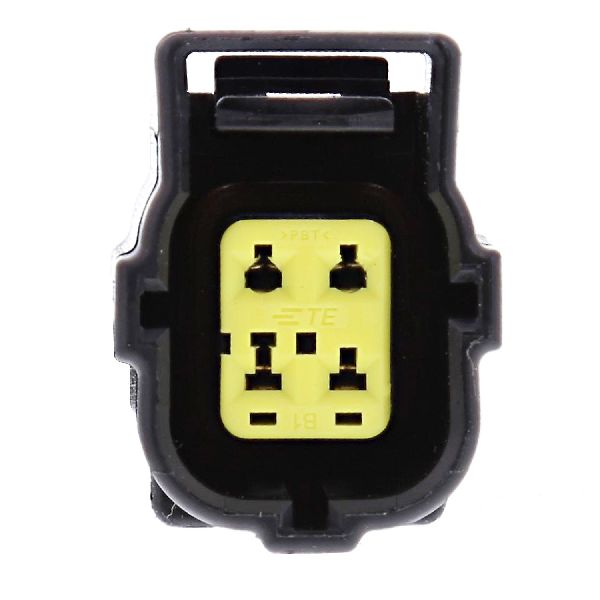
- O2 Sensor Connector (C105) — Connected to the Bank 1, Sensor 1 O2 sensor, routed near the passenger side of the transmission bellhousing.. This 4-pin connector is the primary point for testing both the sensor and the harness. The pins for the heater circuit are typically the two wires of the same color (e.g., two black wires). Corrosion or damage here is a common cause of the code.
Real Owner Repair Stories
- lxforums.com user post (2006 Chrysler 300C SRT-8 (6.1L Hemi), ~90,000 miles) — Check Engine Light with codes P0135 and P0155.
✅ What actually fixed it Replaced both upstream (Bank 1 and Bank 2) oxygen sensors. The user specifically recommended using NTK brand sensors, noting they are the OEM supplier and help avoid compatibility problems. - YouTube video by 'Average Guy's Garage' (2006 Dodge Magnum SRT-8, 130,000+ miles) — Check Engine Light with multiple codes, including one for catalyst inefficiency (P0420).
✅ What actually fixed it Replaced all four oxygen sensors as a preventative measure and to hopefully resolve the catalyst code. The video documents the replacement process, confirming the accessibility and tools needed for a DIY repair. - NHTSA ODI #10577984 — An owner reported that a P0135 code for an O2 sensor heater persisted even after replacing the sensor. They noted that a service bulletin suggested the repair was to flash the body controller.
When the Usual Fixes Don't Work
- While the most common cause is a failed sensor, a notable pattern reported on LX platform forums is the failure of aftermarket oxygen sensors, particularly the Bosch brand, to resolve the P0135 code. Owners report that even new Bosch sensors can cause the code to return quickly or introduce new performance issues. The consensus strongly advises using only the OEM Mopar sensor or the direct OEM equivalent from NTK to ensure compatibility with the Chrysler PCM's specific voltage and resistance expectations.
OEM Part Supersession History
05149180AA→05149180AB— Standard part revision by the manufacturer.
Heads up: None. The 'AB' revision is a direct, backward-compatible replacement for the 'AA' part. It is used on a wide variety of Chrysler, Dodge, and Jeep vehicles.
Diagnostic Flowchart
Other Known Issues on This Vehicle
Issues unrelated to this code that are worth knowing about as an owner of this generation:
- Shifter Stuck in Park ('Pink Thingy' Failure) 🔴 High — Very common on 2005-2007 models. The plastic park interlock lever inside the shifter assembly becomes brittle and breaks, immobilizing the vehicle.
- Front Suspension Component Wear 🟠 Medium — Common with mileage over 60,000 miles. Due to the vehicle's weight, front tension struts, control arm bushings, and outer tie rod ends wear out, causing clunking noises and alignment issues.
- Dropped Valve Seats 🔴 High — Uncommon, but a known catastrophic failure mode for the 6.1L Hemi. Overheating can cause a valve seat to dislodge from the aluminum cylinder head, leading to major engine damage.
- Hemi 'Tick' / Lifter Failure 🟠 Medium — A light ticking sound is common, but a louder tick can be a sign of a failing lifter, which can damage the camshaft if not addressed.
- Takata Airbag Recalls 🔴 High — Widespread across this platform. Multiple recalls (e.g., NHTSA 16V352000) were issued for faulty driver and passenger airbag inflators that could rupture. (Ref: Multiple recalls, including 16V352000)
Used vs. New Parts: Buying Guide for This Vehicle
When a used part is the smart pick: A used part is only a smart choice for the wiring connector pigtail. If the vehicle-side connector is melted or corroded, sourcing a pigtail from a salvage yard vehicle is a cost-effective and reliable repair.
Donor-vehicle mileage cap: roughly under 200000 miles for the part to have meaningful remaining life.
What to inspect on the donor part:
- Inspect the plastic for brittleness or cracking.
- Check the connector's locking tab to ensure it's intact.
- Examine the metal pins inside the connector for any green or white corrosion.
- Ensure the wires on the pigtail are pliable and not melted or frayed.
OEM-only on this vehicle (don't cheap out):
- Oxygen Sensor: This is a critical emissions component and a known wear item. It should always be purchased new to ensure accurate readings and a long service life.
Aftermarket brands forum-validated for this vehicle:
- NTK (OEM supplier)
- Denso
Brands owners have reported issues with on this vehicle:
- Bosch: Many owners of 6.1L Hemi vehicles have reported persistent codes or driveability issues after installing Bosch-branded oxygen sensors, suggesting a potential incompatibility with the factory PCM.
Real Owner Stories
Aggregated from forums and TSBs cited above. Mileages and costs reflect what owners reported in those sources.
2006 Chrysler 300C SRT-8 (6.1L Hemi) — 90000 miles
Symptoms: Check engine light showing both P0135 and P0155 codes simultaneously.
What fixed it: Replacement of both upstream O2 sensors using NTK brand sensors.
Source hint: lxforums.com thread titled 'P0135 and P0155 O2 Sensor Heater Circuit Malfunction'
2006 Dodge Magnum SRT-8 (6.1L Hemi)
Symptoms: Active O2 sensor codes requiring replacement of all sensors.
What fixed it: Replacement of all four O2 sensors as part of a DIY maintenance session.
Source hint: YouTube video by 'Average Guy's Garage' titled '2006 Dodge Magnum SRT8 - Episode 3: O2 Sensors and T-Stat'
Related OBD-II Codes
Frequently Asked Questions
Which brand of oxygen sensor should I use for my 6.1L Hemi to avoid compatibility issues?
Where is the Bank 1, Sensor 1 O2 sensor located on the Magnum SRT-8?
Is there a specific fuse I should check for the O2 sensor heater circuit?
At what mileage do the O2 sensors typically fail on the 6.1L Hemi?
Are there any recalls for the 2006-2008 Magnum SRT-8 I should be aware of while fixing this?
Can I use a used O2 sensor from a salvage yard to save money?
Helpful Videos
We Have This Part in Stock


The information in this article is provided for general reference and educational purposes only. Vehicle specifications, procedures, and part compatibility can vary by production date, trim level, and region. Always consult your vehicle's factory service manual and verify part numbers before purchasing or performing repairs. Safety-critical components such as airbags, seat belts, and braking systems should be installed by a qualified professional.
- Dodge Magnum:
- 🎬 Helpful Videos
- 🛍️ Shop This Part
- What's Unique About the 2006-2008 Dodge Magnum
- Symptoms You May Notice
- Most Likely Causes
- Rare But Worth Checking
- Diagnosis Steps
- Parts You'll Likely Need
- Related Codes That Often Appear With This One
- Platform-Specific Known Issues
- Technical Service Bulletins (TSBs) & Recalls
- Mechanic-Grade Diagnostic Values
- Wiring & Ground Locations
- Real Owner Repair Stories
- When the Usual Fixes Don't Work
- OEM Part Supersession History
- Diagnostic Flowchart
- Other Known Issues on This Vehicle
- Used vs. New Parts: Buying Guide for This Vehicle
- Real Owner Stories
- 2006 Chrysler 300C SRT-8 (6.1L Hemi) — 90000 miles
- 2006 Dodge Magnum SRT-8 (6.1L Hemi)
- Related OBD-II Codes
- Frequently Asked Questions
- 🎟️ Get 5% Off