

P0135 on 2007-2015 Audi Q7: O2 Sensor Heater Circuit Causes and Fixes
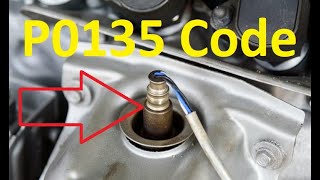
On the 2007-2015 Audi Q7, code P0135 almost always points to a corroded 15A fuse in the under-hood electronics box due to clogged cowl drains. Before replacing the expensive O2 sensor, check and clean the fuse box in the plenum chamber near the windshield. This is a $5 fix that often resolves the issue.
- Before buying any parts, ALWAYS check the 15A/20A fuse in the electronics box located in the plenum chamber under the windshield for corrosion. This is the most common cause of P0135 on this vehicle.
- While checking the fuse, clean out the plenum chamber drains to prevent the problem from happening again. This is critical preventative maintenance.
- If P0155 (Bank 2) is also present, it's almost certain the shared fuse is the problem.
- If the fuse and its connections are clean and intact, the next most likely cause is a failed O2 sensor heater element, which is a common wear item.
What's Unique About the 2007-2015 Audi Q7
For the first-generation Audi Q7 (and its platform-mates, the VW Touareg and Porsche Cayenne), P0135 is uniquely and frequently caused by a specific design vulnerability. The fuse powering the O2 sensor heater is in an electronics box in the plenum chamber at the base of the windshield. The drains in this area are notorious for clogging with leaves and debris, causing rainwater to flood the chamber and corrode the fuse and its terminals. This corrosion creates an open circuit, triggering the P0135 code even when the oxygen sensor itself is perfectly fine.
Symptoms You May Notice
- Check Engine Light is on
- Reduced fuel efficiency
- Rough idling or poor engine performance, particularly during cold starts
- Failing a vehicle emissions test
- Exhaust may smell bad or emit black smoke
- Replacing the oxygen sensor without first checking the fuse in the plenum E-Box. Many owners and even shops spend hundreds on a new sensor when the actual problem was a $5 fuse and corrosion caused by clogged drains.
Most Likely Causes
- Corroded or Blown Fuse in Plenum E-Box 🔴 High Probability The plenum chamber drains clog easily with leaves and debris, causing the electronics box (E-Box) containing the O2 sensor heater fuse to be submerged in water, leading to severe corrosion.
How to confirm: Locate the black electronics box in the plenum chamber under the cowl panel, near the base of the driver's or passenger's side windshield. Open it and inspect the 15A or 20A fuse for the O2 sensor heaters (often in position 3 or 5 of the 'SB' fuse carrier). Look for a blown fuse or, more commonly, green/white corrosion on the fuse and terminals.
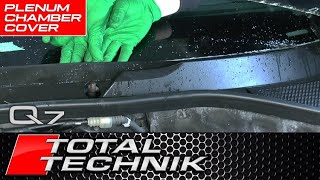
Typical fix: Thoroughly clean the fuse terminals with a wire brush and electrical contact cleaner. Replace the corroded fuse. Crucially, clear the plenum drains to prevent recurrence. This often involves removing the cowl cover for full access. 🎬 See this guide on how to remove the plenum cover
Est. part cost: $1-$5 - Failed Oxygen Sensor Heater Element 🟡 Medium Probability The internal heating element of the O2 sensor can burn out over time due to constant thermal cycling. This is a common failure mode for all heated oxygen sensors after 60,000-100,000 miles. Manufacturer TSB Bulletin #01139020337671 specifically identifies P0135 as a heater circuit fault for the lambda sensor that may require repair authorization.
How to confirm: After confirming the fuse and wiring are good, test the resistance of the heater circuit within the O2 sensor itself using a multimeter. Disconnect the sensor and measure between the two same-colored wires (often white). A reading outside of the typical 2.5-10 ohms, or an open circuit (infinite resistance), confirms a failed heater element.
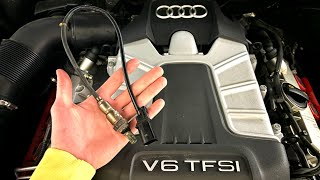
Typical fix: Replace the Bank 1, Sensor 1 oxygen sensor. A special 22mm slotted socket is often required for removal and installation. 🎬 Watch: Step-by-step upstream O2 sensor replacement walkthrough
Est. part cost: $80-$230 - Damaged Wiring or Connector ⚪ Low Probability Exhaust components generate extreme heat, and wiring can become brittle, melt, or chafe over time if not properly secured. The connector pins can also corrode.
How to confirm: Visually inspect the wiring harness and connector for the Bank 1, Sensor 1 O2 sensor from the sensor to where it enters the main loom. Look for any signs of melting, chafing, corrosion, or loose pins.
Typical fix: Repair the damaged section of wiring or replace the connector pigtail.
Est. part cost: $10-$30
Rare But Worth Checking
- Failed Engine Control Module (ECM) Driver: This is extremely rare. Before suspecting the ECM, all other possibilities (fuse, sensor, wiring) must be exhaustively ruled out. The ECM is the last component to check and replace.
Diagnosis Steps
- Read the fault codes with an OBD-II scanner to confirm P0135 is the primary code. Check if P0155 is also present.
- CRITICAL STEP: Locate the electronics box (E-Box) in the plenum chamber under the cowl panel. This requires removing the plastic cowl cover at the base of the windshield.
- Open the E-Box and inspect the 15A/20A fuse for the O2 sensor heater circuit (often labeled for 'Engine Management' or similar). Check for a blown fuse and any signs of water ingress or corrosion on the terminals.
- If corrosion is found, disconnect the battery, clean the terminals meticulously, and replace the fuse. Clear the plenum drains to prevent a recurrence. Clear the code and test drive. If the code does not return, the problem is solved.
- If the fuse and terminals are clean and have power, locate the Bank 1, Sensor 1 oxygen sensor. It is the upstream sensor on the passenger side of the vehicle (for LHD), in the exhaust manifold.
- Inspect the sensor's electrical connector and wiring for any signs of melting, corrosion, or physical damage.
- Using a multimeter, disconnect the sensor and test the resistance of the heater circuit on the sensor side (usually between the two white wires). A reading outside of the manufacturer's specification (typically 2.5-10 ohms) or an open circuit indicates a failed sensor.
- If the sensor tests good, check for 12V power and a good ground at the vehicle-side connector with the ignition on.
- If power or ground is missing, trace the wiring back to the E-Box and ECM to find the open or short in the circuit.
- If the fuse, wiring, and sensor are all confirmed to be good, the fault may lie within the ECM, though this is highly unlikely.
Parts You'll Likely Need
- 15 Amp Mini Fuse
(OEM #N10256407)— This fuse is the most common failure point due to corrosion from water in the plenum chamber.
Trusted brands: Bussmann, Littelfuse, Audi Genuine
OEM price range: $1-$5
Aftermarket price range: $1-$5 - Upstream Oxygen Sensor (Bank 1, Sensor 1)
(OEM #4.2L V8: 079906262F; 3.0T V6: 06E906262S (verify with VIN))— If the fuse and wiring are good, the internal heater element of the sensor itself has likely failed.
Trusted brands: Bosch (OEM supplier, e.g., 17351 for 4.2L), NTK, Denso
OEM price range: $150-$230
Aftermarket price range: $80-$140
Related Codes That Often Appear With This One
- P0155 (O2 Sensor Heater Circuit Malfunction Bank 2, Sensor 1): If the fuse for the O2 heaters is blown, it will often take out both Bank 1 and Bank 2 heaters simultaneously, triggering both codes.
Technical Service Bulletins (TSBs) & Recalls
- While no specific TSB directly addresses the P0135 code by name for this water-ingress issue, the problem is widely acknowledged by technicians and in the owner community. Some related TSBs like 2018498/3 (or 24-08-52) exist for certain Audi models regarding ECM software updates for O2 sensor heater diagnostics, but these are far less common than the physical fuse corrosion problem on the Q7. Audi-specific code P1196 for 'O2 Sensor Heater Circ., Bank1-Sensor1 Electrical Malfunction' is noted in TSB Bulletin #01139020337671 and may appear with P0135. This bulletin specifically addresses the MIL being on due to DTC P1196, P1197, or P0135 as a heater circuit fault for the lambda sensor.
Platform-Specific Known Issues
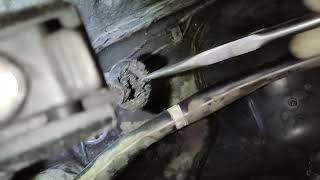
- The Infamous Plenum Drain Issue: A widely documented issue on the first-generation Q7/Touareg/Cayenne platform is the clogging of plenum chamber drains, leading to water accumulation and corrosion in the electronics box that houses the O2 sensor heater fuse. Regular cleaning is essential preventative maintenance. 🎬 Watch: How to find and clear your Audi cowl drains
- Owner Repair Story: A $5 Fix: A user on AudiWorld forums with a 2007 Q7 4.2 reported getting code P0135. Before ordering a new O2 sensor, they followed advice to check the plenum box. They found the chamber full of water and the 15A fuse for the O2 heaters heavily corroded. After cleaning the terminals, replacing the fuse, and clearing the drains, the code was resolved without replacing the expensive sensor.
Mechanic-Grade Diagnostic Values
- O2 Sensor (G39) Heater Element Resistance — expected: 2.5 to 10.0 Ohms at approximately 20°C (68°F).. Failure: A reading of infinity (Open Loop/OL) or a value significantly outside the specified range indicates a failed heater element.
- Voltage Supply to O2 Sensor Heater Circuit Connector — expected: Battery Voltage (approximately 12V+) with the ignition on, engine off.. Failure: 0V or significantly lower than battery voltage points to a break in the circuit, most likely the corroded fuse in the E-Box or damaged wiring.
- VCDS Live Data - O2 Sensor Heater Status — expected: In VCDS, Measuring Value Blocks (MVB) for group 030 will show the status of the heater circuits. The text should read 'Heater before cat... Test ON' during startup and then cycle as needed.. Failure: A status of 'Test OFF' or a fault registered in this block points to a problem detected by the ECU.
Hidden / Shadow Codes Worth Checking
- P1196: This is an Audi-specific code for 'O2 Sensor Heater Circ., Bank1-Sensor1 Electrical Malfunction'. It often appears alongside the generic P0135 and points more directly to an electrical fault rather than just a performance issue. (see via VCDS or other advanced OBD-II scanners capable of reading manufacturer-specific codes.)
Scan Tool Commands That Help
- VCDS (VAG-COM): Output Test for Oxygen Sensor Heater — After checking the fuse, this command can be used to directly activate the heater circuit for Bank 1, Sensor 1. This allows a technician to check for voltage at the sensor connector while the ECU is actively commanded to provide power, bypassing the normal cold-start conditions. This helps isolate whether the fault is in the wiring/sensor or the ECU's control logic.
- VCDS (VAG-COM): Read Measuring Value Blocks (MVB) - Group 030-033 — These blocks show the real-time status and resistance of the O2 sensor heaters. A technician can observe the heater duty cycle and resistance values as reported by the ECU to see if they are within the expected range, confirming if the ECU is detecting an open or short circuit.
Wiring & Ground Locations
- Plenum E-Box (Electronics Box) — Located in the plenum chamber (water box) at the base of the windshield, typically on the driver's or passenger's side under the plastic cowl cover.. This box houses the fuse for the O2 sensor heater circuits. It is the primary failure point for P0135 on this platform due to water ingress from clogged plenum drains causing corrosion.
- O2 Sensor Connectors (Bank 1 vs Bank 2) — The connectors for all four O2 sensors are often grouped together on a bracket on the firewall. On many V6/V8 models, the connectors for Bank 1 (passenger side) are black, while the connectors for Bank 2 (driver side) are a distinct rusty red or brown color.. Correctly identifying the Bank 1 connectors is crucial to avoid testing or replacing the wrong sensor. Following the wire from the passenger-side upstream sensor to the corresponding black connector confirms you are working on the correct circuit.
- T94 Connector — The 94-pin black connector on the Engine Control Unit (ECU), which is also located in the plenum chamber.. All wiring for the O2 sensor heater circuit ultimately terminates at the ECU via this connector. If the fuse and wiring to the sensor are good, a technician would test for continuity from the sensor connector pins back to the corresponding pins on the T94 connector to rule out a break in the main harness.
- Ground Connection (e.g., Point 640) — There are several main engine and chassis ground points. One key ground connection is located in the engine compartment on the left side frame rail.. While less common for this specific code, a poor main engine ground can cause a variety of erratic electrical issues and fault codes. Verifying that the main ground strap is clean and tight is a fundamental step in any electrical diagnosis.
Real Owner Repair Stories
- RANS87IROCZ on YouTube (via Go-Parts article) (2008 Audi Q7 4.2L V8) — Check Engine Light with heater circuit codes for both downstream sensors (P0055, P0085) immediately after installing new sensors.
❌ Tried (didn't work) Replacing both downstream oxygen sensors.
✅ What actually fixed it The fuses for the O2 sensor circuits, located in the engine compartment plenum box, were not blown but were heavily corroded on the contacts. Cleaning the corrosion from the fuse legs and the fuse holder terminals resolved the codes. - AudiWorld Forum User (2012 Audi Q7 3.0T) — Persistent Check Engine Light, increased fuel consumption, and the auto start/stop system stopped working.
❌ Tried (didn't work) Dealer scanned for start/stop errors but found none, acknowledging the system wasn't working.
✅ What actually fixed it The issue was linked to the O2 sensor fault. While the final repair wasn't posted by the original user, another user with a similar issue on a Q5 reported the cause was a loose/corroded O2 sensor electrical plug due to vibration. Cleaning and securing the connection fixed the issue and restored normal operation, including the auto start/stop function.
Model Year Variations Within This Range
- 2007-2010 vs 2011-2015: The primary difference is the engine: the 4.2L FSI V8 (BAR engine code) was used until 2010, and the 3.0T Supercharged V6 (e.g., CJT engine code) was used from 2011 onward. While they use different specific O2 sensor part numbers (e.g., 4.2L: 079906262F, 3.0T: 06E906262S), the underlying cause of P0135 related to the plenum E-box fuse corrosion is identical and plagues the entire 4L generation chassis regardless of engine.
Diagnostic Flowchart
Other Known Issues on This Vehicle
Issues unrelated to this code that are worth knowing about as an owner of this generation:
- Clogged Plenum Chamber Drains 🔴 High — Very common across all model years if not regularly cleaned. Can lead to catastrophic electrical failure.
- Carbon Buildup on Intake Valves 🟠 Medium — Common on both 4.2L FSI and 3.0T direct-injection engines, typically requiring cleaning every 60k-80k miles to prevent misfires and performance loss.
- Timing Chain Tensioner/Guide Wear (4.2L FSI) 🔴 High — A known issue on the 4.2L V8, often presenting as a rattling noise on cold starts. Can lead to engine failure if ignored.
- Water Pump & Thermostat Failure (3.0T) 🟠 Medium — The plastic water pump and thermostat housing are common failure points on the 3.0T engine, often occurring between 60k-100k miles.
- PCV Valve Failure (3.0T) 🟠 Medium — The crankcase ventilation valve, located under the supercharger, can fail and cause oil consumption, lean codes, and rough running.
- Leaking Sunroof Drains 🔴 High — Similar to plenum drains, the sunroof drains can clog and cause water to leak into the cabin, damaging sensitive electronics like amplifiers and control modules located in the floor.
Used vs. New Parts: Buying Guide for This Vehicle
When a used part is the smart pick: A used part is a reasonable choice for the plastic E-box housing or the fuse carrier itself if the original is physically damaged or too corroded to clean. A wiring connector pigtail from a junkyard vehicle can also be a cost-effective repair for a damaged connector.
Donor-vehicle mileage cap: roughly under 150000 miles for the part to have meaningful remaining life.
What to inspect on the donor part:
- For an E-box or connector, inspect for any signs of brittleness, cracking, or previous water lines.
- Ensure all locking tabs on connectors are intact and not broken.
- Check for any existing signs of green or white corrosion on metal terminals; only select pristine examples.
OEM-only on this vehicle (don't cheap out):
- Oxygen Sensor: While not strictly 'OEM-only', using the original equipment supplier (Bosch for this vehicle) is highly recommended. Cheap, unbranded aftermarket sensors are notorious for failing prematurely, having incorrect heater resistance, or providing slow/inaccurate readings that can cause other performance issues.
Aftermarket brands forum-validated for this vehicle:
- Bosch (OEM supplier)
- NTK / NGK
- Denso
Brands owners have reported issues with on this vehicle:
- Unbranded or generic 'white-box' sensors from online marketplaces are frequently reported on forums to fail quickly or be dead-on-arrival.
Real Owner Stories
Aggregated from forums and TSBs cited above. Mileages and costs reflect what owners reported in those sources.
2007 Audi Q7 4.2L V8
Symptoms: Check engine light with code P0135.
What fixed it: Found the plenum chamber full of water and the 15A fuse for the O2 heaters heavily corroded. Cleaned the terminals, replaced the fuse, and cleared the drains.
Cost: $1-$5
Source hint: AudiWorld Forums: 'P0135 - O2 Sensor Heater Circuit Malfunction (Bank 1 Sensor 1) - The REAL cause/fix'
2003-2010 Porsche Cayenne
Symptoms: Codes P0135 and P0155 appearing together.
What fixed it: Replacing a blown fuse caused by clogged cowl drains.
Source hint: Rennlist Forums: 'Oxygen sensor p0135 p0155 p2a00 p2a03'
2004-2017 Volkswagen Touareg
Symptoms: Water in plenum chamber and blown fuse for O2 sensors.
What fixed it: Clearing clogged plenum drains and replacing the O2 sensor heater fuse.
Source hint: ClubTouareg Forums: 'Water in plenum chamber - blown fuse for O2 sensors'
Related OBD-II Codes
Frequently Asked Questions
Is there a specific Audi TSB for the P0135 code on my Q7?
Where is the O2 sensor heater fuse located on the 2007-2015 Audi Q7?
Why does my Q7 have a P0135 code after a heavy rainstorm?
Which oxygen sensor do I need to replace for a P0135 code on the 4.2L V8?
Can I just clean the fuse terminals to fix P0135, or do I need a new sensor?
Are there other vehicles that share this specific O2 sensor heater failure mode?
Helpful Videos
We Have This Part in Stock


The information in this article is provided for general reference and educational purposes only. Vehicle specifications, procedures, and part compatibility can vary by production date, trim level, and region. Always consult your vehicle's factory service manual and verify part numbers before purchasing or performing repairs. Safety-critical components such as airbags, seat belts, and braking systems should be installed by a qualified professional.
- Audi Q7:
- 🎬 Helpful Videos
- 🛍️ Shop This Part
- What's Unique About the 2007-2015 Audi Q7
- Symptoms You May Notice
- Most Likely Causes
- Rare But Worth Checking
- Diagnosis Steps
- Parts You'll Likely Need
- Related Codes That Often Appear With This One
- Technical Service Bulletins (TSBs) & Recalls
- Platform-Specific Known Issues
- Mechanic-Grade Diagnostic Values
- Hidden / Shadow Codes Worth Checking
- Scan Tool Commands That Help
- Wiring & Ground Locations
- Real Owner Repair Stories
- Model Year Variations Within This Range
- Diagnostic Flowchart
- Other Known Issues on This Vehicle
- Used vs. New Parts: Buying Guide for This Vehicle
- Real Owner Stories
- 2007 Audi Q7 4.2L V8
- 2003-2010 Porsche Cayenne
- 2004-2017 Volkswagen Touareg
- Related OBD-II Codes
- Frequently Asked Questions
- 🎟️ Get 5% Off