

P0134 on 2014-2015 Acura RLX: A/F Sensor Heater Malfunction Causes and Fixes
P0134 on a 2014-2015 RLX almost always means the Bank 1, Sensor 1 Air/Fuel Ratio sensor has failed or the vehicle needs a PCM software update. Bank 1 is the rear cylinder bank (near the firewall). Before replacing the sensor (Acura P/N: 36532-5G1-A01), it is critical to check if TSB B15-035 has been performed. This bulletin addresses a known issue where the PCM misinterprets sensor data and requires a software update, which may be the only fix needed.
- P0134 on a 2014-2015 RLX points directly to the heater circuit of the rear, upstream Air/Fuel Ratio sensor (Bank 1, Sensor 1).
- Before replacing the sensor, have an Acura dealer check if your vehicle needs the PCM software update from TSB B15-035, as this may be the actual fix.
- If the sensor does need replacement, Bank 1 is near the firewall, making access challenging.
- Use high-quality OEM brands like Denso or NGK/NTK for the replacement sensor to avoid compatibility issues.
What's Unique About the 2014-2015 Acura RLX
The 2014-2015 Acura RLX and its platform-mate, the Acura MDX, were subject to several Technical Service Bulletins (TSBs) for this exact code. Acura explicitly acknowledged in TSB B15-035 that the PCM could misinterpret sensor data, incorrectly triggering the P0134 and/or P0154 codes. The official fix often involves a software update to the PCM, making it critical to check for this before replacing any parts. This indicates a known software-related issue for this specific platform and model years, not just a simple part failure.
Diagnostic Flowchart
Tap your situation to follow the diagnostic path that matches what you're seeing on this vehicle.
Symptoms You May Notice
- Check Engine Light is on
- Reduced fuel economy
- Rough idling or engine hesitation
- Failing an emissions test
- Engine may run lean, potentially causing long-term damage
- Replacing the wrong sensor (e.g., Bank 2 sensor on the radiator side, or the downstream Sensor 2 after the catalytic converter).
- Replacing the sensor without first checking if the TSB B15-035 software update is needed. Some owners have replaced the sensor only to have the code return, indicating the software was the root cause.
- Replacing the Mass Airflow (MAF) sensor. While some generic advice suggests cleaning the MAF sensor, it is not a common cause for a specific heater circuit code like P0134.
Most Likely Causes
- Failed Bank 1, Sensor 1 Air/Fuel Ratio Sensor 🔴 High Probability The internal heater element within the A/F sensor is a common failure point across many vehicles. For this specific platform, Acura issued multiple TSBs (B15-035, ENG REQ - BER141) directly addressing the failure of the A/F sensor heater system, indicating a higher-than-average likelihood of this issue. The failure is often an open circuit in the heater element itself.
How to confirm: Use a multimeter to test the resistance of the heater circuit terminals on the sensor itself (after disconnecting it). A good sensor should have a low resistance value, typically between 3 and 15 ohms 🎬 See how to test and replace the Bank 1 sensor. when cold. An open circuit (infinite resistance or 'OL') confirms the heater has failed. Live data on an OBD-II scanner will also show no activity or voltage from the sensor.
Typical fix: Replace the Bank 1, Sensor 1 Air/Fuel Ratio Sensor. Bank 1 on the J35 V6 engine is the cylinder bank closer to the firewall. 🎬 Watch: How to locate every sensor on the Acura V6 engine. Sensor 1 is the upstream sensor, located in the exhaust manifold before the catalytic converter. Access is tight, often requiring reaching from the top of the engine bay.
Est. part cost: $150-$480 for an OEM sensor, $50-$250 for an aftermarket one. - Outdated Powertrain Control Module (PCM) Software 🟡 Medium Probability Acura TSB B15-035 explicitly states that the MIL can come on with DTC P0134 because the PCM misinterprets the heater system input from the A/F sensor. This means the sensor itself could be functioning correctly, but the software logic is flawed.
How to confirm: An Acura dealership or a qualified independent shop with access to OEM service information can check your vehicle's VIN to see if the software update from TSB B15-035 has been applied. This is the most reliable method.
Typical fix: Update the PCM software. This must be performed by a dealership or a properly equipped repair shop with a J2534 pass-through device and access to Honda/Acura software. The cost can vary, with some dealers charging a diagnostic fee or a flat rate for the update if the vehicle is out of warranty.
Est. part cost: $0-$250, depending on dealership labor rates and warranty status. - Damaged Wiring or Connector ⚪ Low Probability The sensor is located in a high-heat area near the firewall, making its wiring susceptible to heat damage over time. Rodent damage is also a possibility.
How to confirm: Visually inspect the wiring harness and connector for the Bank 1, Sensor 1 A/F sensor. Look for any signs of melting, chafing, corrosion, or rodent chew marks. With the key on, use a multimeter to check for battery voltage at the heater power wire and a good ground on the corresponding ground wire at the vehicle-side connector.
Typical fix: Repair or replace the damaged section of the wiring harness or the connector pigtail.
Est. part cost: $10-$100 for wiring repair supplies.
Rare But Worth Checking
- Blown Heater Circuit Fuse: A simple and often overlooked cause. Always check the under-hood fuse box for any fuses related to O2 sensors or emissions 🎬 Watch: A quick guide to common P0134 causes and fixes. components before replacing expensive parts. The fuse protects the circuit that powers the sensor's heater.
- Exhaust Leak: An exhaust leak before the A/F sensor can introduce extra oxygen into the exhaust stream, causing the sensor to send incorrect readings. This is less likely to cause a 'no activity' code but is worth checking for, especially if you hear an exhaust leak.
- Faulty PCM: In very rare cases, the driver circuit within the Powertrain Control Module (PCM) that controls the sensor heater can fail. This should only be considered after all other possibilities, including the software update, have been exhausted.
Diagnosis Steps
- Verify the code with an OBD-II scanner. Check for any other pending or stored codes, especially P0154.
- Crucial Step: Contact an Acura dealer with your VIN and ask if TSB B15-035 (PCM software update) has been performed. If not, this is the most important first step, as it may be the sole required fix.
- Visually inspect the wiring and connector for the Bank 1, Sensor 1 A/F sensor. It is located on the rear exhaust manifold, near the firewall, and can be difficult to see. Look for any signs of damage, melting, or corrosion.
- Check the under-hood fuse box for any fuses related to the O2/A-F sensor heater circuits. This may be labeled as 'A/F HEATER' or similar.
- If the wiring and fuse are okay, disconnect the sensor. Allow it to cool to room temperature. Use a multimeter set to Ohms to measure the resistance between the two heater pins on the sensor side of the connector (often the two wires of the same color). A reading between 3 and 15 ohms is typical for a good sensor; a reading of 'OL' or infinite resistance indicates a failed heater element, and the sensor must be replaced. The PCM may set a fault if resistance exceeds 110-200 ohms.
- To be thorough, check for power and ground on the vehicle-side of the connector. With the ignition on (engine off), probe the heater power supply pin; you should see battery voltage (~12V). Check the heater control/ground pin for continuity to ground.
- If the sensor's heater circuit has proper resistance and the vehicle provides power and ground, the issue is almost certainly the PCM software. If the software has already been updated, the fault could be in the signal wires or, in very rare cases, the PCM itself.
Parts You'll Likely Need
- Air/Fuel Ratio Sensor (Bank 1, Sensor 1)
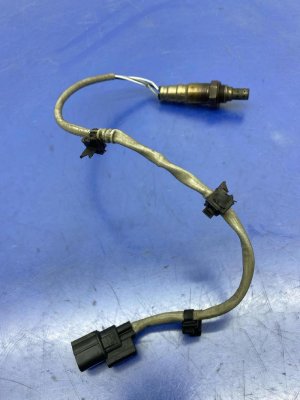
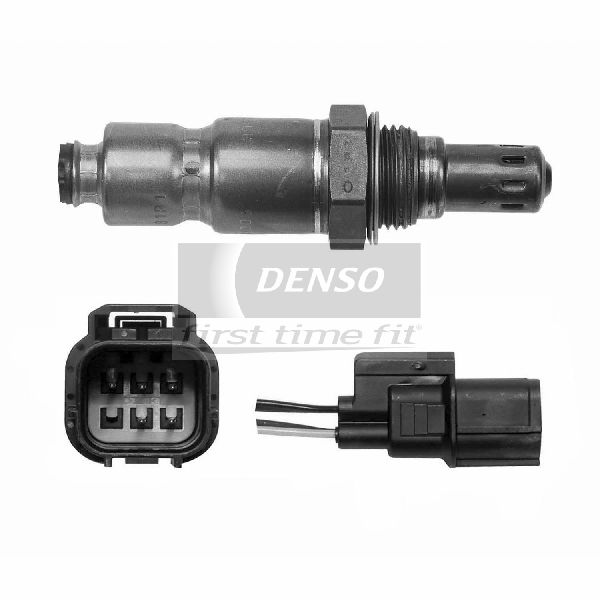
(OEM #36532-5G1-A01)— This is the upstream sensor for the rear cylinder bank (Bank 1). Its internal heater element is the most common point of failure for code P0134, as documented in Acura's own service bulletins. This part number also fits some Honda Accord V6 models.
Trusted brands: Denso (OEM supplier), NGK/NTK (OEM supplier)
OEM price range: $200-$500
Aftermarket price range: $70-$180
Related Codes That Often Appear With This One
- P0154 — This is the identical code for the Bank 2, Sensor 1 A/F sensor (front/radiator side). TSB B15-035 from Acura lists P0134 and P0154 together, indicating the PCM software issue can affect either or both upstream sensors.
- P2251 — O2 Sensor Negative Current Control Circuit/Open (Bank 1, Sensor 1). This code is more specific to an open circuit and can appear alongside P0134, further pointing to a failed sensor or wiring issue.
Technical Service Bulletins (TSBs) & Recalls
- B15-035: "MIL Comes On With DTC P0134 and/or P0154." Recommends a PCM software update as the corrective action due to the PCM misinterpreting sensor data.
- ENG REQ - BER141: A request for information from American Honda Motor (AHM) to dealers to understand the root cause of P0134/P0154 on 2014-15 MDX & RLX models.
- DLR MSG - RFI - (2015-01-16): A questionnaire for dealers regarding 2014-2015 MDX/RLX models with P0134 or P0154 stored, showing active investigation.
- DLR MSG - RFP - (2014-09-09): Another request for parts and information to investigate the cause of the malfunction.
Platform-Specific Known Issues
- Acura issued TSB B15-035 specifically for the 2014-2015 RLX and MDX, calling for a PCM software update to correct a misinterpretation of the sensor's heater system data which falsely sets P0134 or P0154.
- Prior to issuing the TSB, Acura sent multiple requests for information (RFI) to dealerships (e.g., ENG REQ - BER141) to collect data on vehicles with these codes, indicating a focused investigation into this specific platform-wide problem.
- The location of the Bank 1 sensor near the firewall makes access challenging. Mechanics and DIYers often have to climb on top of or lean deep into the engine bay to reach the sensor and its connector, performing much of the work by feel.
Mechanic-Grade Diagnostic Values
- A/F Sensor (Sensor 1) Internal Resistance (Cold Start) — expected: < 110 Ω. Failure: The PCM may log P0134 if resistance is 200 Ω or more for 40-90 seconds after startup. Another source cites a threshold of 110 Ω or more for 40 seconds.
- A/F Sensor (Sensor 1) Internal Resistance (Engine Hot) — expected: Varies, but should not be an open circuit.. Failure: The PCM may log P0134 if resistance is 270 Ω or more for at least 1 second.
- A/F Sensor (Sensor 1) Live Data Voltage (Idle) — expected: Fluctuating voltage signal, typically cycling above and below a central point (e.g. 0.45V for traditional O2, different for wideband A/F).. Failure: Signal is flat, inactive, or stuck at a low voltage (e.g., less than 0.1 V), indicating no activity.
Scan Tool Commands That Help
- Honda Diagnostic System (HDS) or equivalent: Clear DTCs / ECM Reset — Required after replacing a sensor or performing a repair to clear the fault from the PCM's memory. A simple battery disconnect may not be sufficient.
- Advanced Bi-Directional Scanner (e.g., Launch, Foxwell): A/F CONTROL Active Test — This function forces the fuel mixture rich (+25%) or lean (-12.5%) to verify if the A/F sensor responds to the change. If the sensor voltage does not change, it confirms a problem with the sensor or its circuit.
- Honda Diagnostic System (HDS): Jump SCS Line — This is a service function used by technicians to bypass certain onboard diagnostics temporarily, allowing for the isolation and testing of specific components like the A/F sensor without interference from other systems.
Wiring & Ground Locations
- G101 — Located on the right front of the engine.. This is a primary engine ground. A loose or corroded G101 can cause a variety of sensor issues, including incorrect readings or lack of signal from the A/F sensor.
- J/C C016 — Junction connector located at the right rear of the engine.. Wiring for engine sensors often passes through junction connectors. A poor connection or corrosion within this connector could interrupt the A/F sensor heater or signal circuit.
- PCM Connector B (49-pin) — One of the main connectors at the Powertrain Control Module (PCM), located in the right front of the engine compartment.. The A/F sensor heater and signal wires terminate here. Technicians disconnect this connector to test for continuity between the PCM and the sensor, confirming the integrity of the wiring harness.
Real Owner Repair Stories
- Acurazine & MDXers forum posts (2014-2015 Acura MDX/RLX (J35Y4 engine)) — Check Engine Light with code P0134 and/or P0154.
❌ Tried (didn't work) Replacing the Bank 1 Sensor 1 A/F sensor. The CEL returned shortly after., Clearing the code with a basic scanner without addressing the root cause.
✅ What actually fixed it For many owners of these specific model years, the definitive fix was taking the vehicle to an Acura dealer to have the PCM software updated as per Technical Service Bulletin B15-035. The software update corrected the PCM's logic for interpreting the A/F sensor heater signal, and the code did not return. - Acurazine forum user (Acura TL (similar J-series V6)) — Persistent P0134 code.
❌ Tried (didn't work) Initially assuming it was a wiring or PCM issue.
✅ What actually fixed it The owner swapped the upstream A/F sensors between Bank 1 (rear) and Bank 2 (front). After clearing the codes, a P0154 (Bank 2 Sensor 1) appeared. This confirmed the sensor originally in Bank 1 was faulty. Replacing the bad sensor with a new OEM part resolved the issue permanently.
"I Checked Everything" — The Actual Cause
- For this electronic fault, the equivalent scenario is 'sensor tests good, wiring tests good, but the code returns.' For the 2014-2015 Acura RLX, the most common reason for this is a software issue within the Powertrain Control Module (PCM). Acura TSB B15-035 was issued because the PCM's software could misinterpret valid signals from the A/F sensor heater, falsely flagging a P0134 or P0154 code. The actual fix is not a physical part but a PCM software update performed by a dealer.
OEM Part Supersession History
36532-5G1-A01→No official supersession found.
Heads up: While this is the correct OEM part number, care must be taken when buying aftermarket alternatives. The OEM supplier is Denso, but multiple Denso parts (e.g., 234-5060, 234-5056, 234-4781) are listed for similar Honda/Acura V6 applications. Using the wrong one, even if it physically fits, can lead to persistent codes or performance issues. It is critical to cross-reference the specific Denso part number to the OEM number for the 2014-2015 RLX.
Model Year Variations Within This Range
- 2014-2015: These specific model years are subject to Acura Technical Service Bulletin B15-035. The bulletin addresses a known software fault in the PCM that can cause it to incorrectly flag a P0134 or P0154 code. The official fix is a software update, which may not be necessary for later model years that presumably shipped with the updated software.
Helpful Videos
Used OEM Parts in Stock
New Aftermarket Parts Available


The information in this article is provided for general reference and educational purposes only. Vehicle specifications, procedures, and part compatibility can vary by production date, trim level, and region. Always consult your vehicle's factory service manual and verify part numbers before purchasing or performing repairs. Safety-critical components such as airbags, seat belts, and braking systems should be installed by a qualified professional.
- Acura RLX:
- 🎬 Helpful Videos
- 🛍️ Shop This Part
- What's Unique About the 2014-2015 Acura RLX
- Diagnostic Flowchart
- Symptoms You May Notice
- Most Likely Causes
- Rare But Worth Checking
- Diagnosis Steps
- Parts You'll Likely Need
- Related Codes That Often Appear With This One
- Technical Service Bulletins (TSBs) & Recalls
- Platform-Specific Known Issues
- Mechanic-Grade Diagnostic Values
- Scan Tool Commands That Help
- Wiring & Ground Locations
- Real Owner Repair Stories
- "I Checked Everything" — The Actual Cause
- OEM Part Supersession History
- Model Year Variations Within This Range
- 🎟️ Get 5% Off