

P0133 on 2004-2006 Volvo S80 2.5T: Slow O2 Sensor Response Causes and Fixes
This code means the front oxygen sensor is responding too slowly. While the sensor itself may have failed, the root cause is often an exhaust leak before the sensor or a vacuum leak. Expect to pay $100-$200 for a quality OEM-brand sensor (Bosch) and check for leaks before replacing parts.
- P0133 means the front oxygen sensor is responding too slowly to changes in the air-fuel mixture.
- Before replacing the sensor, thoroughly inspect for exhaust leaks (soot trails) and vacuum leaks (hissing noises, cracked hoses), as these are common causes on this Volvo.
- Use a scan tool to watch the live data from the sensor; a lazy, slow-moving waveform confirms a bad sensor, but only after leaks have been ruled out.
- The PCV system is a very common source of vacuum leaks on the B5254T2 engine; use the 'glove test' for a quick diagnosis.
What's Unique About the 2004-2006 Volvo S80
On these Volvo P2 platform vehicles, while the front oxygen sensor is a common failure item due to age, it's frequently misdiagnosed as the root cause. Owners and technicians often find that small, hard-to-detect exhaust leaks at the manifold or downpipe flange, or vacuum leaks from aging hoses, are the actual culprits. These leaks introduce unmetered air, which 'fools' the sensor and slows its response time, triggering the P0133 code even with a perfectly good sensor. Some owners have noted that the ECM's parameters for this code are particularly sensitive, making the system prone to flagging a P0133 from a very minor leak. Always suspect and check for leaks before spending money on a new sensor.
Symptoms You May Notice
- Check Engine Light is on
- Reduced fuel economy
- Slightly rough idle or hesitation during acceleration
- In many cases, no noticeable performance issues other than the Check Engine Light
- Possible whistling or hissing sounds from the engine bay if a vacuum leak is the cause
- Immediately replacing the oxygen sensor without checking for exhaust or vacuum leaks. The code flags a slow response, which can be a symptom of a leak rather than a faulty sensor itself.
- Replacing the wrong oxygen sensor. P0133 is always for Bank 1, Sensor 1, which is the sensor *before* the catalytic converter.
Most Likely Causes
- Failing/Aged Front Oxygen (O2) Sensor 🔴 High Probability Oxygen sensors are wear items with a typical lifespan of 60,000-100,000 miles. On a vehicle of this age, simple failure from long-term exposure to heat and exhaust gases is very common.
How to confirm: Use a scan tool with live data capability to graph the Bank 1, Sensor 1 voltage. 🎬 Watch: How to test O2 sensor data with a scan tool. A healthy sensor at operating temperature will show a rapid, consistent sine wave fluctuating between approximately 0.1V and 0.9V multiple times per second. A slow sensor will show a lazy, sluggish wave pattern that takes a second or more to switch.
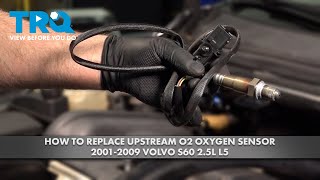
Typical fix: Replace the front (pre-catalytic converter) oxygen sensor. Using an O2 sensor socket is highly recommended. 🎬 Watch: Step-by-step guide to replacing the upstream oxygen sensor. Ensure you use a quality direct-fit replacement, as universal sensors can cause issues.
Est. part cost: $100-$220 - Exhaust Leak (Upstream of Sensor) 🟡 Medium Probability Gaskets and flex pipes in the exhaust system can degrade over time. On the B5254T2, common leak points are the gasket between the turbocharger and the downpipe, and the exhaust manifold gaskets. These leaks allow oxygen into the exhaust, slowing the sensor's perceived reaction time.
How to confirm: With the engine cold, perform a visual inspection of the exhaust manifold and downpipe for black soot trails, which indicate a leak. You can also use a smoke machine to pressurize the exhaust system and watch for smoke escaping. A shop can also use a stethoscope to listen for puffing sounds near the manifold.
Typical fix: Replace the leaking gasket or repair the cracked exhaust component.
Est. part cost: $20-$150 - Engine Vacuum Leak 🟡 Medium Probability The numerous vacuum hoses on this turbocharged engine, as well as the intake manifold gasket, can become brittle and crack with age. The PCV system is a particularly common source of leaks. A cracked plastic turbo inlet pipe is another frequent culprit.
How to confirm: Listen for a hissing sound from the engine bay at idle. A professional can perform a smoke test, which fills the intake system with smoke to reveal the exact location of any leaks. Check fuel trim values (STFT and LTFT) with a scan tool; high positive numbers at idle that decrease with RPM suggest a vacuum leak.
Typical fix: Replace the cracked vacuum hose(s) or faulty gasket. The entire PCV system often needs to be replaced as a kit.
Est. part cost: $10-$250
Rare But Worth Checking
- Damaged Sensor Wiring or Connector: The wiring harness can become brittle from heat or contaminated with oil, causing a poor connection. Visually inspect the harness from the sensor to the main connector for any signs of damage, melting, or oil saturation. On some earlier P2 models, a wiring harness adapter was required from the dealer to correct a factory wiring error, which could be a point of failure.
- Incorrect Fuel Pressure: A failing fuel pressure regulator or weak fuel pump can cause a lean or rich condition that makes the O2 sensor's job harder, potentially leading to a slow response code. This should be investigated if other causes are ruled out.
- Contaminated or Faulty MAF Sensor: A dirty or failing Mass Airflow (MAF) sensor can provide incorrect airflow readings to the ECM, skewing the fuel mixture and causing the O2 sensor to appear slow. Cleaning the MAF sensor with a dedicated cleaner can sometimes resolve this.
Diagnosis Steps
- Read the code with an OBD-II scanner to confirm P0133 is present and note any other codes, especially P0171.
- Inspect for Vacuum Leaks: With the engine running, listen for hissing noises. Carefully spray brake cleaner or a propane torch (unlit) around intake manifold gaskets, vacuum lines, and the base of injectors. If the engine RPM changes, you've found a leak. For a more definitive test, perform a smoke test.
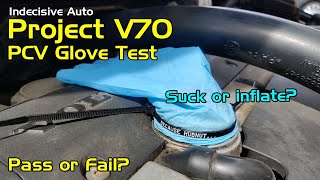
- Check PCV System: Perform the 'glove test'. With the engine idling, remove the oil filler cap and place a latex glove over the opening. 🎬 See how to perform the glove test on your Volvo. If the glove inflates, the PCV system is clogged, creating positive crankcase pressure. If it sucks in violently, the PCV diaphragm may be torn. Both conditions constitute a leak and require PCV system service.
- Inspect for Exhaust Leaks: With the engine cold, start it and feel/listen for puffs of air around the exhaust manifold and the turbo/downpipe connection. Look for black soot trails indicating a leak.
- Analyze Live Data: If no leaks are obvious, connect a scan tool that can display live data. Warm the engine to operating temperature. Graph the voltage for 'Bank 1, Sensor 1'. At a steady 2000-2500 RPM, the voltage should switch rapidly and smoothly between ~0.1V and ~0.9V. If the wave is slow, lazy, or flat, the sensor is the most likely culprit.
- Inspect Wiring: Visually inspect the oxygen sensor's wiring harness for any signs of melting, chafing, or oil contamination. Ensure the connector is secure and free of corrosion.
- Replace Sensor: If all leak checks are negative and the sensor's waveform is slow, replace the front oxygen sensor.
- If the code returns after replacing the sensor, a more thorough professional diagnosis for intermittent leaks, fuel pressure issues, or a rare ECM fault is required.
Parts You'll Likely Need
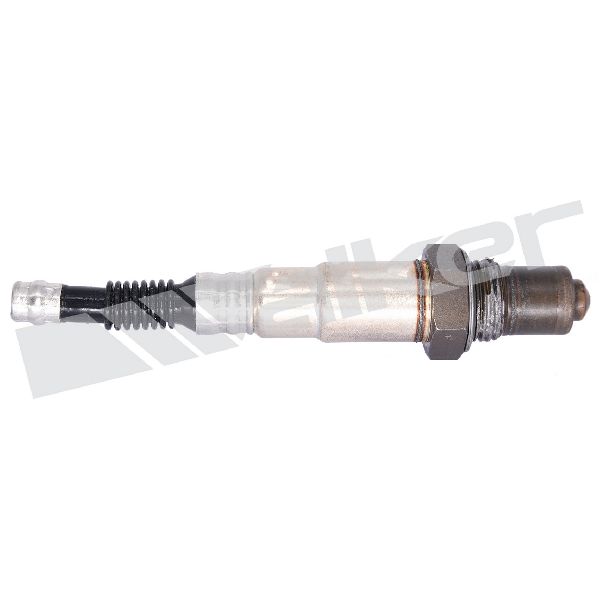
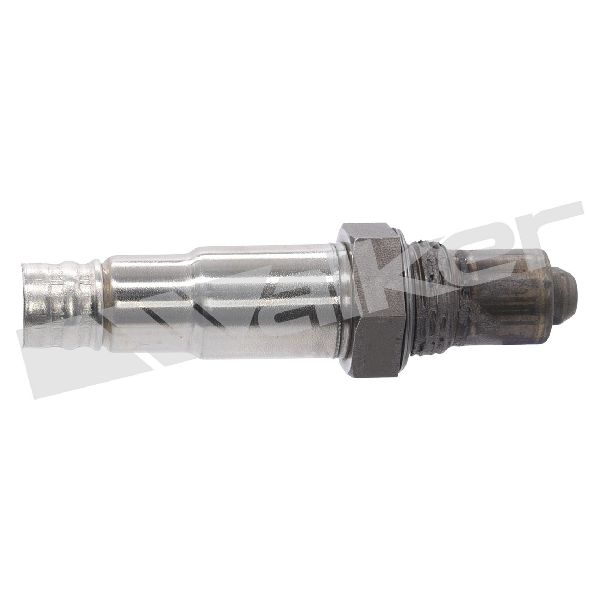
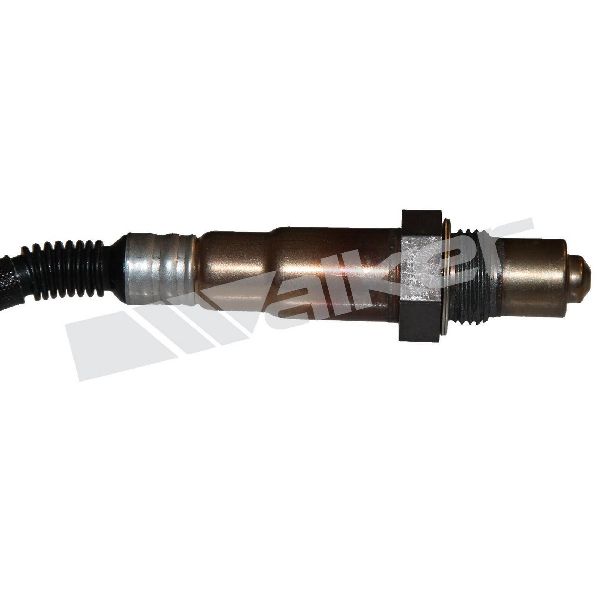
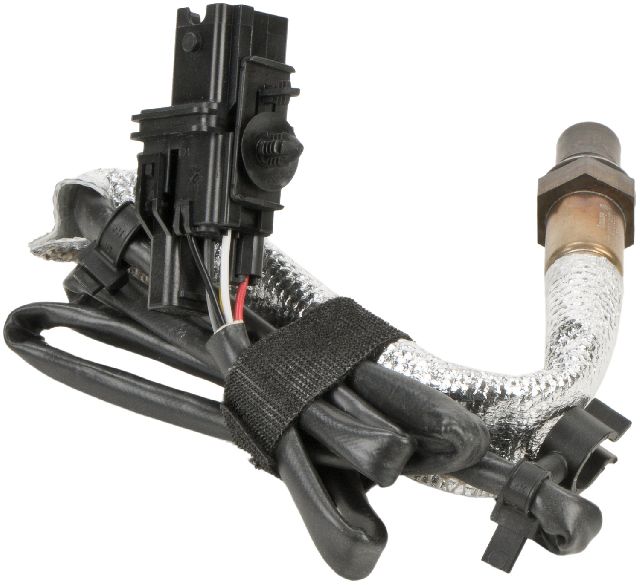
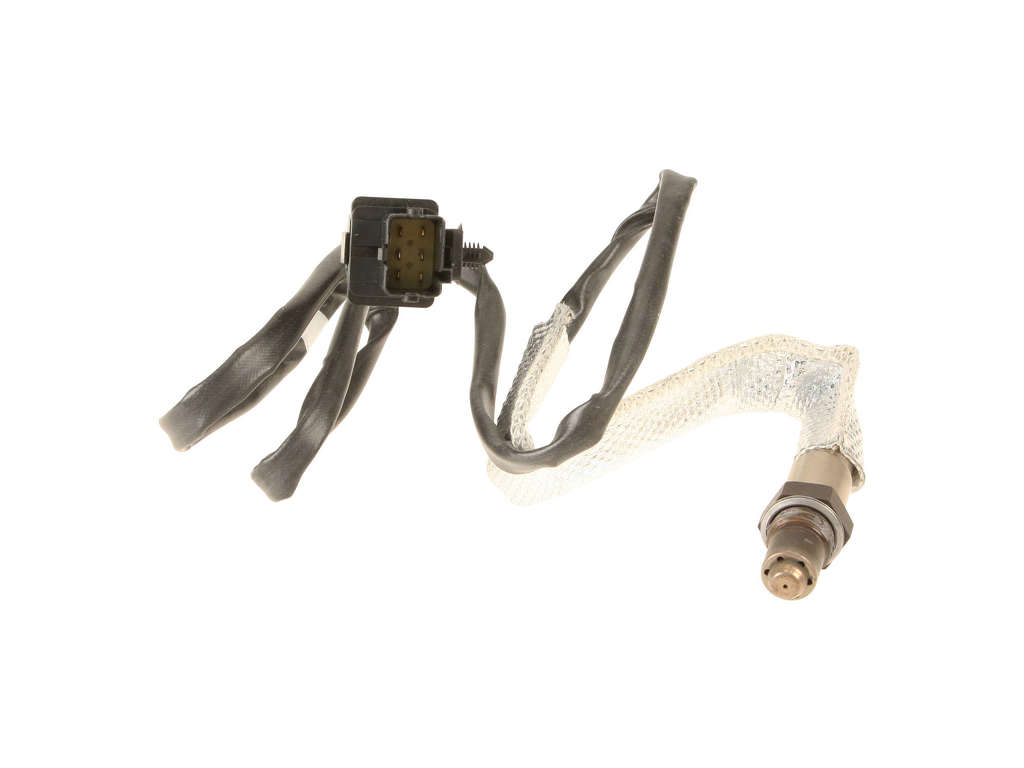
- Front Oxygen Sensor (Upstream)
(OEM #8670279)— This is the sensor being monitored by the ECM for code P0133. Due to age and heat cycles, it is the most commonly replaced part to resolve this code, after ruling out leaks.
Trusted brands: Bosch (OEM Supplier), Denso
OEM price range: $180-$250
Aftermarket price range: $100-$170 - PCV Breather System Kit
(OEM #Multiple, sold as kit)— A very common failure point on this engine that creates vacuum leaks, leading to P0133 and other codes. Often replaced as a complete kit including the oil trap box and hoses.
Trusted brands: Genuine Volvo, Meyle
OEM price range: $150-$200
Aftermarket price range: $80-$120
Related Codes That Often Appear With This One
- P0171 — System Too Lean (Bank 1). A vacuum leak or exhaust leak can cause both a lean condition (P0171) and a slow O2 sensor response (P0133) as the sensor struggles to read the skewed mixture.
- P0300-P0305 — Random or specific cylinder misfire codes. A significant vacuum leak or fuel delivery issue can lead to misfires, which can occur alongside the P0133 code.
Technical Service Bulletins (TSBs) & Recalls
- While no specific TSB exists for P0133, Volvo has issued ECM software updates in the past that can affect the sensitivity of emissions monitors. Some independent shops have suggested that a dealer may need to 'expand the ECM settings for acceptable O2 values' in rare cases where a new sensor doesn't fix the code.
Mechanic-Grade Diagnostic Values
- Front O2 Sensor Heater Resistance — expected: Approximately 3 ohms when cold, up to 13 ohms when hot.. Failure: An open circuit (infinite resistance) or a value significantly outside the expected range indicates a failed heater element.
- Front O2 Sensor Signal Voltage (at idle, fully warm) — expected: Rapidly fluctuating between ~0.1V (lean) and ~0.9V (rich).. Failure: A slow, lazy waveform that takes more than a second to switch, or a flat-line voltage, indicates a failed or slow sensor.
- Fuel Pressure (at idle) — expected: Approximately 50-52 PSI as read by a scan tool (VIDA). A mechanical gauge may read lower, around 44 PSI.. Failure: Significantly lower pressure, or pressure that doesn't respond correctly to engine load, can indicate a failing fuel pump or fuel pressure sensor.
Hidden / Shadow Codes Worth Checking
- ECM-2110: Front heated oxygen sensor (HO2S), bank 1 - Signal too slow. This is the Volvo-specific Diagnostic Trouble Code (DTC) that corresponds to the generic P0133 code. (see via Volvo's proprietary diagnostic software, VIDA (Vehicle Information and Diagnostics for Aftersales), will display this code.)
- ECM-2120: Front heated oxygen sensor (HO2S), bank 1 heating - Signal faulty. While not a direct match for P0133, a fault in the heater circuit can cause the sensor to be slow to reach operating temperature, leading to a P0133 code being set. (see via Volvo VIDA software.)
Scan Tool Commands That Help
- Volvo VIDA: Live Data Graphing - Front HO2S Signal — This is the primary method to visually confirm a slow-responding sensor. A technician will graph the sensor's voltage output while holding the engine at a steady RPM (e.g., 2500 RPM) to observe the switching frequency. A healthy sensor will produce a rapid sine wave, while a faulty one will be slow and lazy.
- Volvo VIDA: Activating Components - Fuel Pump — If a fuel pressure issue is suspected as the root cause of the P0133, VIDA can be used to command the fuel pump to run at maximum duty cycle to test its peak pressure output against specifications, helping to rule out a weak pump.
Wiring & Ground Locations
- Front O2 Sensor Connector — On the B5254T2 engine, the connector for the front O2 sensor is typically located on the left-hand side of the engine bay, near the firewall.. This connector is a common point for corrosion or damage. A poor connection here can mimic a faulty sensor, causing slow or erratic signal transmission to the ECM.
- 31/91 - Engine Ground — This is a primary ground connection located on the engine block itself.. The ECM and its sensors rely on a clean, solid ground connection. Corrosion or looseness at this point can introduce electrical noise and resistance, potentially affecting the O2 sensor's signal and triggering a P0133 code.
Real Owner Repair Stories
- Volvo Forums user (2001 Volvo S40 (P1 Platform, but similar diagnostic principles apply)) — Persistent P0133 code.
❌ Tried (didn't work) Replacing the front O2 sensor (Bosch), Replacing the rear O2 sensor (Bosch), Checking for vacuum leaks
✅ What actually fixed it The vacuum line to the fuel pressure damper/regulator had fallen off. This caused intermittent fuel pressure surges, creating a rich condition that the O2 sensor struggled to read, triggering the slow response code. - Volvospeed Forums user (Volvo (model not specified, but P80/P2 platform)) — P0133 code returned after 100 miles.
❌ Tried (didn't work) Replacing the downpipe, Replacing the front O2 sensor with a new OEM part, Having exhaust leaks welded
✅ What actually fixed it The user was advised that the problem was likely not the sensor or exhaust, but rather an issue with the wiring between the sensor and the ECM, an air intake leak, or a faulty MAF sensor. The thread highlights that replacing the sensor and fixing obvious exhaust leaks does not always solve the problem.
"I Checked Everything" — The Actual Cause
- A user on Volvo Forums reported a persistent P0133 even after replacing sensors and checking for vacuum leaks. The final fix was a disconnected vacuum line on the fuel pressure damper, which would not be found by a standard intake smoke test but caused fuel mixture issues that mimicked a slow sensor.
When the Usual Fixes Don't Work
- In several forum discussions, owners replaced the front oxygen sensor, sometimes multiple times, only to have the P0133 code return. In one documented case, the actual cause was a disconnected vacuum hose on the fuel pressure damper, which caused fuel surges and tricked the ECM into thinking the O2 sensor was slow. This demonstrates that while the sensor is a common failure point, it is critical to diagnose the entire fuel and air metering system, as the code points to a symptom (slow response) that can have multiple root causes beyond the sensor itself.
OEM Part Supersession History
8631643→8670279— Part update/revision by Volvo.
Heads up: The part number 8670279 is the correct OEM number for the front O2 sensor for many P2 platform turbo models, including the specified S80. Using earlier part numbers or non-OEM equivalents is not recommended.
Model Year Variations Within This Range
- 2004-2006: The 2004 model year marked a significant mid-cycle refresh for the S80. The previous 2.9L base engine was replaced with the 2.5L B5254T2 turbo engine, which is the focus of this article. Therefore, diagnostic information for pre-2004 S80s may not apply, as they use different engines and engine management systems.
Diagnostic Flowchart
Other Known Issues on This Vehicle
Issues unrelated to this code that are worth knowing about as an owner of this generation:
- Clogged PCV/Crankcase Ventilation System 🔴 High — Very common on engines over 80,000-100,000 miles. Can cause oil leaks, poor idle, and in severe cases, damage engine seals.
- Aisin-Warner AW55-50/51SN Transmission Valve Body Failure 🔴 High — Common issue leading to harsh shifting, shift flares, or a 'Transmission Service Urgent' message, particularly as the vehicle ages. (Ref: Software updates were issued, but often the valve body requires replacement.)
- Upper Engine Mount Failure 🟠 Medium — The upper engine torque mount (and sometimes the lower one) wears out, causing excessive engine vibration at idle and during acceleration. A common replacement item.
- Cracked Turbo Inlet Pipe 🟠 Medium — The corrugated plastic pipe running from the MAF sensor to the turbo can become brittle and crack, especially on the underside, causing unmetered air leaks and lean codes like P0171.
- Front Suspension Wear 🟠 Medium — Control arm bushings, ball joints, and spring seats are common wear items that need replacement around 100,000 miles, leading to clunking noises and poor alignment.
Used vs. New Parts: Buying Guide for This Vehicle
When a used part is the smart pick: For this specific repair, using used parts is generally not recommended for the primary components. However, if a related issue like a cracked intake pipe or manifold is found, a used part from a low-mileage donor car can be a cost-effective solution.
Donor-vehicle mileage cap: roughly under 80000 miles for the part to have meaningful remaining life.
What to inspect on the donor part:
- For plastic parts like the turbo inlet pipe, check for any hairline cracks, especially near hose clamps or mounting points.
- Ensure all mounting tabs and connector clips are intact.
- Avoid parts that are brittle, discolored from excessive heat, or covered in oil residue, as this indicates a hard life.
OEM-only on this vehicle (don't cheap out):
- Front Oxygen Sensor: Volvos are notoriously sensitive to the brand and quality of O2 sensors. Using a non-OEM or universal sensor is a common cause of persistent codes. Stick with Genuine Volvo or the OEM supplier, Bosch.
- PCV System Components: While some aftermarket kits exist, the Genuine Volvo PCV kit is recommended for best fit and longevity to avoid re-introducing vacuum leaks.
Aftermarket brands forum-validated for this vehicle:
- Bosch (for Oxygen Sensor - OEM supplier)
- Denso (for Oxygen Sensor)
- Meyle (for PCV system components, considered a quality alternative)
Brands owners have reported issues with on this vehicle:
- Universal or no-name 'splice-in' oxygen sensors. The voltage signaling is too precise on these cars, and improper connections or incorrect sensor types frequently cause the code to return immediately.
Real Owner Stories
Aggregated from forums and TSBs cited above. Mileages and costs reflect what owners reported in those sources.
2006 Volvo S80 2.5L Turbo — 142000 miles
Symptoms: Poor acceleration and a fuel consumption rate of 11.8 L/100km (20 mpg). The check engine light was off, but a scan showed long-term fuel issues.
What fixed it: The context indicates this was a diagnostic case involving fuel trim analysis, though the specific final part replaced is not detailed in the snippet.
Source hint: AliExpress Product Guide
2004 Volvo S40 (Platform Mate) — ~150000 miles
Symptoms: The user replaced the O2 sensor with a new Bosch part, but the P0133 code returned.
What fixed it: The fix required looking beyond the sensor for exhaust leaks, vacuum leaks, or wiring issues; one user noted a factory wiring harness adapter was required for some models.
Source hint: VolvoForums - P0133 O2 sensor slow response even after changing the O2 sensor
Related OBD-II Codes
Frequently Asked Questions
Is there a specific Volvo TSB for the P0133 code on my S80?
Can a clogged PCV system cause a P0133 on the B5254T2 engine?
I replaced my front O2 sensor with a universal one and the code is still there. Why?
Where are the most common exhaust leak points on the S80 2.5T that trigger this code?
Could a whistling sound from my engine bay be related to P0133?
How do I know if my S80's front O2 sensor is actually 'slow'?
Helpful Videos



We Have This Part in Stock


The information in this article is provided for general reference and educational purposes only. Vehicle specifications, procedures, and part compatibility can vary by production date, trim level, and region. Always consult your vehicle's factory service manual and verify part numbers before purchasing or performing repairs. Safety-critical components such as airbags, seat belts, and braking systems should be installed by a qualified professional.
- Volvo S80:
- 🎬 Helpful Videos
- 🛍️ Shop This Part
- What's Unique About the 2004-2006 Volvo S80
- Symptoms You May Notice
- Most Likely Causes
- Rare But Worth Checking
- Diagnosis Steps
- Parts You'll Likely Need
- Related Codes That Often Appear With This One
- Technical Service Bulletins (TSBs) & Recalls
- Mechanic-Grade Diagnostic Values
- Hidden / Shadow Codes Worth Checking
- Scan Tool Commands That Help
- Wiring & Ground Locations
- Real Owner Repair Stories
- "I Checked Everything" — The Actual Cause
- When the Usual Fixes Don't Work
- OEM Part Supersession History
- Model Year Variations Within This Range
- Diagnostic Flowchart
- Other Known Issues on This Vehicle
- Used vs. New Parts: Buying Guide for This Vehicle
- Real Owner Stories
- 2006 Volvo S80 2.5L Turbo — 142000 miles
- 2004 Volvo S40 (Platform Mate) — ~150000 miles
- Related OBD-II Codes
- Frequently Asked Questions
- 🎟️ Get 5% Off