

P0133 on 2017-2020 Volkswagen Tiguan: Slow O2 Sensor Response Causes and Fixes
This code almost always means the upstream oxygen sensor (Bank 1, Sensor 1) is failing and needs to be replaced. An aftermarket sensor costs around $70-$120, while an OEM part is typically $150-$250. It's a straightforward DIY replacement for those with basic tools, but ruling out exhaust leaks first is a crucial diagnostic step.
- P0133 on a 2017-2020 Tiguan points to a slow-reacting upstream oxygen sensor (Bank 1, Sensor 1).
- The most common fix is to replace the sensor itself, which is a manageable DIY job. Bosch is the OEM supplier.
- Before replacing the sensor, perform a meticulous visual check for fine black soot trails around the exhaust manifold and turbo gaskets, as a small exhaust leak is a very common cause of this code.
- A scanner capable of graphing live data is the best tool to confirm a lazy sensor waveform.
What's Unique About the 2017-2020 Volkswagen TIGUAN

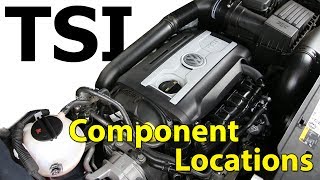
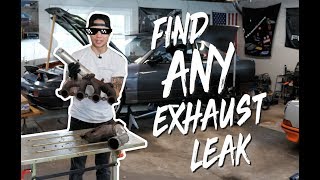
On the 2.0T EA888 Gen3 engine in the second-generation Tiguan, the upstream O2 sensor is a wideband type, mounted directly in the exhaust tract after the turbocharger. Access is reasonable from the top of the engine bay, but the sensor can be very tight after thousands of heat cycles. While the primary cause is usually a worn-out sensor, it's critical to first rule out small exhaust leaks at the manifold or turbo-to-downpipe flange, 🎬 See how to quickly find hidden exhaust leaks. as these can introduce unmetered air and mimic a slow sensor response. VW also issued several Technical Service Bulletins (TSBs) for 2019-2020 models that list P0133 among various other customer complaints, suggesting it's a frequently observed code on this platform.
Diagnostic Flowchart
Tap your situation to follow the diagnostic path that matches what you're seeing on this vehicle.
Generation note: The 2017-2020 model years cover the launch of the second-generation Tiguan (2018-present). In 2017 and 2018, VW also sold the first-generation model as the 'Tiguan Limited'. This guide specifically applies to the second-generation Tiguan with the 2.0T EA888 Gen3 engine.
Symptoms You May Notice
- Check Engine Light is on
- Reduced fuel economy
- Rough or uneven idle
- Hesitation or sluggishness during acceleration
- Failure to pass an emissions test
- Black smoke from the exhaust in some cases
- Replacing the downstream (Bank 1, Sensor 2) oxygen sensor. P0133 specifically refers to Sensor 1, the upstream sensor that controls the air-fuel ratio.
- Replacing the catalytic converter. While a failing converter can cause other codes (like P0420), it does not cause the O2 sensor itself to respond slowly. A slow sensor can, however, damage the converter over time.
- Immediately replacing the O2 sensor without checking for exhaust leaks. A small leak before the sensor is a very common cause and will make a new sensor produce the same P0133 code.
Most Likely Causes


- Failing Upstream Oxygen Sensor (Bank 1, Sensor 1) 🔴 High Probability O2 sensors are wear items that degrade over time from heat and contaminants like silicone or poor fuel. After 60,000-90,000 miles, their chemical responsiveness naturally slows down. The internal heating element can also fail, which is critical for fast sensor warm-up and will trigger a slow response code.
How to confirm: Use an OBD-II scanner with live data to graph the Bank 1 Sensor 1 voltage while holding RPMs steady around 2,000. A healthy sensor will show rapid, clean sine-wave switching from ~0.1V to ~0.9V multiple times per second. A slow sensor will show a lazy, rounded, or delayed waveform that takes more than a second or two to switch.
Typical fix: Replace the upstream oxygen sensor. Apply a small amount of copper-based anti-seize compound to the threads of the new sensor before installation, being careful not to get any on the sensor tip.
Est. part cost: $70-$250 - Exhaust Leak 🟡 Medium Probability Leaks can develop at the exhaust manifold-to-head gasket or the turbocharger-to-downpipe gasket. These leaks allow unmetered air to be pulled into the exhaust stream, which dilutes the exhaust gases and mathematically slows the sensor's perceived switching time.
How to confirm: Perform a visual inspection of the exhaust manifold and downpipe area when the engine is completely cold. Look for fine black soot trails or streaks, which are a definitive sign of a gas leak. A professional smoke test is the most reliable method to find very small leaks.
Typical fix: Replace the leaking gasket. This can be a labor-intensive job depending on the location of the leak.
Est. part cost: $20-$100 - Damaged Wiring or Connector ⚪ Low Probability The wiring harness for the O2 sensor is routed near hot exhaust components. Over time, the protective loom can become brittle, and wires can chafe or melt. Oil or coolant leaks can also contaminate the connector pins, causing high resistance.
How to confirm: Visually inspect the O2 sensor's wiring harness from the sensor to the main engine harness for signs of melting, chafing, or corrosion. Unplug the connector and check for bent, loose, or contaminated pins. Check for continuity and resistance with a multimeter; high resistance (>0.5 Ω) can slow the signal.
Typical fix: Repair the damaged section of the harness or clean the connector with electrical contact cleaner. In severe cases, a new connector pigtail may be needed.
Est. part cost: $10-$50 - Intake Air (Vacuum) Leak ⚪ Low Probability The PCV (Positive Crankcase Ventilation) system on the EA888 engine is a common source of vacuum leaks. A cracked PCV diaphragm or hose introduces unmetered air, causing a lean condition that can sometimes affect O2 sensor readings enough to be flagged as slow.
How to confirm: Use a smoke machine to introduce smoke into the intake system and look for leaks, paying close attention to the PCV valve and its associated hoses. Listening for a hissing sound at idle is also a common diagnostic step.
Typical fix: Replace the leaking PCV valve assembly or the cracked hose.
Est. part cost: $30-$150
Rare But Worth Checking
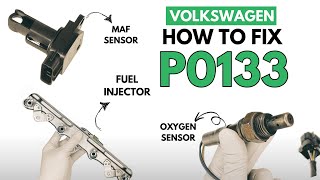
- Dirty Mass Airflow (MAF) Sensor: A contaminated MAF sensor can under-report airflow, causing the ECM to command an incorrect fuel mixture. This can sometimes manifest as a slow O2 sensor response as the system struggles to compensate. Cleaning the MAF sensor with a dedicated cleaner is a cheap and easy diagnostic step.
- Low Fuel Pressure: A weak fuel pump or clogged filter can cause a persistent lean condition that the O2 sensor may struggle to read correctly, potentially being misinterpreted as a slow response. Check fuel pressure with a mechanical gauge if other causes are ruled out.
- ECM Software Issue: In rare cases, the ECM's calibration for evaluating sensor response time may be too sensitive. This can sometimes happen after a battery disconnect, which resets learned values. Check with a VW dealer to see if any software updates are available for your vehicle's VIN.
Diagnosis Steps
- Read the fault codes with an OBD-II scanner and confirm P0133 is present. Note any other codes, as they may point to the root cause (e.g., fuel trim codes like P0171).
- Graph the live data for 'O2 Sensor Voltage (B1S1)' while holding the engine at a steady 2,000-2,500 RPM. A healthy sensor shows a rapid, smooth sine wave. A slow, lazy, or flat-lined response points to a problem.
- Perform a thorough visual inspection of the exhaust system from the cylinder head to the catalytic converter. Look for fine black soot streaks around gaskets and flex pipes, which indicate an exhaust leak.
- Inspect the oxygen sensor's electrical connector and wiring for any damage, melting, corrosion, or contamination from fluids.
- If no exhaust leaks or wiring issues are found, the most likely cause is the sensor itself. Let the exhaust cool completely before attempting removal.
- Spray a quality penetrating oil on the sensor's threads and allow it to soak for at least 30 minutes to aid removal.
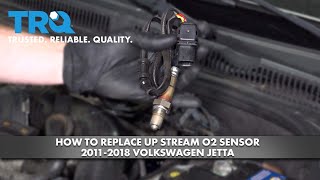
- Using a 22mm (or 7/8") slotted oxygen sensor socket and a long extension, carefully remove the sensor.
- Apply anti-seize to the new sensor's threads, install it, and torque to the manufacturer's specification.
- Clear the fault codes and perform a drive cycle to ensure the code does not return.
Parts You'll Likely Need

- Upstream Oxygen Sensor (Air/Fuel Ratio Sensor)
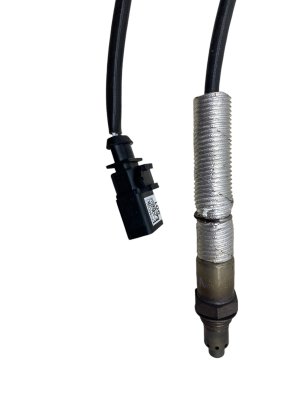
(OEM #06K906262D (or superseding part numbers))— This is Bank 1, Sensor 1, the direct subject of code P0133. It is a wear item and the most common point of failure. Bosch is the original equipment manufacturer (OEM) for VW.
Trusted brands: Bosch (OEM), NGK/NTK, Denso
OEM price range: $150-$250
Aftermarket price range: $70-$120
Technical Service Bulletins (TSBs) & Recalls
- VIN4APIN20200320: Customer states MIL-on with P0133
- VIN4APIN20200124: Customer states MIL-on with P0133
- VIN4APIN20200108: Customer states MIL-on with P0133
- VIN4APIN20191122: Customer states MIL-on with P0133
- VIN4APIN20190906: Customer states MIL-on with P0133
Platform-Specific Known Issues
- Multiple Technical Service Bulletins (TSBs) for 2019-2020 models, including #VIN4APIN20200320, #VIN4APIN20200124, and #VIN4APIN20191122, mention 'Customer states MIL-on with P0133' as a potential logged fault alongside other issues like no-start conditions or airbag lights. This indicates P0133 is a common code observed by VW technicians on this platform.
- A thread on VWForum.nl discusses a user with a P0133 on a VW Golf, where symptoms included the engine seeming to skip or misfire occasionally, both on gas and petrol. This aligns with the 'rough idle' and 'hesitation' symptoms.
Mechanic-Grade Diagnostic Values
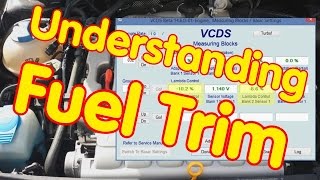
- Long-Term Fuel Trim (Idle & Partial Load) — expected: Ideally within +/- 5%. Values approaching or exceeding +/- 10% indicate a problem the ECM is trying to correct.. Failure: Consistently high positive values (>10%) suggest a vacuum leak or under-reporting MAF. Consistently high negative values (<-10%) suggest leaking injectors or other rich conditions.
- Short-Term Fuel Trim (Live Data) — expected: Should fluctuate rapidly around 0% at steady RPM.. Failure: Large, sustained positive or negative values that don't return to near zero indicate an immediate mixture problem that the ECM is fighting.
- Upstream O2 Sensor Heater Resistance — expected: Approximately 3 ohms when tested at the connector.. Failure: An open circuit (infinite resistance) or a short (zero resistance) indicates a failed heater element within the sensor, which will prevent it from warming up quickly and cause a slow response code.
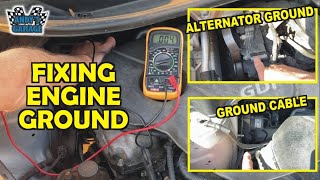
- Engine Ground Voltage Drop — expected: Less than 0.1 Volts (100mV).. Failure: Voltage reading greater than 0.1V between the engine block and the negative battery terminal indicates high resistance in the main ground strap, which can affect sensor readings.
Scan Tool Commands That Help
- VCDS (VAG-COM) or ODIS: Basic Settings - Group 060 (Throttle Body Adaptation) — After cleaning the throttle body or addressing a major vacuum leak. An incorrect throttle adaptation can affect air/fuel calculations and indirectly impact O2 sensor readings.
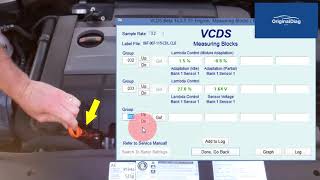
- VCDS (VAG-COM) or ODIS: [Clear DTCs] function in Engine Controller — After replacing a component, clearing codes also resets learned fuel trim values in Group 032. This allows you to watch the new values adapt from a zero state to confirm if the fix was successful.
- VCDS (VAG-COM) or ODIS: Readiness Test — To confirm that the oxygen sensor and its heater circuit have completed their self-tests and are functioning correctly after a repair, which is necessary to pass an emissions inspection.
Wiring & Ground Locations
- Engine Block Ground Strap — A primary ground strap connects the engine block/cylinder head to the vehicle's chassis, often near the passenger side motor mount or on the transmission bell housing.. A corroded or loose engine ground provides an unstable reference for all engine sensors, including the O2 sensor. This can introduce electrical noise and voltage offsets, mimicking a slow or faulty sensor signal.
- G39 - Upstream Oxygen Sensor Connector — The connector is typically clipped to a bracket on the firewall, near the battery. The harness then routes down behind the engine to the sensor on the turbocharger/downpipe.. This connector is a common point for inspection. The pins can become corroded or contaminated with oil/coolant, leading to high resistance and a slowed signal, triggering P0133.
- Ignition Coil Ground Wires — Each ignition coil has a small brown ground wire attached to a stud on the cylinder head cover.. While not directly related to the O2 sensor, poor grounds for the ignition system can lead to incomplete combustion or misfires, which can in turn affect the exhaust gas composition and potentially cause erratic O2 sensor readings.
Real Owner Repair Stories
- Reddit r/AskMechanics (2010 Chevy Tahoe (demonstrates a common cross-platform issue)) — Bogging, lag, poor gas mileage, and recurring P0133 code.
❌ Tried (didn't work) Replacing the O2 sensors multiple times. The code would be gone for a short while but always returned.
✅ What actually fixed it The user discovered a broken exhaust hanger had created a penny-sized hole in the exhaust pipe. Even after welding the hole, the code returned. The underlying issue was likely persistent exhaust leaks or wiring damage from the initial straight-piping modification that was never fully resolved, causing new sensors to fail or report incorrectly. This highlights the critical importance of fixing leaks *before* replacing the sensor.
OEM Part Supersession History
06K906262D→06K906262AJ, 06K906262CM (among others)— Standard part revisions by the manufacturer for improvements in performance, reliability, or supplier changes.
Heads up: Always verify the correct part number with a VIN at a VW dealership. While later revisions are generally backward compatible, using a non-specified part can lead to incorrect readings even if it physically fits.
Helpful Videos



![How to Fix P0133 Engine Code in 3 Minutes [2 DIY Methods / Only $8.35]](https://img.youtube.com/vi/Qk7iEApm11M/mqdefault.jpg)
Used OEM Parts in Stock
New Aftermarket Parts Available



The information in this article is provided for general reference and educational purposes only. Vehicle specifications, procedures, and part compatibility can vary by production date, trim level, and region. Always consult your vehicle's factory service manual and verify part numbers before purchasing or performing repairs. Safety-critical components such as airbags, seat belts, and braking systems should be installed by a qualified professional.
- Volkswagen TIGUAN:
- 🎬 Helpful Videos
- 🛍️ Shop This Part
- What's Unique About the 2017-2020 Volkswagen TIGUAN
- Diagnostic Flowchart
- Symptoms You May Notice
- Most Likely Causes
- Rare But Worth Checking
- Diagnosis Steps
- Parts You'll Likely Need
- Technical Service Bulletins (TSBs) & Recalls
- Platform-Specific Known Issues
- Mechanic-Grade Diagnostic Values
- Scan Tool Commands That Help
- Wiring & Ground Locations
- Real Owner Repair Stories
- OEM Part Supersession History
- 🎟️ Get 5% Off