

P0133 on 2017-2020 Volkswagen Passat: O2 Sensor Slow Response Causes and Fixes
This code means the primary oxygen sensor (Bank 1, Sensor 1) is reacting too slowly. The most common fix is replacing the upstream O2 sensor, which costs about $70-$150 for an aftermarket part or $180-$250 for an OEM part. It's a manageable DIY repair for those with basic tools. Other potential causes include exhaust leaks, wiring issues, or even an outdated ECM software.
- P0133 almost always points to the upstream oxygen sensor (Bank 1, Sensor 1) being old or contaminated.
- Before replacing the sensor, perform a quick visual inspection for obvious exhaust leaks (soot marks) or damaged wiring, as these can also cause the code.
- Using a scan tool to watch the live sensor data is the best way to confirm if the sensor is truly 'slow'.
- This is a DIY-friendly repair for many owners. The sensor is located on the exhaust near the engine, but may require a special O2 sensor socket to remove.
- Do not ignore this code. Continued driving will hurt your fuel economy and can eventually destroy your expensive catalytic converter.
What's Unique About the 2017-2020 Volkswagen PASSAT

On the 2017-2020 Passat with the 1.8T and 2.0T EA888 engines, P0133 is a relatively common code. Its frequent appearance in Volkswagen's own Technical Service Bulletins (TSBs) for this exact model range confirms it's a known issue. While the cause is often just a worn-out sensor, these TSI engines are also sensitive to exhaust and vacuum leaks which can mimic a slow sensor response. A cracked exhaust flex pipe, located just after the turbocharger, is a particularly common source of leaks on this platform that can introduce outside air and trigger this code.
Diagnostic Flowchart
Tap your situation to follow the diagnostic path that matches what you're seeing on this vehicle.
Generation note: The 2017-2020 range covers two versions of the North American Passat (NMS). The 2017-2019 models are a continuation of the generation that began in 2012 (heavily facelifted in 2016). The 2020 model is the first year of a redesigned Passat, though it shares the same underlying platform. The primary engines are the 1.8L TSI (2017, engine code CPKA/CPRA) and the 2.0L TSI (2018-2020, a Gen3 B-cycle EA888 variant). The causes and fixes for P0133 are consistent across these years and engines as they share the core EA888 architecture.
Symptoms You May Notice
- Check Engine Light is on.
- Decreased fuel efficiency.
- Rough or unstable idle.
- Engine hesitation or stumbling during acceleration.
- Failing an emissions test.
- A subtle 'rotten egg' smell from the exhaust if the air-fuel mixture is consistently rich.
- Replacing the catalytic converter when it is not faulty. A P0420 code would typically accompany a bad converter.
- Replacing the downstream (Bank 1, Sensor 2) oxygen sensor instead of the upstream (Bank 1, Sensor 1) sensor.
- Replacing the O2 sensor repeatedly without checking for underlying exhaust leaks or wiring issues.
Most Likely Causes


- Failing Upstream Oxygen Sensor (Bank 1, Sensor 1) 🔴 High Probability O2 sensors are wear-and-tear items that live in a harsh exhaust environment. Contamination from oil, coolant, or carbon buildup over time degrades their ability to respond quickly. The sensor's internal heating element can also fail, preventing it from reaching operating temperature fast enough, which causes a slow response code.
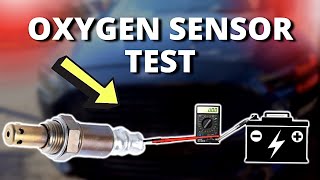
How to confirm: Use a scan tool to graph the voltage of the Bank 1 Sensor 1. A healthy sensor will show rapid fluctuations between approximately 0.1V and 0.9V. A slow sensor will have lazy, rounded-off peaks and valleys, with a response time exceeding 200 milliseconds. 🎬 Watch: How to test an oxygen sensor using live data.
Typical fix: Replace the upstream oxygen sensor. This is also called the pre-catalyst sensor or air-fuel ratio sensor.
Est. part cost: $70 - $250 - Exhaust Leak 🟡 Medium Probability The flex pipe section of the downpipe, just after the turbocharger, is a known weak point on Passats and other VWs with the EA888 engine. It endures significant vibration and heat, leading to cracks that allow unmetered oxygen into the exhaust stream, tricking the O2 sensor.
How to confirm: Visually inspect the exhaust manifold and downpipe (especially the braided flex section) for black soot marks, which indicate a leak. You can also use a smoke machine to pressurize the exhaust system and see where smoke escapes. A hissing or ticking sound from the engine bay that gets louder with acceleration is another sign.
Typical fix: Replace the leaking gasket or repair/replace the section of the exhaust with the leak. Often this means replacing the downpipe assembly if the flex pipe has failed. 🎬 See this guide on identifying symptoms of a bad flex pipe.
Est. part cost: $20 - $500 - Damaged Sensor Wiring or Connector ⚪ Low Probability The wiring harness for the O2 sensor is close to hot exhaust components and can become brittle, melted, or frayed over time. High resistance in the harness can dampen the voltage signal, making the response appear slow to the ECM.
How to confirm: Visually inspect the wiring leading to the upstream O2 sensor for any signs of melting, chafing, or corrosion at the connector pins. Use a multimeter to check for continuity and resistance in the signal and heater circuit wires.
Typical fix: Repair the damaged section of the wiring harness or replace the connector pigtail.
Est. part cost: $15 - $50 - Intake (Vacuum) Leak ⚪ Low Probability The PCV (Positive Crankcase Ventilation) valve/oil separator is a common point for vacuum leaks on TSI engines. A cracked hose or failed diaphragm can allow unmetered air to enter the engine, creating a lean condition that can sometimes be misinterpreted by the ECM as a slow sensor response.
How to confirm: Listen for a hissing sound around the intake manifold or PCV valve with the engine running. A smoke test is the most effective way to find the source of a vacuum leak.
Typical fix: Replace the leaking vacuum line, PCV assembly, or intake manifold gasket.
Est. part cost: $10 - $250
Rare But Worth Checking
- Low Fuel Pressure: If the engine isn't getting enough fuel due to a weak fuel pump or clogged filter, the air-fuel ratio will be consistently lean, which can sometimes trigger this code. This would likely be accompanied by other codes (like P0087) or more severe drivability issues.
- Failing Mass Airflow (MAF) Sensor: A dirty or failing MAF sensor can provide incorrect airflow readings to the ECM, affecting the entire fuel control strategy and potentially causing O2 sensor codes. Cleaning the MAF sensor with a dedicated cleaner is a common first step.
- ECM Software Issue: In some cases, the parameters within the Engine Control Module (ECM) for monitoring the O2 sensor response time may be too sensitive. Volkswagen has issued software updates for various engine management issues, and a dealer may need to re-flash the ECM to the latest version.
Diagnosis Steps
- Read the codes: Use an OBD-II scanner to confirm P0133 is the primary code and check for any other related codes like P0171 (lean) or P0130.
- Inspect the wiring: Visually inspect the oxygen sensor's wiring harness and connector for any signs of damage, melting, or corrosion. Ensure the connector is securely clipped.
- Check for exhaust leaks: With the engine cool, inspect the exhaust manifold and downpipe for soot trails indicating a leak. Pay close attention to the braided flex pipe section. Listen for ticking or hissing noises when the engine is running.
- Analyze live data: Use a scan tool with live data graphing capabilities. Observe the Bank 1, Sensor 1 voltage. It should switch rapidly between rich (<0.45V) and lean (>0.45V). If the graph shows slow, lazy transitions (taking more than ~200ms to switch), the sensor is likely faulty.
- Check for vacuum leaks: If the sensor appears to be switching but the code persists, perform a smoke test on the intake system to rule out vacuum leaks, paying special attention to the PCV system.
- Test Fuel Pressure: If lean codes are also present and no leaks are found, verify fuel pressure is within specification to rule out a fuel delivery issue.
- Replace the sensor: If the sensor is confirmed to be slow and there are no other contributing factors, replace the Bank 1, Sensor 1 oxygen sensor.
- Check for Software Updates: If all hardware checks out, contact a VW dealer or specialist shop to see if there are any available ECM software updates for your vehicle's VIN.
Parts You'll Likely Need

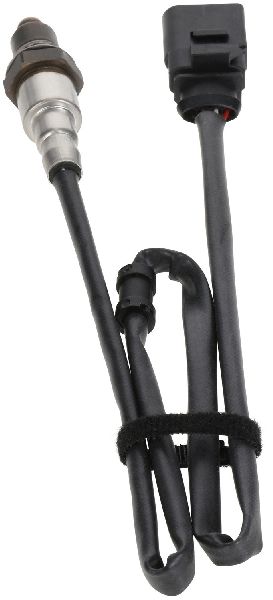
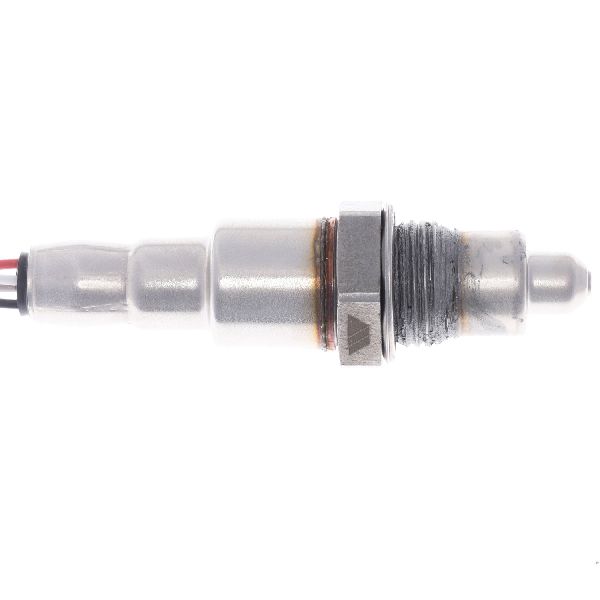
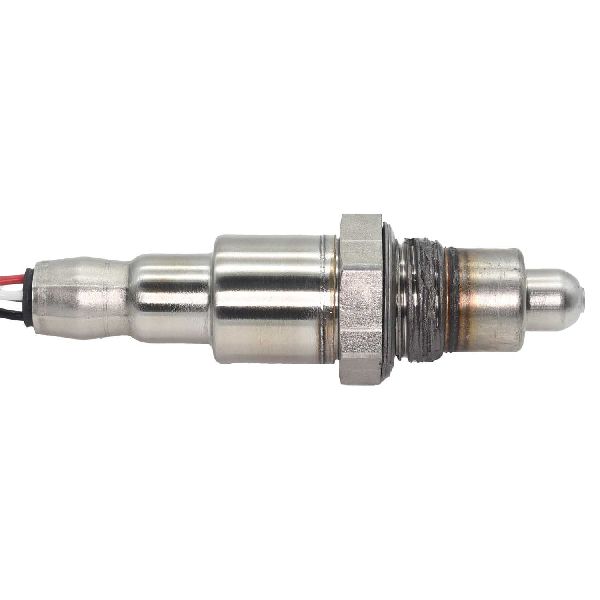
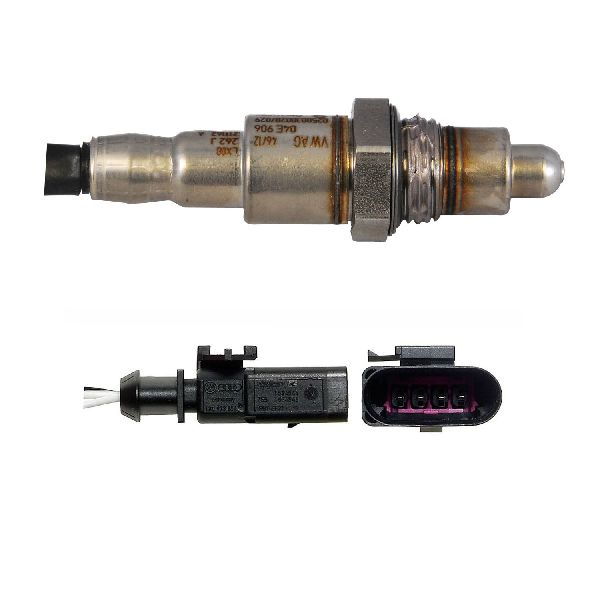
- Upstream Oxygen Sensor (Bank 1, Sensor 1)
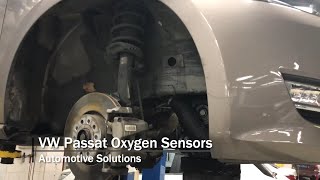
(OEM #06K906262N (may be superseded by 06K906262DA))— This is the most common failure point for code P0133. The sensor wears out over time and loses its ability to react quickly to changes in exhaust gas oxygen content. 🎬 Watch: VW Passat oxygen sensor location and replacement walkthrough.
Trusted brands: Bosch (often the OEM supplier, e.g., part #17100), NGK/NTK, Denso
OEM price range: $180-$250
Aftermarket price range: $70-$150
Related Codes That Often Appear With This One
- P0171 — System Too Lean (Bank 1). An exhaust or vacuum leak that causes P0133 can also cause a lean condition, triggering P0171.
- P0130 — O2 Sensor Circuit (Bank 1, Sensor 1). This is a more general fault code for the same sensor, and a slow response can sometimes be flagged as a general circuit malfunction.
- P0300-P0304 — Random/Multiple Misfire Detected. An incorrect air/fuel mixture caused by the slow sensor can lead to misfires in one or more cylinders.
Technical Service Bulletins (TSBs) & Recalls
- VIN4APIN20200320: Customer states MIL-on with P0133
- VIN4APIN20200124: Customer states MIL-on with P0133
- VIN4APIN20190617: Customer states MIL-on with P0133
- VIN4APIN20200108: Customer states MIL-on with P0133
- VIN4APIN20191122: Customer states MIL-on with P0133
Platform-Specific Known Issues
- Multiple Technical Service Bulletins (TSBs) issued by Volkswagen for the 2017-2020 Passat list 'Customer states MIL-on with P0133' as a known condition, often alongside other unrelated complaints. This confirms it is a common fault code on this platform. (Bulletins: VIN4APIN20200320, VIN4APIN20200124, VIN4APIN20190617, VIN4APIN20200108, VIN4APIN20191122)
- The exhaust flex pipe on the downpipe is a known failure point. A crack here will introduce oxygen pre-sensor and is a very common cause for P0133 that can be misdiagnosed as a bad sensor.
- Some owners on Ross-Tech forums have reported complex electrical issues, such as intermittent EPC lights and communication errors with modules, that occur alongside powertrain codes. While not a direct cause of P0133, it highlights the importance of checking for other stored faults.
Mechanic-Grade Diagnostic Values
- Upstream O2 Sensor (B1S1) Voltage Fluctuation — expected: Rapidly switching between ~0.1V (lean) and ~0.9V (rich) at idle.. Failure: Voltage transitions are slow and rounded, or the voltage is stuck high or low.
- Upstream O2 Sensor (B1S1) Response Time — expected: Less than 100-300 milliseconds to switch from rich to lean (or vice-versa).. Failure: A delay greater than 460 milliseconds may trigger the fault, according to VW's internal criteria.
- O2 Sensor Heater Circuit Resistance (Cold) — expected: Approximately 5 to 15 Ohms when the sensor is at ambient temperature.. Failure: A reading of zero ohms (short circuit) or infinite/OL (open circuit).
- O2 Sensor Heater Circuit Voltage Supply — expected: Approximately 12V (battery voltage) at the heater power wire with the key on.. Failure: No voltage or significantly low voltage, indicating a fuse or wiring issue.
Hidden / Shadow Codes Worth Checking
- Mode 6, Test ID $81: This is not a stored DTC, but a specific onboard monitor test for O2 sensor response time. A VW diagnostic document specifies a 'Delay check' where the fault is logged if the delay between the modeled lambda signal and the measured signal is greater than 460 milliseconds over 12 cycles. (see via A professional scan tool capable of reading Mode 6 data, such as VCDS or ODIS.)
Scan Tool Commands That Help
- VCDS (VAG-COM): Engine -> Measuring Blocks -> Graph -> Group for B1S1 Voltage — To visually graph the live voltage output of the upstream O2 sensor to check its switching speed and range. A lazy, slow-to-react graph is a primary indicator of a failing sensor.
- VCDS (VAG-COM): Engine -> Basic Settings -> Automatic Test Procedure or Group 200 — To run a guided, automated test of the oxygen sensors and catalytic converter. The procedure requires holding the brake and accelerator pedals and allows the ECU to check sensor response under controlled conditions.
- VCDS (VAG-COM): Engine -> Adaptation -> Channel 00 -> Read, Save — To reset all adaptation values, including fuel trims and learned O2 sensor values, to factory defaults. This should be done after replacing a sensor to force the ECU to relearn with the new component.
- VCDS (VAG-COM): Engine -> Basic Settings -> IDE00466 - Resetting of oxygen sensor adaptation values — For newer UDS controllers, this specific basic setting function resets the learned values for the O2 sensor. This is the correct procedure after replacing a sensor to ensure the ECU uses a fresh baseline.
Wiring & Ground Locations
- 15 - Earth point on cylinder head — On the cylinder head, typically near the ignition coils or valve cover.. This is a primary ground point for many engine sensors. A corroded or loose connection here can introduce electrical noise or resistance, affecting sensor readings.
- 652 - Earth point for engine and gearbox earth — This is the main ground strap between the engine/transmission assembly and the vehicle's chassis, often located underneath the engine near a motor mount.. A faulty main ground strap can cause a host of bizarre electrical issues, including incorrect sensor readings, as the engine's electrical system struggles to find a stable ground path.
- 645 / 646 - Earth point on bulkhead (firewall) — Located on the firewall in the engine compartment.. These grounds are used by various components in the engine bay, and ensuring they are clean and tight is a crucial step in diagnosing any electrical fault.
- T6ac - 6-pin connector — The electrical connector for the upstream oxygen sensor (lambda probe) itself.. This is the primary point for testing wiring. Checking for voltage, ground, and signal integrity at this connector is essential before condemning the sensor or ECU.
Real Owner Repair Stories
- Reddit user in r/AskAMechanic (2013 VW Passat 2.5L) — Check engine light with code P2097 (Post Catalyst Fuel Trim System Too Rich Bank 1). OBD2 reader showed abnormally high voltage (up to 2.6V) from the downstream O2 sensor.
❌ Tried (didn't work) Replacing the downstream (post-cat) oxygen sensor two times., Verifying wiring positions against the official diagram.
✅ What actually fixed it Replacing the upstream (pre-cat) oxygen sensor. The faulty upstream sensor was providing incorrect readings, causing the engine to run excessively rich. This rich condition was correctly detected by the downstream sensor, which set the P2097 code. The root cause was the upstream sensor, not the downstream one that was flagging the fault.
When the Usual Fixes Don't Work
- While P0133 directly names the upstream sensor (Bank 1, Sensor 1), it's critical to understand it's part of a system. There are documented cases where a fault with one sensor can cause a code for another. For example, a 2013 Passat owner repeatedly replaced the downstream O2 sensor for a rich code (P2097) with no success. The actual fix was replacing the upstream O2 sensor. The faulty upstream sensor was causing the rich condition, and the downstream sensor was simply doing its job by reporting it. This highlights the importance of analyzing live data from both sensors before replacing parts, even when a code seems to point directly at one component.
OEM Part Supersession History
06K906262N→06K906262DA— Standard part revision by the manufacturer, likely for improved durability or material changes.
Heads up: While many aftermarket sensors are available, VW engine management systems can be sensitive. Using a non-OEM or non-OEM-supplier (e.g., Bosch) sensor can sometimes lead to persistent or new codes. It is highly recommended to use a quality part.
Model Year Variations Within This Range
- 2017 vs 2018-2020: The 2017 model primarily used the 1.8L TSI (CPKA) engine, while 2018-2020 models used the 2.0L TSI EA888 Gen3 B-cycle engine. Despite the displacement and cycle difference, the fundamental emissions control system, including the use of a wideband upstream O2 sensor, is very similar. The causes, diagnostic procedures, and common failures for P0133 are consistent across this entire year range.
Helpful Videos

We Have This Part in Stock



The information in this article is provided for general reference and educational purposes only. Vehicle specifications, procedures, and part compatibility can vary by production date, trim level, and region. Always consult your vehicle's factory service manual and verify part numbers before purchasing or performing repairs. Safety-critical components such as airbags, seat belts, and braking systems should be installed by a qualified professional.
- Volkswagen PASSAT:
- 🎬 Helpful Videos
- 🛍️ Shop This Part
- What's Unique About the 2017-2020 Volkswagen PASSAT
- Diagnostic Flowchart
- Symptoms You May Notice
- Most Likely Causes
- Rare But Worth Checking
- Diagnosis Steps
- Parts You'll Likely Need
- Related Codes That Often Appear With This One
- Technical Service Bulletins (TSBs) & Recalls
- Platform-Specific Known Issues
- Mechanic-Grade Diagnostic Values
- Hidden / Shadow Codes Worth Checking
- Scan Tool Commands That Help
- Wiring & Ground Locations
- Real Owner Repair Stories
- When the Usual Fixes Don't Work
- OEM Part Supersession History
- Model Year Variations Within This Range
- 🎟️ Get 5% Off