

P0133 on 2019-2020 Volkswagen GTI: Causes and Fixes for O2 Sensor Slow Response
On a 2019-2020 VW GTI, code P0133 almost always points to a failing upstream oxygen sensor (Bank 1, Sensor 1). This is the sensor located in the exhaust before the catalytic converter. Expect to pay around $70-$150 for an aftermarket sensor and $180-$250 for an OEM part. It is a common DIY repair. Before replacing, check for exhaust leaks, especially around the downpipe V-band clamp and flex pipe.
- P0133 on your GTI means the pre-catalytic converter oxygen sensor is responding too slowly.
- The most common fix is to replace the upstream O2 sensor (Bank 1, Sensor 1).
- Before replacing the sensor, always check for exhaust leaks between the engine and the sensor, as this is a common secondary cause, especially at the downpipe's flex pipe or V-band clamp.
- This is a DIY-friendly repair for those with basic tools, but an O2 sensor socket is highly recommended.
- Do not ignore this code, as it will decrease your fuel mileage and can eventually harm your catalytic converter.
What's Unique About the 2019-2020 Volkswagen GTI
The 2019-2020 GTI uses the robust EA888 Gen 3 engine. While P0133 is a standard code, on this platform it most commonly indicates an aged or contaminated upstream O2 sensor reaching the end of its service life, sometimes failing at relatively low mileage. While NHTSA technical service bulletins for this vehicle mention P0133, they often list it alongside more severe, unrelated issues like no-start conditions, suggesting it can sometimes be a secondary code flagged during a broader diagnostic check.
Diagnostic Flowchart
Tap your situation to follow the diagnostic path that matches what you're seeing on this vehicle.
Symptoms You May Notice
- Check Engine Light is on
- Reduced fuel economy
- Rough or uneven idle
- Hesitation during acceleration
- Failure to pass an emissions test
- Replacing the downstream (Bank 1, Sensor 2) oxygen sensor instead of the upstream (Bank 1, Sensor 1) one. The downstream sensor is part number 06K906262S, while the correct upstream sensor is 06K906262D.
- Replacing the catalytic converter when the issue is only a slow sensor.
- Replacing the O2 sensor when the root cause is an exhaust leak.
Most Likely Causes
- Failing Upstream Oxygen (O2) Sensor 🔴 High Probability O2 sensors are wear-and-tear items that operate in a harsh environment. Contamination from carbon, oil, or coolant over time degrades their ability to react quickly. On the EA888 engine, failure can sometimes occur prematurely.
How to confirm: Use an OBD-II scanner with live data capabilities to graph the Bank 1, Sensor 1 voltage. A healthy sensor's voltage will fluctuate rapidly between approximately 0.1V and 0.9V in under 100ms. A slow, lazy waveform that takes longer to switch confirms the sensor is failing.
Typical fix: Replace the upstream oxygen sensor (Bank 1, Sensor 1). Using an O2 sensor socket is highly recommended for removal.
Est. part cost: $70-$250 - Exhaust System Leak 🟡 Medium Probability Leaks in the exhaust manifold, V-band clamp at the turbo, or downpipe flex pipe before the O2 sensor can allow outside oxygen to enter the exhaust stream. This skews the sensor's readings, making it appear slow to respond. These leaks can sometimes be more noticeable when the engine is cold and seal up as the metal expands with heat.
How to confirm: Visually inspect the exhaust manifold and downpipe for cracks or black soot trails, which indicate a leak. Pay close attention to the flex pipe section and all clamps. A smoke machine can also be used to pressurize the exhaust system and reveal small leaks.
Typical fix: Repair the leak by replacing the faulty gasket or tightening connections. If the flex pipe is leaking, the downpipe section may need to be replaced.
Est. part cost: $20-$500+ - Damaged Wiring or Connector ⚪ Low Probability The wiring harness to the O2 sensor is exposed to high heat and road debris, which can cause wires to become brittle, frayed, or corroded over time. High resistance in the harness can dampen the signal and trigger the code.
How to confirm: Visually inspect the wiring harness and connector leading to the upstream O2 sensor for any signs of damage, melting, or corrosion. Check for a secure connection. Use a multimeter to check for continuity and resistance in the wiring.
Typical fix: Repair the damaged section of wire or replace the connector pigtail.
Est. part cost: $15-$50
Rare But Worth Checking
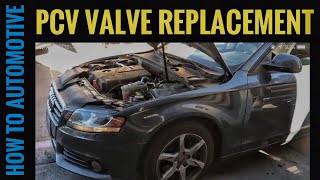
- Intake or Vacuum Leak (e.g., PCV Failure): Unmetered air entering the engine after the Mass Airflow (MAF) sensor can throw off the air-fuel mixture, which can sometimes manifest as a slow O2 sensor response code as the system tries to compensate. A failed PCV valve is a common source of this on EA888 engines. 🎬 Watch: How to replace the PCV valve on your 2.0 TSI engine.
- Low Fuel Pressure: Incorrect fuel pressure can lead to a lean or rich condition that the O2 sensor may struggle to read correctly, potentially triggering a slow response code.
- Failing Mass Airflow (MAF) Sensor: A dirty or failing MAF sensor can provide incorrect airflow data to the ECM, affecting the air-fuel mixture and indirectly causing the O2 sensor to appear slow.
- Faulty O2 Sensor Heater Circuit: The sensor has an internal heater to get it to operating temperature quickly. If the heater circuit fails, the sensor will be slow to respond, especially on a cold engine, and can trigger P0133.
Diagnosis Steps
- Read all stored fault codes with an OBD-II scanner. Address any other codes first, especially for fuel trim (P0171/P0172), MAF sensors, or heater circuits.
- Perform a thorough visual inspection of the exhaust system from the engine to the catalytic converter. Look for any signs of black soot, especially around the downpipe V-band clamp and flex pipe, which indicates a leak.
- Inspect the wiring and connector for the upstream O2 sensor (Bank 1, Sensor 1) for any damage, melting, or corrosion.
- Using a scan tool (like VCDS for VWs), view the live data for the Bank 1, Sensor 1 voltage. At operating temperature and steady RPM, the voltage should switch rapidly between ~0.1V and 0.9V. If it is slow, lazy, or flat, the sensor is likely bad.
- Check the O2 sensor heater circuit operation using the scan tool's diagnostic functions.
- If the sensor appears to be working, check for intake system vacuum leaks. A common culprit on the EA888 is the PCV valve; check for strong suction at the oil cap at idle.
- If no leaks are found, check fuel pressure to ensure it is within the manufacturer's specification (approx. 5.0 bar at idle for the low-pressure side).
- If all other possibilities are ruled out, replace the upstream oxygen sensor (OEM P/N: 06K906262D).
Parts You'll Likely Need
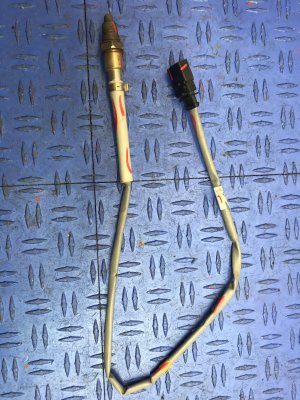
- Upstream Oxygen Sensor (Air/Fuel Ratio Sensor)
(OEM #06K906262D)— This is the primary component responsible for the measurement that triggers code P0133. It is a common wear item.
Trusted brands: Bosch (OEM Manufacturer), NTK, Denso
OEM price range: $180-$250
Aftermarket price range: $70-$150
Related Codes That Often Appear With This One
- P0171 — System Too Lean (Bank 1). An exhaust leak, PCV failure, or vacuum leak causing P0133 can also lead to a lean condition.
- P0172 — System Too Rich (Bank 1). A fuel delivery issue causing P0133 could also lead to a rich condition.
- P2187 — System Too Lean at Idle (Bank 1). Often points to a vacuum leak, such as a failed PCV valve, which can be the root cause of the P0133.
Technical Service Bulletins (TSBs) & Recalls
- VIN4APIN20200320: Customer states MIL-on with P0133.
- VIN4APIN20200124: Customer states MIL-on with P0133.
- VIN4APIN20200108: Customer states MIL-on with P0133.
- VIN4APIN20191122: Customer states MIL-on with P0133.
Platform-Specific Known Issues
- NHTSA Technical Service Bulletins (TSBs) for the 2019-2020 GTI mention P0133, but they are not diagnostic bulletins for this specific code. Instead, they appear to be internal tracking documents that list various codes reported by customers for a given period. For example, TSB #VIN4APIN20200108 lists P0133 alongside unrelated complaints like 'HPFP mounting bolts loose/broken' and 'airbag light is on', indicating P0133 may be recorded as a secondary fault during diagnosis of other issues.
Mechanic-Grade Diagnostic Values
- Upstream O2 Sensor (B1S1) Response Time — expected: Less than 100 milliseconds to switch between rich/lean. Failure: A response time significantly slower than 100ms when viewed on a scope or advanced scan tool.
- Low-Side Fuel Pressure at Idle — expected: 5.0 bar +/- 0.5 bar (approx. 72.5 psi +/- 7 psi). Failure: Pressure that is significantly outside this range can indicate a fuel delivery problem that may indirectly cause P0133.
- High-Side Fuel Pressure (Stock) — expected: Up to 200 bar (2,900 psi) under load. Failure: Inability to reach target high pressure can indicate a failing HPFP, affecting the air-fuel mixture.
Scan Tool Commands That Help
- VCDS (VAG-COM) / ODIS: Basic Settings > IDE00553 Automatic test sequence — After a repair, this function runs a full emissions system test sequence while the vehicle is stationary (requires holding brake and accelerator) to force the readiness monitors to run and confirm the fix without extensive driving.
- VCDS (VAG-COM) / ODIS: Basic Settings > Reset oxygen sensor learned value — Immediately after replacing an O2 sensor. This clears the old sensor's learned adaptation values from the ECU, preventing the new sensor from being judged against the old, faulty data.
- VCDS (VAG-COM) / ODIS: Engine > Readiness (Function 15) — To check if the oxygen sensor and other emissions systems have completed their self-tests. A 'Failed or Incomplete' status for the O2 sensor monitor after a drive cycle indicates a persistent problem.
Wiring & Ground Locations
- GX10 — Component identifier for Bank 1, Sensor 1 (Upstream O2 Sensor) in VW Group wiring diagrams.. When consulting official factory repair manuals or wiring diagrams for the EA888 engine, this identifier is used to locate the correct sensor, its connector, and associated wiring for testing.
"I Checked Everything" — The Actual Cause
- A failed PCV (Positive Crankcase Ventilation) valve is a known issue on EA888 engines that can cause a P0133 code. The torn internal diaphragm creates a significant unmetered air (vacuum) leak. This internal leak will not be found with a standard exhaust smoke test. It drastically leans out the air-fuel mixture, which can make the O2 sensor appear slow or trigger lean codes (P0171, P2187) alongside P0133. A tell-tale sign is a strong suction at the oil fill cap when the engine is running.
When the Usual Fixes Don't Work
- Multiple owner accounts emphasize that replacing the O2 sensor alone does not guarantee a fix. One owner of a Golf MK6 with the same engine family replaced both O2 sensors, yet the P0133 code immediately returned, pointing towards an underlying issue like an exhaust leak that was missed. Another owner of a 2019 Passat with a similar 2.0T engine had a mechanic replace the downstream sensor and repair the harness, but the codes returned the same day, highlighting the importance of correctly diagnosing which sensor has failed and ensuring the wiring repair is sound.
OEM Part Supersession History
06K906262S→06K906262AS, 8S0906262A— Part revision by manufacturer.
Heads up: CRITICAL: This part number is for the DOWNSTREAM (post-catalyst) sensor. It is commonly mistaken for the upstream sensor but will NOT fix a P0133 code.
Model Year Variations Within This Range
- 2019-2020: There are no significant mechanical or engine management differences between the 2019 and 2020 GTI that would affect the diagnosis or common causes of code P0133. Both use the same EA888 Gen 3 engine and control systems. Differences were limited to warranty terms and standard features.
Helpful Videos
Used OEM Parts in Stock
New Aftermarket Parts Available


The information in this article is provided for general reference and educational purposes only. Vehicle specifications, procedures, and part compatibility can vary by production date, trim level, and region. Always consult your vehicle's factory service manual and verify part numbers before purchasing or performing repairs. Safety-critical components such as airbags, seat belts, and braking systems should be installed by a qualified professional.
- Volkswagen GTI:
- 🎬 Helpful Videos
- 🛍️ Shop This Part
- What's Unique About the 2019-2020 Volkswagen GTI
- Diagnostic Flowchart
- Symptoms You May Notice
- Most Likely Causes
- Rare But Worth Checking
- Diagnosis Steps
- Parts You'll Likely Need
- Related Codes That Often Appear With This One
- Technical Service Bulletins (TSBs) & Recalls
- Platform-Specific Known Issues
- Mechanic-Grade Diagnostic Values
- Scan Tool Commands That Help
- Wiring & Ground Locations
- "I Checked Everything" — The Actual Cause
- When the Usual Fixes Don't Work
- OEM Part Supersession History
- Model Year Variations Within This Range
- 🎟️ Get 5% Off