

P0133 on 2016-2020 Volkswagen Golf: Causes for Slow O2 Sensor Response and Fixes
For a 2016-2020 VW Golf, code P0133 almost always points to a failing upstream oxygen sensor (Bank 1, Sensor 1). This sensor is a known wear item on this platform. Before replacing the sensor, which costs between $80 and $200, it is critical to rule out exhaust leaks near the turbocharger or downpipe flex pipe. Replacing the sensor is the most common fix.
- P0133 on a VW Golf means the primary, upstream oxygen sensor is responding too slowly.
- The most likely cause is that the sensor itself has failed and needs to be replaced.
- Before replacing the sensor, always check for exhaust leaks between the engine and the sensor, as a leak can cause the same code.
- This is a DIY-friendly repair for those with basic tools, an O2 sensor socket, and an OBD-II scanner.
- Ignoring this code will result in worse fuel mileage and will cause the vehicle to fail an emissions test.
What's Unique About the 2016-2020 Volkswagen GOLF

On the Mk7 Golf, this code is a straightforward and common issue, often appearing as the sensor ages. There isn't a significant platform-specific defect that causes it; rather, it's typically the result of a standard oxygen sensor reaching the end of its service life, often between 60,000 and 90,000 miles. The diagnostic process is standard, though it's important to rule out exhaust leaks between the cylinder head and the sensor, particularly at the V-band clamp at the turbo and the downpipe's flex pipe, which can mimic a slow sensor by introducing outside air.
Diagnostic Flowchart
Tap your situation to follow the diagnostic path that matches what you're seeing on this vehicle.
Symptoms You May Notice
- Check Engine Light (MIL) is on.
- Decreased fuel economy.
- Rough or uneven idle.
- Hesitation during acceleration.
- Potential failure of an emissions test.
- Black smoke from the exhaust under certain conditions.
- Replacing the downstream O2 sensor (Sensor 2) instead of the upstream one (Sensor 1).
- Replacing the catalytic converter when the issue is simply a slow sensor or an exhaust leak.
- Replacing the O2 sensor without first checking for exhaust leaks that are the true root cause. A Reddit user with a Mk6 Golf reported replacing both O2 sensors, but the code remained, highlighting the need for proper diagnosis.
Most Likely Causes


- Failing Upstream Oxygen Sensor (Bank 1, Sensor 1) 🔴 High Probability Oxygen sensors are wear-and-tear items that degrade over time due to intense heat and contaminants in the exhaust stream. This is the most frequent cause of P0133 on the Mk7 platform.
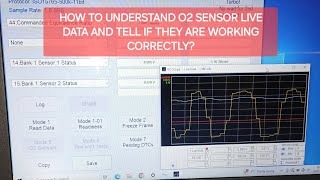
How to confirm: Use an OBD-II scanner with live data capabilities (like VCDS by Ross-Tech) to graph the sensor's voltage. A healthy sensor will show rapid switching between approximately 0.1V and 0.9V multiple times per second. A slow, lazy waveform that takes longer than 100ms to switch confirms the sensor is failing.
Typical fix: Replace the Bank 1, Sensor 1 oxygen sensor. On these engines, it is located on the top of the downpipe, just after the turbocharger. 🎬 See this walkthrough for replacing the upstream O2 sensor.
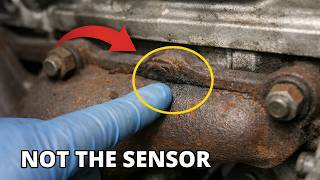
Est. part cost: $80-$200 - Exhaust Leak 🟡 Medium Probability Gaskets and flex pipes can develop leaks over time. On the Mk7, common leak points are the V-band clamp connecting the downpipe to the turbocharger and the braided flex pipe section of the downpipe. A leak here allows fresh air into the exhaust stream, skewing the sensor's readings and making it appear slow to respond.
How to confirm: Visually inspect the exhaust manifold and downpipe for cracks or black soot marks indicating a leak. A smoke test is the most effective way to find small, hard-to-see leaks. Sometimes a leak is only audible when the engine is cold before the metal has expanded with heat.
Typical fix: Replace the leaking gasket, tighten the V-band clamp, or replace the downpipe if the flex section has failed.
Est. part cost: $20-$500 - Damaged Wiring or Connector ⚪ Low Probability The wiring harness to the O2 sensor is exposed to high heat and potential road debris, which can cause wires to become brittle, melt, or break over time. High resistance in the circuit from corrosion or loose pins can also dampen the signal.
How to confirm: Visually inspect the wiring harness and connector leading to the upstream O2 sensor. Look for any signs of melting, chafing, corrosion on the pins, or loose connections. Check for resistance in the wiring with a multimeter.
Typical fix: Repair the damaged section of wire or replace the connector pigtail.
Est. part cost: $15-$50
Rare But Worth Checking
- Engine Vacuum Leak: A significant vacuum leak (e.g., from a PCV hose or intake manifold gasket) can lean out the air-fuel mixture to the point that it affects O2 sensor readings. This would typically be accompanied by other codes, like P0171 (System Too Lean).
- Contaminated Sensor: The sensor element can be contaminated by silicone from certain sealants, or by oil/coolant entering the exhaust from an internal engine leak. This contamination fouls the sensor and slows its response.
- Failing Powertrain Control Module (PCM): This is extremely rare. The PCM itself could have a faulty driver circuit or a software glitch causing it to misinterpret a normal sensor signal. This should only be considered after all other possibilities have been exhaustively ruled out.
Diagnosis Steps
- Connect an OBD-II scanner (VCDS is recommended for VW) to confirm P0133 is the active code and check for any other stored codes.
- Inspect the wiring and connector for the upstream oxygen sensor (Bank 1, Sensor 1) for any visible damage, melting, or corrosion. The connector is typically on the firewall.
- Thoroughly inspect the exhaust system from the cylinder head to the upstream O2 sensor for any signs of leaks, such as soot trails or cracks. Pay close attention to the turbo V-band clamp and the downpipe flex pipe.
- Use a scan tool to view live data for the Bank 1, Sensor 1 voltage. At operating temperature and a steady 2500 RPM, the voltage should fluctuate rapidly between ~0.1V and ~0.9V. If the waveform is slow and lazy, the sensor is likely bad.
- If the sensor's waveform looks normal, perform an exhaust smoke test to definitively rule out any hard-to-see leaks.
- If no leaks are found and the wiring is intact, but the sensor's response is confirmed to be slow via live data, replace the Bank 1, Sensor 1 oxygen sensor.
- After replacement, clear the codes. Some VW-specific tools like VCDS have a function to reset oxygen sensor learned values, which can be beneficial. Perform a drive cycle to ensure the fix is complete.
Parts You'll Likely Need

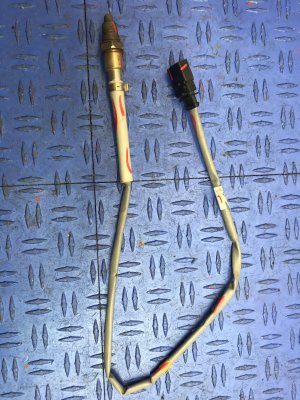
- Upstream Oxygen Sensor (Bank 1, Sensor 1)
(OEM #06K906262S (for 1.8T EA888 engine, may be superseded by 06K906262CS). The 1.4T EA211 engine uses a different part number.)— This sensor is the most common point of failure for a P0133 code, as it is a wear item that degrades over its service life.
Trusted brands: Bosch, NTK, Denso
OEM price range: $150-$250
Aftermarket price range: $80-$180
Related Codes That Often Appear With This One
- P0171 — If an exhaust or vacuum leak is the root cause of the slow sensor response, it often also triggers a P0171 (System Too Lean) code because unmetered air is entering the system.
- P0131/P0132 — These codes for O2 sensor circuit low or high voltage can sometimes accompany P0133 if there are wiring issues or the sensor is failing electrically.
Technical Service Bulletins (TSBs) & Recalls
- VIN4APIN20200320: Confirms customer states MIL-on with P0133 on 2020 models.
- VIN4APIN20200124: Confirms customer states MIL-on with P0133 on 2019 models.
- VIN4APIN20200108: Confirms customer states MIL-on with P0133 on 2019 models.
- VIN4APIN20191122: Confirms customer states MIL-on with P0133 on 2019 models.
- VIN4APIN20190628: Confirms customer states MIL-on with P0133 on 2019 models.
- Note: The cited TSBs are internal dealer information logs acknowledging customer complaints of P0133. They do not contain specific diagnostic or repair procedures but confirm the code's prevalence on these model years.
Platform-Specific Known Issues
- Early Failure on Golf R: A user on Reddit with a 2019 Golf R reported a P0133 code at only 33,000 miles, which caused occasional rough idling. The community confirmed that these sensors are known to fail from time to time, even at lower mileage.
- Exhaust Leak Mimicking Sensor Failure: Forum discussions on GOLFMK7.com frequently mention the importance of checking for exhaust leaks before replacing the sensor. A common spot for leaks is the V-band clamp at the turbo or the flexible joint on the downpipe, which can produce a noise when the engine is cold and then seal up as the metal expands. 🎬 Watch: Differentiating between an exhaust leak and a bad sensor.
Mechanic-Grade Diagnostic Values
- Upstream O2 Sensor (Bank 1, Sensor 1) Voltage — expected: Rapidly fluctuating between ~0.1V and ~0.9V at operating temperature.. Failure: Slow, lazy waveform taking more than 100ms to switch, or a steady voltage.
- O2 Sensor Heater Circuit Resistance — expected: Typically between 1-4 Ω. Should not be infinite (open circuit).. Failure: Infinite resistance (open circuit) or a reading far outside the typical range.
Scan Tool Commands That Help
- VCDS (VAG-COM): [Engine - 01] -> [Basic Settings - 04] -> Group 'Resetting of oxygen sensor learned values' — After replacing the oxygen sensor to clear old adaptation data from the ECU and force it to relearn with the new sensor. This can prevent the code from returning if the ECU was compensating for the old, failing sensor.
- VCDS (VAG-COM): [Engine - 01] -> [Adaptation - 10] -> Channel 00 — To reset all adaptation values to factory settings. A user can select channel 00, read, and then save a value of 0 to reset. This is a more drastic step than just resetting O2 sensor values.
Wiring & Ground Locations
- Earth Point 7 (317) — In the engine compartment wiring harness.. A poor ground connection at this point can introduce electrical noise or resistance into sensor circuits, including the oxygen sensor, potentially causing slow or erratic readings that trigger P0133.
Real Owner Repair Stories
- SEATCupra.net user 'Bigboost' (2001 Golf 1.8T (AUM engine) - Note: Older Mk4 but demonstrates a common diagnostic trap.) — Recurring P0133 code.
❌ Tried (didn't work) Replacing the front oxygen sensor multiple times.
✅ What actually fixed it The user was stuck in a loop of replacing the sensor without success, highlighting that when a new sensor doesn't fix P0133, the root cause is likely an exhaust leak, wiring issue, or another problem like a vacuum leak or fuel delivery issue that is making the sensor *appear* slow.
OEM Part Supersession History
06K906262S→06K906262CS— Standard part revision by the manufacturer.
Model Year Variations Within This Range
- 2019-2020: The standard Golf in many markets switched from the 1.8T EA888 engine to the 1.4T EA211 engine. While the P0133 code's meaning and common causes (failing sensor, exhaust leak) are the same, the specific oxygen sensor part number is different and not interchangeable with the 1.8T's sensor.
Helpful Videos


We Have This Part in Stock

The information in this article is provided for general reference and educational purposes only. Vehicle specifications, procedures, and part compatibility can vary by production date, trim level, and region. Always consult your vehicle's factory service manual and verify part numbers before purchasing or performing repairs. Safety-critical components such as airbags, seat belts, and braking systems should be installed by a qualified professional.
- Volkswagen GOLF:
- 🎬 Helpful Videos
- 🛍️ Shop This Part
- What's Unique About the 2016-2020 Volkswagen GOLF
- Diagnostic Flowchart
- Symptoms You May Notice
- Most Likely Causes
- Rare But Worth Checking
- Diagnosis Steps
- Parts You'll Likely Need
- Related Codes That Often Appear With This One
- Technical Service Bulletins (TSBs) & Recalls
- Platform-Specific Known Issues
- Mechanic-Grade Diagnostic Values
- Scan Tool Commands That Help
- Wiring & Ground Locations
- Real Owner Repair Stories
- OEM Part Supersession History
- Model Year Variations Within This Range
- 🎟️ Get 5% Off