

P0133 on 2012-2019 Porsche 911 Turbo: O2 Sensor Slow Response Causes and Fixes
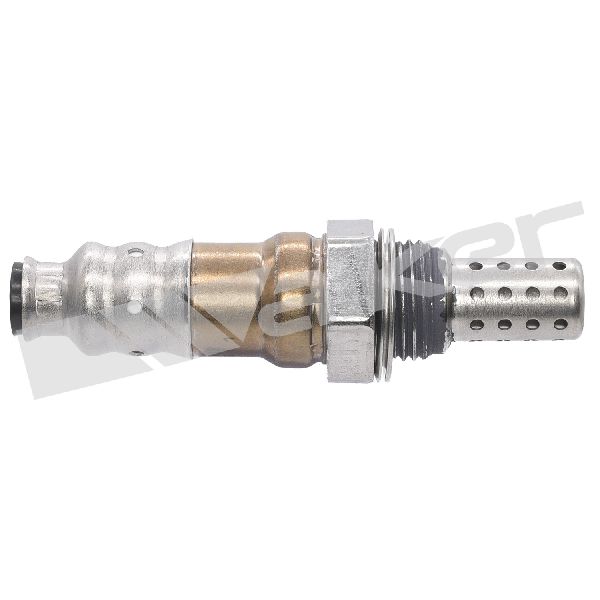
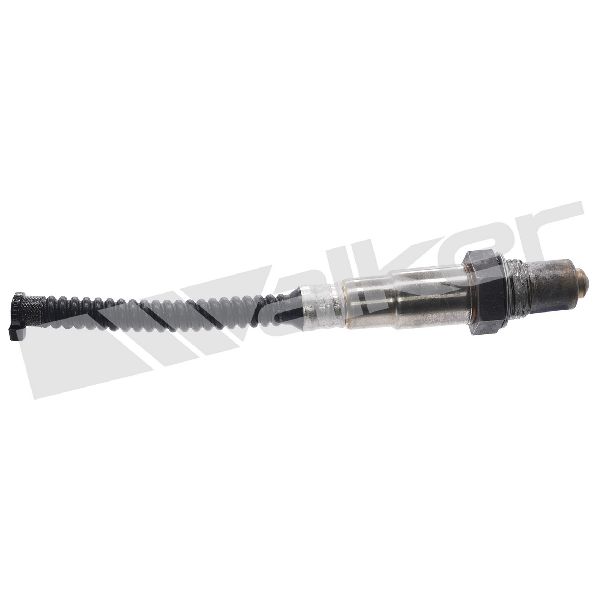
On a 2012-2019 Porsche 911 Turbo, code P0133 almost always means the upstream oxygen sensor on Bank 1 (passenger side for LHD) is failing. Due to a known Porsche issue where the computer can swap bank codes, it's wise to inspect both upstream sensors and consider replacing them as a pair. Expect to pay $100-$200 per OEM-quality sensor. The most common OEM supplier is Bosch.
- P0133 on your 911 Turbo means the passenger-side upstream O2 sensor is responding too slowly, likely due to age.
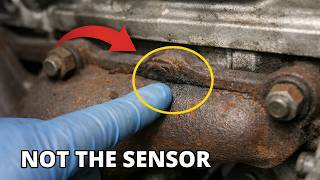
- Before buying parts, check for exhaust leaks between the engine and the sensor, as this can also trigger the code.
- CRITICAL: Porsche has a known issue where the computer may report a Bank 1 fault (P0133) when the problem is actually on Bank 2. The safest and most effective repair is to replace BOTH upstream (pre-catalyst) oxygen sensors.
- Use a quality OEM brand like Bosch for the replacement sensors to ensure proper performance and longevity.
- Ignoring this code will hurt your fuel economy and can eventually lead to a very expensive catalytic converter failure.
What's Unique About the 2012-2019 Porsche 911
The Porsche 911's high-performance, twin-turbocharged engine places significant thermal stress on all exhaust components, including oxygen sensors. The most critical issue for this platform is a documented tendency for the DME (engine computer) to misreport which bank has the faulty sensor. A Technical Service Bulletin (TSB 89/18, also referred to as Service 2470) for related 991 models confirms that a P0133 for Bank 1 might actually be caused by a fault on Bank 2 (and vice-versa), leading to misdiagnosis if only one sensor is replaced. Forum discussions on Rennlist strongly support that this is not an isolated issue and affects a wide range of 991 models, not just the GT3 mentioned in the TSB.
Generation note: This range covers the Porsche 911 991.1 (2012-2016) and 991.2 (2017-2019) generations. The MA1.7x engine is part of the broader MA1 (or 9A1) engine family. No significant differences in the cause or diagnosis of P0133 have been noted between these sub-generations for the Turbo models, though the physical replacement procedure 🎬 See this walkthrough for 991.2 oxygen sensor replacement. has minor variations.
🎬 Watch: Step-by-step oxygen sensor replacement for 991.1 models.Symptoms You May Notice
- Check Engine Light is on
- Reduced fuel economy
- Slight engine hesitation or rough idle, especially when warm
- Slower acceleration or loss of power
- In rare cases, misfires on one entire bank (e.g., cylinders 1, 2, and 3)
- Replacing only the Bank 1 sensor when the DME has swapped the fault code and the Bank 2 sensor is the actual cause.
- Replacing the downstream (Sensor 2) oxygen sensor instead of the upstream (Sensor 1).
- Replacing the catalytic converter, which is a much more expensive part. A failing converter typically sets codes like P0420 or P0430, not P0133.
Most Likely Causes
- Failing Bank 1, Sensor 1 Oxygen Sensor 🔴 High Probability Oxygen sensors are wear items that degrade over time from heat and contaminants. The high-output nature of the MA1.7x engine can accelerate this aging process. Bosch is the OEM supplier, and their planar wideband sensors are designed for these high-temp environments but still have a finite lifespan.
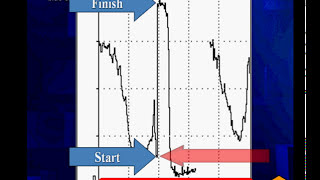
How to confirm: Use a scan tool (a PIWIS tester is ideal, but a quality OBD-II scanner will work) to graph the voltage of the Bank 1 Sensor 1 O2 sensor. A healthy sensor's voltage will switch rapidly between approximately 0.1V and 0.9V multiple times per second. A slow sensor will show lazy, rounded waves, taking more than 100-200 milliseconds to switch. Compare its waveform to Bank 2, Sensor 1 for a clear difference. A healthy sensor waveform should cross the 0.45V threshold roughly once per second at idle. 🎬 Watch: How to analyze oxygen sensor signal waveforms.
Typical fix: Replace the Bank 1, Sensor 1 (upstream) oxygen sensor. Given the known DME issue of swapping bank codes (TSB 89/18), it is highly recommended to replace both upstream sensors (Bank 1 and Bank 2) at the same time. This prevents a repeat repair if the DME misreported the bank.
Est. part cost: $100-$200 per sensor for OEM-quality Bosch parts. - Exhaust Leak 🟡 Medium Probability Extreme exhaust temperatures from the twin-turbo engine can cause gaskets and welds in the exhaust manifold or turbo connections to fail over time, allowing unmetered air to enter the exhaust stream before the sensor.
How to confirm: Perform a cold start and listen for an audible 'ticking' or 'puffing' sound from the engine bay that may diminish as the car warms up. Visually inspect the exhaust manifolds and downpipes for black soot trails, which indicate a leak. A smoke test of the exhaust system is the most definitive way to find small leaks.
Typical fix: Replace the leaking gasket or repair the cracked component. This must be done before replacing the O2 sensor, as the leak is the root cause. Common leak points are the manifold-to-head gaskets and turbocharger flange gaskets.
Est. part cost: $20-$100 for gaskets - Damaged Sensor Wiring or Connector ⚪ Low Probability The engine bay is tightly packaged, and wiring can be disturbed or damaged during other service, such as a turbocharger replacement or spark plug change. A Rennlist user reported a similar issue was caused by a burnt O2 sensor wire where a retaining clip had broken, allowing the wire to contact the hot exhaust header.
How to confirm: Visually inspect the entire wiring harness leading to the Bank 1 O2 sensor. Look for any signs of melting, chafing, or corrosion on the connector pins. Check for a secure connection at both the sensor and the main engine harness.
Typical fix: Repair the damaged section of the harness or clean/replace the connector. Use high-temperature rated wiring and sheathing for any repairs.
Est. part cost: $10-$50 for wiring repair supplies
Rare But Worth Checking
- Aftermarket Exhaust System: Changes in exhaust flow dynamics and sensor placement with some aftermarket systems, especially cat-less headers, can trigger slow response codes (P0133/P0153), sometimes accompanied by lean codes (P0171/P0174). Incorrectly placed O2 sensor spacers (on the pre-cat sensor instead of post-cat) are a known cause of these codes.
- Contaminated Fuel or Oil Consumption: Excessive oil consumption or poor quality fuel can contaminate the O2 sensor's sensing element over time, leading to a slow response. This is less common but possible on higher-mileage engines.
Diagnosis Steps
- Connect an OBD-II scanner (or preferably a Porsche PIWIS tester) and confirm P0133 is the active code. Check for any other codes, especially P0153 or lean/rich codes (P0171/P0174).
- Perform a thorough visual inspection of the exhaust system from the cylinder heads to the catalytic converters, especially around the turbochargers. Look for soot trails indicating an exhaust leak. A smoke test is highly recommended.
- Inspect the wiring and connector for the Bank 1, Sensor 1 (passenger side, pre-cat) oxygen sensor for any signs of damage, melting, or corrosion. Trace the wire as far back as possible.
- Use the live data function on your scan tool to graph the voltage signals from both upstream oxygen sensors (Bank 1 Sensor 1 and Bank 2 Sensor 1).
- Compare the two sensors' waveforms at idle and while holding RPMs around 2500. A faulty sensor will switch between high and low voltage much more slowly and with a more rounded, lazy pattern than the good sensor.
- If an exhaust leak is found, repair it first, clear the codes, and re-test. This is a critical first step before replacing parts.
- If the sensor waveform is clearly slow and no leaks are present, the sensor has failed.
- Replace the Bank 1, Sensor 1 oxygen sensor. It is strongly recommended to also replace the Bank 2, Sensor 1 sensor at the same time to avoid a comeback issue due to the DME's potential to swap fault codes, as advised by Porsche TSB 89/18.
- After replacement, clear all fault codes and perform a drive cycle to ensure the issue is resolved.
Parts You'll Likely Need
- Upstream Oxygen Sensor (Bank 1 and Bank 2)
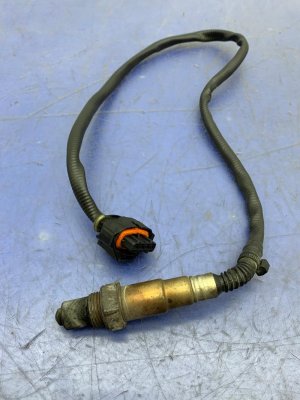
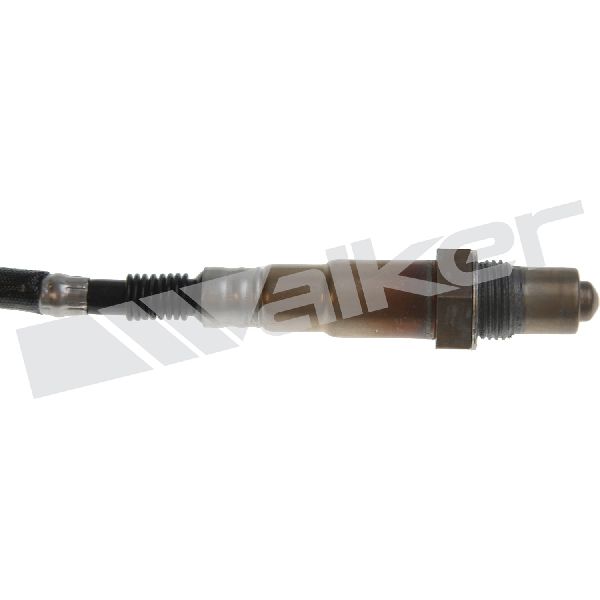
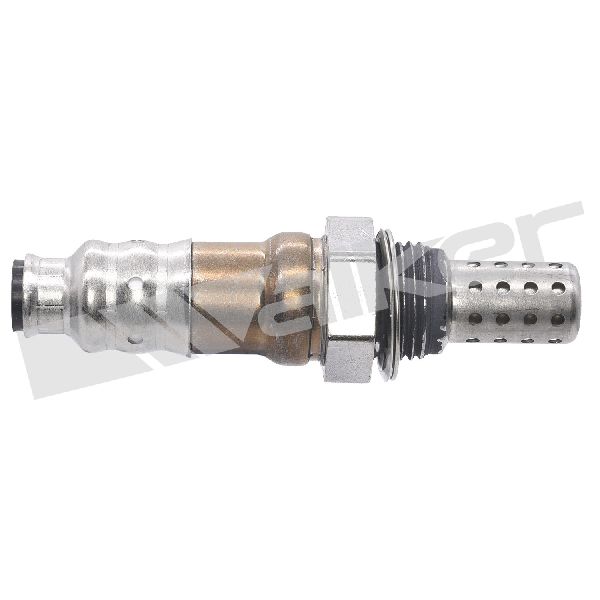
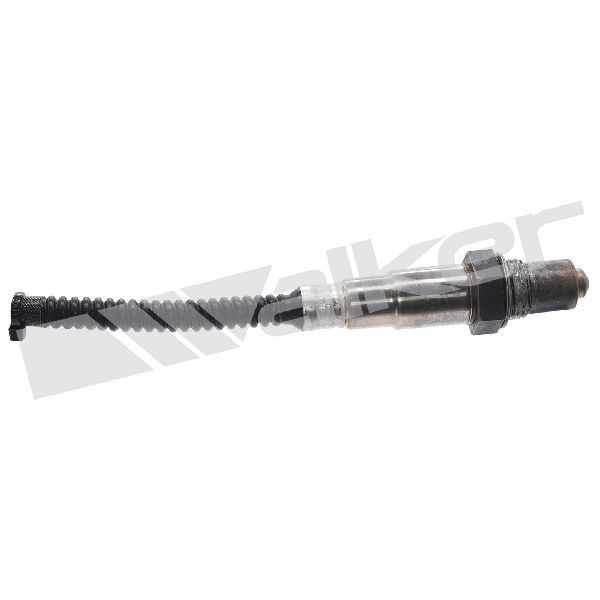
(OEM #9A1-606-168-02 (Porsche), 17133 (Bosch))— This is the most common failure item for code P0133. Due to a Porsche TSB advising that the DME can swap bank codes, replacing both upstream sensors is the most reliable repair. Bosch is the original equipment manufacturer.
Trusted brands: Bosch, Porsche (re-branded Bosch)
OEM price range: $180-$250
Aftermarket price range: $120-$180 - Exhaust Manifold Gasket — If an exhaust leak is the root cause, the corresponding gasket between the cylinder head and manifold or between the manifold and turbo will need to be replaced.
Trusted brands: Porsche, Victor Reinz
OEM price range: $30-$50
Aftermarket price range: $15-$30
Related Codes That Often Appear With This One
- P0153 — This is the identical 'slow response' code for Bank 2. Due to the TSB noting that the DME can swap bank codes, it's common for a fault on one bank to trigger the code for the other. Sometimes both sensors fail around the same time, triggering both codes.
- P0171 — This 'System Too Lean (Bank 1)' code can appear if an exhaust leak before the O2 sensor is the root cause, as the sensor detects the extra oxygen from the leak and the DME incorrectly interprets it as a lean condition.
- P0174 — This is the 'System Too Lean' code for Bank 2. It can appear alongside P0133 if there is a bank-swapping issue and an exhaust leak on Bank 2, or if both banks have leaks.
Technical Service Bulletins (TSBs) & Recalls
- TSB 89/18 (Service 2470): Notes 'Incorrect Allocation of Fault Code (P0153/P0133)' and recommends replacing both upstream oxygen sensors if either code is present on certain 991 models.
Platform-Specific Known Issues
- A Porsche Technical Service Bulletin (TSB 89/18, Service 2470) for 991 GT3 models highlights an issue where the DME can incorrectly assign a fault for an upstream O2 sensor to the opposite bank (e.g., a P0133 for a Bank 2 fault). Forum discussions suggest this behavior is not limited to the GT3, making it a critical consideration for any 991 model, including the Turbo. The official recommendation is to replace both upstream O2 sensors if either P0133 or P0153 is present.
Mechanic-Grade Diagnostic Values
- Upstream O2 Sensor Signal Period — expected: Signal should swing between ~0.1V and ~0.9V multiple times per second.. Failure: The DME flags the sensor as 'aging' if the period duration is too long, exceeding approximately 1 second.
- O2 Sensor Wiring Harness Resistance — expected: Near zero ohms.. Failure: An increase in resistance of more than 0.5 Ω can dampen the signal enough to trigger P0133.
- O2 Sensor Installation Torque — expected: 50 Nm (37 ft-lbs). Failure: N/A - This is an installation specification to prevent leaks and damage.
Hidden / Shadow Codes Worth Checking
- P0133: In Porsche-specific terms, the fault can be described as 'Signal period for oxygen sensor Ageing,' which is more descriptive than the generic 'Slow Response'. The DME determines this by monitoring the oscillating frequency of the sensor. (see via A Porsche PIWIS tester may provide this more detailed fault description.)
- Inactive Faults: A fault, like an O2 sensor code, can be stored in the DME as 'not active' and not trigger a Check Engine Light, but still prevent emissions readiness monitors from setting. A generic OBD-II scanner may not see these faults, while a PIWIS will. (see via Porsche PIWIS Tester)
Scan Tool Commands That Help
- Porsche PIWIS Tester: Live Data Graphing / Actual Values — This is the primary method to definitively diagnose a slow sensor. Graph both upstream sensors (Bank 1 and Bank 2) on the same screen to visually compare their switching speeds. A healthy sensor's graph will be a rapid, sharp wave, while the faulty one will be slow and rounded.
- Porsche PIWIS Tester: Readiness Monitors — After a repair, use this function to confirm that the O2 sensor and other emissions systems have completed their self-tests and are in a 'ready' state, which is required to pass an emissions inspection.
- Porsche PIWIS or advanced scanner: Clear Adaptations — While not always strictly required for an O2 sensor, clearing fuel trim adaptations after a replacement can force the DME to re-learn the new sensor's characteristics more quickly, potentially improving immediate post-repair performance.
Wiring & Ground Locations
- Upstream O2 Sensor Connectors — Located in the engine bay, under the taillight housings on both the driver and passenger sides. The rear bumper cover must be removed for access. The connectors are color-coded to prevent mix-ups.. These connectors are a common point for inspection. Corrosion or damage here will cause a fault. You must access these to test or replace the sensor.
- O2 Sensor Harness Routing — The wire snakes up from the exhaust manifold/turbo area along the side of the engine to the connector under the taillight. It is held in place by several clips.. A broken retaining clip can allow the harness to make contact with the hot exhaust, melting the insulation and causing a short, which can trigger P0133.
- Main Engine/Chassis Grounds — Porsche uses multiple grounding points. Key locations include a transmission-to-chassis ground strap, ground points on the engine block/intake manifold, and ground clusters in the front trunk area and near the passenger footwell power distribution box.. A poor engine ground can cause a host of intermittent electrical issues, including erratic sensor readings. While not a primary cause, cleaning the main ground straps is good practice if electrical issues are suspected.
Real Owner Repair Stories
- Rennlist user (2013 Porsche 911 C2S (991.1), 90k miles) — Slight rough idle when hot. Then, sudden misfires on all of Bank 1 (cylinders 1, 2, 3) and CEL as soon as oil temp hit 190°F. P0133 was stored initially.
❌ Tried (didn't work) Clearing the code. The misfires returned as soon as the car got hot again, even without the P0133 code reappearing immediately.
✅ What actually fixed it The user concluded the upstream O2 sensor was failing only under high heat, causing the entire bank's fuel trim to be incorrect and leading to misfires. The fix is replacing the Bank 1 upstream O2 sensor. - Rennlist user (Porsche 991 with cat-less headers) — Check Engine Light with four codes: P0133 (Bank 1 Slow Response), P0153 (Bank 2 Slow Response), P0171 (Bank 1 Too Lean), P0174 (Bank 2 Too Lean).
❌ Tried (didn't work) The user was running O2 spacers and was about to replace plugs and coils.
✅ What actually fixed it Another user correctly identified that the O2 spacers had been installed on the PRE-catalytic (upstream) sensors instead of the post-catalytic (downstream) positions. Placing spacers on the primary sensors makes them read incorrectly, causing both the 'slow response' and 'system lean' codes. The fix was to remove the spacers from the primary sensors. - Rennlist user (Porsche 991 Turbo) — P0133 code appeared after a recent turbo swap. The code would reappear immediately after clearing, even without starting the engine.
❌ Tried (didn't work) Clearing the code.
✅ What actually fixed it The user suspected a wiring issue caused during the turbo replacement. The fact the code returned without the engine running points to an electrical circuit fault (open, short, or disconnected plug) rather than a sensor performance issue. The fix was to inspect and repair the wiring harness for the Bank 1 O2 sensor that was likely damaged or not reconnected properly during the major service.
"I Checked Everything" — The Actual Cause
- In a case on a similar Porsche model, a user experienced symptoms consistent with P0133 (misfires on one bank) that was ultimately caused by a burnt O2 sensor wire. A retaining clip had broken, allowing the wire to rest on the hot exhaust header and melt. A smoke test would have come back clean, as the issue was purely electrical and not a physical leak in the exhaust system.
When the Usual Fixes Don't Work
- While a faulty sensor is the most common cause, a Rennlist user with a 991.1 reported a P0133 code accompanied by misfires on the entire bank only when the engine was fully hot. This highlights that the failure mode isn't always a simple 'slow response' at all times, but can be a thermal-dependent electrical failure within the sensor. This reinforces that replacing the sensor is often the correct fix, but the symptoms can be more severe than just poor fuel economy.
OEM Part Supersession History
9A1-606-168-01→9A1-606-168-02 / 9A1-606-168-03— Part revision and update by Porsche/Bosch.
Heads up: For the 991 Turbo (MA1.7x), the correct OEM part number is 9A1-606-168-02, which corresponds to Bosch P/N 17133. While other numbers may physically fit, using the specified part is critical for correct DME communication and response time.
Model Year Variations Within This Range
- 2017-2019 (991.2): Access to the O2 sensors is more restricted than on the 991.1. While it is technically possible to replace them from below without major disassembly, it is highly recommended to remove the rear bumper, taillights, and intercooler housing to gain proper access and leverage to remove the sensors without stripping them.
- 2012-2016 (991.1): Access requires removing the rear bumper and air box assembly. While still involved, it does not require removal of intercoolers as on the later 991.2 Turbo models.
Diagnostic Flowchart
Other Known Issues on This Vehicle
Issues unrelated to this code that are worth knowing about as an owner of this generation:
- PADM (Porsche Active Drivetrain Mounts) Failure 🟠 Medium — Common failure, especially on earlier 991 models. Can occur at low mileage (e.g., under 20k miles). The internal sensor often fails due to vibration. (Ref: No recall, but the part has been revised multiple times (up to suffix .10), indicating an acknowledged design flaw.)
- Coolant Pipe & Housing Leaks 🟠 Medium — A well-documented issue where plastic coolant pipes and thermostat housings develop slow leaks over time due to heat cycles. Often presents as a faint coolant smell or slow loss of coolant rather than a catastrophic failure. (Ref: No recall, but updated parts with gussets and improved seals are available.)
- Change-Over Valve (COV) Failure 🟡 Low — These small vacuum solenoids control various functions, including the sport exhaust flaps and intake runners. They are known to fail, causing issues like a non-functional sport exhaust or other minor faults. It is a common issue across 991/981 platforms. (Ref: Some service campaigns or recalls may have been issued for specific valve functions, but failures are common outside of those campaigns.)
- High-Pressure Fuel Pump (HPFP) Failure 🔴 High — Less common than other issues but a known failure point on DFI engines like the MA1. A Rennlist user reported a failure at 44k miles on a 991.1. Failure can cause stalling and significant driveability problems.
Used vs. New Parts: Buying Guide for This Vehicle
When a used part is the smart pick: For this repair, using a second-hand part is NEVER a smart choice. Oxygen sensors are consumable wear-and-tear items with a finite lifespan determined by heat cycles and mileage. Installing a used sensor is installing a part that is already partially worn out, and it will likely fail prematurely, leading to a repeat repair.
What to inspect on the donor part:
- Not applicable. Do not buy used oxygen sensors.
OEM-only on this vehicle (don't cheap out):
- Oxygen Sensor
Aftermarket brands forum-validated for this vehicle:
- Bosch (This is the Original Equipment Manufacturer; a Porsche-branded part is a re-boxed Bosch sensor)
Brands owners have reported issues with on this vehicle:
- Generic or unbranded 'universal' oxygen sensors. A forum user reported a generic sensor did not fix their issue, requiring them to purchase an OEM one. These often have incorrect response characteristics or heater resistance values that are not compatible with the Porsche DME's sensitive monitoring.
Real Owner Stories
Aggregated from forums and TSBs cited above. Mileages and costs reflect what owners reported in those sources.
2014 Porsche 911 Turbo (991)
Symptoms: The owner experienced a P0133 error code shortly after performing a turbocharger swap.
What fixed it: The owner planned to replace both pre-cat (upstream) oxygen sensors as a best practice to resolve the slow response error.
Source hint: Rennlist.com thread titled 'P0133 error code O2 sensor' on a 991 Turbo
2012-2019 Porsche 911 (991)
Symptoms: Misfires on one entire bank (cylinders 1, 2, and 3) occurring along with a one-time O2 sensor fault code.
What fixed it: Replacing the failing Bank 1 oxygen sensor which was causing the bank-wide misfire condition.
Source hint: Rennlist.com thread titled 'misfire on one bank cylinder 1-2-3 along with one time o2 sensor'
2012-2019 Porsche 911 (991)
Symptoms: The Check Engine Light was triggered with codes P0153, P0133, P0171, and P0174 after installing aftermarket exhaust components.
What fixed it: The issue was attributed to the installation of cat-less headers and incorrectly placed O2 spacers.
Source hint: Rennlist.com thread titled 'P0153, P0133, P0171 & P0174 CEL Code'
2012-2019 Porsche 911 (991)
Symptoms: Slow response code caused by physical damage to the sensor's electrical path.
What fixed it: Repairing a burnt O2 sensor wire that had contacted the hot exhaust header after a retaining clip broke.
Source hint: Rennlist.com forum discussion
Related OBD-II Codes
Frequently Asked Questions
Does TSB 89/18 apply to my 911 Turbo if the code is only for Bank 1?
Can I use any aftermarket O2 sensor to fix P0133 on my MA1.7x engine?
I just installed cat-less headers and now have a P0133; is the sensor actually bad?
Why would a P0133 code cause my 911 to misfire on cylinders 1, 2, and 3?
Could a ticking sound on a cold start be related to my P0133 code?
Helpful Videos
Used OEM Parts in Stock
New Aftermarket Parts Available


The information in this article is provided for general reference and educational purposes only. Vehicle specifications, procedures, and part compatibility can vary by production date, trim level, and region. Always consult your vehicle's factory service manual and verify part numbers before purchasing or performing repairs. Safety-critical components such as airbags, seat belts, and braking systems should be installed by a qualified professional.
- Porsche 911:
- 🎬 Helpful Videos
- 🛍️ Shop This Part
- What's Unique About the 2012-2019 Porsche 911
- Symptoms You May Notice
- Most Likely Causes
- Rare But Worth Checking
- Diagnosis Steps
- Parts You'll Likely Need
- Related Codes That Often Appear With This One
- Technical Service Bulletins (TSBs) & Recalls
- Platform-Specific Known Issues
- Mechanic-Grade Diagnostic Values
- Hidden / Shadow Codes Worth Checking
- Scan Tool Commands That Help
- Wiring & Ground Locations
- Real Owner Repair Stories
- "I Checked Everything" — The Actual Cause
- When the Usual Fixes Don't Work
- OEM Part Supersession History
- Model Year Variations Within This Range
- Diagnostic Flowchart
- Other Known Issues on This Vehicle
- Used vs. New Parts: Buying Guide for This Vehicle
- Real Owner Stories
- 2014 Porsche 911 Turbo (991)
- 2012-2019 Porsche 911 (991)
- 2012-2019 Porsche 911 (991)
- 2012-2019 Porsche 911 (991)
- Related OBD-II Codes
- Frequently Asked Questions
- 🎟️ Get 5% Off