

P0133 on 1998-2011 Mercury Grand Marquis 4.6L: Slow O2 Sensor Causes and Fixes
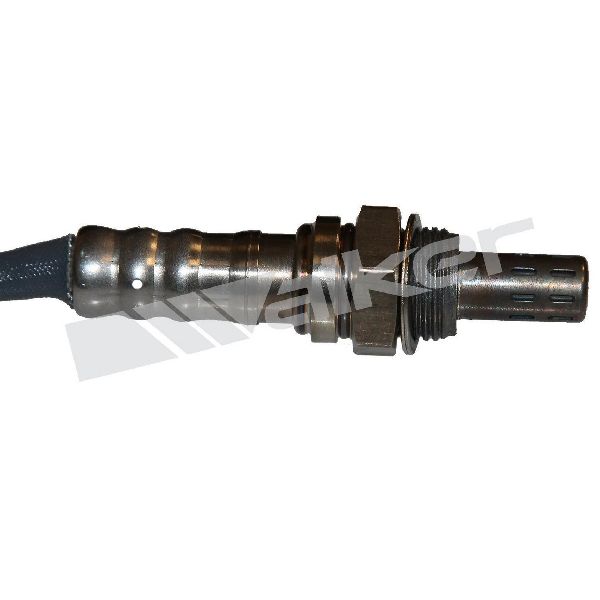
P0133 on a Grand Marquis most often means the Bank 1, Sensor 1 (upstream passenger side) oxygen sensor is old and needs replacement. This is a very common failure on high-mileage Panther Platform vehicles. Other causes include exhaust leaks before the sensor or damaged wiring. Expect to pay $40-$80 for a quality aftermarket sensor (like Bosch or Denso) and $70-$120 for an OEM Motorcraft part.
- P0133 points to a slow-reacting upstream oxygen sensor on the passenger side (Bank 1).
- The most likely fix is replacing the Bank 1, Sensor 1 O2 sensor, which is a common wear-and-tear item.
- Before replacing the sensor, always inspect for exhaust leaks between the engine and the sensor, as this is a common cause of misdiagnosis.
- Driving with this code will hurt your gas mileage and can eventually damage your catalytic converter, so it's best to address it promptly.
- This is a manageable DIY repair for most home mechanics with the right tools, specifically an O2 sensor socket and penetrating oil.
What's Unique About the 1998-2011 Mercury Grand Marquis
On the 4.6L V8 used in the Panther platform (Grand Marquis, Crown Victoria, Town Car), the P0133 code is a very common and straightforward issue, almost always pointing to the original oxygen sensor simply wearing out after years of service. While vacuum or exhaust leaks can trigger the code, the sensor itself is the primary culprit. Owners should be aware that Bank 1 is the passenger side of the V8 engine (the side with cylinder #1), and Sensor 1 is the upstream sensor located in the exhaust manifold before the catalytic converter.
Generation note: This guide covers the third (1998-2002) and fourth (2003-2011) generations of the Mercury Grand Marquis. The fundamental cause, diagnosis, and repair for code P0133 are consistent across these generations 🎬 Watch: P0133 code causes, symptoms, and fixes explained as they share the 4.6L Modular V8 and a similar exhaust layout. Part numbers for the sensor may vary slightly by year, but the function and location are identical.
Symptoms You May Notice
- Check Engine Light is on
- Reduced fuel economy
- Rough or uneven idle
- Slight hesitation or poor acceleration
- Failing an emissions test
- Black smoke from the exhaust or a smell of rotten eggs/gasoline
- Replacing the oxygen sensor without first checking for exhaust leaks. An exhaust leak can make a perfectly good sensor appear to be slow, leading to a wasted part and an unresolved problem.
- Replacing the O2 sensor when the issue is a vacuum leak. If codes P0171 and P0174 are also present, a vacuum leak is a very likely culprit and should be investigated first.
Most Likely Causes
- Failing Bank 1, Sensor 1 Oxygen Sensor 🔴 High Probability Oxygen sensors are wear items with a finite lifespan, typically 70,000-100,000 miles. After many years and miles, the sensor's chemical ability to react to oxygen changes degrades, or it becomes contaminated by fuel or oil deposits, causing it to respond slowly.
How to confirm: Use a scan tool to watch the live data from the Bank 1 Sensor 1 O2 sensor. A healthy upstream sensor's voltage should fluctuate rapidly and consistently between approximately 0.1 and 0.9 volts. A slow sensor will show lazy, infrequent changes or a flat line. Compare its graph to the Bank 2 Sensor 1 graph; they should be similar. A noticeably slower switch rate on Bank 1 confirms the issue.
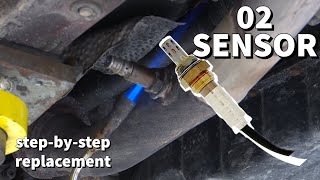
Typical fix: Replace the Bank 1, Sensor 1 (upstream, passenger side) oxygen sensor. It is highly recommended to use a special 22mm (or 7/8") O2 sensor socket with a slit for the wire. 🎬 Watch: Using a specialized socket to remove the sensor Soak the old sensor's threads with a penetrating oil like PB Blaster for several hours or overnight before attempting removal, as they are often seized in the exhaust manifold. 🎬 See this DIY O2 sensor replacement walkthrough
Est. part cost: $40-$120 - Exhaust Leak 🟡 Medium Probability The cast iron exhaust manifolds on the 4.6L V8 are known to develop cracks over time. Gaskets between the manifold and the engine block or downpipe can also fail. These leaks allow outside air to be drawn into the exhaust stream, which 'fools' the O2 sensor into thinking the engine is running lean, causing it to appear slow or biased.
How to confirm: Visually inspect the passenger side exhaust manifold and all connections for cracks or black soot trails indicating a leak. Listen for a 'ticking' or 'puffing' sound from the engine bay, especially when the engine is cold. A smoke test on the exhaust system is the most definitive way to pinpoint the source of a leak.
Typical fix: If a crack is found in the manifold, it must be replaced. If a gasket is leaking, replace the gasket. This is often a more involved repair than the sensor itself.
Est. part cost: $15-$300 - Damaged Wiring or Connectors ⚪ Low Probability The sensor wiring runs close to hot exhaust components and is exposed under the vehicle. Over time, the plastic loom and wire insulation can become brittle and break, or connectors can melt or get filled with dirt and moisture, causing a poor connection.
How to confirm: Visually inspect the wiring harness and connector for the Bank 1, Sensor 1 O2 sensor, from the sensor itself up to where it joins the main engine harness. Look for any signs of melting, chafing, corrosion on the pins, or loose connections. Perform a 'wiggle test' on the harness while watching live data to see if the signal cuts out.
Typical fix: Repair the damaged section of the wiring harness with solder and heat shrink, or clean the connector pins. In severe cases, a new connector pigtail may need to be spliced in.
Est. part cost: $5-$50
Rare But Worth Checking
- Engine Vacuum Leak: A significant vacuum leak from a hose (like the PCV elbow behind the intake manifold) or a leaking intake manifold gasket can allow unmetered air into the engine. This leans out the air-fuel mixture and can cause the O2 sensor to give slow or erratic readings. This is almost always accompanied by other lean codes like P0171 or P0174.
- Low Fuel Pressure: A weak fuel pump or clogged filter can cause low fuel pressure, leading to a lean condition that the O2 sensor struggles to read, potentially appearing as a slow response.
- Contaminated Sensor: An internal coolant leak (e.g., from a bad head gasket) or excessive oil consumption can contaminate the tip of the oxygen sensor with silicone or phosphorus, permanently damaging it and causing a slow response. This would usually present with other symptoms like smoke from the exhaust or fluid loss.
Diagnosis Steps
- Connect an OBD-II scanner and confirm that P0133 is the primary code. Note any other codes present, especially P0153, P0171, or P0174.
- Clear the codes and test drive the vehicle to see if P0133 returns immediately.
- Perform a thorough visual inspection. With the engine cold, check the passenger side exhaust manifold for cracks. Start the engine and listen for a 'ticking' sound that might indicate an exhaust leak.
- Inspect the wiring and connector for the Bank 1, Sensor 1 O2 sensor. Ensure it is securely connected and free of damage, melting, or corrosion.
- Using a scan tool with live data, graph the voltage of the Bank 1, Sensor 1 O2 sensor with the engine warm and at a steady 2000 RPM. It should switch rapidly from ~0.1V to ~0.9V. Compare its switching speed to the Bank 2, Sensor 1 sensor. If it is noticeably slower, the sensor is likely faulty.
- If lean codes (P0171/P0174) are present, check for engine vacuum leaks. A common failure point on the 4.6L is the PCV hose elbow on the back of the intake manifold. Use a smoke machine or carefully spray brake cleaner around vacuum lines and gaskets while listening for a change in engine idle.
- If no other issues are found, the most probable cause is the oxygen sensor itself.
Parts You'll Likely Need
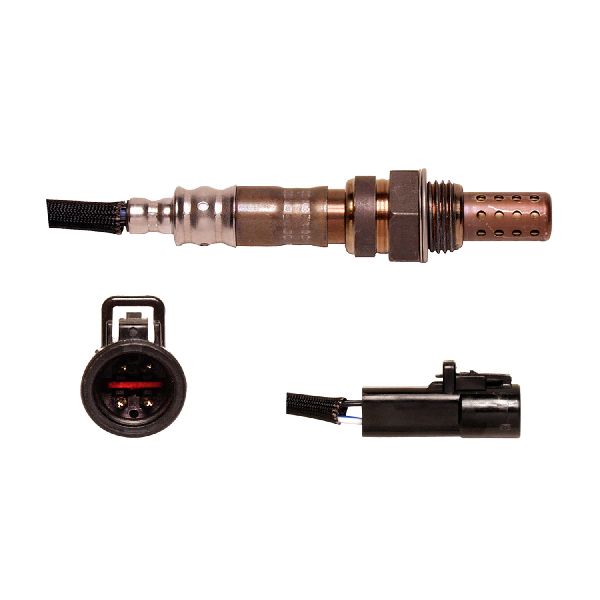
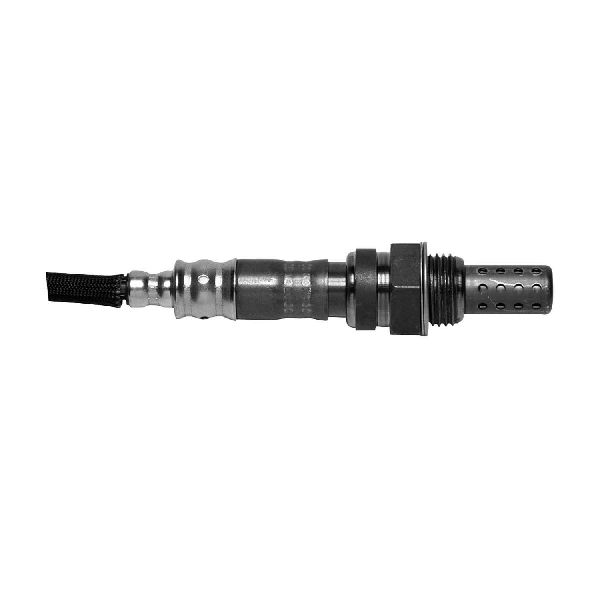
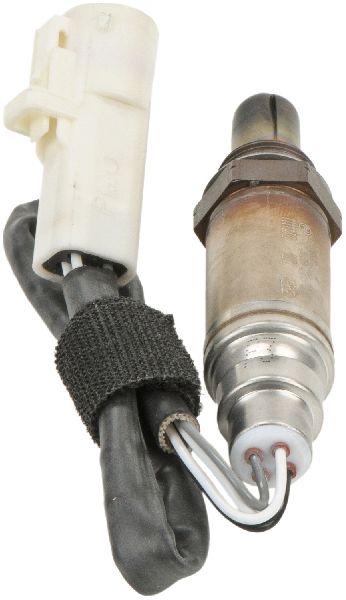
- Upstream Oxygen Sensor (Bank 1, Sensor 1)
(OEM #F8VZ9F472BA)— This is the most common failure point for code P0133. The sensor wears out over time and loses its ability to react quickly.
Trusted brands: Motorcraft, Bosch, Denso, NGK/NTK
OEM price range: $70-$120
Aftermarket price range: $40-$80
Related Codes That Often Appear With This One
- P0153 — This is the same 'slow response' code but for Bank 2 (driver's side). If both appear, it may suggest a common issue like a vacuum leak or fuel pressure problem affecting both sides of the engine, or simply that both sensors have aged out simultaneously.
- P0171 — This code means 'System Too Lean (Bank 1)'. An exhaust leak or vacuum leak can cause both a lean condition and make the O2 sensor appear slow, so these codes often appear together.
- P0174 — This is 'System Too Lean (Bank 2)'. If P0133, P0171, and P0174 all appear, it strongly points to a problem affecting the whole engine, like a major vacuum leak (e.g., PCV hose) or a dirty Mass Airflow (MAF) sensor.
Technical Service Bulletins (TSBs) & Recalls
- TSB 11-8-13: While not directly for the Grand Marquis, this TSB was issued for some 2011 Ford F-series trucks with the P0133 code, indicating a potential need for a PCM reflash on some 4.6L family engines of that era.
- Superseded TSB 97-21-13: An older TSB for 1997 model year 4.6L engines that mentions P0133 among a list of codes that could be caused by various factors, including sensor contamination.
Platform-Specific Known Issues
- Cracked Exhaust Manifolds: The factory cast iron exhaust manifolds on the 4.6L V8 are prone to cracking with age and heat cycles. A crack before the O2 sensor will introduce fresh air and can trigger a P0133 code, fooling you into replacing a good sensor.
- PCV Vacuum Leak: A very common issue on the 4.6L V8 is the deterioration of the PCV hose elbow located on the back of the intake manifold. A leak here will cause lean codes (P0171/P0174) and can contribute to O2 sensor codes like P0133.
Mechanic-Grade Diagnostic Values
- O2 Sensor Heater Circuit Resistance — expected: 3-25 Ohms (typical for many Ford/NGK/NTK sensors). Failure: An open circuit (infinite resistance) or a dead short (near zero resistance) indicates a failed heater element within the sensor. A reading outside the specific part's specification can also cause issues.
- Mode $06, Test ID $51 (O2 Sensor Switch Time) — expected: Value should be below the maximum threshold set by the manufacturer. For example, a max value of 100 (milliseconds) with a test result of 45 would be a pass.. Failure: If the test value reported by the scan tool exceeds the maximum allowable value, it confirms the PCM's diagnosis of a slow-responding sensor.
- PCM/Harness Ground Resistance — expected: Less than 0.5 Ohms, with 0.2 Ohms or less being desirable.. Failure: Resistance greater than 0.5 Ohms from a sensor's ground wire or PCM ground pin to the negative battery terminal indicates a poor ground, which can cause erratic sensor readings.
- Live Data O2 Sensor Transition Time — expected: A healthy sensor should switch from rich (~0.9V) to lean (~0.1V) in under 100 milliseconds (0.1 seconds).. Failure: A transition time that exceeds 1-2 seconds will trigger the P0133 code.
Scan Tool Commands That Help
- Ford IDS (or equivalent like FORScan): Live Data Graphing / Oscilloscope Mode — This is essential for diagnosing P0133. The technician should graph the voltage PIDs for HO2S11 (Bank 1, Sensor 1) and HO2S21 (Bank 2, Sensor 1) simultaneously. By comparing the waveform of the suspect sensor (B1S1) to the known-good sensor on the other bank (B2S1), a slow response becomes visually obvious.
- Ford IDS (or equivalent like FORScan): Freeze Frame (-FF) Data Review — When a P0133 code is set (even as pending), the PCM stores a snapshot of all sensor data at that moment. Reviewing the freeze frame data can show exactly what the sensor voltage, engine load, fuel trims, and other parameters were when the fault was detected, providing critical diagnostic context without having to replicate the fault.
Wiring & Ground Locations
- G101 — On the RH (passenger side) fender apron, near the battery.. This is a primary power ground. While not a direct sensor ground, high resistance here can cause widespread electrical issues, potentially affecting the PCM or sensor heater circuits.
- G104 — Located on the LH (driver's side) rear of the engine compartment. On some similar platforms, it serves as a critical ground point for multiple sensors, including O2 sensors.. This ground point is often a junction for multiple sensor grounds. Corrosion or looseness at G104 can directly impact the O2 sensor's signal return path to the PCM, causing erratic or biased readings that could be misinterpreted as a slow response.
- G201 — Behind the passenger side kick panel, near the PCM.. This is a primary ground for the Powertrain Control Module (PCM). A poor connection at this point can cause a host of engine management problems, including incorrect interpretation of sensor data and false trouble codes.
- O2 Sensor Connector — The Bank 1 Sensor 1 connector is located on the passenger side, where the sensor pigtail meets the main engine harness, typically near the back of the engine or along the transmission bell housing.. This connector is a common failure point due to its proximity to heat and exposure to the elements. The pins can corrode or the plastic can become brittle and break, leading to a poor signal connection that mimics a failing sensor.
Real Owner Repair Stories
- YouTube channel 'MAIC Salazar Diagnostics' (2006 Ford Mustang GT 4.6L (Similar PCM logic to Grand Marquis)) — Recurring P0133 (B1S1 Slow Response) and P0155 (B2S1 Heater Circuit) codes.
❌ Tried (didn't work) Replaced O2 sensors, Checked wiring harness for faults
✅ What actually fixed it The Powertrain Control Module (PCM) was faulty. The internal driver circuits for the O2 sensor heaters had failed. Repairing the PCM by replacing the faulty internal components resolved the codes.
OEM Part Supersession History
XL3Z-9F472-AA→DY-835— Standard part number consolidation by Motorcraft.
Heads up: While DY-835 is a direct replacement for XL3Z-9F472-AA, it's crucial to verify fitment by VIN. There can be minor differences in cable length or connector keying across the long production run of the Panther platform.F8VZ-9F472-BA→DY-1085 (example, verify by VIN)— Part number updates and potential design revisions over the model years.
Heads up: The Pass 2 data cites F8VZ9F472BA, which is a valid number for earlier models. Later models may use a different part. Always use a VIN-based catalog for the correct sensor, as heater resistance and response characteristics can vary between part numbers, even if they physically fit.
Model Year Variations Within This Range
- 2003-2011: The 2003 model year marked a significant update for the Grand Marquis, including a new frame, redesigned front suspension, and a new rack-and-pinion steering system. While the base 4.6L V8 engine remained, it received minor improvements for emissions and longevity. These chassis and system changes could lead to differences in harness routing, ground locations, and PCM software compared to the 1998-2002 models. The LSE trim for 2003 also featured a higher-output version of the 4.6L V8 (235 hp vs 220 hp), which would have a different PCM calibration.
- 1998-2000 vs 2001-2011: Models from 2001 and later feature the 'Performance Improved' (PI) version of the 4.6L V8, which has different cylinder heads and intake manifolds, resulting in a horsepower increase. While the O2 sensor's function is the same, the PCM tuning and potentially the specific part number could differ between NPI (Non-Performance Improved) and PI engines.
Diagnostic Flowchart
Real Owner Stories
Aggregated from forums and TSBs cited above. Mileages and costs reflect what owners reported in those sources.
1999 Mercury Grand Marquis — 307000 miles
Symptoms: P0133 code accompanied by a stall condition when the car is warm and slowing down from speeds over 40 mph.
What fixed it: The issue was unresolved in the thread. The owner tried replacing the O2 sensors, cleaning the MAF and throttle intake, and checking for vacuum leaks without success. Other owners suggested checking for cracks or holes in the exhaust between the manifold and the catalytic converter.
Source hint: Reddit r/CrownVictoria thread 'Can a bad catalyst cause stall only when warm and on the road?'
Related OBD-II Codes
Frequently Asked Questions
Is a cracked exhaust manifold a common cause for P0133 on my 4.6L Grand Marquis?
Can a vacuum leak cause the P0133 code on this engine?
Does TSB 11-8-13 apply to my 1998-2011 Mercury Grand Marquis?
What tools do I need to replace the Bank 1 Sensor 1 oxygen sensor?
Will diagnostic steps for a Ford Crown Victoria work for my Grand Marquis?
Helpful Videos
We Have This Part in Stock


The information in this article is provided for general reference and educational purposes only. Vehicle specifications, procedures, and part compatibility can vary by production date, trim level, and region. Always consult your vehicle's factory service manual and verify part numbers before purchasing or performing repairs. Safety-critical components such as airbags, seat belts, and braking systems should be installed by a qualified professional.
- Mercury Grand Marquis:
- 🎬 Helpful Videos
- 🛍️ Shop This Part
- What's Unique About the 1998-2011 Mercury Grand Marquis
- Symptoms You May Notice
- Most Likely Causes
- Rare But Worth Checking
- Diagnosis Steps
- Parts You'll Likely Need
- Related Codes That Often Appear With This One
- Technical Service Bulletins (TSBs) & Recalls
- Platform-Specific Known Issues
- Mechanic-Grade Diagnostic Values
- Scan Tool Commands That Help
- Wiring & Ground Locations
- Real Owner Repair Stories
- OEM Part Supersession History
- Model Year Variations Within This Range
- Diagnostic Flowchart
- Real Owner Stories
- 1999 Mercury Grand Marquis — 307000 miles
- Related OBD-II Codes
- Frequently Asked Questions
- 🎟️ Get 5% Off