

P0133 on 2013-2015 Hyundai Veloster Turbo: Slow O2 Sensor Causes and Fixes
On a 2013-2015 Veloster Turbo, code P0133 is most often caused by a failing upstream oxygen sensor (Bank 1, Sensor 1) that has become slow to respond. Hyundai issued a Technical Service Bulletin (16-FL-002) for this exact issue, which involves replacing the sensor due to heavy carbon buildup and updating the engine's software (ECM) to improve sensor logic.
- P0133 on a 2013-2015 Veloster Turbo is a known issue addressed by Hyundai TSB 16-FL-002.
- The most likely cause is a carbon-fouled upstream O2 sensor (Bank 1, Sensor 1).
- The correct repair involves replacing the sensor (Part No. 39210-2B250) AND updating the engine computer's software.
- Simply replacing the sensor without the software update may not permanently fix the issue and the code is likely to return.
- This is a manageable DIY repair for the sensor itself, but the final ECM update must be done by a dealer or a shop with the proper Hyundai GDS equipment.
What's Unique About the 2013-2015 Hyundai Veloster
For the 2013-2015 Veloster with the 1.6L Turbo GDI engine, this code is a well-documented issue. Hyundai released a Technical Service Bulletin (TSB 16-FL-002) specifically addressing P0133. The bulletin notes that the sensor can develop heavy carbon buildup, causing the slow response. The official fix involves not only replacing the sensor but also performing an ECM software update to improve the sensor's logic. This makes it different from a simple sensor failure on other vehicles, as the software update is a required part of the repair to prevent recurrence. Forum users have confirmed that simply replacing the sensor often leads to the code returning.
Symptoms You May Notice
- Check Engine Light is on
- Decreased fuel economy
- Rough or unstable idle
- Hesitation or poor acceleration
- Black smoke from the exhaust in some cases
- Engine running rich or lean
- Replacing the oxygen sensor without performing the ECM update. The TSB from Hyundai indicates the software update is a key part of the fix, and skipping it may cause the code to return.
- Replacing the downstream (Sensor 2) oxygen sensor instead of the upstream (Sensor 1) sensor.
- Assuming an aftermarket sensor will work correctly without the ECM update. The OEM logic update is calibrated for the OEM sensor.
Most Likely Causes
- Failing Upstream Oxygen Sensor (Bank 1, Sensor 1) 🔴 High Probability Hyundai TSB 16-FL-002 specifically identifies that the sensor can suffer from heavy carbon buildup, leading to a slow response time on this engine. Forum discussions are filled with owners who have had this exact issue.
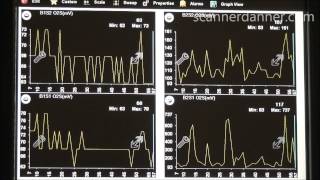
How to confirm: Use a scan tool to graph the live data for the B1S1 O2 sensor. A healthy sensor's voltage will switch rapidly between approximately 0.1V and 0.9V multiple times per second under steady throttle. A slow, lazy waveform that takes a second or more to switch confirms the issue.
Typical fix: Replace the upstream oxygen sensor (a 22mm or 7/8" oxygen sensor socket is required) and perform the ECM software update as per TSB 16-FL-002.
Est. part cost: $70-$260 - Exhaust Leak 🟡 Medium Probability While not specific to this platform, any leak in the exhaust manifold or downpipe before the O2 sensor can introduce outside air, skewing the sensor's readings and potentially triggering a slow response code.
How to confirm: Visually inspect the exhaust manifold and the exhaust pipe leading to the O2 sensor for cracks or black soot trails indicating a leak. A smoke test is the most effective way to find small leaks. An audible ticking noise from the engine bay, especially when cold, can also indicate a leak.
Typical fix: Repair the leak by replacing the gasket or tightening bolts. In cases of a cracked manifold, the manifold itself will need to be replaced.
Est. part cost: $10-$500 - Damaged Wiring or Connector ⚪ Low Probability
How to confirm: Visually inspect the wiring harness and connector for the upstream O2 sensor. Look for any signs of melting (from contact with the exhaust), corrosion, chafing, or loose pins.
Typical fix: Repair the damaged section of the wiring harness or clean/replace the connector.
Est. part cost: $5-$50
Rare But Worth Checking
- Engine Vacuum Leak: A significant vacuum leak can introduce unmetered air, causing the engine to run lean and potentially triggering a P0133 code. This is usually accompanied by a lean code like P0171.
- Contaminated Sensor: An internal engine issue, such as leaking valve seals or a failing head gasket, can contaminate the oxygen sensor with oil or coolant, causing it to fail. This is typically accompanied by other symptoms like smoke from the exhaust or fluid loss.
Diagnosis Steps
- Connect an OBD-II scanner and confirm that P0133 is the only code present. If other codes exist, address them first.
- Check for any applicable Technical Service Bulletins (TSBs). For this vehicle, TSB 16-FL-002 is directly related.
- Visually inspect the exhaust system from the engine manifold to the catalytic converter for any signs of leaks, such as black soot trails or cracks.
- Inspect the wiring and connector for the upstream O2 sensor (Bank 1, Sensor 1) for any damage, melting, or corrosion.
- Use a scan tool with live data capabilities to monitor the voltage of the Bank 1 Sensor 1. At operating temperature and a steady RPM (around 2,500), the voltage should fluctuate rapidly between ~0.1V and ~0.9V. If the switching is slow or lazy, the sensor is likely faulty.
- If the sensor and wiring appear good, and no exhaust leaks are found, the primary cause is the sensor itself, as noted in the TSB.
- After replacing the sensor, it is crucial to have a Hyundai dealer or a qualified shop with a GDS (Global Diagnostic System) tool perform the ECM update specified in TSB 16-FL-002 to complete the repair.
Parts You'll Likely Need
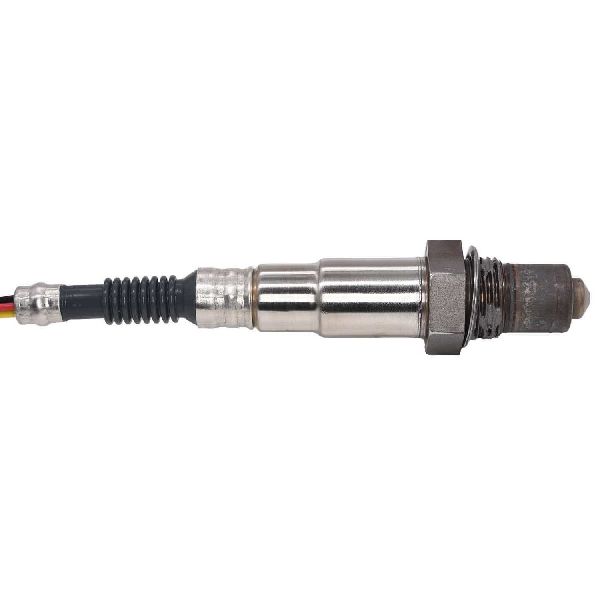
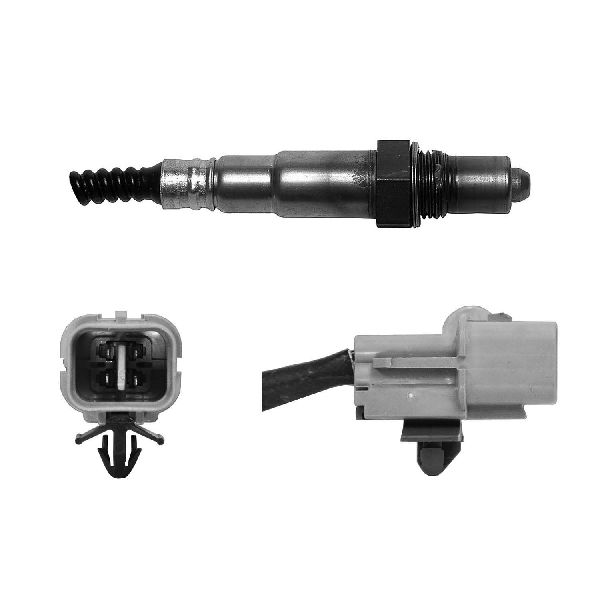
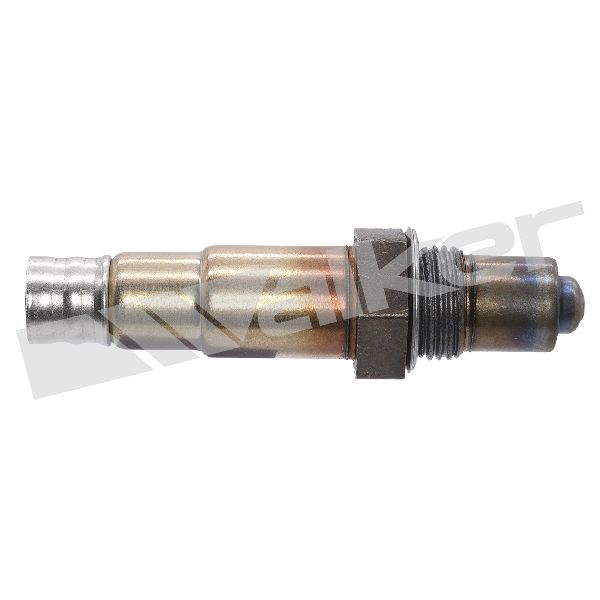
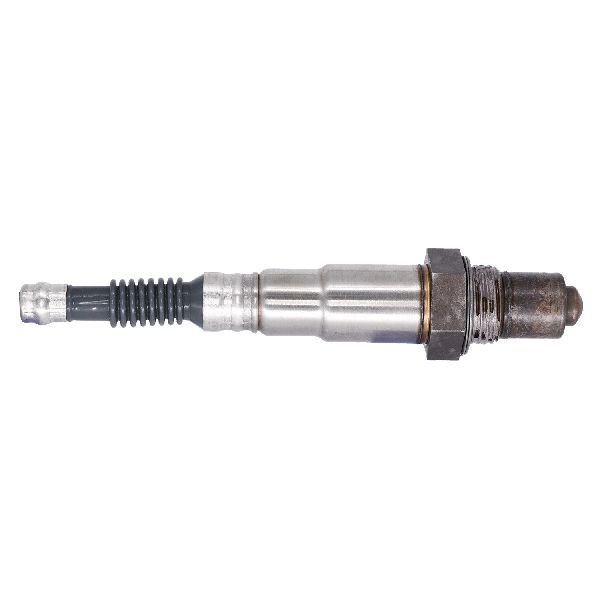
- Upstream Oxygen Sensor (Bank 1, Sensor 1)
(OEM #39210-2B250)— This is the primary failure point identified by Hyundai in TSB 16-FL-002 for the P0133 code on this specific vehicle.
Trusted brands: Hyundai (OEM), Bosch, Denso, NGK/NTK
OEM price range: $150-$260
Aftermarket price range: $70-$130
Technical Service Bulletins (TSBs) & Recalls
- 16-FL-002: Addresses DTC P0133 on 2013-15 Veloster Turbo models, recommending O2 sensor replacement (Part No. 39210-2B250) and an ECM software update due to carbon buildup.
Platform-Specific Known Issues
- Hyundai Technical Service Bulletin 16-FL-002 was issued in March 2016 specifically for the 2013-2015 Veloster Turbo to address DTC P0133. The bulletin states that heavy carbon buildup on the sensor is a common cause and that the repair requires both replacing the sensor and updating the ECM software with event #403 (or newer).
Mechanic-Grade Diagnostic Values
- Upstream O2 Sensor (B1S1) Signal Cycle Period — expected: Should be less than 1.75 seconds.. Failure: A cycle period greater than 1.75 seconds will trigger DTC P0133.
- O2 Sensor Heater Circuit Resistance — expected: Approximately 9.0 Ω at 20°C (68°F). A general acceptable range is 3-25 Ω.. Failure: An open circuit (infinite resistance) or resistance far outside the expected range indicates a failed heater element.
- Long-Term and Short-Term Fuel Trims (LTFT/STFT) — expected: Ideally between -5% and +5% at idle and steady cruise.. Failure: While not a direct cause, a slow O2 sensor can lead to consistently high positive or negative fuel trims as the ECM struggles to maintain the proper air-fuel ratio.
Hidden / Shadow Codes Worth Checking
- Mode 6, Test ID $01, Component ID $01: Mode 6 data allows access to the results of the PCM's non-continuous self-tests. For the O2 sensor, this can show the measured response time (cycle period) compared to the minimum and maximum thresholds set by the manufacturer. A value close to or exceeding the maximum limit confirms the slow response condition even before the MIL is triggered. (see via A professional-level scan tool with Mode 6 capability is required.)
Scan Tool Commands That Help
- Hyundai GDS (Global Diagnostic System): ECM Software Update (ROM ID Event #403 or newer) — This is not a diagnostic command, but a mandatory step in the repair process after replacing the O2 sensor, as specified by TSB 16-FL-002. It updates the ECM's logic for interpreting the O2 sensor signal to prevent the code from returning.
Wiring & Ground Locations
- O2 Sensor Fuse — In the engine compartment fuse & relay box.. The fuse for the oxygen sensor heater circuit is often labeled 'SENSOR 1' in Hyundai vehicles. A blown fuse will disable the heater, preventing the sensor from reaching operating temperature quickly, which can trigger a slow response code.
- Engine Harness Grounds — Bolted to the cylinder head and/or engine block.. Poor engine grounding can introduce electrical noise and voltage offsets into sensor circuits, including the O2 sensor. This can corrupt the signal sent to the ECM, potentially mimicking a slow response. Ensuring all main engine grounds are clean and tight is a critical diagnostic step.
"I Checked Everything" — The Actual Cause
- On some Hyundai models, the upstream and downstream oxygen sensor connectors are physically identical and located near each other. If they are accidentally swapped during a previous repair (like an exhaust or transmission replacement), the ECM will receive the slow-switching signal from the downstream sensor on the upstream circuit, immediately setting a P0133 code. This will not be found with a smoke test or by testing the sensor itself, but by physically tracing the wiring or using a scan tool to identify which sensor is responding when one is unplugged.
OEM Part Supersession History
39210-2B250→N/A— This part number is still the current and correct OEM part specified for the repair.
Heads up: While this part may physically fit other Hyundai/Kia 1.6L engines, it is critical to use this specific part number for the 2013-2015 Veloster Turbo in conjunction with the TSB software update for a permanent fix.
Model Year Variations Within This Range
- 2013-2015: While there may have been minor running changes to engine internals between these model years, the P0133 issue, its cause (carbon fouling), and the specified fix (sensor P/N 39210-2B250 and ECM update #403) are consistent across the entire 2013-2015 range for the 1.6L Turbo engine, as defined by TSB 16-FL-002.
Diagnostic Flowchart
Other Known Issues on This Vehicle
Issues unrelated to this code that are worth knowing about as an owner of this generation:
- Connecting Rod / Engine Bearing Failure 🔴 High — Most prevalent in 2013-2016 models. Can lead to catastrophic engine failure. Some owners report failure around 80,000-100,000 miles. (Ref: Recall 198 / NHTSA 20V-746000 addresses premature connecting rod bearing wear for 2015-2016 models.)
- Low-Speed Pre-Ignition (LSPI) 🔴 High — A known issue with early GDI turbo engines, particularly the 2013 model year. Can cause engine knocking and, in severe cases, piston or connecting rod damage. (Ref: Recall 180 / NHTSA 19V-204000 was issued for 2013 models to update engine software to help prevent LSPI-related damage.)
- Dual-Clutch Transmission (DCT) Issues 🟠 Medium — Owners report jerky shifting, hesitation from a stop, and overheating in stop-and-go traffic. Problems are reported across various model years with the DCT. (Ref: Multiple TCM (Transmission Control Module) software updates have been released, but some mechanical issues persist for owners.)
- MDPS Steering Coupler Failure 🟡 Low — A very common issue where the flexible rubber coupler in the Motor-Driven Power Steering (MDPS) column disintegrates, causing a clicking or clunking noise when turning the steering wheel. (Ref: Not a recall, but a widely known problem. The replacement part is inexpensive.)
- Intake Valve Carbon Buildup 🟠 Medium — Common to all Gasoline Direct Injection (GDI) engines. Over time, carbon deposits build up on the back of the intake valves, which can cause misfires, rough idle, and power loss. Typically requires cleaning (walnut blasting) every 60,000-80,000 miles.
Used vs. New Parts: Buying Guide for This Vehicle
When a used part is the smart pick: For this repair, a used oxygen sensor is never recommended. O2 sensors are wear-and-tear items with a finite lifespan, and a used sensor may already be slow or contaminated. A used part offers no cost savings if it fails shortly after installation.
What to inspect on the donor part:
- Not applicable, as a new part should always be used.
OEM-only on this vehicle (don't cheap out):
- While not strictly 'OEM-only', using the genuine Hyundai sensor (P/N 39210-2B250) is highly recommended to ensure perfect compatibility with the required ECM software update from the TSB.
Aftermarket brands forum-validated for this vehicle:
- If an aftermarket sensor is chosen, brands like NTK, Denso, and Bosch are reputable OEM suppliers with a history of reliable performance.
Brands owners have reported issues with on this vehicle:
- Avoid generic, unbranded, or 'white-box' sensors. These often use lower-quality materials, may not have the correct heater resistance or response characteristics, and can fail prematurely or not resolve the code.
Real Owner Stories
Aggregated from forums and TSBs cited above. Mileages and costs reflect what owners reported in those sources.
2014 Veloster Turbo — 21748 miles
Symptoms: Check Engine Light with code P0133; recurring issue with the sensor being replaced multiple times (2015 and 2017) under warranty.
What fixed it: The owner had the O2 sensor replaced, though the code recurred later, highlighting the need for the TSB-specified firmware update.
Source hint: r/VelosterTurbo - Thread 'Recurring O2 sensor problem (Code P)133)'
2013-2015 Veloster Turbo
Symptoms: Code P0133 triggered by a slow-responding oxygen sensor due to carbon fouling.
What fixed it: Replacement of the O2 sensor (Part No. 39210-2B250) and an ECM software update (Event #403).
Source hint: TSB 16-FL-002
Documented NHTSA Reports
Hyundai Owner Report
Symptoms: An owner reported various check engine light codes including P0133, alongside codes for the mass air flow sensor and oxygen sensors, despite the vehicle having previously passed emissions.
What fixed it: Diagnostic records indicate these issues presented as part of a cluster of sensor and misfire codes (NHTSA ODI #11415689).
Related OBD-II Codes
Frequently Asked Questions
Does TSB 16-FL-002 apply to my 2013-2015 Hyundai Veloster Turbo?
What is the specific part number for the replacement O2 sensor recommended by Hyundai?
Is a simple sensor replacement enough to fix the P0133 code on my Veloster Turbo?
Why does the 1.6L Turbo GDI engine keep triggering this slow response code?
Can I perform the required ECM update for P0133 myself?
Are there any other major engine issues I should be aware of while fixing this code on my 2013 Veloster?
Helpful Videos

We Have This Part in Stock


The information in this article is provided for general reference and educational purposes only. Vehicle specifications, procedures, and part compatibility can vary by production date, trim level, and region. Always consult your vehicle's factory service manual and verify part numbers before purchasing or performing repairs. Safety-critical components such as airbags, seat belts, and braking systems should be installed by a qualified professional.
- Hyundai Veloster:
- 🎬 Helpful Videos
- 🛍️ Shop This Part
- What's Unique About the 2013-2015 Hyundai Veloster
- Symptoms You May Notice
- Most Likely Causes
- Rare But Worth Checking
- Diagnosis Steps
- Parts You'll Likely Need
- Technical Service Bulletins (TSBs) & Recalls
- Platform-Specific Known Issues
- Mechanic-Grade Diagnostic Values
- Hidden / Shadow Codes Worth Checking
- Scan Tool Commands That Help
- Wiring & Ground Locations
- "I Checked Everything" — The Actual Cause
- OEM Part Supersession History
- Model Year Variations Within This Range
- Diagnostic Flowchart
- Other Known Issues on This Vehicle
- Used vs. New Parts: Buying Guide for This Vehicle
- Real Owner Stories
- 2014 Veloster Turbo — 21748 miles
- 2013-2015 Veloster Turbo
- Documented NHTSA Reports
- Hyundai Owner Report
- Related OBD-II Codes
- Frequently Asked Questions
- 🎟️ Get 5% Off