

P0133 on 2020-2026 Ford Explorer: Slow O2 Sensor Causes and Fixes
P0133 on a 2020-2026 Ford Explorer most often means the Bank 1, Sensor 1 oxygen sensor is failing. This is the upstream sensor responsible for air-fuel mixture. Replacing the sensor is the most common fix, costing around $80-$150 for the part. However, always check for exhaust leaks before replacing the sensor.
- P0133 points to a slow-reacting upstream oxygen sensor (Bank 1, Sensor 1).
- The most likely fix is replacing the sensor itself, but always check for exhaust leaks first, as they can mimic a bad sensor.
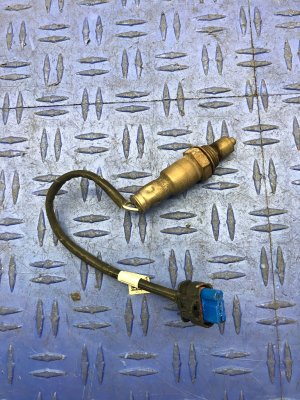
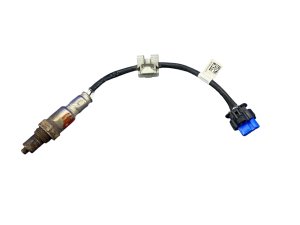
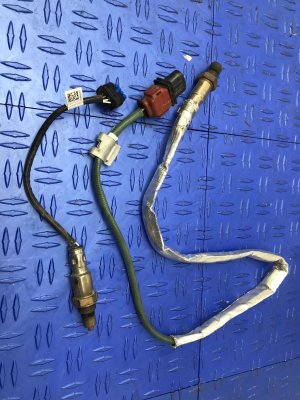
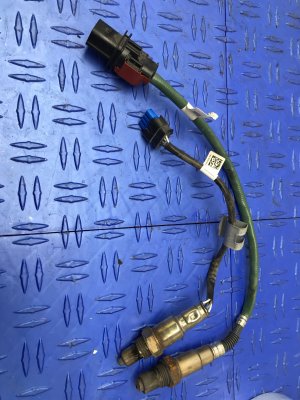
- For the 2.3L engine, use Motorcraft part DY-1537 (Ford P/N: L1MZ-9F472-E). For the 3.0L V6, the correct part for Bank 1 (passenger side) is Motorcraft DY-1530.
- Driving with this code can hurt your fuel economy and eventually damage your catalytic converter, a much more expensive repair.
- This is a DIY-friendly repair for those with basic tools and an O2 sensor socket.
What's Unique About the 2020-2026 Ford Explorer
For the 2020-2026 Ford Explorer, this code applies across its different engine options, including the 2.3L I-4 and 3.0L V6. On the 2.3L inline-four engine, there is only one bank, making 'Bank 1' the only bank. On the 3.0L V6, 'Bank 1' refers to the cylinder bank on the passenger side of the vehicle. While P0133 is a standard OBD-II code, the specific part needed to fix it differs between these engines, and accessibility can be tight, especially on the V6 model near the firewall.
Symptoms You May Notice
- Check Engine Light illuminated
- Reduced fuel economy
- Rough or uneven idle
- Slower acceleration or hesitation
- Black smoke from the exhaust in some cases
- Replacing the oxygen sensor without first checking for exhaust leaks. A leak will cause the new sensor to report the same slow response, leading to the code returning.
- Replacing the wrong sensor. P0133 specifically refers to Bank 1, Sensor 1 (upstream). Replacing the downstream sensor (Sensor 2) will not fix the issue.
Most Likely Causes
- Failing or Contaminated Bank 1, Sensor 1 Oxygen Sensor 🔴 High Probability Oxygen sensors are wear-and-tear items that degrade over time, typically lasting between 50,000 and 100,000 miles. Contamination from fuel additives, oil, or coolant can also cause premature failure. On this platform, no specific recalls for O2 sensors exist; failures are due to normal wear.
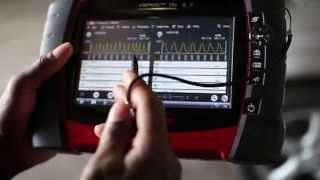
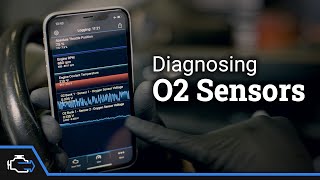
How to confirm: Use an OBD-II scanner with live data graphing capabilities. 🎬 Watch: How to check for slow O2 sensor response with a scanner. A healthy upstream O2 sensor's voltage should fluctuate rapidly between approximately 0.1 and 0.9 volts. A sensor triggering P0133 will show lazy, slow-to-change voltage that does not switch multiple times per second at operating temperature.
Typical fix: Replace the Bank 1, Sensor 1 (upstream) oxygen sensor. An O2 sensor socket is highly recommended for removal.
Est. part cost: $70-$180 - Exhaust System Leak 🟡 Medium Probability Leaks from cracked exhaust manifolds or failing gaskets located before the O2 sensor can allow outside air into the exhaust stream. This unmetered oxygen disrupts the sensor's readings, causing the PCM to interpret the signal as 'slow'. On some 2020-2021 3.0L models, defective manifold welds were noted, which could be a contributing factor.
How to confirm: Visually inspect the exhaust manifold and all piping leading to the O2 sensor for cracks or black soot trails, which indicate a leak. A professional smoke test is the most effective way to pinpoint the exact location of a small leak. 🎬 Watch: How to identify and repair a Ford Explorer exhaust manifold leak.
Typical fix: Repair the leak by replacing the faulty gasket or welding the cracked component. Do not replace the O2 sensor until the leak is fixed.
Est. part cost: $20-$300 - Damaged Wiring or Connector ⚪ Low Probability The wiring harness for the O2 sensor is located under the vehicle and can be susceptible to damage from road debris, heat, or corrosion, especially at the connector.
How to confirm: Visually inspect the wiring harness and connector for the Bank 1, Sensor 1 O2 sensor. Look for any frayed wires, melting, corrosion on the pins, or a loose connection. Use a multimeter to check for continuity and proper voltage at the connector per the vehicle's service manual.
Typical fix: Repair the damaged section of wiring or replace the connector pigtail.
Est. part cost: $15-$50
Rare But Worth Checking
- PCM Software Issue: In some cases, the vehicle's Powertrain Control Module (PCM) may have overly sensitive parameters for flagging a slow sensor. While not specifically documented for P0133 on the Explorer, Ford has issued TSBs for other models (like the F-450 with TSBs 24-2066 and 24-2036) where a PCM reflash was the correct fix for this code. It remains a possibility if all hardware checks out.
- Low Fuel Pressure or MAF Sensor Issues: An incorrect air-fuel mixture caused by other failing components, like a weak fuel pump or a dirty Mass Airflow (MAF) sensor, can sometimes lead to O2 sensor codes, though these usually trigger other codes as well.
Diagnosis Steps
- Read the code: Use an OBD-II scanner to confirm P0133 is the active code and check for any other stored codes.
- Inspect the wiring: Perform a thorough visual inspection of the Bank 1, Sensor 1 oxygen sensor's wiring harness and connector. Check for any signs of melting, chafing, or corrosion.
- Check for exhaust leaks: With the engine cool, start the vehicle and listen/feel for any leaks from the exhaust manifold or the pipe leading to the first O2 sensor. A smoke test is the most reliable method to find small leaks.
- Analyze live data: Use a scanner to graph the voltage of the Bank 1, Sensor 1 O2 sensor. At operating temperature, the voltage should switch rapidly between ~0.1V and ~0.9V. If it's slow, lazy, or flat-lined, the sensor is likely bad.
- Test the sensor: If all other checks pass, the sensor itself is the most likely culprit. Proceed with replacement. Using an O2 sensor socket will make removal much easier.
- Clear and re-test: After replacing the part, clear the code with the scanner and perform a drive cycle to ensure the P0133 code does not return.
Parts You'll Likely Need
- Upstream Oxygen Sensor (2.3L EcoBoost)
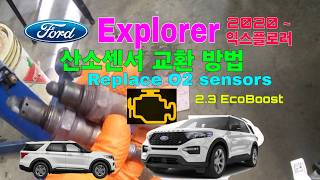
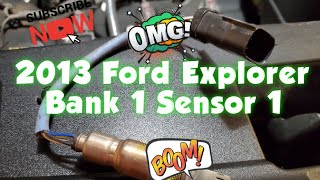
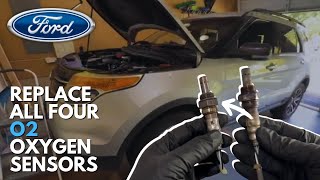
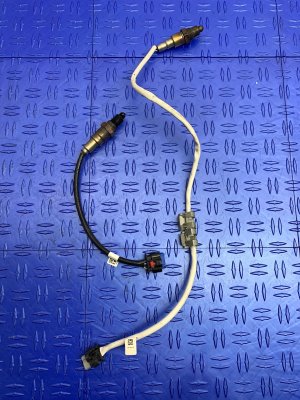
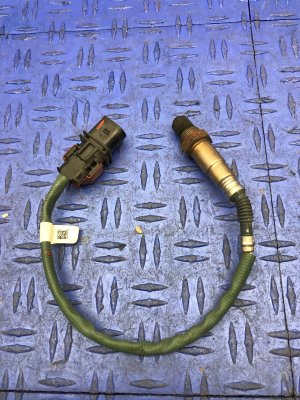
(OEM #L1MZ-9F472-E)— This is the Bank 1, Sensor 1 for the 4-cylinder engine. 🎬 See this walkthrough for replacing the 2.3L upstream oxygen sensor. It is the most common failure point for code P0133.
Trusted brands: Motorcraft (DY-1537), Denso, Bosch, NGK
OEM price range: $120-$180
Aftermarket price range: $70-$130 - Upstream Right Oxygen Sensor (3.0L EcoBoost V6)
(OEM #DY-1530)— This is the Bank 1, Sensor 1 (passenger side) for the V6 engine. It is the most common failure point for code P0133 on this engine.
Trusted brands: Motorcraft (DY-1530), Denso, Bosch
OEM price range: $130-$190
Aftermarket price range: $80-$150
Mechanic-Grade Diagnostic Values
- Upstream O2 Sensor (HO2S) Voltage Switch Time — expected: A conventional sensor should switch from below 400mV to above 450mV in less than 100 milliseconds.. Failure: A time exceeding 100 milliseconds, or in some cases a threshold as high as 2 seconds, will trigger the P0133 code.
- O2 Sensor Wiring Harness Resistance — expected: Less than 0.5 Ω.. Failure: Resistance greater than 0.5 Ω can dampen the voltage signal, stretching the rise and fall times and causing the PCM to perceive a slow response.
- Mode 6, Test ID $86 — expected: This test monitors the HO2S response rate. The reported value should be below the maximum threshold specified in the scan tool's data.. Failure: A value that exceeds the maximum limit indicates the sensor's switching frequency is too slow, confirming the P0133 fault condition.
Scan Tool Commands That Help
- Ford IDS / FORScan: Keep Alive Memory (KAM) Reset — After replacing an O2 sensor or fixing a related wiring/exhaust issue, a KAM reset should be performed. This clears the PCM's adaptive learning tables, including fuel trims and idle values, forcing it to relearn with the new, functional component. Failing to do so can cause the old learned values to conflict with the new sensor's readings, potentially causing the code to return or other driveability issues.
- Ford IDS / High-End Scanners: Datalogger > O2 Sensor Monitor Test — This function allows a technician to actively monitor the O2 sensor's live voltage graph and switching frequency. It's the primary tool for confirming a 'lazy' sensor by comparing its switching speed against a known-good sensor or the vehicle's specifications.
Model Year Variations Within This Range
- 2020-2024 (up to May 13, 2024): The OEM part number for the 2.3L upstream O2 sensor, L1MZ-9F472-E, has a production date cutoff noted by Ford parts dealers, applying to vehicles built up to May 13, 2024. While this doesn't indicate a supersession yet, it suggests a potential change for later 2024 or 2025+ models. Owners of vehicles near this date should double-check the part number with their VIN.
Diagnostic Flowchart
Other Known Issues on This Vehicle
Issues unrelated to this code that are worth knowing about as an owner of this generation:
- Rear Axle Mounting Bolt Fracture 🔴 High — Widespread enough to trigger a major safety recall (22S27 / 22V255) affecting over 224,000 vehicles from 2020-2022 model years. The bolt can fracture during acceleration. (Ref: Recall 22S27 / NHTSA 22V255. The initial fix was a PCM software update to automatically engage the parking brake, with a later phase for hardware replacement. The recall repair itself was later investigated by NHTSA.)
- 10-Speed Automatic Transmission Problems 🔴 High — The most commonly reported complaint on the 2020 model year, with symptoms including harsh/jerky shifting, sudden downshifts, and delayed engagement. (Ref: Multiple TSBs issued, including TSB 20-2305 for harsh 7-6 downshifts on early 2020 models and TSB 23-2176 for delayed reverse engagement on 2.3L models. TSB 22-2428 addresses harsh/delayed shifts across multiple model years and engines.)
- Rearview/360-Degree Camera Failure 🟠 Medium — A very common issue affecting over 700,000 vehicles, with owners reporting blue screens, flickering, or total image loss. Some owners have required multiple replacements. (Ref: At least six separate recalls have been issued to address this problem.)
- Cracked Exhaust Manifold / Exhaust Gas Intrusion (3.0L ST) 🔴 High — Primarily affects 2020-2021 Explorer ST models. Cracks in the manifold can allow exhaust fumes to enter the cabin, posing a carbon monoxide risk. (Ref: Ford issued a recall to replace the catalytic converter and reprogram the PCM to address this.)
- General Electrical and Infotainment System Glitches 🟡 Low — Common complaints include black infotainment screens, Apple CarPlay disconnects, and other random electrical faults like non-functional cameras or power steering issues. (Ref: A recall was issued for some 2025 models for a faulty Body Control Module (BCM) that could cause various electrical failures.)
Used vs. New Parts: Buying Guide for This Vehicle
When a used part is the smart pick: For an oxygen sensor, a used part is almost never a smart choice. O2 sensors are wear-and-tear items with a finite lifespan, and their performance degrades with mileage and exposure to contaminants. Installing a used sensor often means installing a part that is already partially worn out, risking a repeat failure in the near future.
Donor-vehicle mileage cap: roughly under 20000 miles for the part to have meaningful remaining life.
What to inspect on the donor part:
- If forced to use one for temporary diagnostic purposes, select one from the lowest-mileage donor vehicle possible.
- Inspect the sensor tip for heavy white, chalky deposits (coolant contamination) or thick black soot (oil contamination); avoid any sensor that isn't light gray.
- Ensure the wiring pigtail and connector are completely intact with no cuts, melting, or corrosion on the pins.
OEM-only on this vehicle (don't cheap out):
- While the O2 sensor itself is available from quality aftermarket brands, it is generally recommended to use OEM parts for any PCM or other control module replacement if those are suspected as the root cause.
Aftermarket brands forum-validated for this vehicle:
- NTK (often the OE supplier for Ford)
- Denso
- Bosch (though some forum users report mixed experiences with aftermarket Bosch vs. OEM Bosch)
Brands owners have reported issues with on this vehicle:
- Unbranded, no-name sensors from online marketplaces are frequently reported to fail prematurely or not meet the specific switching-speed requirements of the vehicle's PCM, causing the code to return.
Real Owner Stories
Aggregated from forums and TSBs cited above. Mileages and costs reflect what owners reported in those sources.
2020 Ford Explorer — 43000 miles
Symptoms: Transmission jerks and common platform issues reported.
What fixed it: The report notes these as common platform issues potentially related to powertrain sensor inputs.
Source hint: Reddit r/FordExplorer - A user with a 2020 Explorer at 43k miles reported experiencing transmission jerks
Related OBD-II Codes
Frequently Asked Questions
Could the cracked exhaust manifold issue on my 2020 Explorer ST be causing the P0133 code?
Is there a specific oxygen sensor part number recommended for the 2020-2026 Ford Explorer?
My 2020 Explorer is jerking during shifts; could this be related to the P0133 code?
Is there a recall for the oxygen sensor on the 2020-2026 Ford Explorer?
Can I use a used oxygen sensor from a salvage yard to fix this?
Does the Lincoln Aviator share this same P0133 issue?
Helpful Videos

![Ford Explorer Exhaust Manifold Repair Pt1 [E19]](https://img.youtube.com/vi/QzrZozJtRXk/mqdefault.jpg)
We Have This Part in Stock

The information in this article is provided for general reference and educational purposes only. Vehicle specifications, procedures, and part compatibility can vary by production date, trim level, and region. Always consult your vehicle's factory service manual and verify part numbers before purchasing or performing repairs. Safety-critical components such as airbags, seat belts, and braking systems should be installed by a qualified professional.
- Ford Explorer:
- 🎬 Helpful Videos
- 🛍️ Shop This Part
- What's Unique About the 2020-2026 Ford Explorer
- Symptoms You May Notice
- Most Likely Causes
- Rare But Worth Checking
- Diagnosis Steps
- Parts You'll Likely Need
- Mechanic-Grade Diagnostic Values
- Scan Tool Commands That Help
- Model Year Variations Within This Range
- Diagnostic Flowchart
- Other Known Issues on This Vehicle
- Used vs. New Parts: Buying Guide for This Vehicle
- Real Owner Stories
- 2020 Ford Explorer — 43000 miles
- Related OBD-II Codes
- Frequently Asked Questions
- 🎟️ Get 5% Off