

P0132 on 2002-2024 Nissan Altima: O2 Sensor High Voltage Causes and Fixes
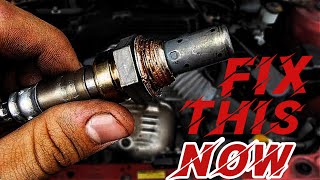
On most Nissan Altimas, especially those with the 2.5L engine, code P0132 is almost always caused by a failing upstream oxygen sensor (Bank 1, Sensor 1). This sensor is also called an Air/Fuel Ratio Sensor. Replacing this sensor is a common DIY fix, with popular aftermarket parts like Denso costing between $50-$140 and OEM parts costing $180-$250.
- P0132 on a Nissan Altima almost always points to the upstream oxygen sensor (Bank 1, Sensor 1), also called an Air/Fuel Ratio sensor.
- On 4-cylinder models, this is an easy DIY replacement located at the front of the engine.
- On V6 models, the sensor is on the firewall side and is much harder to access.
- Always check the wiring for damage before buying a new sensor, as melted wires are a common secondary cause.
- Using a quality aftermarket brand like Denso (the OEM supplier) or NGK can save significant money over dealer parts with reliable performance.
What's Unique About the 2002-2024 Nissan Altima

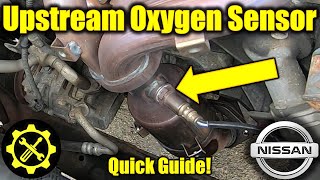
For the vast majority of Nissan Altimas equipped with the 4-cylinder (2.5L QR25DE) engine, the Bank 1 Sensor 1 is extremely easy to access, located directly on the exhaust manifold at the front of the engine bay, often visible as soon as the hood is opened. This makes diagnosis and replacement a very common and straightforward DIY job. 🎬 Watch: Step-by-step upstream sensor replacement for 2.5L engines. However, for Altimas with the V6 (3.5L VQ35DE) engine, Bank 1 is the cylinder bank against the firewall, making the same sensor significantly harder to reach and replace, often requiring the removal of other components like the intake manifold plenum to gain access. 🎬 See how to reach the difficult Bank 1 sensor on V6 models. It's crucial to identify your engine before starting the repair.
Generation note: The 2002-2024 range covers the L31, L32, L33, and L34 generations. While the principle is the same, the primary difference is engine type. The 4-cylinder (QR25DE, PR25DD) models have an easily accessible front O2 sensor. The V6 (VQ35DE) models have a difficult-to-access rear O2 sensor for Bank 1. Part numbers for the sensor vary between generations and engine types, so verifying with your vehicle's VIN is essential.
Symptoms You May Notice
- Check Engine Light is on
- Decreased fuel economy
- Engine may run rough, hesitate, or have an unstable idle, especially at low RPMs
- Smell of gasoline or black smoke from the exhaust in severe cases
- Hesitation or stumbling during acceleration
- Replacing the downstream (Bank 1, Sensor 2) oxygen sensor instead of the upstream (Bank 1, Sensor 1) sensor.
- Immediately replacing the O2 sensor without first checking its wiring and connector for damage, which is a common point of failure.
- Replacing the O2 sensor when it is accurately reporting a rich condition caused by another problem, such as a leaking fuel injector or faulty MAF sensor.
Most Likely Causes

- Faulty Upstream Oxygen Sensor (Bank 1, Sensor 1) 🔴 High Probability Oxygen sensors are wear items that degrade over time from heat and contaminants. After 80,000-100,000 miles, failure is common. An internal short in the sensor's element or heater circuit can cause a persistent high voltage signal.
How to confirm: Use an OBD-II scanner with live data to monitor the B1S1 voltage. A healthy sensor's voltage will fluctuate rapidly between approximately 0.1V and 0.9V. A bad sensor will often be stuck high (above 0.8V) or show very slow, lazy switching. 🎬 Watch this guide to testing and replacing your oxygen sensor.
Typical fix: Replace the Bank 1, Sensor 1 oxygen sensor (also called an Air/Fuel Ratio Sensor).
Est. part cost: $50-$250 - Wiring or Connector Issue 🟡 Medium Probability The sensor's wiring harness is close to the hot exhaust and can become brittle, melted, or corroded over time. The plastic connector can also become brittle and fail.
How to confirm: Visually inspect the wiring and connector for the Bank 1 Sensor 1. Look for any signs of melting, chafing on the heat shield, corrosion on the pins, or breaks in the wire. Use a multimeter to check for a short to voltage in the signal wire.
Typical fix: Repair the damaged section of wiring or replace the connector pigtail.
Est. part cost: $10-$40 - Engine Running Rich ⚪ Low Probability Not specific to the Altima, but any issue causing a rich condition will be reported by the O2 sensor. Common culprits on these engines include leaking fuel injectors or a faulty Mass Airflow (MAF) sensor.
How to confirm: Look for other diagnostic trouble codes (DTCs) related to fuel trim (e.g., P0172) or specific components. Check for leaking fuel injectors, excessively high fuel pressure from a bad regulator, or a malfunctioning Mass Airflow (MAF) sensor. The O2 sensor is correctly reporting a high voltage because the engine is actually running rich.
Typical fix: Diagnose and repair the root cause of the rich condition (e.g., replace leaking injector, fuel pressure regulator, or MAF sensor).
Est. part cost: $50-$400+
Rare But Worth Checking
- Exhaust Leak: An exhaust leak before the O2 sensor can, under certain conditions, draw in fresh air and confuse the sensor, leading to incorrect readings and potentially triggering a high voltage code as the PCM tries to compensate.
- Blown Fuse: The oxygen sensor heater circuit is protected by a fuse. If this fuse blows, it can cause erratic sensor readings, though it more commonly sets a specific heater circuit code (e.g., P0135). It's worth checking the fuse box in the engine bay.
- Faulty Powertrain Control Module (PCM): This is extremely rare. The PCM's internal voltage regulation could fail, causing it to misinterpret the sensor's signal. This should only be considered after all other possibilities, including wiring, have been exhaustively checked.
Diagnosis Steps
- Connect an OBD-II scanner to confirm the P0132 code and check for any other codes that could indicate a rich condition (like P0172).
- Using the scanner's live data feature, observe the voltage for 'B1S1' or 'A/F Sensor 1'. Confirm if it is stuck high (e.g., >0.8V) and not fluctuating rapidly.
- Turn off the engine and locate the Bank 1, Sensor 1. For 2.5L engines, it's on the front exhaust manifold. For 3.5L V6 engines, it's on the rear manifold against the firewall.
- Thoroughly inspect the sensor's connector and wiring for any signs of melting, corrosion, or physical damage. Pay close attention to where the harness might rub against heat shields.
- If wiring looks good, the most likely cause is the sensor itself. Proceed with replacement.
- To replace, disconnect the negative battery terminal. Unplug the sensor's electrical connector.
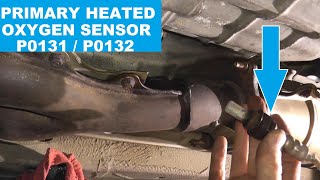
- Use a 22mm (7/8") oxygen sensor socket and a breaker bar or long ratchet to remove the old sensor. It may be extremely tight; applying penetrating oil (like PB Blaster) and letting it soak, or running the engine for a minute to warm the exhaust can help break it loose.
- Apply a small amount of the included anti-seize compound to the threads of the new sensor, being careful to avoid the sensor tip.
- Install the new sensor and torque to specification (typically 30-35 ft-lbs or 40-50 Nm). Reconnect the electrical plug and battery terminal.
- Clear the codes with the scanner and take the vehicle for a 10-15 minute test drive, including city and highway speeds, to ensure the code does not return.
Parts You'll Likely Need
- Upstream Oxygen Sensor (Air/Fuel Ratio Sensor)
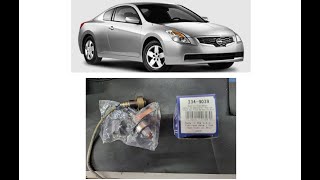
(OEM #22693-3TA0A, 22693-1MR0A, 22690-ED000, 22693-9HP0A (V6))— This is the most common failure part for code P0132, with a high probability of fixing the issue.
Trusted brands: Denso (OEM supplier), Bosch, NGK/NTK, Walker
OEM price range: $180-$250
Aftermarket price range: $50-$140
Related Codes That Often Appear With This One
- P0172: System Too Rich (Bank 1)
- P0135: O2 Sensor Heater Circuit Malfunction (Bank 1, Sensor 1)
Technical Service Bulletins (TSBs) & Recalls
- NTB12-040c: While not directly for P0132, this TSB addresses reprogramming the ECM for other DTCs on 2013 Altimas, indicating that software updates can resolve sensor-related logic issues.
Platform-Specific Known Issues
- On some mid-2010s models, particularly around 2012-2015, there have been isolated reports where recurring O2 sensor codes, including P0132, were only resolved after a dealer performed an ECM (Engine Control Module) software update. Nissan TSB NTB12-040c, for example, addresses reprogramming logic for certain DTCs. If a new, quality sensor and verified wiring do not fix the issue, inquiring about an ECM reflash is a valid next step.
Mechanic-Grade Diagnostic Values

- A/F Sensor 1 (B1S1) Voltage — expected: Rapidly fluctuating between 0.1V and 0.9V at operating temperature.. Failure: Voltage is stuck high, consistently above 0.9V, or in some cases, above 1.8V for more than 2 seconds.
- Nissan 'A/F ALPHA-B1' (Total Fuel Trim) — expected: At or near 100% at idle on a warm engine.. Failure: A value significantly below 100% (e.g., 75%) indicates the ECM is subtracting fuel to compensate for a perceived rich condition, which can be caused by the faulty sensor reporting high voltage.
- Heated Oxygen Sensor (front) Offset Voltage — expected: Between 0.4V and 0.6V.. Failure: A value outside this range may indicate a sensor or ECM issue. This is a specific condition checked by the ECM before setting the P0132 code.
Scan Tool Commands That Help
- Nissan CONSULT-III or equivalent professional scanner (e.g., Snap-on): SELF-LEARNING CONT / Self-Learning Control Reset — This function must be used after replacing the A/F ratio sensor (B1S1) or the ECM. It clears the old learned fuel trim values, forcing the ECM to relearn with the new sensor's data, preventing the code from returning due to incorrect learned adjustments.
- Generic OBD-II Scanner (Manual Procedure): A/F Learning Value Reset (Manual Method) — If a professional scan tool is unavailable. After warming the engine, turn it off, disconnect the MAF sensor connector, start the engine and let it idle for at least 5 seconds (this will set a MAF code). Turn the engine off, reconnect the MAF, and then clear all DTCs. This procedure forces the ECM to clear its fuel learning values.
Wiring & Ground Locations

- E9, E204 — For a 2007 Altima, E9 is on the lower left side of the engine compartment and E204 is on the left side of the engine compartment.. The shield wire for the Air/Fuel Ratio (A/F) Sensor 1 is connected to these ground points. A poor or corroded ground at these locations can introduce electrical noise into the sensor signal, potentially causing incorrect voltage readings and triggering a P0132 code.
- Main Battery Ground Cable — Connects the negative battery terminal to the vehicle frame and the transmission case.. The entire engine control system relies on a solid ground path. On 2007-2013 Altimas, the OEM ground cable (PN 24080-JA10A) is a known weak point. Corrosion or fraying of this cable can create system-wide grounding issues, leading to erratic sensor behavior, including the A/F sensor.
- A/F Sensor 1 Connector — On the 2.5L engine, the connector is typically clipped to the engine harness near the sensor on the front exhaust manifold.. This connector is a common failure point due to heat and vibration. The pins can corrode or the plastic can become brittle and crack, leading to a poor connection and a high-resistance short that mimics a high voltage signal.
Real Owner Repair Stories
- YouTube Commenter on 'Uncle Tinman' video (2009 Nissan Quest (uses related VQ-series V6 engine)) — Persistent P2A00 code (A/F Sensor Performance)
❌ Tried (didn't work) Replacing the O2 sensor, Checking the wiring
✅ What actually fixed it The welds on the catalytic converter's heat shield (firewall side) had broken. This created an exhaust leak that was only detectable with a smoke machine test run through the downstream O2 sensor port. Re-welding the shield fixed the leak and resolved the code.
Model Year Variations Within This Range
- 2007-2013: The main battery ground cable (OEM Part # 24080-JA10A) is a known failure point on these models. Later generations may use a different design. When diagnosing electrical or sensor issues on these specific years, inspecting this cable is a critical, non-obvious step.
- 2019-2024 (L34 generation): These models use the PR25DD engine, which is a direct-injection evolution of the previous QR25DE. While the function of the A/F sensor is the same, the specific part numbers and ECM software logic may differ. It is crucial to verify parts by VIN for these newer models.
Diagnostic Flowchart
Used vs. New Parts: Buying Guide for This Vehicle
When a used part is the smart pick: A used part is almost never a smart choice for this repair. Oxygen/Air-Fuel sensors are wear items with a finite lifespan. A used sensor has unknown remaining life and may fail shortly after installation, wasting time and money.
Donor-vehicle mileage cap: roughly under 20000 miles for the part to have meaningful remaining life.
What to inspect on the donor part:
- If forced to use a used part, source it from a very low-mileage vehicle that was wrecked due to collision, not engine failure.
- Inspect the sensor tip for heavy carbon fouling or white, ashy deposits, which indicate a poorly running donor engine.
- Ensure the wiring and connector are free of any melting, corrosion, or brittleness.
Aftermarket brands forum-validated for this vehicle:
- Denso (often the OEM supplier for Nissan)
- NGK / NTK
- Bosch
Brands owners have reported issues with on this vehicle:
- Generic, unbranded sensors from online marketplaces. These often have poor quality control, incorrect heater resistance, or slow response times, leading to the code returning or poor engine performance.
Real Owner Stories
Aggregated from forums and TSBs cited above. Mileages and costs reflect what owners reported in those sources.
2010 Nissan Altima 2.5L
Symptoms: Owner was troubleshooting to find the correct replacement part (22690-ED000) for the upstream oxygen sensor located before the catalytic converter.
What fixed it: Replacing the old sensor with the new one. The owner noted the fit was exact and the connector snapped into place firmly after using a 22mm socket and penetrating oil for removal.
Source hint: AliExpress Blog
2012-2015 Nissan Altima
Symptoms: Recurring P0132 code that would not go away even after replacing the oxygen sensor with a new, quality part and verifying the wiring was intact.
What fixed it: The problem was ultimately resolved by a dealer performing an ECM (Engine Control Module) software update/reflash.
Source hint: Nissan TSB NTB12-040c
2007 Nissan Sentra (with shared QR25DE engine)
Symptoms: A persistent P0132 code that was not fixed by replacing sensors or repairing an exhaust leak.
What fixed it: The diagnosis shifted to a potential engine rich condition, with the likely root cause being leaking fuel injectors that required further testing.
Source hint: Reddit r/AskMechanics - 07 Nissan Sentra P0132
Infiniti G35 (with shared VQ-series V6 engine)
Symptoms: The vehicle was experiencing repeated failures of the upstream oxygen sensor, causing the P0132 code to return.
What fixed it: Forum discussion pointed to the rare possibility of a bad ECU/PCM (Engine Control Module) that was causing the new sensors to fail prematurely.
Source hint: NICOclub Forums - P0132 Front O2 Sensor, Bank 1 Rich Shift Monitoring
Related OBD-II Codes
Frequently Asked Questions
Where is the Bank 1, Sensor 1 oxygen sensor located on my Nissan Altima?
I replaced the O2 sensor on my 2013 Altima, but the P0132 code came back. What now?
What special tool do I need to replace the oxygen sensor?
My old O2 sensor is completely stuck. Any tips for removing it?
Is the P0132 code a common problem on other Nissan models too?
Besides a bad sensor, what's the most likely cause for P0132 on an Altima?
Helpful Videos
![Bad O2 Sensor Symptoms Downstream & Upstream [Oxygen Sensor Failure and Causes] How to fix & Replace](https://img.youtube.com/vi/b-xxdBlikSA/mqdefault.jpg)
We Have This Part in Stock


The information in this article is provided for general reference and educational purposes only. Vehicle specifications, procedures, and part compatibility can vary by production date, trim level, and region. Always consult your vehicle's factory service manual and verify part numbers before purchasing or performing repairs. Safety-critical components such as airbags, seat belts, and braking systems should be installed by a qualified professional.
- Nissan Altima:
- 🎬 Helpful Videos
- 🛍️ Shop This Part
- What's Unique About the 2002-2024 Nissan Altima
- Symptoms You May Notice
- Most Likely Causes
- Rare But Worth Checking
- Diagnosis Steps
- Parts You'll Likely Need
- Related Codes That Often Appear With This One
- Technical Service Bulletins (TSBs) & Recalls
- Platform-Specific Known Issues
- Mechanic-Grade Diagnostic Values
- Scan Tool Commands That Help
- Wiring & Ground Locations
- Real Owner Repair Stories
- Model Year Variations Within This Range
- Diagnostic Flowchart
- Used vs. New Parts: Buying Guide for This Vehicle
- Real Owner Stories
- 2010 Nissan Altima 2.5L
- 2012-2015 Nissan Altima
- 2007 Nissan Sentra (with shared QR25DE engine)
- Infiniti G35 (with shared VQ-series V6 engine)
- Related OBD-II Codes
- Frequently Asked Questions
- 🎟️ Get 5% Off