

P0132 on 2007-2011 Jeep Wrangler 3.8L: Causes and Fixes for O2 Sensor High Voltage
This code almost always means the upstream oxygen sensor on the passenger side (Bank 1, Sensor 1) has failed or its wiring is damaged. A very common issue on the JK Wrangler is the wiring harness melting on the hot exhaust manifold. Before buying parts, inspect the harness carefully. If replacement is needed, use an NTK/NGK sensor (NTK P/N: 23159) for best results, as these Jeeps are sensitive to other brands. Expect to pay $50-$120 for a quality aftermarket sensor and $100-$180 for an OEM Mopar
- Before buying any parts, thoroughly inspect the O2 sensor's wiring harness for melting or damage where it passes near the passenger-side exhaust manifold.
- P0132 refers specifically to the upstream (pre-catalytic converter) sensor on the passenger side (Bank 1).
- If the sensor needs replacement, it is highly recommended to use an NTK or NGK brand sensor, as many Jeep owners report issues with other brands.
- This code is often paired with P1128; fixing the root cause of P0132 will resolve both codes.
What's Unique About the 2007-2011 Jeep Wrangler

The 2007-2011 Jeep Wrangler JK with the 3.8L V6 is particularly known for this code. A primary factor is the routing of the oxygen sensor wiring harness, which is very close to the hot exhaust manifold. Over time, the heat can cause the wiring to melt or chafe, leading to a short circuit that triggers P0132. Additionally, the 3.8L EGH engine, originally from Chrysler's minivans, is known for potential oil consumption issues, which can contaminate and shorten the life of oxygen sensors. Owners on forums widely report that these Jeeps are very sensitive to the brand of O2 sensor used, and strongly recommend using only NTK/NGK sensors to avoid persistent issues.
Symptoms You May Notice
- Check Engine Light is on
- Decreased fuel economy
- Engine running rough or idling poorly
- Hesitation or stumbling during acceleration
- Black smoke from the exhaust in some cases
- Failed emissions test
- Smell of gasoline or rich exhaust
- Replacing the catalytic converter. This code points to an issue with the sensor *before* the converter, not the converter itself.
- Replacing the wrong O2 sensor. P0132 is for Bank 1 (passenger side), Sensor 1 (upstream/pre-catalyst). Do not replace the driver's side or downstream sensor.
- Using a non-NTK/NGK brand sensor. Many owners report that using Bosch or other generic sensors does not resolve the code on the JK platform due to sensitivity issues.
Most Likely Causes

- Melted or Damaged O2 Sensor Wiring Harness 🔴 High Probability The wiring for the Bank 1 Sensor 1 O2 sensor is routed very close to the hot exhaust manifold, making it highly susceptible to melting and short-circuiting. This is a widely documented failure point on Jeep JK forums.
How to confirm: Visually inspect the entire length of the O2 sensor's wiring harness from the sensor to the main connector. The harness is easily accessible after removing the passenger side front fender liner. Look for any signs of melted plastic, chafed insulation, or direct contact with the exhaust manifold.
Typical fix: Repair the damaged section of the wire using heat-shrink butt connectors and secure the harness away from the exhaust manifold using high-temperature wire loom and zip ties. If damage is severe or close to the sensor, the entire sensor and its integrated pigtail must be replaced. A pigtail connector repair kit is also available.
Est. part cost: $15-$40 for repair materials - Failed Upstream Oxygen Sensor (Bank 1, Sensor 1) 🔴 High Probability Oxygen sensors are wear-and-tear items with a finite lifespan. The 3.8L engine's tendency to consume oil can also lead to premature sensor failure due to contamination from burnt oil deposits.
How to confirm: Using a scan tool, observe the live data for 'O2 Sensor Voltage Bank 1 Sensor 1'. If the voltage is stuck high (e.g., near 1.0V or even shorted to 5V) and does not fluctuate rapidly with the engine running, the sensor is likely faulty. A definitive test involves disconnecting the sensor; if the voltage on the scan tool drops to a default value, the sensor is bad.
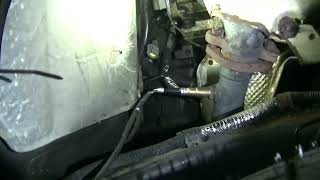
Typical fix: Replace the Bank 1, Sensor 1 oxygen sensor. It is located on the passenger side exhaust manifold, before the catalytic converter. An oxygen sensor socket is required. Owners strongly recommend using an NTK sensor (part number 23159) 🎬 Watch: Step-by-step Bank 1 Sensor 1 replacement for P0132. as other brands like Bosch are known to cause compatibility issues.
Est. part cost: $50-$180
Rare But Worth Checking
- Exhaust Leak: An exhaust leak before the O2 sensor can introduce outside air into the exhaust stream, confusing the sensor and potentially causing incorrect voltage readings. The 3.8L engine is known for cracked exhaust manifolds which can cause this. Check for soot marks or listen for ticking noises from the exhaust manifolds, especially on a cold start.
- Rich Fuel Condition: A legitimate rich running condition (caused by a leaking fuel injector, faulty fuel pressure regulator, or other sensor issue) will cause the O2 sensor to read high voltage. This is less common than a sensor or wiring fault, and would typically be accompanied by other trouble codes and symptoms like black smoke or a strong fuel smell.
- Faulty Powertrain Control Module (PCM): In very rare cases, the PCM itself can fail, causing it to misinterpret the sensor's signal. The 2007-2011 Wrangler PCM is a known failure point, though it more commonly causes misfires or charging issues (P0622). This should only be considered after all other possibilities, including wiring and the sensor itself, have been definitively ruled out.
Diagnosis Steps
- Read all fault codes with an OBD-II scanner. Note any other codes present, especially P1128 or P0152.
- Crucial First Step for this vehicle: Visually inspect the Bank 1, Sensor 1 (passenger side, upstream) O2 sensor wiring harness. Access is excellent after removing the plastic fender liner. 🎬 See this diagnostic walkthrough to confirm a faulty sensor. Check carefully for any signs of melting, chafing, or contact with the exhaust manifold. This is the most common cause.
- Inspect the sensor's electrical connector for corrosion, damage, or loose pins. The connector is located on the frame rail near the sensor.
- If wiring appears intact, use a scan tool to monitor the live voltage of the Bank 1, Sensor 1 O2 sensor with the engine running. A healthy sensor's voltage should fluctuate rapidly between approximately 0.1V and 0.9V. A reading stuck high (e.g., 0.9V or higher) points to a problem.
- To confirm a bad sensor vs. a wiring short, disconnect the O2 sensor. If the scan tool voltage drops to a default reference value (or changes significantly from its stuck-high reading), the sensor itself is faulty and should be replaced. If the voltage stays high, there is a short to voltage in the harness.
- Check for exhaust leaks between the cylinder head and the O2 sensor. Listen for ticking sounds (especially when cold) and look for black soot trails, which could indicate a cracked exhaust manifold, a known issue on the 3.8L.
- If the sensor and wiring are confirmed good, investigate potential rich-running conditions (e.g., fuel pressure test, check for leaking injectors). This is a less likely cause.
- If all else fails, the PCM may be at fault, but this is extremely rare and requires professional diagnosis.
Parts You'll Likely Need

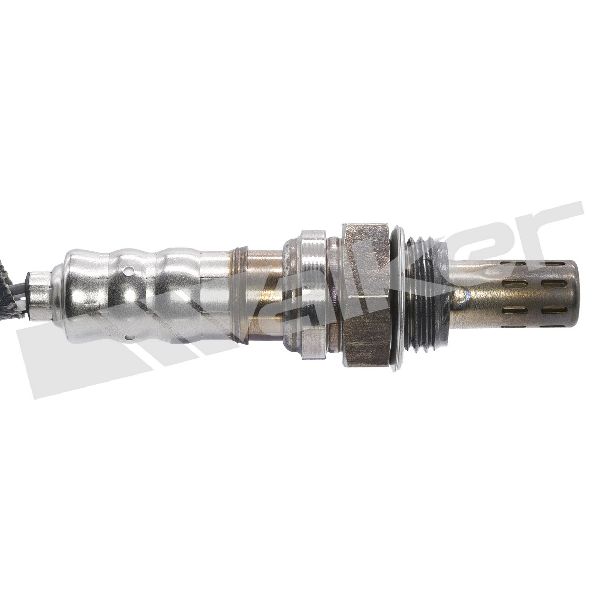
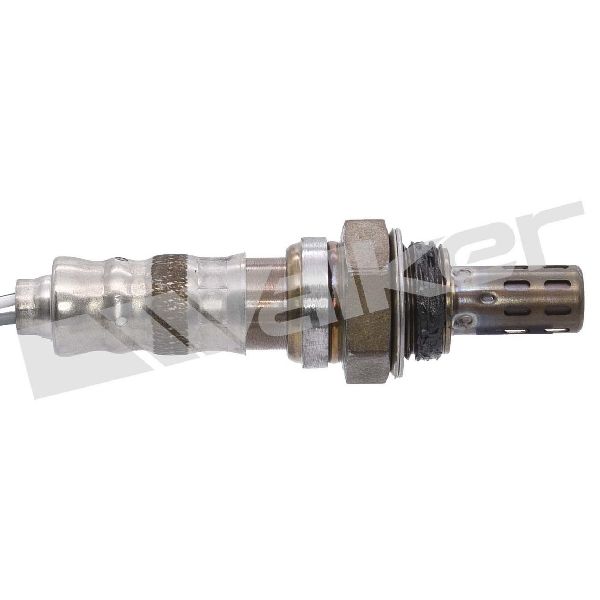
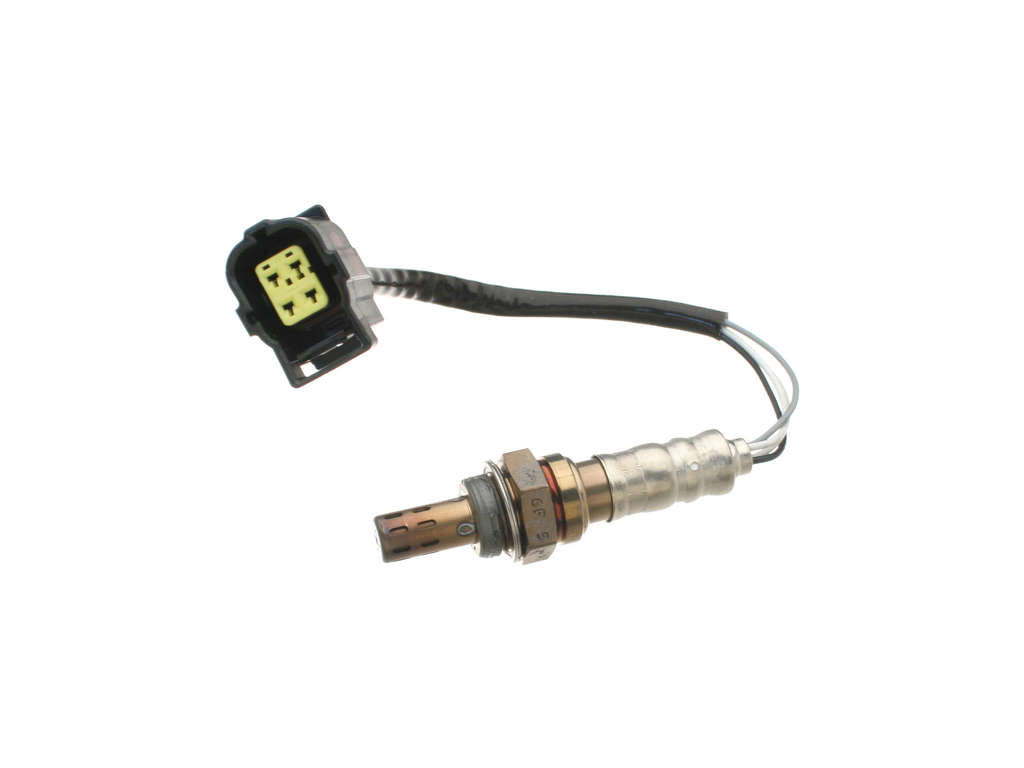
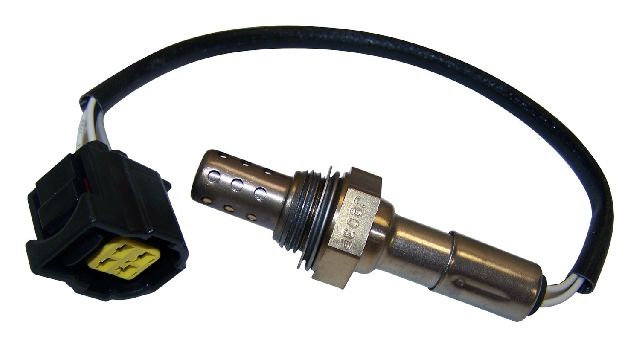
- Upstream Oxygen Sensor (Bank 1, Sensor 1)
(OEM #56029049AA)— This is the most common part to fail, either internally or due to external wiring damage, causing the P0132 code.
Trusted brands: NTK, NGK, Mopar, Denso
OEM price range: $100-$180
Aftermarket price range: $50-$120
Related Codes That Often Appear With This One
- P1128 — This Jeep-specific code for 'Closed Loop Fueling Not Achieved' is a direct result of P0132. The PCM sets P1128 because it cannot trust the faulty high-voltage signal from the O2 sensor to accurately control the fuel mixture.
- P0152 — This is the identical fault (O2 Sensor Circuit High Voltage) but for Bank 2 (driver's side). If both codes appear together, it points towards a systemic issue like a fuel pressure problem or a wiring issue common to both sensor harnesses. One forum user reported replacing the B1S1 sensor for P0132, only to have both P0132 and P0152 appear immediately after, suggesting a deeper issue.
Platform-Specific Known Issues
- The wiring harness for the passenger-side upstream O2 sensor is frequently found melted against the exhaust manifold, causing a short to voltage. This should be the first thing you inspect.
- The Jeep JK ECU is notoriously sensitive to O2 sensor brands. Owners and forum consensus strongly indicate that only NTK (an NGK brand) sensors should be used for reliable, long-term fixes. Using other brands often results in the code returning.
Mechanic-Grade Diagnostic Values

- PCM Fault Trigger Condition — expected: The PCM sets P0132 when it sees the O2 sensor voltage remain above 3.99 volts for 40 seconds.. Failure: A scan tool showing voltage stuck above 3.99V for this duration will trigger the MIL.
- O2 Sensor Heater Element Resistance — expected: 4 to 11 Ohms across the two heater wires (often white).. Failure: A reading of 0 Ohms indicates a short, while an infinite reading (OL) indicates an open circuit in the heater.
- Harness Signal Wire Voltage (Sensor Disconnected, KOEO) — expected: 0 Volts.. Failure: Any voltage present on the signal wire (Pin 4, often Brown) with the sensor disconnected indicates a short to voltage in the harness.
- Definitive Sensor Condemnation Test (Jumper Wire) — expected: With the sensor disconnected and a jumper wire between Pin 3 (O2 Return) and Pin 4 (O2 Signal) on the harness connector, a scan tool should read between 2.3 and 2.7 volts.. Failure: If the voltage falls within this range, the PCM and wiring are confirmed good, proving the sensor itself is faulty.
Scan Tool Commands That Help
- wiTECH (or equivalent high-level scanner): O2 Heater Actuation Test — This bidirectional control allows a technician to command the O2 sensor heater circuit on (typically up to 25% duty cycle on this model) while monitoring amperage with a scope. This can verify the PCM driver, wiring, and heater element integrity dynamically, which is more thorough than a static resistance test.
Wiring & Ground Locations
- B1S1 Connector Pinout (Harness Side) — On the passenger side frame rail, connected to the upstream O2 sensor.. Knowing the pin functions is critical for testing. Pin 1 (BR/GY) is Heater Control from PCM, Pin 2 (BK) is Ground, Pin 3 (DB/DG) is O2 Return to PCM, and Pin 4 (BR) is O2 Signal to PCM. P0132 is a fault on the Pin 4 signal circuit.
- PCM Connector C2 — The Powertrain Control Module is located on the passenger side of the firewall in the engine bay. C2 is one of the large multi-pin connectors.. This is the termination point for the O2 sensor wiring. For end-to-end continuity tests, you need to test from the sensor connector to the corresponding pins on C2. For example, the O2 Return wire (Pin 3 at sensor) goes to Pin 9 on the C2 connector.
Real Owner Repair Stories
- YouTube channel 'Stephan E&S Garage' (2010 Jeep Wrangler JK with 269,000 miles) — Check Engine Light with codes P0132 and P1128.
❌ Tried (didn't work) The video focuses directly on the successful repair.
✅ What actually fixed it The Bank 1, Sensor 1 oxygen sensor was replaced. The mechanic also used a thread chaser to clean the threads in the exhaust manifold before installing the new sensor. After replacement and clearing the codes, the check engine light did not return after several drive cycles. - JK-Forum.com user 'rclark' (Jeep JK Wrangler (year not specified)) — Check Engine Light came on, key-cycle diagnostic showed P0132.
❌ Tried (didn't work) Initial inspection of wires and connector showed no visible damage.
✅ What actually fixed it The owner disconnected the battery for a while to reset the computer. This cleared the Check Engine Light and the Jeep ran well afterward. This indicates a potential intermittent fault that was cleared by a hard reset, though the underlying cause may eventually return.
OEM Part Supersession History
56029049AA→N/A— This part number is still the current and correct Mopar part for the 2007-2011 3.8L Wrangler.
Heads up: This part is used for both upstream and downstream positions on the 3.8L engine, but it is NOT compatible with the 3.6L engine used in 2012 and newer Wranglers.
Diagnostic Flowchart
Other Known Issues on This Vehicle
Issues unrelated to this code that are worth knowing about as an owner of this generation:
- Excessive Oil Consumption 🔴 High — Common, especially on engines over 75,000 miles. Consumption of 1 quart per 1,000-1,500 miles is frequently reported. (Ref: TSB 09-008-07 addresses oil seepage from a porous timing chain cover on early models, but no official recall exists for internal oil burning.)
- Death Wobble 🔴 High — A well-known issue across all JK model years. It is a violent shaking of the front end and steering wheel after hitting a bump at speed, typically caused by worn or loose front suspension components. (Ref: No recall, as it's considered a wear-and-tear issue. The most common culprit is a worn front track bar.)
- Cracked Exhaust Manifold 🟠 Medium — The cast iron exhaust manifolds on the 3.8L V6 are prone to cracking from thermal stress, causing an exhaust leak. This often presents as a ticking noise, especially when the engine is cold.
- Totally Integrated Power Module (TIPM) Failure 🔴 High — Common on 2007-2016 models. The TIPM is the vehicle's main fuse and relay box, and failure can cause a wide range of bizarre electrical problems, such as the fuel pump not working, horn honking randomly, or wipers activating on their own.
- Oil Filter Housing / Cooler Leaks 🟡 Low — The gaskets and O-rings in the oil filter adapter housing can degrade over time, causing oil leaks onto the top of the engine.
Used vs. New Parts: Buying Guide for This Vehicle
When a used part is the smart pick: For this repair, a used part is only recommended for the wiring harness pigtail connector. If the original connector is melted or damaged, a clean pigtail from a junkyard vehicle is a viable and cost-effective alternative to buying a new connector kit.
Donor-vehicle mileage cap: roughly under 150000 miles for the part to have meaningful remaining life.
What to inspect on the donor part:
- Inspect the donor pigtail for any signs of melting, brittleness, or cracking in the plastic.
- Ensure the locking tab is intact and functional.
- Check for corrosion or damage on the internal pins.
- Ensure there is at least 6-8 inches of clean, uncut wire attached to the connector for splicing.
OEM-only on this vehicle (don't cheap out):
- Powertrain Control Module (PCM) - If the PCM is the fault (very rare), a remanufactured OEM unit from a reputable source is the only reliable option, as it will need to be programmed to the vehicle's VIN and options.
Aftermarket brands forum-validated for this vehicle:
- NTK (NGK)
- Denso
Brands owners have reported issues with on this vehicle:
- Bosch - While a quality brand for many applications, numerous forum reports indicate compatibility issues with the Jeep JK platform, often leading to the code returning.
Real Owner Stories
Aggregated from forums and TSBs cited above. Mileages and costs reflect what owners reported in those sources.
2010 Jeep Wrangler JK 3.8L
Symptoms: Check engine light with two hard codes: P1128 and P0132. Closed loop fueling not achieved and bank one sensor one signal stuck high.
What fixed it: Replacing the Bank 1 Sensor 1 oxygen sensor.
Source hint: youtube_comment from S&E's Garage
2007-2011 Jeep Wrangler 3.8L
Symptoms: Check Engine light P0132; light went off temporarily after disconnecting the battery, indicating an intermittent fault.
What fixed it: Checking the plug and replacing the sensor with an NTK brand unit.
Source hint: JK-Forum.com - Thread 'Check Engine light P0132'
2007-2011 Jeep Wrangler 3.8L
Symptoms: Replaced the Bank 1 sensor for P0132, but then immediately received codes for both Bank 1 and Bank 2 (P0152).
What fixed it: The issue was more complex than a single sensor, requiring diagnosis of both banks.
Source hint: JK-Forum.com - Thread 'P0132 and P0152'
Related OBD-II Codes
Frequently Asked Questions
Which brand of oxygen sensor should I use for my 2007-2011 Jeep Wrangler 3.8L?
Is there a specific TSB for the oil consumption that might be fouling my O2 sensors?
Where is the Bank 1 Sensor 1 O2 sensor located on the Jeep JK 3.8L?
Why does my Jeep's wiring harness keep melting and causing P0132?
Can a cracked exhaust manifold cause O2 sensor codes on the 3.8L engine?
How can I tell if the P0132 code is a bad sensor or a wiring short?
Helpful Videos
We Have This Part in Stock

The information in this article is provided for general reference and educational purposes only. Vehicle specifications, procedures, and part compatibility can vary by production date, trim level, and region. Always consult your vehicle's factory service manual and verify part numbers before purchasing or performing repairs. Safety-critical components such as airbags, seat belts, and braking systems should be installed by a qualified professional.
- Jeep Wrangler:
- 🎬 Helpful Videos
- 🛍️ Shop This Part
- What's Unique About the 2007-2011 Jeep Wrangler
- Symptoms You May Notice
- Most Likely Causes
- Rare But Worth Checking
- Diagnosis Steps
- Parts You'll Likely Need
- Related Codes That Often Appear With This One
- Platform-Specific Known Issues
- Mechanic-Grade Diagnostic Values
- Scan Tool Commands That Help
- Wiring & Ground Locations
- Real Owner Repair Stories
- OEM Part Supersession History
- Diagnostic Flowchart
- Other Known Issues on This Vehicle
- Used vs. New Parts: Buying Guide for This Vehicle
- Real Owner Stories
- 2010 Jeep Wrangler JK 3.8L
- 2007-2011 Jeep Wrangler 3.8L
- 2007-2011 Jeep Wrangler 3.8L
- Related OBD-II Codes
- Frequently Asked Questions
- 🎟️ Get 5% Off