

P0132 on 2005-2022 Hyundai Tucson: O2 Sensor High Voltage Causes and Fixes
The P0132 code on a Hyundai Tucson almost always points to a failed upstream oxygen sensor (Bank 1, Sensor 1). The sensor's signal is stuck high, telling the computer the engine is running rich. Replacing this sensor is the most common fix, costing around $60-$150 for the part. Before replacing, it is crucial to inspect the wiring harness for melting or damage due to its proximity to the hot exhaust.
- P0132 on a Hyundai Tucson means the upstream O2 sensor (Bank 1, Sensor 1) circuit has a high voltage fault.
- The most probable cause is a failed O2 sensor itself.
- Before replacing the sensor, always inspect its wiring and connector for damage, especially melting, and check the related fuse.
- This is a DIY-friendly repair for most home mechanics with the correct O2 sensor socket.
- Ignoring the code will cause poor fuel mileage and can eventually damage the catalytic converter.
What's Unique About the 2005-2022 Hyundai Tucson
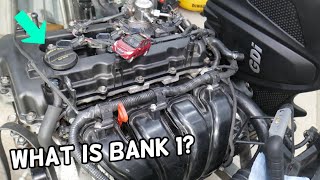
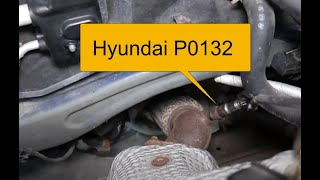
For most Hyundai Tucsons, which are equipped with four-cylinder engines, there is only one bank of cylinders, so "Bank 1" refers to the entire engine. 🎬 Watch this quick clip on finding Bank 1 on a Tucson Sensor 1 is always the upstream sensor, located on the exhaust manifold before the catalytic converter. The issue is very common across all generations of the Tucson and is typically an electrical failure within the sensor itself or its wiring, rather than a more complex fuel system problem. The wiring is particularly susceptible to melting from contact with the exhaust manifold.
Generation note: This guide covers the first four generations of the Hyundai Tucson (2005-2009, 2010-2015, 2016-2021, 2022+). While engine designs have changed (e.g., Theta II, Nu, Gamma), the function of the Bank 1 Sensor 1 O2 sensor and the meaning of code P0132 remain consistent. The physical location and part number of the sensor will vary by engine and model year. For example, part number 39210-2E101 is specified for the 2.0L Nu engine in 2019-2021 Tucsons, among other Hyundai models.
Symptoms You May Notice
- Check Engine Light is on
- Decreased fuel efficiency
- Rough or erratic idle
- Engine hesitation or misfiring
- Black smoke from the exhaust (in rare cases of an actual rich condition)
- Strong exhaust smell, sometimes like rotten eggs or sulfur.
- Replacing the downstream (Sensor 2) oxygen sensor. P0132 specifically refers to Sensor 1, which is located before the catalytic converter.
- Replacing the catalytic converter. A bad converter typically sets codes like P0420, not P0132.
- Using cheap, universal aftermarket sensors. Some owners report recurring codes after replacing the sensor with a non-OEM part, suggesting some Tucsons are sensitive to sensor brand.
Most Likely Causes
- Failed Upstream Oxygen Sensor (Bank 1, Sensor 1) 🔴 High Probability Oxygen sensors are wear-and-tear items exposed to extreme heat and exhaust gases, leading to eventual failure. This is the most common reason for P0132 on virtually all vehicles, including the Tucson.
How to confirm: Use an OBD-II scanner to monitor live data for the B1S1 O2 sensor. If the voltage is stuck high (e.g., >0.9V) and does not fluctuate rapidly on a warm engine, the sensor has likely failed. A healthy sensor's voltage should swing between approximately 0.1V and 0.9V.
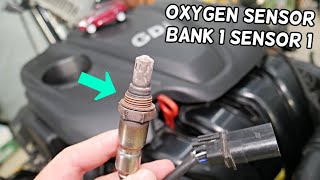
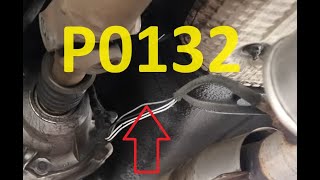
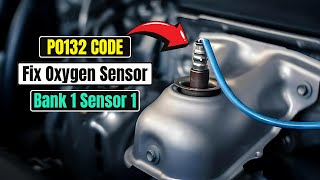
Typical fix: Replace the Bank 1, Sensor 1 oxygen sensor. An O2 sensor socket is often required for removal. 🎬 See how to locate and replace the upstream oxygen sensor
Est. part cost: $60-$150 - Wiring or Connector Issue 🟡 Medium Probability The sensor wiring is located near the hot exhaust manifold, making it highly susceptible to melting, chafing, or corrosion over time. A short to power in the signal wire will cause a constant high voltage reading.
How to confirm: Visually inspect the wiring harness and connector leading to the O2 sensor for any signs of melting, breaks, corrosion, or loose pins. Pay close attention to where the harness may have come in contact with the exhaust manifold or engine block.
Typical fix: Repair or replace the damaged section of the wiring harness or the connector. Waterproof crimp connectors or a new pigtail may be needed.
Est. part cost: $10-$50 - Blown Fuse ⚪ Low Probability A short in the O2 sensor's internal heater circuit can cause its associated fuse to blow, which can sometimes affect the signal circuit.
How to confirm: Locate the fuse for the oxygen sensor heater circuit in the vehicle's fuse box (often labeled 'SENSOR 1' or similar in the under-hood panel) and check for continuity.
Typical fix: Replace the blown fuse. If it blows again, investigate the wiring and the sensor's heater element for a short circuit.
Est. part cost: $1-$5
Rare But Worth Checking
- Exhaust Leak: An exhaust leak before the O2 sensor can draw in outside air, confusing the sensor and potentially causing erratic readings, though it's less likely to cause a steady high voltage signal.
- High Fuel Pressure or Leaking Fuel Injector: If the engine is genuinely running rich due to a faulty fuel pressure regulator or a leaking injector, the O2 sensor will correctly report high voltage. This is less common and would usually be accompanied by other codes (like P0172 - System Too Rich) or more severe drivability issues.
- Faulty Powertrain Control Module (PCM): This is extremely rare. The PCM should only be considered after all other possibilities (sensor, wiring, fuel system) have been exhaustively ruled out by a professional.
Diagnosis Steps
- Connect an OBD-II scanner and confirm that P0132 is the primary code. If other codes like P0172 are present, it may point towards a fuel system issue rather than just the sensor.
- View the live data stream for the Bank 1 Sensor 1 (B1S1) O2 sensor. The voltage should fluctuate rapidly between approximately 0.1V and 0.9V on a warm, running engine. If it is stuck high (e.g., above 0.9V), it confirms the fault condition. 🎬 Watch a video walkthrough on diagnosing and fixing code P0132
- Perform a thorough visual inspection of the O2 sensor's wiring harness and connector. Look for any signs of melting, chafing, corrosion, or loose connections. This is a common point of failure on Tucsons.
- Check the fuse for the O2 sensor heater circuit in the under-hood fuse panel, often labeled 'SENSOR 1'.
- If the wiring and fuse are intact, the O2 sensor itself is the most likely culprit and should be replaced. Using a quality OEM or equivalent brand (Denso, NGK/NTK) is recommended.
- After replacement, clear the codes with the scanner and perform a drive cycle to ensure the code does not return.
- If the code persists, further investigation into potential exhaust leaks, fuel pressure, or fuel injectors is necessary.
- As a final, rare step, the PCM's internal driver for the O2 sensor circuit may need to be tested by a professional.
Parts You'll Likely Need
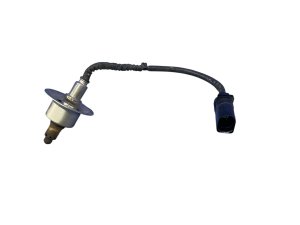
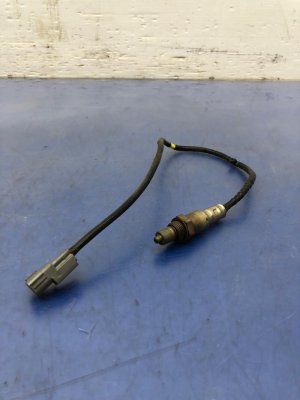
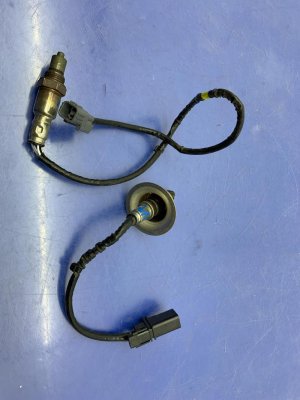
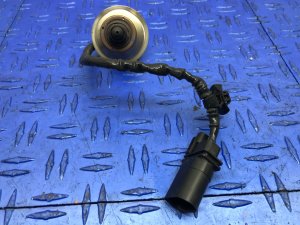
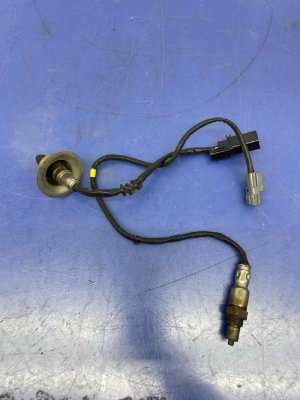
- Upstream Oxygen Sensor (Bank 1, Sensor 1)
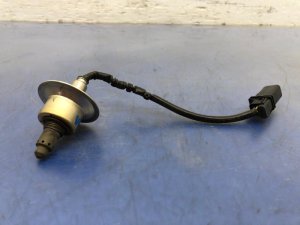
(OEM #Varies by year/engine. Examples: 39210-2E101 (2.0L Nu), Denso 234-5082 (2018-2021 2.0L), NGK 27088 (2014-2018 2.0L). Always verify with VIN.)— This sensor is the primary component responsible for the signal that triggers code P0132. It is a common failure item due to its exposure to high temperatures in the exhaust stream.
Trusted brands: Bosch, Denso, NGK/NTK, Hyundai Genuine
OEM price range: $120-$200
Aftermarket price range: $60-$150
Related Codes That Often Appear With This One
- P0135: O2 Sensor Heater Circuit Malfunction (Bank 1 Sensor 1) - A fault in the sensor's internal heater can occur alongside the signal fault.
- P0172: System Too Rich (Bank 1) - This may appear if the P0132 code is being caused by a genuine rich running condition, not just a sensor fault.
Platform-Specific Known Issues
- Theta II Engine Context: On 2010-2019 Tucsons with the 2.4L Theta II engine, while P0132 is a standard O2 sensor fault, be aware these engines have a history of more severe issues like oil consumption and engine failure. An O2 sensor code could be an early symptom of oil contamination, so monitoring oil levels is critical.
- Aftermarket Sensor Sensitivity: Some owner experiences suggest that certain Tucson models can be sensitive to aftermarket O2 sensors, leading to recurring codes even after replacement. Using an OEM or a top-tier brand like Denso or NGK/NTK is often recommended for a lasting repair.
Mechanic-Grade Diagnostic Values
- DTC Trigger Threshold (B1S1 Voltage) — expected: Fluctuating between 0.1V and 0.9V.. Failure: Voltage remains above 1.2V or 1.3V for more than 1 second.
- O2 Sensor Heater Element Resistance — expected: Approximately 8.0 - 10.0 Ω when cold (approx. 20°C / 68°F).. Failure: Reading is an open circuit (OL) or significantly outside the expected range.
- O2 Sensor Circuit Bias Voltage (KOEO) — expected: Approximately 450 mV (0.45V) on the signal wire before the engine starts and the sensor heats up.. Failure: Voltage is 0V, near battery voltage, or significantly different, indicating a wiring or PCM issue.
Scan Tool Commands That Help
- Hyundai GDS (Global Diagnostic System): Data Analysis / Live Data Graphing — To visually inspect the real-time voltage output of the Bank 1 Sensor 1. A healthy sensor will show a rapidly fluctuating waveform, while a faulty one will often be a flat line stuck high.
- Hyundai GDS (Global Diagnostic System): Reset Lambda Adaptation / Fuel Trim Adaptation — After replacing the O2 sensor or fixing a related wiring issue. This command clears the long-term fuel trim values that may have been skewed by the faulty sensor, allowing the PCM to relearn with the new, correct data.
Wiring & Ground Locations
- ECM Connector Pin (Heater Control) — On older models (e.g., ~2005), the B1S1 heater control output may be on Pin 7 of the ECM connector. For later models (~2011 2.0L), this may be on Pin 7 of the [CGG-K] connector.. This pin sends the signal to activate the sensor's internal heater. A short or open on this circuit can cause related codes (like P0135) and sometimes affect the sensor's signal reading.
- ECM Connector Pin (Signal) — For a 2011 2.0L Tucson, the B1S1 signal wire is located at Pin 42 of the ECM connector (Compensative Resistance).. This is the specific pin at the ECM where the high voltage signal is received. Testing for voltage here can confirm if the short-to-power is in the harness or if the issue is internal to the PCM (rare).
- Engine/Chassis Ground — Multiple ground points exist, such as G03 on some diagrams, typically located on the cylinder head or engine block near the intake manifold. Other diagrams show power grounds at Pins 3 and 4 of the ECM connector.. A poor ground connection for the ECM or the sensor circuit can cause erratic voltage readings, including a floating high voltage that could trigger a P0132.
Real Owner Repair Stories
- Reddit r/MechanicAdvice (Unknown year/model, symptoms consistent with Tucson) — P0130 and P0132 codes.
❌ Tried (didn't work) Replacing the upstream oxygen sensor.
✅ What actually fixed it The check engine light returned after replacing the sensor. A closer inspection revealed the wiring harness for the O2 sensor had melted from contact with the exhaust. The final fix was to repair the melted wires in the harness. - Hyundai Aftermarket Forum (2000 Hyundai Elantra (similar wiring principles)) — Melted O2 sensor harness.
❌ Tried (didn't work) Attempting to match wire colors on a new pigtail, but the car's harness used different colors (Red, Red, Black, Orange).
✅ What actually fixed it The recommended solution was to use a multimeter in continuity mode to trace each wire from the damaged connector end back to its source pin on the ECM to correctly identify its function (Signal, Ground, Heater, etc.) before splicing, as Hyundai wire colors were inconsistent.
OEM Part Supersession History
Varies significantly by generation→Example: 39210-2E101— Part consolidation and minor design updates.
Heads up: Part number 39210-2E101 is listed for many 2.0L Hyundai engines from roughly 2016-2021, including the Tucson, Elantra, Kona, and Veloster. Using a sensor from a different engine family, even if it physically fits, can cause issues due to different heater resistances or calibration. Always verify the part number with the vehicle's VIN.
Model Year Variations Within This Range
- 2005-2009 (JM Generation): These first-generation models have simpler engine control logic. The diagnostic threshold for P0132 is a sensor voltage greater than 1.3V for 1 second. The wiring and connectors are older and may be more prone to corrosion and brittleness.
- 2010-2015 (LM Generation): For the 2012 model year, the diagnostic threshold was lowered to a sensor voltage greater than 1.2V for 1 second. This generation introduced the Theta II engines, which have their own specific issues (see 'Vehicle Specific Issues').
Diagnostic Flowchart
Other Known Issues on This Vehicle
Issues unrelated to this code that are worth knowing about as an owner of this generation:
- Theta II Engine Failure 🔴 High — Common in 2010-2019 models with 2.0L and 2.4L Theta II engines. Caused by manufacturing debris leading to bearing wear and seizure. (Ref: Multiple recalls and a major class-action lawsuit settlement exist. NHTSA Consent Order (2020) and various service campaigns.)
- Dual-Clutch Transmission (DCT) Hesitation/Shudder 🟠 Medium — Affects 2016-2017 models equipped with the 1.6L Turbo engine and 7-speed DCT. Owners report hesitation, shuddering, or lack of acceleration from a stop. (Ref: Hyundai issued recalls and TSBs (e.g., for 2016 models) to reprogram the Transmission Control Module (TCM).)
- Excessive Oil Consumption 🟠 Medium — Reported in various engines, including the 2.0L Nu and 2.4L Theta II, often due to issues with piston rings. (Ref: Part of the broader engine class-action settlement which extended warranties for certain engine repairs.)
- A/C System Malfunction 🟡 Low — Some owners, particularly of the 2016 model year, report the A/C intermittently blowing warm air.
Used vs. New Parts: Buying Guide for This Vehicle
When a used part is the smart pick: Never. A used oxygen sensor is not recommended. It is a wear-and-tear component with a finite lifespan, and its remaining life is impossible to determine. The cost of labor to install a used sensor that may fail shortly after outweighs any potential savings.
What to inspect on the donor part:
- Not applicable, as used sensors are not advised.
OEM-only on this vehicle (don't cheap out):
- While not strictly 'OEM-only', using a genuine Hyundai sensor or a sensor from the original equipment manufacturer (like Denso or NTK) is highly recommended to avoid compatibility issues that are sometimes reported with budget aftermarket brands.
Aftermarket brands forum-validated for this vehicle:
- Denso
- NGK/NTK
- Bosch (though some users report occasional incompatibility on certain Asian models)
Brands owners have reported issues with on this vehicle:
- Unbranded, 'white-box' sensors or universal sensors that require splicing may not have the correct heater resistance or calibration, leading to recurring codes.
Real Owner Stories
Aggregated from forums and TSBs cited above. Mileages and costs reflect what owners reported in those sources.
2005 Hyundai Tucson
Symptoms: Experienced a frustrating recurring code despite replacing the sensor multiple times with aftermarket parts.
What fixed it: Installing a genuine Hyundai OEM sensor finally resolved the issue.
Source hint: Reddit r/MechanicAdvice
2010-2019 Hyundai Tucson 2.4L Theta II
Symptoms: P0132 fault code appearing alongside concerns regarding oil consumption.
What fixed it: Replacing the upstream O2 sensor and monitoring oil levels due to potential oil contamination from the Theta II engine.
Source hint: vehicle_specific_issues
Related OBD-II Codes
Frequently Asked Questions
Can I use a used oxygen sensor from a donor Tucson to save money?
Which brand of oxygen sensor should I buy for my Tucson to ensure the P0132 code stays away?
I have a 2015 Tucson with the 2.4L Theta II engine; could P0132 be related to my engine's oil issues?
Where is the fuse for the O2 sensor located on a Hyundai Tucson?
Is P0132 common on the Kia Sportage as well?
Could a short in the wiring cause the high voltage reading for P0132?
Helpful Videos
![How to Fix P0132 Engine Code in 3 Minutes [2 DIY Methods / Only $8.78]](https://img.youtube.com/vi/z01JETB0ezI/mqdefault.jpg)
We Have This Part in Stock

The information in this article is provided for general reference and educational purposes only. Vehicle specifications, procedures, and part compatibility can vary by production date, trim level, and region. Always consult your vehicle's factory service manual and verify part numbers before purchasing or performing repairs. Safety-critical components such as airbags, seat belts, and braking systems should be installed by a qualified professional.
- Hyundai Tucson:
- 🎬 Helpful Videos
- 🛍️ Shop This Part
- What's Unique About the 2005-2022 Hyundai Tucson
- Symptoms You May Notice
- Most Likely Causes
- Rare But Worth Checking
- Diagnosis Steps
- Parts You'll Likely Need
- Related Codes That Often Appear With This One
- Platform-Specific Known Issues
- Mechanic-Grade Diagnostic Values
- Scan Tool Commands That Help
- Wiring & Ground Locations
- Real Owner Repair Stories
- OEM Part Supersession History
- Model Year Variations Within This Range
- Diagnostic Flowchart
- Other Known Issues on This Vehicle
- Used vs. New Parts: Buying Guide for This Vehicle
- Real Owner Stories
- 2005 Hyundai Tucson
- 2010-2019 Hyundai Tucson 2.4L Theta II
- Related OBD-II Codes
- Frequently Asked Questions
- 🎟️ Get 5% Off