

P0132 on 2003-2024 Honda Accord: O2 Sensor High Voltage Causes and Fixes
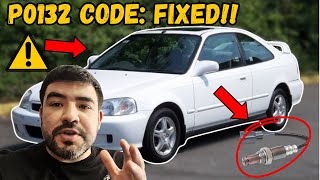
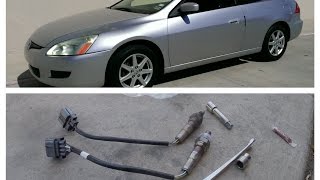
On a Honda Accord, code P0132 is most often caused by a failing primary oxygen sensor (Bank 1, Sensor 1). Replacing this sensor, which is an Air/Fuel Ratio sensor on most models, typically resolves the issue. Expect to pay $80-$150 for an aftermarket part or $150-$250 for an OEM Denso or NGK/NTK sensor. Always use the correct A/F sensor, not a cheaper conventional O2 sensor.
- P0132 on a Honda Accord almost always points to a faulty primary oxygen sensor, also known as the Air/Fuel Ratio sensor.
- Ensure you purchase the correct type of sensor; a standard O2 sensor will not work if the vehicle requires an A/F sensor. Denso and NGK/NTK are trusted OEM suppliers.
- On 4-cylinder models, this is an easy DIY replacement. On V6 models, the sensor is on the rear bank against the firewall and is much harder to access.
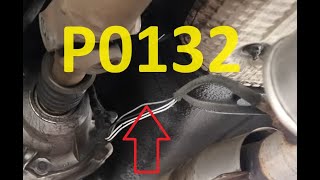
- Before replacing the sensor, perform a quick visual inspection of the wiring and connector for any obvious damage like melting, chafing, or fluid contamination.
- Driving with this code will hurt your fuel economy and could lead to more expensive catalytic converter damage over time.
What's Unique About the 2003-2024 Honda Accord
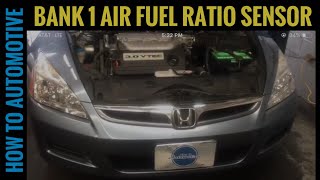
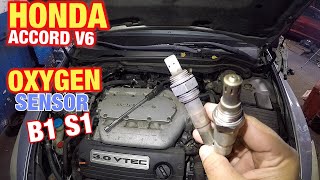
For the Honda Accord, the "Bank 1, Sensor 1" is typically a wideband Air/Fuel (A/F) ratio sensor, not a conventional O2 sensor. Using a standard, cheaper O2 sensor where an A/F sensor is required will not fix the problem and the code will return. On 4-cylinder engines across all generations, this sensor is easily accessible on the front of the exhaust manifold, often visible right when you open the hood. 🎬 Watch: Step-by-step A/F sensor replacement for 4-cylinder Accords. On V6 models, Bank 1 is the rear cylinder bank (closer to the firewall). Access to this sensor is significantly more difficult, often requiring removal of the plastic engine cover and reaching down behind the engine, making it a more challenging DIY job.
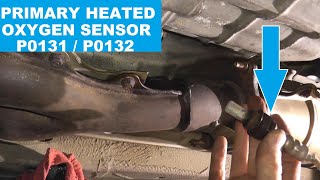
🎬 See this walkthrough for replacing the difficult V6 rear sensor.Generation note: This guide covers the 7th (2003-2007), 8th (2008-2012), 9th (2013-2017), 10th (2018-2022), and 11th (2023-2024) generations of the Honda Accord. While the code's meaning is consistent, the primary difference is the location and accessibility of the Bank 1 Sensor 1 on 4-cylinder versus V6 engines. Part numbers are also specific to generation and engine type.
Symptoms You May Notice
- Check Engine Light illuminated
- Decreased fuel economy
- Rough or erratic idle
- Engine running rough or hesitating during acceleration
- Black or dark smoke from the exhaust (due to a rich condition)
- Delay in acceleration when the engine is cold
- Replacing the wrong oxygen sensor (e.g., the downstream Sensor 2 instead of the upstream Sensor 1).
- Installing a generic or incorrect type of oxygen sensor instead of the required Air/Fuel Ratio sensor. A user on Reddit confirmed this mistake; their car ran poorly until they installed the correct Denso A/F sensor.
- Replacing the O2 sensor without first checking for wiring issues or an underlying rich condition, leading to the code returning.
Most Likely Causes
- Faulty Bank 1, Sensor 1 (Air/Fuel Ratio Sensor) 🔴 High Probability Oxygen sensors are wear-and-tear items that degrade over time from heat and contaminants. This is the most common failure point for this code on Accords of all ages.
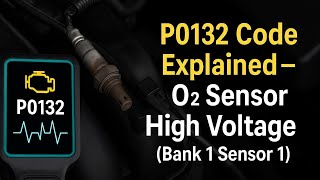
How to confirm: Use an OBD-II scanner with live data to observe the Bank 1 Sensor 1 voltage. If the voltage is stuck high (typically above 0.9V) and does not fluctuate on a warm engine, 🎬 Watch: A detailed explanation of the P0132 high voltage code. the sensor has likely failed. A healthy sensor's voltage should oscillate rapidly.
Typical fix: Replace the Bank 1, Sensor 1 Air/Fuel Ratio sensor. It is highly recommended to use an OEM supplier part like Denso or NGK/NTK to ensure compatibility and longevity. Using cheaper, incorrect sensor types (like a conventional O2 sensor instead of an A/F sensor) is a common cause for the fix to fail.
Est. part cost: $80-$250 - Wiring Harness or Connector Issue 🟡 Medium Probability The wiring is exposed to high heat in the engine bay, which can cause insulation to become brittle and crack over time, leading to shorts. Connectors can also become contaminated with moisture, oil, or other fluids, causing a short to voltage.
How to confirm: Visually inspect the wiring harness leading to the O2 sensor for any signs of melting, chafing, or breaks. Check the connector for corrosion, bent pins, or fluid contamination. Test for a short to voltage on the signal wire using a multimeter and a vehicle-specific wiring diagram.
Typical fix: Repair the damaged section of the wiring harness or clean/replace the connector. In some cases, fluid leaking from above (like a power steering hose) can contaminate the harness, requiring the leak to be fixed and the harness and sensor to be replaced.
Est. part cost: $5-$50 for simple repairs, potentially higher if a harness section needs replacement. - Engine Running Rich ⚪ Low Probability While less common, other issues can force the engine to run rich, causing the O2 sensor to correctly report high voltage. This is not a sensor failure, but a symptom of another problem.
How to confirm: Look for other DTCs stored in the PCM, especially P0172 (System Too Rich). Check for leaking fuel injectors, excessively high fuel pressure from a faulty regulator, or a malfunctioning Mass Airflow (MAF) or Engine Coolant Temperature (ECT) sensor that could lead to a rich condition.
Typical fix: Diagnose and repair the underlying cause of the rich condition, such as replacing a leaking fuel injector or faulty fuel pressure regulator.
Est. part cost: $50-$500+
Rare But Worth Checking
- Exhaust Leak: An exhaust leak before the O2 sensor can sometimes draw in outside air and paradoxically cause the sensor to react in unexpected ways, although a low voltage code (lean) is more common. It's worth checking for leaks if other diagnoses are inconclusive.
- Faulty Powertrain Control Module (PCM): This is extremely rare. The PCM's internal driver for the O2 sensor circuit can fail. This should only be considered after all other possibilities, including the sensor and wiring, have been exhaustively tested and ruled out. A technician on a Honda-Tech forum noted this is the last resort after checking wiring continuity back to the ECM.
Diagnosis Steps
- Connect an OBD-II scanner and verify that P0132 is the primary code. If other codes like P0172 are present, diagnose the rich condition first.
- Using the scanner's live data stream, monitor the voltage for 'Bank 1, Sensor 1'. On a warm engine, it should fluctuate rapidly. If it is stuck above 0.9 volts and does not change, the sensor or its circuit is faulty.
- Turn off the engine and visually inspect the Bank 1, Sensor 1 and its wiring harness. Look for any signs of melting on the exhaust, chafing, fluid contamination, or corrosion on the connector pins.
- If the wiring looks good, the most likely cause is a failed A/F sensor.
- To test the wiring, disconnect the sensor and use a multimeter to check for a short to power on the signal wire. Refer to a vehicle-specific wiring diagram to identify the correct pins.
- If you suspect an underlying rich condition, check long-term and short-term fuel trims on the scanner. High negative fuel trims (e.g., -10% or more) indicate the PCM is trying to compensate for a rich mixture.
- Before replacing the PCM (very rare), exhaust all other possibilities. A technician on a forum detailed a step-by-step electrical test from the sensor connector back to the PCM to rule out wiring faults.
Parts You'll Likely Need
- Air/Fuel Ratio Sensor (Bank 1, Sensor 1)
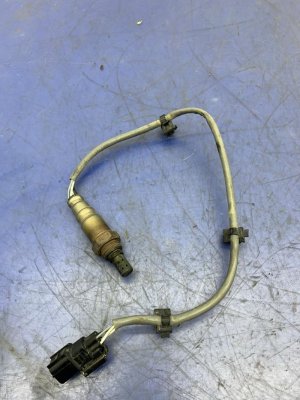
(OEM #Varies by year/engine. Ex: 36531-R70-A01 (V6), 36531-RAA-A01 (4-cyl), 36532-5G1-A01 (9th Gen V6).)— This is the primary sensor for fuel control and the most common failure point for code P0132. It is a wear item that eventually fails from heat and contamination.
Trusted brands: Denso (OEM Supplier), NGK/NTK (OEM Supplier)
OEM price range: $150-$250
Aftermarket price range: $80-$150
Related Codes That Often Appear With This One
- P0172 — P0172 (System Too Rich Bank 1) may appear alongside P0132. P0132 indicates a sensor circuit fault, while P0172 confirms the PCM's conclusion that the engine is running rich. Seeing both together strongly suggests investigating a true rich condition (like a leaky injector) rather than just a bad sensor.
- P0135 — P0135 (O2 Sensor Heater Circuit Malfunction Bank 1 Sensor 1) can sometimes appear with P0132. This points more directly to an electrical failure within the sensor's heating element or its circuit, reinforcing the likelihood that the sensor itself has failed.
Technical Service Bulletins (TSBs) & Recalls
- While no specific Honda TSB for P0132 was found, General Motors issued TSB 18-NA-009 for a similar issue where leaking power steering fluid would contaminate the O2 sensor wiring harness, causing high voltage codes including P0132. This is a plausible, though unconfirmed, diagnostic path for Honda Accords if a fluid leak is observed above the sensor harness.
Platform-Specific Known Issues
- On V6 models (J-series engines), owners consistently report the extreme difficulty of accessing the Bank 1 Sensor 1. It is located on the rear bank against the firewall, requiring mechanics to work by feel. One owner on AcuraZine described it as 'a bit awkward to reach' even for an experienced DIYer.
- A common mistake is installing an aftermarket Bosch sensor, which some owners report does not work correctly with Honda's ECU, causing the code to persist. A user on Honda-Tech and another on YouTube both noted that replacing a Bosch unit with a Denso sensor fixed the problem.
- For 8th generation (2008-2012) Accords with the 2.4L 4-cylinder, the correct upstream A/F sensor is often Denso part #234-9072 or NGK/NTK #24684.
Mechanic-Grade Diagnostic Values
- A/F Sensor (LAF) Signal Voltage — expected: When forcing a rich condition (e.g., with propane), voltage on the signal pin should drop to ~0.1V. When forcing a lean condition (e.g., disconnecting an injector), voltage should rise to at least 0.4V.. Failure: The sensor is failing if the difference between the maximum lean and rich voltages is less than 1.0V.
- A/F Sensor (LAF) Response Time — expected: Using an oscilloscope, the signal should shift from full lean to full rich in 100 milliseconds or less.. Failure: A slower response time indicates a tired or contaminated sensor that needs replacement.
- A/F Sensor Heater Circuit Resistance — expected: Approximately 2 Ω.. Failure: A reading significantly different from 2 Ω suggests a problem with the internal heater element.
- A/F Sensor Element Resistance — expected: Between 1-3 kΩ across the sensor leads.. Failure: Values outside this range indicate a shorted or open sensor element.
- Live Data Voltage (Scan Tool) — expected: A healthy sensor's voltage should fluctuate rapidly between approximately 0.1V and 0.9V on a warm engine.. Failure: Voltage is stuck consistently above 0.9V.
Hidden / Shadow Codes Worth Checking
- Mode 6, Test ID for Catalyst Monitor: Mode 6 data provides raw test results from the PCM's self-diagnostics. For the catalyst, it shows oxygen storage capacity. While not a shadow code for P0132 itself, a failing catalyst value could point to a long-term rich condition that P0132 is detecting. (see via A professional scan tool with Mode 6 capabilities. Note that on some Honda systems, it is normal for the 'current value' to be the same as the 'minimum passing value'.)
Scan Tool Commands That Help
- Honda Diagnostic System (HDS): A/F Test (or similar function) — The HDS can run specific self-tests on the A/F sensor circuit and display commanded vs. actual air/fuel ratios, which helps differentiate between a sensor fault and a true rich condition.
- Honda Diagnostic System (HDS): Snapshot Function — This allows a technician to capture all sensor data at the moment the P0132 fault is triggered, which is invaluable for diagnosing intermittent issues.
- Professional Scan Tool: PCM Self-Test / Module Communication Check — This is a final check to be used when the sensor and wiring have been proven good. A failure here points towards an internal PCM fault, which is a rare cause of P0132.
Wiring & Ground Locations
- G101 — On older Accords (circa 98-02), this is the main ECU ground located in the engine bay on the driver's side, potentially on the cylinder head or near the thermostat housing. Its exact location varies by generation but it's a critical ground for many sensors.. A poor ECU ground at G101 can cause floating voltages and erratic sensor readings, including a false high voltage signal from the O2 sensor, leading to a P0132 code.
- ECM/PCM Connector D, Pins D7 and D11 — On older Accords (e.g., 1997), these are pins on the gray 16-pin connector (C461) at the ECM/PCM.. Service manual procedures may require jumping these specific pins to test the circuit's integrity back to the computer, helping to isolate a wiring fault from a sensor or PCM fault.
- A/F Sensor Signal Ground Wire — In the A/F sensor's own connector harness. For a 2000 Accord V6, this was identified as the Green/Black wire.. A high voltage code is often caused by an open or poor ground. A technician found a P0132 was caused by a poor connection on this specific ground wire within the connector itself; wiggling the connector caused the ground to return.
Real Owner Repair Stories
- Oz Mechanics on YouTube (2000 Honda Accord V6 (3.0L)) — Persistent P0132 code.
❌ Tried (didn't work) A previous shop replaced the Throttle Position Sensor (TPS)., The previous shop replaced the entire throttle body., The previous shop replaced the primary oxygen sensor with an aftermarket Bosch unit.
✅ What actually fixed it The technician diagnosed an open ground on the A/F sensor circuit. The Green/Black wire in the sensor's connector was not making a solid connection. Wiggling the connector harness caused the ground to intermittently connect. The final fix was to repair the connection within the harness/connector for that ground wire. - Honda-Tech.com forum user (1997 Honda Accord SE 4-cylinder, 154k miles) — P0132 code, stalls once or twice when first started cold.
❌ Tried (didn't work) Replacing the primary O2 sensor with a new Bosch sensor., Resetting the ECU.
✅ What actually fixed it The user did not post a final resolution, but other technicians in the thread strongly advised against the Bosch sensor and recommended a Denso or NGK/NTK part. The diagnostic advice given was to check the wiring continuity from the sensor connector all the way back to the ECM pins to rule out a wiring harness break before condemning the rare-but-possible faulty ECM. - Reddit user r/MechanicAdvice (2002 Honda Accord V6 EX) — P0132 code, low revs, rumbling.
❌ Tried (didn't work) Replacing the upstream sensor with an incorrect part (a conventional O2 sensor, part #13377, which lacked the side holes of the original).
✅ What actually fixed it The user was advised by their teacher and other commenters that they needed a wideband Air/Fuel sensor, not a conventional O2 sensor. The fix was to install the correct Denso or NGK/NTK A/F ratio sensor for that specific vehicle.
When the Usual Fixes Don't Work
- In one documented case for a 2000 Honda Accord V6, the P0132 code was not caused by a faulty sensor or a rich running condition. After a new sensor and even a new throttle body failed to fix the issue, the root cause was found to be a poor ground connection within the sensor's own electrical connector. The wire had likely fatigued at the pin, creating an open ground circuit which the PCM interprets as high voltage. This highlights the importance of physically testing the harness connector itself, not just the sensor or the main wiring loom.
OEM Part Supersession History
36531-RAA-A01→36531-RAA-A02— Standard part revision by Honda.36531-R70-A01→Unknown— Original part for many V6 models.
Heads up: This is an A/F Ratio sensor. Using a cheaper conventional O2 sensor will not work and the code will persist.
Model Year Variations Within This Range
- 2003-2007 (7th Gen): These models use a wideband A/F sensor. A common aftermarket part is Denso 234-5010 for the V6. The ECU ground G101 is a frequent point of failure to check.
- 1998-2002 (6th Gen, for context): Even on these older models, using a non-OEM brand like Bosch for the O2 sensor is a well-documented cause of persistent codes. A 2000 V6 model surprisingly only had two total O2 sensors (one upstream, one downstream) instead of four, simplifying diagnosis.
Diagnostic Flowchart
Real Owner Stories
Aggregated from forums and TSBs cited above. Mileages and costs reflect what owners reported in those sources.
2002 Honda Accord V6 EX
Symptoms: Check engine light came on, revs were low, and the car felt like it was rumbling.
What fixed it: The user initially installed a Bosch replacement sensor (part 13377) which failed to fix the issue. They were advised to replace it with a Denso or NGK/NTK sensor, as the original part was likely Denso.
Source hint: Reddit r/MechanicAdvice - 'P0132 on my 2002 Honda Accord V6 EX'
1997 Honda Accord SE 4cyl Auto
Symptoms: P0132 code remained active even after replacing the sensor with a Bosch part.
What fixed it: Diagnosed the issue using service manual steps, which included checking for voltage stuck above 0.9V and performing jumper wire tests to rule out wiring faults before addressing the incompatible Bosch sensor.
Source hint: Honda-Tech.com - '97 Accord SE 4cyl. Auto p0132'
Acura TL V6 (J-Series Platform Mate)
Symptoms: Triggered a P0132 code pointing to a failed Bank 1 A/F sensor on the rear firewall side.
What fixed it: Replaced the rear bank A/F sensor, though the owner noted it was 'a bit awkward to reach' against the firewall even for an experienced DIYer.
Source hint: AcuraZine forum (cited in vehicle_specific_issues)
Related OBD-II Codes
Frequently Asked Questions
Why did my P0132 code come back after installing a new Bosch O2 sensor on my Accord?
Is Bank 1 Sensor 1 hard to replace on my V6 Honda Accord?
What is the correct part number for the upstream A/F sensor on my 2008-2012 Accord 2.4L?
Can a power steering fluid leak cause a P0132 code on my Accord?
How can I test if the Bank 1 Sensor 1 is actually bad on my Accord?
Should I replace the PCM to fix the P0132 code?
Helpful Videos
We Have This Part in Stock



The information in this article is provided for general reference and educational purposes only. Vehicle specifications, procedures, and part compatibility can vary by production date, trim level, and region. Always consult your vehicle's factory service manual and verify part numbers before purchasing or performing repairs. Safety-critical components such as airbags, seat belts, and braking systems should be installed by a qualified professional.
- Honda Accord:
- 🎬 Helpful Videos
- 🛍️ Shop This Part
- What's Unique About the 2003-2024 Honda Accord
- Symptoms You May Notice
- Most Likely Causes
- Rare But Worth Checking
- Diagnosis Steps
- Parts You'll Likely Need
- Related Codes That Often Appear With This One
- Technical Service Bulletins (TSBs) & Recalls
- Platform-Specific Known Issues
- Mechanic-Grade Diagnostic Values
- Hidden / Shadow Codes Worth Checking
- Scan Tool Commands That Help
- Wiring & Ground Locations
- Real Owner Repair Stories
- When the Usual Fixes Don't Work
- OEM Part Supersession History
- Model Year Variations Within This Range
- Diagnostic Flowchart
- Real Owner Stories
- 2002 Honda Accord V6 EX
- 1997 Honda Accord SE 4cyl Auto
- Acura TL V6 (J-Series Platform Mate)
- Related OBD-II Codes
- Frequently Asked Questions
- 🎟️ Get 5% Off