

P0132 on 2015-2023 Ford Mustang 2.3L EcoBoost: O2 Sensor High Voltage Causes and Fixes
This code almost always points to a faulty upstream oxygen sensor (Bank 1, Sensor 1) on the 2.3L EcoBoost Mustang. Expect to pay $70-$120 for an OEM-quality sensor and spend about an hour on the replacement, which is a straightforward DIY job.
- P0132 on your EcoBoost Mustang is most likely caused by a failed upstream O2 sensor.
- Before buying a new sensor, always check the wiring harness for visible damage like melting or pinching, as this is a known issue.
- Use a scan tool to watch the sensor's voltage; if it's stuck high (above 0.9V), it's a strong indicator of a bad sensor or a wiring short.
- Replacing the sensor is a DIY-friendly job that requires an O2 sensor socket and can save you significant labor costs.
- Do not ignore this code, as it will hurt your fuel mileage and can lead to more expensive catalytic converter damage over time.
What's Unique About the 2015-2023 Ford Mustang
The 2015-2023 Ford Mustang is the S550 generation. On the 2.3L EcoBoost engine, the upstream O2 sensor (Bank 1, Sensor 1) is located in the downpipe, just after the turbocharger. This high-heat environment can contribute to a shorter sensor lifespan. The sensor's input is critical for the PCM to manage the air-fuel ratio on this direct-injected, turbocharged engine. While the most common cause is a failed sensor, it's worth noting that the wiring harness can sometimes be damaged or pinched during unrelated repairs like a clutch replacement.
Symptoms You May Notice
- Check Engine Light is on
- Reduced fuel economy
- Rough idle or engine hesitation
- Black smoke from the exhaust
- Strong smell of fuel from the exhaust
- Replacing the downstream (post-catalyst) O2 sensor. P0132 specifically refers to Sensor 1, which is the upstream (pre-catalyst) sensor.
Most Likely Causes
- Faulty Upstream Oxygen Sensor (Bank 1, Sensor 1) 🔴 High Probability The sensor is in a high-heat area right after the turbocharger, which can lead to wear and contamination over time.
How to confirm: Using an OBD-II scanner, observe the live data for the B1S1 O2 sensor. If the voltage is stuck high (typically >0.9V) and doesn't fluctuate, the sensor is likely bad. Unplugging the sensor should cause the voltage to drop on the scan tool; if it does, this confirms a bad sensor.
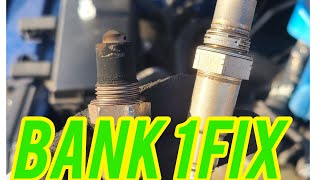
Typical fix: Replace the upstream oxygen sensor. 🎬 See this walkthrough for fixing the EcoBoost Bank 1 sensor
Est. part cost: $70-$120 - Wiring Harness Short or Damage 🟡 Medium Probability The wiring harness is routed near hot exhaust components and the transmission. It can be melted by heat or pinched/damaged during other maintenance, like a clutch or transmission service.
How to confirm: Visually inspect the entire wiring harness from the O2 sensor to the engine. Look for melted sections, chafing, or breaks. If you unplug the sensor and the scan tool voltage remains high, it confirms a short-to-power in the wiring harness.
Typical fix: Repair or replace the damaged section of the wiring harness.
Est. part cost: $10-$200 - Engine Running Rich ⚪ Low Probability Issues like a leaking fuel injector or a faulty fuel pressure regulator can cause a rich condition, which the O2 sensor will accurately report as high voltage.
How to confirm: Check short-term and long-term fuel trims with a scan tool. If they are highly negative (e.g., -15% or more), the PCM is trying to remove fuel to compensate for a rich condition, suggesting the sensor is working correctly. This would point to a separate fuel system problem.
Typical fix: Diagnose and repair the underlying fuel system issue (e.g., replace a leaking fuel injector).
Est. part cost: $50-$500+
Rare But Worth Checking
- Powertrain Control Module (PCM) Fault: This is very uncommon. Before suspecting the PCM, all other possibilities, especially the sensor and wiring, must be thoroughly ruled out.
Diagnosis Steps
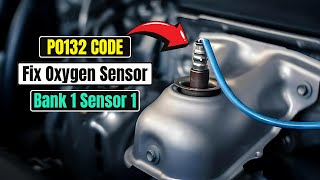
- Connect an OBD-II scanner and confirm P0132 is the active code. 🎬 Watch: A quick guide to fixing the P0132 code Note any other codes present.
- View the live data stream for the 'O2S11' or 'B1S1' voltage. It should fluctuate rapidly between approximately 0.1V and 0.9V on a healthy, warm engine. With a P0132 fault, it will likely be stuck above 0.9V.
- Visually inspect the upstream O2 sensor's wiring harness and connector. Look for any signs of melting, chafing, corrosion, or loose connections. The harness is located near the back of the engine on the passenger side.
- If the wiring appears intact, unplug the O2 sensor. Watch the live data on the scanner. The voltage should drop to a low, default value. If it does, the sensor itself is faulty and needs replacement.
- If the voltage remains high after unplugging the sensor, there is a short to power in the wiring harness that needs to be traced and repaired.
- If the sensor voltage fluctuates normally but the code persists, or if fuel trims are highly negative, investigate potential causes of a rich running condition, such as leaking fuel injectors or incorrect fuel pressure.
Parts You'll Likely Need
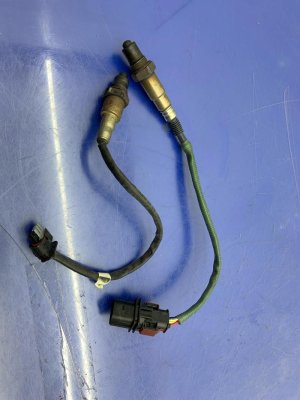
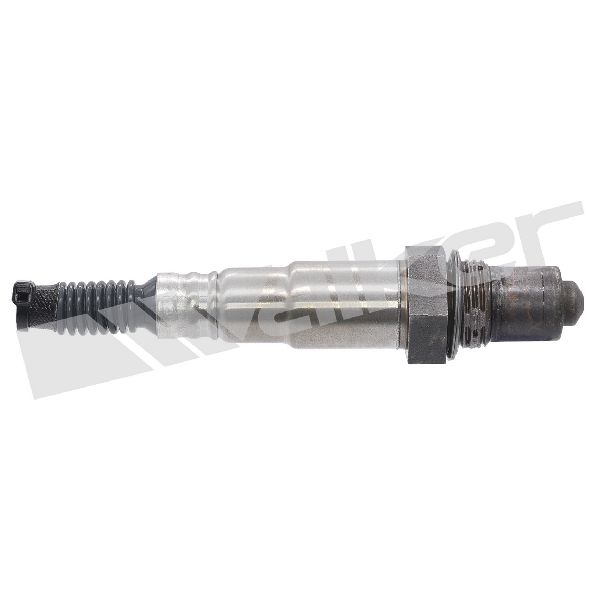
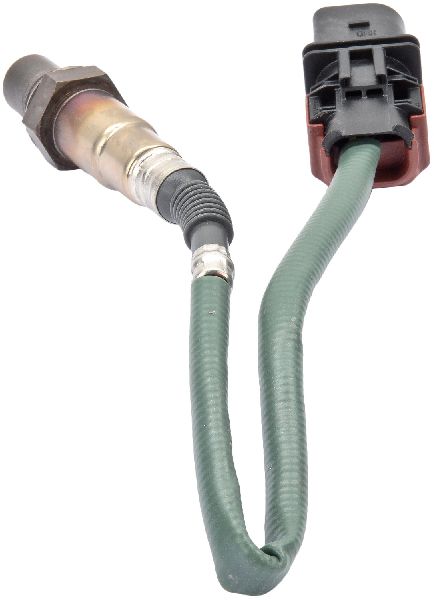
- Upstream Oxygen Sensor
(OEM #FR3Z-9F472-A)— This is the most common failure point for code P0132. The sensor wears out or gets contaminated, causing it to send a continuous high voltage signal.
Trusted brands: Motorcraft, Bosch, Denso, NTK
OEM price range: $90-$120
Aftermarket price range: $70-$100
Related Codes That Often Appear With This One
- P2196 — P2196 means 'O2 Sensor Signal Biased/Stuck Rich Bank 1 Sensor 1'. This is essentially another way of describing the same condition as P0132, where the sensor signal is stuck in a state indicating a rich mixture.
Mechanic-Grade Diagnostic Values
- Upstream O2 Sensor (HO2S11) Signal Voltage — expected: Rapidly fluctuating between ~0.1V and ~0.9V on a warm, closed-loop engine.. Failure: Voltage is stuck consistently high, above 0.9V, for an extended period.
- Upstream O2 Sensor Heater Circuit Resistance — expected: Approximately 5-8 Ohms when tested across the two heater wires (typically same color) on a disconnected sensor.. Failure: An open circuit (infinite resistance) or a direct short (near zero resistance) indicates a failed heater element.
- High-Pressure Fuel Rail Pressure (at idle) — expected: Approximately 280-350 PSI (Note: GDI systems can reach over 2,000 PSI under load).. Failure: While not a direct cause, significantly low pressure could indicate a fuel delivery issue. However, P0132 is a high voltage (rich) code, so this is more for ruling out compound problems.
- O2 Signal Circuit Voltage (Sensor Unplugged) — expected: On Ford systems without a bias voltage, the scan tool should read near 0V when the sensor is unplugged.. Failure: If the voltage remains high (>0.9V) on the scan tool with the sensor unplugged, it confirms a short-to-power in the wiring harness.
Hidden / Shadow Codes Worth Checking
- Mode $06, TID:$01, CID:$11: This is the On-Board Diagnostic Test ID for the Upstream Oxygen Sensor (HO2S11). It monitors the sensor's switching characteristics and response time. A failing result here can indicate a degraded sensor even before a persistent DTC like P0132 is set. (see via A professional scan tool or an advanced consumer tool (like BlueDriver, FORScan) capable of displaying Mode $06 data. The raw data may need to be converted to be human-readable.)
Scan Tool Commands That Help
- FORScan / Ford IDS / Professional Scan Tool: Live Data Graphing (PID: O2S11) — This is the primary diagnostic step. Graphing the sensor voltage visually shows if it is fluctuating correctly or stuck high, which is the key symptom of P0132.
- FORScan / Ford IDS / Professional Scan Tool: Clear DTCs / KAM Reset — Used after a repair is completed to clear the P0132 code and reset the Keep Alive Memory (KAM). A drive cycle is then required to confirm the fix is permanent.
Wiring & Ground Locations
- Upstream O2 Sensor Connector — The electrical connector for the upstream sensor is located on the passenger side of the transmission.. This connector is a primary point of failure due to proximity to heat and potential for contamination. It must be unplugged before removing the sensor to avoid twisting and breaking wires.
- G103 — On SN95/New Edge Mustangs, this is on the passenger side top of the radiator support. Location is likely similar on S550 models.. This ground point is known to be used for the O2 sensor heater circuit ground. A poor connection here can affect heater performance, leading to slow sensor response, although not typically a high voltage code.
- G104 — Located on the driver's side front fender apron, near the battery.. This is a critical chassis ground. On some models, it provides the ground for the Data Link Connector (DLC) and has ties to the PCM ground circuit. A poor ground here can cause a multitude of bizarre electrical issues.
- G201 — Located in the passenger side kick panel area, near or directly below the PCM.. This is a primary ground for the Powertrain Control Module (PCM). A fault here can cause incorrect readings from various sensors, including the O2 sensor, as the PCM may not have a stable ground reference.
OEM Part Supersession History
FR3Z-9F472-A→FR3Z-9F472-A— No supersession found. This part number remains current.
Heads up: This part is listed as compatible for the entire 2015-2023 Ford Mustang EcoBoost range.
Model Year Variations Within This Range
- 2018-2023: The 2018 model year introduced a mid-cycle refresh with revised exterior styling, a slight increase in torque (from 320 to 350 lb-ft), and the option of a 10-speed automatic transmission. However, the 2.3L engine block, upstream O2 sensor part number (FR3Z-9F472-A), and the diagnostic procedure for P0132 did not change.
Diagnostic Flowchart
Used vs. New Parts: Buying Guide for This Vehicle
When a used part is the smart pick: For this specific code, a used part is almost never recommended. The primary cause is a failed O2 sensor, which is a wear-and-tear component. A used wiring harness from a low-mileage, accident-free vehicle could be a cost-effective choice if the original harness is confirmed to be damaged beyond simple repair.
Donor-vehicle mileage cap: roughly under 40000 miles for the part to have meaningful remaining life.
What to inspect on the donor part:
- For a wiring harness: Check for any signs of melting, brittleness, or previous repairs.
- Ensure the locking tabs on all connectors are intact and not broken.
- Verify the donor vehicle has a clean history with no flood or fire damage.
OEM-only on this vehicle (don't cheap out):
- Oxygen Sensor - While not strictly 'OEM-only', using a reputable OEM manufacturer like Motorcraft, NTK, or Denso is critical. Cheap, unbranded aftermarket sensors are a very common cause of P0132 returning shortly after a repair.
Aftermarket brands forum-validated for this vehicle:
- Motorcraft (OEM)
- Bosch
- Denso
- NTK
Brands owners have reported issues with on this vehicle:
- Unbranded, 'white-box' parts from online marketplaces with no reputation or warranty.
Real Owner Stories
Aggregated from forums and TSBs cited above. Mileages and costs reflect what owners reported in those sources.
Ford Mustang (S197)
Symptoms: P0132 code appearing immediately following a clutch swap.
What fixed it: Repairing the wiring harness which was likely pinched or damaged during the repair.
Source hint: S197Forum.com
Related OBD-II Codes
Frequently Asked Questions
Why is the upstream oxygen sensor on my 2.3L EcoBoost Mustang prone to P0132?
I just had a clutch swap on my Mustang and now P0132 is appearing. What happened?
Where is the O2 sensor wiring harness located on the 2015-2023 Mustang 2.3L?
Can I use a used O2 sensor to fix this code on my EcoBoost?
Which brands of oxygen sensors are recommended for the S550 Mustang?
How can I tell if P0132 is caused by the sensor or a fuel system issue like a leaking injector?
Helpful Videos
Used OEM Parts in Stock
New Aftermarket Parts Available

The information in this article is provided for general reference and educational purposes only. Vehicle specifications, procedures, and part compatibility can vary by production date, trim level, and region. Always consult your vehicle's factory service manual and verify part numbers before purchasing or performing repairs. Safety-critical components such as airbags, seat belts, and braking systems should be installed by a qualified professional.
- Ford Mustang:
- 🎬 Helpful Videos
- 🛍️ Shop This Part
- What's Unique About the 2015-2023 Ford Mustang
- Symptoms You May Notice
- Most Likely Causes
- Rare But Worth Checking
- Diagnosis Steps
- Parts You'll Likely Need
- Related Codes That Often Appear With This One
- Mechanic-Grade Diagnostic Values
- Hidden / Shadow Codes Worth Checking
- Scan Tool Commands That Help
- Wiring & Ground Locations
- OEM Part Supersession History
- Model Year Variations Within This Range
- Diagnostic Flowchart
- Used vs. New Parts: Buying Guide for This Vehicle
- Real Owner Stories
- Ford Mustang (S197)
- Related OBD-II Codes
- Frequently Asked Questions
- 🎟️ Get 5% Off