

P0132 on 2012-2018 Chevrolet Sonic 1.8L: O2 Sensor High Voltage Causes and Fixes
On a 2012-2018 Sonic 1.8L, P0132 is most often a failed upstream oxygen sensor. Before replacing it, check the wiring for damage or fluid contamination, especially from a known power steering fluid leak issue (TSB #18-NA-009). If a new sensor doesn't fix it, suspect an underlying rich condition like a leaking fuel injector, confirmed by negative long-term fuel trims. A quality OEM-equivalent sensor costs about $50-$90.
- P0132 on your Sonic 1.8L points to the upstream O2 sensor on the exhaust manifold.
- The most common fix is replacing the sensor, but always inspect the wiring for heat or fluid damage first.
- If a new sensor doesn't solve the problem, you must investigate for an underlying rich-running condition (like a bad fuel injector).
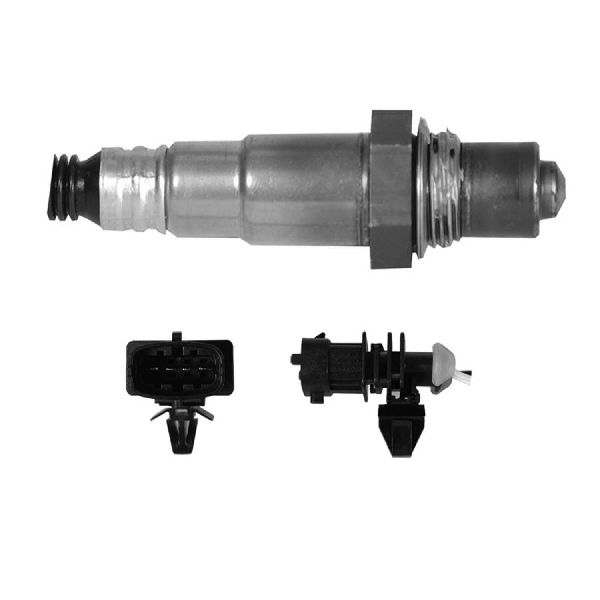
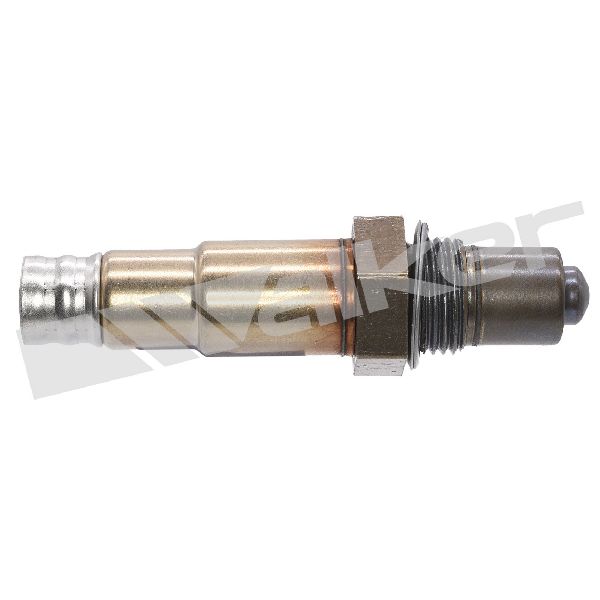
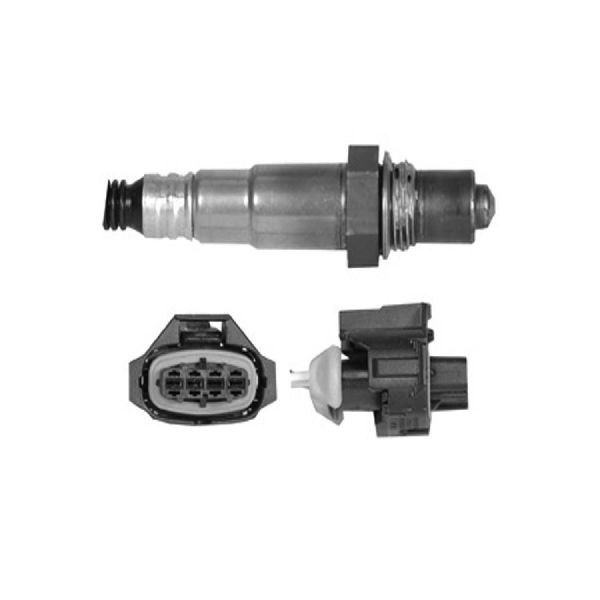
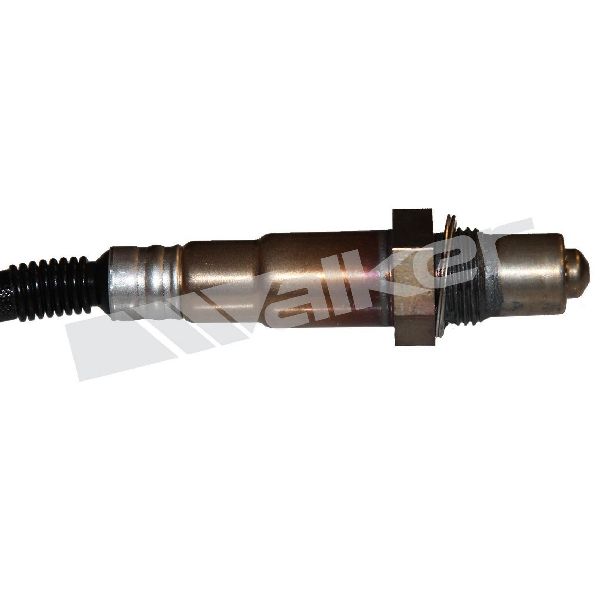
- Use a quality replacement sensor from a brand like ACDelco, Denso, or NGK. The correct ACDelco part number is 213-4764.
- Ignoring this code will cause poor fuel mileage and can eventually destroy your catalytic converter, a much more expensive repair.
What's Unique About the 2012-2020 Chevrolet Sonic
While a failed oxygen sensor is the most common cause, the Chevrolet Sonic 1.8L platform requires a careful diagnosis. The code could be a symptom of an actual rich-running condition, which owners have experienced even after replacing the sensor. Additionally, a GM Technical Service Bulletin (TSB #18-NA-009) warns that on some GM vehicles, power steering fluid can leak from an inlet hose onto the O2 sensor's wiring harness, causing shorts and various O2 sensor codes, including P0132. This TSB recommends replacing the hose, the sensor, and potentially the entire engine wiring harness if contamination is found. It's also worth noting that the 1.8L engine was discontinued for the 2019 model year, so this guide is most relevant for 2012-2018 models.
Symptoms You May Notice
- Check Engine Light is illuminated
- Decreased fuel economy
- Rough or unstable idle
- Engine hesitation or sluggish acceleration
- Black smoke from the exhaust in severe rich condition cases
- Rotten egg or sulfur smell from the exhaust
- Engine stalling in some instances
- Replacing the downstream (Bank 1, Sensor 2) oxygen sensor. The code P0132 is specific to Sensor 1, the upstream sensor. Replacing the wrong sensor will not fix the issue.
- Immediately replacing the O2 sensor without checking for an underlying rich condition. As noted by owners, if the engine is actually running rich due to a bad injector, a new O2 sensor will not solve the problem and the code will return.
- Replacing the O2 sensor without addressing fluid leaks from above. If the power steering fluid leak mentioned in TSB #18-NA-009 is the root cause, a new sensor will quickly be contaminated and fail again.
Most Likely Causes
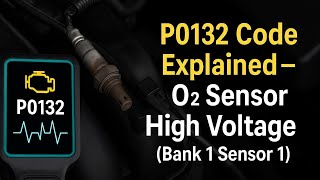
- Failed Upstream (Bank 1, Sensor 1) Oxygen Sensor 🔴 High Probability Oxygen sensors are wear items that operate in an extreme-heat environment. The internal heating element or the sensing element itself can fail or short internally over time, causing a persistent high voltage signal. This is the most frequent cause for P0132. 🎬 Watch: A detailed breakdown of the P0132 high voltage code.
How to confirm: Using a scan tool with live data, observe the B1S1 O2 sensor voltage on a fully warmed engine. A healthy sensor fluctuates rapidly between ~0.1V and ~0.9V. If the voltage is stuck high (e.g., >0.8V) and does not change with RPM, the sensor has likely failed. You can also test the sensor's internal heater resistance with a multimeter (expect 2-30 Ohms).
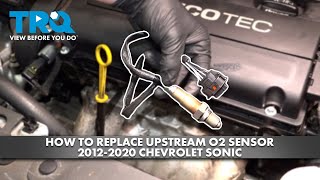
Typical fix: Replace the upstream oxygen sensor. It is located on the front of the exhaust manifold and is accessible from the top of the engine bay. 🎬 See this step-by-step guide to replacing the upstream sensor. A special 22mm O2 sensor socket is required to avoid damaging the wire.
Est. part cost: $50-$100 - Damaged Wiring or Contaminated Connector 🟡 Medium Probability The wiring harness for the O2 sensor is near the hot exhaust manifold and can melt or chafe. More specifically for this platform, GM TSB #18-NA-009 identifies a power steering fluid hose that can leak directly onto the O2 sensor connector, causing a short circuit and triggering codes like P0132.
How to confirm: Visually inspect the entire wiring harness from the O2 sensor to its connection point. Look for melted plastic, frayed wires, or corrosion. Pay close attention to the area under the power steering lines for any signs of oily residue on the harness loom or in the connector itself.
Typical fix: If wiring is simply damaged, repair the specific section or splice in a new pigtail connector. If contaminated with power steering fluid, the leak must be fixed first by replacing the power steering inlet hose (GM P/N 22912855 per the TSB), then the connector must be thoroughly cleaned or replaced, and the O2 sensor itself should also be replaced as it's likely compromised.
Est. part cost: $10-$30 for a pigtail, or $100+ if the hose and sensor need replacement. - Engine Running Rich ⚪ Low Probability The O2 sensor may be accurately reporting a rich condition. Common causes on the 1.8L Ecotec include leaking fuel injectors or a faulty fuel pressure regulator. A user on a Reddit forum reported P0132 with violent shaking that persisted after sensor replacement, pointing towards a potential leaking injector as the underlying cause.
How to confirm: Use a scan tool to check long-term fuel trims (LTFT). A significantly negative LTFT (e.g., -10% or lower) indicates the PCM is consistently removing fuel to compensate for a rich condition. This confirms the O2 sensor is likely working correctly. Further diagnosis, like a fuel pressure test or an injector balance test, is needed to find the source.
Typical fix: Identify and replace the component causing the rich condition. This most often involves replacing one or more leaking fuel injectors.
Est. part cost: $50-$300
Rare But Worth Checking
- Exhaust Leak: An exhaust leak before the O2 sensor, such as from a cracked exhaust manifold or a failed flex pipe, can introduce outside air. While this usually causes a lean code (P0171), it can sometimes disrupt sensor readings erratically and potentially lead to a high voltage code.
- Powertrain Control Module (PCM) Fault: This is very rare, but a fault in the PCM's internal driver for the O2 sensor circuit can cause a false high voltage reading. This should only be considered after all other possibilities, including wiring and the sensor itself, have been exhaustively ruled out.
Diagnosis Steps
- Connect an OBD-II scanner and confirm the P0132 code is present. Check for any other codes.
- View live data on the scanner. Watch the voltage for 'B1S1' (Bank 1, Sensor 1). It should fluctuate rapidly between approximately 0.1V and 0.9V on a warm, running engine. If it is stuck high (e.g., >0.8V), the problem is confirmed.
- Perform a visual inspection. Look in the engine bay for any fluid leaks from above the exhaust manifold, particularly from the power steering lines as noted in TSB #18-NA-009.
- Carefully inspect the oxygen sensor's wiring harness and connector for any signs of melting, chafing, corrosion, or oily fluid contamination.
- If wiring appears good, check the Long Term Fuel Trim (LTFT) value. A significant negative number (e.g., -10% or more) suggests the engine is running rich, and the O2 sensor is likely doing its job correctly. The cause of the rich condition (e.g., fuel injector) must be found.
- If fuel trims are normal and the wiring is good, the upstream O2 sensor itself is the most likely culprit.
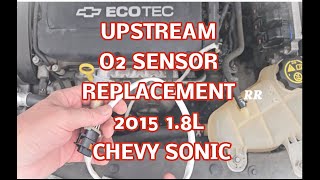
- Replace the upstream (Bank 1, Sensor 1) oxygen sensor using a 22mm O2 sensor socket. 🎬 Watch: This 1.8L engine walkthrough shows the sensor replacement process.
- Clear the code and perform a drive cycle to ensure the code does not return.
Parts You'll Likely Need
- Upstream Oxygen Sensor (Bank 1, Sensor 1)
(OEM #ACDelco 213-4764 (Supersedes 55563348, 55569903, 55572993))— This is the sensor that triggers the P0132 code. Its internal components are a common failure point due to the harsh exhaust environment.
Trusted brands: ACDelco (GM Genuine), Denso (Often the OEM supplier), NGK/NTK, Bosch
OEM price range: $70-$100
Aftermarket price range: $50-$80
Related Codes That Often Appear With This One
- P0172 — System Too Rich (Bank 1). This code directly indicates the engine is running rich, which the P0132 code is detecting. If you see both, the problem is almost certainly not the O2 sensor, but rather a fuel delivery issue like a leaking injector.
- P0030 — HO2S Heater Control Circuit (Bank 1, Sensor 1). This code indicates a problem with the O2 sensor's internal heater. A short in the heater circuit can sometimes cause the P0132 high voltage code to appear at the same time, strongly pointing to a failed sensor unit.
- P0131, P0133, P0137, P0171, P2096 — These are all various O2 sensor and fuel trim related codes that are listed alongside P0132 in GM TSB #18-NA-009 as potential results of the power steering fluid contamination issue.
Technical Service Bulletins (TSBs) & Recalls
- TSB #18-NA-009: Details a power steering fluid leak from an inlet hose that can contaminate the Bank 1 O2 sensor wiring, causing codes P0131, P0132, P0133, P0137, P0171, or P2096. Recommends replacing the hose, sensor, and potentially the engine harness.
Platform-Specific Known Issues
- A GM recall (#16186) was issued for some 2013-2014 Sonics with the 1.8L engine to reprogram the ECM to prevent high exhaust temperatures that could damage the catalytic converter. While not a direct cause of P0132, it indicates a sensitivity in the vehicle's emissions and exhaust management system.
- A known issue on some GM vehicles involves power steering fluid leaks dripping onto and contaminating the O2 sensor wiring, which can cause this code, as detailed in TSB #18-NA-009.
Mechanic-Grade Diagnostic Values
- Upstream O2 Sensor (B1S1) Heater Element Resistance — expected: 2 to 30 Ohms when cold.. Failure: A reading of 'OL' (Open Line/infinite resistance) or a value outside the specified range indicates a failed heater element within the sensor.
- Upstream O2 Sensor (B1S1) Live Data Voltage (Scan Tool) — expected: At idle on a warm engine, voltage should fluctuate between 0.790V and 0.900V. As RPMs increase, the voltage should drop to between 0.450V and 0.500V.. Failure: Voltage stuck high (above 0.8V) or being erratic and not responding to RPM changes points to a sensor or wiring issue.
- O2 Sensor Heater Circuit Supply Voltage (at harness connector) — expected: Approximately 12V (or battery voltage) with the key on, engine off.. Failure: Little to no voltage indicates a problem upstream of the sensor, such as a blown fuse (check F24 in the under-hood fuse box), a bad relay, or a break in the power wire.
Scan Tool Commands That Help
- GDS2 / Professional Scan Tool: HO2S Heater Resistance Learn Reset — After replacing the heated oxygen sensor (HO2S), this function should be performed to reset the ECM's learned resistance value for the old sensor's heater. Failing to do so can lead to improper heater control and potentially premature failure of the new sensor.
Wiring & Ground Locations
- G105 — On the driver's side frame rail, under the battery tray.. This is a primary engine and chassis ground. A loose or corroded connection here can cause unstable ground reference for the ECM, leading to a variety of incorrect sensor readings, including O2 sensor faults. A GM service bulletin (PIC5574A) specifically mentions inspecting this ground for paint or weld slag.
- G106 / G107 — On the lower rear of the engine block.. These are critical ground points for the ECM and its sensors. A poor connection at these locations can directly affect the O2 sensor's low reference signal, potentially causing incorrect voltage readings.
- ECM Connector X1 (at ECM) — The Engine Control Module is on the left side of the engine compartment, near the strut tower.. For end-to-end circuit testing, the B1S1 O2 sensor signal wire is typically a Gray wire at pin J1-28. The low reference is often a Tan wire. Probing here can confirm if the high voltage signal is reaching the ECM, which helps differentiate a wiring short from an internal PCM fault.
- Engine Block to Chassis Ground Strap — Attaches to the chassis frame rail beneath the battery tray, near the transmission mount.. This is the main ground path for the engine block, where the exhaust manifold and O2 sensor are mounted. A weak or corroded connection here can create a ground offset, affecting the sensor's signal integrity and contributing to voltage-related codes.
Real Owner Repair Stories
- Sonic Owners Forum user 'Sonic86' (Chevrolet Sonic 1.8L (year not specified, but post from 2022)) — Codes P0171 (System Too Lean), P0131 (O2 Sensor Circuit Low Voltage), and P0420 (Catalyst System Efficiency Below Threshold).
❌ Tried (didn't work) Initial diagnosis pointed to a bad O2 sensor due to the combination of codes.
✅ What actually fixed it The user advised that in addition to checking the O2 sensor, a common issue is a leak in the flex joint of the front exhaust pipe, which can cause lean codes and other erratic O2 sensor readings. This was identified as a likely culprit if a new sensor didn't resolve the issue.
OEM Part Supersession History
55563348, 55569903, 55572993→ACDelco 213-4764 / GM 55515244— Standard part consolidation and minor revisions over the production life of the vehicle.
Heads up: While aftermarket sensors from brands like Denso, NTK, and Bosch are widely used, some owners report that these Ecotec engines can be sensitive. Using the specific ACDelco GM Genuine part is often recommended to avoid compatibility issues, especially if other codes are present or if an aftermarket part doesn't resolve the issue.
Diagnostic Flowchart
Other Known Issues on This Vehicle
Issues unrelated to this code that are worth knowing about as an owner of this generation:
- Cracked Plastic Thermostat Housing 🔴 High — Very common failure. The plastic becomes brittle and cracks, causing coolant leaks. Often occurs between 60,000 and 120,000 miles.
- Leaking Engine Oil Cooler Gaskets 🔴 High — Extremely common. The gaskets for the oil cooler (part of the oil filter housing) harden and fail, causing oil to leak onto the hot exhaust manifold or mix with the coolant.
- PCV System Failure 🟠 Medium — Common, especially on the 1.4L Turbo but also reported on the 1.8L. The diaphragm in the valve cover can rupture, causing a significant vacuum leak.
- Cracked/Broken Intake Manifold Tuning Valve Linkage 🟡 Low — A known issue on the 1.8L engine. The small plastic linkage arm for the intake manifold runner control breaks.
- Transmission Turbine Shaft Fracture (2012-2014 models) 🔴 High — Affects specific early model years with the 6-speed automatic transmission. (Ref: Recall #14V315 / GM #14182)
Used vs. New Parts: Buying Guide for This Vehicle
When a used part is the smart pick: For this repair, buying a used part is generally not recommended for the oxygen sensor itself, as it is a wear-and-tear item with a finite lifespan. However, sourcing a used engine wiring harness from a junkyard is a viable option if yours is found to be contaminated with power steering fluid (per TSB #18-NA-009) and is too damaged to clean or repair.
Donor-vehicle mileage cap: roughly under 80000 miles for the part to have meaningful remaining life.
What to inspect on the donor part:
- For a wiring harness, inspect for any signs of cuts, melting, or previous repairs (e.g., excessive electrical tape).
- Ensure all connector housings are intact, not cracked, and the locking tabs are present.
- Check the area of the harness near the O2 sensor connector for any oily residue, which would indicate the donor vehicle had the same fluid leak issue.
OEM-only on this vehicle (don't cheap out):
- While not strictly required, the ACDelco (GM Genuine) oxygen sensor is often the most reliable choice to guarantee compatibility and prevent recurring codes.
Aftermarket brands forum-validated for this vehicle:
- Denso (often the original OEM supplier for many GM parts)
- NGK / NTK
- Bosch
Brands owners have reported issues with on this vehicle:
- Ultra-cheap, unbranded sensors from online marketplaces should be avoided, as they are frequently reported to fail quickly or be dead-on-arrival.
Real Owner Stories
Aggregated from forums and TSBs cited above. Mileages and costs reflect what owners reported in those sources.
2016 Chevrolet Sonic 1.8L
Symptoms: Violent shaking and power loss; the code P0132 persisted even after replacing the O2 sensors, MAF, and fuel pressure sensor.
What fixed it: Diagnosis pointed toward a leaking fuel injector causing a persistent rich condition.
Source hint: Reddit r/ChevySonic - A user with a 2016 Sonic 1.8L reported code P0132
2015 Chevrolet Sonic 1.8L LT
Symptoms: O2 sensor voltage readings of .790-.900 at idle, which were considered high.
What fixed it: Used live data monitoring to track voltage drops to .450-.500 as RPMs increased to diagnose sensor behavior.
Source hint: Sonic Owners Forum - A thread discussing multiple codes including P0131 on a 1.8L model
2012-2020 Chevrolet Sonic 1.8L
Symptoms: P0132 triggered by a short circuit in the O2 sensor wiring due to fluid contamination.
What fixed it: Replaced the power steering inlet hose (GM P/N 22912855) to stop the leak, then replaced the contaminated connector and O2 sensor.
Source hint: TSB #18-NA-009
Related OBD-II Codes
Frequently Asked Questions
Could a power steering leak really cause my P0132 code on a Chevrolet Sonic?
Is there a recall for the 1.8L Ecotec engine that affects the exhaust or emissions system?
I replaced the O2 sensor but the P0132 code and rough idle persist. What else should I check on my 1.8L Sonic?
Where is the Bank 1, Sensor 1 oxygen sensor located on the 1.8L Sonic?
Can a PCV failure cause O2 sensor related codes on the 1.8L engine?
Helpful Videos
We Have This Part in Stock



The information in this article is provided for general reference and educational purposes only. Vehicle specifications, procedures, and part compatibility can vary by production date, trim level, and region. Always consult your vehicle's factory service manual and verify part numbers before purchasing or performing repairs. Safety-critical components such as airbags, seat belts, and braking systems should be installed by a qualified professional.
- Chevrolet Sonic:
- 🎬 Helpful Videos
- 🛍️ Shop This Part
- What's Unique About the 2012-2020 Chevrolet Sonic
- Symptoms You May Notice
- Most Likely Causes
- Rare But Worth Checking
- Diagnosis Steps
- Parts You'll Likely Need
- Related Codes That Often Appear With This One
- Technical Service Bulletins (TSBs) & Recalls
- Platform-Specific Known Issues
- Mechanic-Grade Diagnostic Values
- Scan Tool Commands That Help
- Wiring & Ground Locations
- Real Owner Repair Stories
- OEM Part Supersession History
- Diagnostic Flowchart
- Other Known Issues on This Vehicle
- Used vs. New Parts: Buying Guide for This Vehicle
- Real Owner Stories
- 2016 Chevrolet Sonic 1.8L
- 2015 Chevrolet Sonic 1.8L LT
- 2012-2020 Chevrolet Sonic 1.8L
- Related OBD-II Codes
- Frequently Asked Questions
- 🎟️ Get 5% Off