

P0131 on 2011-2016 Ford F-250 Super Duty 6.2L V8: Causes and Fixes for Low O2 Sensor Voltage
On the 6.2L V8, P0131 is almost always a failed upstream oxygen sensor on the passenger's side (Bank 1). Expect to pay $50-$100 for an aftermarket sensor or ~$150 for an OEM Motorcraft part. It's a common DIY repair, but the sensor is often seized in the exhaust manifold. Access is through the passenger wheel well, and a 7/8" or 22mm O2 sensor socket is required.
- P0131 on your F-250 points to the upstream oxygen sensor on the passenger side.
- The most likely cause is simply a worn-out sensor that needs to be replaced.
- Before replacing the sensor, always inspect the wiring harness for any signs of melting or damage, as this is a common secondary cause.
- When performing the repair yourself, soak the old sensor in penetrating oil for as long as possible before attempting to remove it to prevent it from breaking off in the exhaust manifold.
- A special O2 sensor socket will make removal and installation much easier.
What's Unique About the 2011-2016 Ford F-250 Super Duty
For the Ford F-250 with the 6.2L V8, the key thing to remember is that Bank 1 is always the passenger side, where cylinder #1 is located. Owners and technicians frequently report that this specific sensor can be very difficult to access and remove due to its location and tendency to seize in the exhaust manifold from thousands of heat cycles. Access requires working through the passenger-side wheel well, and removing the inner fender liner is necessary for better leverage. The sensor's electrical connector is located further up, clipped to the side of the transmission bell housing, which can also be difficult to reach.
Symptoms You May Notice
- Check Engine Light is on
- Decreased fuel economy
- Rough or unstable idle
- Engine hesitation or reduced power during acceleration
- A strong smell of sulfur or 'rotten eggs' from the exhaust
- Engine may intermittently 'fall on its face' for a short period before running normally again.
- Stalling specifically after refueling or hesitation at low speeds, as noted in some Ford-related reports like NHTSA ODI #11443669.
- Replacing the catalytic converter. The P0131 code points to the upstream sensor that monitors the engine's air-fuel ratio, not the downstream sensor that monitors the converter's efficiency. A faulty upstream sensor can harm the converter over time, but it is not the root cause.
Most Likely Causes
- Failed Upstream Oxygen Sensor (Bank 1) 🔴 High Probability Oxygen sensors are wear-and-tear items with a finite lifespan, typically 70,000-100,000 miles. Constant exposure to high exhaust temperatures and gases causes them to degrade and fail over time. This is the most common cause of P0131.
How to confirm: Use an OBD-II scanner to monitor live data for the 'O2S11' voltage. A healthy sensor's voltage fluctuates rapidly between approximately 0.1V and 0.9V. A failed sensor will often be 'stuck' at a low voltage (e.g., below 0.2V) or respond very slowly.
Typical fix: Replace the Bank 1, Sensor 1 oxygen sensor. This is the upstream sensor on the passenger side. Soaking the sensor threads with penetrating oil for several hours beforehand is highly recommended.
Est. part cost: $50-$150 - Exhaust Leak (Broken Manifold Studs) 🟡 Medium Probability The 6.2L V8 is known for breaking exhaust manifold studs, especially the rear-most ones near the firewall. A leak before the O2 sensor allows outside oxygen into the exhaust stream, causing the sensor to read a false lean condition (low voltage), which sets the P0131 code.
How to confirm: Listen for a 'ticking' or 'hissing' sound from the passenger side of the engine, especially when the engine is cold. You may also see black soot trails around the manifold-to-head mating surface. A smoke test can definitively identify a leak.
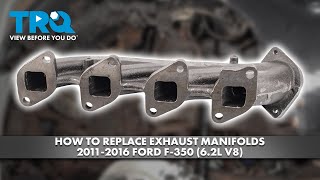
Typical fix: Replace the broken exhaust manifold studs and the manifold gasket. 🎬 See this walkthrough for replacing 6.2L exhaust manifolds. This is often a difficult and time-consuming repair.
Est. part cost: $50-$200 - Damaged Wiring or Connector 🟡 Medium Probability The sensor's wiring harness is routed near hot exhaust components and the transmission. Owners report the harness can get brittle from heat or chafe against the frame or transmission bell housing where it is routed. The connector itself is on the side of the transmission and can be exposed to debris and moisture.
How to confirm: Visually inspect the entire length of the wiring harness from the O2 sensor to its connection point. Look for any signs of melting, frayed wires, or corrosion on the connector pins. Check for continuity on the signal and heater circuit wires with a multimeter.
Typical fix: Repair the damaged section of wire or replace the connector pigtail. Secure the harness away from heat sources with high-temp zip ties.
Est. part cost: $10-$40
Rare But Worth Checking
- Low Fuel Pressure: If the engine is truly running lean due to insufficient fuel, the O2 sensor will correctly report a low voltage. This could be caused by a weak fuel pump or clogged filter. This should be investigated if replacing the sensor doesn't fix the code and other lean codes (like P0171) are present.
- Intake Vacuum Leak: A leak in the intake manifold or a vacuum hose allows unmetered air into the engine, causing a lean condition. NHTSA ODI #10219019 notes that replacing isolator bolts and port seals is sometimes necessary when P0131 appears alongside P0171 and P0174.
- Faulty Powertrain Control Module (PCM): In rare cases, the internal driver circuit for the O2 sensor within the PCM can fail. This is a last-resort diagnosis after the sensor, wiring, and other causes have been definitively ruled out. The 6.2L PCM is known for other driver failures, making this a remote possibility.
- Water Intrusion: Manufacturer service bulletins TSB 19-2091 and TSB 17-0014 indicate that undesired water entry into the engine compartment directly over power components can lead to an illuminated MIL with P0131 and other drivability codes.
Diagnosis Steps
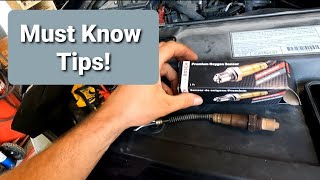
- Use an OBD-II scanner to confirm P0131 is the active code 🎬 Watch: Three DIY methods to fix the P0131 code. and check for any other codes, especially P0171.
- Perform a thorough visual inspection of the passenger side exhaust manifold for signs of a leak, such as black soot trails or audible ticking sounds when cold.
- Inspect the Bank 1 (passenger side) upstream O2 sensor and its wiring harness. Follow the wires from the sensor up to the connector on the transmission bell housing, looking for melting, chafing, or loose connections.
- Use the scanner to view live data for 'O2S11' (Bank 1, Sensor 1). Voltage should switch rapidly between ~0.1V and ~0.9V. If it is stuck low (e.g., <0.2V) or is very slow to respond, the sensor or its circuit is likely faulty.
- If the sensor voltage appears normal, the issue might be intermittent or caused by a true lean condition. Check for vacuum leaks using a smoke machine or by carefully spraying brake cleaner around intake gaskets and hoses while monitoring engine RPM.
- If an exhaust leak is suspected, a smoke test introduced into the tailpipe can help pinpoint the source.
- If all else fails, test the sensor's heater circuit and signal wire for continuity and proper voltage/resistance according to the factory service manual before considering a PCM fault.
Parts You'll Likely Need
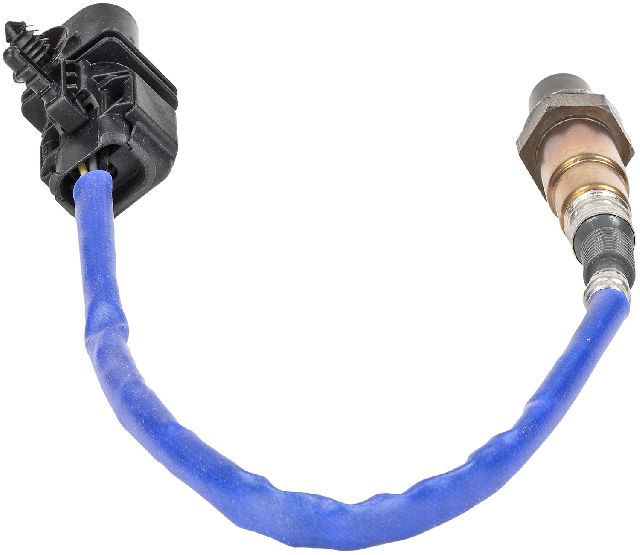
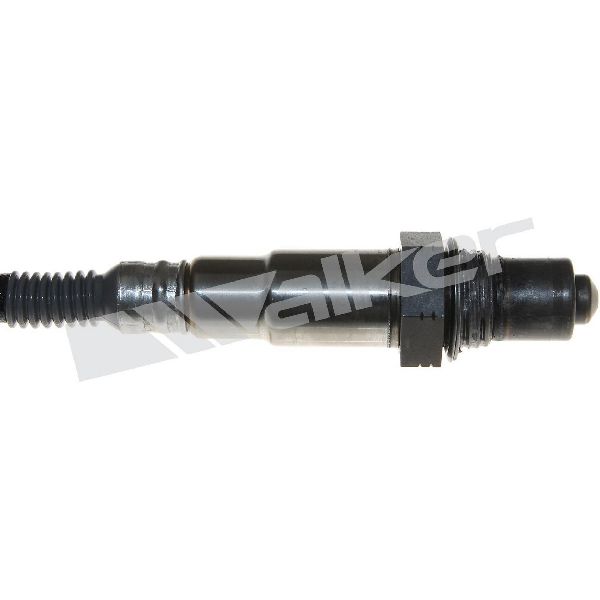
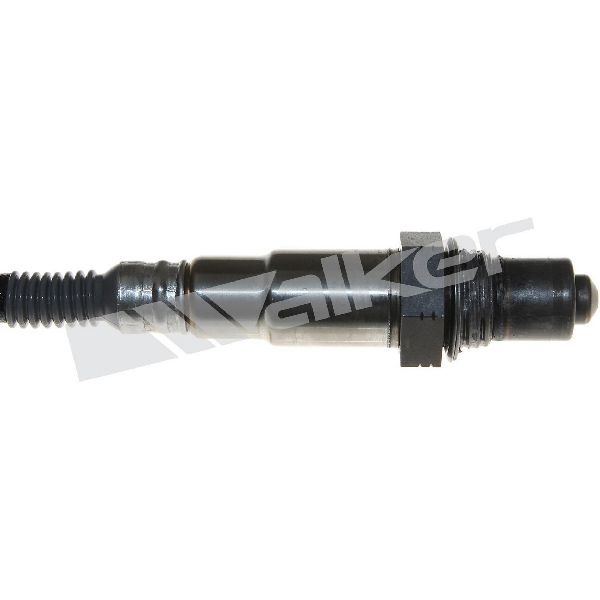
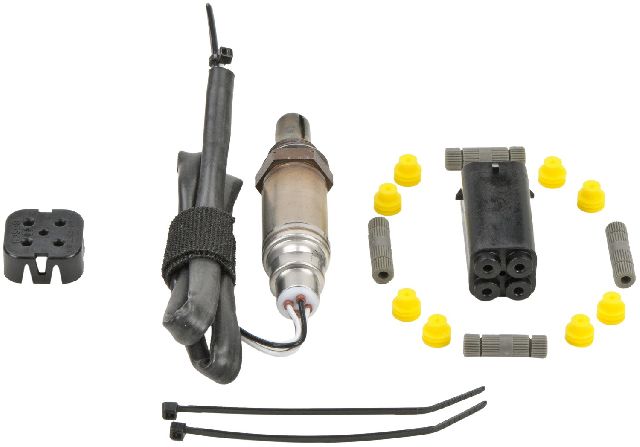
- Upstream Oxygen Sensor (Bank 1)
(OEM #BL3Z-9F472-A)— This is the most frequent point of failure for code P0131 due to being a consumable part that degrades with age and heat cycles.
Trusted brands: Motorcraft (BL3Z-9F472-A), Bosch (17321), Denso (234-5097), NGK/NTK (22537)
OEM price range: $100-$150
Aftermarket price range: $50-$100
Related Codes That Often Appear With This One
- P0171 — P0171 means 'System Too Lean (Bank 1)'. Since P0131 indicates a low voltage signal (which the PCM interprets as lean), these two codes often appear together when there is an actual lean condition (like a vacuum or exhaust leak) or a sensor that is biased low.
Technical Service Bulletins (TSBs) & Recalls
- SSM 44528: Mentions that a missing, loose, or damaged ground (G400) can cause the MIL to illuminate. While not specific to P0131, a bad ground can cause various electrical sensor issues.
- TSB 16-0163: Notes that vehicles may exhibit a constant or intermittent illuminated MIL with various drivability issues and DTC P0131 among other codes.
- TSB 19-2091 & TSB 17-0014: These bulletins describe how undesired water entry into the engine compartment can store P0131 in the powertrain control module memory.
Platform-Specific Known Issues
- The upstream oxygen sensor on the passenger side can be extremely difficult to remove due to seizing in the exhaust manifold. Liberal use of penetrating oil over several hours or even days is highly recommended before attempting removal.
- Access to the sensor and its connector is tight. Mechanics and DIYers find it easiest to access by removing the passenger side front wheel and the inner fender liner.
- A standard 7/8" or 22mm oxygen sensor socket is required. Due to the tight space, some owners have resorted to cutting the end off a box-end wrench and heating it to straighten it for better leverage on a seized sensor.
Mechanic-Grade Diagnostic Values
- O2 Sensor (Bank 1, Sensor 1) Heater Circuit Resistance — expected: 2 to 30 Ohms when measured across the two heater pins (often same-colored wires) on the sensor connector.. Failure: A reading of infinity (OL) indicates an open/failed heater circuit. A reading outside the specified range also indicates a faulty sensor.
- O2 Sensor (Bank 1, Sensor 1) Signal Voltage — expected: Rapidly fluctuating between approximately 0.1V (lean) and 0.9V (rich) on a warmed-up engine in closed loop.. Failure: Voltage is stuck low (consistently below 0.3V - 0.4V) or responds very slowly to changes in engine RPM.
- Short-Term Fuel Trim (STFT) and Long-Term Fuel Trim (LTFT) for Bank 1 — expected: Close to 0% on a healthy, warmed-up engine.. Failure: Consistently positive values (e.g., > +10%) indicate the PCM is adding fuel to compensate for the lean signal reported by the O2 sensor. This supports the P0131 code but doesn't distinguish between a bad sensor and a true lean condition.
Hidden / Shadow Codes Worth Checking
- Mode 6, Test ID $81, Component ID $11: This non-continuous monitor test specifically tracks the Bank 1, Sensor 1 O2 sensor's signal amplitude and switching frequency. A failure here can be a precursor to a P0131 code or confirm an intermittent performance issue with the sensor. (see via A professional scan tool capable of displaying Ford's Mode 6 data.)
Scan Tool Commands That Help
- Ford IDS / Capable OBD-II Scanner: Reset Keep Alive Memory (KAM) — This should be performed after replacing the O2 sensor. It clears the PCM's adaptive fuel trim learning and forces it to relearn values based on the new, correctly functioning sensor, which can resolve poor running conditions more quickly.
- Ford IDS (Integrated Diagnostic System): Power Balance Test — If misfires (e.g., P030x codes) are present alongside P0131, this test graphically displays the power contribution of each cylinder. It helps determine if the lean condition indicated by the O2 sensor is causing a specific cylinder to misfire.
Wiring & Ground Locations
- G400 — On the left (driver's side) frame rail, often in the vicinity of the rear axle or just in front of the fuel pump module.. The TSB cites this ground. While not directly for the O2 sensor, a poor chassis ground can cause a variety of unpredictable electrical faults and sensor reading errors. It's a known trouble spot worth checking for corrosion or looseness.
- Main Engine/Battery Grounds — The passenger side battery negative cable grounds to the front of the engine block. The driver side battery negative cable grounds to the frame near the steering box.. The PCM and its sensors rely on a solid engine ground reference. A corroded or loose main engine ground can create a voltage offset, potentially causing sensor signals to read incorrectly low.
- PCM Connector C175B, Pin 62 — This is the connector at the Powertrain Control Module (PCM).. This pin supplies the Keep Alive Power (KAM) to the PCM. A break in this wire (which can cause code P1633) means the PCM loses its memory every time the key is turned off, which can lead to erratic fuel control and potentially trigger fuel-trim related O2 sensor codes.
Real Owner Repair Stories
- YouTube - Daddy Long Leg (Ford F-250 with 6.2L V8 (year not specified, but within generation)) — After replacing the passenger side exhaust manifold, the truck began running poorly intermittently. It would 'fall on its face' for about 30 seconds and then run fine again. A check engine light with a lean code for Bank 1 Sensor 1 was present.
❌ Tried (didn't work) The owner suspected the sensor was the issue due to the recent work in that area.
✅ What actually fixed it Replacing the Bank 1, Sensor 1 oxygen sensor resolved the issue. The theory was that the original sensor was either damaged during the manifold replacement or failed from being disturbed. - NHTSA ODI #11443669 — An owner reported symptoms of P0131 along with EVAP codes P144A and P1450. The vehicle would stall specifically after putting new gas in and would hesitate at low speeds.
- NHTSA ODI #10219019 — A report describes the Check Engine Light coming on with P0131, P0171, and P0174. The owner performed an extensive repair including replacing isolator bolts, port seals, and clamshell seals to address the underlying lean condition.
"I Checked Everything" — The Actual Cause
- While no specific stories for this truck were found, a common 'smoke test clean' scenario that can cause a P0131 is a partially clogged or failing fuel injector on Bank 1. A smoke test checks for air leaks (unmetered air) but cannot detect a fuel delivery problem. A weak injector will create a true lean condition on that bank, which the O2 sensor correctly reports as low voltage, but no vacuum or exhaust leak will be found.
Model Year Variations Within This Range
- 2011-2016: No significant variations in the Bank 1 Sensor 1 oxygen sensor part number, location, or common causes have been identified within this model year range for the 6.2L V8 engine.
Diagnostic Flowchart
Other Known Issues on This Vehicle
Issues unrelated to this code that are worth knowing about as an owner of this generation:
- Broken Exhaust Manifold Studs 🔴 High — Very common, especially on trucks used for towing or with high mileage. The rearmost studs on both banks are most prone to breaking due to heat cycles.
- Front End 'Death Wobble' 🔴 High — A well-documented issue on Super Duty trucks, often triggered by hitting a bump at highway speeds (45+ mph). Caused by worn steering and suspension components like the track bar bushing, ball joints, and steering damper. (Ref: Customer Satisfaction Program 20N04; TSB 18-2268.)
- Electronic Throttle Body Failure 🟠 Medium — Can fail without warning, causing the truck to enter 'limp mode' with a wrench light on the dash. Often requires cleaning or replacement. (Ref: Customer Satisfaction Program 16B32; TSB 16-0139.)
- Powertrain Control Module (PCM) Failure 🟠 Medium — The internal drivers for ignition coils or fuel injectors can fail, leading to persistent misfire codes that aren't resolved by replacing coils or plugs.
- Broken Valve Springs 🟡 Low — An issue reported on some earlier 6.2L engines, though not widespread. A broken spring will cause a significant misfire and potential for further engine damage if the valve drops into the cylinder.
Used vs. New Parts: Buying Guide for This Vehicle
When a used part is the smart pick: For an oxygen sensor, a used part is almost never a smart choice. They are wear-and-tear items with a finite lifespan. The low cost of a new, quality aftermarket sensor does not justify the risk and potential diagnostic headache of installing a used one with unknown history.
Donor-vehicle mileage cap: roughly under 5000 miles for the part to have meaningful remaining life.
What to inspect on the donor part:
- Not applicable, as used O2 sensors are not recommended.
OEM-only on this vehicle (don't cheap out):
- While not strictly OEM-only, using a reputable brand is critical. Avoid generic, no-name sensors from online marketplaces.
Aftermarket brands forum-validated for this vehicle:
- Bosch
- Denso
- NGK / NTK
Brands owners have reported issues with on this vehicle:
- Unbranded, 'white-box' sensors from Amazon, eBay, or AliExpress that are priced significantly lower than reputable brands.
Real Owner Stories
Aggregated from forums and TSBs cited above. Mileages and costs reflect what owners reported in those sources.
2011-2016 Ford F-250 Super Duty 6.2L V8
Symptoms: The engine would intermittently 'fall on its face' for a short period before running normally again.
What fixed it: Replaced the Bank 1, Sensor 1 oxygen sensor after accessing it by removing the passenger side front wheel and inner fender liner.
Source hint: vehicle_specific_issues
2011-2016 Ford F-250 Super Duty 6.2L V8
Symptoms: Check engine light with P0131; found the wiring harness was damaged.
What fixed it: Repaired a chafed wire in the harness located near the firewall.
Source hint: Ford-Forum.com
2011-2016 Ford F-250 Super Duty 6.2L V8 — ~120000 miles
Symptoms: Audible ticking sound from the passenger side of the engine when cold and a P0131 code.
What fixed it: Replaced broken exhaust manifold studs and the manifold gasket.
Source hint: Ford Truck Enthusiasts Forums
Ford Owner Report — NHTSA ODI #11443669
Symptoms: An owner reported stalling after putting new gas in and hesitation at low speeds, with P0131 and EVAP codes P144A and P1450 stored.
What fixed it: While the specific fix wasn't detailed, the report highlights the correlation between fuel system issues and the P0131 low voltage code.
Related OBD-II Codes
Frequently Asked Questions
Where is Bank 1 Sensor 1 located on my 6.2L V8 F-250?
I hear a ticking sound from the passenger side when my F-250 is cold; could this cause P0131?
Does SSM 44528 apply to my P0131 issue?
Why is the O2 sensor so hard to remove on the Super Duty?
Can I use a standard wrench to replace the sensor on my 6.2L V8?
Is there a specific wiring area I should check for my P0131 code?
Can water entry cause a P0131 code on my Ford?
Helpful Videos
![How to Fix FORD P0131 Engine Code in 4 Minutes [3 DIY Methods / Only $9.65]](https://img.youtube.com/vi/08Qlh9M1zrU/mqdefault.jpg)
We Have This Part in Stock


The information in this article is provided for general reference and educational purposes only. Vehicle specifications, procedures, and part compatibility can vary by production date, trim level, and region. Always consult your vehicle's factory service manual and verify part numbers before purchasing or performing repairs. Safety-critical components such as airbags, seat belts, and braking systems should be installed by a qualified professional.
- Ford F-250 Super Duty:
- 🎬 Helpful Videos
- 🛍️ Shop This Part
- What's Unique About the 2011-2016 Ford F-250 Super Duty
- Symptoms You May Notice
- Most Likely Causes
- Rare But Worth Checking
- Diagnosis Steps
- Parts You'll Likely Need
- Related Codes That Often Appear With This One
- Technical Service Bulletins (TSBs) & Recalls
- Platform-Specific Known Issues
- Mechanic-Grade Diagnostic Values
- Hidden / Shadow Codes Worth Checking
- Scan Tool Commands That Help
- Wiring & Ground Locations
- Real Owner Repair Stories
- "I Checked Everything" — The Actual Cause
- Model Year Variations Within This Range
- Diagnostic Flowchart
- Other Known Issues on This Vehicle
- Used vs. New Parts: Buying Guide for This Vehicle
- Real Owner Stories
- 2011-2016 Ford F-250 Super Duty 6.2L V8
- 2011-2016 Ford F-250 Super Duty 6.2L V8
- 2011-2016 Ford F-250 Super Duty 6.2L V8 — ~120000 miles
- Ford Owner Report — NHTSA ODI #11443669
- Related OBD-II Codes
- Frequently Asked Questions
- 🎟️ Get 5% Off