

P0131 on 2003-2006 Ford Expedition 5.4L: Causes and Fixes for O2 Sensor Low Voltage
On a 2003-2006 Expedition with the 5.4L V8, P0131 almost always means the passenger-side upstream oxygen sensor has failed or its wiring is damaged. A replacement sensor is the most common fix, costing around $40-$80 for an aftermarket part and is a DIY-friendly repair. Check for water dripping from the A/C drain onto the sensor's connector as a source of repeat failures.
- P0131 on your Expedition points to the passenger-side, pre-catalytic converter O2 sensor.
- The most likely fix is replacing the O2 sensor itself, which is a standard wear item.
- Before buying parts, perform a visual inspection of the wiring for melting/damage and check for exhaust leaks (ticking sounds) near the passenger-side manifold.
- Specifically check if the A/C is dripping water onto the sensor or its connector, as this is a known issue on these trucks.
- Ignoring the code will hurt your gas mileage and can eventually lead to a much more expensive catalytic converter replacement.
What's Unique About the 2003-2006 Ford Expedition
For this generation of Expedition, the P0131 code is a very common and straightforward fault. The primary causes are almost always a worn-out sensor or a simple physical issue like a wiring problem. A notable issue on these Ford trucks is the location of the air conditioning drain; condensation can drip directly onto the Bank 1 O2 sensor or its electrical connector, causing corrosion and premature failure. This is a well-documented complaint in owner communities. While access can be tight from underneath, it's a well-documented repair in owner communities.
Symptoms You May Notice
- Check Engine Light is on
- Reduced fuel economy
- Rough or unstable idle
- Engine hesitation or stumbling on acceleration
- A rotten egg smell from the exhaust if the mixture becomes too rich as the PCM tries to compensate
- Possible engine misfires or stalling in severe cases
- Replacing the wrong O2 sensor. P0131 is specifically for Bank 1 (passenger side) and Sensor 1 (upstream, before the catalytic converter).
- Replacing the catalytic converter. This code points to a problem with the air/fuel mixture reading, not the efficiency of the converter itself. A converter failure code is typically P0420.
Most Likely Causes
- Failed Bank 1, Sensor 1 Oxygen Sensor 🔴 High Probability O2 sensors are wear items with a finite lifespan, typically 70,000-100,000 miles. Also, the A/C drain can drip onto this specific sensor, causing corrosion and it to fail prematurely.
How to confirm: Use a scan tool to monitor live data for 'O2S11' or 'B1S1'. If the voltage is stuck below 0.2V and does not fluctuate when the engine is warm, the sensor has failed. The sensor's internal heater resistance can also be tested and should be between 3 and 30 Ohms.
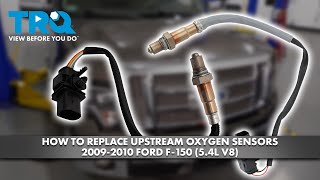
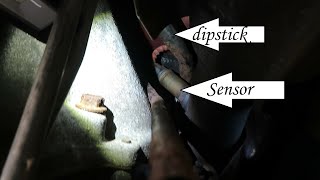
Typical fix: Replace the Bank 1, Sensor 1 (passenger side, upstream) oxygen sensor. An oxygen sensor socket is highly recommended for removal. 🎬 See this walkthrough for replacing the right front oxygen sensor.
Est. part cost: $40-$80 - Damaged Wiring or Connector 🟡 Medium Probability The wiring harness runs close to the hot exhaust and transmission, making it susceptible to melting or chafing. A forum member confirmed their connector melted from direct contact with the exhaust pipe. The connector itself can also fill with water or corrode, especially if the A/C drain drips on it.
How to confirm: Visually inspect the entire length of the sensor's wiring harness from the sensor to the main loom. Check for melted sections, chafed insulation, or bent/corroded pins in the connector. Check for water intrusion.
Typical fix: Repair the damaged section of wire with solder and heat shrink, or replace the connector pigtail if it is corroded or melted.
Est. part cost: $10-$30 - Exhaust Leak 🟡 Medium Probability The exhaust manifolds on the 5.4L Triton engines are known to develop cracks or have studs break, causing leaks. This allows outside air to be sucked into the exhaust stream, which passes over the O2 sensor and creates a false lean reading (low voltage).
How to confirm: Listen for a ticking or puffing noise from the passenger side of the engine, especially when cold. Look for black soot trails around the exhaust manifold or the flange where it connects to the exhaust pipe. A smoke test can also pinpoint the leak.
Typical fix: Replace the exhaust manifold gasket, repair or replace the cracked manifold, or replace broken exhaust studs.
Est. part cost: $20-$300 - Vacuum Leak ⚪ Low Probability The intake manifold and various vacuum hoses (especially PCV elbows at the back of the intake) can become brittle and crack over time, causing unmetered air to enter the engine. This creates a true lean condition that the O2 sensor correctly reports.
How to confirm: Listen for a hissing sound at idle. With the engine running, carefully spray short bursts of brake cleaner or starting fluid around the intake manifold gaskets and vacuum lines. If the engine RPM changes, you've found the leak. A smoke test is the most definitive method.
Typical fix: Replace the leaking vacuum hose (a common culprit is the PCV elbow) or intake manifold gasket.
Est. part cost: $5-$150
Rare But Worth Checking
- Low Fuel Pressure: A failing fuel pump or clogged filter can create a lean condition that the O2 sensor correctly reports. This would typically affect both engine banks and may be accompanied by other codes like P0174 (Bank 2 Lean).
- Faulty Powertrain Control Module (PCM): This is extremely rare. The PCM should only be considered after all other possibilities, including the sensor, wiring, and leaks, have been definitively ruled out.
Diagnosis Steps
- Read the code with an OBD-II scanner to confirm P0131 is present and note any other codes.
- Visually inspect the passenger side exhaust manifold for signs of leaks (soot marks, broken studs). Listen for a ticking sound when the engine is cold.
- Inspect the O2 sensor's wiring harness for any signs of melting, chafing against the engine or transmission, or corrosion. Pay close attention to where the A/C drain is located above the sensor and check for wetness or corrosion in the connector. A known failure point is the connector melting from contact with the exhaust.
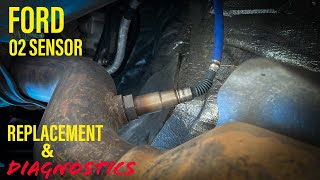
- Use a scan tool with live data capability to monitor the 'B1S1' O2 sensor voltage with the engine fully warmed up. The voltage should fluctuate rapidly between ~0.1V and ~0.9V. If it is stuck below 0.2V, the fault is active. 🎬 Watch: A complete guide to O2 sensor diagnostics and replacement.
- If the sensor voltage is stuck low and there are no visible wiring or exhaust issues, the sensor itself is the most likely culprit.
- If you suspect a vacuum leak (especially if you also have a P0171 code), perform a smoke test or carefully spray carb cleaner around potential leak points (intake gaskets, PCV hoses) while listening for a change in engine RPM.
- If all other steps fail to find a problem, check fuel pressure to rule out a weak fuel pump or clogged filter.
Parts You'll Likely Need
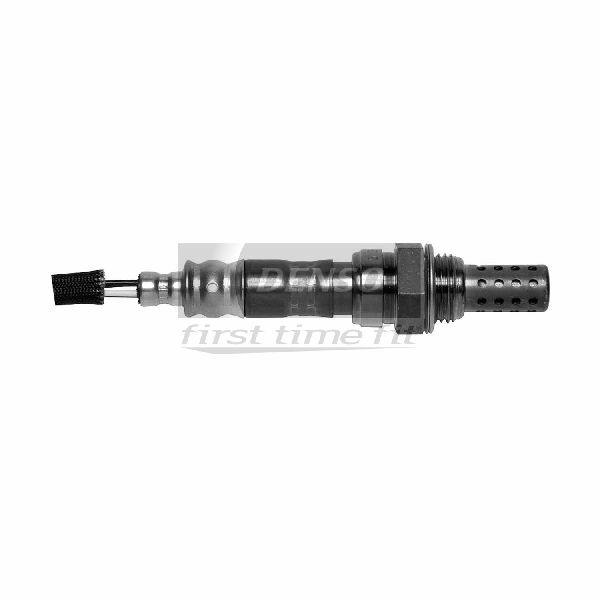
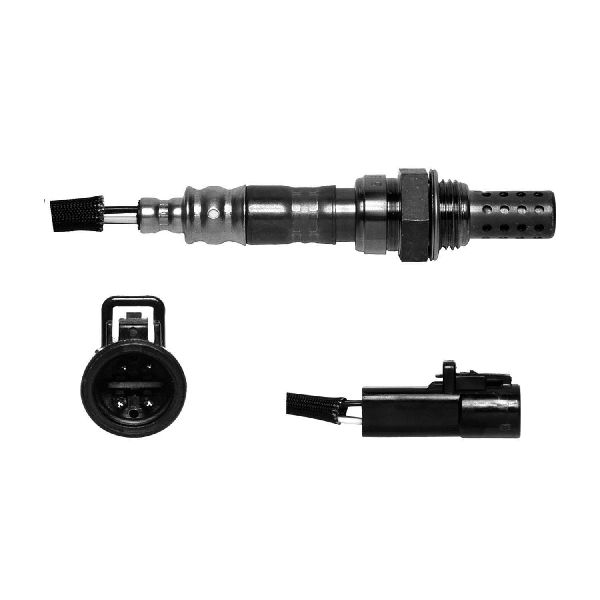
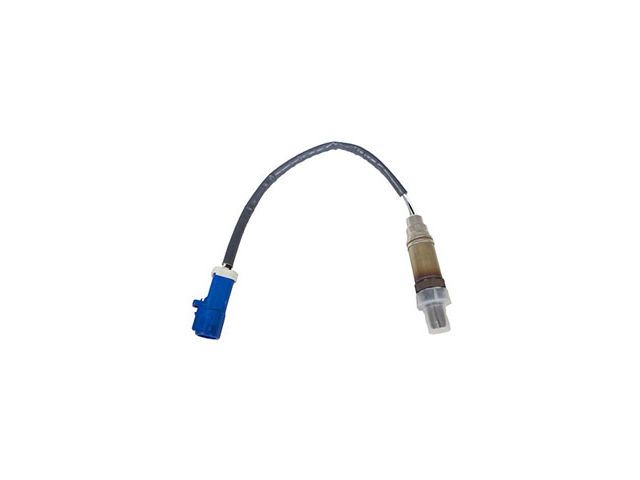
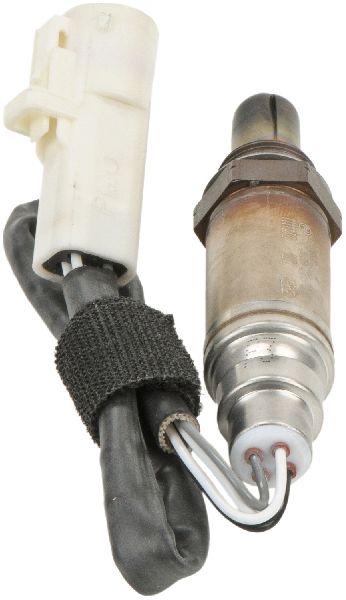
- Oxygen Sensor (Bank 1, Sensor 1)
(OEM #Motorcraft DY-835 (or older p/n XC2Z-9F472-BA). Always verify with VIN.)— This is the most common failure point for code P0131. The sensor is a wear item and is also susceptible to damage from heat and contamination.
Trusted brands: Motorcraft, Bosch, Denso, NGK/NTK
OEM price range: $70-$120
Aftermarket price range: $40-$80
Related Codes That Often Appear With This One
- P0171 — 'System Too Lean (Bank 1)' often appears with P0131. This can happen if there is a legitimate lean condition from a vacuum or exhaust leak that the sensor is correctly detecting.
- P0135 — 'O2 Sensor Heater Circuit (Bank 1, Sensor 1)' points to a failure in the sensor's internal heating element. If you see this code with P0131, it's a very strong indication that the O2 sensor itself has failed and needs replacement.
Technical Service Bulletins (TSBs) & Recalls
- TSB 08-7-6: While not for P0131 directly, this TSB details the complex procedure for removing broken spark plugs from the 5.4L 3V engine, a critical 'known issue' for this platform.
Platform-Specific Known Issues
- The air conditioner's condensation drain tube can drip water directly onto the Bank 1 Sensor 1 O2 sensor or its electrical connector, causing corrosion and repeated failures. Some owners fashion a small shield or redirect the drain tube with a small piece of hose to prevent this. 🎬 Watch: How to diagnose and repair the Ford A/C drain leak.
- The exhaust manifold studs on the 5.4L Triton are known to rust and break, causing an exhaust leak right before the O2 sensor, which can trigger this code.
- The sensor can become seized in the exhaust manifold, requiring significant force, heat, or even a mechanic's intervention to remove. One owner on the Ford Expedition Forum noted their passenger side sensor was seized and had to be taken to a shop for removal.
Mechanic-Grade Diagnostic Values
- B1S1 O2 Sensor Voltage (Warm Engine, Closed Loop) — expected: Rapidly fluctuating between ~0.1V and ~0.9V. Failure: Stuck flat-line reading, typically below 0.2V. The PCM may trigger P0131 if the voltage remains below 0.4V for more than 20 seconds.
- O2 Sensor Heater Element Resistance (Cold) — expected: 3 to 30 Ohms. Failure: A reading of 'OL' (Open Loop) on a multimeter indicates a broken internal heater circuit.
- Fuel Pressure (2003-2004 5.4L 2V) — expected: 30-55 PSI (Key On, Engine Off). Failure: Pressure significantly below 30 PSI may indicate a weak fuel pump or clogged filter, causing a true lean condition.
- Fuel Pressure (2005-2006 5.4L 3V) — expected: 28-45 PSI (Key On, Engine Off or Running). Failure: Pressure outside this range suggests a problem with the Fuel Pump Driver Module (FPDM) or the fuel pump itself.
- Short Term Fuel Trim (STFT1) — expected: Fluctuating near 0%, typically within +/- 10%. Failure: Consistently high positive values (e.g., > +20%) indicate the PCM is adding significant fuel, which can point to a vacuum leak, exhaust leak, or a sensor that is falsely reading lean.
Hidden / Shadow Codes Worth Checking
- Mode 6, Test ID $01, Comp ID $11: This is the onboard diagnostic test for O2 sensor voltage amplitude for Bank 1, Sensor 1. (see via A professional scan tool or an app like FORScan that can access Mode $06 data. A reported value below the minimum threshold (typically < 0.5V) indicates the sensor is not switching with sufficient amplitude.)
Scan Tool Commands That Help
- Ford IDS, FORScan: Clear/Reset Keep Alive Memory (KAM) — After replacing the O2 sensor or fixing a vacuum/exhaust leak. This clears the long-term fuel trim adaptations that the PCM learned while the fault was present, allowing it to re-learn with the new, correct sensor data.
- Ford IDS: Power Balance Test — If a rough idle or misfire accompanies the P0131 code. This test graphically shows the power contribution of each cylinder, helping to determine if the lean condition is causing a specific cylinder to misfire.
- Advanced Scan Tool: O2 Heater Circuit On/Off Command — When P0135 (Heater Circuit Malfunction) is also present. This bidirectional command allows you to manually turn the heater circuit on and off to verify with a test light or multimeter if the wiring and PCM driver are functioning correctly.
Wiring & Ground Locations
- PCM Pin 60 — At the 104-pin Powertrain Control Module connector, typically located in the engine bay near the firewall on the passenger side.. This is the specific pin for the Bank 1 Sensor 1 signal wire (Gray/Light Blue). It can be used to test for continuity and shorts between the PCM and the sensor connector.
- G101 — Near the right side of the radiator, on the passenger side of the engine compartment.. This is a primary engine and PCM power ground. A poor connection here can cause a variety of sensor and module issues, including incorrect sensor readings.
- G104 — On the right side of the engine compartment, on the frame rail.. This is another critical chassis ground point in the vicinity of the Bank 1 sensor. Corrosion or a loose connection can affect the sensor's ground reference.
- B1S1 Harness Routing — The harness runs down the passenger side of the transmission bell housing area, near the exhaust manifold and downpipe.. This area is prone to extreme heat. The harness or its plastic connector can easily melt if it comes into direct contact with the exhaust pipe, causing a short or open circuit.
Real Owner Repair Stories
- Ford Expedition Forum user 'Herb2017' (2006 Ford Expedition 5.4L) — Check Engine Light with P0131.
❌ Tried (didn't work) Attempted to simply replace the O2 sensor.
✅ What actually fixed it Discovered the engine-side (female) connector for the O2 sensor had been resting on the exhaust pipe, causing it to melt and burn. The final fix was to replace the wiring pigtail on the engine harness side of the connection.
OEM Part Supersession History
XC2Z-9F472-BA→XL3Z-9F472-AA (Service Part Number: Motorcraft DY-835)— Part number updates and revisions over time.
Heads up: While other sensors may physically fit, using a non-specified sensor can lead to incorrect readings or heater circuit faults. Sticking with the specified Motorcraft part is recommended to avoid compatibility issues.
Model Year Variations Within This Range
- 2003-2004: These models use the 5.4L 2V Triton engine with a return-style fuel system. Fuel pressure diagnosis involves checking for a steady pressure (approx. 30-55 psi) regulated mechanically.
- 2005-2006: These models use the 5.4L 3V Triton engine with a returnless fuel system and Variable Camshaft Timing (VCT). Fuel pressure is controlled by the PCM via a Fuel Pump Driver Module (FPDM), and specs are different (approx. 28-45 psi).
Diagnostic Flowchart
Other Known Issues on This Vehicle
Issues unrelated to this code that are worth knowing about as an owner of this generation:
- Ford 5.4L 3-Valve Spark Plug Breakage 🔴 High — Extremely common on 2004-2008 3-valve engines during spark plug changes. The two-piece plug design allows carbon to build up, causing the lower portion to seize in the head and break off upon removal. (Ref: TSB 08-7-6 (supersedes earlier versions) provides a specific, multi-step procedure using a soaking agent (like Motorcraft Carburetor Tune-Up Cleaner) and special extraction tools to remove broken plugs.)
- Cam Phaser Rattle / Timing Chain Failure 🔴 High — Widespread on the 5.4L 3V engine, often presenting as a diesel-like ticking or rattling noise at idle that may quiet down when warm. The issue stems from worn phasers, failing tensioner seals causing low oil pressure to the top end, and stretched timing chains that slap against guides.
- Fuel Pump Driver Module (FPDM) Failure 🟠 Medium — Common across this generation. The module is mounted to the frame crossmember under the spare tire, where its aluminum body corrodes from contact with the steel frame, allowing water intrusion and failure. Symptoms include a crank-no-start or stalling.
- Cracked Plastic Intake Manifold 🟠 Medium — The plastic intake manifold, particularly the coolant crossover channel at the front, is prone to cracking and causing a coolant leak. This was a very common failure on the 2V engines and still occurred on the 3V.
- Burnt PCM Relay in Fuse Box 🟡 Low — The fuse box (Junction Box) can develop issues where the PCM power relay overheats and melts its contacts, leading to a no-crank or no-start condition.
Used vs. New Parts: Buying Guide for This Vehicle
When a used part is the smart pick: For the engine wiring harness pigtail connector. If the original connector is melted or corroded, sourcing a clean, undamaged pigtail from a salvage yard is a cost-effective and reliable repair.
What to inspect on the donor part:
- Inspect the plastic for any signs of brittleness, cracking, or melting.
- Ensure the locking tab is intact and functional.
- Check the internal pins for corrosion, discoloration, or being bent/pushed back.
- Verify the wire insulation is flexible and not cracked or heat-damaged.
OEM-only on this vehicle (don't cheap out):
- Oxygen Sensor
Aftermarket brands forum-validated for this vehicle:
- Bosch
- Denso
- NGK/NTK
Real Owner Stories
Aggregated from forums and TSBs cited above. Mileages and costs reflect what owners reported in those sources.
2003 Ford F-150 5.4L V8
Symptoms: The owner triggered a P0131 code immediately after performing work on the exhaust manifold.
What fixed it: Repaired a burnt wiring harness for the O2 sensor that had been damaged during the manifold work.
Source hint: Ford Truck Enthusiasts Forums - Oxygen sensor riddle
2003-2006 Ford Expedition 5.4L V8
Symptoms: The passenger side upstream O2 sensor was completely stuck and would not come out with standard tools.
What fixed it: The vehicle had to be taken to a professional shop to have the seized sensor removed from the manifold.
Source hint: Ford Expedition Forum - P0131 and P0151 but running fine
2015 Ford F-150 5.4L V8
Symptoms: Rapid and repeated failures of the Bank 1 Sensor 1 oxygen sensor.
What fixed it: Addressing the A/C condensation drain dripping directly onto the sensor.
Source hint: 2CarPros - P0131 low voltage sensor #1 bank1?
Related OBD-II Codes
Frequently Asked Questions
Why does my 5.4L Triton keep burning through Bank 1 Sensor 1 oxygen sensors?
I hear a ticking sound from the passenger side when my Expedition is cold; could this cause P0131?
Does TSB 08-7-6 relate to my P0131 oxygen sensor code?
Can I replace the Bank 1 Sensor 1 O2 sensor myself on a 2003-2006 Expedition?
Is there a specific wiring issue on the Expedition that triggers P0131?
Could a vacuum leak on my 5.4L engine be the cause of P0131?
Helpful Videos
We Have This Part in Stock



The information in this article is provided for general reference and educational purposes only. Vehicle specifications, procedures, and part compatibility can vary by production date, trim level, and region. Always consult your vehicle's factory service manual and verify part numbers before purchasing or performing repairs. Safety-critical components such as airbags, seat belts, and braking systems should be installed by a qualified professional.
- Ford Expedition:
- 🎬 Helpful Videos
- 🛍️ Shop This Part
- What's Unique About the 2003-2006 Ford Expedition
- Symptoms You May Notice
- Most Likely Causes
- Rare But Worth Checking
- Diagnosis Steps
- Parts You'll Likely Need
- Related Codes That Often Appear With This One
- Technical Service Bulletins (TSBs) & Recalls
- Platform-Specific Known Issues
- Mechanic-Grade Diagnostic Values
- Hidden / Shadow Codes Worth Checking
- Scan Tool Commands That Help
- Wiring & Ground Locations
- Real Owner Repair Stories
- OEM Part Supersession History
- Model Year Variations Within This Range
- Diagnostic Flowchart
- Other Known Issues on This Vehicle
- Used vs. New Parts: Buying Guide for This Vehicle
- Real Owner Stories
- 2003 Ford F-150 5.4L V8
- 2003-2006 Ford Expedition 5.4L V8
- 2015 Ford F-150 5.4L V8
- Related OBD-II Codes
- Frequently Asked Questions
- 🎟️ Get 5% Off