

P0131 on 1999-2007 Chevrolet Silverado: O2 Sensor Low Voltage Causes and Fixes
On a 1999-2007 Silverado, P0131 almost always points to a failing upstream oxygen sensor on the driver's side (Bank 1, Sensor 1). It's a common failure due to age. Expect to pay $40-$80 for an aftermarket sensor like a Denso or NGK/NTK, and $90-$150 for an OEM ACDelco part. Replacement is a straightforward DIY job for most owners, though the sensor can be seized in the exhaust pipe.
- P0131 on your Silverado almost always means the driver's side upstream O2 sensor has failed.
- Before buying a new sensor, do a quick check for obvious exhaust leaks at the manifold (especially on a cold start) and inspect the sensor's wiring for melting or damage.
- Bank 1 is the driver's side; Sensor 1 is before the catalytic converter. Make sure you are replacing the correct sensor.
- The sensor can be very difficult to remove; use plenty of penetrating oil and the correct O2 sensor socket.
- The recommended OEM part is ACDelco AFS109, and a quality aftermarket alternative is Denso 234-4012.
What's Unique About the 1999-2007 Chevrolet Silverado

For the V8 engines in the 1999-2007 Silverado (GMT800 and early GMT900 platforms), this code is a very common and straightforward issue. Bank 1 is always the driver's side on these GM trucks. The upstream sensor (Sensor 1) is relatively easy to access in the driver's side wheel well, before the catalytic converter. While other issues like exhaust leaks or wiring problems can cause this code, the vast majority of cases on these trucks are simply the original O2 sensor failing from age and wear after 100,000+ miles. The sensors are known to get seized in the exhaust pipe, so using penetrating oil and a special O2 sensor socket is highly recommended.
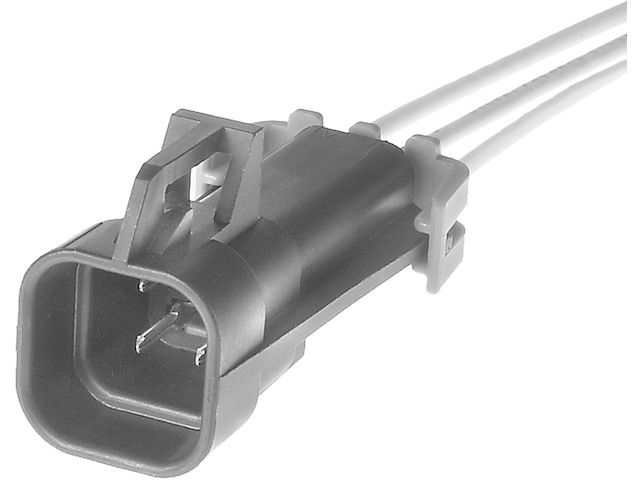
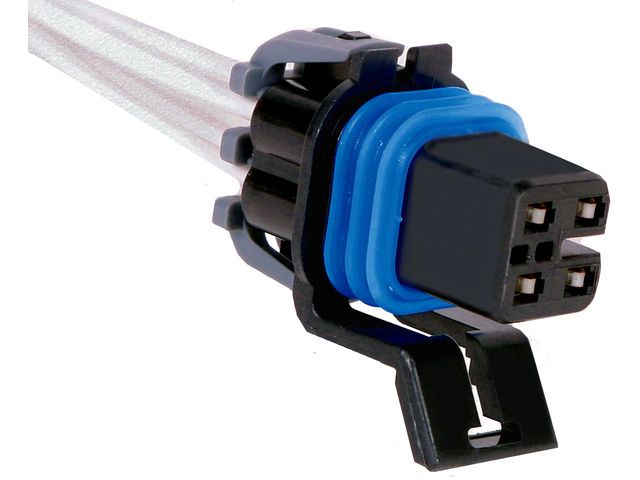
Generation note: This range covers the first generation Silverado (GMT800, 1999-2006 and 2007 "Classic") and the first model year of the second generation (GMT900, 2007). For this specific code, the causes, diagnosis, and repair are virtually identical across both generations. Note that connector styles for the O2 sensors on GM trucks can vary by year and even sub-model, so it's crucial to verify the connector on your specific truck before ordering a replacement part.
Symptoms You May Notice
- Check Engine Light is on
- Decreased fuel economy
- Rough or poor idle
- Engine hesitation or running poorly
- Black smoke from the exhaust (less common, indicates a rich condition the ECM is trying to command)
- Engine pinging or knocking
- Sulfur or "rotten egg" smell from the exhaust
- Replacing the catalytic converter. The P0131 code relates to the sensor *before* the converter; a bad converter would typically set a P0420 code.
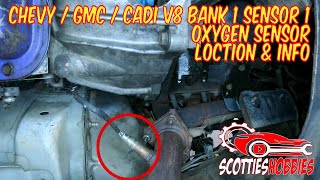
- Replacing the wrong O2 sensor. 🎬 Watch this guide to correctly identify the Bank 1 Sensor 1 location. It is crucial to identify Bank 1 (driver's side) and Sensor 1 (upstream/pre-catalytic converter). Replacing the passenger side (Bank 2) or downstream (Sensor 2) sensor will not fix this code.
- Ignoring an exhaust leak. Many owners replace the O2 sensor only to have the code return because the root cause was an exhaust manifold leak drawing in fresh air.
Most Likely Causes

- Failed Bank 1, Sensor 1 Oxygen Sensor 🔴 High Probability Oxygen sensors are a wear-and-tear item with a typical lifespan of 70,000-100,000 miles. On these trucks, they often fail simply due to age, heat cycles, and mileage. Contamination from oil or coolant can also shorten their life.
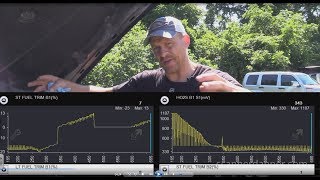
How to confirm: Use an OBD-II scanner to monitor the live data for the B1S1 O2 sensor. A healthy sensor's voltage should fluctuate rapidly 🎬 See a professional diagnostic walkthrough of O2 sensor live data and codes. between approximately 0.1 and 0.9 volts. If the voltage is stuck low (e.g., below 0.2V) and doesn't respond to changes in engine RPM or by inducing a rich condition (like adding propane to the intake), the sensor is likely bad. You can also test the internal resistance of the sensor's heater circuit; if it is out of spec, the sensor has failed.
Typical fix: Replace the upstream oxygen sensor on the driver's side. Soaking the sensor threads with penetrating oil before removal is highly recommended.
Est. part cost: $40-$150 - Exhaust Leak Before the O2 Sensor 🟡 Medium Probability The Vortec V8 engines in this generation of Silverado are known for developing cracks in the exhaust manifolds or breaking manifold bolts, which causes a leak. This allows outside air to be sucked into the exhaust stream, fooling the O2 sensor into reading a false lean condition (low voltage).
How to confirm: Visually inspect the exhaust manifold on the driver's side for cracks or black soot trails indicating a leak. Listen for a ticking or puffing sound that is most noticeable on a cold start. A shop can use a smoke machine to pinpoint the leak.
Typical fix: Replace the exhaust manifold gasket or the cracked exhaust manifold. Broken bolts must be extracted and replaced. Small leaks in pipes can sometimes be repaired with exhaust putty or wraps as a temporary fix.
Est. part cost: $20-$400 - Damaged Wiring or Connector ⚪ Low Probability
How to confirm: Visually inspect the wiring harness and connector for the driver's side upstream O2 sensor. The harness runs near hot exhaust components and can be prone to melting, chafing, or corrosion. Check for loose pins, burnt plastic, or frayed wires. A common failure point is the wiring rubbing on the front driveshaft on 4WD models.
Typical fix: Repair the damaged section of the wiring harness or replace the connector pigtail. Ensure the repaired harness is properly secured away from heat sources.
Est. part cost: $15-$50
Rare But Worth Checking
- Low Fuel Pressure: If the engine is genuinely running lean due to a weak fuel pump or faulty fuel pressure regulator, the O2 sensor will correctly report a low voltage. This would typically be accompanied by other codes (like P0171) and noticeable performance issues like hesitation under load.
- Vacuum Leak: A significant vacuum leak from a cracked hose or bad intake manifold gasket can let unmetered air into the engine, causing a lean condition that triggers P0131. This is usually accompanied by a high, rough idle and a P0171 or P0174 code.
- Faulty Mass Airflow (MAF) Sensor: A dirty or failing MAF sensor can under-report airflow, causing the PCM to deliver too little fuel. This creates a true lean condition that the O2 sensor correctly reports as low voltage.
- Faulty Powertrain Control Module (PCM): This is extremely rare. The PCM should only be considered after all other possibilities, including the sensor, wiring, and other engine systems, have been thoroughly ruled out.
Diagnosis Steps

- Confirm the code P0131 is present using an OBD-II scanner. Check for any other related codes, like P0171 or P1133.
- Using the scanner's live data function, observe the voltage for 'O2S B1S1'. A healthy sensor fluctuates rapidly from ~0.1V to ~0.9V. If it's stuck low (e.g., <0.2V), it confirms the fault condition.
- Perform a thorough visual and auditory inspection of the exhaust system on the driver's side, from the manifold to the catalytic converter. On a cold start, listen for a distinct 'ticking' or 'puffing' sound that indicates a leak. Look for black soot trails around the manifold or gaskets.
- Inspect the O2 sensor's wiring harness and connector for any signs of physical damage, melting, corrosion, or being loosely connected.
- If the wiring and exhaust system appear intact, the most likely culprit is the O2 sensor itself. Given the high failure rate and relatively low cost, replacement is often the most practical next step.
- To be 100% certain, you can test the sensor's heater circuit with a multimeter (should have resistance, and power/ground from the ECM) and check for the 450mV bias voltage at the connector with the sensor disconnected.
- After repair, clear the code with the scanner and perform a complete drive cycle to ensure the Check Engine Light does not return.
Parts You'll Likely Need

- Upstream Oxygen Sensor (Bank 1, Sensor 1)
(OEM #ACDelco AFS109)— This is the most common failure point for code P0131 on these trucks due to age and normal wear.
Trusted brands: ACDelco (OEM), Denso (Often the OE manufacturer), NGK/NTK, Bosch
OEM price range: $90-$150
Aftermarket price range: $40-$80 - O2 Sensor Socket — Required for removal and installation. The sensor is often seized in the exhaust pipe, and a standard wrench may not fit or provide enough leverage. A special socket with a slit for the wire is needed.
Trusted brands: Lisle, OEMTOOLS, GearWrench
Aftermarket price range: $10-$25
Related Codes That Often Appear With This One
- P0171 — System Too Lean (Bank 1). This code often appears with P0131 because a faulty sensor stuck in a low voltage state can make the ECM think the engine is lean. Alternatively, a true lean condition (like a vacuum or exhaust leak) will cause both codes to appear.
- P0300 — Random/Multiple Cylinder Misfire Detected. A severe lean condition or incorrect fuel mixture caused by the P0131 fault can lead to misfires.
- P1133 — HO2S Insufficient Switching (Bank 1, Sensor 1). This is a manufacturer-specific GM code that often accompanies P0131, indicating the sensor is not actively switching between high and low voltage as it should, which is a classic sign of a failing sensor.
Platform-Specific Known Issues

- The V8 engines in this generation of Silverado are known for developing cracks in the exhaust manifolds or breaking the rear-most manifold bolts, which can cause an exhaust leak and trigger a P0131 code. Always check the driver's side manifold carefully before replacing the sensor.
Technical Service Bulletins (TSBs) & Recalls
- TSB Bulletin #PIP5529B and TSB Bulletin #PIP5529A — These manufacturer service bulletins note that P0131 may appear in combination with other codes like P0171, P0101, and P0106, requiring specific diagnostic steps to resolve the malfunction indicator lamp illumination.
Mechanic-Grade Diagnostic Values
- O2 Sensor Bias Voltage — expected: Approximately 450 mV. Failure: Significantly higher or lower than 450 mV when testing the harness-side connector with the sensor disconnected and key on.
- O2 Sensor Heater Circuit Resistance — expected: Between 3-30 Ohms (varies by sensor brand). Failure: An open circuit (infinite resistance) or a short (near zero resistance) when measured across the heater pins on the sensor itself indicates a failed heater element.
- O2 Sensor Heater Circuit Voltage — expected: 12 Volts (Battery Voltage). Failure: No voltage indicates a blown fuse (check O2A/O2B fuses in underhood panel) or a break in the power wire (typically pink).
- Fuel Alcohol Content % (Flex Fuel Vehicles) — expected: Should match the actual percentage of ethanol in the fuel tank (e.g., 0-10% for E10 gasoline).. Failure: A reading significantly higher than the actual ethanol content (e.g., showing 40% when using regular gas) can cause the ECM to adjust fuel trims incorrectly, leading to lean codes like P0131.
Scan Tool Commands That Help
- Tech2 / GDS2 / High-End Aftermarket: Fuel Composition Reset — On Flex Fuel (E85 compatible) models, if the 'Fuel Alcohol Content' PID is showing a high percentage (e.g., >20%) but the owner only uses regular gasoline (E0-E10), this can cause persistent lean or rich conditions. Resetting this value forces the ECM to relearn the actual fuel composition, which can resolve incorrect fuel trims that may trigger P0131.
Wiring & Ground Locations
- G103 — On the front of the driver's side cylinder head/engine block. Part of the main negative battery cable harness.. This is a primary engine and PCM ground. A corroded or loose G103 connection can introduce electrical noise or incorrect ground reference for multiple sensors, including the O2 sensors, leading to erratic readings and codes like P0131.
- B1S1 O2 Sensor Connector (Harness Side) — On the driver's side, follow the wire from the O2 sensor located in the exhaust manifold before the catalytic converter.. This is where you perform critical voltage and resistance tests. For 2003+ models, Pin D (Pink) is 12V power, Pin C (Light Blue or Black/White) is heater ground, Pin B (Purple/White) is the high signal, and Pin A (Tan) is the low signal.
- PCM Connector C2 (Blue/Green depending on year) — The Powertrain Control Module is typically located in the engine bay on the driver's side.. For a 2001 Silverado, the B1S1 high signal wire (PPL/WHT) is on Pin 69 of the Blue C1 connector. For 2003-2007 models, it's Pin 69 of the Green C2 connector. The low signal (TAN) is on Pin 29. This allows for continuity checks of the wiring from the sensor to the PCM.
- O2A / O2B Fuses — In the under-hood fuse block.. These 15-amp fuses provide power to the O2 sensor heater circuits. If a fuse is blown, the sensor won't heat up properly, leading to slow response and potential codes. A blown fuse often indicates a short in the sensor wiring, which may be chafed or melted.
Real Owner Repair Stories
- Forum user reports on various Chevrolet forums. (2004 Chevrolet Silverado 5.3L) — Persistent P0131 code, rough idle.
❌ Tried (didn't work) Replacing the Bank 1 Sensor 1 O2 sensor (code returned).
✅ What actually fixed it The wiring harness for the O2 sensor had rubbed through on the front driveshaft, causing a short. Repairing the damaged wires and securing the harness away from the driveshaft resolved the code permanently. - Common knowledge from GMT800 technician forums. (2005 Chevrolet Silverado 1500 4.8L/5.3L) — P0131 and P0171 codes, ticking noise on cold start.
❌ Tried (didn't work) Replacing the O2 sensor., Cleaning the MAF sensor.
✅ What actually fixed it The rear-most exhaust manifold bolt on the driver's side had broken off, creating a small exhaust leak. The leak was only audible when cold. Replacing the broken bolt and the manifold gasket fixed the leak and cleared the codes. - YouTube video by 'Matt's Shop' (2006 Chevy Silverado 1500 4.8L) — Various electrical and sensor problems.
❌ Tried (didn't work) Replacing individual sensors.
✅ What actually fixed it Found and cleaned multiple corroded engine and frame grounds. Specifically highlighted the PCM ground on the engine block (G103) as a critical point that causes sensor issues when dirty or loose. Cleaning the ground contact points on the block and the wire terminal resolved the electrical issues. - NHTSA ODI #11581909 — An owner reported that their vehicle started stuttering and lost power at 60 MPH with codes P0131, P2097, and P0171; the actual cause was found to be loose intake bolts.
- NHTSA ODI #10257817 — A report describes a recurring failure where the O2 sensor in Bank 1 failed five times in a four-month period, throwing codes P0131, P1133, P0300, and P0171.
- NHTSA ODI #11165031 — An owner reported several codes including P0171, P0106, P0131, and P1101 appearing simultaneously with the TCS light on.
"I Checked Everything" — The Actual Cause
- A common scenario on these trucks is a cracked exhaust manifold that only leaks when cold. Once the engine warms up and the metal expands, the crack can seal itself, causing a smoke test on a warm engine to show no leaks. The technician may then incorrectly rule out an exhaust leak. The key is to inspect the manifold bolts (especially the rear ones) and listen for ticking sounds immediately after a cold start.
Model Year Variations Within This Range
- 1999-2002: These earlier models often used a 'case grounded' oxygen sensor system. The sensor body itself provides a ground path. The pre-cat O2 sensors typically have a FLAT 4-pin BLACK connector.
- 2003-2007: These later models switched to an 'isolated ground' system where the ground is provided by the PCM through a dedicated wire. The pre-cat O2 sensors on these trucks often use a SQUARE 4-pin WHITE or GRAY connector. Using the wrong type of sensor (case vs. isolated) for your year can cause persistent codes even with a new part. The PCM's internal grounding for the O2 low reference circuit was also changed in 2003, making harness swaps between year groups require modification.
Diagnostic Flowchart
Real Owner Stories
Aggregated from forums and TSBs cited above. Mileages and costs reflect what owners reported in those sources.
2005 Chevrolet Silverado 5.3L — 50000 miles
Symptoms: The truck started to idle rough at times, and the check engine light came on with codes P0131, P0171, and P0300.
What fixed it: The owner considered checking the Fuel Pressure Regulator, spark plugs, or O2 sensor. The community suggested swapping the O2 sensor from bank 1 to bank 2 to see if the code followed the sensor to confirm it was bad.
Source hint: GM-Trucks.com - 05 4wd Silverado 5.3 Codes Po 131, 171, 300
2004 Chevrolet Tahoe 5.3L
Symptoms: Live OBD-II data showed the Bank 1 Sensor 1 O2 sensor voltage dropping to zero and staying there.
What fixed it: The community confirmed the likely cause was a bad sensor and suggested advanced diagnostics like adding propane to the intake to verify the sensor was completely dead before replacing it.
Source hint: ScannerDanner Forum thread '2004-tahoe-5-3l-p0131-code-and-readings-from-obdii'
2004 Chevrolet Tahoe/GMC Yukon 5.3L
Symptoms: Experienced a cluster of codes including P0131, P0171, and P0300, particularly noticeable when the engine was cold.
What fixed it: Diagnosed as a lean condition, either real (from a vacuum or exhaust leak) or perceived (from a bad O2 sensor), which is a common platform issue requiring visual inspection of the manifolds and sensor replacement.
Source hint: Tahoe Yukon Forum thread '04-5-3l-throwing-p0300-p0131-p0171-with-a-p1133-for-good-measure'
Related OBD-II Codes
Frequently Asked Questions
Why does my 1999-2007 Silverado V8 have a ticking sound along with the P0131 code?
I need to replace the O2 sensor on my Silverado. Are all the replacement connectors the same?
My 4WD Silverado has a P0131 code. Could it be a wiring issue?
How long do the oxygen sensors typically last on these GM trucks?
Can I test the O2 sensor on my Silverado without replacing it first?
Helpful Videos

We Have This Part in Stock


The information in this article is provided for general reference and educational purposes only. Vehicle specifications, procedures, and part compatibility can vary by production date, trim level, and region. Always consult your vehicle's factory service manual and verify part numbers before purchasing or performing repairs. Safety-critical components such as airbags, seat belts, and braking systems should be installed by a qualified professional.
- Chevrolet Silverado:
- 🎬 Helpful Videos
- 🛍️ Shop This Part
- What's Unique About the 1999-2007 Chevrolet Silverado
- Symptoms You May Notice
- Most Likely Causes
- Rare But Worth Checking
- Diagnosis Steps
- Parts You'll Likely Need
- Related Codes That Often Appear With This One
- Platform-Specific Known Issues
- Technical Service Bulletins (TSBs) & Recalls
- Mechanic-Grade Diagnostic Values
- Scan Tool Commands That Help
- Wiring & Ground Locations
- Real Owner Repair Stories
- "I Checked Everything" — The Actual Cause
- Model Year Variations Within This Range
- Diagnostic Flowchart
- Real Owner Stories
- 2005 Chevrolet Silverado 5.3L — 50000 miles
- 2004 Chevrolet Tahoe 5.3L
- 2004 Chevrolet Tahoe/GMC Yukon 5.3L
- Related OBD-II Codes
- Frequently Asked Questions
- 🎟️ Get 5% Off