

P0128 on 2010-2013 Mazda3 (2.0L & 2.5L): Thermostat or PCM Update? Causes and Fixes
On a 2010-2013 Mazda3, code P0128 is most often caused by a faulty thermostat stuck open or, for the 2.0L engine, a known software issue requiring a PCM update. First, identify your engine. If it's a 2.0L, check if TSB #01-021-13-2817B applies to your car; otherwise, replacing the thermostat is the likely fix for both 2.0L and 2.5L engines.
- Before buying any parts for a P0128 code on a 2010-2013 Mazda3, first determine if your vehicle needs the PCM software update described in TSB 01-021-13-2817B.
- If the software update is not applicable or has already been performed, the most likely cause is a thermostat that is stuck open.
- Replacing the thermostat is a manageable DIY job for many, with a difficulty of 2 out of 5. The main tasks are draining and refilling the coolant.
- Always use Mazda FL22 coolant or a compatible P-HOAT Asian vehicle coolant to refill the system.
What's Unique About the 2010-2013 Mazda MAZDA3
For this specific generation of Mazda3 with the 2.0L (LF) engine, the P0128 code has a significant known cause that isn't a hardware failure. Mazda issued a Technical Service Bulletin (TSB 01-021-13-2817B) acknowledging that the check engine light can be triggered by "improper control logic of the PCM." This means the computer's software is too sensitive and may set the code even with a functional thermostat. For these 2.0L models, a PCM reflash is the intended fix. Owners of 2.5L models are less likely to be affected by the TSB; for them, a failed thermostat is the primary cause. An out-of-warranty PCM reflash at a dealer typically costs between $150 and $250.
Diagnostic Flowchart
Tap your situation to follow the diagnostic path that matches what you're seeing on this vehicle.
Symptoms You May Notice
- Check Engine Light is on
- Engine temperature gauge reads lower than normal or takes a very long time to reach the middle
- Heater may not blow hot air, or blows lukewarm air, especially at idle or in cold weather
- Noticeable decrease in fuel economy
- Cooling fan seems to run excessively or at high speeds when it normally wouldn't
- Replacing the thermostat on a 2.0L engine when the actual problem is the PCM software calibration. It is crucial to check for the TSB first to avoid unnecessary repairs.
- Replacing the ECT sensor when the thermostat is the actual cause. A stuck-open thermostat is far more common than a failed sensor for this code.
Most Likely Causes
- Improper PCM Control Logic (2.0L Engine) 🔴 High Probability Mazda released TSB #01-021-13-2817B specifically for the 2.0L (LF and SKYACTIV PE) engine, stating the cause is overly sensitive software logic that misinterprets slow warm-up times.
How to confirm: A Mazda dealership or a qualified independent shop with Mazda's diagnostic software (IDS/MDARS) can check your vehicle's VIN and current calibration file to see if the update applies and has not yet been performed. The TSB provides specific Freeze Frame Data (FFD) criteria to verify the issue: for 2010 models, ECT between 78°C-80°C; for 2011 models, ECT at 82°C or above with Ambient Air Temp at 46°C or below.
Typical fix: Reprogramming the Powertrain Control Module (PCM) with the updated software calibration.
Est. part cost: $0 (if under warranty) or $150-$250 (dealer cost if out of warranty) - Stuck-Open Thermostat 🔴 High Probability This is the most common mechanical failure for P0128 on all engines, and the primary cause for the 2.5L (L5) engine in this generation. The internal mechanism fails, leaving the valve open and causing the engine to be over-cooled.
How to confirm: Monitor the engine coolant temperature with a scan tool 🎬 Watch a helpful walkthrough on diagnosing the P0128 fault code. while driving. The temperature will rise very slowly and often drop significantly at highway speeds, falling well below the typical 180-190°F range. Physically removing it and testing in hot water will show it fails to close when cooled.
Typical fix: Replace the thermostat and housing assembly. It is critical to properly 'burp' the cooling system after replacement to remove air pockets.
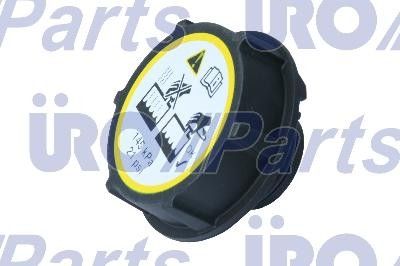
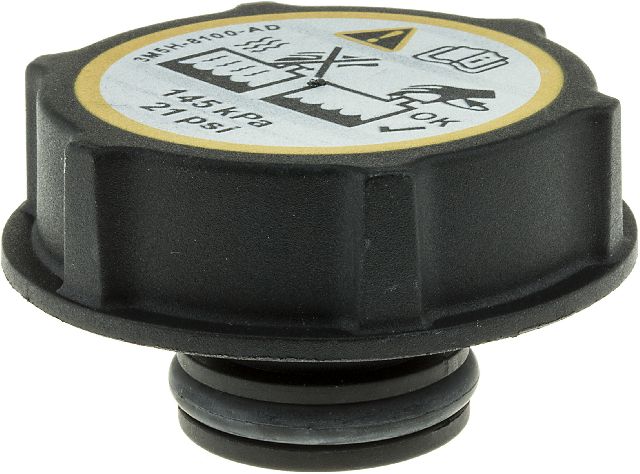
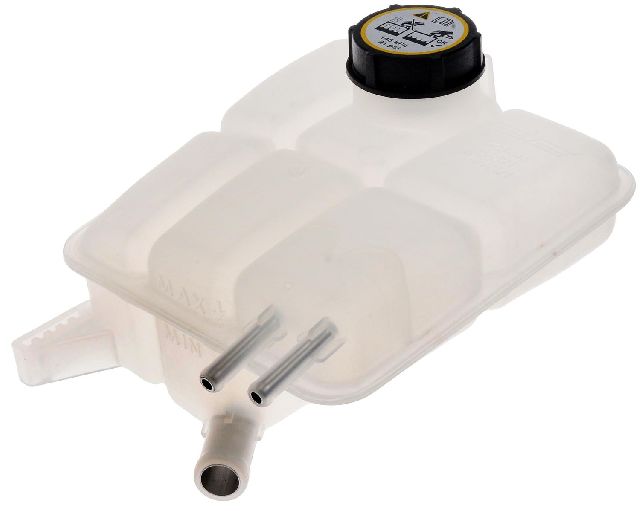
Est. part cost: $45-$110 - Low Engine Coolant 🟡 Medium Probability A leak in the system can introduce air, causing the ECT sensor to give inaccurate low readings even if the engine is warm. A cracked coolant overflow reservoir is a known possible failure point.
How to confirm: Visually inspect the coolant level in the overflow reservoir and radiator (when the engine is cold). If low, there may be a leak in the system (hoses, radiator, water pump, reservoir tank) that needs to be addressed.
Typical fix: Top off the coolant with the correct type (Mazda FL22 or equivalent) and pressure test the system to find and repair any leaks.
Est. part cost: $20-$30 for coolant, plus cost of any leaking parts. - Faulty Engine Coolant Temperature (ECT) Sensor ⚪ Low Probability
How to confirm: With a cold engine, use a scan tool to compare the ECT sensor reading with the Intake Air Temperature (IAT) sensor reading. They should be within a few degrees of each other. If the ECT reading is skewed significantly (e.g., reading 80°F on a 40°F day), the sensor is likely faulty. The sensor is located on the cylinder head.
Typical fix: Replace the ECT sensor.
Est. part cost: $20-$50
Rare But Worth Checking
- Cooling fan running constantly due to a failed fan control module or shorted wiring, preventing the engine from ever reaching temperature.
Diagnosis Steps
- Identify Your Engine. Determine if you have the 2.0L or 2.5L engine, as the diagnostic path differs. This information is on the emissions label under the hood. Note whether you have the MZR or SkyActiv 2.0L engine, as this became an option in 2012.
- (For 2.0L Engine) Check for Technical Service Bulletins (TSBs). Contact a Mazda dealer with your VIN to see if TSB 01-021-13-2817B applies to your vehicle. If it does and the software has not been updated, this is the most likely fix.
- Inspect Coolant Level and Condition. Ensure the engine is cold. Check the coolant reservoir. If it's low, top it off with Mazda FL22 coolant and check for visible leaks from hoses, the radiator, or the reservoir tank.
- Monitor Coolant Temperature via Scan Tool. Watch the live Engine Coolant Temperature (ECT) data. The temperature should rise steadily to about 180-200°F and stabilize. If it warms up very slowly, struggles to get over 170°F, or drops significantly at highway speeds, the thermostat is almost certainly stuck open.
- Test the ECT Sensor. If the temperature readings are erratic or illogical, test the sensor's accuracy as described in the 'Common Causes' section. You can also test its resistance with a multimeter; it should be around 2000-3000 Ohms at 20°C (68°F) and drop to 200-300 Ohms at 90°C (194°F).
- Check Cooling Fan Operation. Ensure the cooling fan is not stuck on and running constantly from the moment the car is started (on a cold engine). If it is, this will prevent the engine from warming up properly.
- Inspect/Replace the Thermostat. If all other checks pass, the thermostat is the culprit. It is typically replaced as a complete housing assembly. 🎬 Watch this step-by-step thermostat replacement guide for the 2.0L engine. After replacement, ensure the cooling system is properly 'burped' to remove trapped air, which can cause overheating or lack of heat.
Parts You'll Likely Need
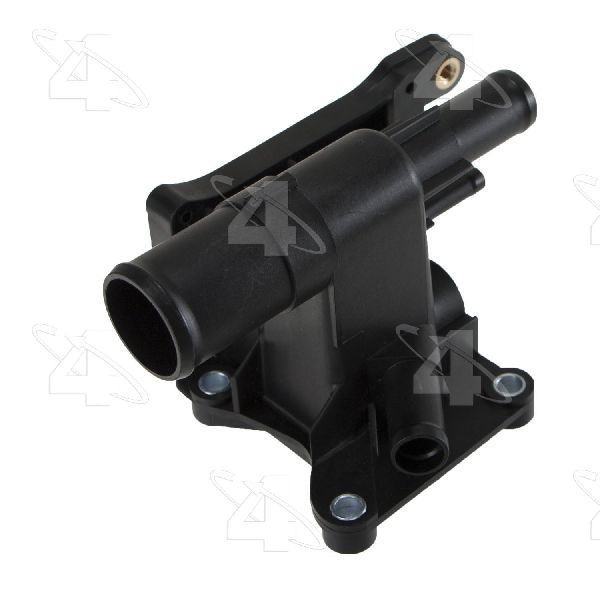
- Thermostat with Housing (2.0L Engine)
(OEM #LF94-15-17Z)— This is the most common mechanical part to fail on the 2.0L engine if the PCM update TSB does not apply or has already been performed. It is replaced as a complete assembly.
Trusted brands: Mazda (OEM), Motorad, Stant, Gates
OEM price range: $85-$110
Aftermarket price range: $45-$75 - Thermostat with Housing (2.5L Engine)
(OEM #L336-15-170)— This is the most common mechanical part to fail on the 2.5L engine, causing the P0128 code. It is replaced as a complete assembly.
Trusted brands: Mazda (OEM), Motorad, Dorman, Gates
OEM price range: $90-$120
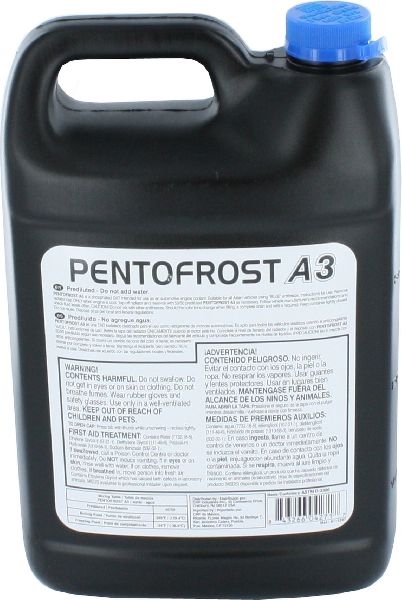
Aftermarket price range: $50-$80 - Engine Coolant — The cooling system must be drained to replace the thermostat, requiring a refill. Mazda specifies long-life FL22 coolant.
Trusted brands: Mazda FL22 (OEM), Zerex Asian Vehicle Formula, Pentofrost A3, Peak OET Asian Vehicle Green
OEM price range: $20-$30 per gallon
Aftermarket price range: $18-$25 per gallon
Related Codes That Often Appear With This One
- P0126 — P0126 is 'Insufficient Coolant Temperature for Stable Operation.' It's very similar to P0128 and is often triggered by the exact same root causes, 🎬 See how to address both P0126 and P0128 codes together. like a stuck-open thermostat or PCM logic issue.
Technical Service Bulletins (TSBs) & Recalls
- 01-021-13-2817B: States that some 2010-2013 Mazda3 vehicles with the 2.0L engine may experience the MIL on with DTC P0128 due to improper control logic of the PCM and that a software update is available to correct the problem.
Platform-Specific Known Issues
- The primary issue for the 2010-2013 Mazda3 with the 2.0L engine is the PCM's over-sensitivity, as documented in Mazda TSB #01-021-13-2817B, which requires a software update.
- For the 2.5L engine, the issue is almost always a standard mechanical failure of the thermostat sticking open.
- Some owners report difficulty accessing the lower thermostat housing bolts, recommending the use of long extensions and wobble sockets. A pair of long-reach hose clamp pliers is also highly recommended for DIY repair.
Mechanic-Grade Diagnostic Values
- Engine Coolant Temperature (ECT) Sensor Resistance — expected: Approximately 2000-3000 Ω at 20°C (68°F). Failure: Significantly higher or lower resistance, or an open/short circuit.
- Engine Coolant Temperature (ECT) Sensor Resistance — expected: Approximately 200-300 Ω at 90°C (194°F). Failure: Resistance does not drop as the engine warms up, indicating a faulty sensor.
- Freeze Frame Data (FFD) for TSB Confirmation (2010 2.0L) — expected: ECT value between 78°C (172.4°F) and 80°C (176.0°F). Failure: If FFD values match this range, it indicates the PCM logic issue, not a mechanical fault.
- Freeze Frame Data (FFD) for TSB Confirmation (2011 2.0L) — expected: ECT is 82°C (179.6°F) or above AND Ambient Air Temperature (AAT) is 46°C (114.8°F) or below. Failure: If FFD values match this criteria, it indicates the PCM logic issue, not a mechanical fault.
Scan Tool Commands That Help
- Mazda IDS/MDARS: PCM Reprogramming — This service function is used to apply the updated software calibration as specified in TSB 01-021-13-2817B to correct the 'improper control logic' that falsely sets P0128 on affected 2.0L engines.
Wiring & Ground Locations
- G06 — Located at the left rear of the engine.. A poor ground at this location can affect various engine sensors, including the ECT sensor circuit, potentially causing incorrect readings.
- G09 — Located under the left side of the dashboard.. This is a major chassis ground point. While less direct, corrosion or looseness here can cause a variety of unpredictable electrical issues for the PCM and sensor circuits.
- ECT Sensor Connector — On the cylinder head for the 2.0L Skyactiv engine (2012-2013). For the MZR engines, it is located in the thermostat housing.. This is the primary connection point for testing the sensor and its circuit. The PCM uses the voltage signal from this connector to determine coolant temperature.
Real Owner Repair Stories
- Reddit user hydroflower007 (2012 Mazda3, 83,650 miles) — Check Engine Light with code P0128.
✅ What actually fixed it Replaced the thermostat with an Autozone Duralast part and refilled with Peak Asian green 50/50 coolant. The user noted that the job was made much easier by purchasing long-wired hose clamp pliers due to tight spacing. This resolved the check engine light. - YouTube channel 'pistonsandpixiedust' (2006 Mazda 3 2.0L (Note: slightly older model, but identical P0128 cause and fix)) — Check Engine Light with code P0128.
❌ Tried (didn't work) Initially considered the temperature sensor but decided to diagnose the thermostat first as it's a known failure point.
✅ What actually fixed it Replaced the thermostat. The mechanic demonstrated the failure by putting the old thermostat in hot water (it opened) and then cold water, where it failed to close properly, confirming it was stuck open. The video highlights this as the definitive cause of the P0128 code.
OEM Part Supersession History
lf9415179a→LF94-15-17Z— Standard part revision or manufacturer change.
Heads up: Applies to the thermostat housing for the 2.0L MZR engine. The new part number is a direct replacement for the old one.l32715170, l32715170a, l32715171, l32815170a, l32815170b, lfe215170, zzca15172, zzca15172a→L336-15-170— Multiple revisions and consolidations over the part's lifespan.
Heads up: Applies to the thermostat unit for the 2.5L engine. L336-15-170 is the current replacement for a long list of prior part numbers.
Model Year Variations Within This Range
- 2012-2013: The 2.0L engine was available in two versions: the older MZR (LF) and the new direct-injection SkyActiv-G (PE). The TSB for P0128 applies to both, but they use different parts (e.g., radiators, thermostats) and may have different diagnostic nuances.
- 2010 vs 2011: Within the TSB for the P0128 software issue, Mazda specifies different Freeze Frame Data (FFD) criteria for 2010 and 2011 models to confirm the logic error, indicating a slight change in the PCM software between these years.
Helpful Videos
We Have This Part in Stock

The information in this article is provided for general reference and educational purposes only. Vehicle specifications, procedures, and part compatibility can vary by production date, trim level, and region. Always consult your vehicle's factory service manual and verify part numbers before purchasing or performing repairs. Safety-critical components such as airbags, seat belts, and braking systems should be installed by a qualified professional.
- Mazda MAZDA3:
- 🎬 Helpful Videos
- 🛍️ Shop This Part
- What's Unique About the 2010-2013 Mazda MAZDA3
- Diagnostic Flowchart
- Symptoms You May Notice
- Most Likely Causes
- Rare But Worth Checking
- Diagnosis Steps
- Parts You'll Likely Need
- Related Codes That Often Appear With This One
- Technical Service Bulletins (TSBs) & Recalls
- Platform-Specific Known Issues
- Mechanic-Grade Diagnostic Values
- Scan Tool Commands That Help
- Wiring & Ground Locations
- Real Owner Repair Stories
- OEM Part Supersession History
- Model Year Variations Within This Range
- 🎟️ Get 5% Off