

P0128 on 2016-2017 Jeep Cherokee: Causes and Fixes for Thermostat Rationality
On a 2016-2017 Jeep Cherokee, code P0128 almost always means the engine thermostat is stuck open. This is a very common failure. The most reliable fix is to replace the entire thermostat housing assembly, which includes a new thermostat and sensor. For the 2.4L, look for Mopar part #68253514AF or a successor; for the 3.2L, it's #68253457AA. Expect a shop repair to cost between $475 and $700.
- P0128 on a 2016-2017 Cherokee almost always points to a thermostat that is stuck open.
- The most effective repair is to replace the entire thermostat housing assembly, not just the thermostat itself.
- Always use the specified Mopar OAT coolant (MS-12106) when refilling the system to prevent damage.
- While you can drive with this code, it's best to get it fixed promptly to avoid poor fuel economy, increased engine wear, and the possibility of the vehicle entering 'limp mode'.
What's Unique About the 2016-2017 Jeep CHEROKEE

The Jeep Cherokee of this era (KL generation) is known for this specific issue, and it's a common failure point for both the 2.4L and 3.2L engines, often occurring between 35,000 and 90,000 miles. Unlike some vehicles where you might replace just the thermostat, on the Cherokee, it is highly recommended to replace the entire plastic thermostat housing assembly. This assembly typically includes the thermostat, the housing itself, and a new coolant temperature sensor, addressing all potential failure points at once.
Diagnostic Flowchart

Tap your situation to follow the diagnostic path that matches what you're seeing on this vehicle.
Symptoms You May Notice

- Check engine light is on
- Engine temperature gauge reads lower than normal, often staying at the 1/4 mark instead of the 1/2 mark
- Heater blows lukewarm air or takes a very long time to get hot
- Noticeable decrease in fuel economy
- Engine fails to warm up during remote start
- Vehicle may enter 'limp mode' with reduced power
- Engine temperature drops at highway speeds
- Replacing only the ECT sensor when the thermostat is the actual problem. Since the thermostat is the most common cause and the sensor is included in the replacement housing, it's best to replace the entire assembly.
- Ignoring a slow coolant leak. If the system is repeatedly topped off without fixing an underlying leak, the P0128 code will likely return as air gets back into the system.
Most Likely Causes

- Faulty Thermostat (Stuck Open) 🔴 High Probability This is the most common failure for P0128 on virtually all vehicles, and especially on the Jeep Cherokee and its platform mates. The thermostat is designed to fail in the open position as a failsafe against overheating.
How to confirm: Use a scan tool to monitor the live engine coolant temperature. If the temperature rises very slowly and struggles to reach or maintain the target of ~195-210°F, especially at highway speeds, the thermostat is almost certainly stuck open.
Typical fix: Replace the entire thermostat and housing assembly. The OEM Mopar part for the 2.4L is #68253514AF (or a newer revision like 5047861AC/AD) and for the 3.2L V6 is #68253457AA. The cooling system must be drained, refilled, and bled of air after the replacement. 🎬 Watch: How to properly bleed air from the cooling system.
Est. part cost: $60-$420 - Faulty Engine Coolant Temperature (ECT) Sensor ⚪ Low Probability While less common than a bad thermostat, the ECT sensor can fail and send inaccurate readings to the ECM, making it think the engine is colder than it is.
How to confirm: After the vehicle has sat overnight (cold soak), use a scan tool to compare the Intake Air Temperature (IAT) and Engine Coolant Temperature (ECT) readings. They should be within a few degrees of each other. If the ECT reading is significantly different (e.g., reading -40°F), the sensor is faulty.
Typical fix: Replace the ECT sensor. On the Jeep Cherokee, the sensor is included with the new thermostat housing assembly, so it gets replaced as part of the standard thermostat job. This makes diagnosing the sensor separately less critical, as the fix is the same.
Est. part cost: $20-$50 - Low Engine Coolant Level ⚪ Low Probability If the coolant level is too low, the ECT sensor may be exposed to an air pocket, causing it to send erratic or incorrect temperature readings to the ECM.
How to confirm: Visually inspect the coolant reservoir. If the level is below the 'MIN' line when cold, it is too low. Also, inspect for any visible coolant leaks around hoses, the radiator, and the water pump.
Typical fix: Top off the coolant with the correct type (Mopar OAT coolant meeting MS-12106 specification). If a leak is present, the leaking component must be repaired or replaced. If the level is low, a pressure test is recommended to find the source of the leak.
Est. part cost: $25-$40
Rare But Worth Checking
- Cooling Fan Stuck On: If the electric cooling fans run constantly, even when the engine is cold, they can over-cool the engine and prevent it from reaching operating temperature, triggering a P0128 code. This is usually caused by a faulty fan relay, control module, or a failed ECT sensor sending an erroneous signal.
- PCM Software Issue: While some owners have reported that a PCM update might be needed, the widely cited TSBs (18-110-20, 18-032-17, 18-122-16) for this vehicle do NOT provide a direct software fix for a standalone P0128 code. They are updates for other issues that list P0128 as a possible co-occurring code. One technician on YouTube suggested ensuring the PCM is up-to-date as a general best practice, as older software versions could be overly sensitive, but this is not a confirmed fix from the manufacturer.
Diagnosis Steps
- Check for other DTCs: Use a scan tool to see if any other codes are present.
- Inspect Coolant Level and Condition: Ensure the coolant reservoir is filled to the proper level with the correct purple Mopar OAT coolant. Check for visible leaks on hoses and around the engine.
- Verify ECT Sensor Accuracy: With the engine cold (sat overnight), compare the Intake Air Temperature (IAT) and Engine Coolant Temperature (ECT) sensor readings on a scan tool. They should be within 5°F of each other. If not, the ECT sensor is likely faulty, but it will be replaced with the thermostat housing anyway.
- Monitor Coolant Temperature: Start the engine and use the scan tool to graph the ECT reading as the engine warms up. The temperature should rise steadily to about 195-210°F and then stabilize as the thermostat opens and closes.
- Identify a Stuck Thermostat: 🎬 Watch: How to diagnose a P0128 code on the 2.4L engine. If the temperature rises very slowly, drops significantly at highway speeds, or never reaches the target temperature range, the thermostat is stuck open and must be replaced.
- Check Cooling Fan Operation: Ensure the cooling fans are not running constantly from a cold start. They should only activate when the A/C is on or when the engine reaches a high temperature (typically well above 212°F).
Parts You'll Likely Need
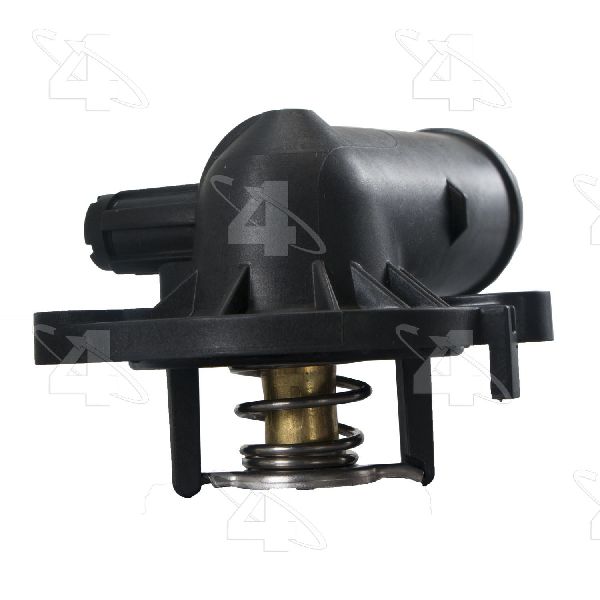
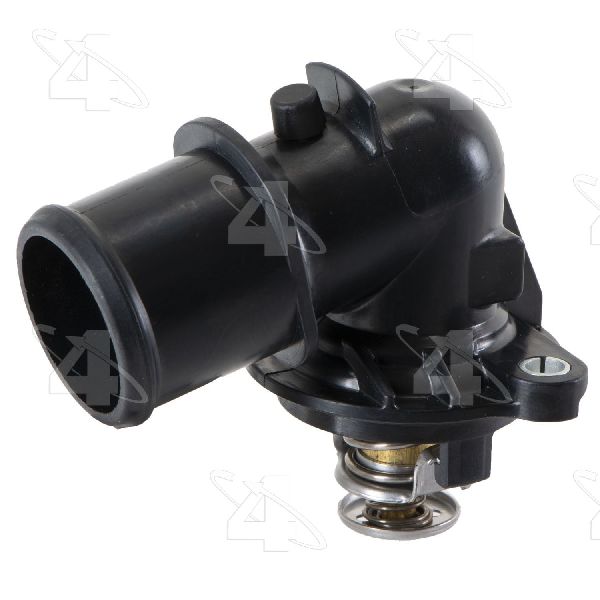
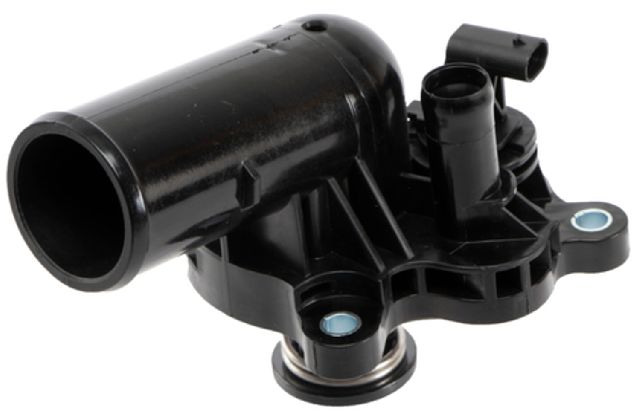
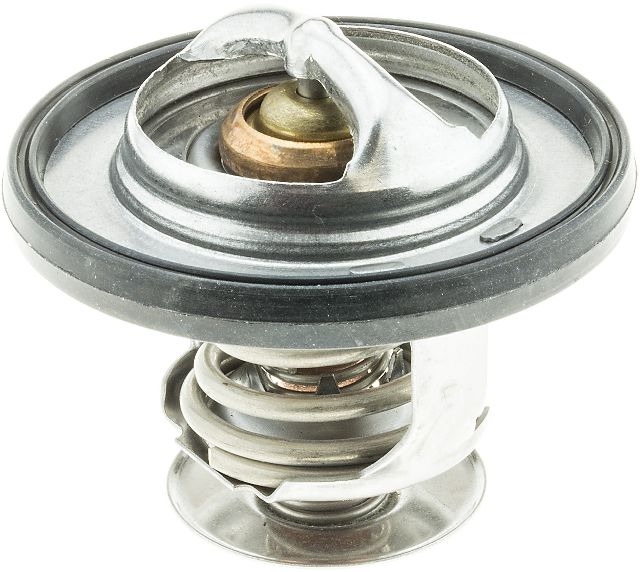
- Engine Coolant Thermostat Housing Assembly
(OEM #2.4L: 68253514AF (or superseding part #5047861AC/AD) / 3.2L: 68253457AA)— This is the most common cause of code P0128. On the Cherokee, the thermostat, housing, and ECT sensor are integrated into one assembly. Replacing the whole unit is the standard and most reliable repair.
Trusted brands: Mopar, Dorman, Motorad, Gates, SKP
OEM price range: $150-$420
Aftermarket price range: $60-$150 - Engine Coolant / Antifreeze
(OEM #68163848AB)— The cooling system must be drained to replace the thermostat. It must be refilled with the specified Mopar OAT (Organic Acid Technology) 10-year/150,000-mile coolant meeting Chrysler specification MS-12106 to prevent corrosion and system damage.
Trusted brands: Mopar, PEAK OET (Purple), Valvoline Zerex (Purple)
OEM price range: $25-$40 per gallon
Aftermarket price range: $20-$30 per gallon
Technical Service Bulletins (TSBs) & Recalls
- 18-110-20: This TSB is a PCM software update for the 2.4L engine to address multiple issues, including potential misfires and extended crank times. It lists P0128 as one of many DTCs that a technician *might* find, but it is not a targeted fix for the thermostat rationality code itself.
- 18-032-17: This TSB is a PCM update for specific oil supply solenoid valve codes. It explicitly states that if P0128 is the reason for service, this update does *not* apply. This confirms it is not a fix for P0128.
- 18-122-16: Similar to the other TSBs, this is a powertrain control module update that mentions P0128 - Thermostat Rationality Error along with various other sensor-related codes, but does not provide a specific remedy for it.
Platform-Specific Known Issues
- A recurring P0128 code was reported by one owner even after a thermostat replacement, which ultimately required a $600+ repair at 85,762 miles, only to have the same symptoms reappear a year later, indicating a potential for faulty replacement parts or a deeper issue.
- At least one owner has reported the vehicle entering 'limp mode' on the interstate as a direct result of the P0128 code, which is a significant safety and drivability concern.
- Failure is common enough that many owners on forums report the issue appearing at relatively low mileage, often between 35,000 and 40,000 miles.
Mechanic-Grade Diagnostic Values
- Normal Engine Operating Temperature — expected: 195-210°F (90-99°C). Failure: Live data shows temperature struggling to exceed 170°F or dropping at highway speeds.
- ECT Sensor Resistance at 68°F (20°C) — expected: 2,000 - 3,000 Ohms (Ω). Failure: A reading significantly outside this range, or an open/shorted reading, indicates a faulty sensor.
- ECT Sensor Signal Voltage (Key On, Engine Off, Cold) — expected: ~3.5 - 4.0 Volts. Failure: Voltage remains high even as the engine warms up.
- ECT Sensor Signal Voltage (Engine at Operating Temp) — expected: ~0.5 - 1.3 Volts. Failure: Voltage does not decrease smoothly as the engine warms, or stays high.
- ECT Sensor Connector Voltage (Sensor Unplugged, KOEO) — expected: 5.0 Volts (Reference Voltage from PCM). Failure: No voltage indicates a problem with the PCM or the wiring from the PCM.
Scan Tool Commands That Help
- wiTECH (or equivalent J2534 tool): Flash PCM / Reprogram Powertrain Control Module — As a best practice if other causes are ruled out, to ensure the PCM software is not overly sensitive. Note that no TSB directly links a software update as a fix for a standalone P0128.
Wiring & Ground Locations
- ECT Sensor (2.4L Engine) — On the thermostat housing, located on the passenger side of the engine.. This is the primary sensor that provides the temperature reading to the PCM. Its location is critical for replacement.
- ECT Sensor (3.2L V6 Engine) — On the back side of the driver's side cylinder head.. This is the primary sensor for the V6. Its location is less accessible than the 2.4L and important for estimating labor time.
- Thermostat Housing Bleeder Screw (3.2L V6) — A small screw on the top of the thermostat housing.. This screw must be opened during the coolant refilling process to bleed trapped air from the system. Failure to do so can cause air pockets, leading to a recurring P0128 code or overheating issues.
- ECT Sensor Fuses — In the main engine fuse box, located on the driver's side of the engine bay.. A blown fuse can cut power to the sensor circuit. Check fuses F7, F8, F10, F16, F30, F59, and F83 if you suspect an electrical issue.
Real Owner Repair Stories
- Reddit user story (Jeep (model unspecified, but behavior is common to Cherokee)) — P0128 code returned after replacing the thermostat.
❌ Tried (didn't work) Replacing the thermostat.
✅ What actually fixed it The owner was told by the dealer that the radiator was 'seeping' despite passing a pressure test. Another user confirmed their P0128 issue was only resolved after their radiator, which had a known issue with a cracked housing, was replaced a few months after the thermostat job. - Reddit user story (2015 Jeep Grand Cherokee 3.6L V6) — P0128 code. Before the fix, oil temp was ~170°F. After the fix, it was ~210°F.
✅ What actually fixed it Replacing the thermostat resolved the code. The user was concerned about the higher operating temperature post-repair, but others confirmed that ~200-210°F is the normal temperature and the previous lower temp was a symptom of the stuck-open thermostat. - Jeepz.com user story (2012 Jeep Wrangler (similar cooling system principles)) — P0128 code remained after changing the thermostat.
❌ Tried (didn't work) Replacing the thermostat.
✅ What actually fixed it The suggested fix was to properly bleed ('burp') the cooling system to remove trapped air, which can cause incorrect temperature readings and prevent the code from clearing.
OEM Part Supersession History
68147599AA, 68147599AB, 68147599AC→68253457AA— Part has been revised by the manufacturer for improved reliability or manufacturing changes.
Heads up: This part number is for the 3.2L V6 engine. Several parts sites incorrectly label it for the 3.0L Diesel.
Model Year Variations Within This Range
- 2016-2017: There are no significant mechanical differences between the 2016 and 2017 model year Cherokee that affect the cause or repair of a P0128 code. Both use the same 2.4L and 3.2L engines. The primary differences were cosmetic and trim-level features, such as the 2017 model making HID headlamps standard on more trims.
Helpful Videos
We Have This Part in Stock


The information in this article is provided for general reference and educational purposes only. Vehicle specifications, procedures, and part compatibility can vary by production date, trim level, and region. Always consult your vehicle's factory service manual and verify part numbers before purchasing or performing repairs. Safety-critical components such as airbags, seat belts, and braking systems should be installed by a qualified professional.
- Jeep CHEROKEE:
- 🎬 Helpful Videos
- 🛍️ Shop This Part
- What's Unique About the 2016-2017 Jeep CHEROKEE
- Diagnostic Flowchart
- Symptoms You May Notice
- Most Likely Causes
- Rare But Worth Checking
- Diagnosis Steps
- Parts You'll Likely Need
- Technical Service Bulletins (TSBs) & Recalls
- Platform-Specific Known Issues
- Mechanic-Grade Diagnostic Values
- Scan Tool Commands That Help
- Wiring & Ground Locations
- Real Owner Repair Stories
- OEM Part Supersession History
- Model Year Variations Within This Range
- 🎟️ Get 5% Off